
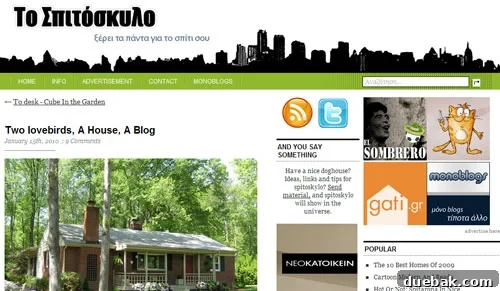
As enthusiasts of data and digital insights, one of the most captivating aspects of our blogging journey has always been meticulously tracking where our website visitors originate. This practice not only provides invaluable data for optimizing our content strategy but also serves as an exciting conduit for discovering new and inspiring blogs to follow within our niche and beyond. It’s a dynamic exploration that keeps us connected to the broader online community and informs our understanding of who our audience truly is and what resonates with them.
Recently, this ongoing investigation led us to a fascinating discovery: two new websites had linked back to us. While the initial excitement was palpable, a quick glance revealed a significant linguistic hurdle – both sites were written entirely in Greek. Despite a personal history that includes familiarity with the Greek alphabet (a requirement from my fraternity days), delving into a full blog post in the language proved to be a considerably more challenging endeavor. Understanding the nuances and context of an entire article requires more than just alphabet recognition; it demands fluency we simply don’t possess. This presented a unique challenge: how do we understand what these generous, yet linguistically distant, bloggers were saying about our work?
Fortunately, thanks to a timely suggestion from our engaged community on Twitter, we quickly realized there was a readily available tool to bridge this communication gap. We promptly plugged the URLs of these intriguing Greek blogs into Google Translate, eager to uncover the sentiments expressed. Would their mentions be complimentary, critical, or perhaps even a bit snarky? The anticipation was almost as entertaining as the results themselves. What unfolded before our eyes was not just a translation, but a genuinely hilarious series of interpretations that turned our blog into everything from a romance novel to a medical drama. It was clear that while the intent was likely positive, the robotic translation process added an unexpected layer of comedic relief.
The immediate good news was that we could discern, even through the most bizarre translations, that the authors’ intentions were genuinely kind. A heartfelt “thank you” to our Greek friends, whose original posts were undoubtedly well-meaning! However, Google’s machine translation offered a uniquely entertaining perspective, often veering into outright inaccuracy, but always with a charm that kept us laughing uncontrollably. The sheer absurdity of some phrases overshadowed any concern about precision, proving that sometimes, being lost in translation can be the most delightful part of the journey.
A Love Story Unveiled: The Romance Novel Rendition
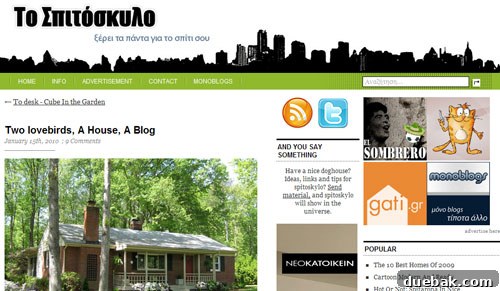
Our first venture into the world of robot-translated Greek came from this particular site. According to Google Translate, the post enthusiastically declared: “the Sherry and John loved passionately, and went and found an old house amid nature.” This translation instantly transformed our humble DIY and home decor blog into something akin to a grand romance novel. While we certainly pour a lot of love into our home projects and enjoy the journey of transforming spaces, we typically strive to keep our content focused on practical tips, design ideas, and the occasional anecdote, far from the dramatic narratives of passionate love affairs. The idea that our efforts were being interpreted as a tale of fervent romance and rustic discovery was not only unexpected but also incredibly amusing. It made us wonder what specific turns of phrase in the original Greek could possibly conjure such a vivid and fervent description, painting a picture of us as protagonists in a heartfelt story of love and natural living.
A Medical Emergency? The Diabetic Shock Saga

Just when we thought the translations couldn’t get any more outlandish, Google presented us with an even more bizarre interpretation, seemingly casting our blog in the role of an incomprehensible medical drama. The same Greek site offered this gem: “The spitoskylo apologize for diabetic shock may be caused by Glykeria this spectacle.” This translation left us utterly bewildered and in stitches. A DIY blog causing “diabetic shock”? The sheer absurdity of the statement was phenomenal. We sincerely hoped that our content, which typically features paint swatches, renovation progress, and decor inspiration, was not literally sending readers in the Mediterranean into a state of medical emergency. Surely, if our blog was indeed inducing such severe physical reactions, someone would have alerted us by now, right? Regardless, the implied apology from “the spitoskylo” for this purported medical hazard only added to the comic relief, making this one of the most memorable translation blunders we encountered. It served as a stark, yet humorous, reminder of the vast chasm that can exist between human intent and machine interpretation.
The Mixed Signals: Positive Start, Negative Finish

Our journey through the looking glass of Google Translate continued when, a day after the initial humorous encounters, a second Greek site also featured our blog. Once again, Google’s interpretive algorithms took considerable liberties with the original text, leading to another moment of comedic confusion. The translation began on an incredibly high note, showering us with praise: “When a couple has humor, fun, style and love of decoration…” We swelled with pride, thinking, “Yes, that’s us! They truly understand our vibe!” However, the very next phrase abruptly pulled the rug out from under us, delivering a jarring and utterly contradictory conclusion: “…then the result can not be positive.”
“NOT be positive?!” we exclaimed in disbelief. How could a combination of humor, fun, style, and a genuine love for decoration possibly lead to a negative outcome? It defied all logical reasoning and certainly didn’t align with the encouraging feedback we usually receive. According to Google Translate, our site, despite embodying all those wonderful qualities, somehow managed to yield an unfavorable result. This particular translation highlighted the inherent challenges of machine learning when grappling with complex sentence structures or idiomatic expressions, where a misplaced negative or an inaccurate contextual interpretation can completely invert the meaning of an entire passage. It was a stark reminder that while machine translation is a powerful tool, it’s far from infallible, especially when nuance is key.
The “Terrible Do It Yourself” Conundrum

The comedic saga continued with another intriguing phrase from the same second Greek blog, which Google Translate rendered as our “Terrible Do It Yourself.” This immediately sparked a fresh wave of concern and amusement. Had our DIY projects, which we meticulously document and share with pride, been deemed “terrible” by an international audience? The thought was unsettling, yet the sheer bluntness of the translation was undeniably funny. To try and gain a clearer understanding and perhaps alleviate our mild existential DIY crisis, we decided to cross-reference this specific phrase with another well-known translation service, Yahoo’s Babelfish. Our hopes were high that Babelfish might offer a more benign interpretation. However, to our surprise (and further amusement), it merely swapped “terrible” for “horribly.” “Yowza!” was our collective reaction. It seemed that this particular Greek phrasing was notoriously difficult for machine translators to accurately interpret, consistently leaning towards a negative connotation regarding our DIY endeavors.
Just as we were beginning to question our entire blogging premise and perhaps consider a career change, the subsequent lines of the translated text delivered a much-needed reassurance. The same article went on to describe our posts as “intelligent, entertaining and comprehensive.” This sudden shift from “terrible” to “intelligent” was a whiplash-inducing reversal that once again underscored the quirky inconsistencies of machine translation. Even more heartening, the blog concluded by affectionately calling us a “blog-haven for Do it yourself’ers!” Whew! The relief was palpable. Despite the initial shock and the bizarre interpretations, it became abundantly clear that the Greek bloggers were not, in fact, disparaging our work. On the contrary, they were offering genuine praise and recommending our site as a valuable resource for fellow DIY enthusiasts. This ultimate affirmation dissolved any lingering doubts, solidifying the understanding that the previous negative descriptors were simply charming artifacts of the translation process, rather than genuine criticism.
The Universal Language of Laughter: Embracing Translation Mishaps
Ultimately, we chalked up these experiences to prime examples of the humorous side effects when things get truly “lost in translation.” The amusing interpretations provided by Google Translate were simply too good not to share, offering a lighthearted glimpse into the complexities of cross-cultural communication in the digital age. It’s a testament to the power of context and nuance that even the most advanced algorithms can sometimes miss the mark, leading to outcomes that are both baffling and brilliant.
This entire episode served as a wonderful reminder of the universal appeal of human connection, regardless of language barriers. While the words themselves might get scrambled, the underlying sentiment of appreciation and shared interest often shines through. It reinforced our belief that blogging is not just about content creation but also about fostering a global community, where even a comical translation error can become a shared moment of joy and understanding.
We are absolutely certain that many of you, our wonderful readers, have equally entertaining stories to tell about times when a language barrier provided unexpected comic relief. Perhaps a holiday abroad, an online interaction, or even a simple misunderstanding led to a laugh-out-loud moment. These anecdotes are more than just funny stories; they are precious reminders of our shared human experience and the delightful quirks that arise when different cultures and languages intersect. So please, don’t hold back! We invite you to share your own experiences in the comments section below. Just make sure it’s in English, or we might once again have to rely on the unpredictable, yet undeniably entertaining, interpretations of Google Translate to fill us in on the details!
P.S. For those curious souls who wish to experience the original Greek posts in their untranslated glory, you can find them here and here. And if you’d like to revisit the full Google-translated versions that provided us with so much amusement, they are available here and here. A huge, heartfelt thank you to both of these wonderful Greek blogs for their amazing write-ups and for taking the time to feature our content. We sincerely apologize that Google Translate didn’t quite do justice to their original meaning, but we appreciate their kind words and recognition nonetheless. In fact, we got more than a few hearty laughs out of the entire experience, and for that, we are truly grateful!