
DIY Kitchen Transformation: Building a Custom Built-In Refrigerator Enclosure on a Budget
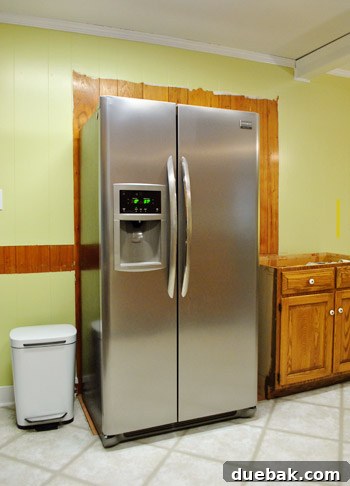
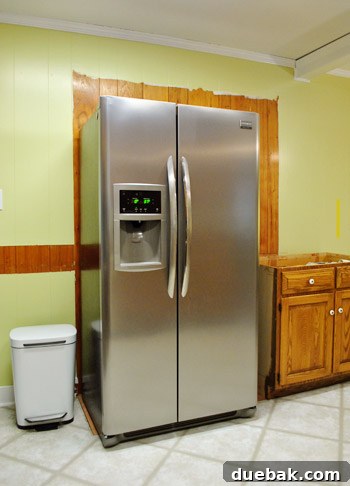
Every homeowner dreams of a kitchen that feels custom-designed, sleek, and effortlessly elegant. One of the simplest yet most impactful ways to achieve this sophisticated look is by integrating your refrigerator seamlessly into your cabinetry. As we learned from our initial kitchen renovation project, a built-in fridge instantly elevates the entire space, transforming it from merely functional to undeniably “fancy schmancy.” For a long time, our freestanding refrigerator, seemingly adrift in the kitchen, was doing quite the opposite of contributing to that high-end aesthetic.
The Vision: A Seamless and Sophisticated Kitchen
Our goal was clear: to create a custom built-in refrigerator enclosure that would give our kitchen a more polished, cohesive, and intentional feel. This wasn’t just about aesthetics; it was about maximizing space, improving functionality, and achieving that sought-after integrated look without breaking the bank. The journey began with a remarkable find, proving that with a little creativity and resourcefulness, high-end results are entirely achievable on a DIY budget. We wanted to move away from the “floating fridge” dilemma and toward a more architectural and purposeful design that would become a cornerstone of our updated kitchen.
Sourcing Materials: Smart Finds and Essential Supplies
A Cabinet Gem from Habitat ReStore
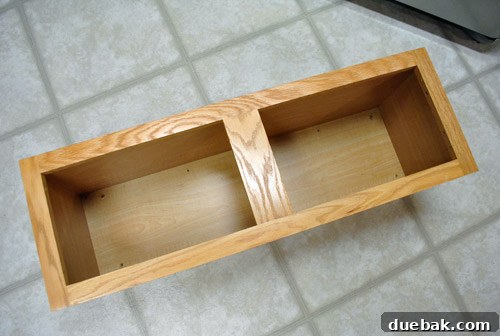
The cornerstone of this ambitious project was an incredibly fortunate discovery: a cabinet, priced at a mere $19, from the Habitat For Humanity ReStore. We had mentioned this incredible find just yesterday, and its perfect dimensions were almost too good to be true. Measuring 12 inches tall and precisely 36 inches wide, it was the exact width of our refrigerator, making it the ideal candidate to sit majestically atop our appliance. The existing doors didn’t match our vision or our other kitchen cabinets, but that was a minor detail. The plan was to remove them and eventually retrofit some extra existing doors to ensure a seamless integration with the surrounding cabinetry, making the entire setup look like it was always meant to be there. This budget-friendly acquisition set the stage for our custom build, proving that treasure hunts at salvage stores can yield incredible results.
Selecting the Right Plywood and Trim for Durability
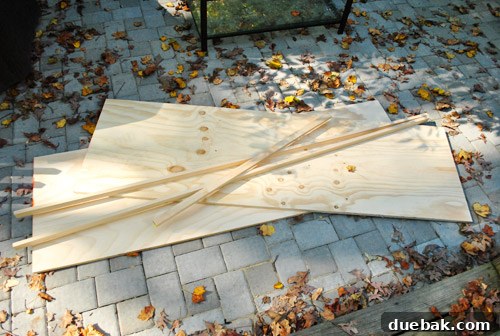
For the essential side panels of our built-in refrigerator enclosure, I headed to Lowe’s with a clear objective. There, a knowledgeable assistant recommended two 4-foot by 8-foot pieces of sturdy plywood specifically designed for cabinet construction. He confidently assured me that this was the very same material professionals utilize for high-quality, custom built-in kitchen installations, lending a sense of confidence to our DIY endeavor. An invaluable service offered by Lowe’s was the precise cutting of these large planks to the exact sizes required, directly in their wood-cutting area. This saved immense time and effort, especially considering the planks were still too large to fit comfortably into our Altima. To transport them safely and conveniently, I opted to rent the $19 Lowe’s truck, a small investment that greatly facilitated the project. Including the truck rental, the essential refrigerator planks, and a few 1×2 inch pieces of pine trim for a refined finish, the total material cost for these components came to approximately $90. This figure, combined with our $19 ReStore cabinet, demonstrated that a custom, high-end look could be achieved with careful planning and smart material sourcing, maintaining our overall project within a reasonable budget.
Crafting the Components: Precision and Preparation
Enhancing Aesthetics with Pine Trim
The primary purpose of incorporating the pine trim pieces was to bestow a more refined, substantial, and custom-built appearance upon the front edges of our plywood side panels. Without this trim, the raw edges of the plywood could look unfinished and thin, detracting from the desired high-end aesthetic. To securely attach the trim and ensure a strong, concealed connection, I relied on my trusted Kreg jig. This essential tool allowed me to drill a series of precise pocket holes down one edge of both plywood pieces. The Kreg jig is a fantastic asset for DIY cabinet makers, as it creates strong joints without visible fasteners on the exterior, contributing significantly to a professional-looking finish.
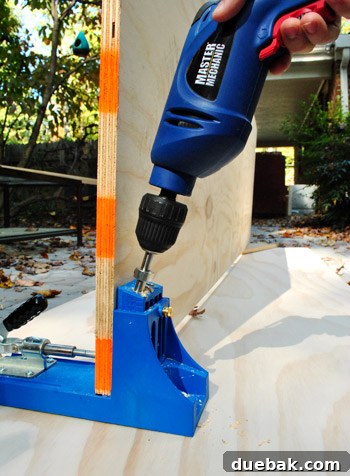
Sanding and Prepping for a Flawless Finish
With all the necessary holes meticulously drilled, the next crucial step involved thorough sanding of both sides of the plywood panels. This ensured a perfectly smooth surface, free from splinters or rough patches, which is vital for achieving a professional paint finish later on. While attending to the plywood, I also took the opportunity to sand off the existing finish from the front of the ReStore cabinet. This preparation was essential to ensure optimal adhesion for primer and paint, setting the stage for a durable and beautiful coating. We decided to hold off on the actual priming and painting of these components until the new countertops are fully installed in the kitchen. This strategic timing prevents any accidental chips, scratches, or damage to the fresh paint during the installation phase of the heavier, more robust countertop materials. This thoughtful planning helps preserve the integrity of our efforts and ensures a pristine final product for our kitchen renovation.
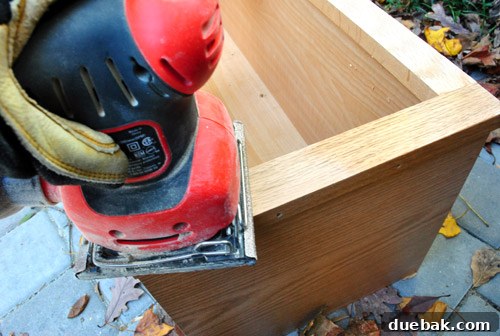
Mastering the Trim Attachment with the Kreg Jig
Attaching the pine trim to the plywood pieces required careful attention to detail to ensure perfectly flush edges. I meticulously clamped each piece of trim to the plywood before securing it with screws, taking extra care to align everything precisely. Having used my Kreg jig on several projects previously, I’ve learned that sometimes a little foresight goes a long way. Occasionally, drilling a second, strategically placed hole specifically for the special Kreg clamp can be immensely helpful. This technique allows for even more stable clamping, preventing any movement while driving the screws and ensuring a consistently flush joint. It’s a small trick that makes a big difference in the quality and ease of assembly. This meticulous approach, though time-consuming, is what separates a good DIY project from a truly professional-looking one, contributing to the overall stability and aesthetic appeal of the built-in unit.
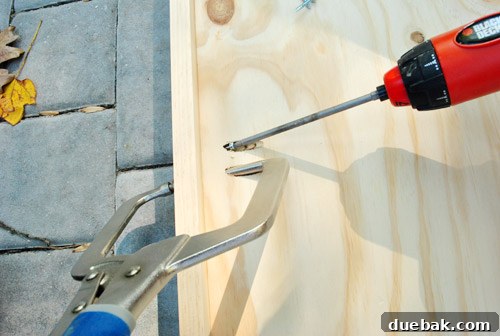
This particular phase of trim attachment, while seemingly straightforward, demanded patience and precision. It wasn’t a quick job; in fact, this part of the process took me approximately an hour to complete for both pieces of plywood. However, the effort was well worth it, as the result was perfectly attached trim, creating the substantial and finished look we were aiming for. The subtle enhancement provided by this trim is crucial in transitioning a simple plywood structure into an elegant piece of cabinetry, ready to anchor our refrigerator in its new custom home.
Assembly: Bringing the Vision to Life
Strategic Filler Pieces for a Perfect Fit
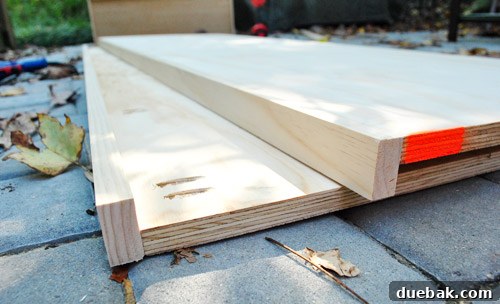
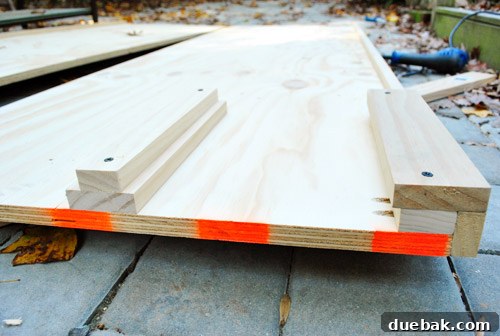
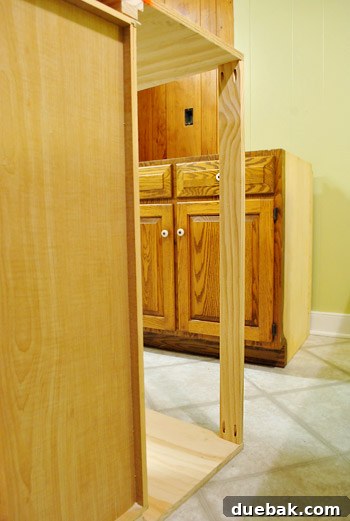
Attaching the ReStore cabinet to the side panels also required some strategic forethought and creative problem-solving. We had two specific requirements: first, the cabinet needed to sit perfectly flush with the newly attached trim on the plywood sides, not recessed behind it. Second, the overall opening for the refrigerator needed to be slightly wider than the cabinet itself, despite the cabinet matching the fridge’s width. To achieve these precise dimensions and ensure a snug, flush fit, I improvised by adding clever filler pieces. These were essentially stacks of leftover scrap wood, strategically placed: one stack positioned at the front of the cabinet and another at the back. Crucially, these filler pieces would be completely hidden from view once the entire unit was fully installed, serving their functional purpose without compromising the aesthetic. This ingenuity allowed us to customize the fit perfectly, creating the exact clearances and alignments needed for a truly built-in appearance.
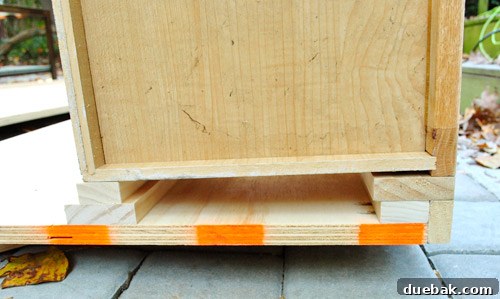
To further illustrate the necessity of these filler pieces, this view shows the ReStore cabinet sitting on top of the side panels. The fillers visibly create the necessary offset, allowing the cabinet to align flush with the trim and providing the crucial extra width for the refrigerator opening. During this stage, I also discovered that the cabinet wasn’t sitting 100% straight, so I carefully inserted a thin wooden shim to ensure it was perfectly level and stable. These minor adjustments are often essential in DIY projects to achieve professional results, guaranteeing both structural integrity and a flawless aesthetic finish.
Teamwork and In-Kitchen Assembly
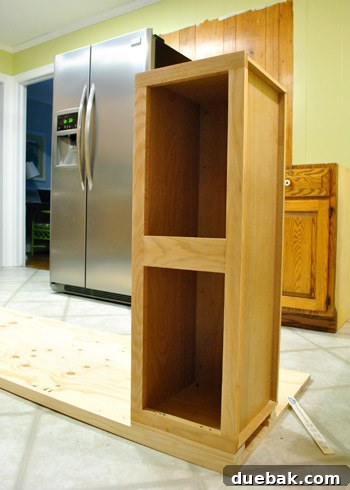
We made the practical decision not to attach the cabinet permanently until all components were brought inside the kitchen. Maneuvering the fully assembled, bulky structure from my patio workspace through several doorways and into its final position would have been an unnecessary challenge, risking damage to both the unit and the house. So, with the individual pieces ready, we transitioned to the kitchen for the final assembly. Here, with the cabinet carefully screwed to one of the plywood sides, the project gained momentum. It was at this crucial juncture that Sherry, after putting Clara down for a nap, joined me, lending her invaluable help and making the two-person assembly process much smoother and more efficient.
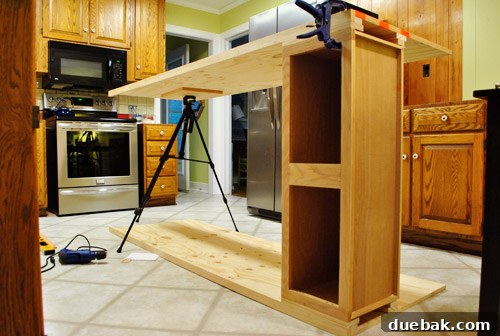
Next, we carefully brought in the second side panel. To hold it securely in place while we aligned and screwed everything together, we ingeniously repurposed our camera tripod as a makeshift jack. This improvised support allowed us to meticulously check and double-check that every angle was perfectly square and every surface was precisely level. Ensuring such accuracy at this stage is paramount for a professional-looking built-in unit, as any misalignment would be glaringly obvious in the finished product. This careful attention to detail, combined with teamwork, brought us closer to a structurally sound and aesthetically pleasing enclosure.
Ensuring Stability and Wall Integration
Before attempting to stand the entire structure upright, we took an important step to enhance its stability and rigidity. We securely added a spare board across the back of the unit. This served multiple critical functions: it helped maintain the enclosure’s squareness, provided vital front-to-back support, and most importantly, it became the anchor point through which we would later drill to screw the entire built-in unit securely into the kitchen wall. This prevents any accidental tipping or movement, ensuring safety and long-term stability. Similarly, we installed another plank of wood across the bottom of the structure. This bottom support not only reinforced the squareness of the base but also provided an additional point for firmly attaching the unit to the wall, creating a robust and immovable installation. These reinforcement steps are fundamental to creating a durable, safe, and professional-looking built-in appliance enclosure.
With the back and bottom supports securely in place, lending considerable stability to the unit, it was time for the “heave-ho!” moment. Together, we carefully lifted and maneuvered the entire assembly into an upright, standing position. This step marked a significant visual milestone in the project, as the enclosure now began to truly take shape as a formidable piece of custom cabinetry, ready for its final placement. The substantial nature of the piece made this a two-person job, ensuring it was lifted safely and without strain, minimizing any risk to the newly constructed frame.
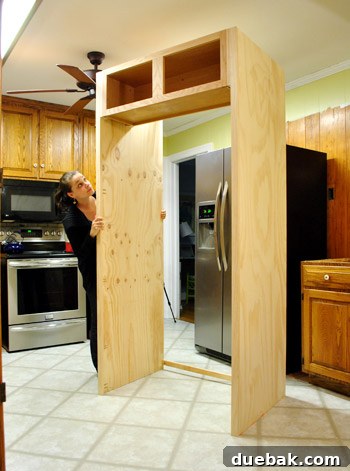
Finally, with the unit standing tall, we carefully slid it into its designated position in the kitchen. To achieve this, we temporarily removed the bottom support slat, which allowed us to seamlessly slide the entire structure over the top of the refrigerator, much like fitting a slipcover. Once it was perfectly positioned around the appliance, the bottom support could be reattached and secured, anchoring the unit firmly in place. This clever method ensured that the enclosure enveloped the fridge snugly and precisely, bringing our vision of an integrated kitchen appliance closer to reality and marking a monumental step in our kitchen renovation journey.
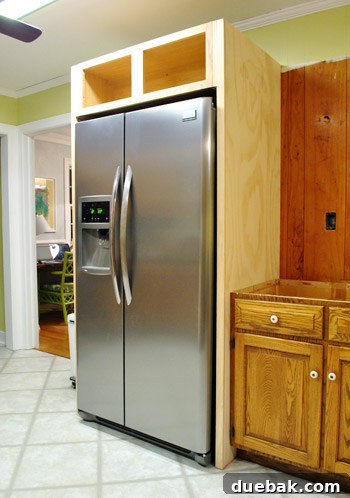
The Grand Reveal (Almost!): A Major Step Forward for Kitchen Aesthetics
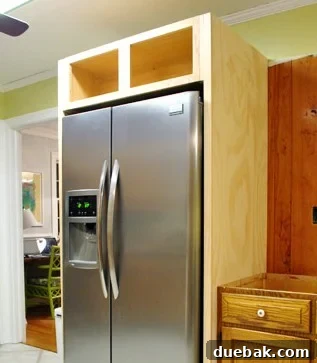
While we’re not quite ready for a full “ta-da!” moment just yet, given that there are still several finishing touches awaiting our attention, we are immensely proud of this significant step. The immediate visual impact is profound, marking a noticeable progression towards making our kitchen look far more cohesive and thoughtfully designed. The upcoming tasks include priming and painting the newly built enclosure, priming and painting the paneling directly behind it for a uniform look, fabricating and adding matching cabinet doors to the top unit, installing decorative molding around the top for architectural detail, and adding trim around the bottom to create a fully finished, built-in appearance. However, even in its current unfinished state, we are thoroughly enjoying the substantial upgrade this built-in refrigerator enclosure brings to the overall feel and aesthetic of our kitchen.
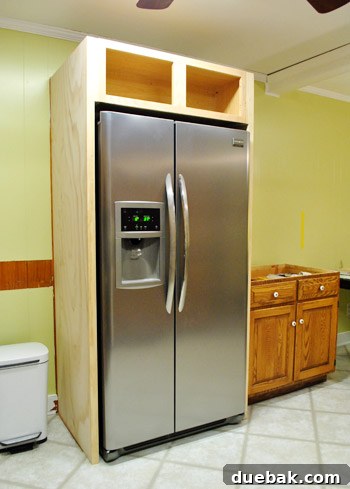
There’s no denying that this transformation represents a significant upgrade from the previously un-built-in version of our refrigerator. The difference in visual continuity and perceived quality is remarkable, instantly elevating the kitchen’s style. The floating appliance has been replaced with a grounded, intentional piece of custom cabinetry, a testament to the power of thoughtful design and DIY effort.
If you scroll back up to compare the “built-in” image with the initial “floating” one, you might notice that the refrigerator door still protrudes a slight “smidge” from the wooden sides. This is a deliberate and functional design choice. While the fridge could technically slide a bit further back into the enclosure, doing so would restrict how wide the doors could open. This limited opening would prevent full access to certain slide-out fridge drawers, as the doors would hit the wooden frame. By allowing this slight protrusion, we maintain full functionality and accessibility for all refrigerator compartments. Aesthetically, this small detail is barely noticeable, especially since the new built-in sides effectively block all the black coloring on both sides of the fridge. Now, only the sleek stainless steel front is predominantly visible, along with just a hint of the stainless sides of the doors, creating a much cleaner and more integrated appearance. This custom-looking fridge setup, coupled with the flush-front cabinet installed directly above (a significant improvement from our old above-fridge cabinet, which was set back about six inches and considerably harder to access), is undeniably a massive upgrade, enhancing both the visual appeal and practical utility of our kitchen.
What’s Next for Our Ongoing Kitchen Renovation
This built-in refrigerator enclosure represents the latest slow but steady progress in our comprehensive kitchen renovation. Our next major undertaking is to finalize the precise placement of the kitchen peninsula. We are awaiting one more cabinet to complete this crucial area, and establishing its exact position by the end of this week is essential. This decision will, in turn, allow us to finalize the dimensions and placement of the impressive eight-foot doorway to the dining room. This significant structural change will be executed with the expert assistance of a professional, and we are eagerly anticipating its commencement sometime next week. The thought of this next phase evokes a mix of emotions: it promises to be interesting, potentially a little scary, definitely exciting, and undoubtedly dusty! As always, we are committed to keeping you thoroughly updated on every step of this exciting journey.
Psst- We’re also sharing an update over on BabyCenter about how we efficiently organize and store Clara’s outgrown clothes. We’d love to hear your smart storage secrets on the subject, so feel free to share!