
After more than three weeks of dedicated effort, our ambitious 12-foot-long DIY living room console table has finally reached completion! This project, born from a vision for functional and aesthetically pleasing furniture, now stands as a testament to perseverance and creative problem-solving in our living space. It’s not just a piece of furniture; it’s a centerpiece that truly defines the room.
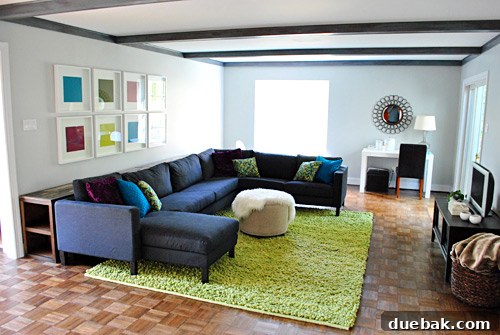

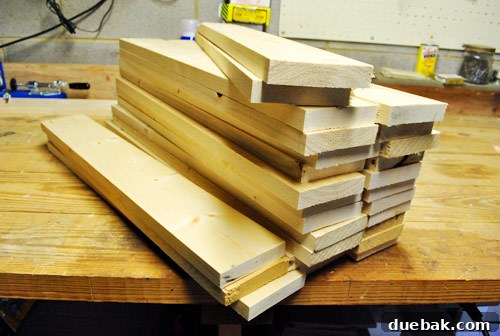
Before diving into more captivating images of the final piece nestled perfectly in its spot, let’s take a moment to recap the journey. The last time you saw our console table, its sturdy base was stained, but the top was still awaiting its transformation, presenting a tantalizing glimpse of potential. Our initial vision involved using reclaimed pallets for the tabletop, a concept that, unfortunately, didn’t pan out as smoothly as we’d hoped. The pallets proved uncooperative, leading us to swiftly transition to Plan B. After extensive searching across town for suitable reclaimed wood – a quest that sadly yielded no materials of the right width or sufficient bulk – Plan B crystallized into a new strategy: “buy new wood and make it look old.” This decision led to a significant pile of fresh lumber gracing our basement floor, ready for its rustic makeover.

The selection of the perfect wood combination for our custom console table top was a critical step. During an insightful trip to Home Depot, I experimented with various board configurations directly on the store floor. It was there that I discovered an ideal pairing: four 1×4-inch whitewood boards could be perfectly sandwiched between two 1×2-inch poplar boards. This arrangement, a fortunate accident, not only achieved the desired width but also added an unexpected aesthetic bonus. The poplar 1x2s framing the perimeter created a natural, elegant border, harmonizing beautifully with the 1×2-inch poplar framing already used on the front of our bookshelves. This serendipitous discovery was a real win, promising a cohesive look for our entire living room furniture arrangement.
To create the desired staggered, almost brick-like pattern for the tabletop, I meticulously cut all of the 1×4-inch whitewood boards into precise two-foot lengths. This initial preparation was crucial for ensuring the distinct, aged appearance we aimed for, setting the stage for the next exciting phase of our DIY console table project.
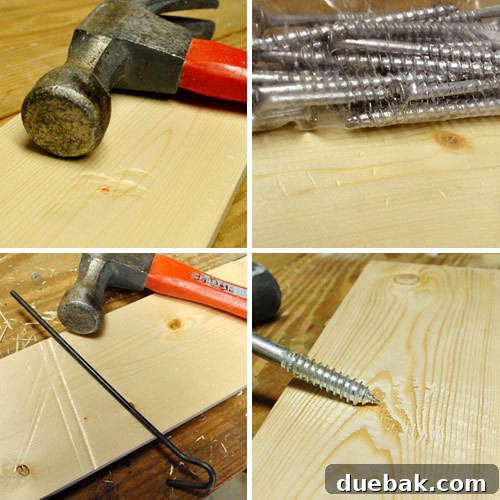
The next captivating stage involved a comprehensive distressing process, designed to strip away the “straight-from-Home-Depot” freshness and imbue each board with a rich, aged character. This technique, along with the subsequent staining, is a detailed story in itself, which we promise to unravel in an upcoming follow-up post complete with a wealth of details and a video tutorial (currently in the editing phase – hence this reveal post coming first!). However, to give you a tantalizing preview, the distressing involved a diverse array of methods. We hammered dents into the wood, dropped bags of screws to create unique divots, made subtle line imprints, and artfully roughed up surfaces with various pointy objects. Each action was carefully executed to mimic the wear and tear of decades, ensuring that every piece contributed to an authentic, weathered aesthetic for our DIY console table.
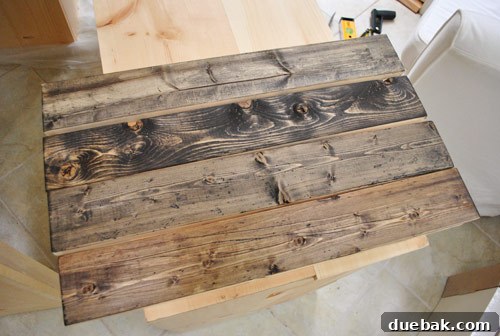
Once all 27 pieces of wood – yes, over two dozen individual boards – were meticulously distressed to perfection, it was Sherry’s turn to work her “stain magic.” As mentioned, we’ll delve deeper into the intricate details of this process in a forthcoming post (complete with more staining video to edit!), but in essence, it involved a skilled variation of applications using Minwax’s Dark Walnut and Ebony stains. We applied some sections lightly, others darkly, and even mixed the stains to achieve a nuanced range of tones. The goal was to create boards that appeared genuinely aged and somewhat battered, as if they had been salvaged from multiple distinct sources over time, rather than recently purchased from a home improvement store looking shiny and new. This thoughtful approach to staining was crucial in achieving the authentic rustic look for our console table.
With the distressed and stained boards prepared, it was time for the monumental task of assembling them into one cohesive, robust tabletop – or, more accurately, three distinct tabletop pieces. This design includes two long end sections and one smaller, cleverly designed “puzzle” piece, which serves as a discreet cover for our hidden storage compartment nestled in the middle, allowing it to be easily lifted out. After careful calculations and precise measurements, we opted to stagger the boards by four inches. This specific staggering created a subtle lip on each edge of the central opening, allowing the puzzle piece to rest perfectly flush when closed, maintaining an unbroken surface. While this might sound complex, the final images at the bottom of the post will undoubtedly clarify this ingenious design. My initial cuts, as you can see, marked the beginning of this intricate assembly process.

To securely join the numerous boards for our console table top, I once again turned to my indispensable Kreg Jig. This remarkable tool allowed me to drill precise pocket holes, creating incredibly strong and tight joints that effectively merged each piece to its neighbor. The Kreg Jig is a true game-changer for woodworking projects, enabling professional-quality results even for DIY enthusiasts. Its accuracy and ease of use significantly streamlined the assembly process, ensuring the tabletop would be robust and durable for years to come.
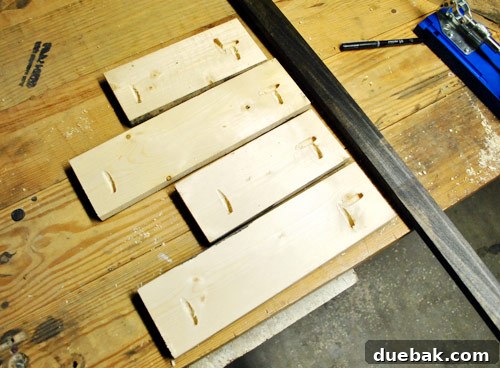
After joining the initial end boards, I systematically drilled the remaining pocket holes and continued screwing the pieces together, one by one. This meticulous process took approximately 40 minutes to complete each of the two long sides of the wood countertop. Subsequently, the smaller, central “puzzle piece” cover for the hidden storage compartment took about twenty minutes to construct. The satisfaction of seeing the individual boards transform into a solid, unified surface, piece by careful piece, was immense. Each joint was a step closer to realizing our vision for this custom console table.
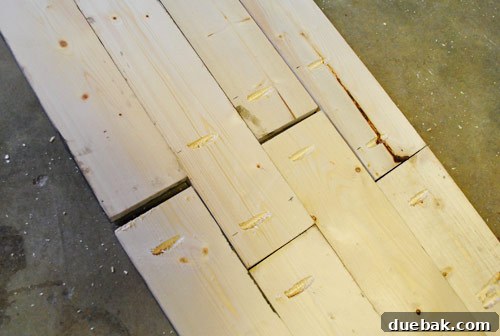
Here’s a glimpse of one side of the console tabletop nearing completion, still awaiting its final 1×2-inch poplar border around the edge. You can clearly observe the intentional variation in color among adjacent boards. This deliberate choice ensured that the shifts in tone appeared purposeful, adding a rich tapestry of texture and character to the finished piece. It’s these subtle details that elevate a DIY project from mere construction to a true work of craftsmanship, creating a piece that looks genuinely unique and thoughtfully designed.
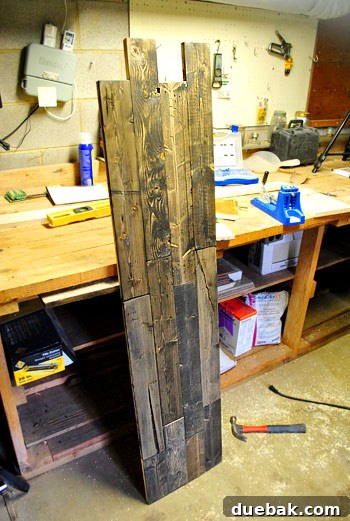
Once the second side of the tabletop was meticulously completed, I performed a crucial double-check. I carefully placed both tabletop sections onto the console bases, verifying that all my measurements remained accurate and that no last-minute adjustments were needed before permanently attaching the poplar 1x2s around the perimeter. Fortunately, everything aligned perfectly, eliciting a massive sigh of relief. This precision was paramount to ensure a flawless fit and finish for our impressive 12-foot console table.
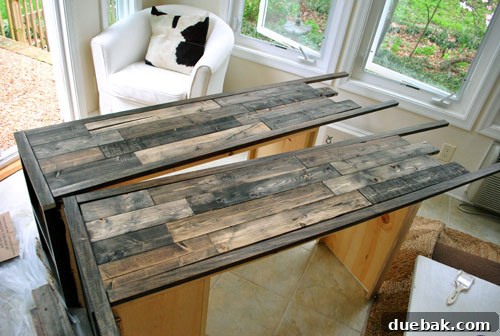
Let’s fast forward through the steps of attaching the side borders and meticulously screwing together the four staggered boards that form the middle puzzle piece. Our penultimate step before the grand assembly was the essential process of touch-up staining and poly-ing. We realized that certain cut ends and parts of the middle storage piece required additional staining to ensure no raw wood was visible, maintaining the seamless, aged aesthetic. Once these touch-ups were thoroughly dried, Sherry expertly applied a coat of Safecoat AcrylAcq polyurethane over all stained surfaces. This was not only to seal everything in and protect our beloved console table – our “console baby” – but also to safeguard our actual baby, as Safecoat is renowned for being non-toxic and water-based, eliminating the harmful off-gassing associated with traditional oil-based polys. (For more comprehensive details on staining and sealing the consoles, you can find information here).
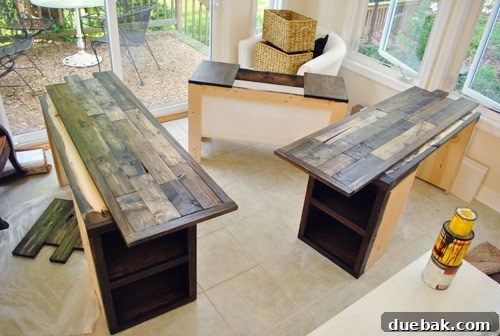
Oh, and before I forget, did you notice the white fabric carefully wrapped around the middle console piece in the image above? That was an ingenious addition using an extra sheet we had on hand. Sherry neatly stapled it around the entire wooden frame, creating a soft, contained fabric compartment. This brilliant detail ensures that anything we choose to store within won’t accidentally slip behind the sofa, a common nuisance with open-back furniture. Those two baskets you see stacked on the chair, which we already owned, fit perfectly inside this fabric “box.” They’re ideal for organizing everything from board games and books to remote controls and other sundry items typically found on a coffee table (especially since we opted for an ottoman instead). We’ll share more close-up photos of this practical storage solution in just a moment.
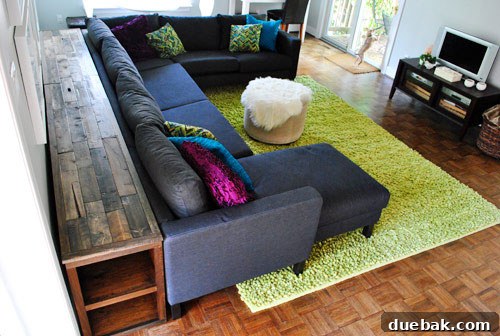
After the final bits of staining and sealing, followed by a few days of patient drying, every component was at last ready to be brought back into the living room. We carefully moved each part, one by one – starting with the sturdy bases, then positioning the custom-built tops. Once everything was meticulously lined up to our precise specifications, I drilled a few strategic screws up through the bottom of the two end bases, securing the wood tops firmly in place. With that final, satisfying step, our nearly 12-foot console table, complete with its ingenious hidden middle storage compartment and stylish bookcase-sides offering even more valuable stash space, was officially complete. This massive DIY project now stands as a functional and aesthetic marvel in our home.
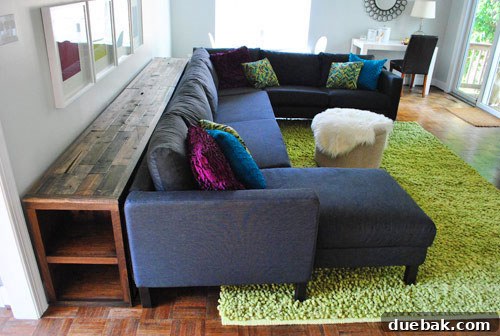
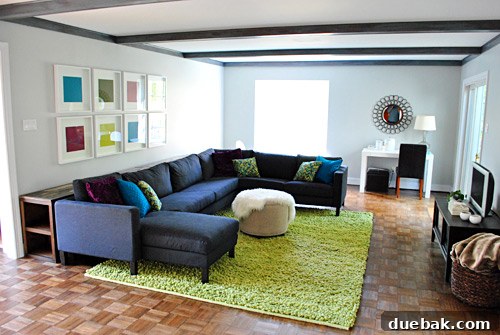
Perhaps we’re a bit biased, given it’s our own creation, but both of us are genuinely convinced that the console table turned out even better than we had initially envisioned. In fact, we firmly believe that the DIY distressed wood top looks significantly superior in the space compared to what the grey-ish pallets would have offered. We’re the first to admit that the room already features a considerable amount of gray, making this warm, rustic top a welcome contrast. Hallelujah for happy accidents that lead to such delightful outcomes!
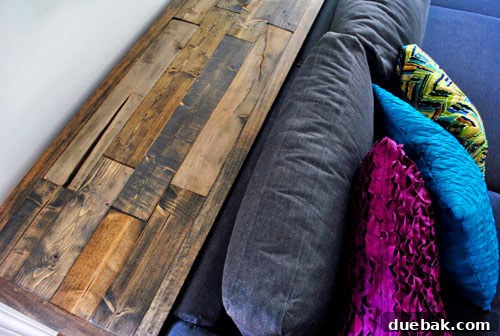
We’re also incredibly pleased that we ultimately opted for a warm, rustic wood look, embracing imperfections and character. This choice was particularly important because the room had started to lean a bit more modern than our original intention. The distressed wood console table definitely introduces some much-needed balance to the overall vibe of the living room, grounding the space with its organic texture and vintage appeal. We anticipate this balance will be further enhanced once we add a more substantial TV stand and some carefully selected table lamps to complete the decor.
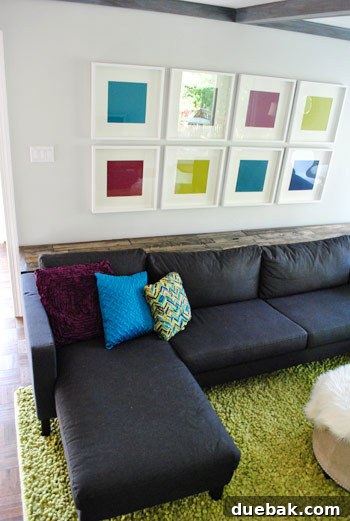
Oh, but I absolutely cannot forget to reveal one of its most exciting features: the hidden storage compartment nestled discreetly in the middle. This is, without a doubt, my favorite aspect of the entire console, perhaps because it evokes a thrilling “James Bond” secret agent feeling! Can you spot the removable puzzle piece in the picture below? It’s designed to blend seamlessly, making it a truly clever addition to our DIY console table.
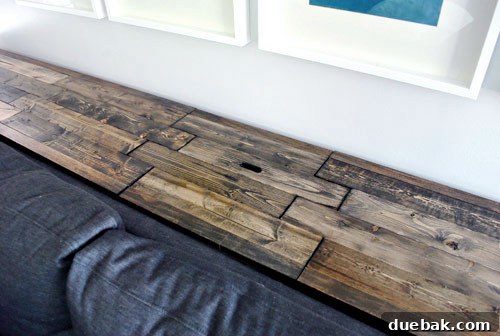
While it’s true that the hidden compartment isn’t 100% invisible upon close inspection, when viewed as an integral part of the console table’s grand design, it certainly doesn’t scream for attention. Just scroll back up a few photos to see what I mean – its flush fit and the carefully staggered ends prevent it from looking like a blatant, removable rectangle. We’re confident that once we accessorize the table with lamps, a lacquer box or two, a few books, and other decorative elements, it will call even less attention to itself. We are incredibly proud to have achieved such a snug fit without compromising its ease of removal; miraculously, it slides right out and drops back in with effortless precision. This perfect blend of discreet design and user-friendly functionality is a highlight of our custom console table.
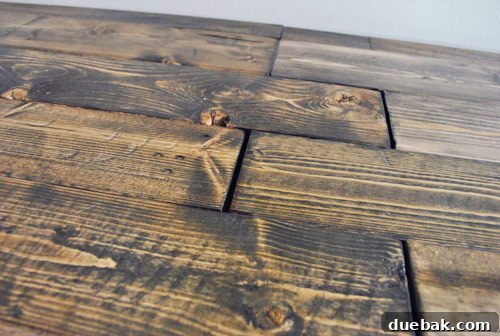
Speaking of which, to ensure that lifting out the hidden compartment top was as simple as possible, I ultimately drilled a small, oblong hole. This opening, about four “John fingers” or five “Sherry fingers” wide, serves as a discreet handle. Three cheers for the sanding bits on my Dremel – a fantastic Dremel Trio Sherry gave me for Father’s Day last year – which proved invaluable in creating an even and smooth hole. I admit I was nervous about puncturing my creation, which had taken three weeks to build, but in the end, it worked out perfectly, adding a final touch of functional finesse to our DIY console table.
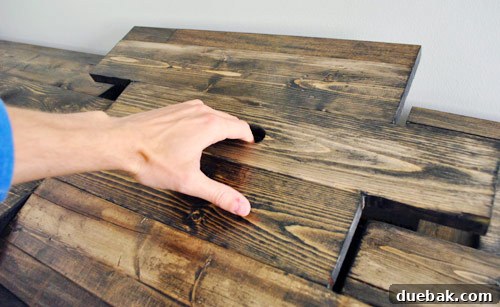
When the puzzle piece is lifted out completely, we gain convenient access to those two storage baskets I mentioned earlier. These will eventually be filled with more board games, perhaps some DVDs, remote controls that aren’t used daily, and who knows what else – making it an incredibly versatile hidden storage solution for our living room. Oh, and below, you can clearly see what I meant by staggering the boards to create that subtle lip, allowing the puzzle piece to rest perfectly flush for that seamless, polished look we meticulously aimed for on our console table.
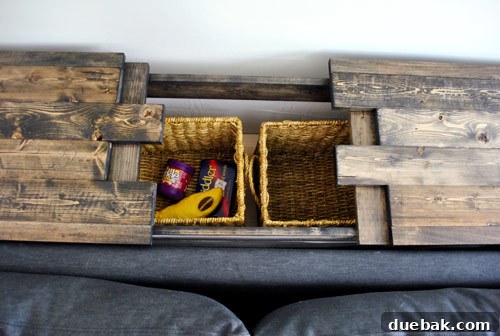
We don’t anticipate needing to access this hidden storage on a daily basis. For the most part, our console table will maintain its secret identity as one solid, cohesive piece of furniture, only revealing its clever compartment once or twice a week when we delve in for a movie, a board game, or other occasional items. This balance of everyday elegance and practical, discreet storage truly embodies the thoughtful design behind our DIY project.
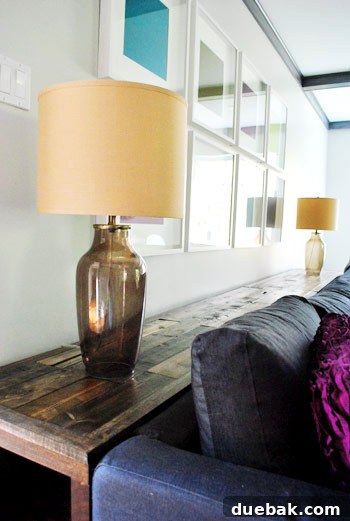
Of course, the next exciting phase involves putting this magnificent console table to its full use! This includes adding some stylish table lamps to the top, arranging various items on the shelves on each side, and generally infusing this piece with both function and a touch of form – perhaps a charming ceramic animal for the wife. To give you a preliminary sense of its potential, here are our two bedside lamps temporarily standing in. This momentary arrangement serves as a perfect reminder of why the 16.5-inch width is absolutely ideal for us; it’s generously wide enough to accommodate a substantial table lamp without any concern of accidentally knocking our heads into them during particularly exaggerated laughing spells, especially during those hilarious moments in “Modern Family.”
And no reveal post would be truly complete without – say it with me – a comprehensive budget breakdown. So, here it is, detailing the surprisingly affordable cost of our custom 12-foot DIY console table:
- Wood (whitewood & poplar from Home Depot) – $98
- Screws & Tools – $0 (already owned everything)
- White sheet – $0 (already owned)
- 2 storage baskets for middle compartment – $0 (already owned)
- Minwax Ebony Stain – $4
- Minwax Dark Walnut Stain – $0 (already owned)
- Safecoat Acrylacq Sealant – $0 (already owned)
- Cheap paintbrushes for staining – $2
- TOTAL: $104
Clearly, the raw wood represented our biggest budget expenditure, yet for a nearly 12-foot piece of solid wood furniture, we genuinely cannot complain about the incredibly modest price tag of just over $100. This is especially remarkable when considering a highly similar piece from West Elm, which retails for $379. To match the length and functionality of our custom console, we would have needed to purchase three of those, escalating the total cost to a staggering $1,137. Yowsa! Our DIY console table delivers incredible value and custom appeal.
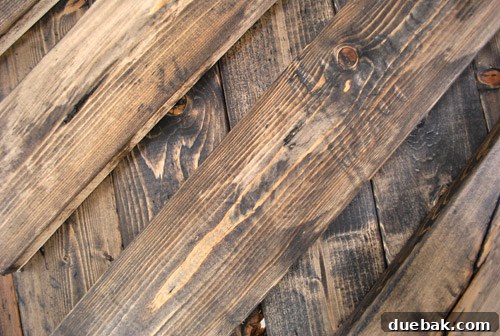
So, another huge thanks goes out to Ana White, whose brilliant designs provided the initial spark of inspiration and gave me the confidence to tackle this ambitious project myself, with invaluable assistance from my incredibly talented, “stain slingin'” wifey. Did anyone else out there complete any exciting DIY builds this week? Who’s still in the basement, garage, shed, or workroom, diligently putting the finishing touches on something special? Speaking of finishing up, I have some videos to edit and a comprehensive post to write about our detailed wood distressing technique, so here’s hoping I can get that published in the next day or two. In the meantime, I’ll leave you with this captivating shot of our new “old” boards before we meticulously screwed them all together to create the console top. Is it weird that raw, distressed lumber gets me all hot and bothered? Whatever, my wife likes leopard heels, and I like character-filled wood.
Psst- Wanna see all the past steps that went into building this beast of a console table? Here’s the first post, the second one, and the third one.
UPDATE: CHECK OUT THE ACCESSORIZED CONSOLE TABLE HERE.