
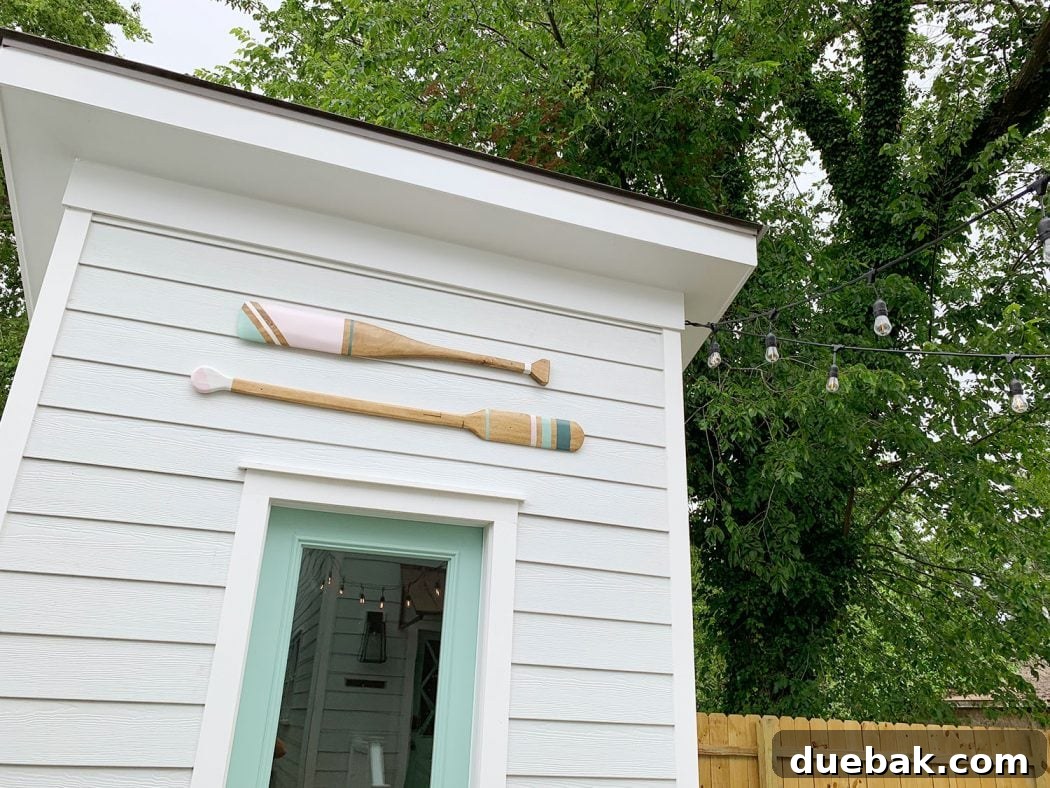
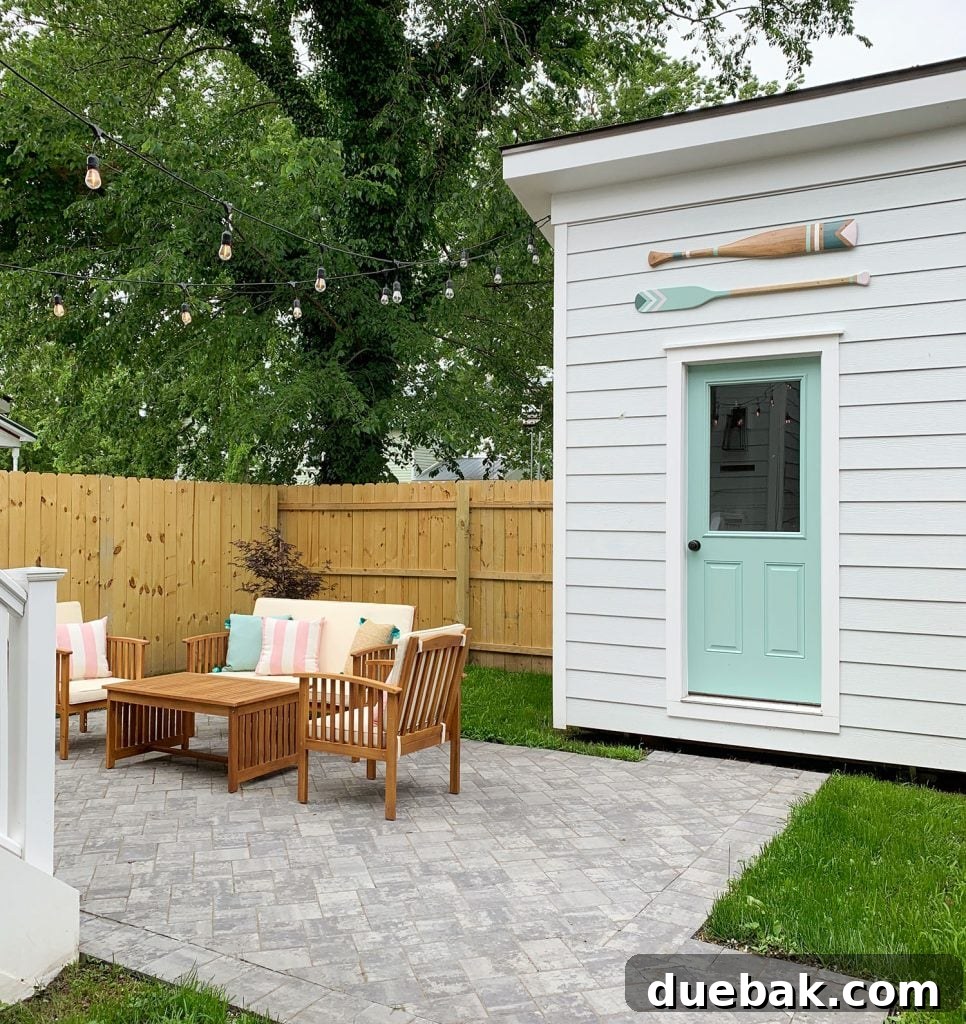
When we first unveiled the stunning transformation of our duplex backyard makeovers last month, one detail consistently captured attention: the charming decorative oars adorning each shed. You asked for the secrets behind these unique coastal accents, and today, I’m thrilled to deliver a comprehensive, step-by-step tutorial. Not only will I guide you through crafting your own beautiful outdoor-friendly oars, but I’ll also share crucial insights (including how to avoid a significant setback we encountered!) and a few other clever hacks you’ve been curious about.
The Unexpected Journey to Coastal Oars: Solving an Outdoor Decor Dilemma
Our journey to creating these decorative oars was, believe it or not, entirely unplanned. When the duplex sheds were finally constructed, we faced a design conundrum. Our initial vision included running electricity to them, primarily for ambient lighting above the doors. However, after a careful review of the budget and a realistic assessment of their actual needs – they truly didn’t require constant power – we decided to scrap the electrical plans. This left us with a blank, somewhat awkward space above each shed door, begging for a creative solution. We needed something that would enhance the aesthetic, complement the coastal vibe of Cape Charles, and most importantly, fill that empty void without breaking the bank.
The inspiration struck during a casual trip to HomeGoods, where a decorative surfboard caught our eye. While a surfboard might have been a fun idea, Cape Charles, our beloved beach town, isn’t typically known for its surfing scene. Instead, it’s a hub for kayaking, paddle boarding, and other serene water activities. This distinction made oars feel far more appropriate, resonating perfectly with the local aquatic culture and our desired coastal aesthetic. With this fresh vision, I embarked on an online hunt, specifically on Etsy, hoping to find the perfect set. I discovered several truly beautiful options, such as this elegant design, this charming pair, and even the highly coveted ones pictured below. However, a recurring theme quickly emerged: the price tags were significantly higher than we had budgeted for. Spending upwards of $350 just for four decorative oars to hang on the sheds felt excessive and simply couldn’t be justified for what was essentially a secondary decor element. Our quest for budget-friendly coastal charm had hit a snag.
Sourcing & Prepping: The Hunt for Affordable Nautical Treasures
For a couple of weeks, the oar idea was completely shelved. We continued to ponder alternatives, but nothing quite captured the same magic. Then, serendipity struck again, back at HomeGoods. We stumbled upon two decorative oars, each priced at an incredibly reasonable $25. While their existing colors and designs were far from our desired aesthetic, we immediately recognized their potential. Paint, after all, can work wonders! We purchased them on the spot and brought them to Cape Charles, holding them up against the sheds to confirm their size and shape were a perfect fit. This crucial “test fit” before any modifications was key, ensuring we wouldn’t regret altering them and forfeiting the option to return them if they weren’t quite right.
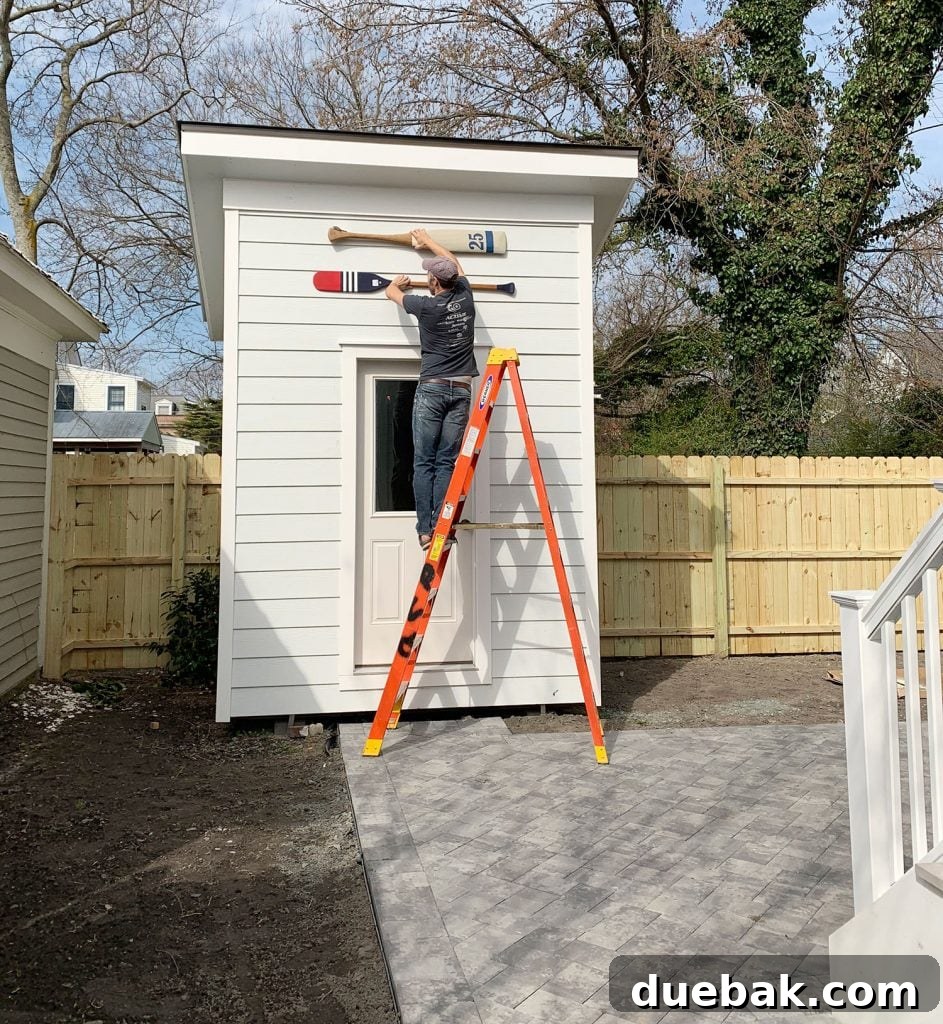
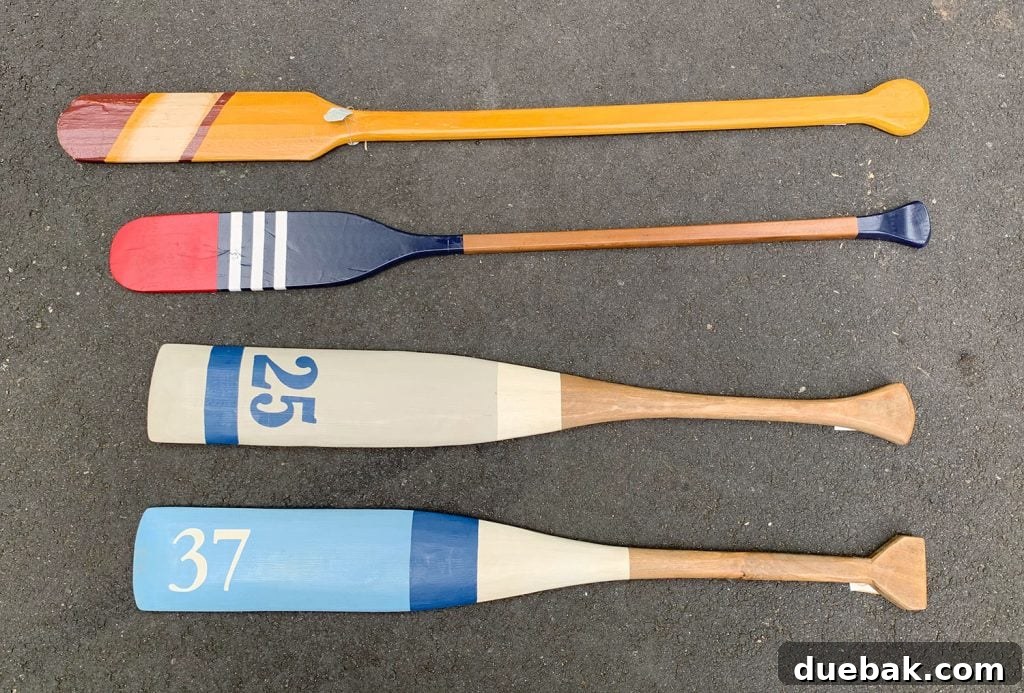
Buoyed by this renewed enthusiasm and success, we broadened our search. Thanks to Richmond boasting two HomeGoods locations, we managed to track down two additional decorative oars, bringing our total to four. The collective cost for all four oars was just over $100 – a significant win compared to the initial $350+ estimates! However, as you can see, their combined appearance at this stage was, to put it mildly, quite mismatched and visually jarring. They looked pretty awful together, a true testament to the power of transformation that lay ahead.
Having recently achieved impressive results sanding down and refinishing the duplex dining tables, I felt emboldened to tackle this new challenge. My first major step was to strip each oar down to its raw wood. For this task, I relied on our trusty orbital sander, a tool that consistently performs exceptionally well. When sanding, starting with a coarser grit (like 80-100) helps remove existing finishes quickly, then progressing to finer grits (120-150, then 180-220) ensures a smooth, ready-to-finish surface. Always sand with the grain of the wood for the best results, and don’t forget essential safety gear: eye protection and a dust mask are non-negotiable to protect yourself from airborne particles.
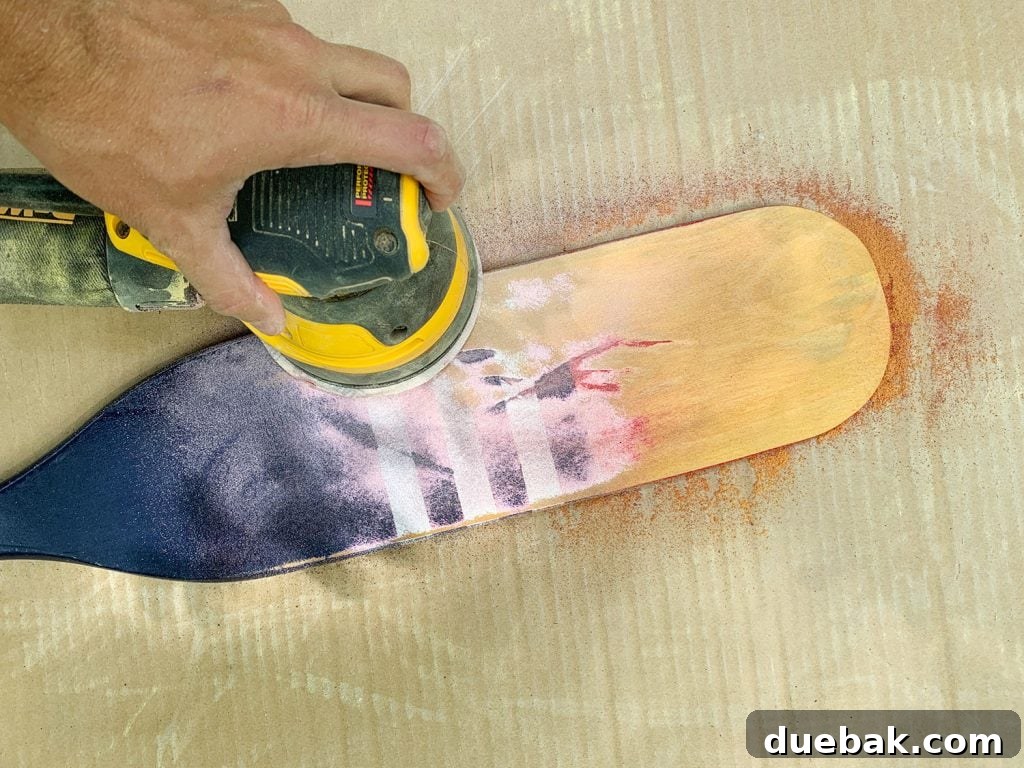
While it required a fair bit of elbow grease and patience, the transformation was incredibly rewarding. The raw wood beneath the old finishes revealed itself, smooth and ready for a fresh start. The encouraging progress was immediately evident, as you can see in this side-by-side comparison of two similar oars – one still bearing its original finish, the other beautifully sanded down.

Designing & Staining: Crafting a Cohesive Coastal Aesthetic
With all four oars meticulously sanded down to their raw wood, the next step was to unify their varying wood tones before adding any color. This involved a process of trial and error using various leftover stain cans we had accumulated in our garage – a common DIYer’s treasure trove! While the exact combination varied slightly, I am approximately 95% certain the winning formula involved layering Rustoleum Summer Oak with Minwax Weathered Oak. This layering technique allowed us to achieve a more consistent and appealing base tone that evoked a natural, weathered coastal feel. When experimenting with stains, always test on an inconspicuous area or a scrap piece of similar wood to ensure you achieve your desired hue.
Before even thinking about paint, I took a crucial step in the design process: I arranged the sanded oars on the ground and captured a photograph. This image became my canvas for digital experimentation. Using Photoshop, I began mocking up various stripe patterns, shapes, and color combinations. Yes, this might sound excessive for decorative oars, but I firmly believe this level of dedication is paramount in the pursuit of perfectly coordinating outdoor decor! At this point, I feel I’ve earned a Bachelor’s Degree in Oarology, a testament to the meticulous planning involved. This digital foresight prevented countless potential painting mistakes and ensured our vision was perfectly aligned before a single drop of paint was applied.
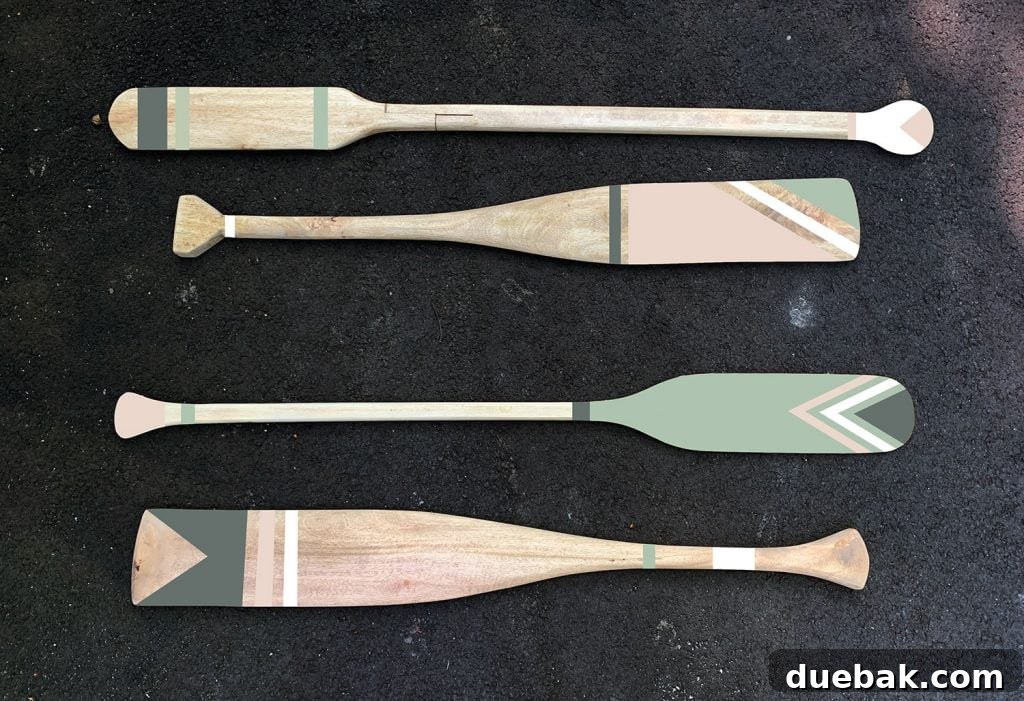
Our goal was to integrate colors that echoed the existing palette throughout the duplex. This meant drawing inspiration from the vibrant mint green shutters, the crisp white siding, and the subtle, muted pinks and greens found on the interior doors. The Photoshop mock-ups proved invaluable in fine-tuning our design direction, allowing us to experiment with different stripe widths, color placements, and overall compositions without wasting any paint. And, of course, it solidified my highly esteemed Oarology degree. (*I step up to the podium, clear my throat*) “I’d like to extend my deepest gratitude to my parents, who, from an early age, instilled in me an unwavering love for all things oar-related… and to the countless hours spent digitally rendering stripes.”
Painting Perfection: Taping, Priming, and Strategic Color Choices
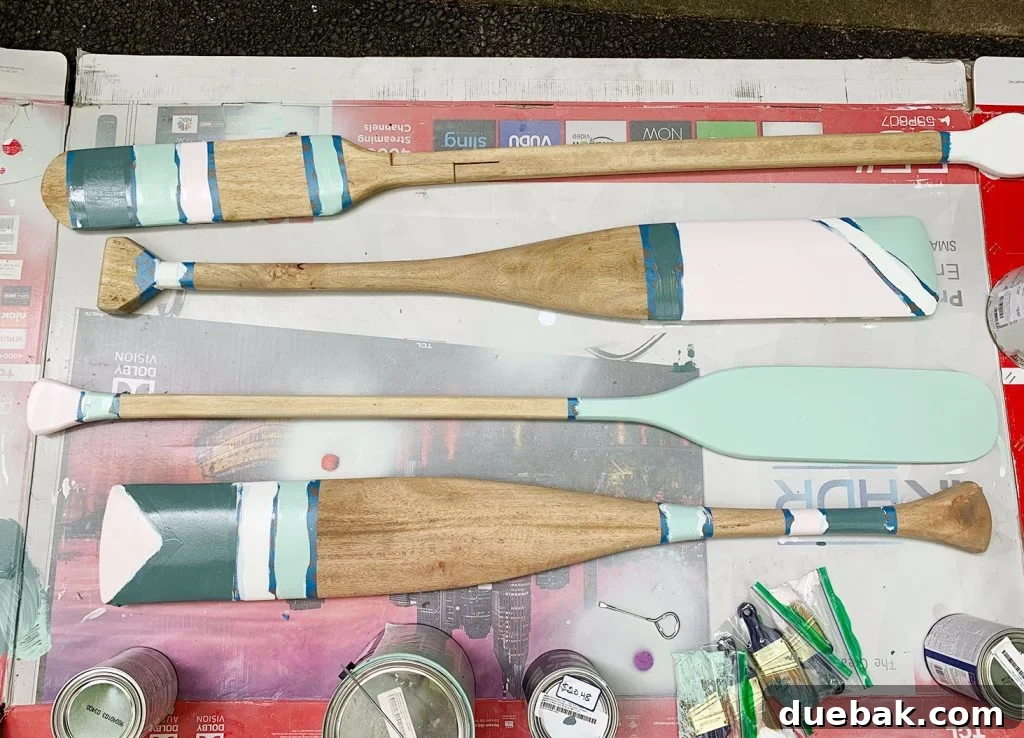
Alright, back to the hands-on tutorial! With our digital mock-ups perfected, the next step was to translate those designs onto the physical oars using painter’s tape. We strategically designed our patterns to include numerous natural wood “stripes” – the areas beneath the tape that would remain stained. This wasn’t just for aesthetic reasons; it was a practical decision for efficiency. When two paint colors touch, you typically need to paint one, allow it to dry completely, and then tape over it before applying the second color. By minimizing these direct color-to-color transitions, we streamlined the painting process. You might notice the top section of the third oar in the image below lacks tape; this is because it required a base coat of mint green before subsequent colors could be taped and painted over it. For clean, crisp lines, always press the tape down firmly, especially along the edges, to prevent paint bleed. A trick many professionals use is to paint a thin layer of your base color (or clear coat) over the tape edge first; once dry, this seals the edge and ensures any minor bleed is the same color as the background, creating a perfectly sharp line for your topcoat.
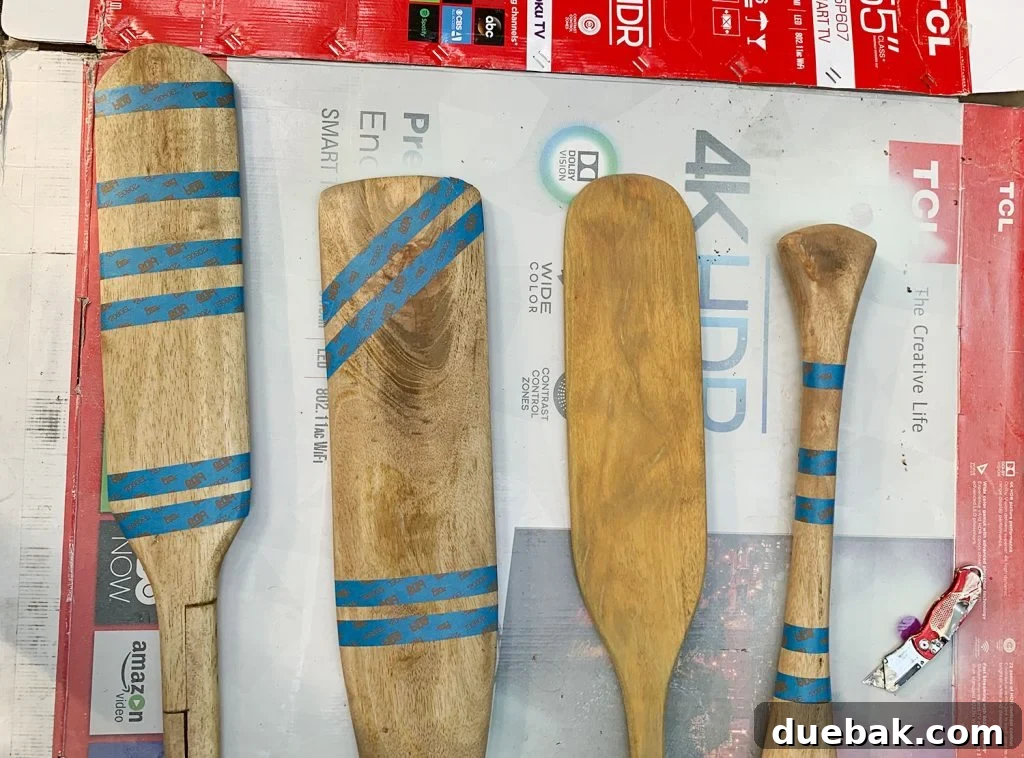
Once everything was meticulously taped off, I began the painting process by priming each section. Primer is a critical step, especially when working with stained wood and vibrant colors, as it ensures better paint adhesion, promotes color uniformity, and enhances the overall durability of your finish. We consistently use our favorite primer for its exceptional coverage and quick-drying properties. After the primer had dried thoroughly, I carefully painted each section, constantly referencing our digital rendering. While we did allow for minor deviations and creative adjustments as we progressed, the mock-up remained our guiding blueprint.
For the paint colors, we aimed for a cohesive yet distinct palette. The mint color, Sherwin Williams Pale Patina, was an exact match to our shutters, ensuring continuity. However, for the white, pink, and navy, we opted for slightly different, more saturated versions than those used indoors. The white was an exterior-grade white we had on hand, Sherwin Williams Snowbound, offering a clean, bright contrast. The pink (Sherwin Williams Downing Pink) and navy (Sherwin Williams Riverway) were intentionally chosen to be more intense than their interior door counterparts. This choice is vital for outdoor projects: colors tend to appear significantly lighter and more washed out under direct exterior sunlight than they do indoors. Therefore, it’s often necessary to select shades that are a bit darker or more vibrant than what you might initially choose for an interior space. Furthermore, it is absolutely imperative to use exterior-grade paint for any project destined for the outdoors. These paints are specifically formulated to withstand harsh weather conditions, UV radiation, and temperature fluctuations, preventing chipping, fading, and peeling over time.
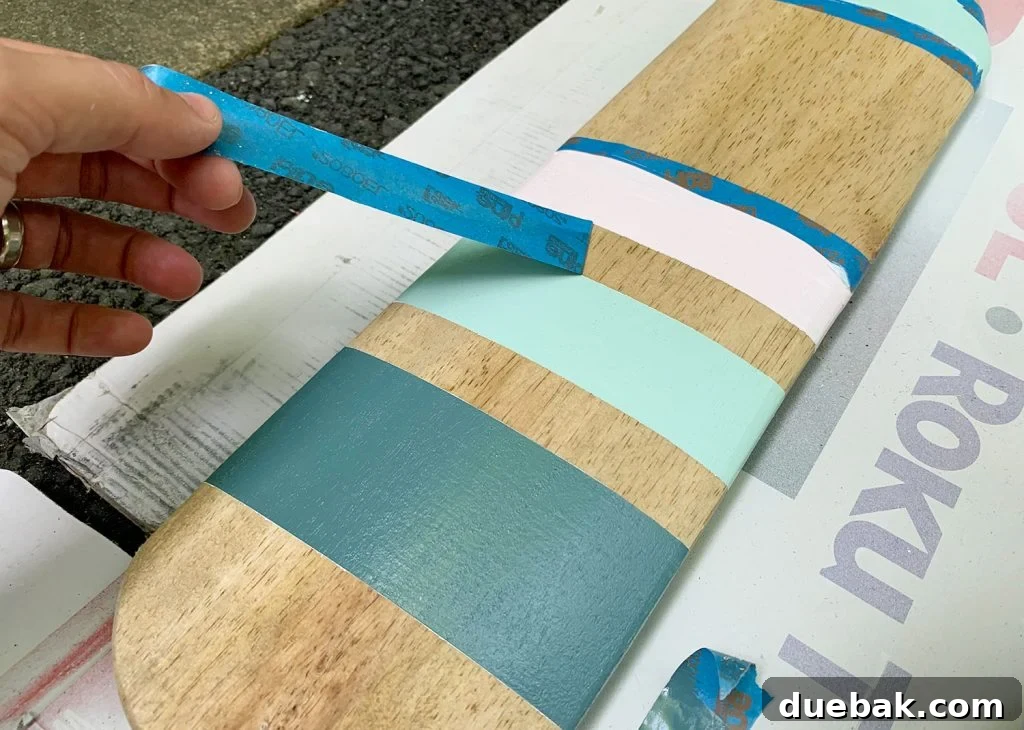
The project was progressing beautifully. The warm outdoor temperatures expedited drying times, and each freshly painted stripe added to our growing excitement. There’s an undeniable, unmatched satisfaction that comes from carefully peeling off painter’s tape to reveal perfectly crisp, clean lines. It’s a small victory that makes all the preparation worthwhile.
The Unforeseen Challenge: A Crucial Lesson in Outdoor Sealing
And then, just when everything felt perfect, the project took an unexpected turn. This is where I urge you to learn from my mistake – a critical lesson in outdoor project durability. My final step was to apply a protective sealer to the entire surface, ensuring maximum outdoor resilience. These oars would be exposed to the elements 24/7/365, facing not just rain, but also intense heat, humidity, and even snow. Therefore, a robust, exterior-grade polyurethane sealer was essential. These sealers are typically oil-based due to their superior durability and long-lasting protection. In my eagerness, I made a crucial oversight: I neglected to test the sealer in an inconspicuous area first. We had a weekend trip to Cape Charles rapidly approaching, and I was determined to finish the oars and bring them with me. So, against better judgment, I just WENT FOR IT.
My wife, Sherry, ever the pragmatist, described the resulting issue as “not a big deal” and advised, “nothing to freak out over – John, you’re being crazy.” But having invested so much time and effort, and being so thrilled with their appearance thus far, I was immensely frustrated with myself for messing up on the very last step. Here’s precisely what happened and why it’s a vital consideration for your own outdoor DIY projects:
Oil-based sealers and stains have a notorious tendency to yellow over time, or even upon application. This is precisely why we predominantly use water-based finishes for most of our indoor projects. However, for uncompromising exterior durability, oil-based options often reign supreme. The immediate yellowing caused a significant shift in our carefully chosen color palette, especially the whites and lighter tones. Furthermore, because the oars possess a slightly rounded profile, the sealer pooled in various spots as it dried, leaving distinct brownish-yellow streaks and unsightly dots along the painted surfaces. This created an unintended “rustic” effect that completely deviated from our desired crisp, vibrant coastal look.
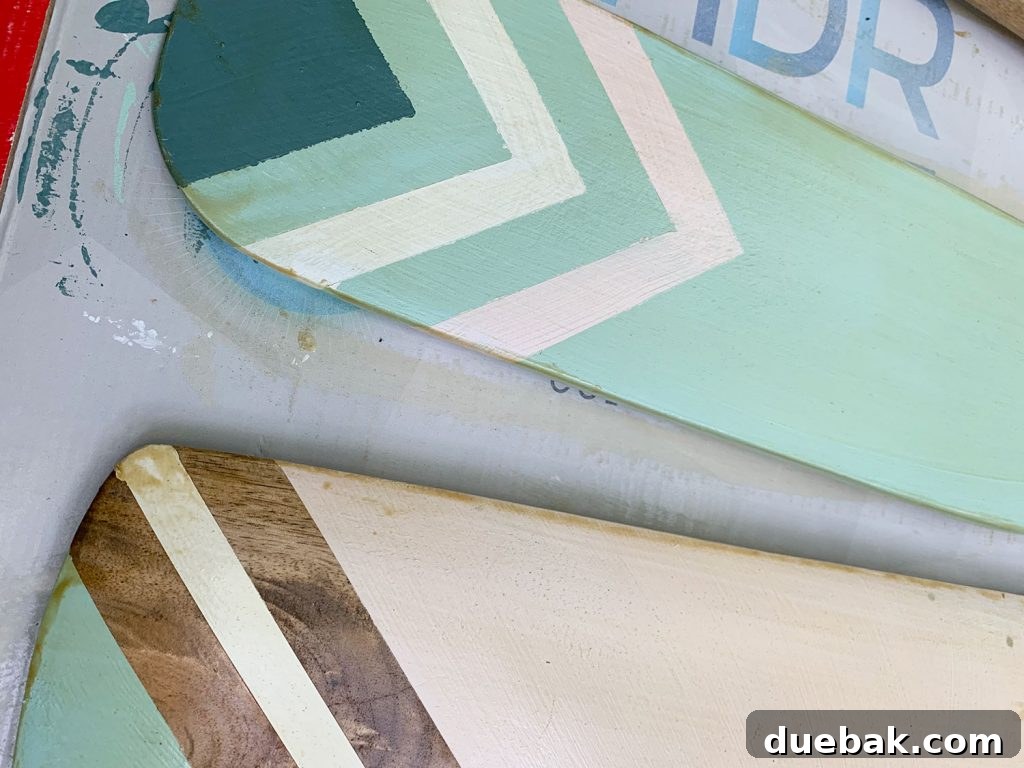
Sherry was right, of course; from a distance, the issue was relatively minor and likely wouldn’t be super detectable once the oars were hung. But for me, the creator, the undesired yellowing and streaking were profoundly annoying. It diminished the pristine quality we had worked so hard to achieve, making the oars appear far more “rustic” than intended.
Rectifying the Mistake: The Certified Oarologist’s™ Solution
In this moment of profound DIY frustration, there was only one sensible (or perhaps, wildly insane) course of action for a Certified Oarologist™: I had to fix it. This involved sanding off all the streaky, yellowed spots, meticulously re-taping every single design element, and then repainting all four oars. While this wouldn’t reverse the yellowing of the underlying stained wood tone, it would, at least, restore the crisp vibrancy and clean lines of our original paint colors. It was a tedious, time-consuming process, but absolutely necessary to achieve the vision we had painstakingly developed.
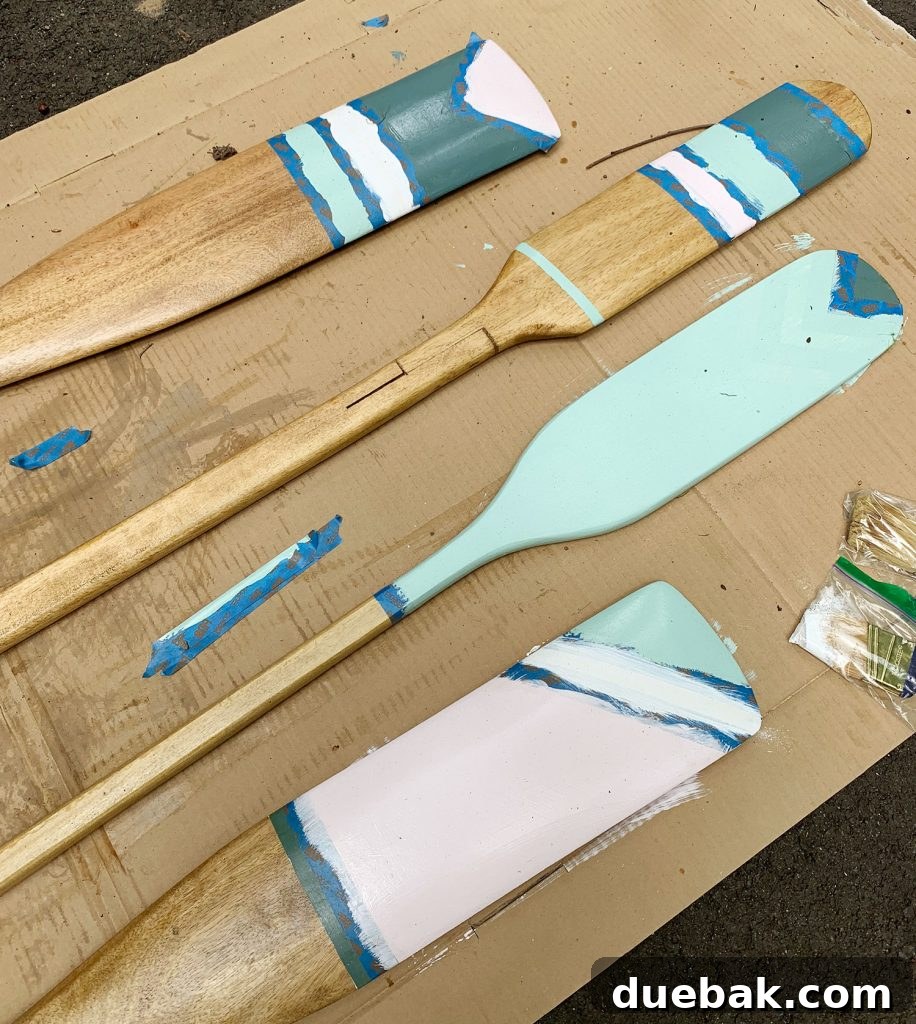
Herein lies the crucial insight we overlooked at the outset of this project: we were using exterior paints for all the colored sections. Exterior paints are specifically engineered to be weather-resistant and durable on their own, meaning they don’t actually require an additional sealer coat to protect the painted surfaces. The only part of the oars that genuinely needed sealing for outdoor longevity was the exposed raw wood. Therefore, if I were to embark on this project again (or if you, my fellow burgeoning Oarologist, are doing it right now – welcome to the field!), I would unequivocally recommend sealing the raw wood (both sides!) BEFORE applying any paint stripes or detailing. This revised sequence would have entirely circumvented the yellowing and streaking issue, ensuring the entire oar, both painted and wood sections, was perfectly durable and outdoor-safe from the start. Learn from our hard-won experience and save yourself a considerable amount of extra work!
The Grand Finale: Installation and Lasting Coastal Charm
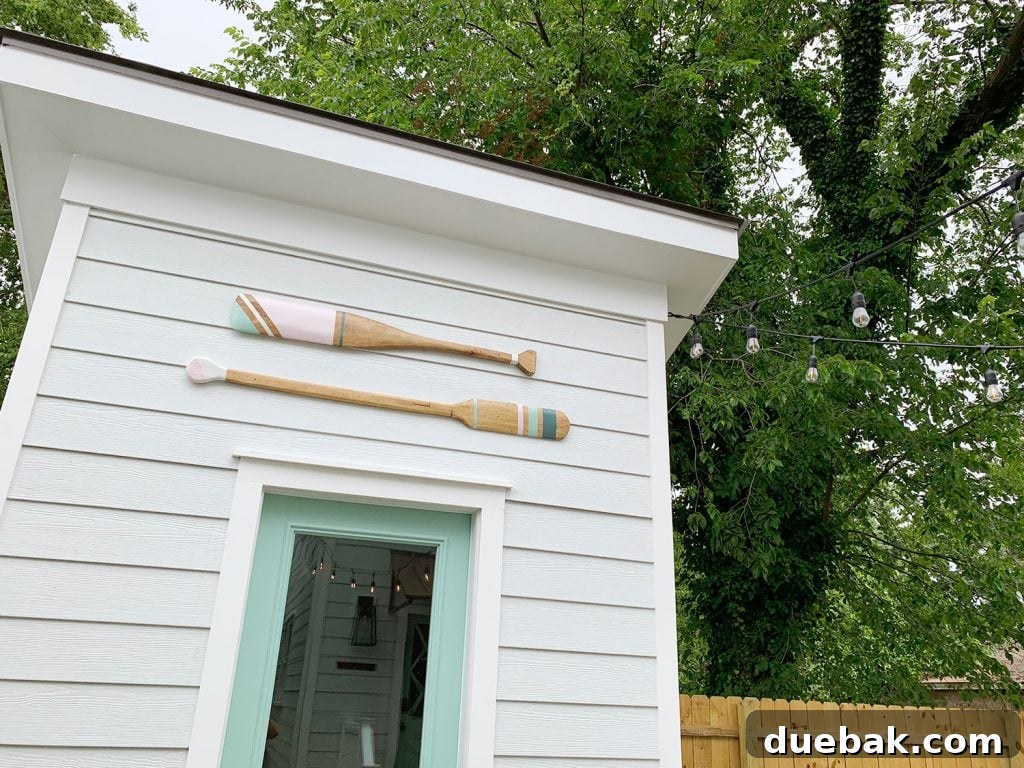
Ultimately, everything turned out wonderfully. Despite the unforeseen detour of the extra paint job, which pushed our completion date a little closer to the rental season than we had initially hoped, we are absolutely thrilled with the final look of the decorative oars. They add the perfect touch of coastal charm and personality to our duplex sheds, transforming otherwise utilitarian structures into inviting, aesthetically pleasing elements of our backyard. Hanging them was surprisingly simple: we merely drove a 3-inch exterior-grade screw directly through the oar and into the siding, ensuring it securely hit a stud behind it. To prevent any splitting in the wood, I always recommend pre-drilling a small pilot hole in the oar before driving the screw. This makes the screw sink smoothly and easily, ensuring a clean and secure installation.
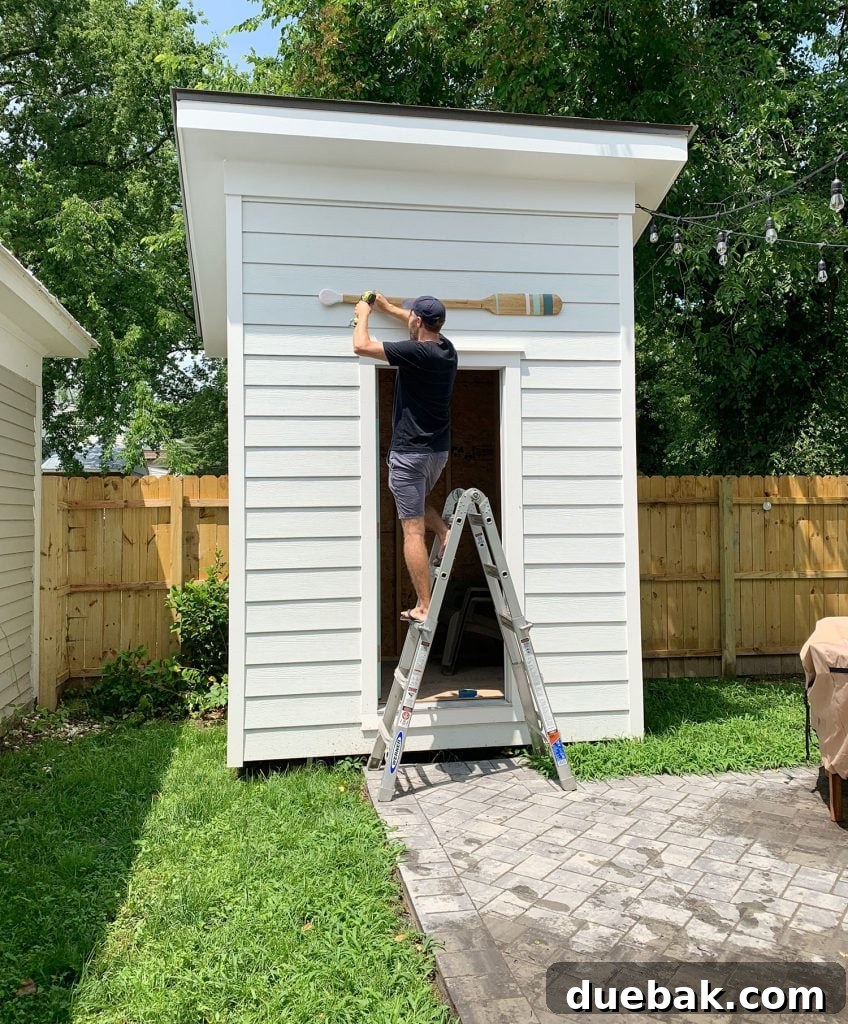
You might notice the subtle screw heads in the photo below (look for the small dots). We intentionally tried to place them within the natural wood sections whenever possible, as they tend to blend in more seamlessly with the wood tone compared to the lighter painted areas. However, in reality, they are barely noticeable. Your eyes naturally focus on the vibrant patterns and the overall design, making the screw heads effectively disappear unless you’re actively searching for them. This minor detail in no way detracts from the overall appeal of these custom-crafted outdoor decorations.
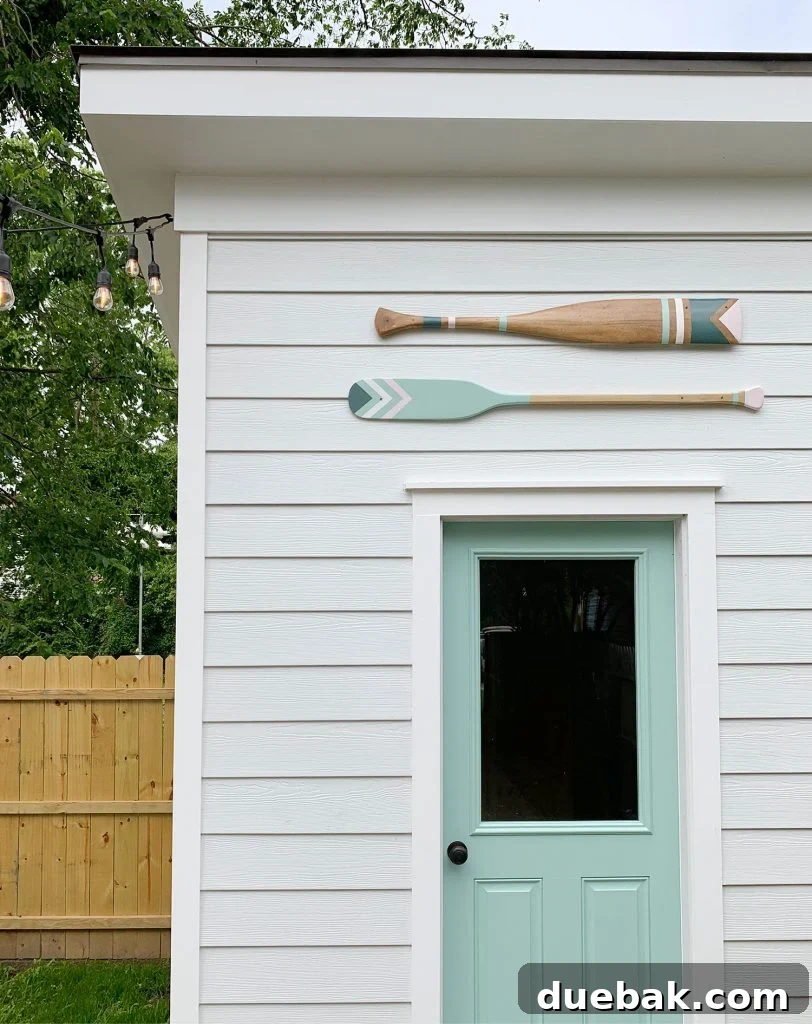
This comprehensive tutorial isn’t just for oars! The techniques and lessons learned here – sanding, staining, strategic painting, and understanding outdoor sealing – are universally applicable to almost any wooden item you wish to customize and hang outdoors. So, whether you’re dreaming of a custom surfboard to adorn your patio, a rustic wooden sign bearing your family name, or unique decorative paddles for your pool area, this process will serve as an excellent guide. And as a final, non-negotiable hack for elevating any outdoor space: always, always add string lights! We use these exact string lights everywhere, from our patio to our sheds, because they possess an unparalleled ability to instantly enhance ambiance, comfort, and visual appeal, literally making everything better. They cast a warm, inviting glow that transforms any setting into a magical retreat, especially as evening descends.
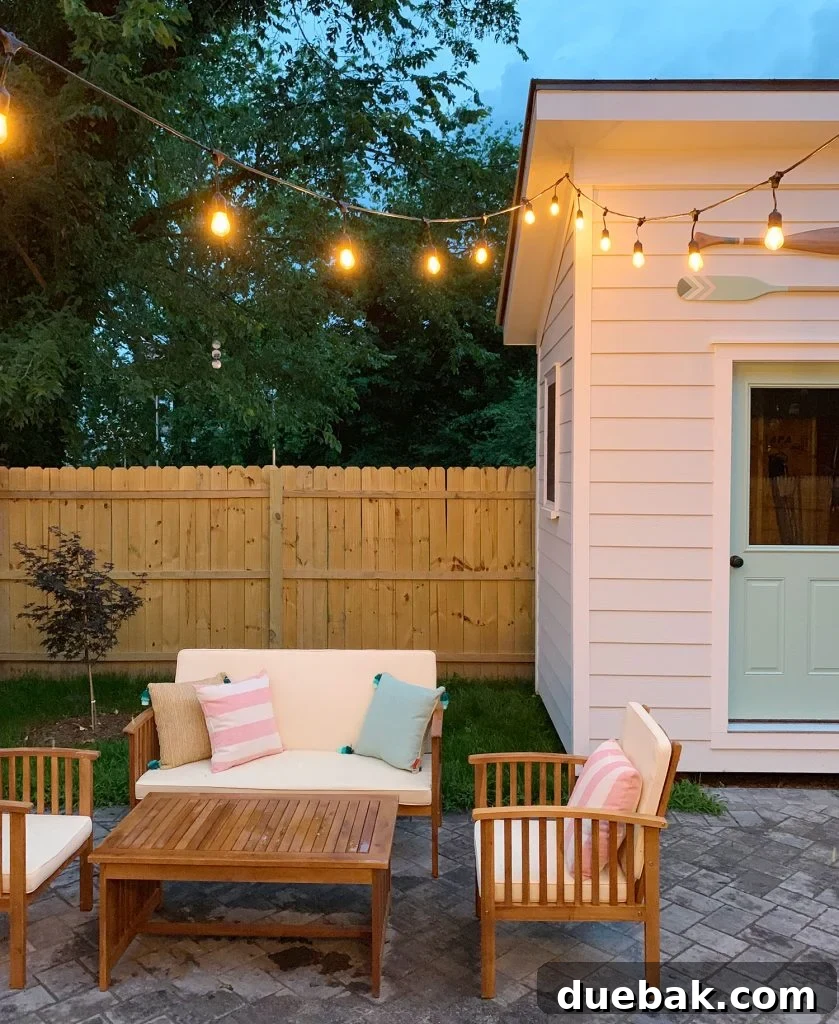
For a complete reveal of our entire duplex backyard, including detailed sources and information on the sheds, patio design, furniture selections, and more, be sure to click here. And if you haven’t yet witnessed the stunning transformation of our pink house backyard – a project we completed right after the duplex yard – you absolutely must check that out right here for even more outdoor inspiration and DIY success stories!
*This post contains affiliate links, which means we may earn a small commission if you make a purchase through these links, at no extra cost to you. We only recommend products we genuinely use and love.