
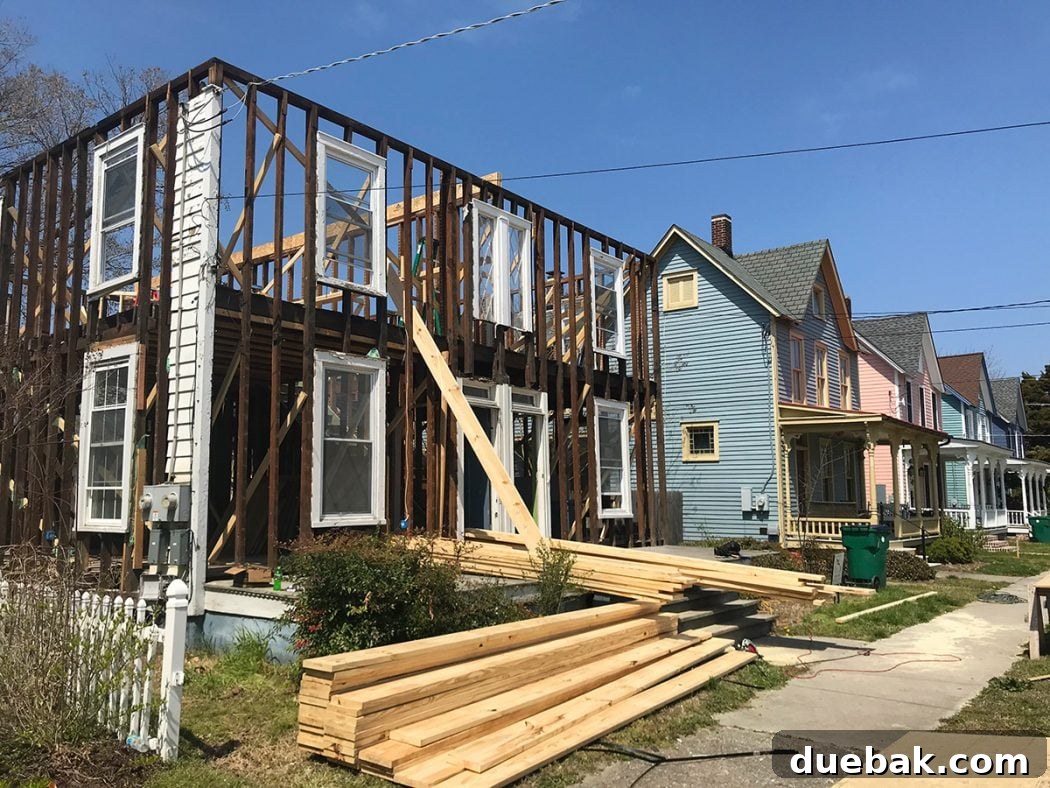
Embarking on a historic home renovation is a journey filled with unexpected turns, dramatic transformations, and moments of both challenge and triumph. Our latest endeavor, the duplex project in the charming historic downtown district of Cape Charles, is proving to be no exception. While many of the initial images might evoke a sense of “what happened to that house?!” rather than a meticulous “rebuilding,” we assure you that behind the scenes, incredible progress is being made. Over the past few weeks, a flurry of activity has stripped this old home to its bare essentials, revealing both its inherent charm and its hidden structural woes. This post aims to bring you up to speed on the extensive work undertaken, the crucial floor plan adjustments we’ve made, and some of the surprising curveballs thrown our way as we meticulously bring this historic gem back to life.
Unveiling the “Bare Bones” Reality: Why Such Extensive Demolition?
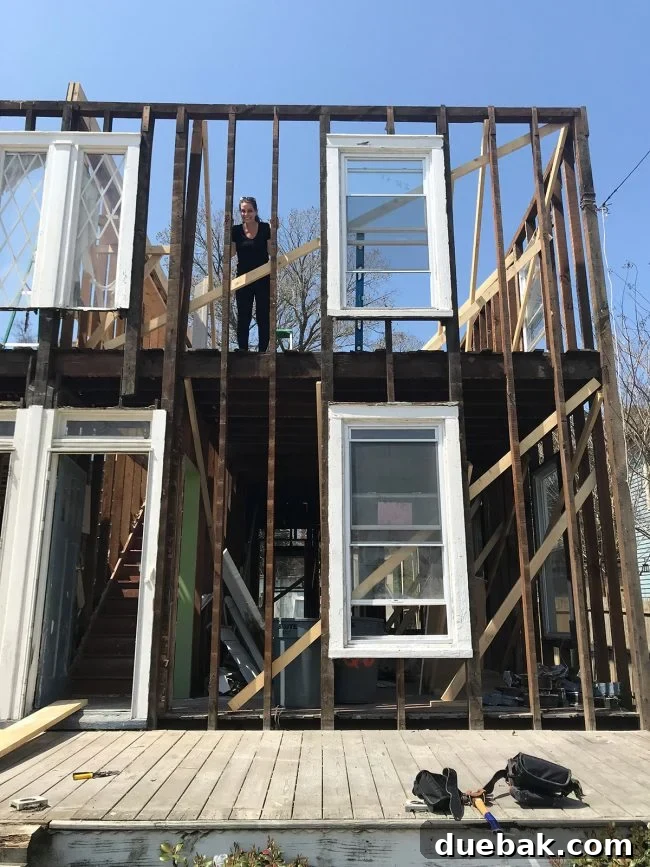
The sight of a house stripped down to its skeletal framework can be jarring, but it’s a necessary stage in the comprehensive restoration of an older property, especially one that has endured decades of neglect. As we discussed in a recent podcast, the duplex’s current “bare bones” appearance is a direct result of the severe deterioration we uncovered. The interior suffered from extensive rot, pervasive mold, significant termite damage, and compromised framing that simply wasn’t safe or sound. Simultaneously, the exterior required a complete overhaul due to rotting siding and a failing roof that no longer provided adequate protection. When a structure reaches this level of disrepair, this is the inevitable (and often dramatic) stage you reach before the true rebuilding can begin.
While visually impactful, this extensive demolition offers crucial advantages. It provides an unparalleled opportunity to install entirely new, up-to-code, and energy-efficient systems throughout the house. Imagine completely refreshed electrical wiring, modern plumbing, and an efficient HVAC system – all foundational elements for a comfortable and safe home. Trying to retrofit these critical upgrades into an existing, compromised structure would be far more challenging, less effective, and ultimately more expensive. This dramatic process, though initially startling, is surprisingly common in Cape Charles’ historic downtown district. Many of these beautiful old homes, after enduring decades of moisture intrusion and structural decay, require this level of restorative work to ensure their longevity and structural integrity for future generations.
Renovate or Rebuild: A Deep Dive into Historic Preservation Economics
A common question we hear, particularly when faced with a house in such a state, is: “Wouldn’t it just be cheaper to knock it all down and start over?” The answer, perhaps counter-intuitively, is a resounding no, especially in a historic context. Pouring a new foundation and erecting an entirely new frame constitute some of the most substantial line items in a new construction budget. We recently learned that a friend’s new build framing budget alone topped $75,000! By salvaging and reinforcing the existing structure, we sidestep these “big whopper” expenses, significantly impacting our overall budget positively.
Beyond the financial considerations, these charming beach houses are nestled within a protected historic district. This designation means that bulldozing an existing structure, even if one were inclined, is simply not permitted. This regulatory framework plays a vital role in preserving the unique character, architectural heritage, and undeniable charm that defines this historic neighborhood. Our commitment to renovation aligns perfectly with this ethos, allowing us to retain the soul of the home while equipping it for modern living.
Echoes of the Past: Lessons from the Pink Beach House
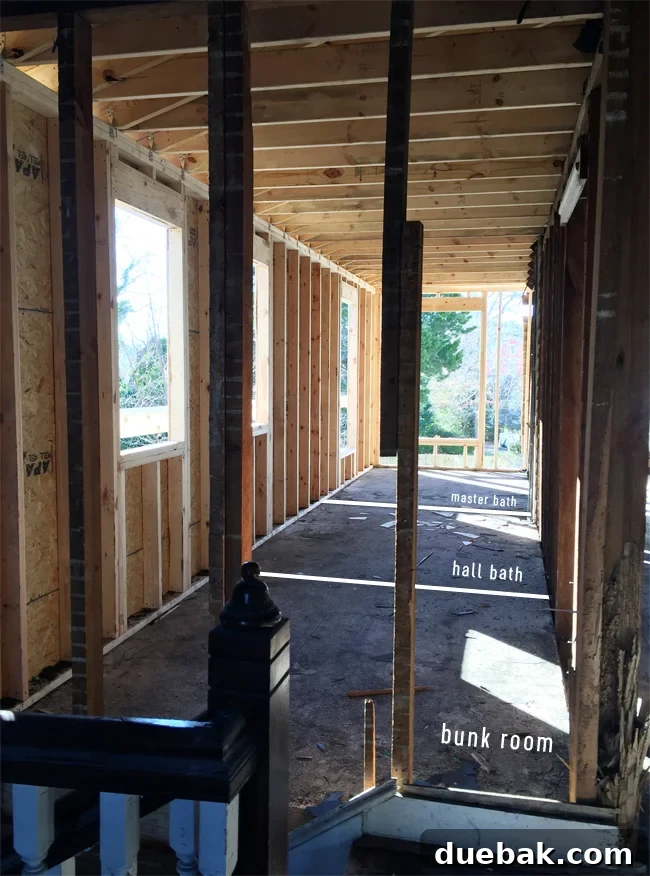
This isn’t our first rodeo when it comes to bringing a historic home back from the brink. We traversed a remarkably similar “skeleton-ization” process with our previous pink beach house project. In fact, the same skilled framing crew that worked on the pink house is now meticulously working on the duplex. They even confirmed that the pink beach house was in an even more dire state, with its foundation actually sinking into the ground on one side, necessitating a complete rebuild from scratch. So, while the duplex presents its own set of challenges, there’s a certain relief in knowing we’ve dodged that particular bullet this time around! Below, you can see the pink beach house at a comparable stage of its rebuilding process about a year ago, illustrating the familiar sight of a structure stripped bare for renewal:
The Roof Reimagined: Enhancing Durability and Addressing Historic Nuances
One key difference, contributing to the duplex’s more dramatic demo appearance, was the complete removal of its entire roof structure. At the pink beach house, we were able to simply re-shingle the existing roof while retaining its original framing. However, the duplex presented a unique opportunity for improvement. We successfully secured approval from the historic review board to slightly increase the roof’s pitch. This seemingly minor adjustment is a significant long-term investment, designed to help the roof shed water more effectively, a critical upgrade given the existing roof’s history of leaks due to its extremely shallow pitch. This choice, while beneficial for future durability, mandated the removal of the entire top section of the house to allow for complete roof reframing.
During this process, we also gained fascinating insight into the house’s original construction method. After sharing photos on Instagram, we learned the duplex was built using “balloon framing.” This technique, popular in houses constructed between approximately 1880 and 1930 (which aligns perfectly with our estimated 1920 build date), features exterior studs that extend continuously from the foundation all the way to the roofline. This contrasts sharply with modern construction, where wood is rarely sold in such long lengths, and houses are typically built one story at a time, with each floor resting on its own separate platform. Understanding these historical construction methods is crucial for an effective and respectful renovation.
Balancing Preservation and Modern Efficiency: Windows and Architectural Details
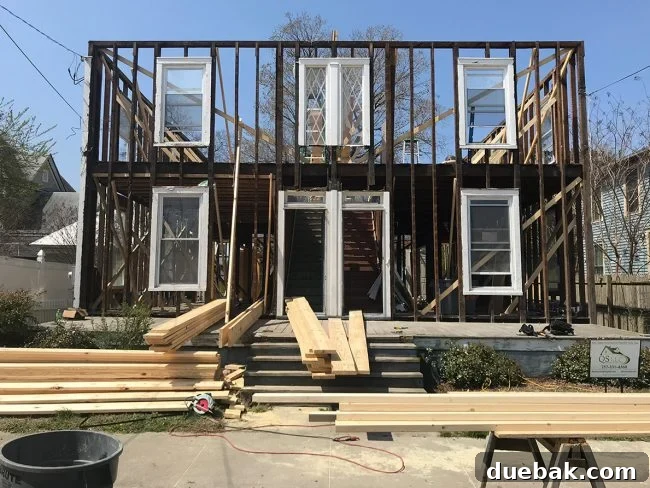
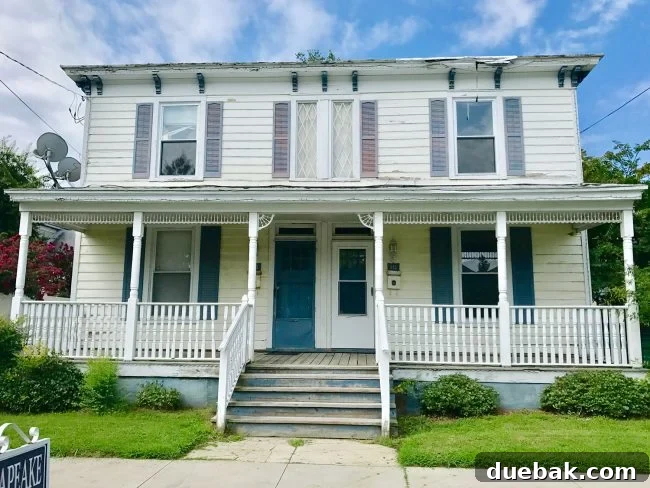
The image above captures the house just before the windows were removed. Rest assured, our commitment to preserving the home’s historic charm remains paramount. We are meticulously salvaging the original diamond grills from the center windows, along with the distinctive old corbels nestled under the roofline – visible in the “before” photo below. However, many other windows were not original to the house; they were low-quality, broken vinyl replacements that offered neither aesthetic appeal nor energy efficiency. These will be replaced with new, high-performance windows that not only function flawlessly but also contribute significantly to the home’s energy performance, mirroring the successful upgrades we implemented at the pink beach house.
Budget Surprises and Unexpected Fortunes: The Porch and Foundation
Renovations are rarely without their surprises, and our duplex project has certainly had its share. One unfortunate discovery during demolition was the realization that the porch required far more extensive work than initially anticipated. Its framing proved to be significantly more unstable than we had estimated, necessitating a complete rebuild – a definite “cha-ching!” moment for the budget.
However, serendipity occasionally smiles upon renovators. In a rare stroke of luck, the foundation, which we had braced ourselves for with an allocated $3,000 for potential reinforcement, was actually in far better condition than expected, requiring hardly any work at all. This fortunate turn of events allowed us to seamlessly reallocate our “foundation repair” funds directly into the “whoops, the porch is busted” fund. In essence, the budget miraculously balanced itself out. These moments of unexpected financial equilibrium are exceedingly rare in large-scale renovations, and we’re certainly savoring this lucky break while it lasts!
Preserving the Past: Identifying and Restoring Original Details
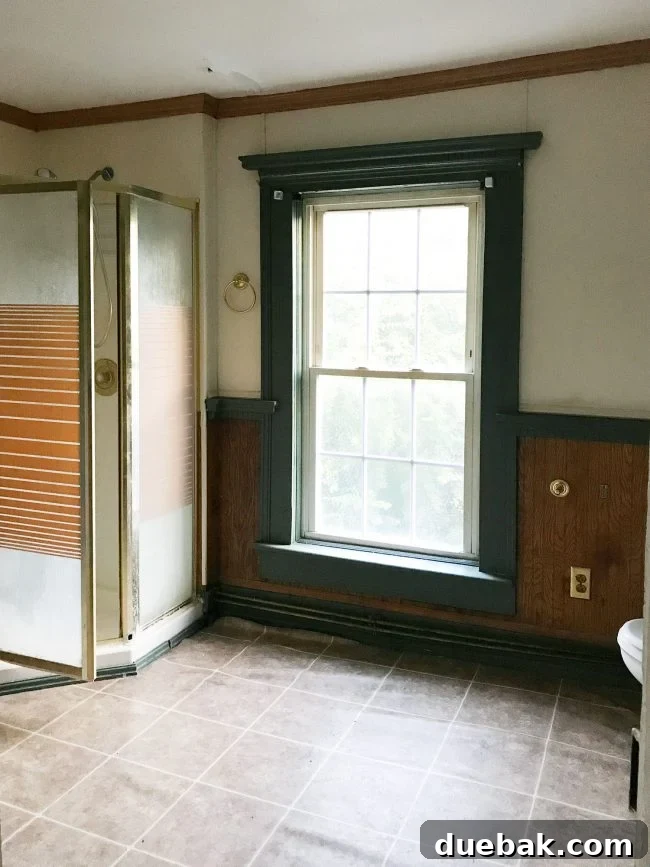
Compared to the pink beach house, the duplex sadly offers fewer original architectural details that could be saved and meticulously restored. Beyond the aforementioned diamond grills in the middle upstairs windows and the charming old corbels under the roofline, this property lacked the exquisite stained glass or the intricate back staircase that we were fortunate enough to preserve at the beach house. Years of being utilized as a rental property had taken their toll, resulting in the replacement of almost everything (like those broken vinyl windows) and a considerable amount of “covering up.” We found sheet vinyl flooring and wood paneling extensively used throughout, clearly employed to conceal underlying damage and pervasive moisture issues within the walls and floors.
Reviving the Hardwood Floors: A Sticky Situation Turned Beautiful Opportunity
One truly exciting discovery, and a significant cost-saving opportunity, lies beneath the layers of past neglect: the original hardwood floors. At some point in its history, these beautiful floors were covered with vinyl stick tiles and then carpeted over. We vividly recall the purchase of the house last fall, particularly the incredibly sticky residue left by the leftover vinyl tile in one of the bedrooms. Sherry literally lost her flip-flops walking across it – a testament to the adhesive power of decades-old vinyl! However, this initial annoyance quickly transformed into anticipation, knowing that these original hardwoods, once properly refinished, will be a stunning feature.
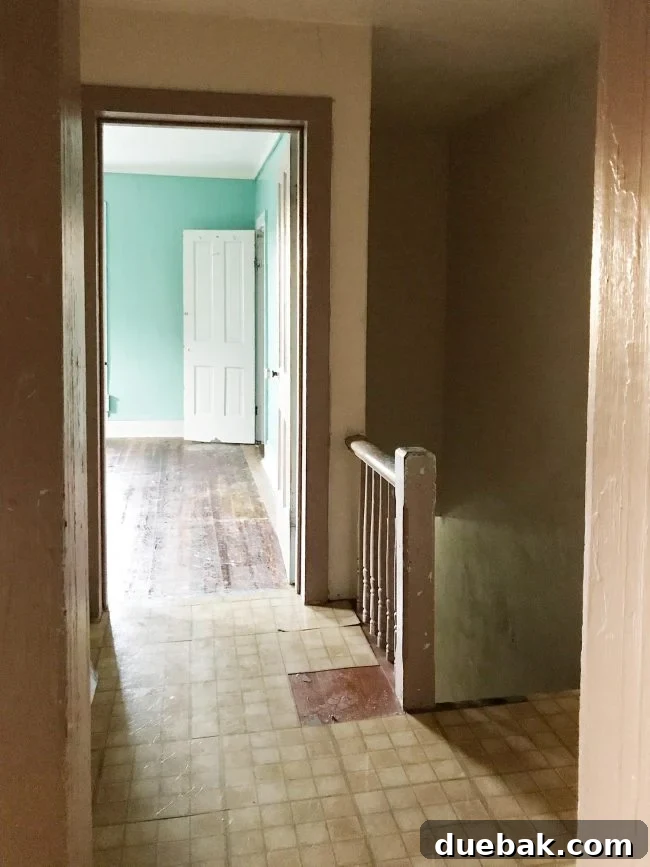
The preservation of these original hardwood floors, both upstairs and downstairs, represents another hugely expensive line item we get to “dodge” in our budget. Refinishing existing hardwoods is substantially more economical than purchasing and installing all-new flooring throughout the property. This decision aligns perfectly with our renovation philosophy: to respect and restore the home’s original character wherever possible, while also making smart financial choices.
We’ve also received questions about how one protects original hardwood flooring during such a drastic gutting process, especially when the house is open to the elements. The answer, though it sounds completely counter-intuitive, is actually to leave them exposed. While they might get a little wet during a brief period of exposure, the natural drying power of the sun quickly remedies this. Crucially, tarping them can actually cause more damage by trapping moisture underneath, creating a breeding ground for mold and mildew. This “leave them open” approach is actually a pretty standard and effective procedure in our area for these types of renovations.
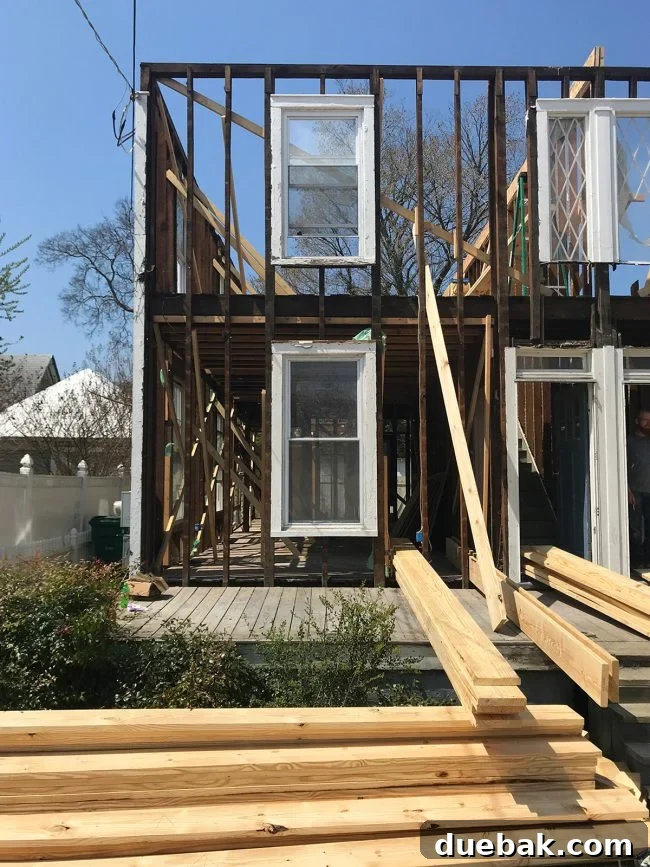
The success of this method was beautifully demonstrated at the pink beach house, where the exposed floors, once meticulously sanded and sealed, transformed into stunning features. Similarly, we were able to restore original doors in the pink house, yielding equally impressive results. We hold high hopes that the duplex floors will clean up just as nicely, becoming another testament to the beauty of thoughtful restoration.
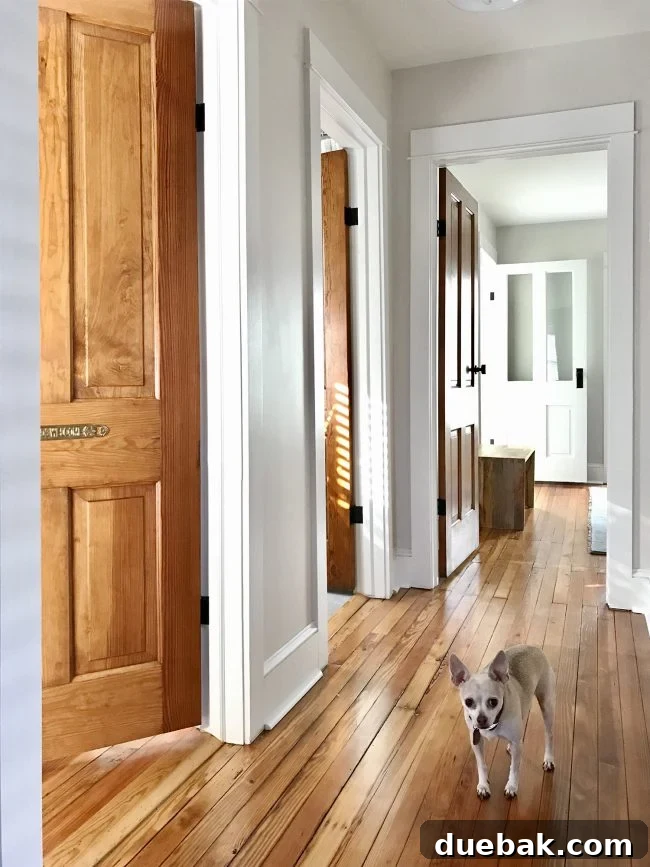
So here’s hoping these duplex floors clean up just as nicely, adding immense character and value to the home.
Visualizing the Transformation: A Space Reimagined
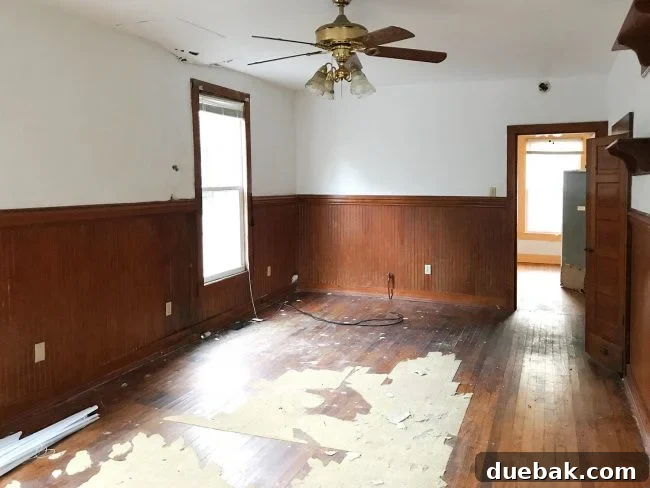
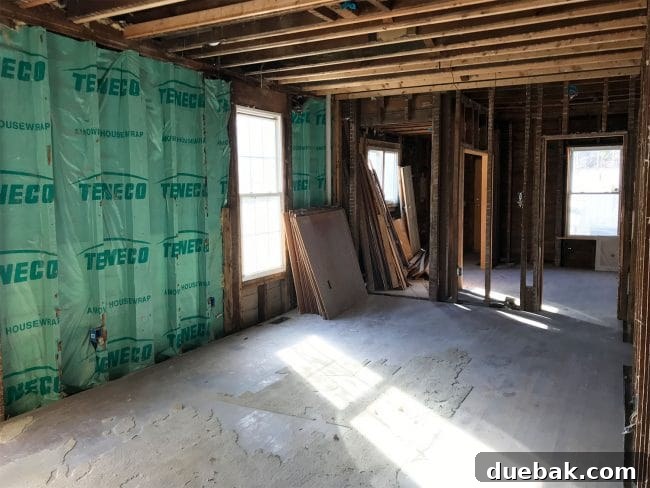
The photo directly above shows the living room on the left side of the duplex as we initially encountered it. For context, both sides of the duplex are mirror images of each other, offering identical layouts. Below, you can see that very same space after the initial interior demolition work was completed, a stark contrast revealing the extent of the structural issues and the potential for a fresh start.
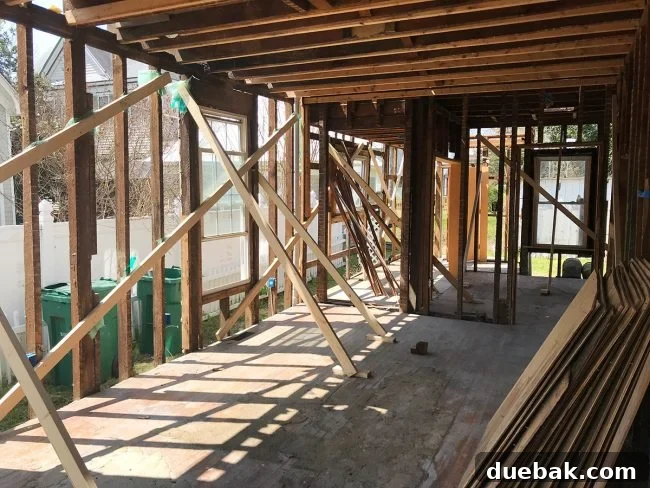
And here is the most recent snapshot of that same space, illustrating the ongoing structural reinforcement. All of those diagonal boards you see are temporary supports, strategically placed to stabilize the walls while our crew works diligently on getting the new roof framing in place and the interior meticulously re-framed to shore everything up securely. The back-left corner, in particular, required a significant amount of new framing to ensure its long-term safety and stability. We are incredibly relieved and satisfied that our thorough stripping back of the structure allowed us to identify and remedy these critical “danger zones” before they could become larger problems. While it might currently resemble a giant game of Pick-Up Sticks, this intricate web of supports is a testament to the rigorous structural work being performed.
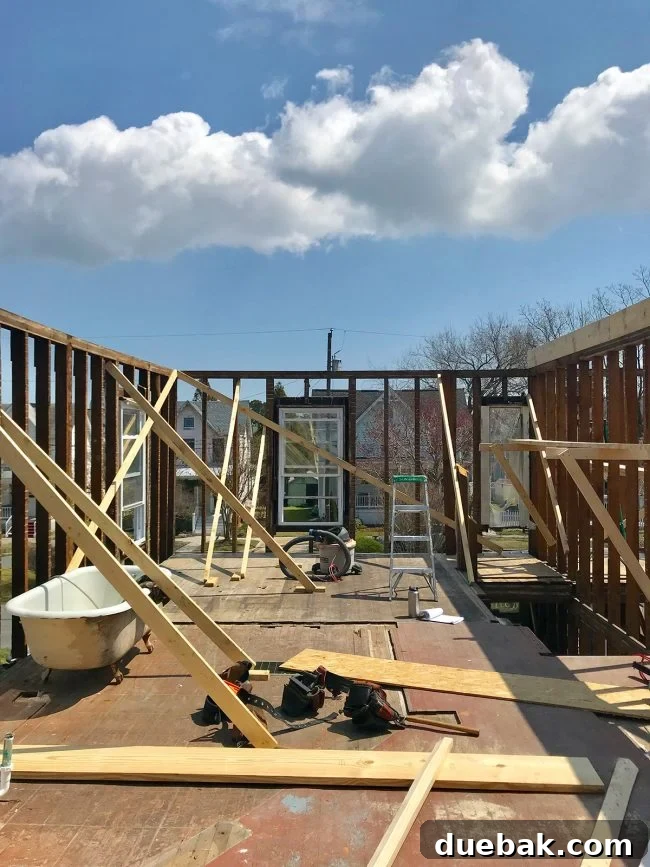
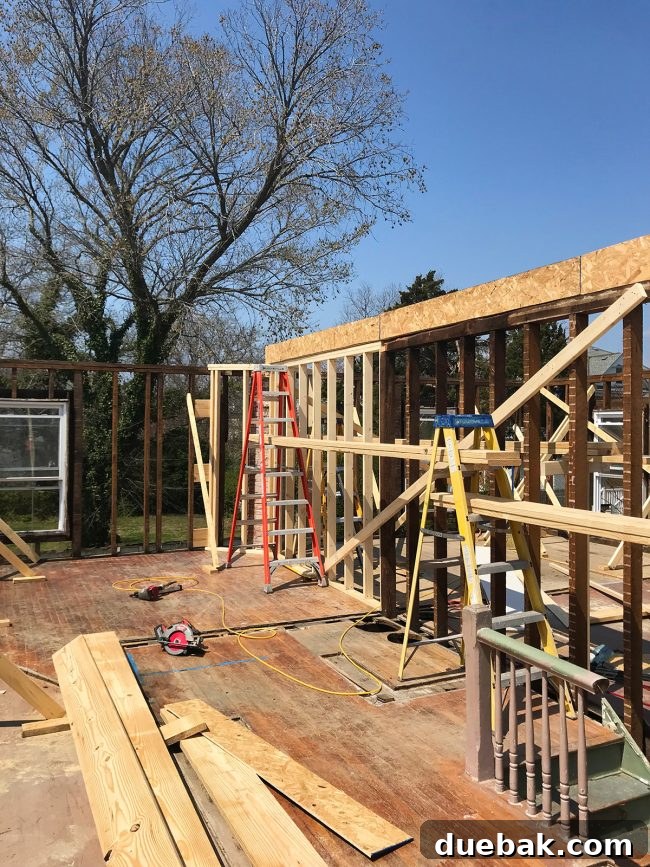
Of course, the most breathtaking and visually dramatic view during this phase was undoubtedly from the second floor. Before the new roof framing began to take shape, the upper level was completely open to the sky. Call me a nerd, but witnessing that expanse, feeling the open air where a ceiling once stood, was utterly captivating. It truly felt as if a giant had simply come and lifted the roof clean off!
Navigating the “Curveballs”: Unforeseen Structural Challenges
Beyond the dramatic visuals, the demolition process inevitably uncovers more mundane but equally critical “curveballs.” As the old siding was meticulously removed, it not only confirmed existing problem areas we suspected but also brought several new ones to light. We had long known that the back side of the house, originally a side porch later poorly enclosed, was constructed deficiently. The most egregious issue? The studs were placed facing the wrong way! This section, once an odd little galley kitchen, is slated to become a functional laundry room/mudroom area. We even captured a quick video of our contractor, Sean, demonstrating with alarming ease how little effort it took to shake the entire structure. His calm demeanor, shaking it with just one hand, perfectly illustrated the urgency of the necessary repairs.
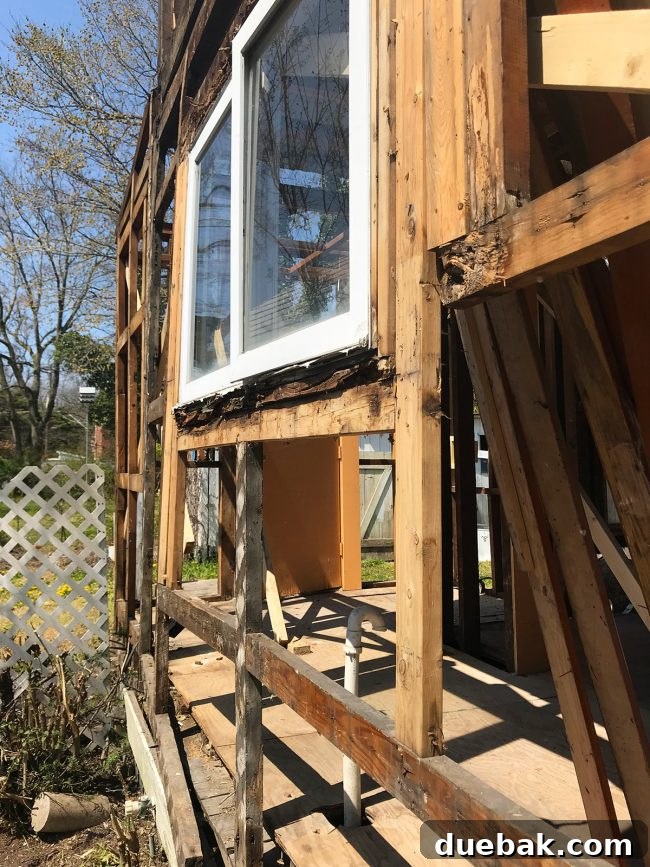
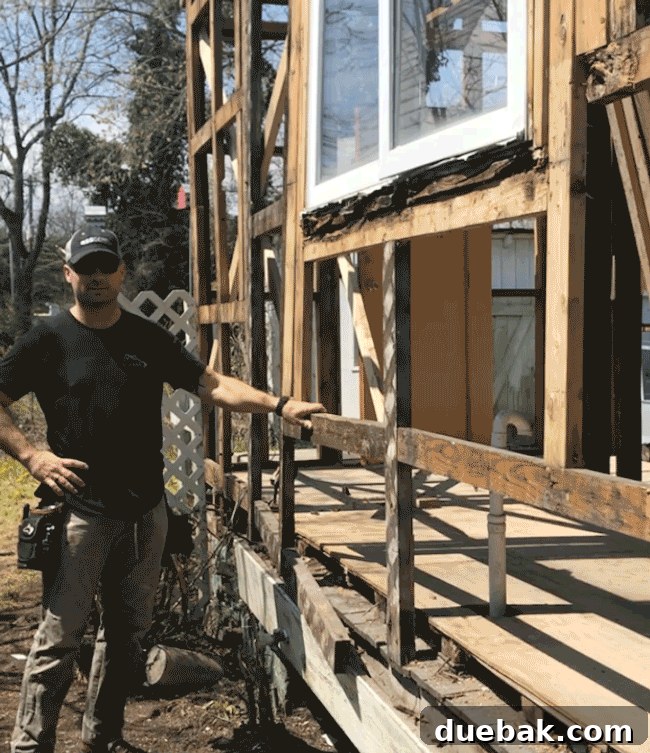
Rest assured, this entire section will receive robust new framing to make it supremely secure. The days of a person being able to shake it with one arm will soon be a distant memory. Other curveballs, though less visually exciting, were equally important to address. We found some noticeable sagging in one corner of the second floor, which, thankfully, turned out to be an issue of insufficient framing rather than a more severe foundation problem. Additionally, some interior flooring required reframing. You can actually discern this in the image above (the GIF); notice how the floor appears almost two layers thick? It is! Someone, in an attempt to level the floor with the rest of the house, had built a new interior floor directly on top of an old porch floor, using rudimentary 2x4s as spacers. Our solution involves stripping everything down to the original floor joists and properly raising the floor, ensuring a completely level and stable surface, free from any wobbly, double-floor contraptions that shift underfoot.
Rapid Progress and Floor Plan Refinements
Most of the captivating photos shared above were captured just two weeks ago, during our initial visit back after spring break. However, incredible progress has been made since then. During our visit last week, we were thrilled to discover that the roof is already back up! While it still awaits its shingles, the essential framing and plywood cover are entirely complete. I must admit, I’m already starting to miss all that glorious natural light that poured into the second floor! 😉
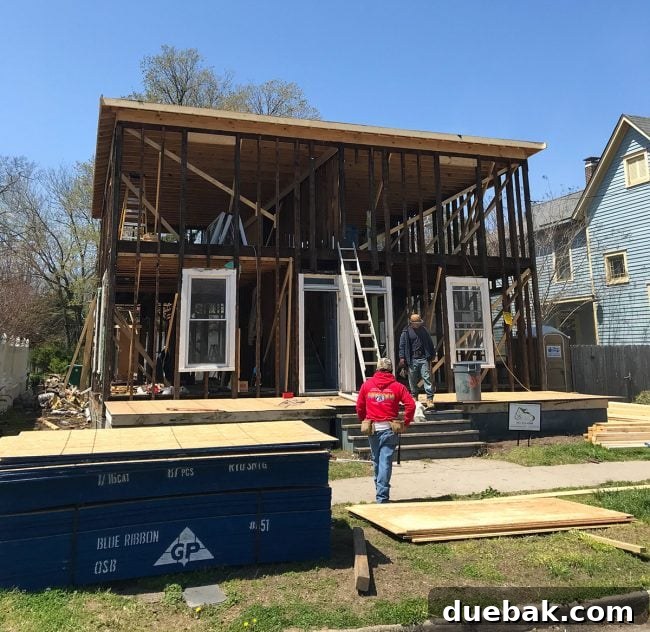
What isn’t immediately apparent from that photo is the significant work our contractor, Sean, had also begun on mapping out our new upstairs floor plan. We previously shared our proposed layout improvements last month, but our plan always included an in-person walkthrough to finalize everything. The three of us spent valuable time together in the house, making several crucial tweaks to the layout. Sherry provided an excellent overview of these adjustments in a video (originally intended for InstaStories but too long, so now on YouTube). You can watch the full explanation here on YouTube.
As Sherry detailed in the video, I’ve included the rough floor plan below to visually aid in understanding the areas she described and the thoughtful changes we’ve implemented. For a more detailed comparison of how this new layout differs from the original, you can always read more about it in our dedicated post.
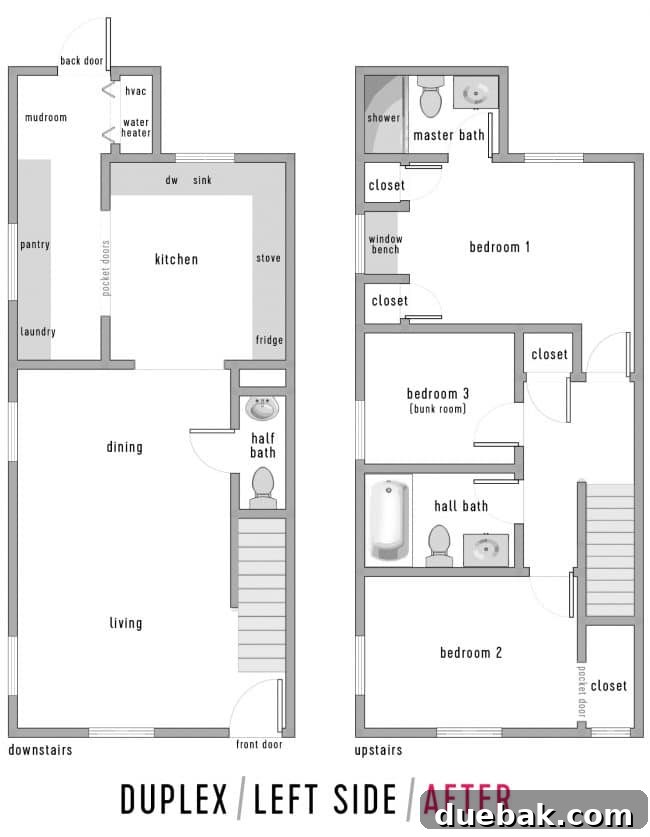
We also made some practical shifts in the laundry room/mudroom area, though these weren’t captured on video. We’re hoping to render those changes for you in a future post or during another walk-through very soon. We’re headed back to Cape Charles again this weekend, so feel free to check in on Instagram (Sherry is always quick to share real-time updates on InstaStories during our visits). We’re now entering a phase of the renovation where the updates might be less visually dramatic (alas, new support beams aren’t always as thrilling as a demolished wall!), but equally vital. To satisfy my own craving for big transformations, I’ll leave you with one more striking before and after comparison. Here’s what the left side of the duplex looked like when we first acquired it last fall:
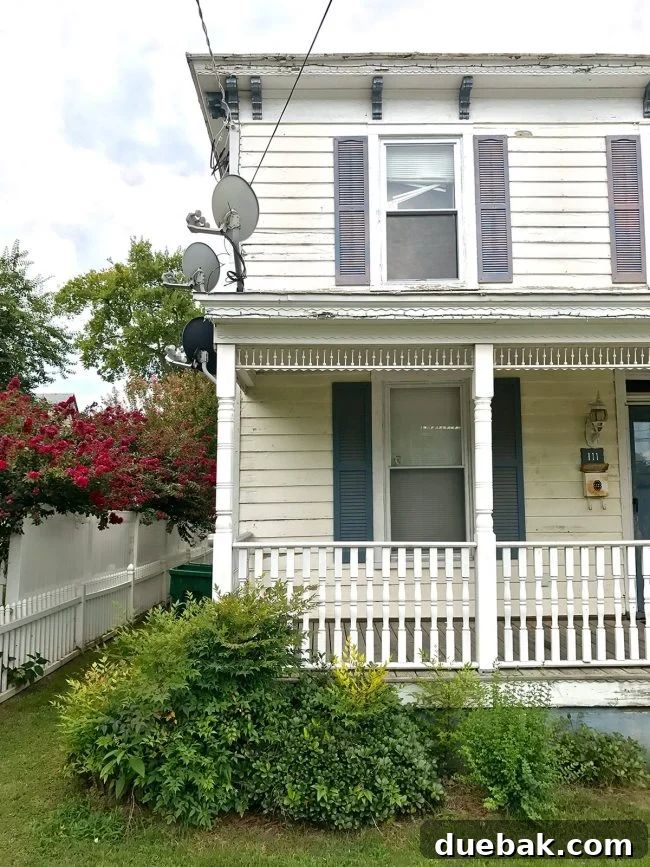
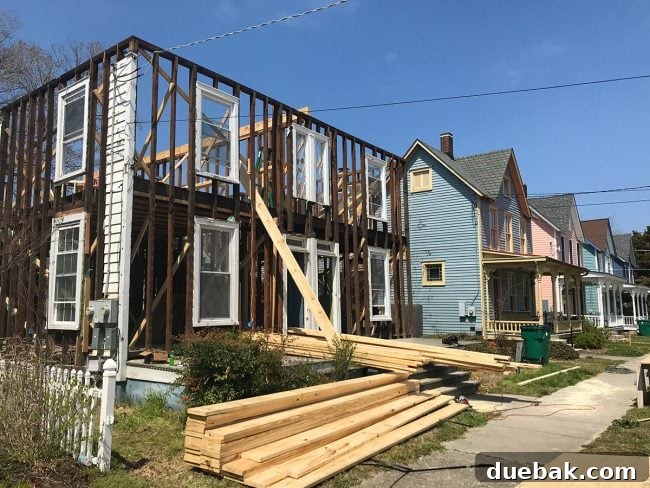
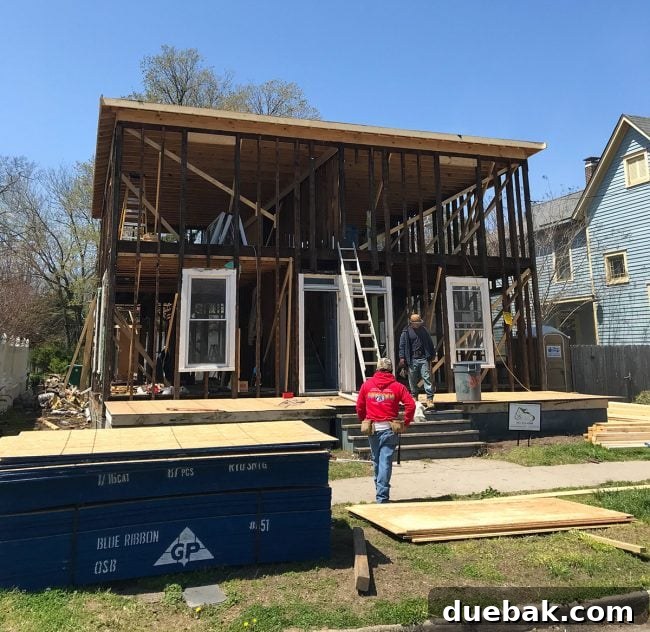
And here it is just a couple of weeks ago. Gulp. It’s an exciting gulp, though. From this point forward, it can only get better, folks. The transformation, while still underway, promises a stunning return to glory for this historic property.
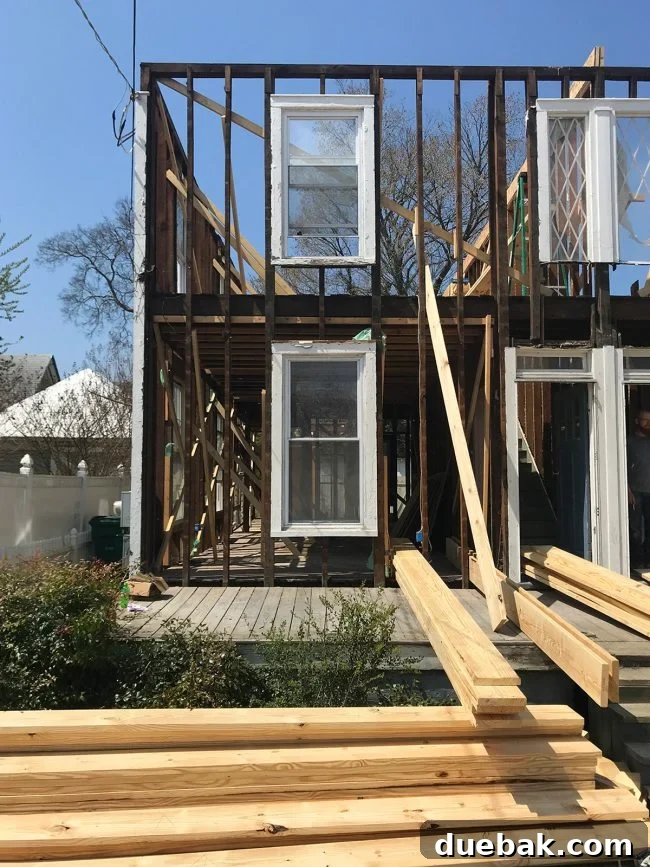
And on a particularly bright note – all three of those unsightly satellite dishes are finally gone! Hasta la vista, baby!
P.S. For those interested in delving deeper into our duplex journey, including how we acquired this property, our long-term vision for it, and access to other video walk-throughs, we invite you to explore our dedicated duplex category. There, you’ll find every post we’ve ever written about this ambitious and rewarding renovation project.