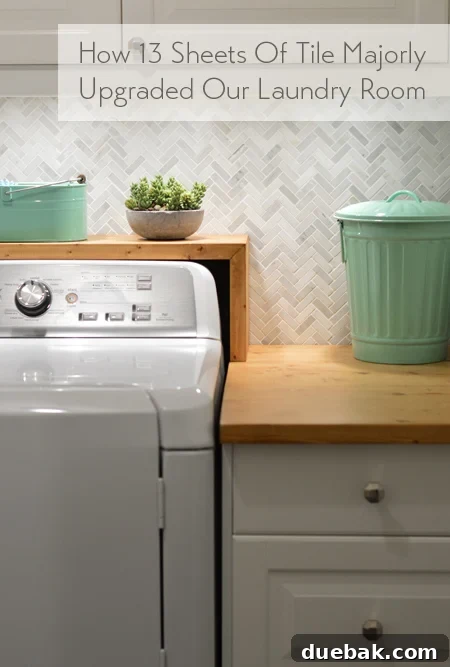
Transforming Our Laundry Room: A DIY Marble Herringbone Backsplash Installation Guide
“It’s like a cable knit sweater on the wall!” That was the immediate reaction after we successfully installed the elegant marble backsplash tile on the back wall of our laundry room. And frankly, the idea of an under-cabinet “sweater” that adds warmth, texture, and a touch of luxury is something we can absolutely get behind. It feels like just yesterday we were tackling the laundry room floor tile (and indeed, we were), but this time, the project involved the beautiful marble we had acquired a while back, destined for the space behind our trusty washer and dryer.
To truly appreciate the transformation, here’s a sneak peek from the near future, showcasing the completed laundry room and how all the elements, including this gorgeous backsplash, harmoniously came together:
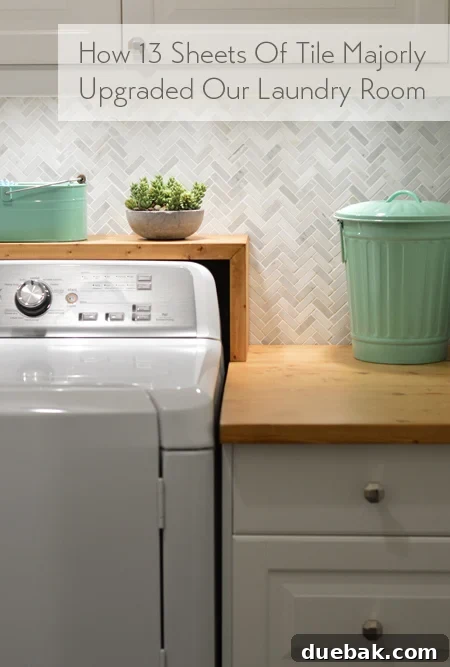
Seeing that final vision is incredibly exciting, isn’t it? Returning to the present, the room now feels profoundly more upgraded than the blank, utilitarian box we began with. Achieving this significant aesthetic leap required a mere 13 sheets of tile, each contributing to an impressive and visually captivating feature wall. The intricate herringbone pattern, crafted from the mosaic marble, instantly adds character and sophistication that was previously lacking, proving that even a small change can have a monumental impact on a room’s overall ambiance and design.
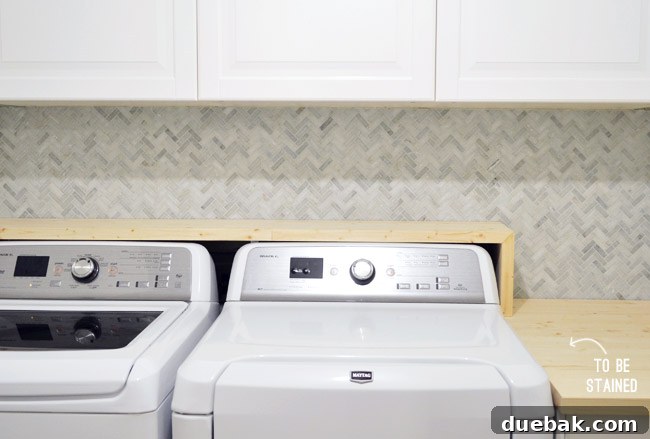
Strategic Planning: Integrating a Removable Shelf with Our Backsplash
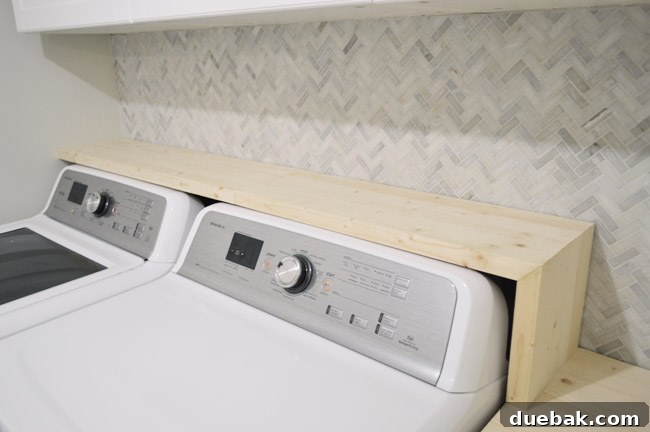
While the focus is on the tile, let’s momentarily set aside the unfinished shelf/counter. It’s still a work in progress, needing staining, sealing, and final installation, which we plan to tackle later this week. However, its preliminary construction was crucial to our tiling strategy. The key design feature of this shelf is its complete removability, achieved by resting on sturdy L-brackets. This thoughtful design ensures we retain easy access behind the appliances – a vital consideration for maintenance or in emergencies, allowing us to even reach the water shut-off in the tight triangle between the machines. Beyond practicality, this new wooden shelf will serve a dual purpose: it will prevent stray socks from disappearing into the abyss behind the washer and dryer, and it will introduce a much-needed layer of warmth and organic texture to the room, complementing the cool elegance of the marble.
Our decision to construct the rough shelf/counter before tiling this specific area was entirely strategic. It allowed us to accurately mark a precise line indicating the lower boundary for our tile work. This way, we avoided tiling where the L-brackets would eventually be installed. Hanging the brackets first and then tiling around them promised a much smoother installation process compared to attempting to cut intricate tile shapes to accommodate pre-tiled areas. This forward-thinking approach significantly reduced potential headaches and ensured a clean, professional finish.
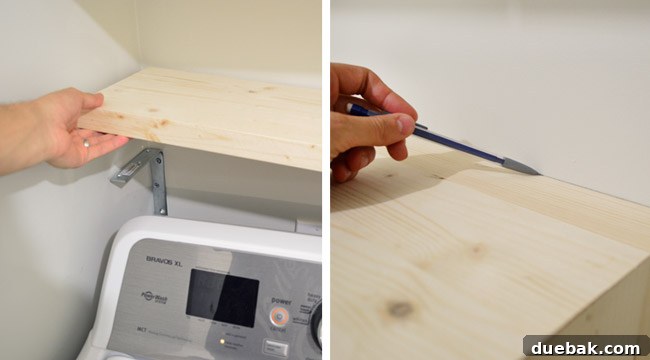
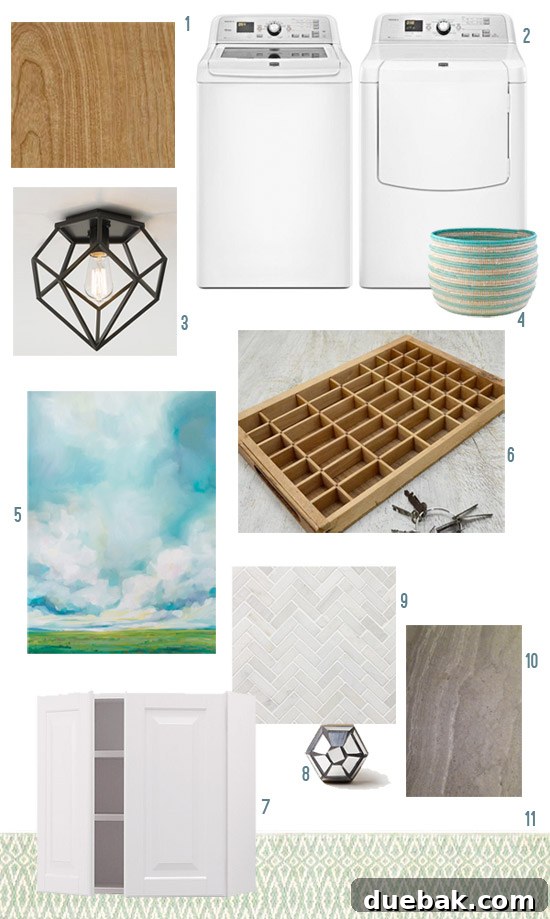
Regarding the shelf’s aesthetics, we envision staining the wood slightly darker, aiming for a shade reminiscent of option #1 on our mood board. Speaking of which, you can see our chosen wall tile, the exquisite Hampton Carrera marble from The Tile Shop, prominently featured as #9 in the design scheme. This mood board was instrumental in visualizing the entire room, ensuring all elements would coalesce into a cohesive and inviting space. For those interested in all the sources from this comprehensive mood board, they are detailed in this earlier post.
Embracing New Techniques: Marble Mosaic and Mastic Application
This particular tiling project introduced two exciting new elements to our DIY repertoire. Firstly, we ventured into a different type of tile application. While we previously crafted our own larger herringbone pattern using marble subway tile from Home Depot on our old fireplace, this project involved a much tinier marble herringbone pattern that came in convenient mosaic sheets. We had experience with mosaic sheets before, specifically with ceramic penny tile, but combining this intricate mosaic format with marble was a new challenge and learning curve. The delicate nature of marble, coupled with the small, pre-arranged pieces, demanded a refined approach.
Secondly, we used mastic for the first time as our adhesive. Mastic offered the significant advantage of allowing us to tile directly over the painted drywall. To ensure optimal adhesion, we did take the preparatory step of sanding the drywall to give it a slightly grittier texture. This simple yet crucial step enhances the bond between the mastic and the wall surface, preventing any future delamination. Using mastic felt like an appropriate choice for a backsplash application where moisture exposure is less intense than in a shower, for instance, and the convenience of a pre-mixed product saved valuable time.
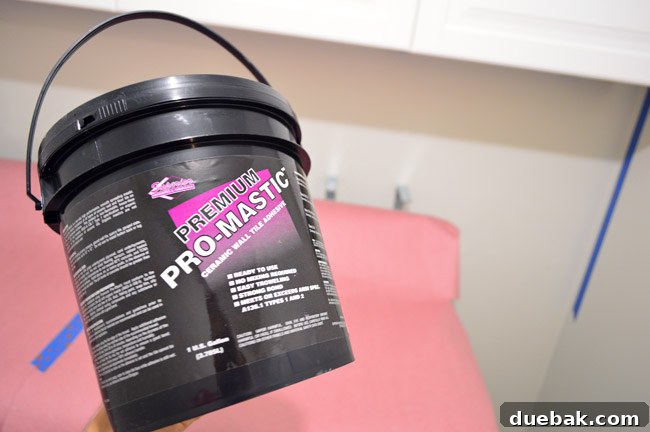
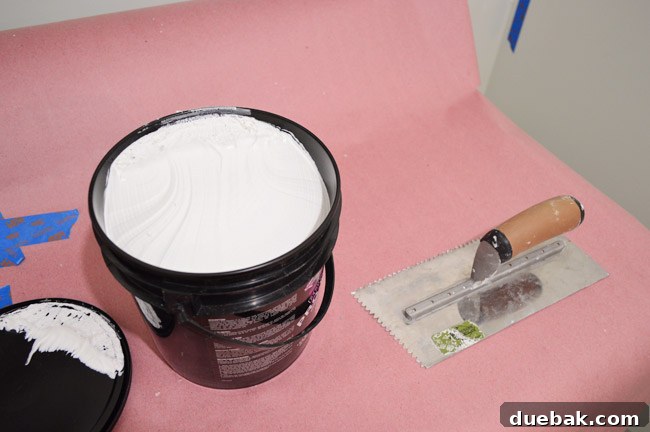
The mastic we sourced from The Tile Shop arrived premixed, boasting a consistency akin to spackle or drywall mud. Despite its different composition, the application process felt remarkably similar to spreading thinset, which we used for the laundry room floor. However, for the specific combination of mastic and these smaller mosaic tiles, we opted for a smaller 3/16″ v-notch trowel. This finer notch size is ideal for ensuring the right amount of adhesive is applied to each small tile, preventing squeeze-out and ensuring a strong, even bond without over-applying the material. Precision in adhesive application is paramount when working with mosaic sheets to maintain uniform grout lines and a flat surface.
Mastering Marble Cuts: Precision with a Wet Saw
A significant source of apprehension for this project was the prospect of cutting the delicate marble mosaic tiles without excessive waste, especially given their back-ordered status. Our previous experience with mosaic sheets – the ceramic penny tile in our kitchen – involved a considerable amount of trial and error to achieve clean cuts. Back then, the wet saw proved challenging, often damaging the mesh backing, leading us to rely on tile nippers. However, this time, extensive research into tips for cutting marble mosaics online suggested that the wet saw, when used correctly, was indeed the superior method.
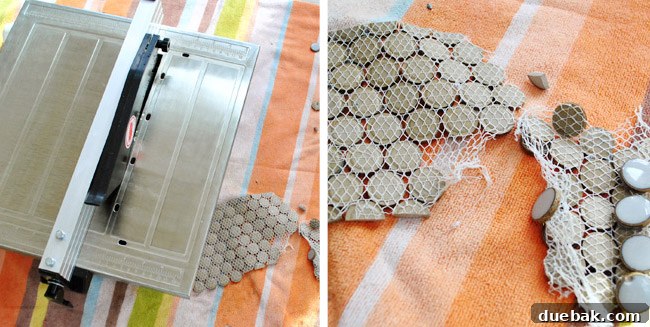
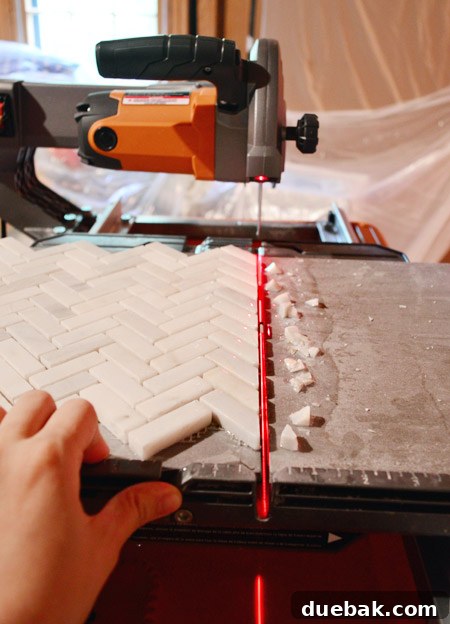
To our immense relief, the wet saw worked WONDERFULLY! We could almost hear our collective sighs of relief. A critical tip that proved incredibly effective was placing two scrap tiles (or even wood, as we learned) on either side of the blade. This clever trick provided a stable, flat surface for the mosaic sheet to rest on as it passed through the blade, preventing the small marble pieces from shifting or chipping. This simple technique made all the difference in achieving clean, precise cuts on the delicate marble.
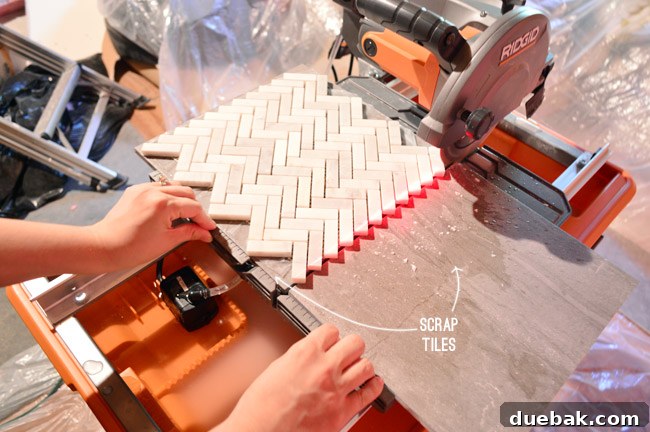
Most of our cuts involved trimming the top edges of a few tiles to ensure they sat flush against the side walls or the underside of the cabinets. Our initial concern was that the blade might simply push the tiny corners out of place. However, by maintaining a steady, unhurried pace and ensuring a continuous flow of water to the blade, the saw performed exceptionally well, making clean incisions every time. Sherry was so impressed, she declared she wants to take the tile saw out to dinner. It seems we have a new addition to our DIY love triangle!
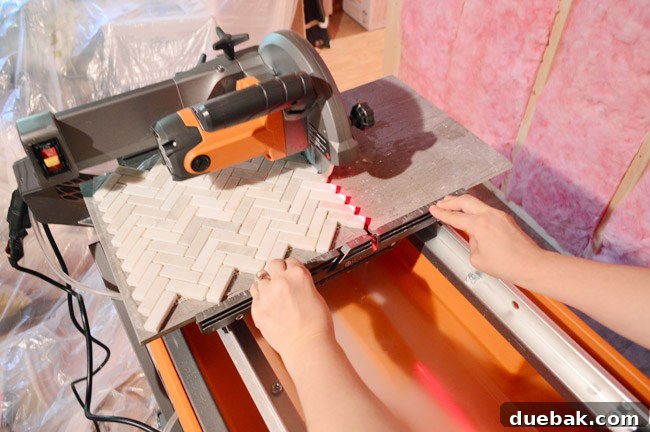
I’m quite certain we wouldn’t have enjoyed the same level of success with my older wet saw. The smooth, rolling tray on our new saw, combined with its precise laser line, significantly contributed to the effortless and accurate cutting process. The laser line was particularly invaluable for maintaining perfectly straight cuts, especially along the intricate angles of the herringbone pattern. This technological advancement truly elevated our tiling experience, making what could have been a frustrating task into a surprisingly satisfying one.
Seamless Application: Laying the Marble Mosaic Sheets
Unfortunately, I only managed to capture one photo during the mastic application, so this image jumps ahead to being roughly halfway done. Mastic, in our experience, sets noticeably faster than thinset, which dictated our workflow. To prevent premature drying, we meticulously spread only enough mastic for two tile sheets at a time. This allowed us ample working time to perfectly position each sheet without the adhesive hardening prematurely, ensuring a strong and uniform bond across the entire backsplash. Speed and precision are key when working with quick-setting adhesives.
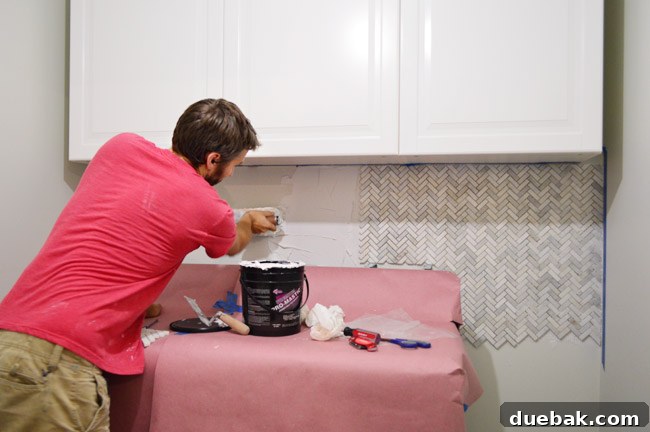
Once I had skillfully spread the mastic using the flat side of the trowel and then scraped it with the v-notched side to create the ideal ridges for adhesion, Sherry took charge of the delicate task of applying each sheet of tile. Her meticulous attention ensured each sheet was perfectly positioned, nesting seamlessly into the existing pattern without any visible gaps or misalignments. The mastic instructions advised a slight “twisting” motion to ensure an optimal bond, effectively embedding the mesh backing into the adhesive. While making crazy, gnarled-looking fingers is entirely optional, a firm but gentle twist certainly helps secure the tiles in place.
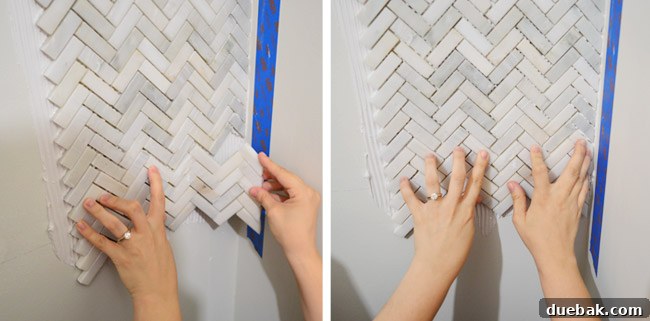
Much like our experience with laying sheets of penny tile, this process demanded a highly careful eye and an acute sense of precision (thank goodness for Sherry’s unwavering attention to detail!). It was critical to ensure the intricate herringbone pattern aligned perfectly from one sheet to the next. We quickly discovered that the factory spacing on some sheets wasn’t always flawless. Occasionally, stepping back would reveal an obvious vertical seam where the pattern seemed slightly off. To rectify these imperfections, Sherry expertly “smooshed” the sheets together gently or subtly nudged them higher or lower, bridging those minor gaps until they blended seamlessly with the surrounding tiles. This meticulous adjustment is crucial for achieving a professional, integrated look that doesn’t scream “DIY.”
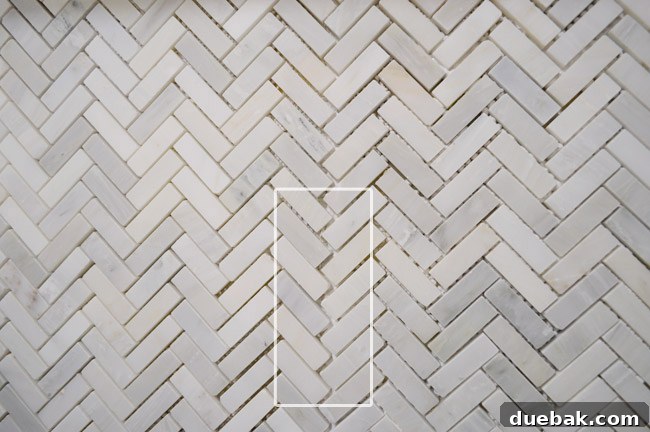
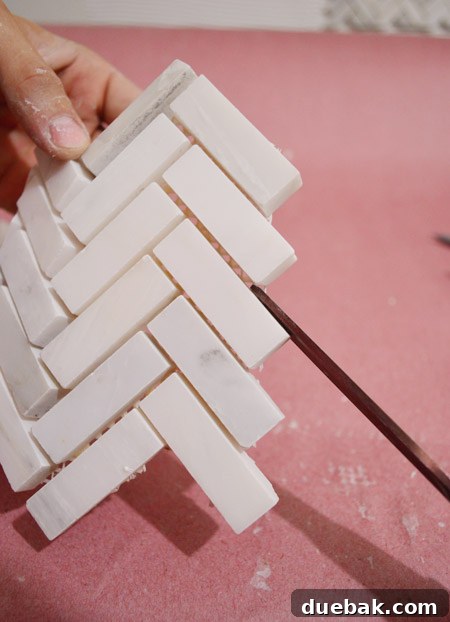
One practical tip that significantly streamlined our installation was to carefully snip out any excess mesh backing that extended beyond the edge of a tile sheet. This overhang sometimes interfered with our ability to position the edge tiles snugly against the already set ones. By removing this extraneous mesh, we ensured that each new sheet could nest perfectly into place, allowing for tighter joins and a smoother overall application process. This small but effective adjustment made a big difference in maintaining consistent grout lines and achieving a truly integrated appearance.
Another strategic technique we employed to further disguise any potential horizontal seams was staggering our tile sheets. For the areas above the appliances, which required approximately 1.5 sheets vertically, and the two vertical rows above the counter, needing 2.5 sheets, this method was particularly effective. We would begin one vertical row with a full sheet at the top and a half-sheet at the bottom. The subsequent vertical row would then start with the leftover half-sheet at the top, followed by a full sheet at the bottom. This deliberate staggering prevents any single horizontal line from extending across the entire back wall, which could otherwise create a conspicuous and undesirable seam, detracting from the overall visual flow of the herringbone pattern. It’s a subtle detail that makes a significant impact on the finished product.
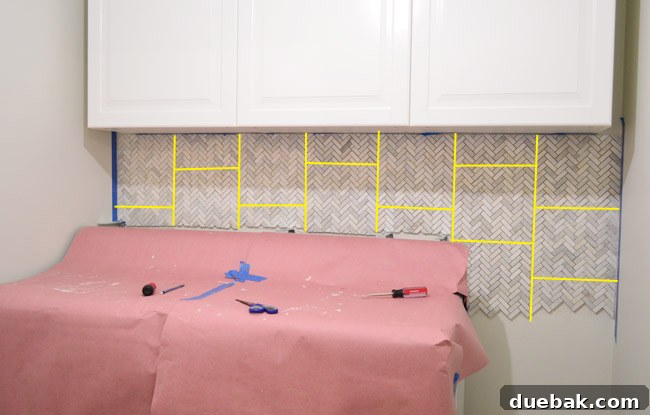
If all the horizontal seams were to align perfectly across the entire backsplash – for instance, if every top piece consisted of a full tile sheet – it would inevitably create a distinct and very obvious seam running horizontally along the back wall. Our objective was to meticulously avoid such a stark visual break, ensuring the herringbone pattern flowed continuously and organically across the entire tiled surface, enhancing the illusion of a custom, hand-laid installation rather than a series of attached sheets.
The Final Touch: Grouting and Haze Removal
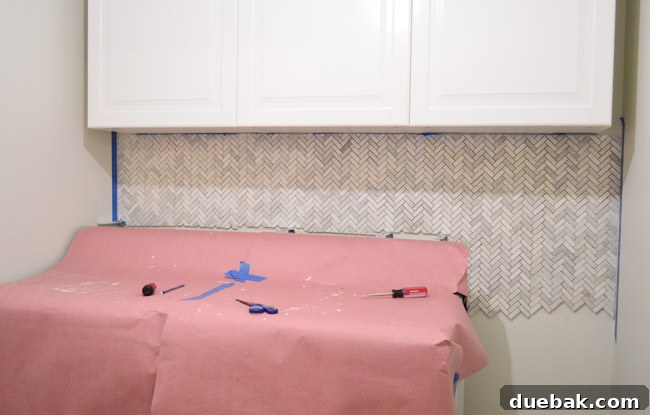
We efficiently hung all the tile sheets in approximately two hours on a Saturday afternoon, a feat accomplished while Clara napped peacefully and Teddy remained mostly entertained with his playmat-bumbo rotation (with a brief nursing break integrated, of course). The mastic, known for its rapid drying time compared to thinset, was likely dry enough for grouting by Saturday night. However, to err on the side of caution and ensure maximum adhesion, we patiently waited until yesterday morning to begin the grouting process. Given that the spaces between our intricate marble mosaic tiles were slightly larger than an eighth of an inch, we opted for sanded grout. Specifically, we used the “Standard White” color from The Tile Shop, which perfectly complements the cool tones of the Hampton Carrera marble and provides a classic, clean finish.
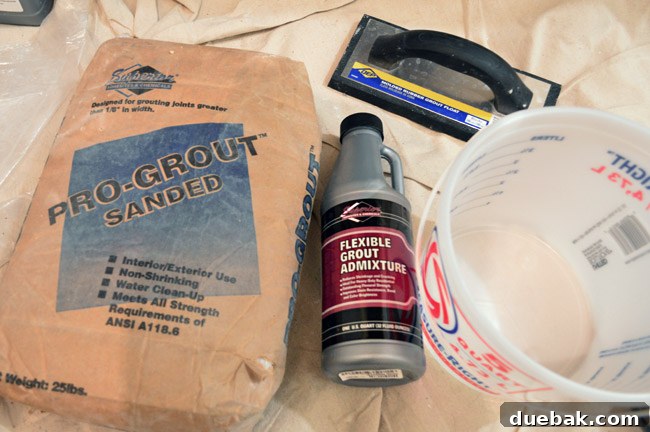
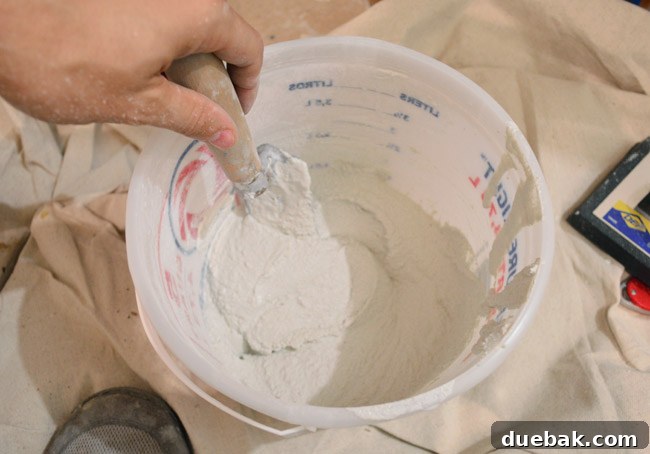
Even though this backsplash covered a smaller area compared to the laundry room floor, it demanded a significantly greater amount of grout due to the myriad of gaps between the tiny mosaic pieces. Understanding this, I mixed up just enough grout to cover about half of the wall. This strategic decision was based on anticipating the increased effort required for working the grout into all those small crevices, preventing the mixture from drying out prematurely while I meticulously worked each section. This approach ensured that every gap was thoroughly filled, guaranteeing both the structural integrity and aesthetic appeal of the tiled surface.
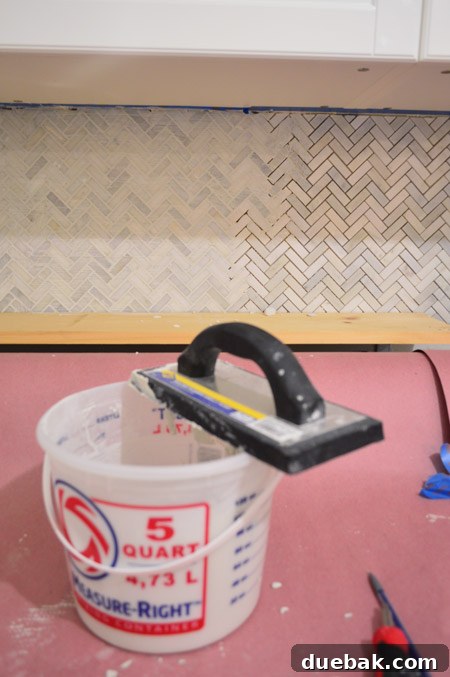
During the grouting process, I also wisely positioned a scrap piece of wood where the future shelf would eventually sit. This served as an excellent drip guard, catching any excess grout and preventing it from inadvertently smearing onto the floor behind the washer and dryer. This simple protective measure saved us considerable cleanup time and effort, ensuring that the only areas receiving grout were precisely where it was intended.
Once the entire bucket of grout (which covered approximately half the wall) had been fully applied and pressed into all the joints, I immediately began wiping it down with a lightly damp sponge. This crucial step smoothed out the grout lines, creating a uniform finish, and effectively removed the majority of the excess material from the tile surface. Working quickly and systematically during this stage is essential to prevent the grout from setting too firmly on the tile faces, making subsequent cleanup much more manageable.
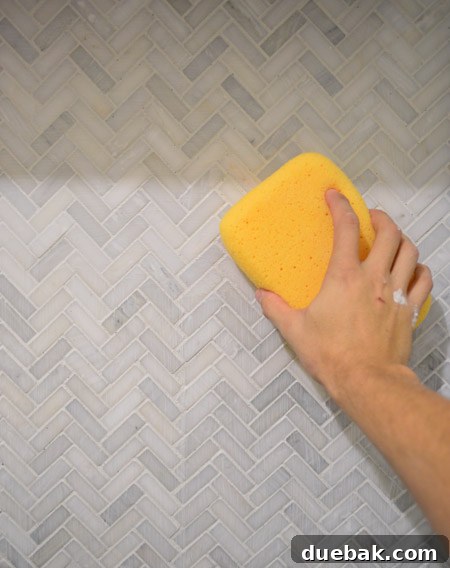
By now, we’ve learned to anticipate the inevitable appearance of a subtle haze as the grout begins to dry. This phenomenon used to cause us a fair amount of panic (“Oh no, did we not sponge well enough?!”). However, with more experience under our belts, we now recognize it as a perfectly normal and unavoidable part of the tiling process (at least for us!). Thankfully, there are several effective methods to address and eliminate this grout haze, restoring the tiles to their intended brilliance.
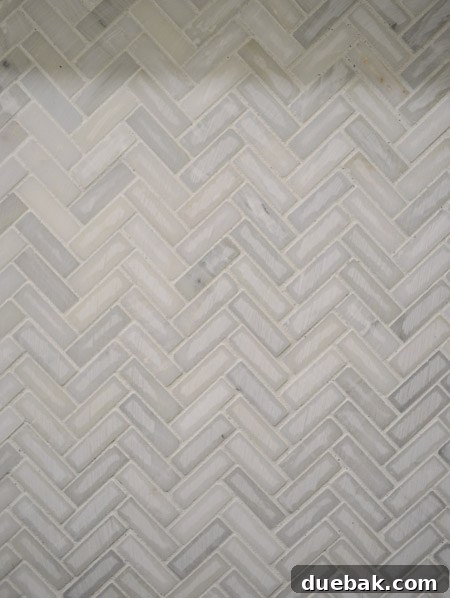
For polished marble tiles, a critical consideration is avoiding chemical haze removers, as they can potentially damage the delicate finish of the stone. Therefore, the task of achieving a pristine, haze-free surface fell to a tried-and-true method I affectionately call “elbow grease.” I diligently used a soft microfiber cloth to buff away the drying haze from the marble tile. It wasn’t the fastest process, requiring patience and sustained effort, but the difference it made was substantial. Each buffing pass brought out more of the marble’s natural gleam, proving that sometimes, the simplest solutions are the most effective, especially when dealing with sensitive materials like polished natural stone.
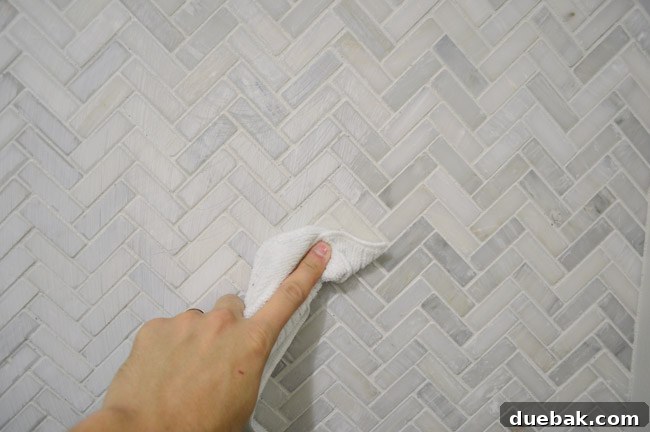
Here’s the stunning result after two dedicated buffing passes. While the improvement is undeniable, Sherry, ever the perfectionist, believes one more pass will ensure it achieves maximum gleam. Polished marble, particularly, can appear somewhat dull if even the slightest trace of haze remains, so a thorough buffing is essential to unlock its full reflective potential. I understand that the bottom edges of the tile might look a little rugged in these shots, but that leads us to another key design element…
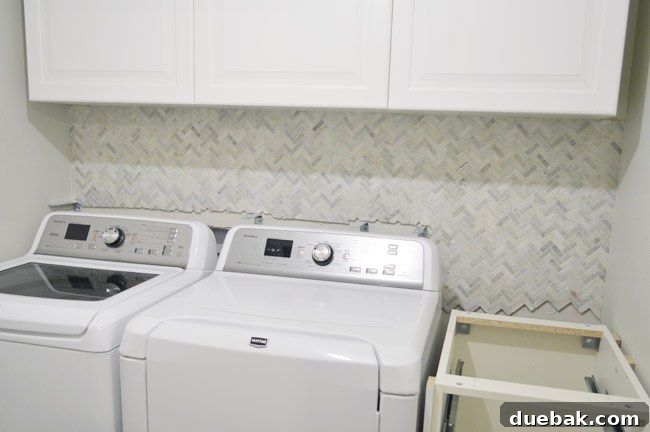
…and that’s the ingenious beauty of the custom shelf and counter that will soon be installed directly over these edges. Once they are meticulously stained, sealed, and precisely put into place, they will perfectly conceal any minor imperfections at the tile’s lower boundary. This integrated design ensures a clean, finished look, elevating the entire backsplash and laundry area. It’s a classic example of how thoughtful design details contribute to both aesthetics and function, neatly tying everything together.
Future-Proofing Our Laundry Room Design
Update: We’ve received some insightful questions regarding the longevity and adaptability of this design, particularly concerning what might happen if we eventually need to replace our washer and dryer, potentially requiring a new shelf placement or additional tiling. From a width perspective, standard spacing means a new washer/dryer should slip right into place, allowing the side cabinet and existing counter to remain undisturbed. However, appliance heights can vary slightly. Should this be the case, the beauty of our design lies in its flexibility: the small shelf is completely removable, making it relatively simple to remake or adjust if a new height necessitates it. While we couldn’t tile significantly lower due to the fixed bracket placement, we thoughtfully saved extra tile sheets and grout. This foresight means we can easily add more tile lower down in the future, if ever needed, ensuring our laundry room remains functional and beautiful for years to come, adapting seamlessly to future changes.
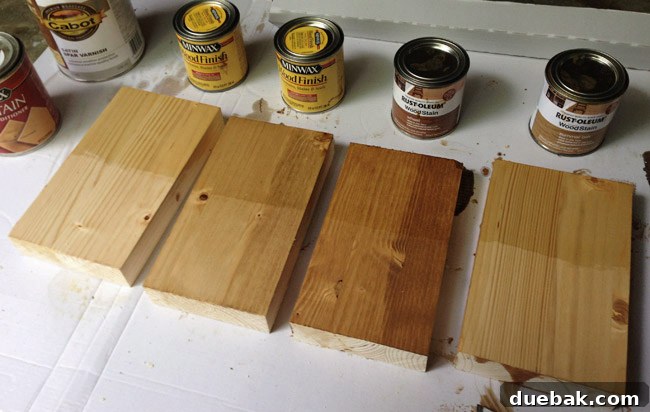
Speaking of staining the shelf and counter, we’ve already begun conducting various tests on scrap pieces of wood. Our goal is to determine the ideal stain and sealer combination that will best match our vision for the room, ensuring durability and a perfect aesthetic complement to the new marble backsplash.
Our Laundry Room Renovation Journey: Progress & Next Steps
We’re eagerly anticipating sharing the finished shelf and counter with you in just a few days! We also just realized we owe you the detailed breakdown of installing the washer/dryer and hooking up the overflow drain, so those essential steps will be covered in our very next post. Until then, here’s an updated look at our comprehensive laundry room renovation to-do list, reflecting our exciting progress:
Move washer & dryer and remove cabinetry(more on that here)Demo cased opening, side wall, back wall, part of the floor and the attic stepFrame new walls & doorways
Move laundry plumbing hook-ups & drains
Move laundry electrical plus other outlets/lights(more on those last four bullets here)
Move dryer vent & HVAC duct(more on that here)Hang drywall(more on that here)Add insulation(more on thathere)Mud, tape, and sand all the drywall seams in the new room(more on that here)
Prime & paint laundry room and hallway walls(more on thathere)
Tile & grout new laundry floor(more on that here)Hang upper cabinets and install lower cabinetReinstall washer & dryer(more on those two bullets here)- Stain, seal, and install the wood counter & shelf
- Rehang the laundry door & add our new glass door to the future bunk-room
- Add cabinet fillers, crown molding, baseboard, & door casings
- Install cabinet hardware & soft-close drawer upgrades
- Add a ceiling light fixture & under cabinet lighting
- Hang art, ironing board, and bring in other laundry room items (drying rack, trash can, etc)
- Finishing touches and repairs (fix the drywall in the garage, add the step to the attic, etc)
With only seven bullets left to check off, and the immense satisfaction of having a fully functional washer and dryer once again, it truly feels like we are in the home stretch of this ambitious renovation. Also, there’s a fair chance that Sherry is currently petting the beautiful new marble tile as I type this, completely enamored with the finished product. An intervention might indeed be necessary to separate her from her latest DIY love! We’re incredibly proud of how this project has come together, and we hope our journey inspires your own home improvement endeavors.