
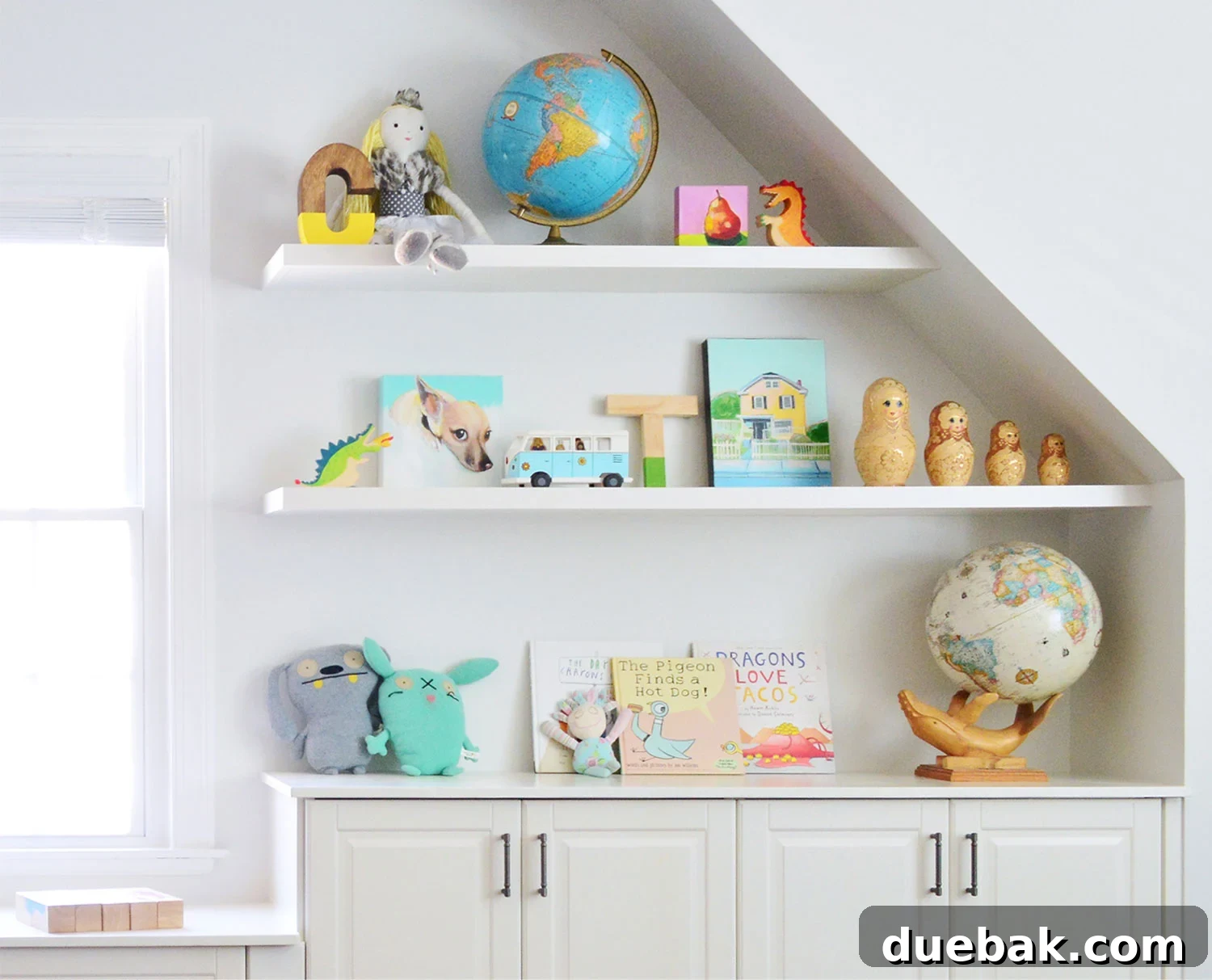
Elevate Your Space: A Comprehensive Guide to Building Modern, Thin DIY Floating Shelves
Transforming a room often comes down to clever storage and thoughtful design. Among countless home improvement projects, building your own DIY floating shelves stands out as a rewarding endeavor, adding both style and functionality. We’ve tackled numerous DIY shelving solutions across our homes, but the sleek, modern floating shelves we crafted for our bonus room remain a true favorite. This detailed tutorial focuses on achieving that coveted thin, contemporary look, setting our shelves apart from the bulkier options commonly found. While this guide emphasizes a slender profile, we’ve also adapted this method for more robust floating kitchen shelves, proving the versatility of the core technique.
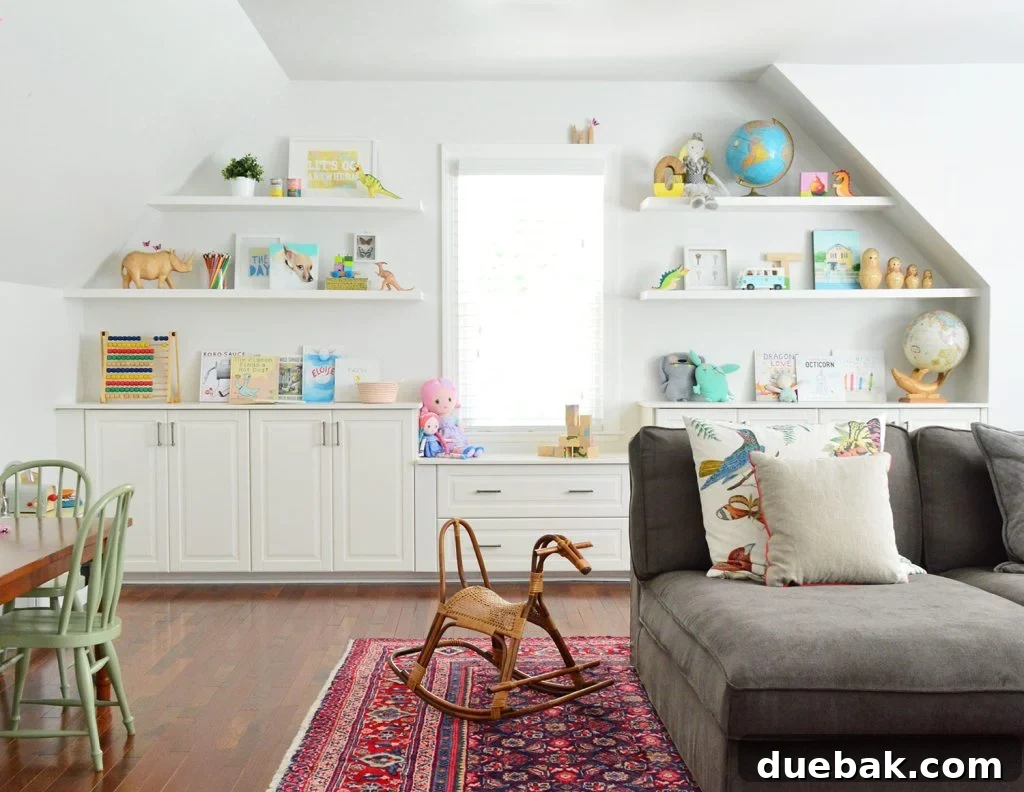
Beyond the shelves themselves, the surrounding elements play a crucial role in creating a cohesive, built-in aesthetic. We encourage you to explore our guide on how we meticulously constructed the cabinets directly beneath these shelves. This complementary project was vital for defining the entire niche area, providing both closed and open storage. That post also delves into our design process, illustrating how we leveraged Ikea’s intuitive online kitchen planning tool to visualize various layouts and select the perfect configuration for our space.
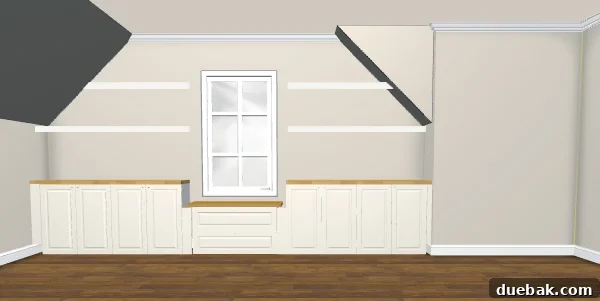
The design we ultimately settled on, as depicted above, was chosen for its elegant simplicity and efficiency. It perfectly integrated into the recessed wall area of the room, providing a wealth of storage that is both highly functional and visually appealing. This integrated approach not only maximizes utility but also enhances the overall architectural appeal of the room, creating a custom look without the custom price tag.
Table of Contents
Supplies For Building DIY Floating Shelves
Initially, our plan was to follow this DIY Ikea floating shelf tutorial we published years ago. However, upon reconsideration, the 2-inch thickness of those shelves felt too substantial for the delicate aesthetic we envisioned for this particular space. We sought a thinner, more refined look. Inspired by our friend Sarah at The Ugly Duckling House, who ingeniously adapted a similar process to create slender floating shelves, we decided to embark on a similar path. The result is a design that is both sturdy and visually light, perfectly complementing the modern bonus room.
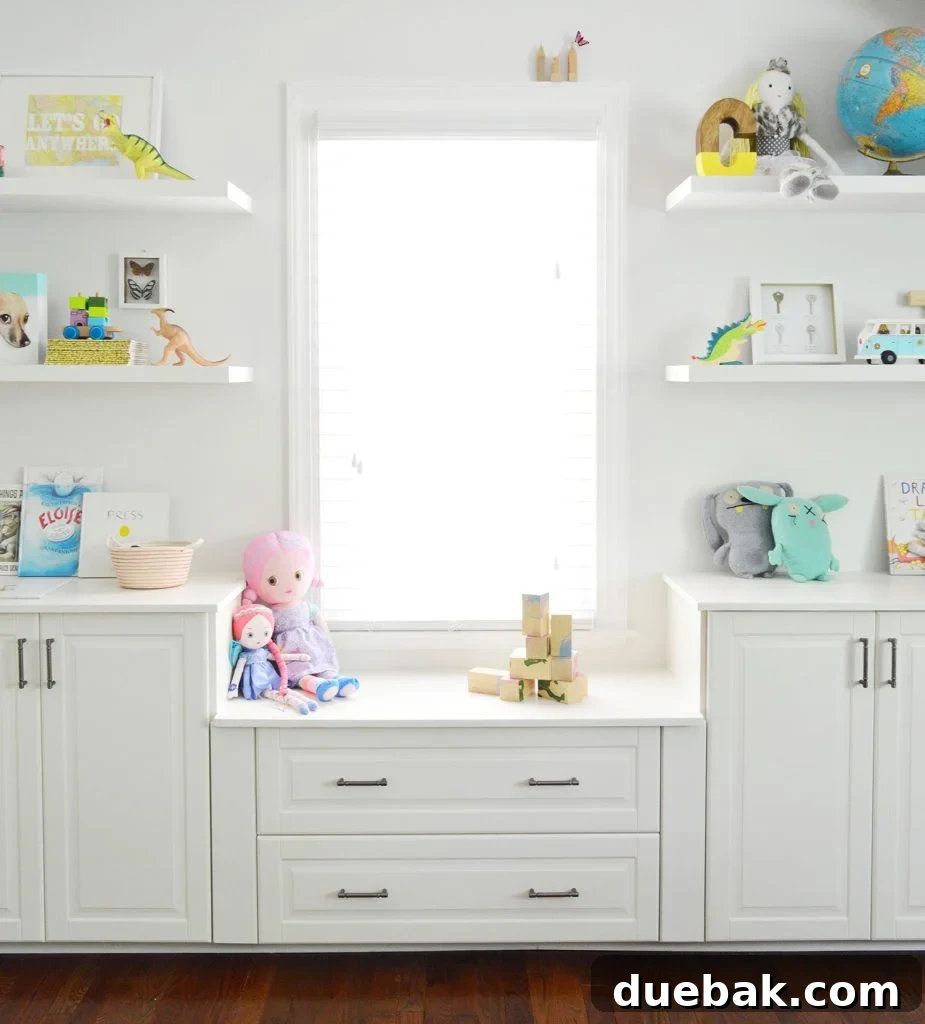
To recreate these elegant floating shelves, gather the following tools and materials. Proper preparation is key to a smooth and successful DIY project:
- Pine Boards: You’ll need 1×2-inch and 1×3-inch pine boards for constructing the robust support bracket that will bear the weight of your items. Additionally, 1×2-inch pine boards are required for the shelf facing, providing a clean, finished edge.
- Plywood: Acquire 1/2-inch plywood for the top surface of each shelf. This offers a sturdy, flat platform. For the underside of each shelf, thin 5mm plywood is crucial for achieving the desired slim profile while still providing structural integrity.
- Miter Saw: Essential for precise, angled cuts, especially when creating the mitered corners for the shelf face boards.
- Table Saw or Circular Saw: Used for cutting plywood sheets down to the required widths and lengths. A table saw offers more precision for ripping long boards, while a circular saw is more portable and versatile for larger sheets.
- Power Drill/Driver: Indispensable for drilling pilot holes and driving screws, securing the bracket and shelf components.
- Nail Gun: A nail gun (cordless or pneumatic) will significantly speed up the process of attaching plywood and face boards, ensuring a strong and neat finish.
- Long Level: Absolutely critical for ensuring your shelves are perfectly horizontal. A long level (2-4 feet) will give you the best accuracy.
- Measuring Tape: For all your precise measurements and cuts.
- Stud Finder: Necessary for locating wall studs, which are vital for securely anchoring your shelf support bracket.
- Clamps: Various clamps, including pocket hole clamps and general-purpose quick-grip clamps, will hold pieces steady during drilling, gluing, and screwing.
- 2 1/2-inch Structural Screws: These heavy-duty screws are designed to provide superior holding power when fastening the support bracket to wall studs.
- Wood Glue: A strong adhesive that provides additional reinforcement, especially for components that will be nailed, preventing loosening over time.
- Pocket Hole Jig (optional but highly recommended): This tool makes strong, concealed joints, perfect for attaching the support spokes to the back piece of the bracket.
- Safety Glasses and Ear Protection: Always prioritize safety when working with power tools.
The exact quantity of wood required will vary based on the number and dimensions of the shelves you plan to install. It is paramount to meticulously measure your space and plan your layout before purchasing any materials. This prevents waste and ensures you have everything you need for a seamless project.
Step 1: Build Your Shelf Support Bracket
The foundation of any robust floating shelf lies in its hidden support bracket. Unlike many off-the-shelf floating shelves that come with a pre-fabricated metal bracket, our DIY approach involves constructing a custom wooden bracket directly onto which the shelf will be built. This method offers superior customization and strength for a fraction of the cost. The bracket consists of a long horizontal piece that mounts against the wall, with several shorter “spokes” projecting outwards to support the shelf’s depth, as illustrated below.
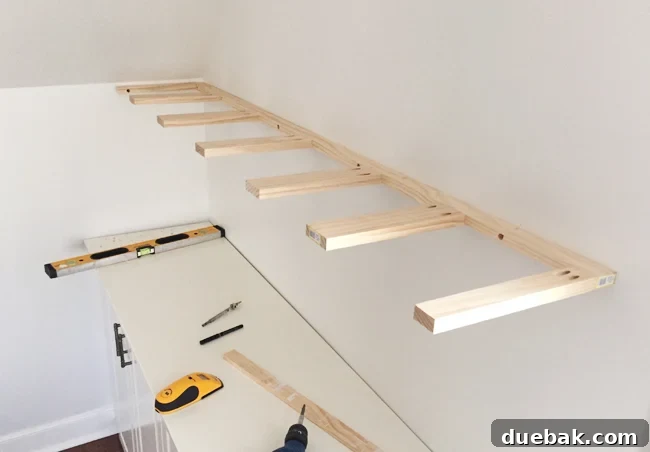
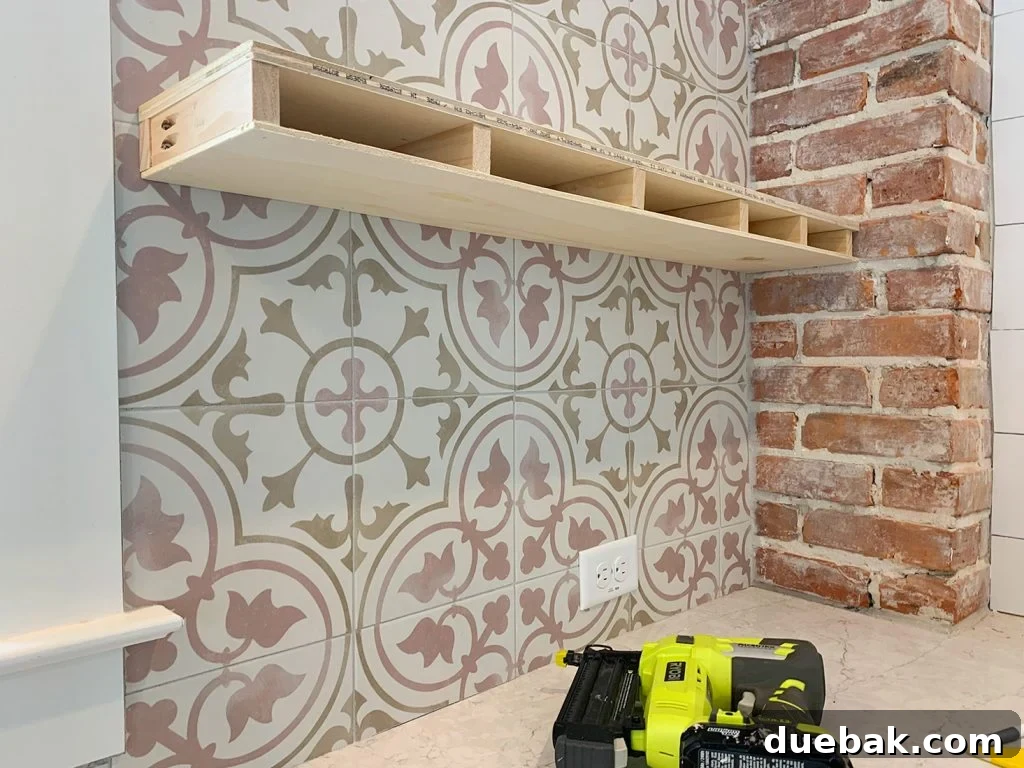
A key modification for achieving our desired thin aesthetic is laying the bracket pieces flat on their wider sides, as seen in the image above. This contrasts with traditional bracket designs where spokes are often stood on their edges for maximum rigidity (as shown in the thicker kitchen shelf example below). While this flat orientation results in a visibly thinner shelf profile, it does slightly reduce the overall load-bearing capacity. Therefore, if you anticipate storing exceptionally heavy items like large collections of books, heavy dinnerware, or ceramics, you might consider a design with vertical spokes or reinforced supports. For decorative items, framed photos, or lighter storage in a bonus room or playroom, this thin bracket design is perfectly adequate and visually striking.
To begin constructing the bracket, accurately cut a long 1×2-inch pine board to serve as the back piece that will directly attach to the wall. Then, cut several smaller 1×3-inch pieces for the support spokes. Precision in these measurements is vital for a flush, professional finish. Remember to factor in the thickness of the finished shelf pieces that will eventually enclose this bracket. Here’s a quick calculation example for determining the optimal spoke length:
- 12.5 inches: This is your desired total finished shelf depth.
- Minus 0.75 inches: Account for the thickness of the 1×2-inch face piece that will be added to the front of the shelf.
- Minus 1.5 inches: This is the actual width (when laid flat) of the 1×2-inch bracket piece that sits against the wall.
- Equals 10.25 inches: This calculation yields the precise length required for each support spoke.
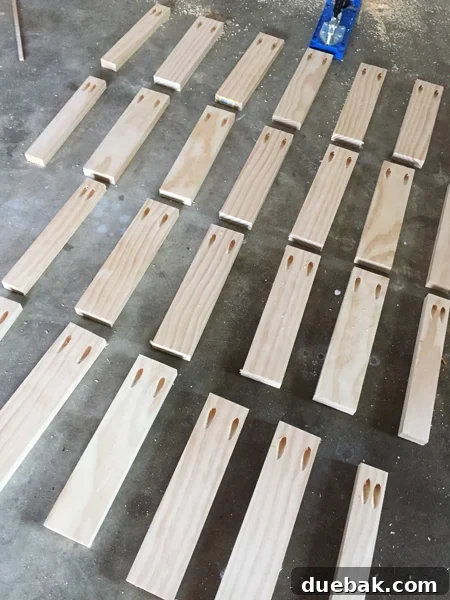
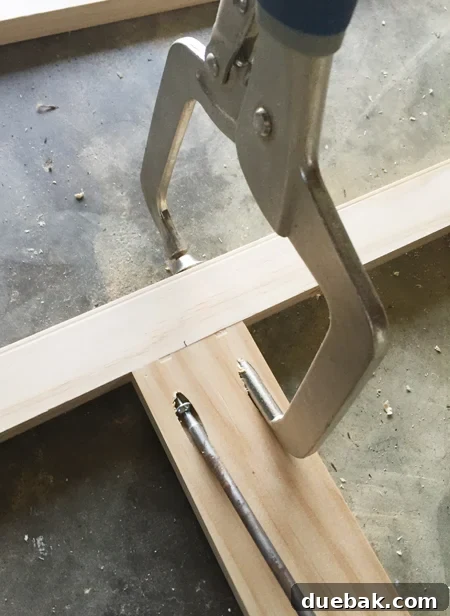
To securely attach the spokes to the back piece of the bracket, we opted for pocket holes. Using our Kreg Jig, we drilled one pocket hole into one side of each spoke. The Kreg Jig creates strong, concealed joints that are ideal for this application. Clamping the pieces firmly during drilling and assembly is paramount for ensuring perfect alignment and strong connections. A dedicated pocket hole clamp proves particularly useful for this task, holding the pieces at a perfect 90-degree angle while you drive the screws.
We intentionally positioned the support spokes more frequently than strictly necessary—roughly every 8 inches, along with one at each end of the bracket. This provides extra rigidity and peace of mind. For optimal planning, you might find it beneficial to complete the next step (locating studs) before permanently attaching all your spokes, allowing for minor adjustments based on stud placement.
Step 2: Find Your Studs & Drill Pilot Holes
For maximum strength and stability, it is imperative to anchor your floating shelf bracket directly into the wall studs behind your drywall. This prevents future sagging or detachment, ensuring your shelves are truly “floating” securely. We rely on our favorite stud finder for accurate and reliable results. Before assembling the full bracket, we meticulously located and marked the exact positions of our studs on the wall. This foresight allowed us to avoid placing any support spokes directly over these critical stud locations on the bracket itself, ensuring a clear path for mounting screws.
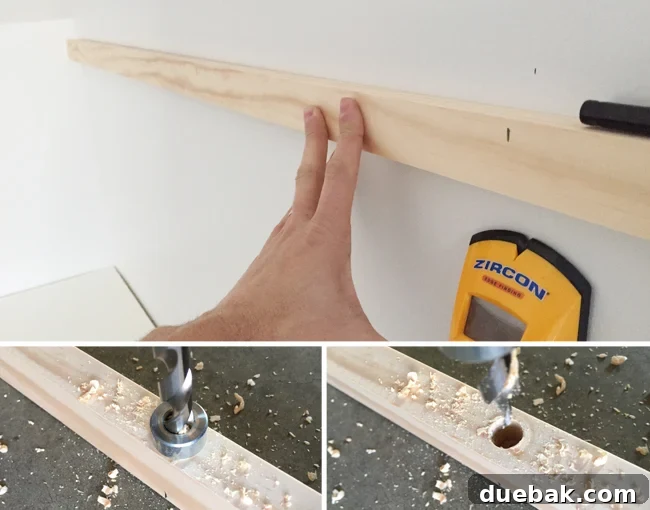
To simplify the attachment process and ensure a tight fit, we employed a clever trick: drilling slightly recessed pilot holes into our 1×2-inch back piece at each marked stud location. The drill bit designed for pocket holes (often included with a Kreg Jig) proved ideal for creating these recesses. Since our structural screws would be going through the long, flat side of the 1×2, creating these recesses allowed us to use screws of a standard length. This eliminated the need for excessively long screws that can be cumbersome to drive and might not pull the bracket as tightly against the wall, thus guaranteeing a sturdy and robust installation.
Step 3: Screw Your Shelf Bracket To The Wall
With your bracket assembled and pilot holes pre-drilled, it’s time for the crucial step of attaching it to the wall. Begin by positioning your bracket against the wall at the desired height. Using a reliable long level, meticulously ensure the bracket is perfectly straight and level before driving any screws. This is absolutely critical for the aesthetic and functionality of your floating shelves. Once leveled, use your power drill to drive the 2 1/2-inch structural support screws through the pilot holes and into the wall studs. These specialized screws are designed to provide exceptional grip and pull the bracket firmly against the wall.
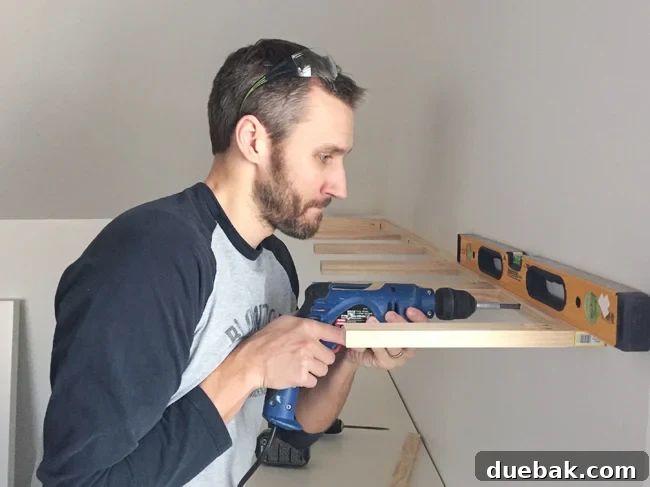
It’s common for the bracket to require a fair amount of “oomph” to pull completely tight against the wall. Don’t be discouraged by this resistance; it’s actually a positive indicator. This tension signifies that your screws have firmly engaged with the wall studs, creating an incredibly strong anchor point. A bracket that is tightly secured to the studs will result in floating shelves that are exceptionally sturdy, capable of holding your items without any wobble or concern.
Step 4: Add Your Shelf Top
Unlike other floating shelf tutorials that might involve constructing a separate box-like structure to slide over the bracket, our method integrates the shelf construction directly onto the installed bracket. This streamlined approach significantly contributes to the thin, lightweight profile of the finished shelves. For the top surface of each shelf, we utilized 1/2-inch thick sanded plywood, a durable and versatile material. Alternatively, medium-density fiberboard (MDF) could also be a suitable choice, offering a smooth finish and excellent paintability.
Wood Cutting Tip for Precision
While you can certainly cut your plywood to size at home using a table saw or circular saw, we highly recommend taking advantage of the cutting services offered at most home improvement stores. This not only saves you significant effort but also ensures remarkably straight and even cuts, which are crucial for a professional-looking shelf. For our project, we had our large 4×8-foot plywood panels precisely cut into 11.75-inch wide strips at Home Depot. Once home, we then used our own table saw to cut these strips to the specific lengths required for each shelf, tailoring them perfectly to our niche.
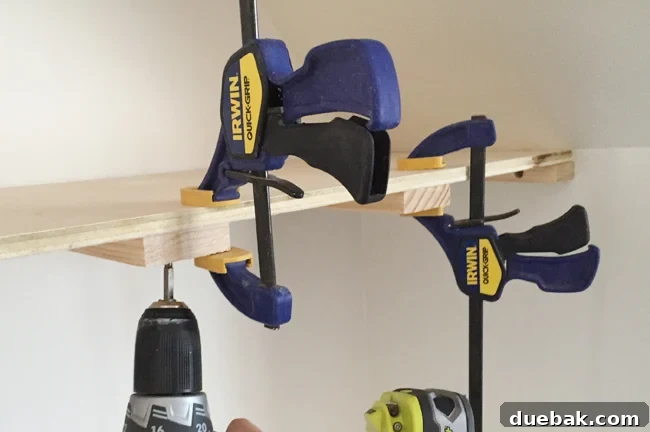
Once your plywood top pieces are cut, position one over your installed bracket. Use several strong clamps, such as Irwin Quick-Grip clamps, to firmly hold the plywood in place, ensuring it’s flush with the wall and the front edge of your bracket spokes. With the top secured by clamps, drive 1-inch screws from underneath, through the plywood and into the bracket spokes. This technique cleverly conceals the screw heads on the underside of the shelf, minimizing the number of holes that will need to be filled later, contributing to a smoother and more polished finish.
Step 5: Add Your Shelf Bottom
With the top of your shelf securely in place, it’s time to add the bottom panel. For this step, we utilized strips of thin 5mm plywood. This specific thickness is vital for achieving the ultra-slim profile of our modern floating shelves. We strategically had these bottom pieces cut at the same time as our top pieces at the home improvement store, ensuring the saw was locked at the consistent 11.75-inch width. This consistency in cutting helps maintain uniform shelf depth and a precise fit. The thinness of these boards plays a crucial role in the overall aesthetic, as you’ll observe in the next step when we add the face boards.
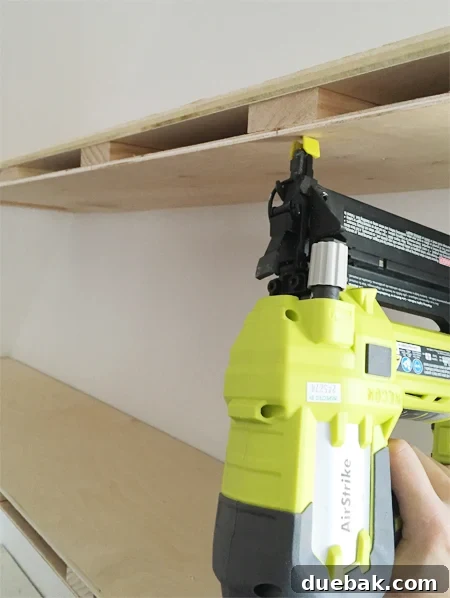
Before nailing the bottom plywood strips, apply a generous amount of wood glue to the bottom edges of the bracket spokes and the wall-side brace. Wood glue provides a robust bond that nails alone cannot guarantee. While nails offer immediate holding power, glue creates a permanent, structural connection that will prevent the shelf bottom from loosening or separating over time due to temperature changes or light impacts. Once the glue is applied, carefully position the 5mm plywood, ensuring it is flush with the sides and front of the bracket, and then use your nail gun to secure it, aiming for nails every 6-8 inches along the spokes and into the wall brace.
Step 6: Nail In Shelf Face Boards
The final construction step, and arguably the one that truly transforms your bracket into a seamless floating shelf, is adding the face boards. These 1×2-inch pine boards will cover the exposed front and side edges of the shelf, completely concealing the internal support bracket and giving the illusion of a solid, floating slab. We used our miter saw for all cuts on these face boards, including precision 45-degree mitered cuts at the corners where two boards meet. These angled cuts ensure a tight, professional-looking joint that makes the shelf appear to be one continuous piece of wood.
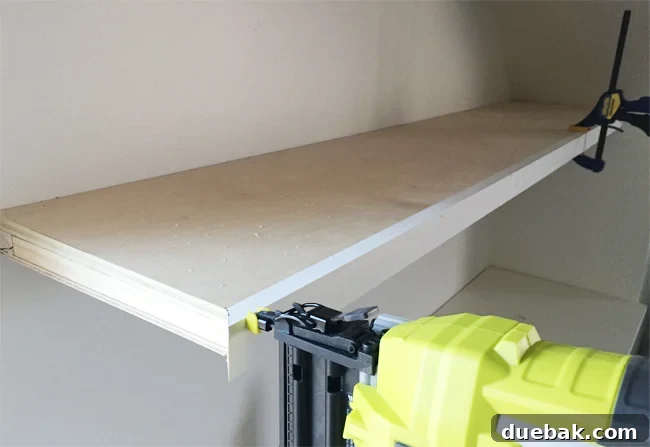
As you attach the face boards, you’ll appreciate the critical importance of the specific plywood thicknesses chosen in the earlier steps. The combined thickness of the 1/2-inch plywood top and the 5mm plywood bottom creates a total vertical dimension that is almost exactly the same as the actual width of a 1×2-inch pine board. This precise alignment allows the 1×2 face board to sit perfectly flush, creating a seamless, box-like exterior that beautifully hides the underlying support structure. Apply a thin bead of wood glue to the edges of the plywood top and bottom, as well as the front of the bracket spokes, before nailing the face board into place with your nail gun. This combination of glue and nails provides maximum adhesion and prevents any future gaps or movement, ensuring a crisp and clean edge for your floating shelves.
Step 7: Caulk, Prime, & Paint
With the construction of your modern floating shelves complete, the final step is to finish them to match your desired aesthetic and protect the wood. This finishing process involves several key stages to ensure a professional and durable result. First, take the time to meticulously fill all nail holes and any small gaps or seams where the wood pieces meet. You can use caulk for small seams along the wall, and wood filler or spackle for nail holes and mitered corner joints. Allow these fillers to dry completely, then sand them smooth for a flawless surface.
Next, apply a high-quality primer. Priming is essential, especially when working with pine, as it helps seal the wood, prevents knots from bleeding through your paint, and creates a uniform surface for your topcoat. It also significantly improves paint adhesion and coverage, reducing the number of paint coats needed. Once the primer is dry, you can proceed with your chosen finish. For these specific shelves in our bonus room, we opted for a clean, bright white finish using Benjamin Moore Simply White. This classic color complements a wide range of interior styles and brightens the space beautifully. However, the beauty of DIY is customization; you might choose a bold color to make a statement, a subtle neutral to blend in, or even a rich wood stain if you prefer to highlight the natural grain, as seen in some versions of our thicker shelves. Always apply paint or stain in thin, even coats, allowing adequate drying time between each for the best results.
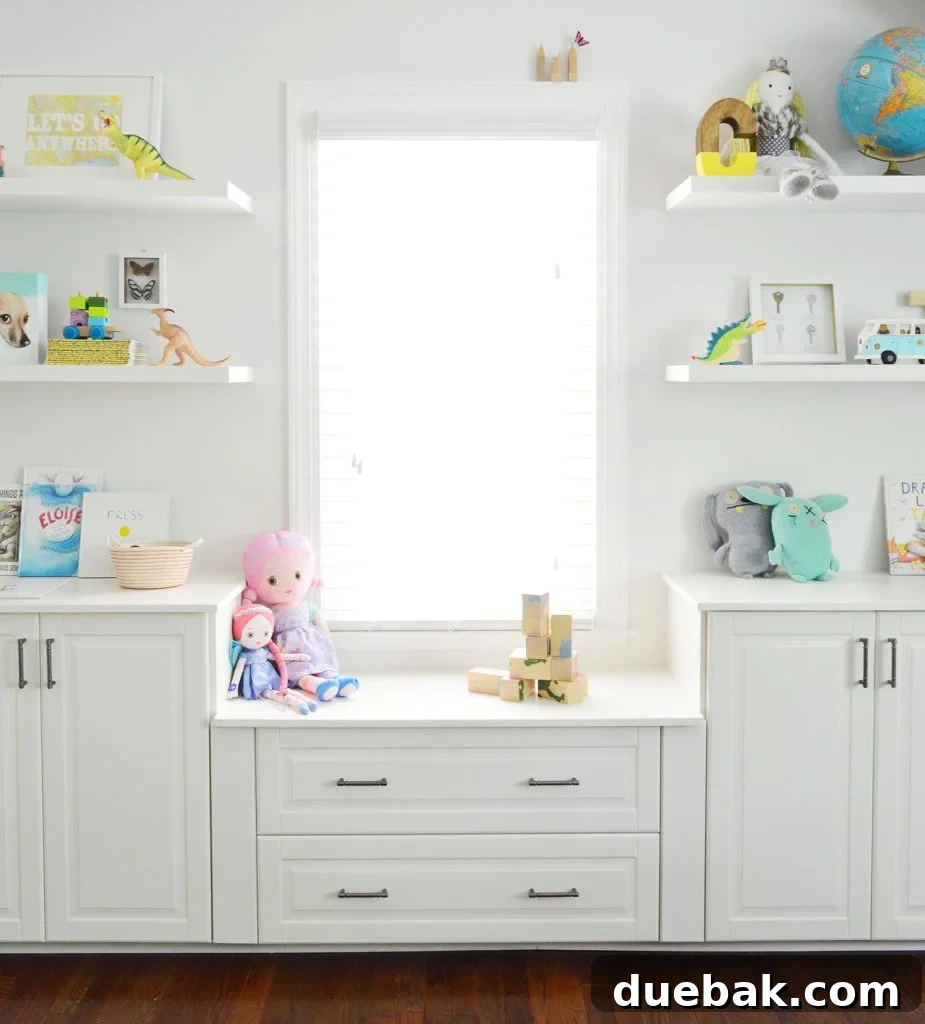
We are absolutely thrilled with the transformative impact this vertical storage has brought to our bonus room. What was once a somewhat sparse and eclectic space now feels infinitely more polished and purposeful. Not only do the shelves and built-in cabinets contribute to a more finished aesthetic, but they also serve as an open invitation for our children to engage with the space, making it a truly playful and welcoming environment. The strategic placement of these storage solutions has dramatically improved organization and visual appeal.
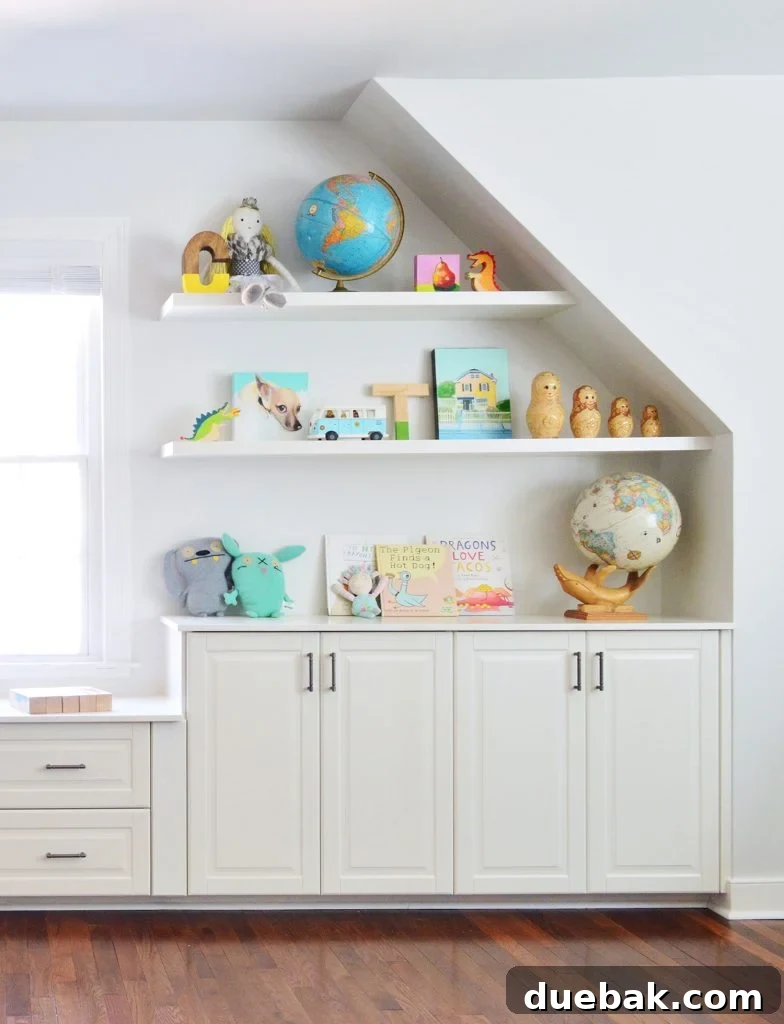
This project exemplifies how a narrow niche, often an overlooked or awkward space, can be reimagined into a powerhouse of functional storage. Providing both cleverly concealed and attractively open shelving, it fulfills diverse storage needs while enhancing the room’s character. Stepping into the hall and catching this new, organized, and beautifully designed view is a genuinely satisfying experience. These modern floating shelves are a testament to the power of thoughtful DIY in creating spaces that are both beautiful and supremely functional.
More DIY Shelf Ideas
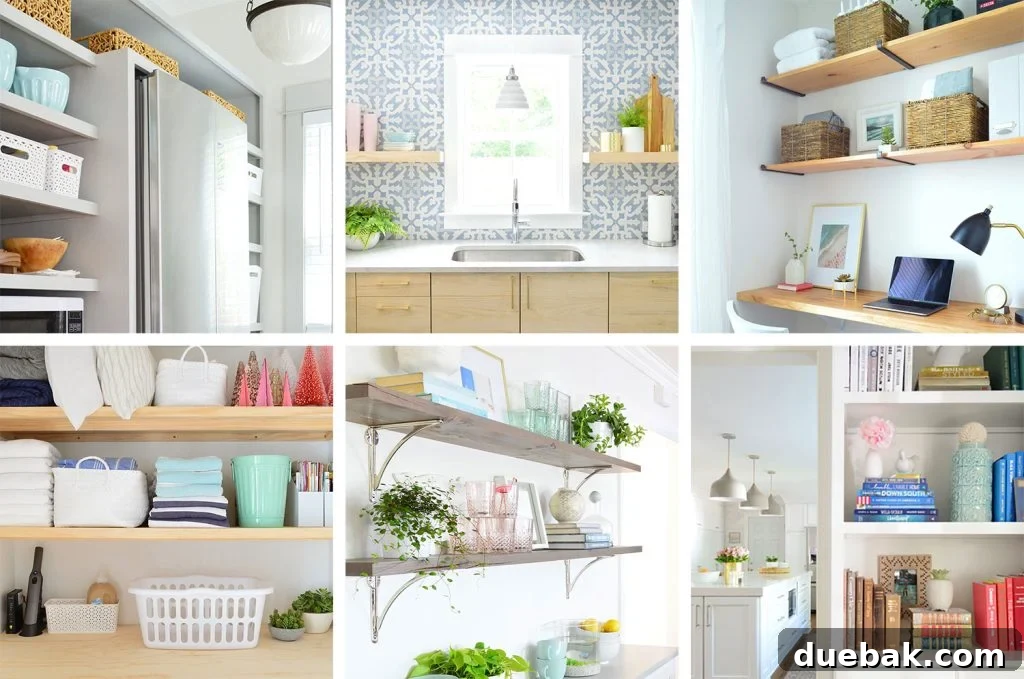
If this project has sparked your imagination and you’re eager to explore more creative storage solutions, we’ve got you covered! Our comprehensive post, 17 DIY shelving ideas, is a treasure trove of inspiration and practical advice. This extensive guide delves into a diverse range of shelving projects, catering to various needs and skill levels. From robust, heavy-duty shelves designed to hold substantial weight to elegant decorative options that add flair to any room, and specialized solutions like efficient pantry shelving, you’ll find a wealth of tips, tricks, and step-by-step instructions. Whether you’re looking to optimize a small space, create a dramatic display, or simply get organized, there’s an idea in there just waiting for your next DIY adventure.
*This post contains affiliate links, so we may earn a small commission when you make a purchase through links on our site at no additional cost to you.