

First things first. We truly appreciate you all being such good sports about our little April Fool’s Day prank (which you can revisit here). The laughter and engagement from that nautical-themed doggie mood board made our day, inspiring us to dive headfirst into our next ambitious home improvement project.

With spirits high and creativity flowing, it was time to tackle a long-overdue addition to our living room: a custom, extra-long console table designed specifically to sit behind our beloved sectional sofa, affectionately nicknamed Karl. This isn’t just any console table; it’s a massive 140-inch build, promising to transform our living space by adding much-needed functionality and style. The journey to bring this vision to life was an exciting blend of careful planning, innovative design, and hands-on woodworking.

The Genesis of a Giant: Why We Needed a Custom Console Table
From the moment Karl, our substantial sectional, found its place in our living room, we faced a common dilemma for families with young children: the coffee table conundrum. We quickly agreed that a large, traditional coffee table, even a rounded one, wouldn’t be ideal. With our little one, Clara, actively exploring, we wanted to minimize potential bumps and bruises. Our padded ottoman offered flexibility, easily movable to create space for playtime, entertaining guests, or even a thorough vacuuming session. While practical, this left a significant void in terms of functional surfaces and storage. We desperately needed a dedicated spot for everyday essentials that wasn’t our non-existent coffee table.
This led to the realization that a long console table positioned behind the sectional, between it and the wall, would be the perfect solution. Such a table could provide a stable and accessible surface for table lamps (essential for cozy reading nights), a convenient spot for drinks, and discreet storage for remotes, magazines, and other living room must-haves. However, the challenge quickly became apparent: where does one find a nearly 12-foot-long console table designed to perfectly span the entire length of a massive sectional like Karl? The answer, as we soon discovered, was “nowhere” – at least not without commissioning a custom build for thousands of dollars.
Embracing DIY: Inspiration from Ana White and Tailored Design
Facing the high cost of custom furniture, we decided to take matters into our own hands. The idea of a custom DIY console table began to take shape over several months as we gathered the energy, confidence, and a solid game plan. We initially considered simpler options, such as installing a few floating shelves behind Karl. While this would create a “floating console” effect, it would leave a lot of unused vertical space beneath and wouldn’t quite achieve the warm, homemade weathered aesthetic we envisioned. Our goal was to balance the room’s more modern elements, like our green rug and sleek sectional, with a touch of rustic charm.
Ultimately, we concluded that building something custom-fitted to our giant sectional was the best approach – something that maximized every inch of available space. It was during this research phase that we stumbled upon an inspiring plan from the legendary Wood Wonder Woman, Ana White (you can view her original “Mod Modular Office Bookcase” plan here). Her design provided the perfect blueprint, offering a modular structure that we could adapt to our specific needs for our extra-long behind-the-sofa table.
Designing for a Seamless 140-Inch Span
Building a 140-inch behemoth in one piece was simply not feasible, both for construction and for maneuvering it into our living room. Our solution was to construct the console in three distinct 4-foot sections, which would then be unified by one long, continuous tabletop to create a beautifully seamless finish. We drew significant inspiration from Ana White’s bookcase design for the two end sections. Each of these end pieces would incorporate two open shelves on one side, offering invaluable bonus storage and display opportunities. However, since the inner sides of these end pieces (and the entire middle section) would be hidden behind the sofa, we opted to omit any interior shelves that wouldn’t be accessible. This clever modification not only simplified the build but also saved on wood, cost, and effort. While my initial sketch looked a bit rough, it captured the essence of our tailored design.

To ensure perfect dimensions, we conducted a crucial test several weeks prior (we originally aimed to start this project in February, but life happens!). We temporarily placed our existing console table from the hallway behind Karl. This experiment helped us confirm the ideal depth for accommodating a table lamp (our test model was barely wide enough, so we knew to make our custom version wider to prevent any “head-into-shade” mishaps). We also assessed the optimal height; the hallway console proved too tall. Our new console table would sit slightly above the back edge of the sofa but remain below the back cushions, achieving a balanced aesthetic with maximum ease of access for all its functions.

Gathering the Goods: A Trip to Home Depot and Smart Material Choices
With our measurements finalized and plans thoughtfully sketched out, it was time for a trip to Home Depot. We loaded up on a variety of wood, taking full advantage of their complimentary in-store cutting service. Having the lumber pre-cut to size was a huge time-saver and, more importantly, allowed us to fit everything snugly into our Altima – a feat that would have been impossible with full-length planks. As always, our little helper had a blast exploring the aisles!

To keep project costs down, we opted for standard white wood for the majority of the structure. The exception was the 1×2-inch poplar pieces, which we reserved for trimming out the visible sections of the end bookshelves. There was no need to splurge on premium wood for parts that would be hidden behind the sofa or between the console sections. The white wood provided more than adequate support, strength, and sturdiness for this application. While a professional furniture builder might insist on higher-grade lumber, as an amateur DIYer on a budget, I preferred not to add the pressure of potentially “screwing up the expensive stuff.”
Here’s a glimpse at the supply pile for one of the two end pieces. I’ll spare you an exact breakdown, as this build is highly specific to our space. Plus, if my drawing skills are any indication, I should definitely not venture into publishing furniture plans!

Notice the two slightly thicker boards on the far left? These are a 1×8-inch and a 1×10-inch piece, both cut to the same length in-store. We aimed for our console to be approximately 16 inches deep, but the widest readily available board was 12 inches. Our ingenious solution was to combine these two boards side-by-side. It’s a common woodworking tip: advertised board widths (like 8-inch and 10-inch) are often nominal; their actual widths are slightly smaller (typically 7.25-inch and 9.25-inch, respectively). When joined, these gave us a combined depth of approximately 16.5 inches – precisely what we needed for our spacious console table.
The Build Takes Shape: Assembling the End Sections
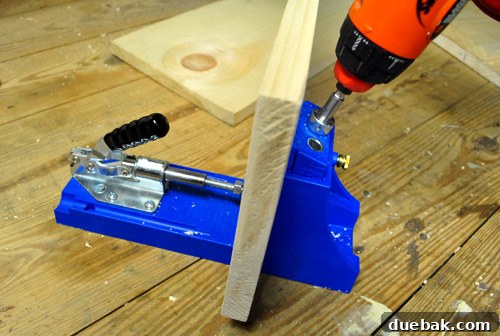
Once back home, my trusty Kreg Jig and I rekindled our woodworking romance. This indispensable tool is a game-changer for joining boards, allowing for the creation of perfect pocket holes that connect pieces of wood with professional-grade strength and seamless finishes. If you’re unfamiliar with its magic, you can learn more about my main man Kreg in this post. The result during the joining process looks a little something like this:
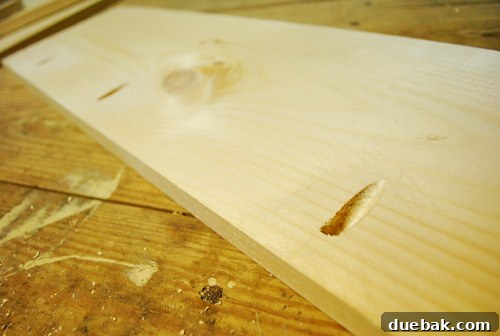
After drilling the pocket holes, I carefully lined everything up and screwed the two board pieces together. The Kreg Jig ensures a super tight, robust hold, forming a single, wider plank:
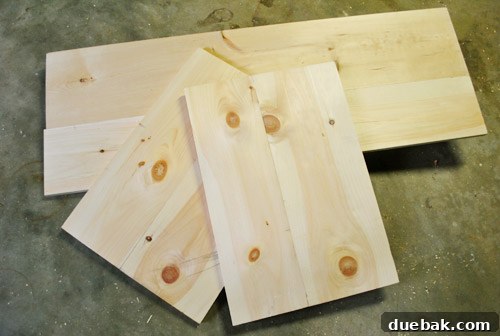
This process yielded three sturdy 1×16.5-inch planks, which would form the top and the two sides (essentially, wide legs) of each console end unit:
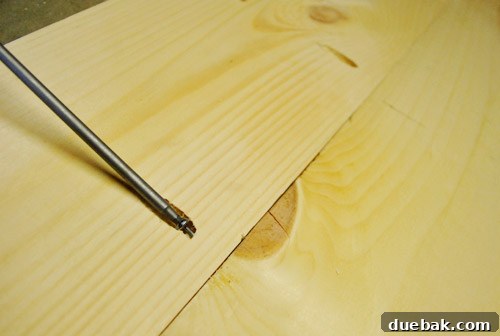
Admittedly, the very left side of one of the planks wasn’t perfectly flush. However, since the entire console will eventually be covered by one long, continuous tabletop, absolute perfection in hidden areas wasn’t critical. The crucial aspect was ensuring that all exposed parts were precisely aligned. In fact, given that most of this console section would be tucked away behind Karl and beneath the new top, the only truly visible sections requiring a pristine finish were the open shelves at the very ends of each piece I was constructing. Remember, I’m building two end pieces and one middle piece, all designed to seamlessly merge under that 140-inch top, creating the illusion of one cohesive, extra-long console.
Building the Framework and Bookshelf Component
With more Kreg holes strategically drilled and meticulous clamping, I moved on to securing the first leg – the one destined for the hidden, interior side of this section. This initial structural component is vital for the console’s overall stability and integrity.
Next, I added some 1×2-inch rails, which provide crucial additional support, especially for a piece of this length and anticipated load. These rails reinforce the structure, ensuring it can comfortably hold lamps, books, and various living room essentials.
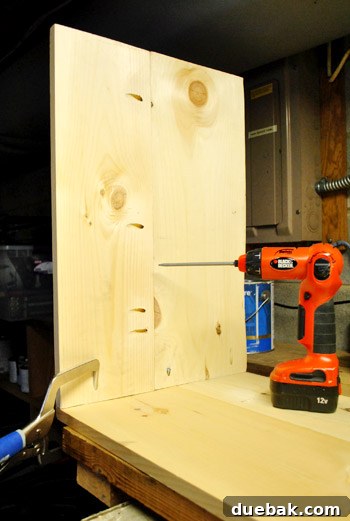
The bookshelf side was next on the agenda. I began by constructing the two sides of the shelf unit, each crafted from a 1×12-inch board. As I planned the assembly, I realized there would be a fair amount of screwing involved – attaching these to the main top and other leg, and later securing the finishing trim. To streamline the process and ensure clean results, I decided to pre-drill all pilot holes in advance. This “pilot hole drilling session” meant all those little holes were dealt with in one go, saving time and preventing any last-minute splitting of the wood.
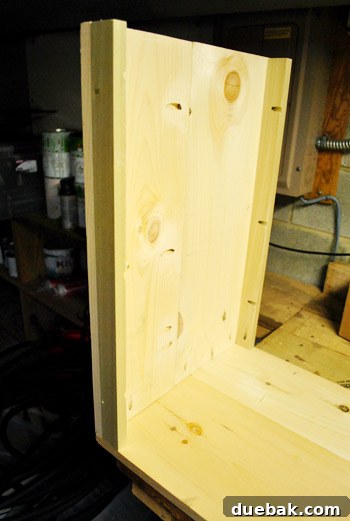
After the pilot holes, the actual assembly began. The side pieces were carefully attached:
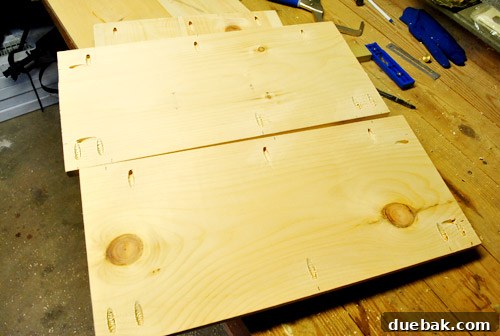
Then, the back panel was secured. A key decision here was the placement of pocket holes. Typically, I’d hide all these holes on the *inside* of a shelf. However, since Karl would fully obscure one side of this console section (it would be snugly positioned between the back of the sectional and the wall), I intentionally placed the holes on the exterior of that hidden side. This kept the visible interior of the shelf pristine and smooth, as it would be seen and used, while the “busted up and hole-y” exterior remained completely out of sight.
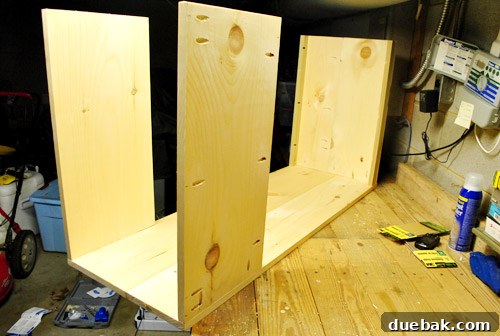
Next came the installation of the two shelves themselves. It’s worth noting that this entire piece was being built upside down at this point, so all the resulting holes from securing the shelves would eventually be hidden from view, ensuring a clean finished appearance.
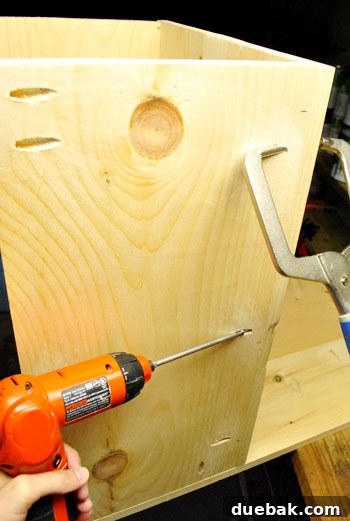
Finally, to complete the look and add a polished touch, I installed the trim on the outside. Using my miter saw for precise cuts, I attached the 1×2-inch poplar pieces using the pre-drilled holes in the sides and shelves. By this stage, the piece truly began to resemble my initial sketch, albeit still upside down. It’s always satisfying to see the individual components come together into a coherent, functional form.
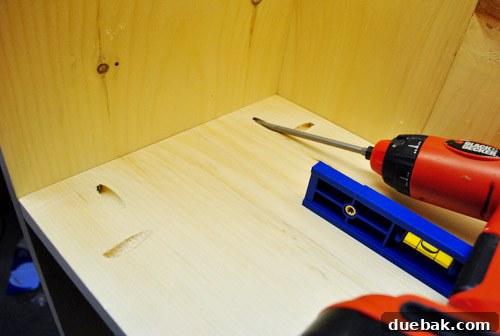
First Impressions and Lessons Learned
All in all, crafting one of these console end sections (without the top) took me about 1.5 Clara naps – roughly two hours. While it wasn’t the prettiest thing yet, I was genuinely proud of how it turned out and pleasantly surprised by how much less challenging it was than I initially anticipated. The process felt efficient and rewarding.
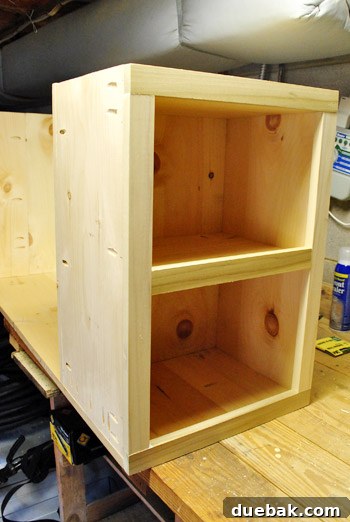
Full disclosure: the console section photographed above was actually the second one I built (since two are needed for the ends). I was so focused on perfecting the first one that I completely forgot to document it with pictures! However, both units came out really well. A silver lining for anyone else embarking on a multi-part furniture build like this: you genuinely get faster and more efficient with each subsequent piece. My first console creation did have one minor “mistake”: I hadn’t thought to place all my holes on the *outside* of the interior bookcases, meaning some were visible initially. But thankfully, wood putty is a fantastic problem-solver!
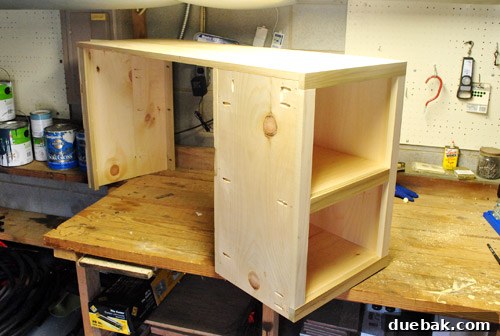
Above, you can see the first end piece making its appearance during a test run behind Karl. While this isn’t its final resting place (it will eventually sit between the back wall with the frames and Karl’s actual backside), I was simply too lazy to move Karl out from the wall for a quick height check – he’s a big boy! The primary goal was to ensure the height felt correct, which it did. Once the new tabletop is added, it will sit perfectly as planned: slightly above the sofa back but comfortably below the back cushions, offering optimal accessibility.
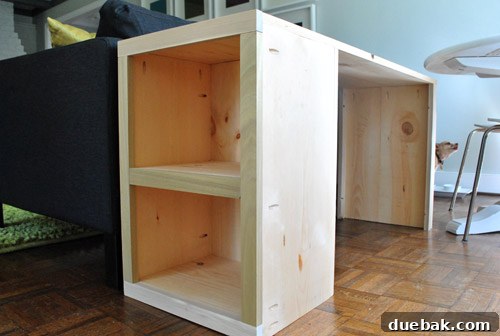
Even with furniture chaos, our dog, Burger, decided it was the ideal moment for lunch. He’s not howling in the picture, just contentedly chewing and observing the world outside the window – a true testament to the comfortable, lived-in feel we’re trying to create in our home.
Looking Ahead: The Middle Section, Reclaimed Top, and Budget Insights
The third and middle piece of our console table is also mostly built, awaiting a few final details and its photoshoot. While this post is already quite lengthy, it’s exciting to reveal that we incorporated clever top-entry storage into this central section, even though it will be nestled between the two end pieces. More details and pictures of that will be shared very soon!
Next on the agenda is tackling the entire “countertop.” We’ve made an exciting decision to use reclaimed wood – specifically, slats from old shipping pallets that have been patiently waiting in our yard. This choice will inject a much-desired rustic, beaten-up style into our living room, helping to balance out some of its current modern elements. For the rest of the console’s base, we plan to apply a dark wood stain, allowing it to subtly blend into and almost disappear behind Karl. As my wife eloquently puts it, this will allow the beautifully weathered and varied reclaimed top to truly be the star of the show.
As for the cost, we’ve spent approximately $65 so far on the two end pieces and the almost-complete middle section. This figure doesn’t include the tabletop, but since we’re “recycling” our pallets, we anticipate very minimal additional costs for that component. We’re committed to providing a full budget breakdown, including stain, screws, and all the good stuff, once this expansive console table project is fully complete.
We’ll be sure to post more updates on the console table as our work progresses, but for now, we’d love to hear from you. Have you embarked on any exciting DIY building projects lately? Did you find inspiration or put any of Ana White’s fantastic plans to good use? Seriously, that woman has an incredible talent for building just about anything, and her plans are a treasure trove for DIY enthusiasts!