
Transforming Our Beach House: A Deep Dive into Demolition, Discoveries, and Design Evolution
For quite some time, we’ve been offering glimpses into the intensive renovation of our beloved beach house across various platforms. However, it’s high time for a comprehensive, picture-rich update, detailing every significant stride we’ve made, complete with our latest (and hopefully final) floor plans. Prepare to witness a remarkable transformation, as things are looking drastically different compared to when we first acquired this charming property.
If you recall the before pictures and our virtual video tour, you’ll appreciate just how much has changed. This project has truly embodied the adage, “sometimes it has to get uglier before it can get prettier.” The journey has been arduous, filled with unexpected challenges and delightful discoveries, but we’re thrilled to share our progress.
The Unveiling: Our Beach House Demolition Journey
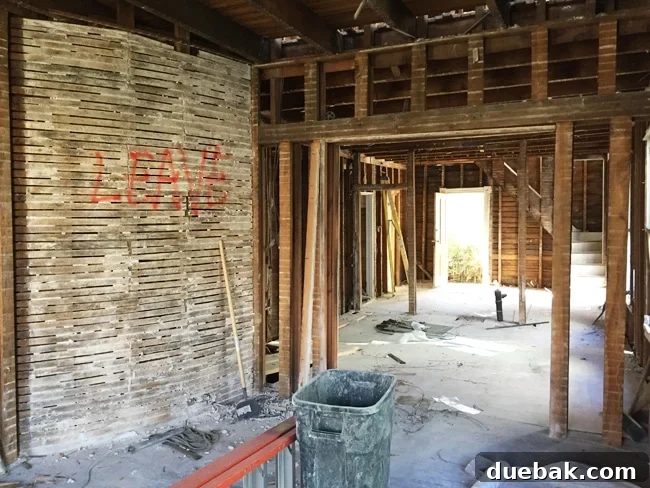
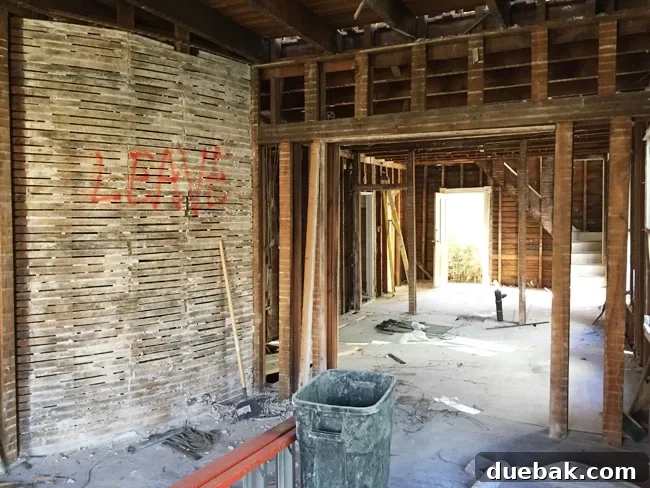
As the initial image clearly illustrates, we embarked on a full-scale demolition of all existing interior walls. The prominent “LEAVE” sign you see isn’t a cryptic message from a horror film; rather, it’s a crucial note from our contractor, directing his crew to preserve the lath of the curved wall. Retaining this structure will significantly ease the process of bending new drywall around it later, ensuring a smooth, original curve. This meticulous approach highlights the thoughtful planning even amidst the chaos of demolition.
For those who tuned into this week’s podcast, you might already know that despite our initial reluctance to tear down all the old plaster (and the occasional drywall sheets – this house was quite the patchwork), every expert we consulted, from the inspector to the contractor, strongly advised a complete strip-down. The consensus was clear: it was simply too risky not to open everything up to expose and address any hidden issues lurking beneath the surface. This decision, though daunting, proved to be one of the most critical steps in ensuring the long-term health and stability of our beach house.
Why We Went Down to the Studs: Uncovering Hidden Truths
The argument for taking the house down to its bare studs was compelling and multi-faceted, focusing on both immediate condition and unforeseen problems:
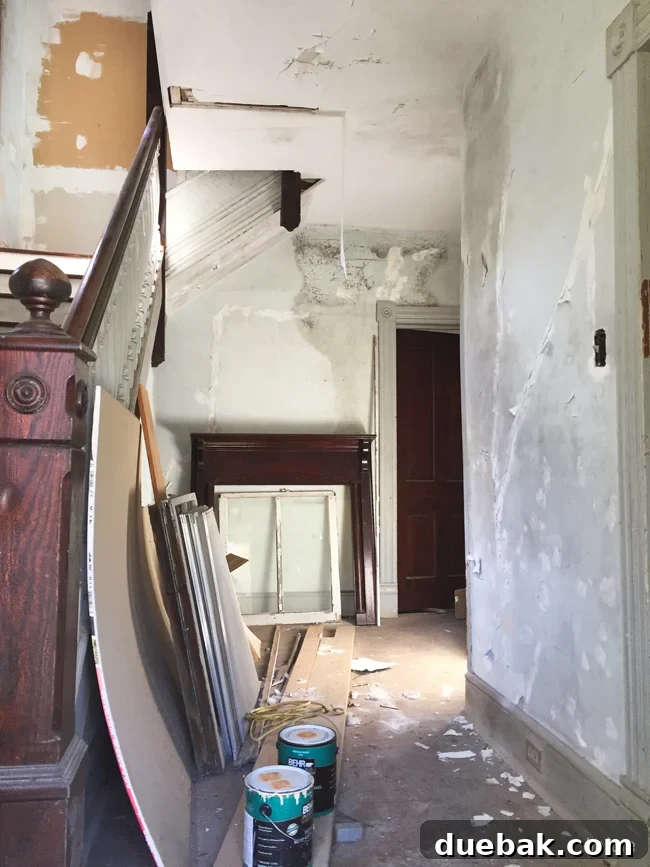
1. The Existing Condition: The interior walls were a medley of cracked, damaged, stained, and even missing plaster, interspersed with old drywall. While a methodical patching and replacement strategy seemed plausible, it would have been an incredibly tedious and costly endeavor. Repairing the old surfaces, especially after necessary electrical, plumbing, and HVAC work, would have driven up labor costs significantly. Furthermore, working within damaged, uneven walls would have increased the time and effort required for electricians, plumbers, and HVAC technicians. Ultimately, starting fresh with new framing and surfaces emerged as the more time- and cost-efficient solution, providing a clean slate for modern systems and finishes.
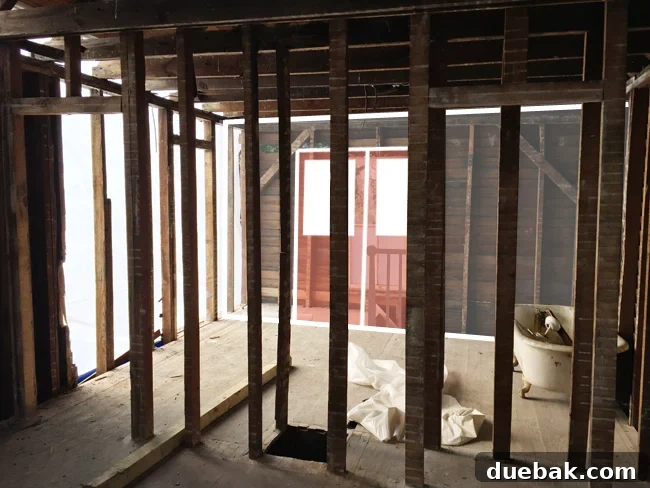
2. Unveiling Hidden Secrets: Beyond the visible damage, there were strong indicators of deeper issues. We had already identified some visible mold on the plaster and significant termite damage on a few exposed studs. Our contractor, a seasoned expert in historic home restoration, made a powerful case for removing all the old walls. This would grant us the crucial peace of mind that we could identify and rectify any other hidden structural vulnerabilities. We are incredibly thankful we followed this advice, as the demolition revealed far more extensive problems than anticipated. We uncovered additional, widespread termite damage (as evident in the right-hand image below) and discovered several instances where the original framing was no longer structurally sound, including severely warped studs on the left side of the photograph. These discoveries validated our decision to strip everything down, ensuring we weren’t just masking problems but genuinely resolving them.
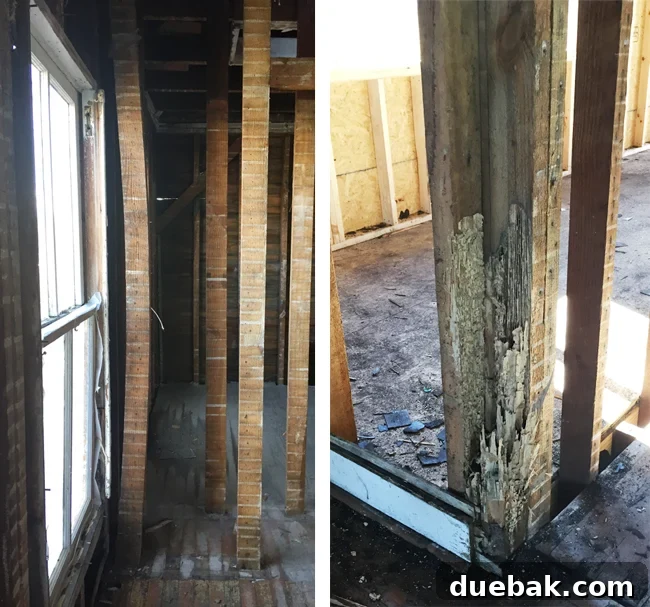
Although it was disheartening to see our house further disassembled, these critical discoveries brought immense relief, knowing we were being thorough and proactive. Now, the next step involves adding essential reinforcements throughout the structure, ensuring everything is perfectly square and robust. This will prevent future issues like popping or cracking in our new walls, guaranteeing a durable and stable home for years to come.
Stripping all interior walls also affirmed our decision to replace the exterior siding, a process we detailed in this previous post. We were aware of some rotten sections, but exposing the wall cavities revealed an astonishing number of gaps (as depicted in the picture below). The town inspector had warned us about the notorious cold winds that can infiltrate older homes through such openings, causing significant heating challenges in winter. True to his word, there was absolutely no housewrap or insulation between the exterior siding and the interior plaster. Had we merely patched the exterior and interior, the house would have remained poorly sealed and energy-inefficient. Catching this widespread issue was an enormous relief and a testament to the value of a full gut renovation.
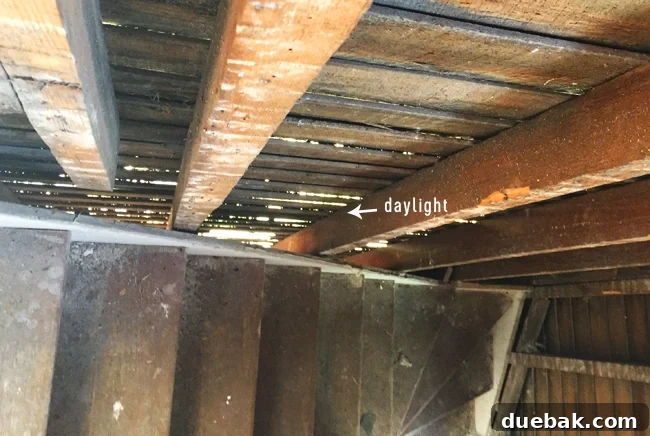
In the long run, these extensive updates are undeniably making our beach house significantly more structurally sound. Furthermore, it will be far easier and less expensive to heat and cool, leading to substantial savings in both time and money, and preventing countless frustrations down the line. Despite the large-scale demolition, we are committed to preserving the home’s original character where possible. We’ve carefully saved elements like our beautiful heart pine hardwood floors, the old stair railings and treads, the original doors and doorknobs, and the intricate millwork and trim, all slated for reinstallation once the reconstruction is complete. This blend of modern efficiency and historic charm is central to our vision.
Unexpected Treasures & Challenges: The Renovation Rollercoaster
Speaking of looking on the bright side, removing the walls led to a couple of exciting discoveries. One such find was a charming brick chimney stack, hidden behind a faux-mantle in the living room, which extended all the way up through the front bedroom. While it requires a few repairs, we absolutely love the idea of exposing this original brickwork to add significant character to both rooms. Our sheer excitement over this unexpected treasure is perfectly captured in the photograph below!
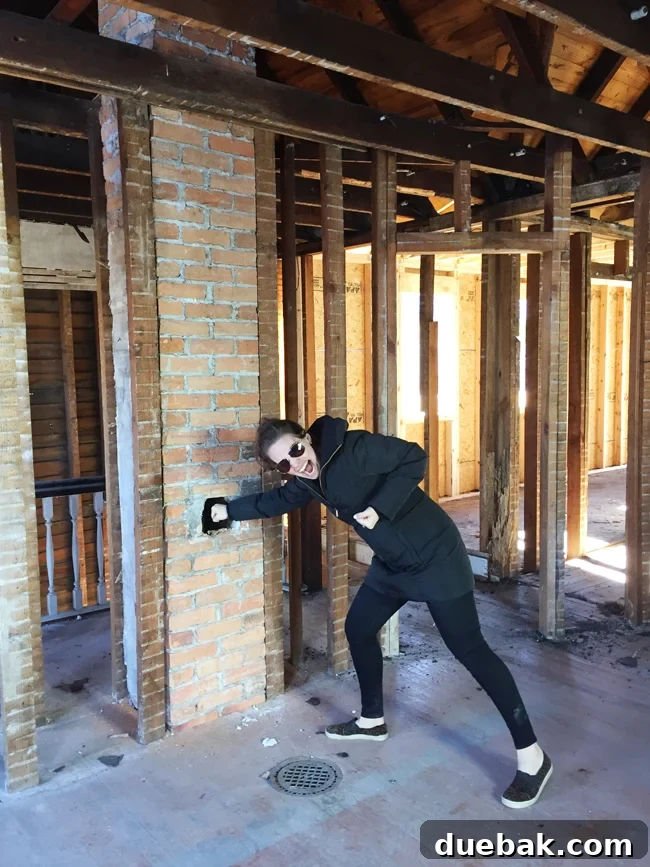
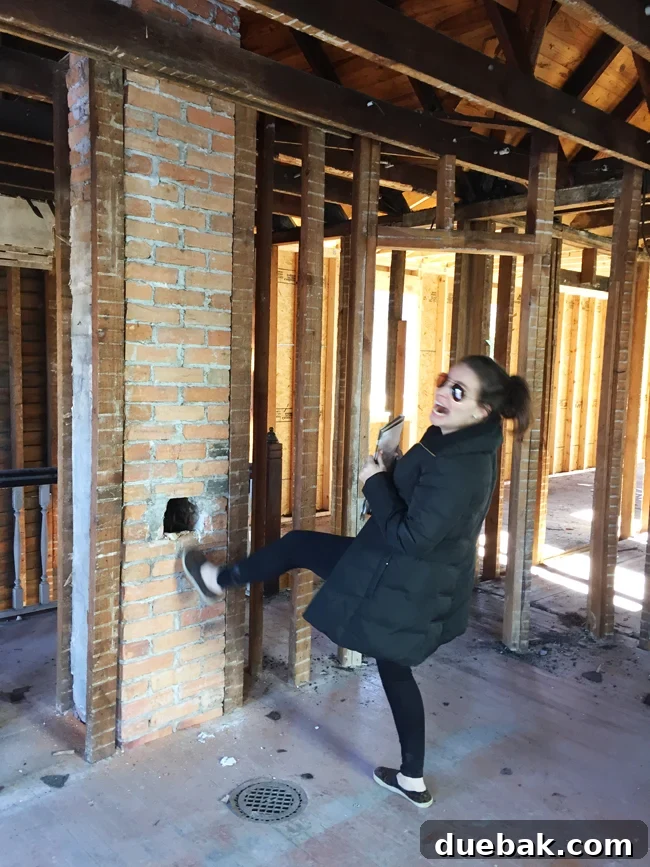
Note: Our initial attempt to stage this photo involved a “kicking” pose rather than “punching,” which mostly resulted in hilariously blurry outtakes like the one below. These are the spontaneous moments that happen when the contractor’s back is turned!
This is what the upstairs looked like during our last visit. While we initiated some of the demolition and cleared out much of the debris, we ultimately opted to hire our contractor for the majority of this intensive work. It quickly became apparent that attempting to tackle such a massive undertaking during our short weekly visits would result in agonizingly slow progress. Moreover, considering the presence of mold, lead paint, and asbestos—common issues in older homes—it was prudent and safer to engage experienced professionals to handle these hazardous materials responsibly. Entrusting this complex phase to experts ensured both efficiency and safety.
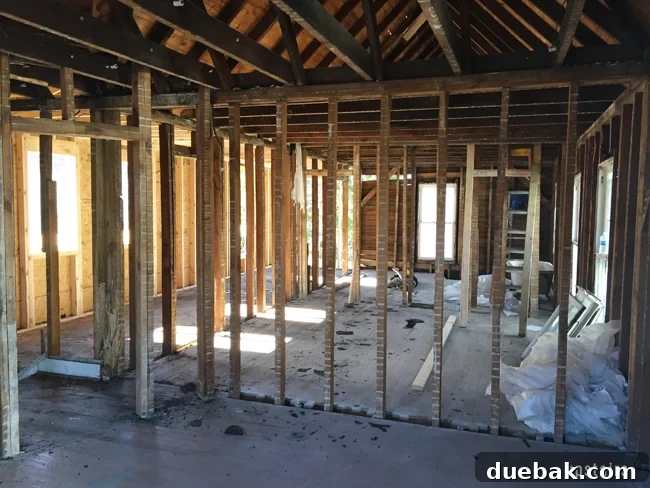
As we previously shared on this week’s podcast, seeing the entire house stripped down to its studs provided an invaluable perspective. It allowed us to truly grasp the scale and potential of certain spaces, prompting us to re-evaluate and refine our original floor plan ideas. We’ll delve deeper into those exciting design changes shortly, but first, let’s catch you up on another monumental development.
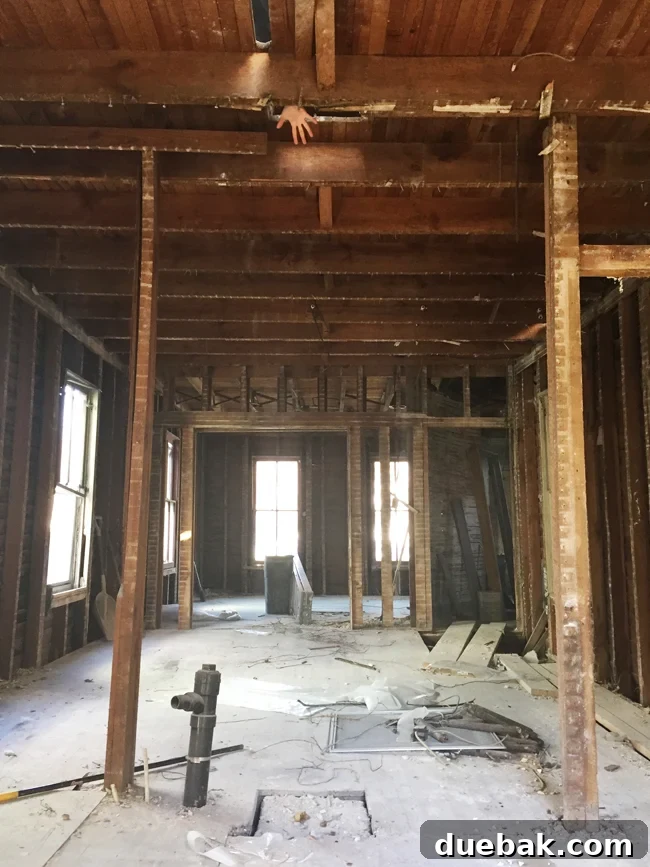
Rebuilding from the Ground Up: Addressing Major Structural Flaws
Surprisingly, taking down the interior walls wasn’t even the biggest project we’ve tackled so far. The true behemoth was dealing with a severely rotted side of the house. Not only had the siding deteriorated completely – legend has it that someone many years ago used untreated wood not meant for outdoor exposure when enclosing a once-open side porch – but the very foundation beneath it was sinking into the ground. Yes, you read that correctly. It was precariously set on sand, not robust concrete or brick footers, and had settled many inches lower than the rest of the house. This entire section was literally falling off the main structure and slowly slipping into the earth.
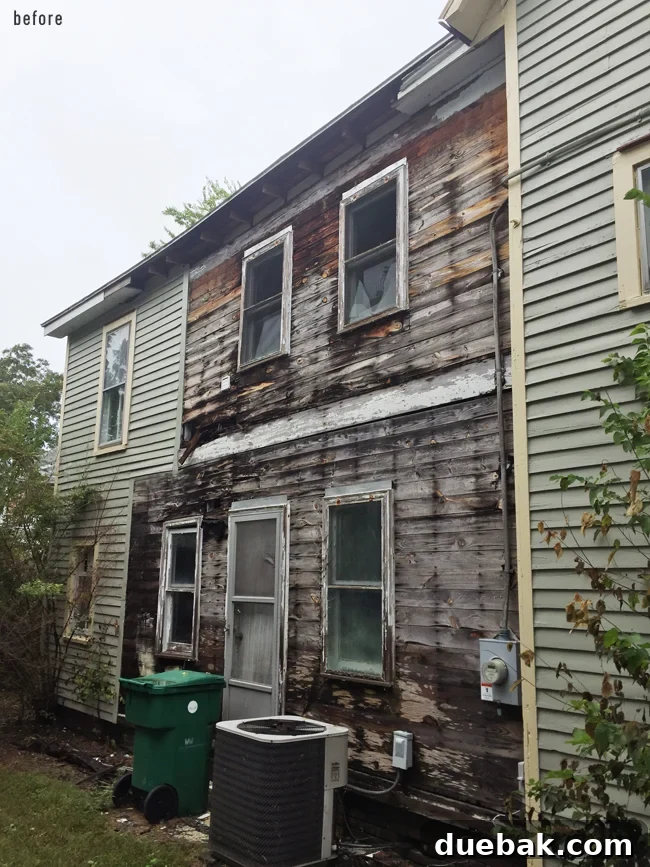
So, what was the optimal course of action for such a critical structural failure? The unanimous decision was to tear that entire section off and start anew. This was a tough call, and yes, Sherry definitely shed some tears over the loss of original structure.
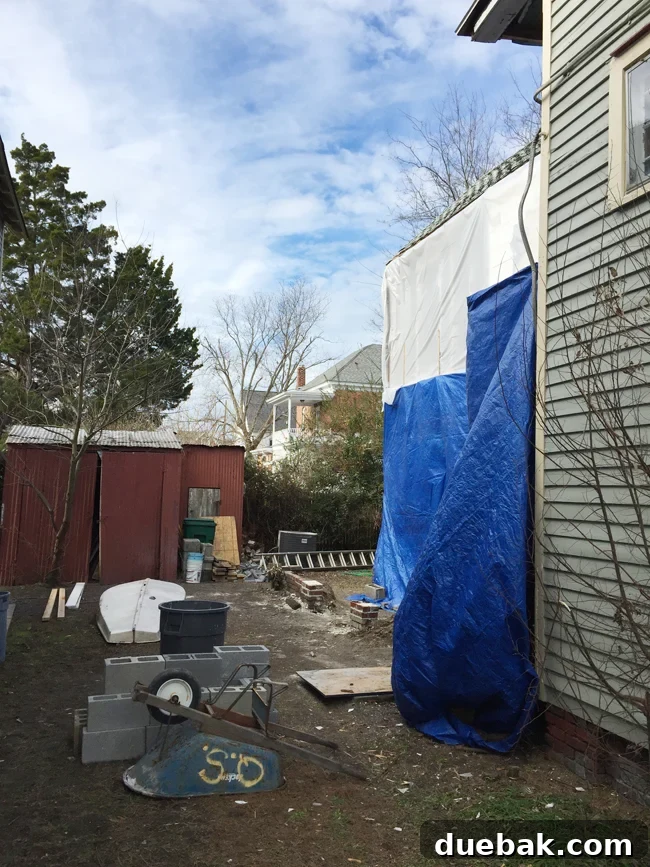
Our initial hope was to “sister” the beams, meaning reinforcing the existing structure with new beams rather than a complete removal. However, upon closer inspection, it became unequivocally clear that too much of the wood was irreparably rotted or severely compromised by termites. Adding to the complexity, that entire side wall was clad in asbestos shingles, posing additional removal challenges. Consequently, every expert we consulted – from the structural engineer to the town inspector and our own contractor – strongly advised that a complete rebuild was the wisest and safest approach. This was particularly telling, as our contractor is a renowned restoration expert who typically loathes removing old elements that could potentially be saved. His recommendation underscored the severity and necessity of this drastic measure.
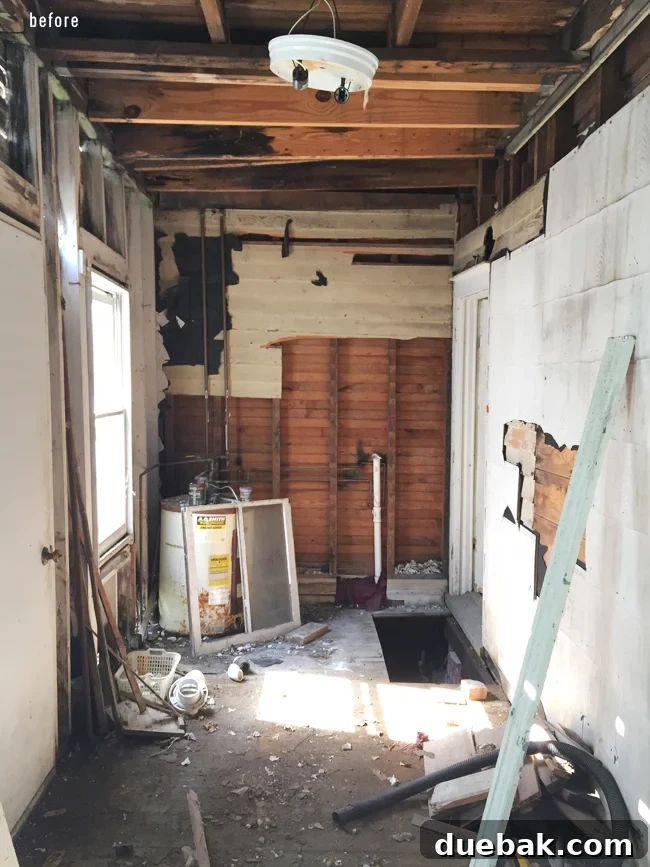
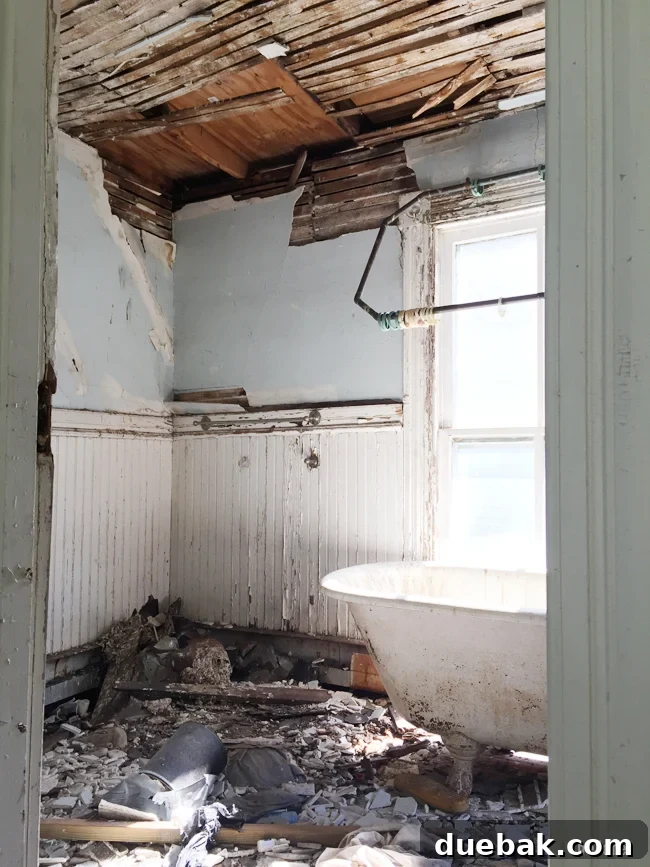
The photograph above depicts the downstairs porch area, while the one below shows the upstairs porch—which regrettably doubled as a makeshift lavatory for some wild animal that had found its way in through various holes in the siding. The ceilings on both levels were in a state of imminent collapse, and much of the framing had severely rotted due to prolonged weather exposure. It was, simply put, a structural catastrophe.
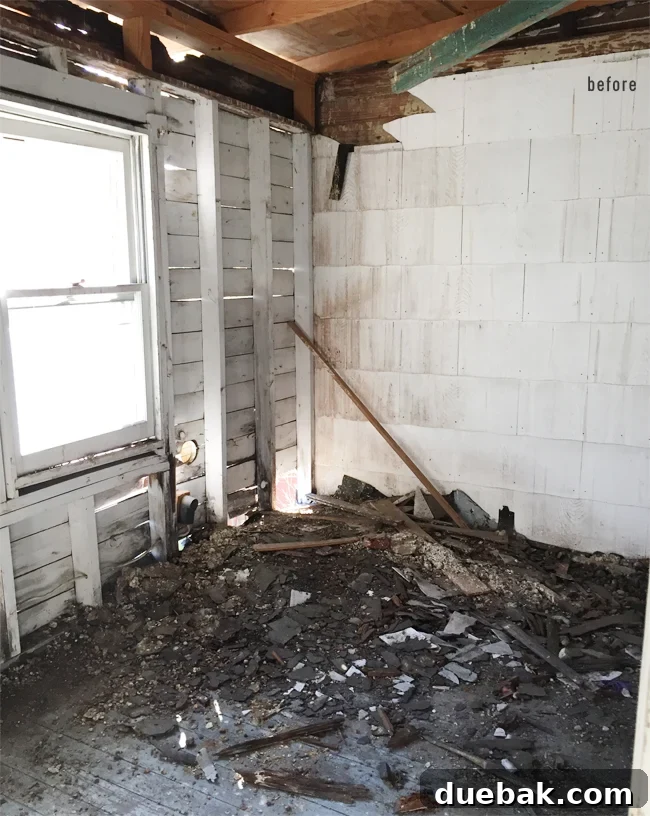
Even the two existing bathrooms, situated directly behind each enclosed porch area, were succumbing to the same dire fate. The old bathroom, in particular, offered a stark illustration of what happens when a house slowly sinks into the ground while its siding rots and its roof develops gaping holes that allow water infiltration for years. The result was a scene of extensive decay and structural compromise.
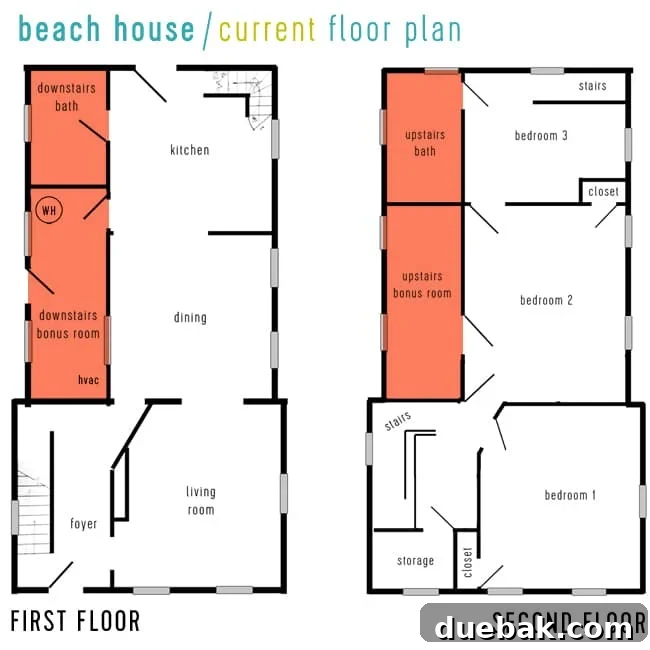
Once the interior demolition was complete, we gave the green light for the complete reconstruction of this entire side of the house. For your reference, we’ve clearly marked the affected areas in red on the floor plan below, illustrating the significant scope of this project.
I must confess, it was quite a surreal experience to arrive one day and discover an entire section of our house completely GONE. #gulp. It was a stark reminder of the massive undertaking we’re involved in, but also a step towards a stronger, safer home.
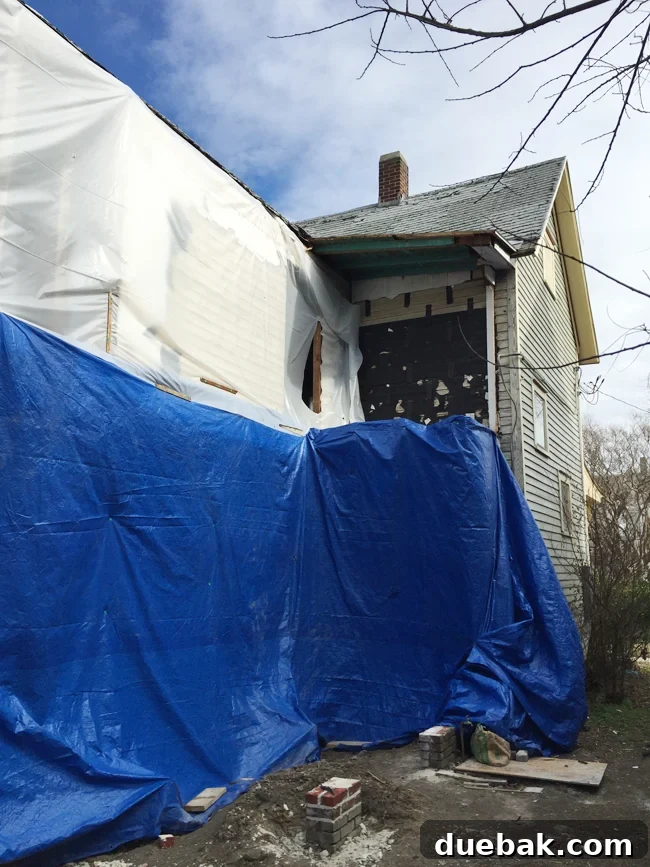
Although it certainly let in some incredibly beautiful light! You see, we’re always striving to find the silver lining in every challenge. (Notice the charming clawfoot tub that had temporarily relocated into the bedroom while that entire side of the house was meticulously rebuilt.)
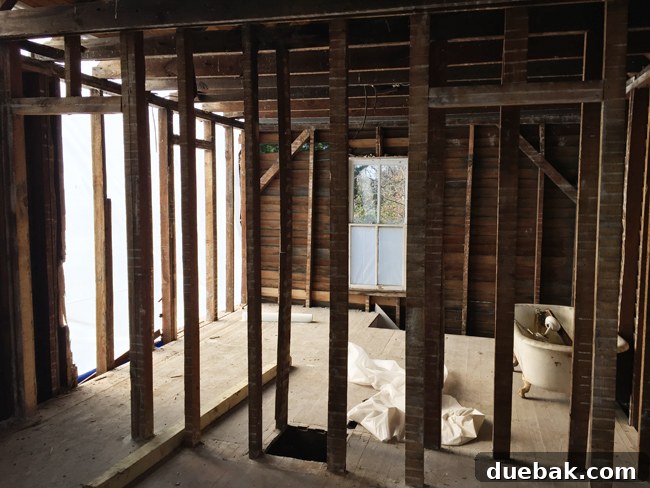
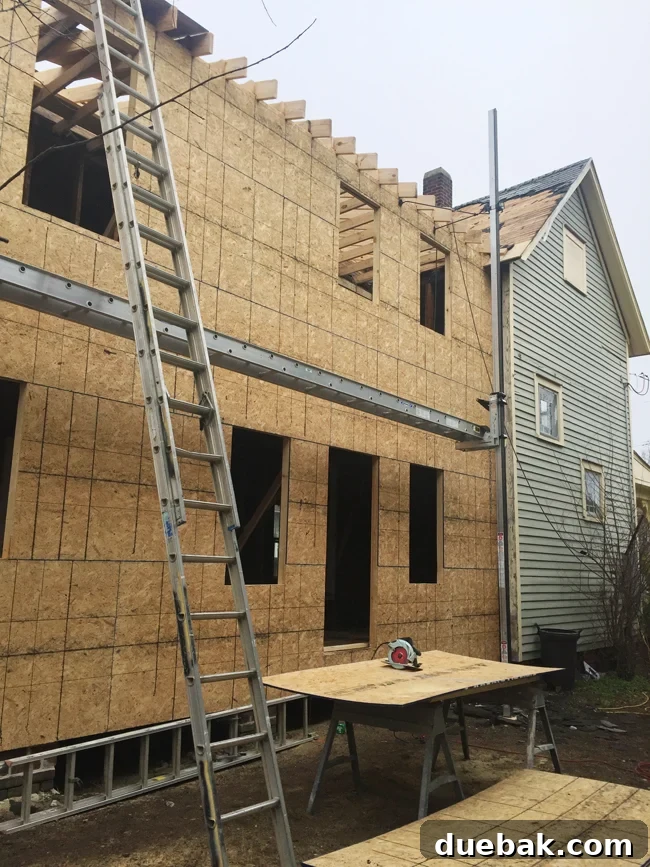
Fast-forward approximately a week, and the contractor’s dedicated crew had nearly completed setting our brand-new foundation and meticulously rebuilding the entire structure. A significant advantage of being in a historic district meant that certain aesthetic decisions were made for us – a welcome relief! We simply had to match the original window and door placements exactly, ensuring that once completed, everything would seamlessly blend in and look entirely original.
SO. MUCH. BETTER. No longer will our poor neighbors have to gaze upon a slice of rotten siding. The transformation is truly incredible, providing a fresh, solid face to our home.
From Unstable to Solid: The Transformation of the Porch Areas
Here’s a glimpse of what the bathroom area looks like now. It’s truly impossible to overstate the excitement we felt stepping into this space and soaking in all the newly rebuilt awesomeness. For those who follow us on Facebook or Instagram, you might even recall Sherry’s unbridled joy, which resulted in her losing a shoe out the window!
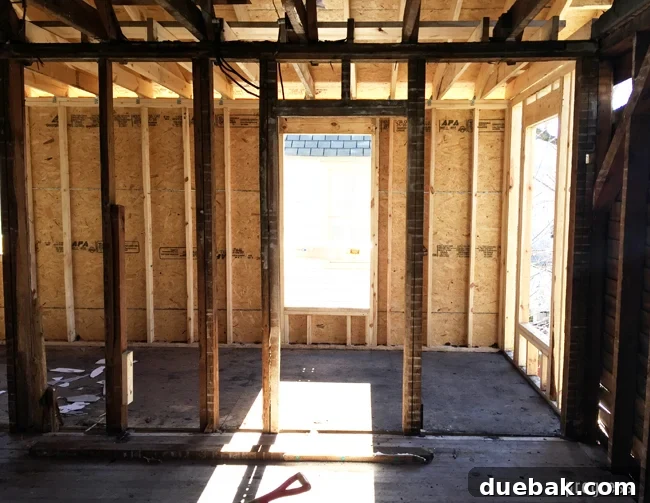
Before, the area felt so unstable and slanted that we were genuinely wary of spending more than a few seconds tip-toeing around. Now, it stands solid, steady, and perfectly square, a testament to the meticulous reconstruction work.
Just a quick comparison of the “before” and current progress to highlight the dramatic changes. This was the view from the middle bedroom looking towards the old, dilapidated porch, which is now destined to become a charming bunk room.
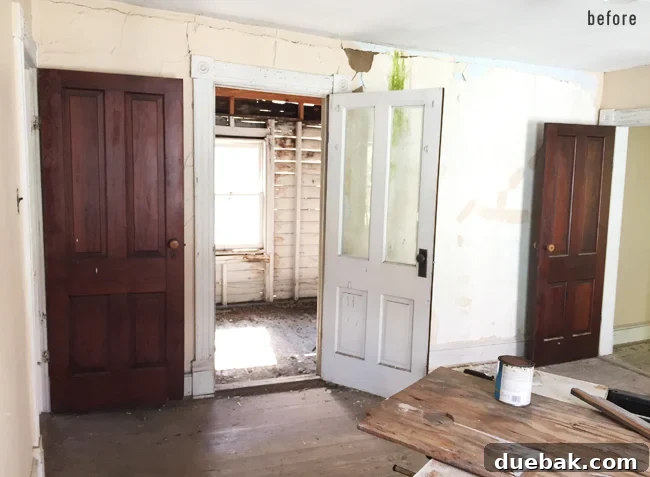
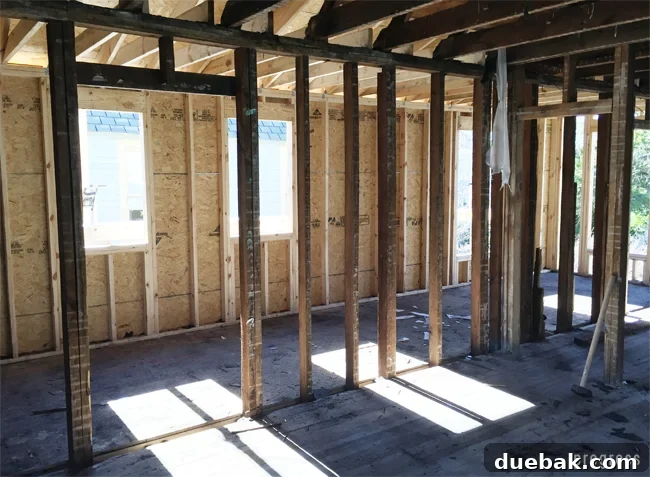
And here it is now, completely transformed. You can clearly see that some of the studs on the right side of this photo were extensively chewed by termites—notice that short, stick-like piece that only extends about a third of the way up the wall. We are incredibly relieved we caught these issues, allowing us to thoroughly reinforce the entire structure and ensure its integrity.
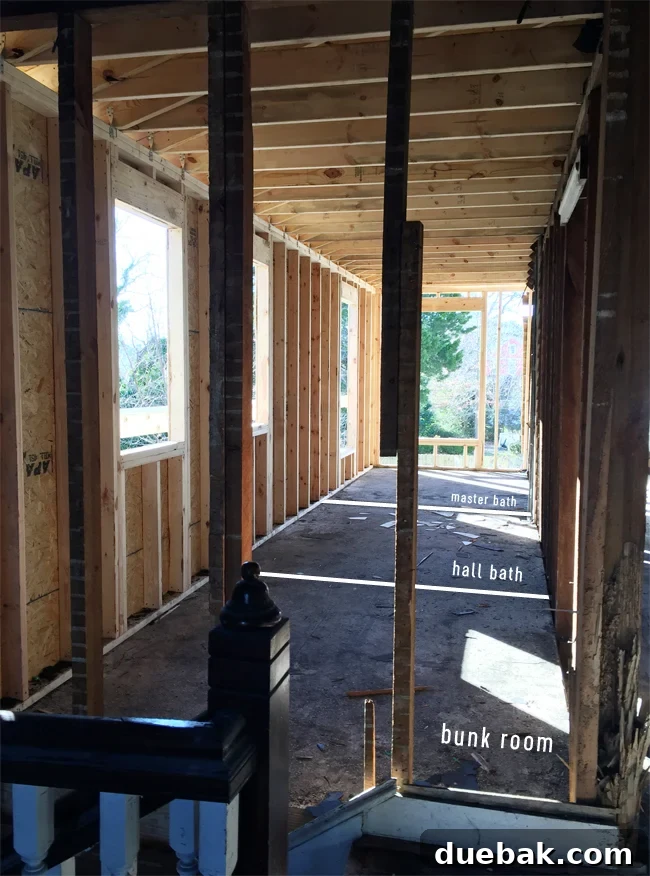
Here’s another perspective of the rebuilt portion of the house, captured from the top of the stairs. Eventually, this wall will be solid and opaque, but I seized the opportunity to mark it out in this image, providing a clear visual of how we’re planning to divide this exciting new space.
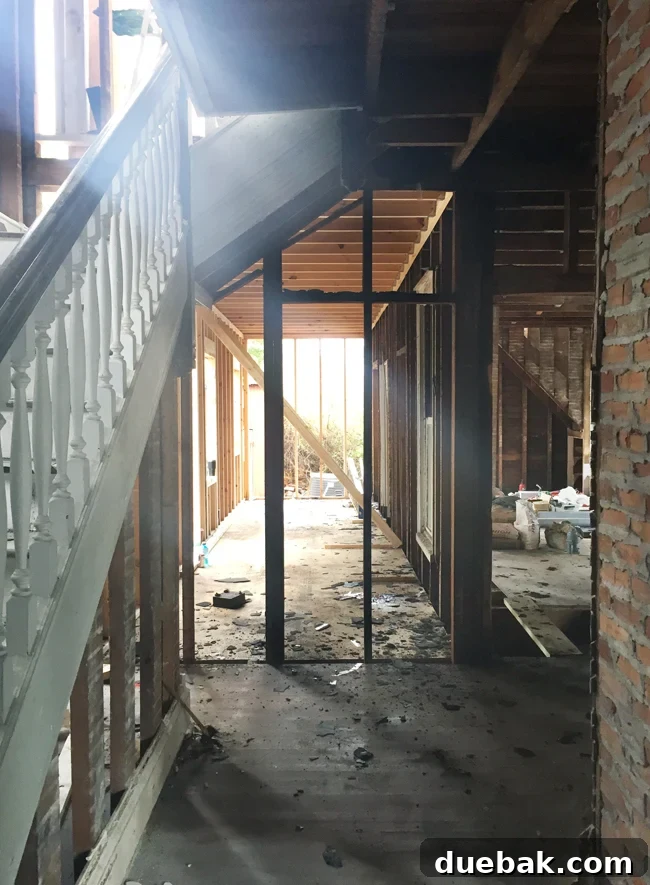
The downstairs tells a similar story of dramatic improvement. This view from the foyer clearly demonstrates the immense potential of the space. Again, that wall will eventually be solid, but you can now appreciate just how much open space exists back there, freed from its previous state of rot and imminent collapse. Crucially, we’ve also raised the floor to be perfectly level with the rest of the house. Previously, there was a significant step down because, as mentioned earlier, that entire section of the house was slowly succumbing to the ground’s embrace.
Refining Our Vision: Evolving Floor Plans for Modern Coastal Living
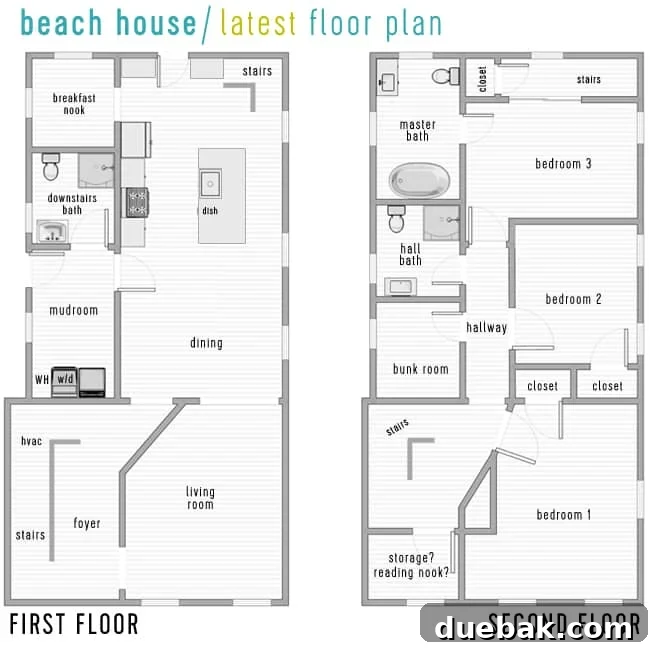
Now feels like an opportune moment to discuss our evolving floor plan, especially since we’ve made some notable adjustments since the last time we shared it with you all. I’ve been experimenting with a new floor planning tool, which gives these plans a slightly different aesthetic compared to my earlier rough sketches. While the renderings aren’t entirely precise (for instance, the curved wall in the living room wasn’t rendering perfectly), it has proven incredibly valuable for maintaining clarity and communication with our contractor.
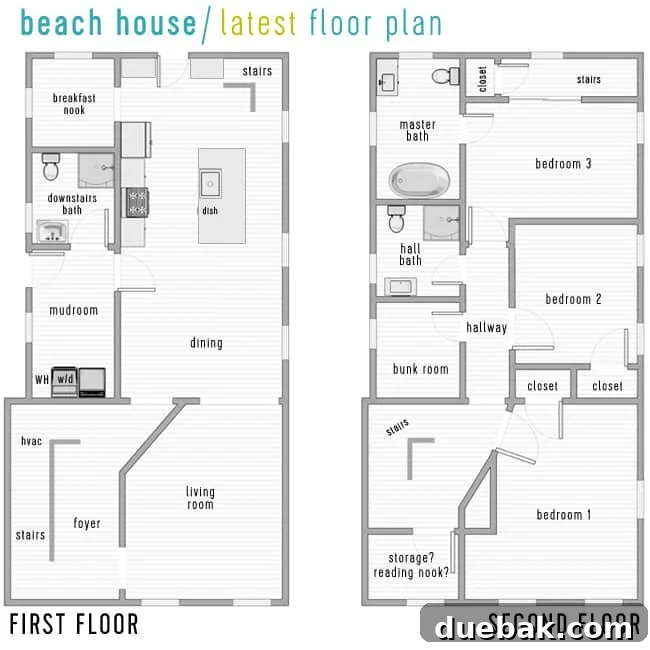
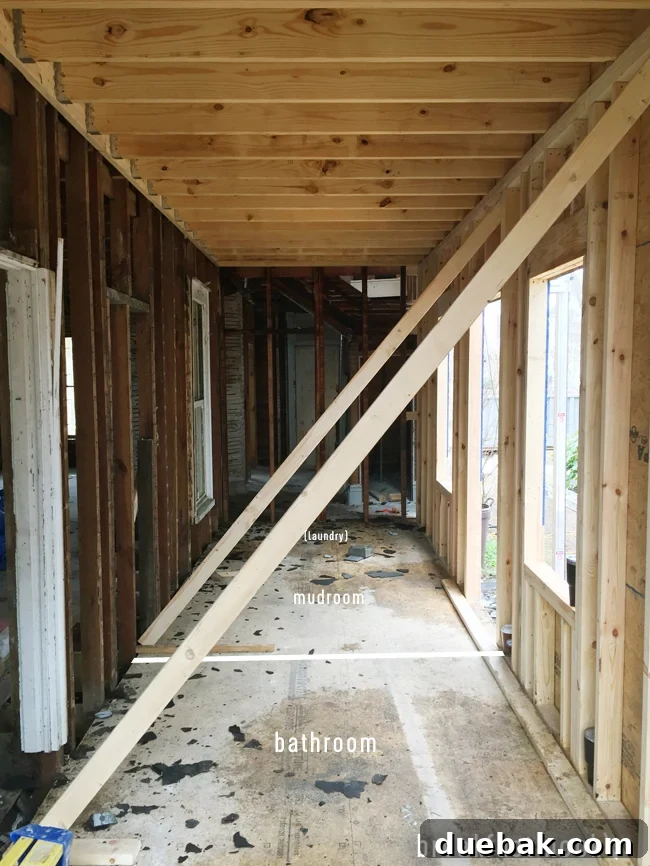
The most significant revisions took place downstairs, primarily because standing in the newly constructed side, we were struck by its unexpected length. Our initial plan was to simply incorporate a bathroom and a mudroom there, but it quickly became apparent that it would have resulted in the longest, most disproportionate mudroom imaginable.
Therefore, we creatively reconfigured the space: half of what was initially conceived as the mudroom will now serve as a functional bathroom, and the old bathroom area will be transformed into a charming eat-in breakfast nook. The picture below was taken while I was standing inside what will become the breakfast nook, offering a clear sense of the generously sized space. It’s important to remember that originally, everything you see in this photograph was slated to be part of an enormous mudroom. Yipes!
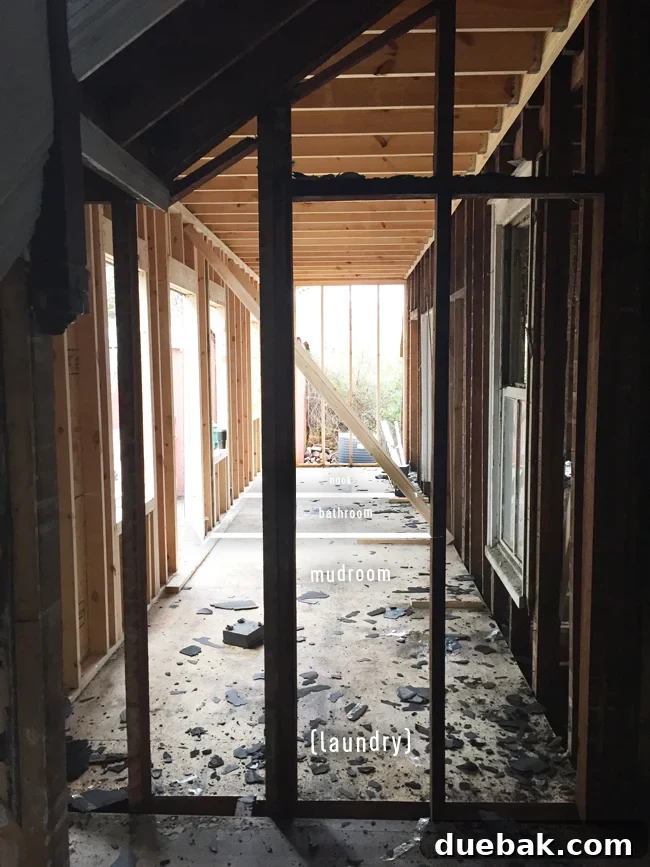
Here’s the same area viewed from the opposite side, visible through a wall in the foyer that will eventually be enclosed. This perspective further emphasizes the generous proportions and potential of this versatile space.
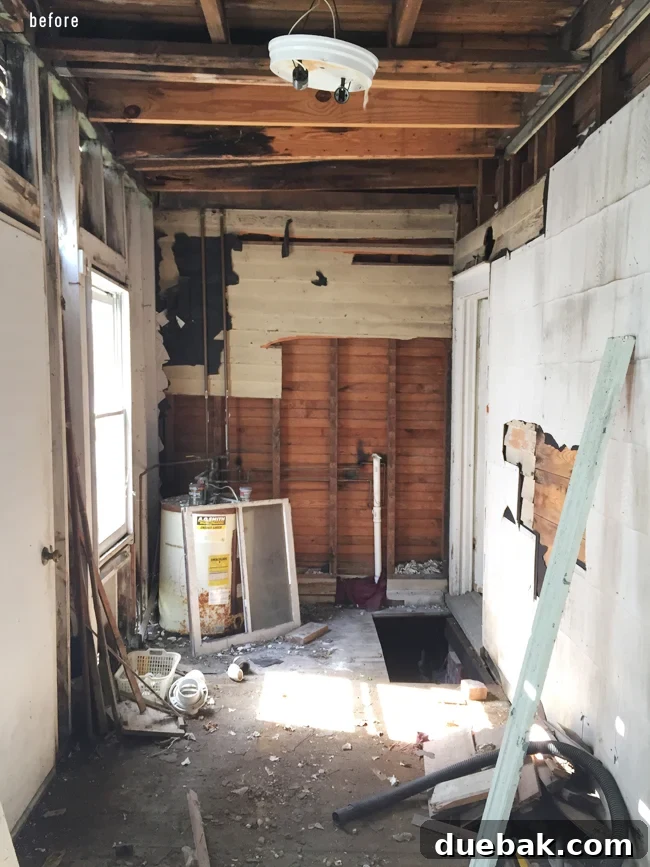
And just for old times’ sake, here’s that exact view from the day we first bought the house, providing a striking before-and-after comparison:
We are incredibly enthusiastic about the breakfast nook concept, largely inspired by advice that suggests a vacation home can never have too many comfortable seating or gathering areas. This nook will create a wonderful, adaptable spot that can function as a kids’ table, a dedicated game table, or simply a cozy, intimate alternative to the more formal open dining area. Its versatility will undoubtedly enhance the guest experience.
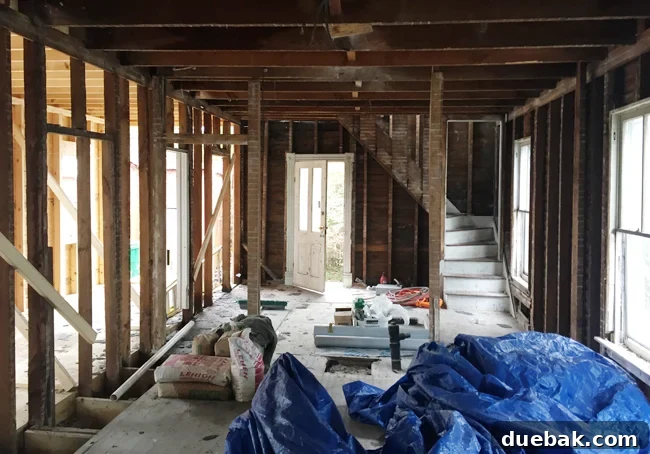
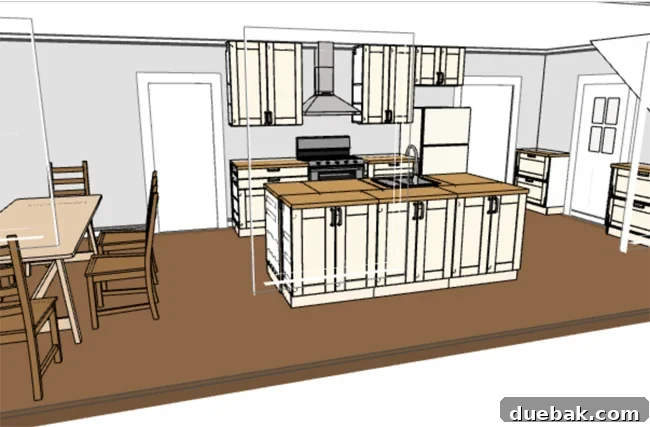
Integrating the breakfast nook at the rear of the house necessitated a slight rethink of our kitchen layout. Essentially, we’ve moved the kitchen back to the very rear of the house, strategically positioning the breakfast nook conveniently off the kitchen. So, in the photograph below, I am essentially standing where the main dining table will eventually be placed, looking towards the kitchen. The breakfast nook will be situated in the back-left corner, within the newly reconstructed section of the house.
Designing the Heart of the Home: Our Kitchen Vision
To better visualize and plan our kitchen, we turned to the incredibly user-friendly free Ikea kitchen planner software. While it’s certainly not an exact rendering (you might spot some oddities like stairs in the background!), I still find their software to be one of the easiest tools for rapidly arranging cabinetry and testing different layouts. Plus, given the strong possibility that we might opt for an Ikea kitchen, it makes perfect sense to utilize their planning resources.
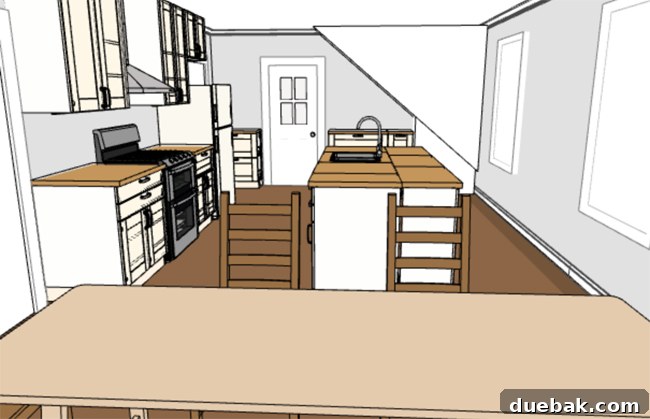
Please disregard all the finishes, colors, and furniture depicted in these renderings, as the software isn’t always accurate (for example, that cabinet above the fridge has about a foot of inexplicable gap!). We’re primarily using it to ensure we like the general flow and functionality of the space. While we haven’t finalized every detail, we’re contemplating tiling that distinctive triangle-shaped wall along the back, near the doorway, perhaps incorporating some open shelving. Additionally, we’ll likely opt for stools rather than cabinets on the backside of the island, creating a more open and social counter. Crucially, you can now clearly see how the breakfast nook is conveniently accessed through the doorway adjacent to the (admittedly weirdly rendered) fridge, creating a cohesive and inviting open-concept living area.
Optimizing Upstairs: Functionality and Light
The upstairs floor plan didn’t undergo as many radical changes, with one key exception: we strategically “stole” a small amount of space from the middle bedroom. This clever adjustment allowed us to create functional closets for both the middle bedroom and the front bedroom, significantly enhancing their practicality. Beyond that, the most significant new design idea revolves around the back area, encompassing the main bedroom and its attached bathroom.
Previously, a door located on the third step of the back stairs, downstairs in the kitchen, served to close off the upstairs, providing privacy and a sound barrier for those sleeping in that bedroom. However, our contractor raised a significant safety concern: current building codes and inspectors would never permit a door to be installed directly on a step. Furthermore, Sherry was very keen on the idea of leaving the back staircase visually open, allowing its charming character to shine through rather than being obscured by a few steps and a solid door.
To address the need for privacy for anyone sleeping upstairs, we recognized the necessity of adding a wall. Yet, a conventional solid wall would unfortunately block precious natural light from the nearby window. After collaborative brainstorming with our contractor, we arrived at an innovative solution: a set of double-pocket doors (or potentially barn doors) featuring glass panels, possibly frosted, on top. The glass will cleverly allow the natural light from the window to filter through, while the pocket/barn door mechanism eliminates the need for swing space, optimizing the flow and footprint of the area. One door will slide open to reveal the existing railing, which isn’t a perfect concealment, but we were genuinely enthusiastic about the aesthetic appeal of double doors and the increased light transmission afforded by two glass planes compared to just one. This design gracefully balances privacy, light, and architectural interest.
I understand the rendering above might appear a little “janky,” but trust us on this one. It’s going to be fantastic. I hope!
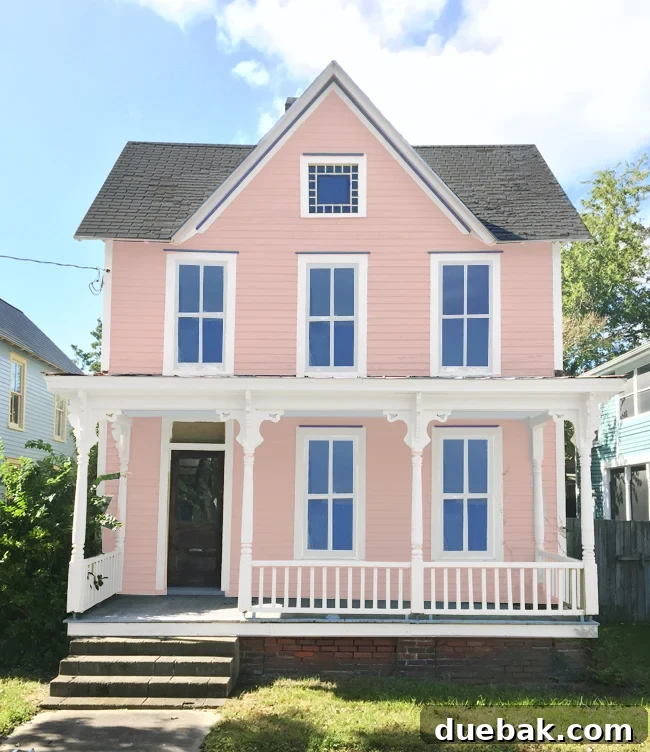
Currently, the interior framing is well underway, and we’re also in the process of hanging the new exterior siding, which has already been meticulously painted and is ready to transform the facade! We are absolutely thrilled to witness this next stage of the renovation and will undoubtedly return with a fresh set of pictures once it’s completed. No more Photoshopping our siding pink for conceptual designs!
For anyone interested in more general beach house insights and updates, you can find a wealth of information in this week’s podcast episode. And if you’re keen to revisit our beach house journey from the very beginning, here’s a chronological guide: our initial post about buying the house, followed by a second post featuring a video tour and our first floor plan ideas, a deep dive into our beach house decorating inspiration, and finally, a post exclusively dedicated to how we meticulously selected the exterior siding color (a decision inspired by the most wonderfully random thing!).