

Moving into a new home often brings a whirlwind of decisions, and for us, one of the trickiest has been finding the perfect permanent spot for our vegetable and herb garden. This continued indecision, coupled with the myriad of other settling-in tasks, unfortunately meant we completely missed the prime planting window this spring. We’ve had thriving edible gardens in years past (you can glimpse our previous gardening adventures here and here), and the thought of going a whole year without fresh, homegrown herbs felt like a real loss. But where there’s a will, there’s a way! Determined to cultivate *something* green and delicious this season, we devised a clever, temporary solution: a versatile galvanized tub that promised to bring our gardening dreams to life, even if just for a little while.
Embracing the Temporary: Our Potted Herb Garden Plan
Our strategy this year pivoted towards a more manageable, potted herb garden, focusing on a carefully selected collection of “edible essentials” that we frequently use in our kitchen. This approach allowed us to bypass the complexities of digging new beds and contending with unknown soil conditions in our new yard. Instead, we prioritized portability and immediate gratification.
This past weekend, our quest for fresh herbs led us to the local farmer’s market – an excellent resource for high-quality, often organic, produce and plants. There, we happily scooped up a quartet of vibrant, organically grown herbs: parsley, oregano, basil, and mint, all for a reasonable $12. Sourcing locally not only supports our community but also ensures the plants are already acclimatized to our regional climate, giving them a better chance to thrive. While at the market, we also embarked on a “Big Day Out” adventure with BabyCenter, which you can read more about on their site. This little excursion was a perfect reminder of the joy and simple pleasures found in local markets.

Transforming a Galvanized Tub into a Planter
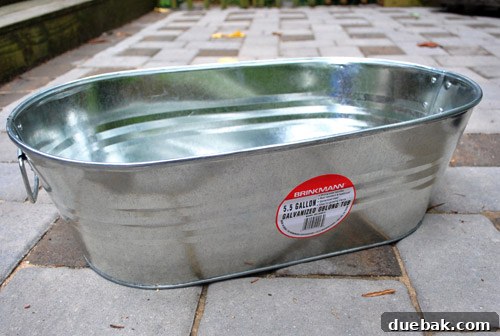
The star of our temporary gardening project, the galvanized tub, was a fantastic find at Lowe’s for a mere $8. This was significantly more affordable than any dedicated planter of comparable size we could find, making it an ideal budget-friendly option. Its rustic aesthetic also added a charming, farmhouse-chic touch to our evolving outdoor space.
The first crucial step in converting this tub into a functional herb pot was to ensure proper drainage – a non-negotiable for healthy container plants. Without adequate drainage, water can accumulate at the bottom, leading to root rot and ultimately killing your precious herbs. Using my trusty cordless drill, making drainage holes in the bottom of the tub was incredibly straightforward. It was a quick and satisfying DIY task that immediately made the tub suitable for planting.

To ensure the holes were sufficiently large for effective water flow, I gently wiggled a large nail around in each one, expanding them slightly. In a moment of playful spontaneity – perhaps I was feeling a touch romantic, or maybe it was an unconscious ode to the “L” in YHL, or even a deep-seated love for galvanized containers – I shaped the holes into tiny hearts. It’s a whimsical detail that very few will ever notice once the soil is in, but it adds a small, personal touch that makes the project even more “us.”

A Crucial Safety Check: Testing for Lead in Galvanized Metals
Update: A very important point was raised by a few observant commenters, and we’re grateful for their savvy advice! When using galvanized metal containers for growing edible plants, it is absolutely essential to test for the presence of lead. Galvanized materials are coated with zinc to prevent rust, but some older or less pure batches of galvanized metal can contain trace amounts of lead, especially in the solder used for seams. If present, lead could potentially leach into the soil and subsequently into your food, which is a significant health concern.
To address this, we promptly purchased a simple, inexpensive lead test stick from Home Depot – they typically cost around $4. These sticks are designed to change color if lead is detected. We meticulously tested various parts of the tub: the seams, the inside surface, the outside surface, the bottom, and even the edges of the holes we drilled. We were relieved to find that every test came back negative, indicating our tub was safe for growing edible herbs. This step is non-negotiable for anyone considering a similar DIY project with galvanized containers. Always prioritize safety, and if a lead test comes back positive, it’s best to repurpose the container for non-edible plants or outdoor décor. Your health, and the health of those enjoying your homegrown produce, is paramount.
Enhancing Drainage with a Gravel Layer
Beyond the drilled holes, we added another layer of defense against waterlogging: a base of gravel. This wasn’t just any gravel; it was leftover material from our recent patio project, embodying our commitment to sustainability and resourcefulness. A layer of gravel at the bottom of a planter serves a vital purpose: it creates a reservoir for excess water to drain into, preventing it from saturating the soil around the roots. While some debate the necessity of this layer, we find it adds an extra measure of security, particularly in a potentially shallow container like this tub. We hoped it would keep the majority of our precious organic soil from escaping through those hidden, heart-shaped holes.

Strategic Herb Placement and Potting Techniques
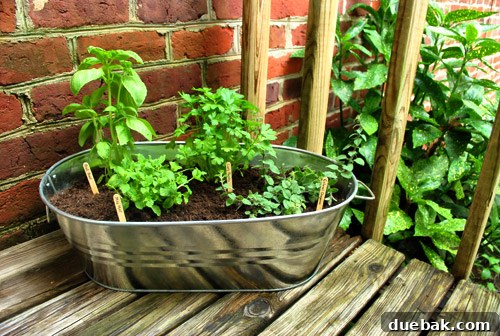
Before committing to adding any soil, we performed a quick “dry run” with our herbs, arranging them in the tub to visualize their final positions. This step is invaluable for optimizing space and ensuring each plant has adequate room to grow. We placed the taller herbs, basil and parsley, towards the back of the tub, allowing them to stretch upwards without overshadowing their companions. Oregano, known for its sprawling and bushy growth habit, was given a dedicated spot on the side where it could expand freely without crowding the other plants. This thoughtful arrangement helps ensure proper air circulation and sunlight exposure for all the herbs. (Yes, my oregano tends to get bushy… not sure I like the sound of that last sentence either!)

A key consideration for container gardening, especially with a mixed herb planter, is understanding each plant’s growth patterns. While this galvanized tub offers a cozy home for now, we anticipate our herbs growing big and strong, potentially outgrowing their shared space. The beauty of container gardening is its flexibility: if any herb starts to get “diva-like” and demands more room, we can easily transplant it into its own larger, dedicated pot. This foresight prevents overcrowding and allows us to nurture each plant to its full potential.
One particular herb that requires special attention is mint. Known for its vigorous and often invasive spreading habit, mint can quickly take over an entire garden bed or container if not properly managed. To prevent it from choking out its neighbors, we employed a clever tip we picked up from a friendly local gardener at the farmer’s market: we planted the mint in a separate, smaller pot which was then buried within the larger galvanized tub. This simple but effective technique confines its aggressive root system, allowing us to enjoy fresh mint without fear of it becoming a botanical bully.

The Importance of Quality Soil for Edible Plants
With our herbs arranged and drainage secured, it was time for the essential ingredient: soil. For edible plants, the quality of the potting mix is paramount. We opted for an organic potting mix, which we sourced from Lowe’s. While it was slightly more expensive than the conventional varieties (around $10 compared to $6, if memory serves), we firmly believe the investment is worthwhile, especially since these plants will be consumed. Organic potting mixes are formulated without synthetic fertilizers or pesticides, providing a healthier, more natural growing medium that aligns with the fact that our herbs were organically grown up to this point.

Typically, we’d rely on our own nutrient-rich compost pile for our gardening needs. However, the process of moving and settling into our new home meant our DIY compost bins got a little disrupted. As a result, we don’t currently have enough “ready” composted soil to use – things are still breaking down and maturing. This temporary setback further justified our decision to purchase a high-quality organic potting mix, ensuring our herbs received the best possible start in their new home.
Here are the plants, all nestled in and properly “soiled up,” ready to thrive:

Finding the Perfect Sunny Spot: Our Balcony-to-Nowhere
Choosing the right location for our new herb garden was another critical step. Our patio, while lovely, is surprisingly shaded for most of the day, making it less than ideal for sun-loving herbs. After some observation and experimentation, we discovered an unexpected gem: our “balcony-to-nowhere,” which is conveniently located right off our living room and kitchen. Despite being tucked between two sections of the house, this compact balcony receives a remarkable amount of light – arguably the closest thing to full sun available on our mostly shaded property.
This spot offers several distinct advantages. Firstly, the abundant sunlight is crucial for the vigorous growth and flavor development of most culinary herbs. Secondly, its proximity to the kitchen makes it incredibly convenient for quick harvests while cooking – truly a farm-to-table experience right outside our door. Thirdly, and perhaps most importantly for our temporary setup, the inherent portability of a container garden means we can easily move the tub around. This flexibility allows us to test different sun patterns and microclimates on our property, helping us to identify the absolute sweet spot for a more permanent garden next year. This year’s experiment is not just about growing herbs; it’s about gathering valuable data for our future gardening endeavors.
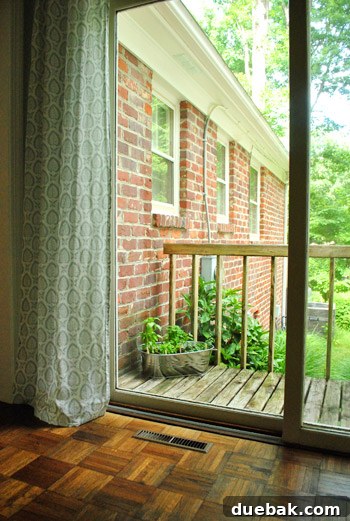
The adaptability of our potted herb garden extends beyond just finding the best sun. If we decide to keep this charming potted version in the long term, it will still look fantastic on the larger deck we plan to build out here eventually. We can even envision it serving as an oversized, living centerpiece on an outdoor dining table, adding natural beauty and fragrance to alfresco meals. This temporary solution truly offers a blend of practicality, aesthetic appeal, and future potential.
Adding a Touch of Whimsy: Creative Plant Labels
No herb garden story, especially one born out of a mix of necessity and creativity, would be complete without a peek at the plant labels. They’re often an overlooked detail, but for us, they’re an opportunity to inject a little personality and fun into our green space. Here’s an artsy close-up of our unique labels!
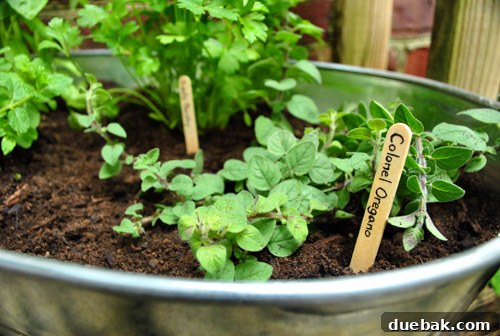
If you’re wondering, “Colonel Oregano” is not some obscure botanical variety. It’s just me indulging in a bit of silliness. I decided it would be amusing to take our simple popsicle stick labels and give them the “Clue” board game character treatment. Think Miss Scarlet, Professor Plum, or Colonel Mustard – but for herbs! My entire cast of made-up herb/suspect names adds a quirky, personalized touch to our garden. As Sherry’s dad affectionately calls me, I’m a “strange bird” – he’s also the one trying to single-handedly revive the term “sick puppy.”
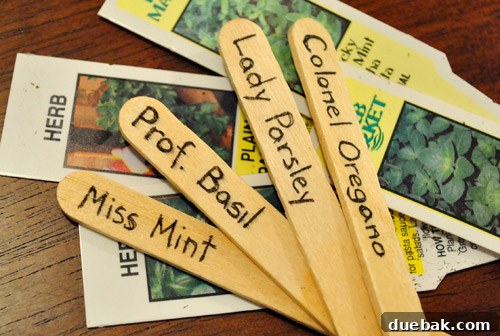
Looking ahead, if we decide to expand our edible garden next year to include peppers, I’ll face the tough decision of whether to bestow upon them the title of “Sergeant” or “Doctor.” Though, the idea of a “Dr. Pepper” plant sounds pretty phenomenal, so perhaps my decision is already made! These little creative elements make the gardening process even more enjoyable and distinctly ours.
What Are You Growing This Season?
We’re so excited to see these “edible essentials” flourish in their temporary home. This project has shown us that even with indecision and missed deadlines, there’s always a way to connect with nature and enjoy the fruits (or herbs!) of your labor. The portability and simplicity of this galvanized tub herb garden have made it a perfect fit for our transitional phase.
What are you guys growing in your gardens or containers this year? Is anything sprouting up particularly well, bursting with deliciousness, or perhaps exceeding your expectations? On the flip side, is anything proving to be a challenge, not showing as much promise as you’d like, or perhaps even, to lean into the Clue theme, “murdering someone in the conservatory with the lead pipe?” Share your gardening triumphs and tribulations in the comments below – we’d love to hear about them!
Psst – Don’t forget to check out the full details of our Farmer’s Market adventures over on BabyCenter for more inspiration!