
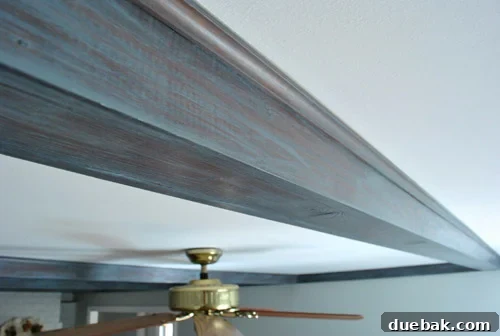
Transforming Our Living Room Beams: A Journey to Rustic Elegance
There are projects that challenge you, and then there are projects that challenge every muscle in your body and test the very limits of your patience. I distinctly remember the relief I felt when a previous, arduous task concluded. However, nothing quite compares to the profound sense of accomplishment I now feel with the completion of our living room beam transformation. Imagine balancing precariously on a stepladder, craning your neck upwards and backwards, meticulously painting three sides of five massive beams. Add to that the intricate work of refreshing the crown molding and quarter-round trim surrounding a generous 25 x 15-foot room, and you begin to understand the sheer scale of the endeavor. This was no leisurely afternoon activity; it was an intense physical undertaking that left me with an assortment of aches and pains – from neck and back to calves and even my chin! For anyone who speculated that beam painting might be a calorie-burning workout, I can confirm it is indeed a significantly uncomfortable one, undoubtedly burning calories alongside a few strained muscles.
The Vision Unveiled: From Reddish Tones to Weathered Charm
Despite the physical toll, the end result is unequivocally worth every ounce of effort. The transformation of these substantial architectural features has dramatically altered the character of our living space. Previously, the beams sported a prominent reddish hue that, despite our best intentions, simply didn’t resonate with our personal style. To us, they felt out of place, almost a jarring element in the room’s evolving aesthetic. Our vision was for something softer, more integrated, and reflective of a timeless, rustic charm.
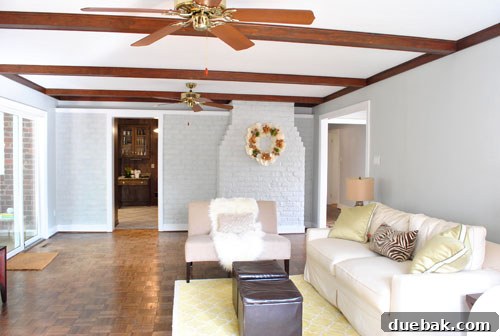
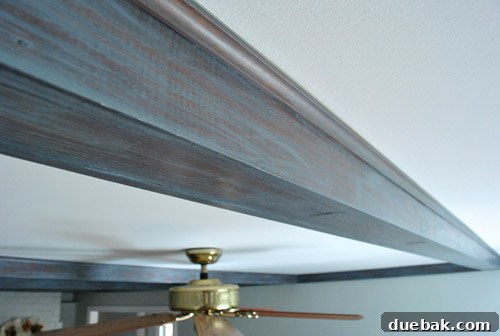
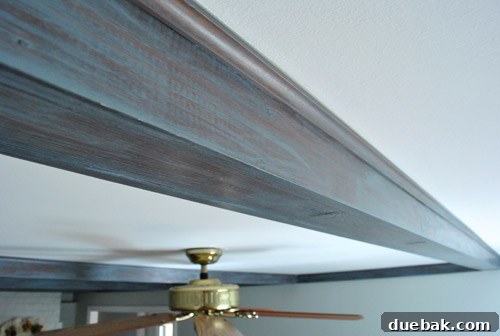
Now, these same beams boast a warm, inviting rustic gray tone. What makes this finish truly special is that it allows just enough of the original brown wood color to subtly peek through, creating a rich depth and an authentic, aged appearance. This deliberate choice breathes new life into the room, infusing it with a sense of cozy sophistication without the heaviness that the former dark, reddish-brown beams imposed.
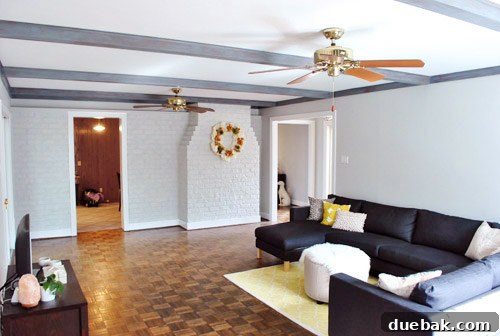
The soft gray wash on the beams serves as a foundational element, guiding the overall aesthetic of our living room towards a style that feels distinctly “us.” It strikes a perfect balance, offering a charming and subtly dramatic effect without overwhelming the space. The thin, translucent application of paint masterfully diffused those sharp, undesirable red undertones, revealing a nuanced texture that beautifully enhances the room’s character.
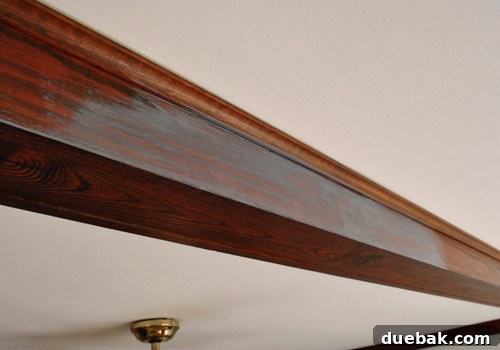
For a closer look, this detailed shot of the more thoroughly painted beams highlights the incredible dimension and the natural wood grain that remains visible, a testament to the chosen technique:
A Glimpse into the Future: Crafting a Cohesive Living Space
Achieving this visual victory brings immense satisfaction. While some homeowners might prefer the untouched beauty of natural wood beams, for our space and personal taste, this transformation was essential. The beauty of our newly gray-ified beams lies in their dynamic character; as the light shifts throughout the day, they transition from a soft, rustic appearance to a deeper, more dramatic presence. This chameleon-like quality is particularly delightful as the sun sets, lending the room a swankier, more moody ambiance. The deeper tones visible later in the day are truly captivating, and we absolutely adore it.
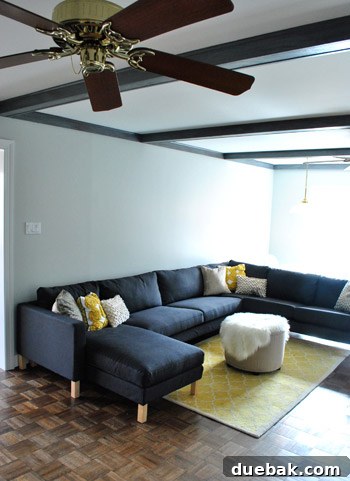
It’s important to remember that this beam project, as impactful as it is, represents merely a fraction of our overall vision for this living room. In fact, the room is arguably only about 8% complete. We still have a list of significant upgrades ahead: replacing a too-small rug and media center, removing the overly large and oddly placed ceiling fans, dressing the expansive naked windows and sliding glass doors with elegant curtains, and finally, adorning the bare walls with art. Just the simple act of introducing a bright 8 x 10 rug in place of our current 5 x 8, and hanging bold, floor-length curtain panels high and wide, will instantly make the space feel significantly more finished. These additions will also help seamlessly integrate the beams with the rich textures and saturated colors we plan to introduce, moving the room beyond its current “gray sandwich” state.
Art will play a crucial role in preventing the room from feeling like a cold, gray box. Alongside a vibrant rug and eye-catching curtain panels, we envision adding large-scale, brightly colored artwork. This will balance the strong presence of the beams, ensuring they are not the sole focal point but rather a layered and lovely element within a room rich with color, contrast, diverse shapes, and inviting fabrics. We understand that this isn’t an HGTV renovation where a room magically transforms in 30 minutes. Instead, we’re sharing a real-time evolution, project by project, reflecting a genuine budget and an authentic design journey. We are confident that as we slowly introduce more color, art, and textiles, the gray beams will perfectly complement our overarching vision for this space, grounding it with character and warmth.
The Art of “Graywashing”: A Detailed DIY Guide
Now, let’s delve into the “how-to” of this demanding yet rewarding project. And yes, I use “I” intentionally here; my husband John’s contributions were invaluable, but primarily involved childcare and “blog-sitting” while I tackled the beams. His support, keeping our daughter Clara entertained, was supremely helpful, but his neck and back didn’t endure three consecutive days of revolt as mine did. Despite the physical strain, every ache was worth it. Walking into the room now, I can’t help but smile, and we’ve even caught Clara gazing up at our “new” beams with a grin. I might have even been smiling while painting, though in retrospect, that expression was probably more of a grimace. Hence, this charming back-only progress shot:

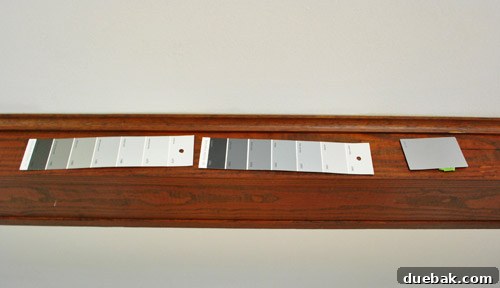
That image alone spurred me to get a haircut the very next day – my first in nine months since Clara’s birth! But back to the beam painting. I use the term “painting” quite loosely, as the technique employed was more accurately a blend of graywashing, sponging, and dry brushing. The process began with meticulous color selection. We taped several different swatch cards onto the beams, narrowing our choices down to three gray tones we particularly liked. These were the final three swatches on a Benjamin Moore middle card: Shaker Gray 1594, Rocky Coast 1595, and Nightfall 1596.
Next, we headed to Lowe’s, where they expertly color-matched these three shades to small test pots of satin Olympic Premium No-VOC paint. Armed with our samples, we returned home to conduct a series of applications on an inconspicuous back edge of a beam – a spot visible only from a specific corner, just in case our experiments went awry. Fortunately, each test was easily wiped away after evaluation. Our first attempt involved heavily watering down a drop of paint on a ceramic plate and applying it with a foam brush. This proved disastrous; the paint was so thin it simply ran off the beam onto the floor, creating a messy, drippy situation that was clearly not the desired effect.

Undeterred, I pivoted to a dry foam brush, lightly brushing paint directly from the tester pot without any dilution or brush wetting. As soon as I began to feather it out, the technique showed promise. We quickly gravitated towards the dry-brush method using the lightest of our chosen grays: Benjamin Moore’s Shaker Gray 1594. The other test applications were swiftly removed with a wet rag, leaving our winning color as the starting point for the entire project. Here’s how it looked at that pivotal stage:

With the color confirmed, John assisted me in carefully taping off the areas around the beams and crown molding, a necessary step given that the 2-inch foam brush wasn’t as precise as my usual short-handled brushes. The application itself was a mind-numbingly repetitive, yet ultimately straightforward, process. I used the foam brush to softly dry brush the medium gray paint across the bottom and sides of each beam, every piece of trim, and all the quarter-round. The goal was an imperfect, yet soft and charming, weathered gray wood effect. We opted for a single, extremely thin coat, stretching the paint as much as possible by dragging the foam brush to create a nice, translucent finish.
While the project spanned parts of three days (Friday, Saturday, and Sunday) due to necessary breaks for my cramped neck and shaky extended arm, the actual painting time totaled only about six hours. It was a genuinely challenging task, both physically demanding and requiring considerable endurance, especially for someone of my 5’2″ stature. But as we’ve always vowed to keep it real, it would be disingenuous to claim it was “easy as pie” when it clearly wasn’t. The skill level required wasn’t exceptionally high, but the sheer stamina needed was considerable.
A remarkable aspect of this project was its incredible cost-effectiveness. We didn’t even exhaust the small amount of paint from the tester pot! The entire project was completed with paint that cost a mere $2.80, with about 10% still remaining in the pot. It’s truly amazing how a little paint can go such a long way when applied with a dry-brush technique, achieving a subtle, layered effect rather than full coverage.
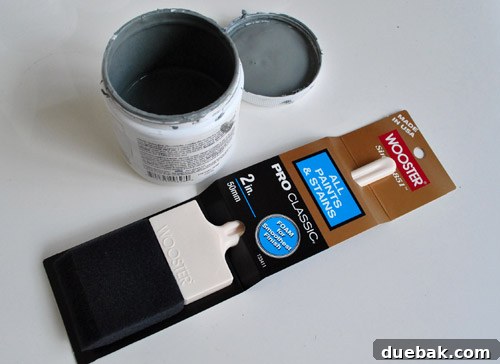
In the photograph above, you’ll also spot an extra foam brush I had on hand. My initial brush held up admirably through the entire project, so this one served as a visual reference for anyone curious about the specific tool I used (it’s a standard foam brush from Lowe’s).
The beauty of this particular paint job lies in how the subtle gray wash gracefully catches the natural knots and imperfections in the wood. This technique makes the beams appear stained rather than overtly painted, resulting in a beautifully diffused, aged look. It’s almost as if we intentionally muted the reddish tones and amplified the weathered grays, achieving a soft, aged effect that harmonizes perfectly with the deep charcoal sectional sofa below. This sectional plays a vital role in grounding the room and balancing the substantial presence of the beams.
As we continue to layer in elements like a larger area rug, a new media cabinet, and vibrant art, and once the existing fans are removed and textured, bold curtains are hung, this room will truly begin to coalesce into the warm, inviting space we envision. The beams are now a celebrated feature, offering a sophisticated contrast and a touch of rustic charm that anchors the entire design.
Embracing the Journey: Our Real-Time, Real-Budget Renovation
Ultimately, we both adore the fact that we ventured outside our usual “paint-it-white” comfort zone. Taking this risk to create a weathered, stately, yet surprisingly soft finish on the beams feels like a significant win. We are confident that this bold decision will pay dividends as the room gradually comes together over the coming months. The final piece of the puzzle for this ceiling area will be determining the perfect color for the ceiling itself. Will it be a soft metallic champagne? A subtle blue, green, or yellow tone? Or perhaps even wallpaper? We’ll be sure to share all the details once we’ve made our definitive choice.
To truly appreciate how far we’ve come, let’s take a quick trip back in time to how the room looked when we first moved in, less than two months ago:
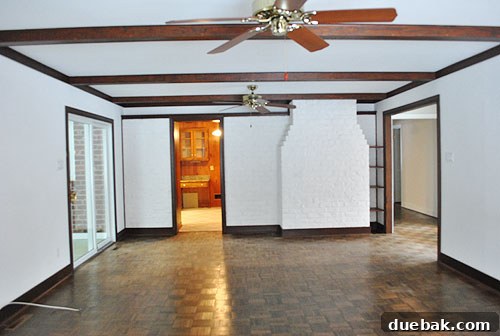
It’s incredible to see the progress. Our living room has truly come a long way, and we’re excitedly looking forward to embarking on the next phase of projects that will continue to shape this space into our dream home.