

Q: My dilemma is closets! I have two very small closets in my bedroom and I can’t seem to get a handle on keeping them organized and easy to use since they feel like they’re stuffed within an inch of their life! I know you guys are great at living with less, simplifying, and organizing in general- so I thought maybe you could share some encouragement when it comes to paring things down and choosing what to keep? Deep down I know there’s a lot of extra stuff that I don’t need that’s taking up some much needed space, but I have a hard time letting things go for fear that I’ll want them again once they’re gone. Any tips for scaling back and keeping only what I need so I can regain control of my closets again? – Leslie
Mastering Small Closets: Your Ultimate Guide to Decluttering and Organization
A: Leslie, your struggle with small, overflowing closets resonates with so many of us! It’s a universal challenge in the pursuit of a serene and functional living space. The dream of a perfectly organized closet, where every item has its dedicated spot and outfits come together effortlessly, often feels miles away when you’re staring at a chaotic jumble. We’ve all scrolled through magazine spreads, gazing at celebrity wardrobes with their vast, boutique-like spaces, entire walls dedicated to accessories, and enough room for a chic ottoman. While the designer labels and sheer abundance might be impressive, what truly captivates us, as fellow organization enthusiasts, is the sheer order. The thought that every single item, no matter how luxurious or simple, has a distinct, designated place to rest is incredibly appealing. It’s this sense of calm and control that we crave in our own, often far smaller, closets.
The good news is, you don’t need an expansive walk-in closet to achieve a wardrobe that is both functional and beautiful. The key lies not in acquiring more space, but in thoughtfully curating and organizing the space you already have. This guide will walk you through actionable strategies for decluttering your small closets, simplifying your wardrobe, and maintaining an organized system that works for you, addressing that deep-seated fear of letting go.

Embracing the “A Place for Everything” Philosophy
At the heart of effective organization, especially in compact spaces, is the principle: “a place for everything, and everything in its place.” This isn’t just a catchy phrase; it’s a foundational mindset. For us, it means keeping our closets meticulously edited and pared down. Why? Because it directly enables two crucial benefits:
- Visibility: When your closet isn’t crammed, you can actually see every single item you own. No more forgotten treasures buried at the back, no more buying duplicates because you couldn’t find what you already had.
- Effortless Styling: With everything visible and accessible, putting together an outfit becomes a joy, not a chore. You can quickly grab an ensemble you know and love, rather than wrestling with a stuffed wardrobe overflowing with clothes you never wear. Overstuffing your closet, like our old Ikea wardrobe once was, leads to daily frustration and wasted time.

Overcoming the Fear of Letting Go: The Cost of Clutter
When people ask how I manage with a relatively small collection of clothes and just a few pairs of jeans (you can read more about our closets here), it’s often challenging to articulate the minimalist approach. It boils down to being intentional about what I bring into my home and what I choose to keep. If I notice something is no longer serving its purpose—perhaps it’s damaged, unflattering, or simply too worn—I take action. It’s either repaired, consigned, or donated. This proactive approach immediately frees up valuable square footage for items that truly deserve a spot in my limited space.
This mindset was deeply ingrained during my time living in a closet-sized studio apartment in NYC, where literally every inch counted. There was no room for anything extraneous. Coupled with a thrifty nature (which I’m proud of!), this experience taught me the ease of walking away from things that might look appealing but aren’t genuinely necessary. However, I completely understand that for many, this isn’t an easy philosophy to adopt, especially when facing the allure of a clearance rack or the sentimental attachment to an item.
This is where the wisdom from “The Lucky Shopping Manual” truly shines. It perfectly encapsulates the financial and practical toll of holding onto unused items:
If a piece doesn’t work, look at it this way: You paid for it once in cash, and now you’re paying for it in valuable closet space. If it’s not right for you, bite the bullet and let it go.
Doesn’t that make perfect sense? Every item in your closet, whether worn or unworn, occupies real estate. If a piece of clothing doesn’t fit, is outdated, never sees the light of day, looks shabby, or simply isn’t flattering, ask yourself: is it truly worth continually paying for that space? Or would you rather liberate that precious room to better showcase the clothes you genuinely love and wear, perhaps even making space for a few new, intentional additions that offer a better return on your closet real estate investment?

Practical Steps to Declutter Your Wardrobe
When it’s time for a serious closet overhaul, the best approach is often the most direct: take everything out. Yes, every single item. Lay it all out on your bed, on the floor, or any available surface. This visual confrontation is often the most powerful catalyst for change. As John and I embark on a “pairing down spree,” our bed often looks something like this:
With everything exposed, you can systematically go through each item, asking yourself critical questions. This is where you identify anything you don’t absolutely love or wear. Consider these categories:
- Too Worn/Damaged: Is it beyond repair? Has it lost its shape or vibrancy?
- Doesn’t Fit: Does it pinch, sag, or feel uncomfortable? Be honest about sizes that no longer work.
- Stained: If a stain is permanent, it’s time to part ways (unless it’s designated “painting clothes”).
- Never Worn: Has it been more than a year or two since you last wore it? If so, why?
- Doesn’t Suit My Style: Did you buy it on a whim, or does it genuinely reflect your current personal style?

Smart Shopping for a Streamlined Closet
Beyond decluttering, preventing future clutter is equally important. Another invaluable piece of advice from “The Lucky Shopping Manual” offers guidance on making thoughtful purchases:
Don’t buy anything on sale that you wouldn’t consider at full price.
This gem is a powerful antidote to impulse buying. It’s incredibly easy to get swept up in the thrill of a good deal, focusing solely on how much you’re “saving.” But if the item doesn’t truly fit, flatter, or fulfill a genuine need, then you’re not saving anything at all. In fact, you’re spending hard-earned money on something that will merely occupy space in your closet, perpetuating the cycle of clutter. This principle encourages you to evaluate an item’s true worth and utility, rather than just its discounted price tag.
Here are some other profound insights from the book, which we wholeheartedly endorse and encourage you to adopt:
- The 24-Hour Rule for Big Purchases: “If you’re unsure about a big ticket item, put it on hold for 24 hours and think it over.” This allows emotional impulse to subside and rational thought to kick in.
- Prioritize Comfort and Flattery: “Don’t buy anything that doesn’t flatter you or isn’t comfortable, no matter how of-the-moment it is.” Trends are fleeting; comfort and confidence are timeless.
- Trust Your Gut in the Dressing Room: “If you have to talk yourself into a purchase in the dressing room, pass on it.” A truly great item won’t require convincing.
- Versatility is Key: “If there’s nothing in your closet to wear with it, skip it.” Aim for items that integrate seamlessly with your existing wardrobe.
- Personal Style Over Imitation: “Never purchase something just because it looks good on someone else.” What suits another person might not suit your body type or personal aesthetic.
- Release the “Someday” Clothes: “Don’t save a pair of jeans for that anticipated five-pound weight loss. Owning them is bad for your psyche. If the time comes when you drop a size, chances are you won’t hesitate to run out and buy a new pair.” Clothes that don’t fit now serve as a negative reminder and occupy valuable space.
- Accept Permanent Damage: “If a stain didn’t come out at the cleaners or when you toiled over it in the sink it’s permanent. Time to let it go.” <- (or, as we sometimes do, repurpose it into painting clothing for DIY projects!)
- Memories, Not Merchandise: “If we kept every item of clothing with a memory attached, we’d be buried in clothes.” Memories live in your heart, not necessarily in your closet. Consider taking a photo of sentimental items before donating them.
- The Four “Yesses” Test: “Ask yourself if each item of clothing in your closet: 1) flatters your shape, 2) fits perfectly or is fixable, 3) is the right color for you, 4) has been worn in the last two years – only things that get four yesses should stay.” This is a rigorous but highly effective filtering method.
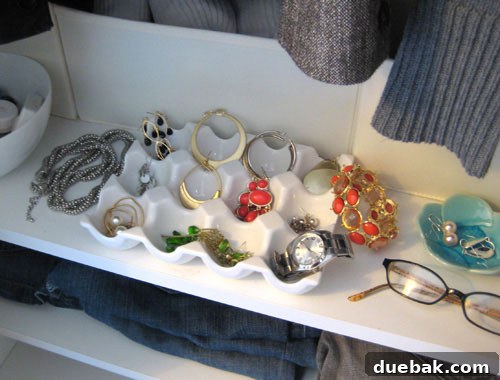
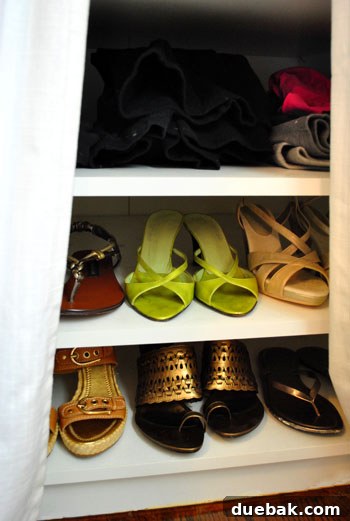
Some might call me a bit obsessive, but I genuinely enjoy the process of sifting through my clothing, jewelry, and shoes to identify items that can be skimmed down, consigned, or donated. It’s a therapeutic exercise that yields tangible results.
Maintaining Your Organized Oasis: Beyond the Initial Purge
The decluttering process is just the first step. To ensure your small closets remain functional and clutter-free, ongoing maintenance is crucial. This involves smart storage solutions and regular reviews.
Maximize Vertical Space
In small closets, going vertical is a game-changer. Utilize:
- Shelf Dividers: Keep stacks of sweaters or folded items neat.
- Stackable Bins/Drawers: Ideal for accessories, intimates, or off-season items.
- Over-the-Door Organizers: Perfect for shoes, scarves, or small bags.
- Hanging Organizers: Multi-tiered hangers for pants, skirts, or tank tops save rod space.
Uniform Hangers
Switching to slim, uniform hangers (velvet ones are excellent for preventing slips) can magically create more hanging space and give your closet a more cohesive, organized look.
Seasonal Rotation
If space is extremely limited, consider rotating your wardrobe seasonally. Store off-season clothes in vacuum-sealed bags or clear bins under the bed or on a high shelf. This keeps your active wardrobe focused and accessible.
The “One In, One Out” Rule
To prevent re-cluttering, adopt a “one in, one out” policy. When you buy a new item, commit to donating or selling an existing one. This mindful approach ensures your wardrobe stays at a manageable size.
Shift Your Perspective: Focus on Gains, Not Losses
Leslie, try not to view paring down and simplifying as a process of loss. Instead, focus intently on everything you stand to gain! Imagine:
- More Space: Not just physical space, but mental breathing room.
- A “No-Brainer” Wardrobe: A curated collection of clothes that are simplified, flattering, comfortable, and easy to toss on without a second thought.
- Potential Money: From everything you consign, sell on eBay, or at a garage sale. That’s cash back in your pocket!
- Reclaimed Time: No more frantic rooting through piles of stuff to find that elusive top or pair of socks. Your mornings will become smoother and less stressful.
There’s a genuine rush that comes from looking into my closet and confidently proclaiming, “Every single thing in here is something I love and wear.” It’s a feeling of accomplishment, control, and daily joy that is well worth the initial effort of decluttering.
Now, we’d love to hear from you! What are your strategies for closet upkeep? Do you schedule annual purges, never part with a stitch of clothing, actively consign items, or perhaps embrace a daily uniform? Feel free to share any and all tips that might help Leslie and anyone else grappling with similar closet predicaments!
Psst- Looking for more in-depth information about our own closet journeys? Be sure to check out this post and this post for more insights. And for general advice on simplifying your life, here’s a broader post about keeping things simple. Oh, and if you’re curious about how we ingeniously modified two inexpensive Ikea wardrobes to create custom bedside built-ins, delve into this post for all the fascinating details.