
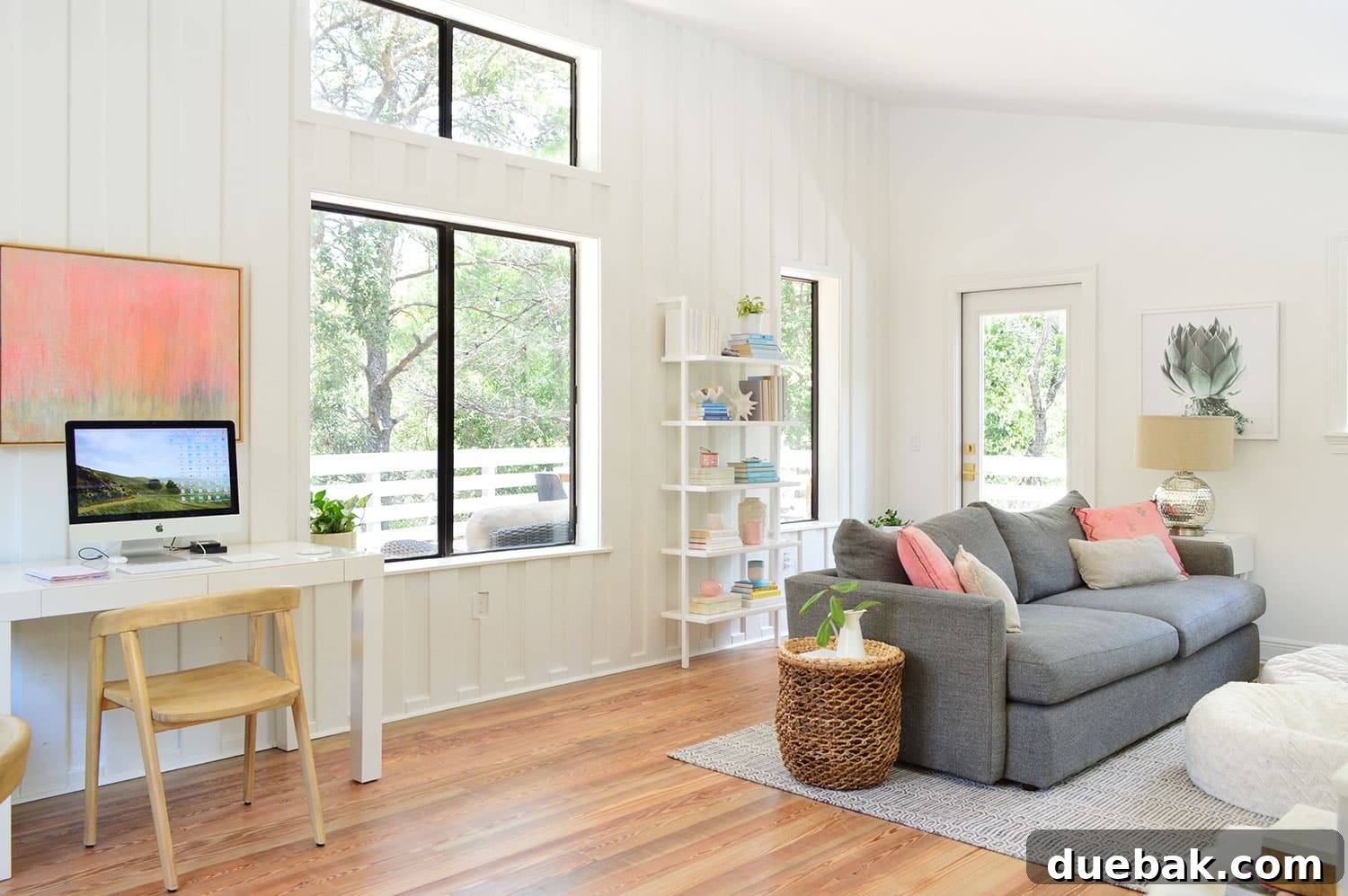
Welcome back to our Florida home renovation journey! Following last week’s sneak peek into our thoughtfully arranged kitchen, where we cleverly utilized existing furniture, we’re thrilled to unveil the transformation of our upstairs space. This area is rapidly becoming one of our most beloved rooms, and it’s easy to see why: with expansive windows gracing all four walls, it bathes in glorious natural light throughout the day. Beyond the sheer brightness, these windows offer breathtaking panoramic views of the lush greenery outside, creating a serene and invigorating atmosphere at every turn.
Unveiling Our Multifunctional Upstairs Sanctuary: A Bright & Airy Family Haven
Our vision for this upstairs room was always clear: to create a spacious, shared family hub where everyone could comfortably gather and spend quality time together. We intentionally steered away from conventional layouts, like dividing it into a master bedroom and bathroom for us, or two smaller bedrooms and a bathroom for the kids. Instead, we committed to a large, open-concept family room that seamlessly integrates a dedicated workspace. This design choice has proven incredibly successful, fostering a sense of togetherness and making the most of every square foot. An added benefit, and one we deeply appreciate, is the practical aspect of having everyone sleep on the same floor. For those inevitable middle-of-the-night calls from the kids, having us all on the same level offers immense peace of mind, eliminating the need for them to navigate stairs in the dark. This spacious, light-filled sanctuary upstairs has truly enriched our daily lives, serving as a vibrant gathering spot from morning until evening.
The Vision: Crafting a Shared Family & Workspace Oasis
The essence of modern living often calls for adaptable spaces, and our upstairs design embodies this philosophy. By dedicating this entire level to a versatile family room and workspace, we’ve embraced a lifestyle that prioritizes communal living and flexible functionality. This approach has allowed us to create zones within a larger area, offering both relaxation and productivity without feeling cramped. Imagine a sunny afternoon where one corner buzzes with creative projects or focused work, while another invites leisurely lounging, all under the same sun-drenched roof. This deliberate choice has not only optimized our home’s square footage but has also fundamentally shifted how we interact and enjoy our living environment, proving that thoughtful design can elevate everyday experiences in profound ways.
Maximizing Space: A Large Living Area for Small Home Living
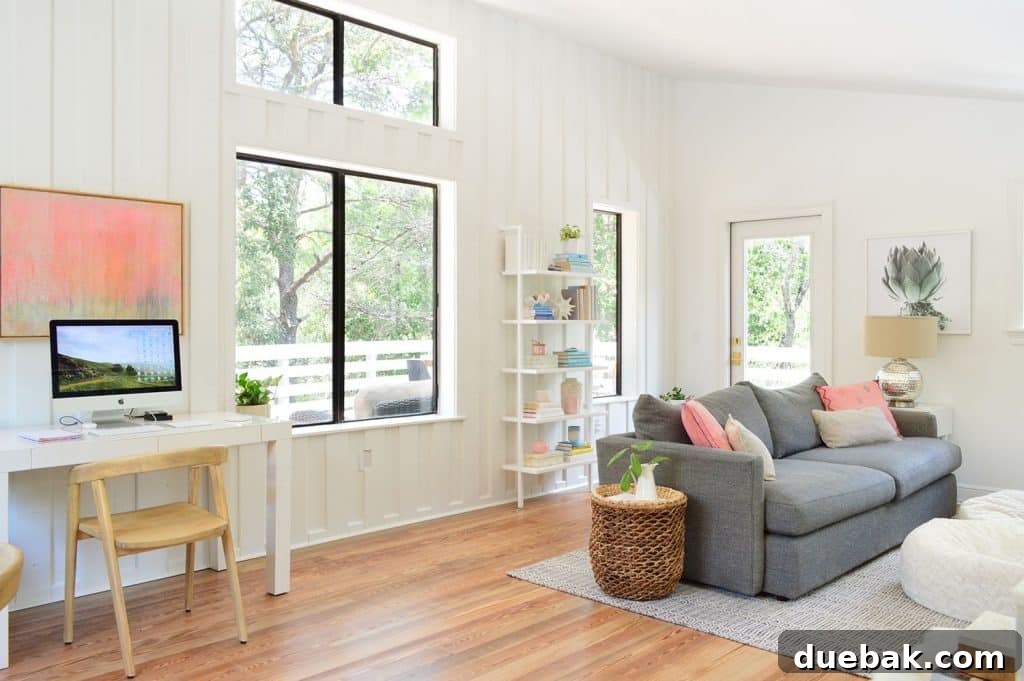
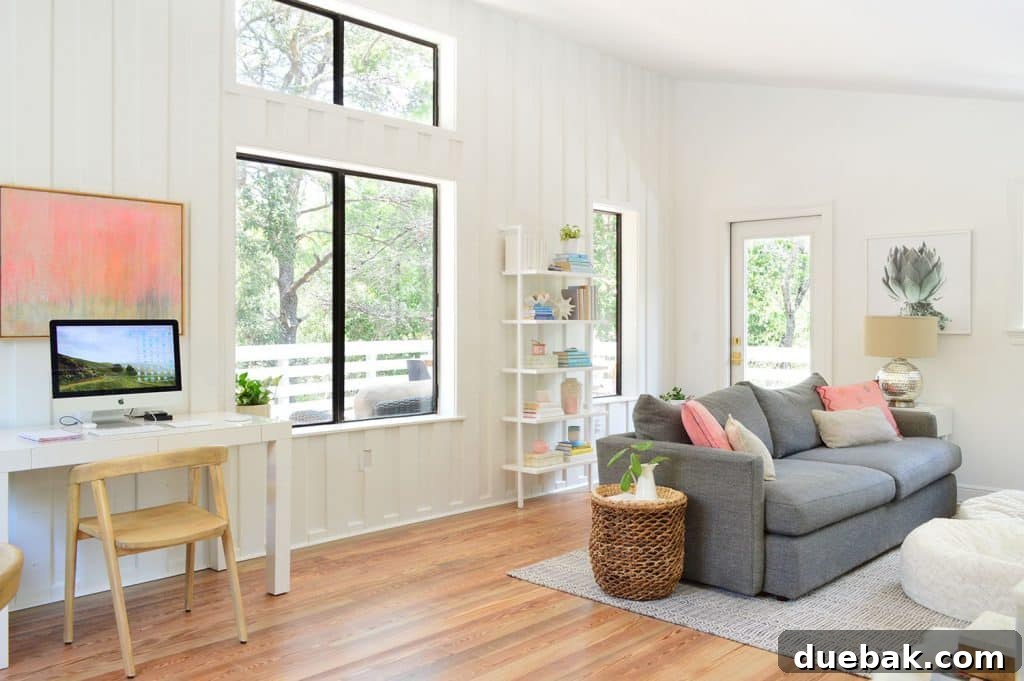
Observing the photograph above, your eye is immediately drawn to the prominent double window crowned with a transom. This architectural feature is perfectly centered within the room, serving as a natural divider that visually splits the expansive space into two distinct yet harmonious zones. To the right, we’ve crafted a comfortable living area, clearly delineated by a generously sized area rug. Its soft texture and calming color anchor this side, inviting relaxation. On the left, a dedicated office, art, and general work area unfolds, catering to both our professional needs and the kids’ creative endeavors. This thoughtful segmentation ensures that despite its open nature, the room offers functional pockets for various activities.
To truly grasp the scale of this room, consider the dimensions of the gray rug, which measures a substantial 8 by 10 feet, and the sofa, a whopping 93 inches in length. These pieces underscore just how grand this upstairs space truly is. When you note where the edge of the rug aligns with the central axis of the window, it becomes apparent that this living zone alone occupies nearly half of the room’s impressive width! This generous proportion allows us to enjoy a sense of spaciousness rarely found in homes of our current size. We’ve often heard from readers in smaller residences that “larger living areas and cozier sleeping spaces are ideal, as you share the expansive rooms together and retreat to bedrooms merely for sleep. This makes the shared square footage feel far more ample!” We wholeheartedly echo this sentiment. Having one substantial communal space downstairs, and this equally impressive one upstairs—complemented by the vast outdoor deck accessible from this level—has been an absolute delight.
Designing for Light and Views: The Four-Sided Window Advantage
The decision to utilize existing furniture was a guiding principle in our move, and it paid off beautifully in this upstairs room. Everything we already owned found its place, creating a cohesive and comfortable environment with minimal new purchases. The four-sided windows, a defining feature of this room, proved to be both a blessing and a design challenge. While they flood the space with light and offer captivating views, they also limited wall space for necessities like a television. Our solution was to position the seating area to face the only wall large enough to accommodate the TV without overlapping a window. This pragmatic choice, though perhaps not the most avant-garde, has been incredibly effective, proving that functionality often trumps rigid design rules – especially when considering our family’s love for a good binge-watch session!
The Multifunctional Workspace: Combining Creativity and Productivity
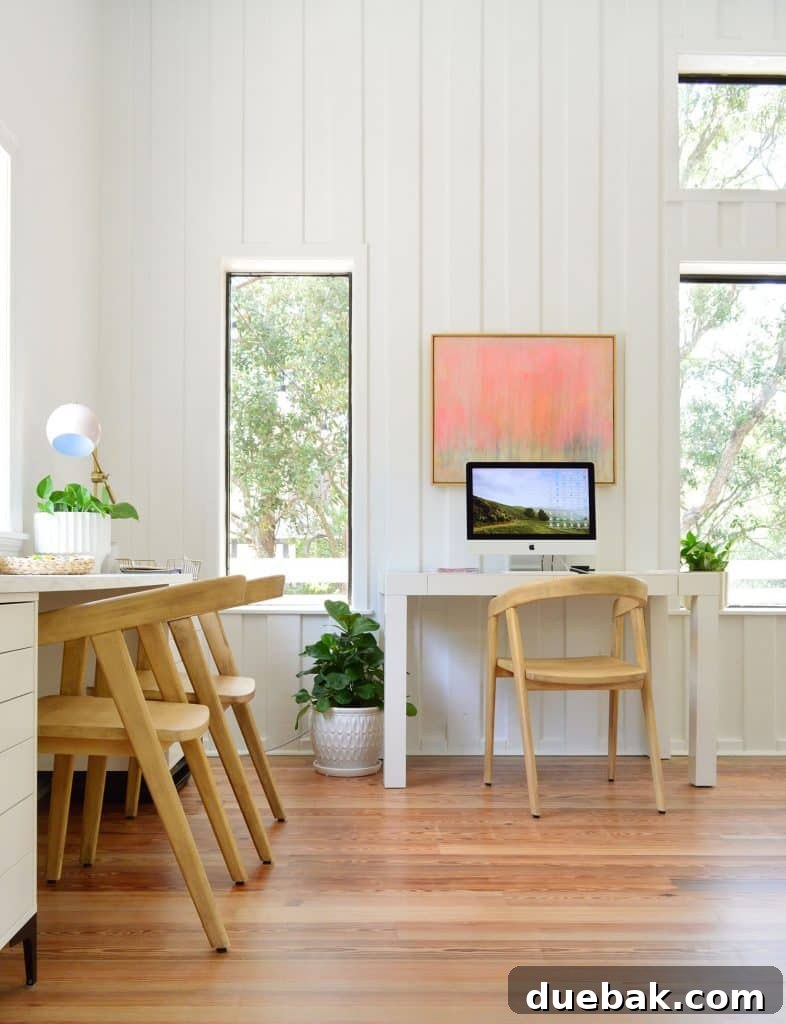
Now, let’s turn our attention to the left side of this incredible space, which serves as a dynamic hub for work, homework, and artistic expression. This zone is thoughtfully designed to accommodate both the kids’ creative projects and our need for a dedicated adult workspace, especially when using our large desktop monitor. While our laptops offer mobility for working from various spots downstairs at the kitchen table or even out on the deck, having a fixed setup here is invaluable. It’s where serious tasks get done, and where the kids can spread out their art supplies or tackle school assignments with ample room. This integrated approach to work and play ensures that creativity and productivity can coexist harmoniously within our shared family environment.
Our DIY Desk Solution: An IKEA Hack for Family Productivity
Just as in our kitchen, the majority of the furnishings and decor in this upstairs room were items we already owned, carefully transported from our previous home. This commitment to using existing pieces not only saved us time and money but also infused the space with a sense of familiar comfort and history. The only new additions were the comfortable chairs for the office area, a couple of versatile storage baskets to keep clutter at bay, and a new television—a necessity after selling our wall-mounted TVs with our Richmond house. It’s truly gratifying to see how these familiar pieces have seamlessly integrated into our new, distinctly different beach house, demonstrating the power of smart planning and adaptable decor. While we wouldn’t claim this space is 100% perfect or permanently finalized, its current configuration has come together remarkably well, especially considering it’s primarily composed of items we simply packed and hoped would fit. This fortunate outcome means we’re under no immediate pressure to replace anything, allowing us to live in and truly understand the space before making any further investments.
Furnishing Smart: Leveraging What We Already Own
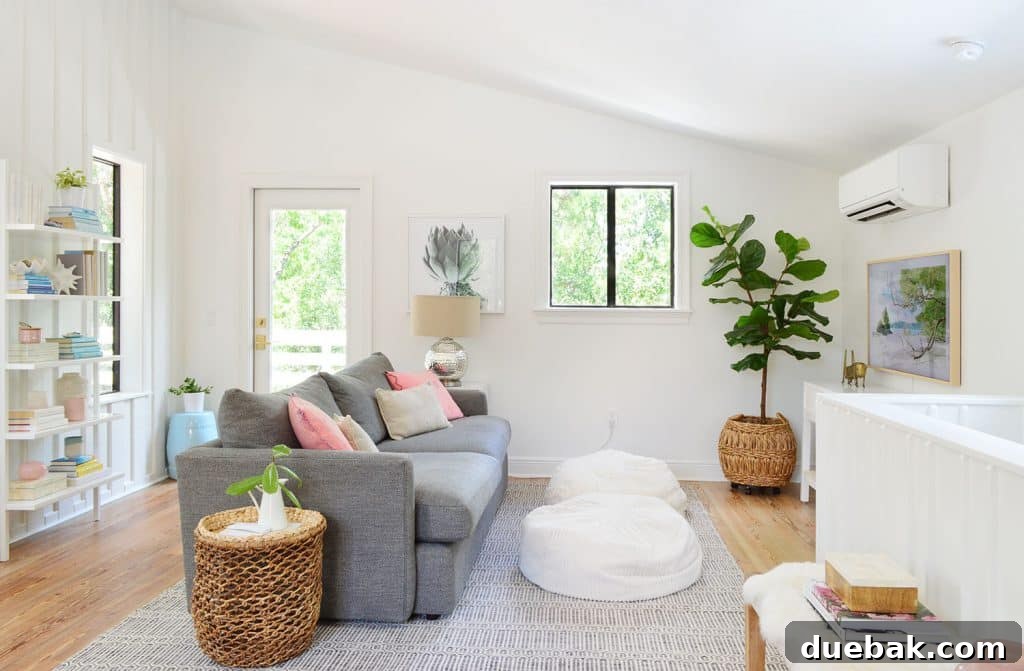
One of the most satisfying aspects of designing this upstairs space was the challenge and triumph of furnishing it almost entirely with pieces we already owned. It’s a testament to versatile design and strategic packing. The large, comfortable sofa, a beloved fixture from our previous living room, found a new home here, inviting relaxation. The soft, neutral rug, which once grounded our son’s bedroom, now defines the lounge area with its familiar texture. Even the sleek, white wall-mounted bookshelf, previously a feature in our beach house living room, seamlessly integrates into this new layout, providing essential storage without visual bulk. The kids’ bean bags, repurposed from their old art room, serve as casual seating for now, a placeholder until we eventually select a more permanent coffee table. What surprised us most was how effortlessly these disparate items, which had never shared a space before, coalesced. We anticipated extensive rearranging, but instead, everything largely stayed put from the moment of unpacking, proving that a cohesive aesthetic can emerge from beloved, pre-owned pieces, even in a completely new environment.
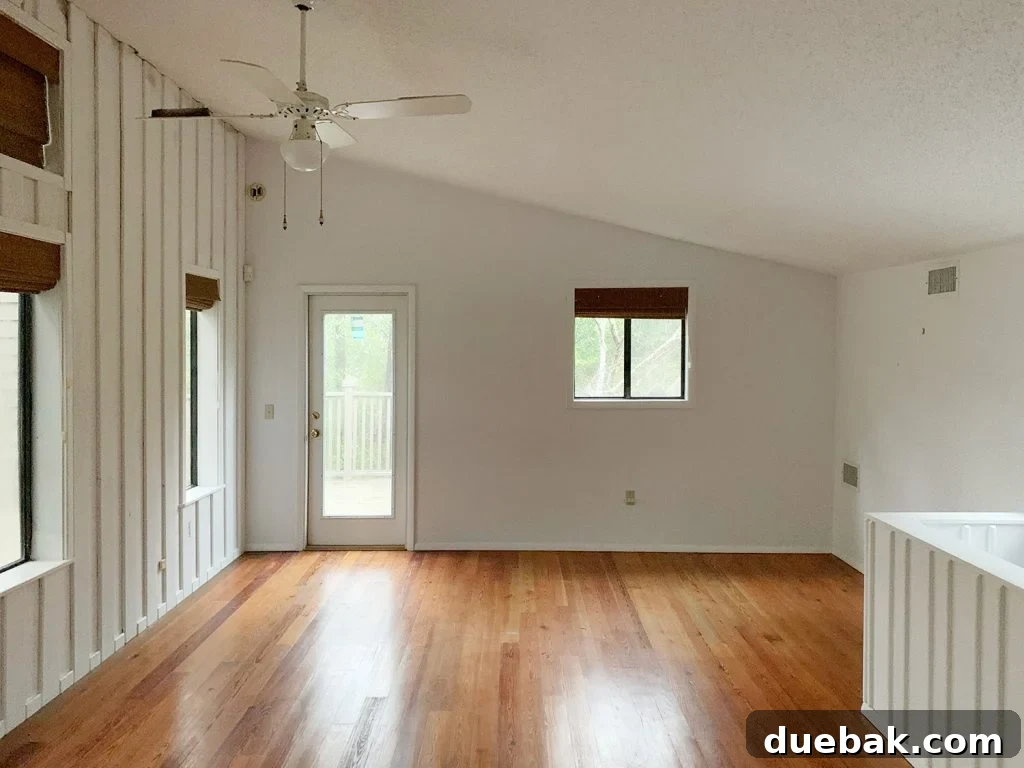
Before & After: A Transformation into Our Dream Upstairs Retreat
To truly appreciate the journey of this space, let’s take a quick look back. When we first viewed this property in February, the area designated as the “lounge-y half” of the room appeared as a blank canvas. It was a functional but uninspired space, awaiting our personal touch and vision. The potential, however, was undeniable, especially with those coveted four-sided windows hinting at the brightness to come.
Fast forward to today, and the transformation is remarkable. After applying a fresh coat of Sherwin Williams Pure White to the walls, expertly refinishing the floors to bring out their natural beauty, and strategically placing our carefully chosen furniture, the room has been utterly revitalized. The difference is striking, not just due to the design choices, but also because of how the space now interacts with light. It also helps that the current photos are taken on a sunny day with better equipment, showcasing the room’s true vibrancy and warmth. This “after” shot isn’t just a photograph; it’s a living testament to how paint, polished floors, and personalized furnishings can completely redefine a space, turning it into a cherished retreat.
Smart Solutions: The Frame TV & Efficient Climate Control
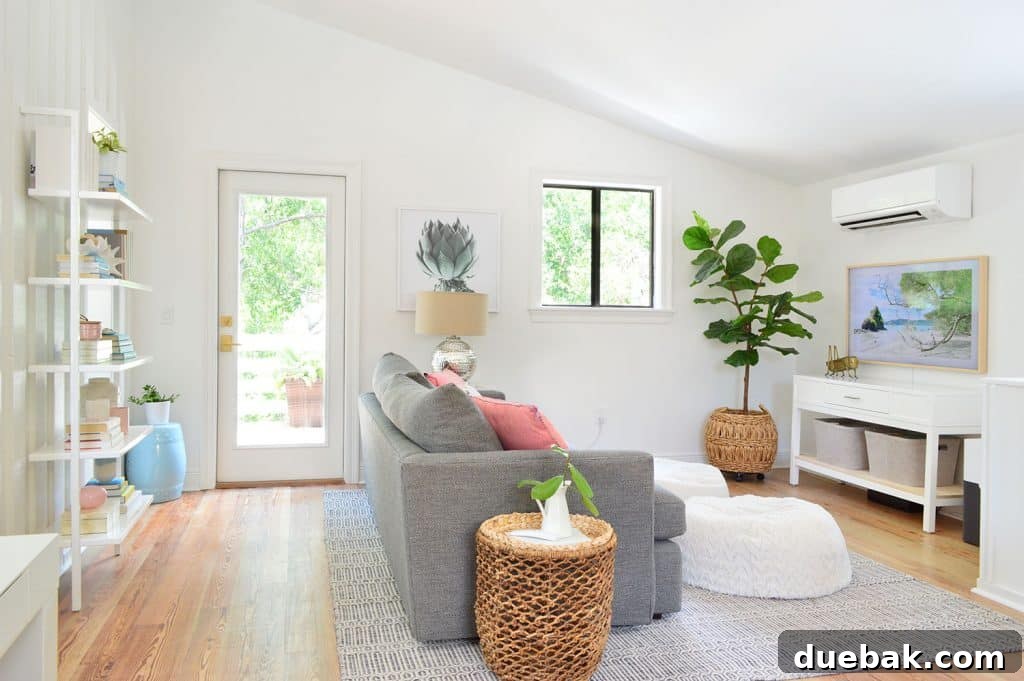
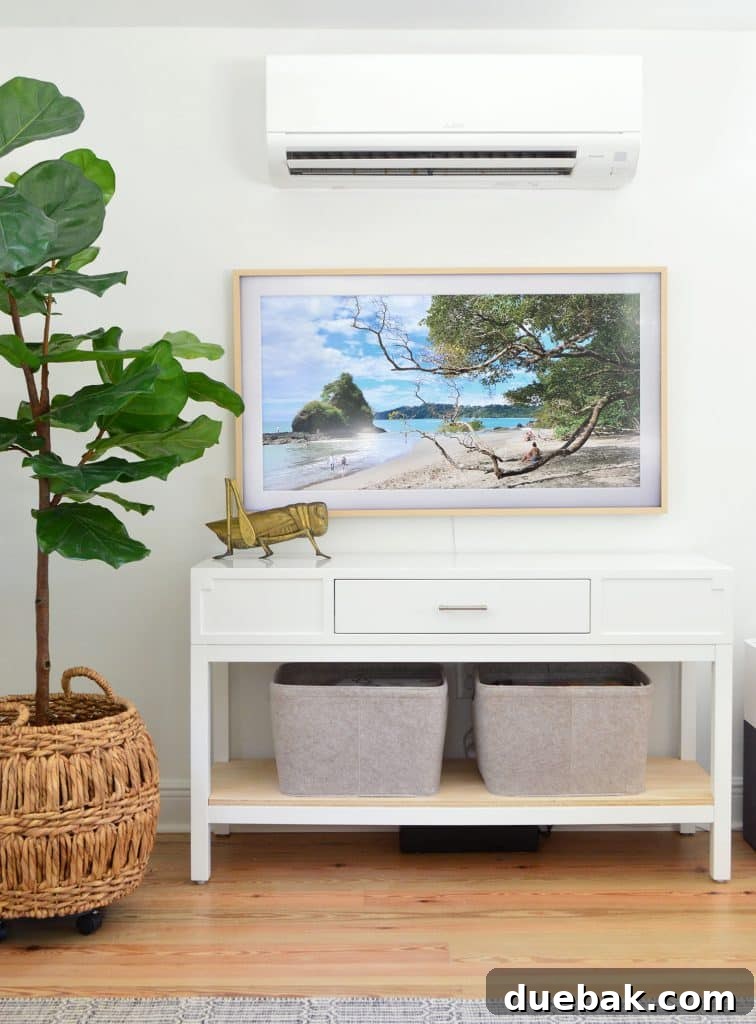
Yes, we did ultimately indulge in a Frame TV, joining the ever-growing “blogger bandwagon”! It was a strategic splurge, considering it’s likely to be our only television in the entire house. Overall, I’d give it a solid B+. We absolutely adore how flush it sits against the wall, creating a seamless look, and the ease with which we could magnetically attach the beige “bezel” to mimic a light wood picture frame. This frame, which comes with the TV itself, truly elevates its aesthetic appeal. However, I’ve found that the “art” screensaver often looks more impressive in photographs than it does in real life. While we currently use a cherished photo from our family’s Costa Rica trip as our “art” when the TV is off, we frequently opt to simply power it down, leaving a plain black screen. Perhaps I’ll delve deeper into my full review in a future podcast, but for now, those are my two cents on this popular tech-meets-decor item.
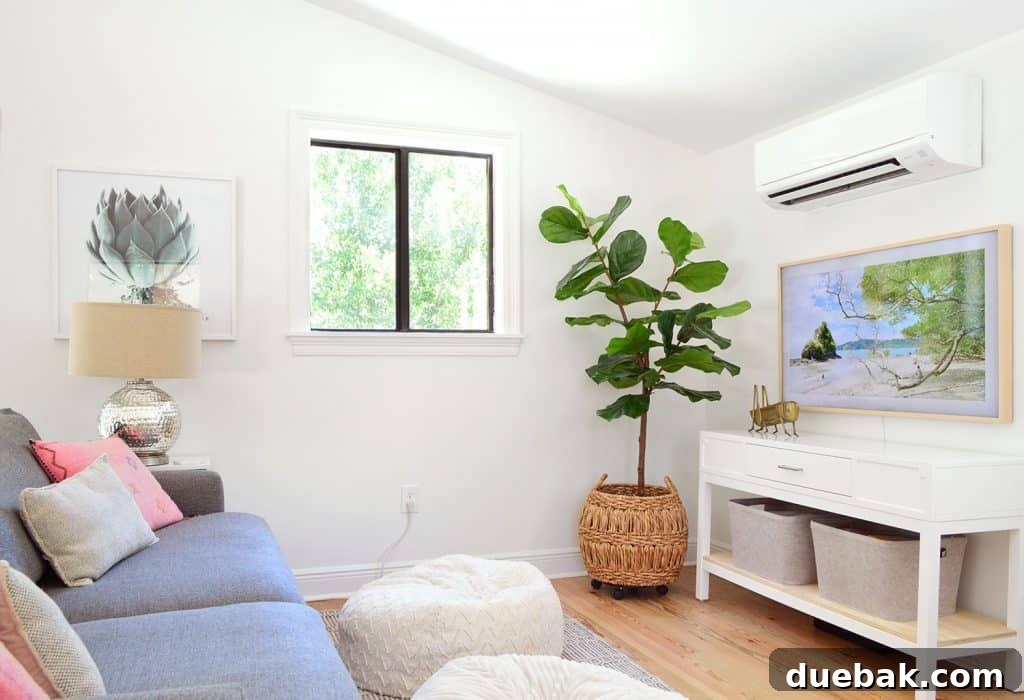
Another thoughtful update we implemented in this space involved enhancing a white console table that previously resided in our old dining room. Originally, it had an open bottom, offering zero storage. To rectify this, once it was placed here beneath the TV, we simply cut a piece of plywood to rest across its lower supports, instantly transforming it into a highly functional shelf. This clever modification provided much-needed concealed storage. We then invested in two felt baskets, perfect for neatly organizing all our board games. This placement is ideal, as we’ve found that our favorite time to play them is after dinner, out on the upstairs deck. This small adjustment significantly improved both the utility and tidiness of the area.
If you’re curious about the white unit mounted above the TV, that’s a mini-split system—a far more efficient heating and cooling solution than what was originally installed. Initially, we resisted, preferring the discreet look of a wall vent over a prominent wall-mounted unit. We even gathered four different estimates from local HVAC professionals, hoping for an alternative. However, every single expert unanimously advised that this room, with its abundant windows, would never achieve optimal comfort without this specific type of unit. Ultimately, function won over form. And they were absolutely right! Despite all those large windows, the room remains exceptionally comfortable, consistently maintaining a pleasant temperature. The previous system, powered by downstairs vents, simply wouldn’t have been as efficient or effective in regulating the climate in this sun-drenched space.
Seamless Flow: Integrating the Deck & Interior Design
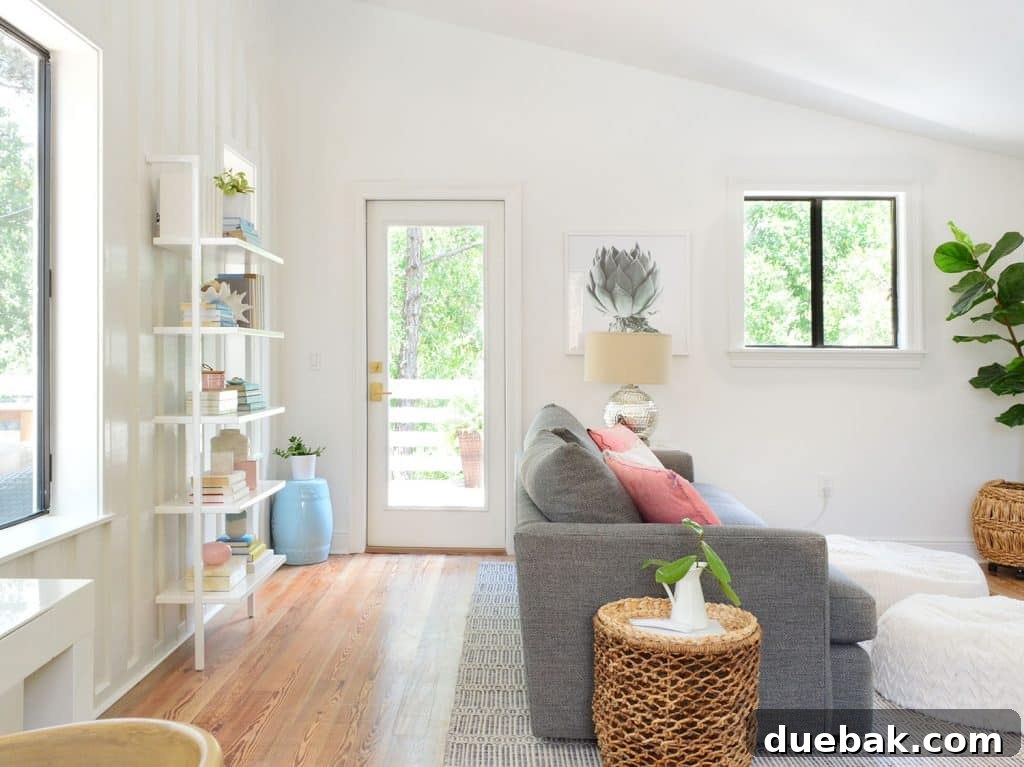
Revisiting the discussion of furniture placement, another critical factor was ensuring effortless access to our upstairs deck. Creating a smooth, unobstructed path to the deck door was a top priority. Ingeniously, positioning the sofa in its current spot actually carves out a natural and welcoming corridor leading directly outside. While the area rug ideally would be slightly shorter to avoid infringing on the door frame, this minor detail is hardly a deal-breaker at this stage. We are, after all, working with the furniture we already possess, and its adaptability has been nothing short of remarkable. It’s truly astonishing to realize that so many pieces that comfortably filled our expansive 3,150 square foot brick colonial now integrate so perfectly into the more compact, modern aesthetic of our 1,400 square foot beach house. This adaptability speaks volumes about the timelessness of good design and the power of thoughtful curation.
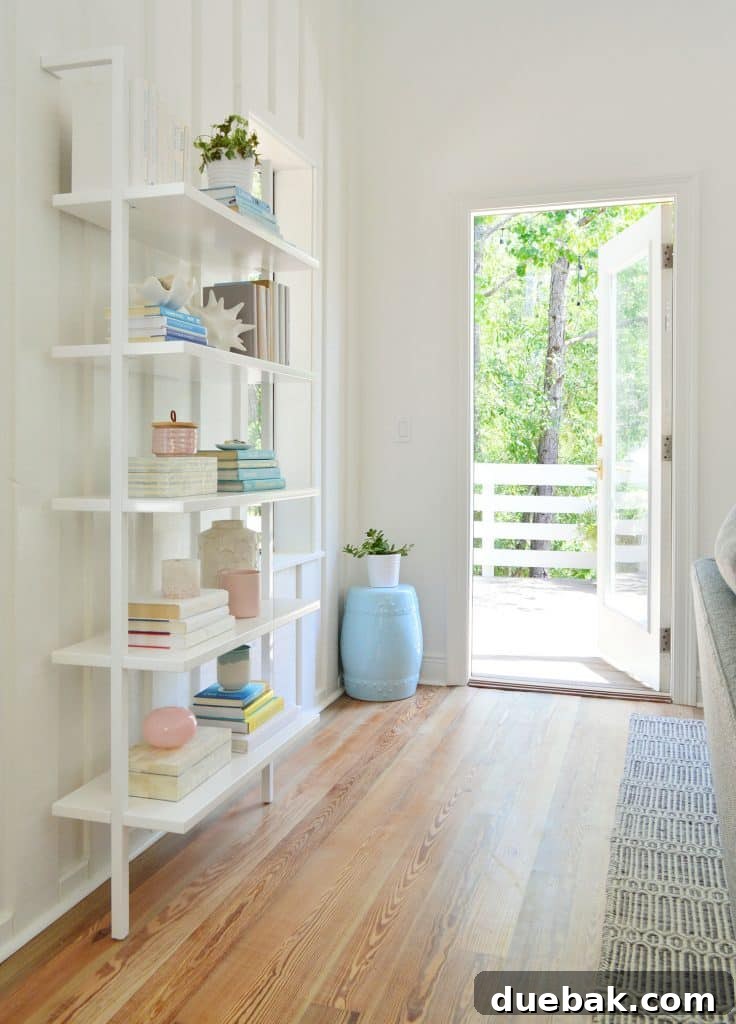
Initially, I harbored some reservations about installing this particular bookshelf in what could be considered a high-traffic pathway leading to the deck. However, it has proven to be an absolute stroke of genius – dare I say, Sherry was right! There have been precisely zero incidents of anyone bumping into it, and its presence actually makes perfect sense of an otherwise awkward sliver of wall. This narrow recess might have remained unused or felt like wasted space, but the shallow depth of the bookshelf perfectly complements it, turning a potential design challenge into a functional asset. The key, I believe, lies in its slim profile; even in a hallway or corridor, people instinctively maintain a comfortable distance from walls, usually about a foot, making this placement surprisingly unobtrusive and incredibly effective for storage and display.
Lighting Up the Space: Future Plans for a Statement Pendant
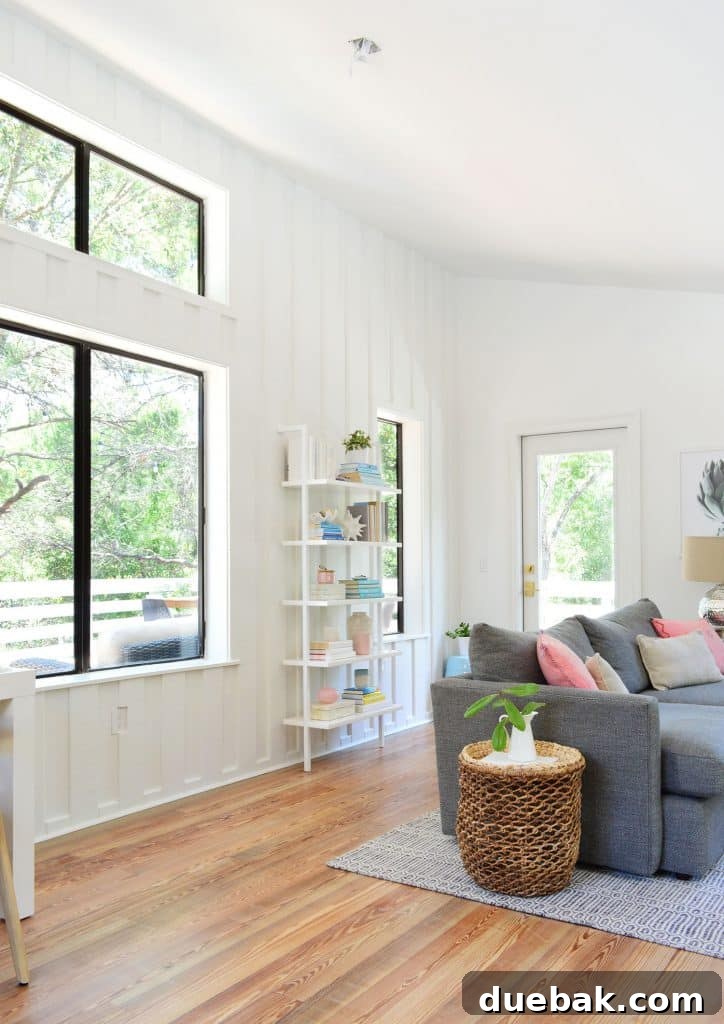
One final, exciting detail about this side of the room involves our future lighting plans. With its impressively tall ceilings, this space is perfectly suited for a grand and visually striking light fixture. We currently have a large pendant light on order, specifically designed to hang from the ceiling junction box visible in the picture below – though it’s centered on the window, it can be a bit tricky to discern from this particular angle. Our strategy was to live in the house for a full, hot summer month first, allowing us to accurately assess our cooling needs before committing to either a ceiling fan or a decorative light fixture. Thankfully, we’re now well into June, and this room has consistently remained cool and comfortable, even during the warmest days. This confirmed comfort level gives us the confidence to proceed with our chosen statement pendant light, knowing we won’t be sacrificing essential air circulation for style. It’s a perfect blend of form and function, tailored to our actual living experience.
The “Business in the Back”: Our Family’s Dedicated Productivity Hub
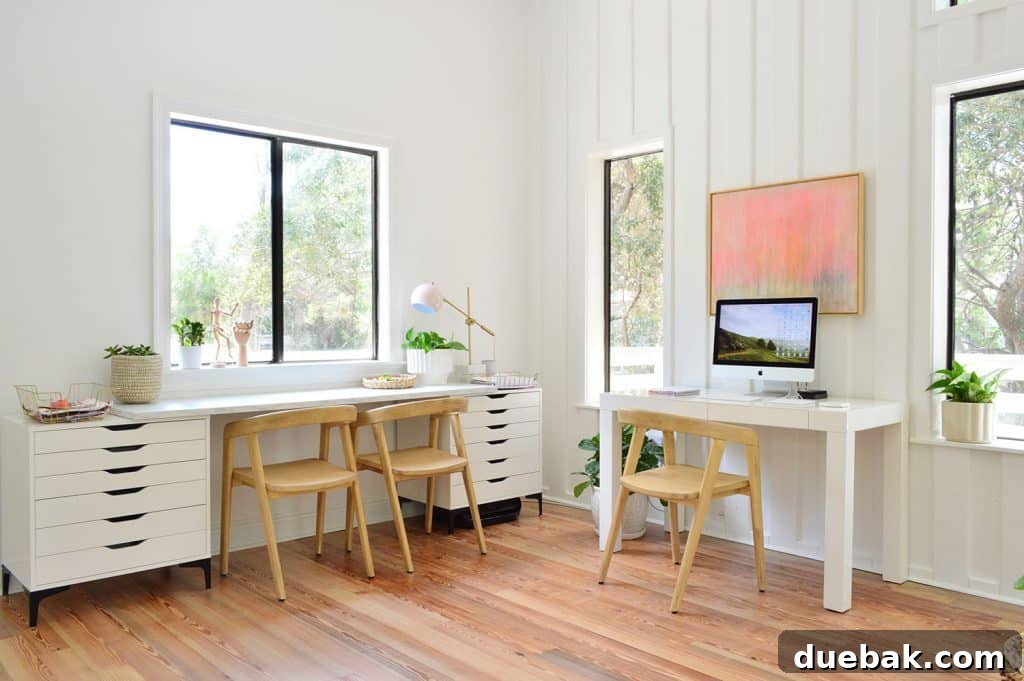
Now, let’s gracefully pivot to the other half of this dynamic room: the dedicated workspace. If the living area to the right is the “party in the front,” this side is undoubtedly the “business in the back”—and yes, I just compared our versatile room to a mullet! In all seriousness, as this house is considerably more compact than our previous one, we no longer enjoy the luxury of entirely separate office and art spaces for the children. This is a significant shift, especially since it was only earlier this year that we had separated those functions in our much larger old home. However, we are far from strangers to working alongside our kids as they draw and craft. In fact, for over six years, our previous office was set up this very way. The verdict after a month of this integrated arrangement? It’s been incredibly successful, even navigating the ultimate test of quarantine and distance learning. The synergy of shared space for work, homework, and creative pursuits has truly proven its worth.
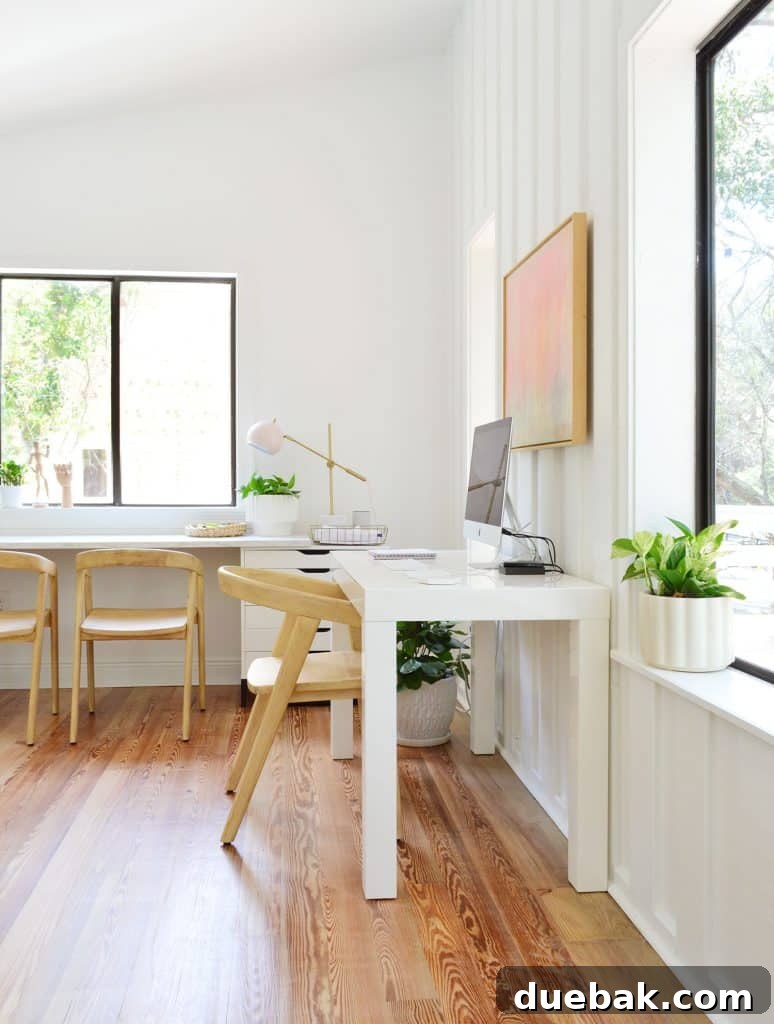
Adapting to a Smaller Footprint: Integrated Art & Homework Zone
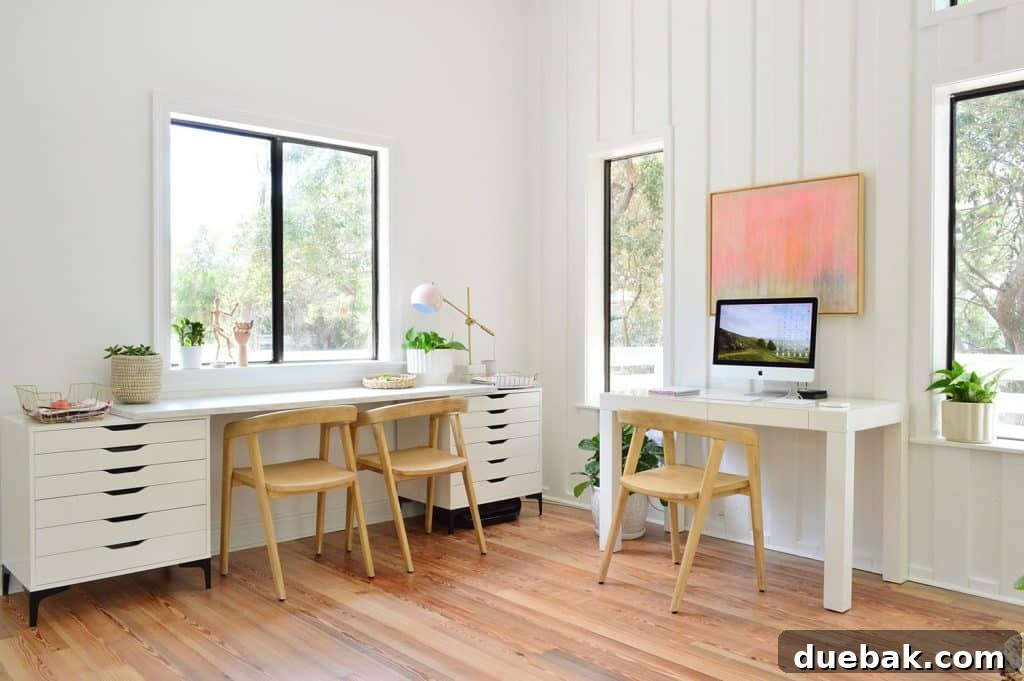
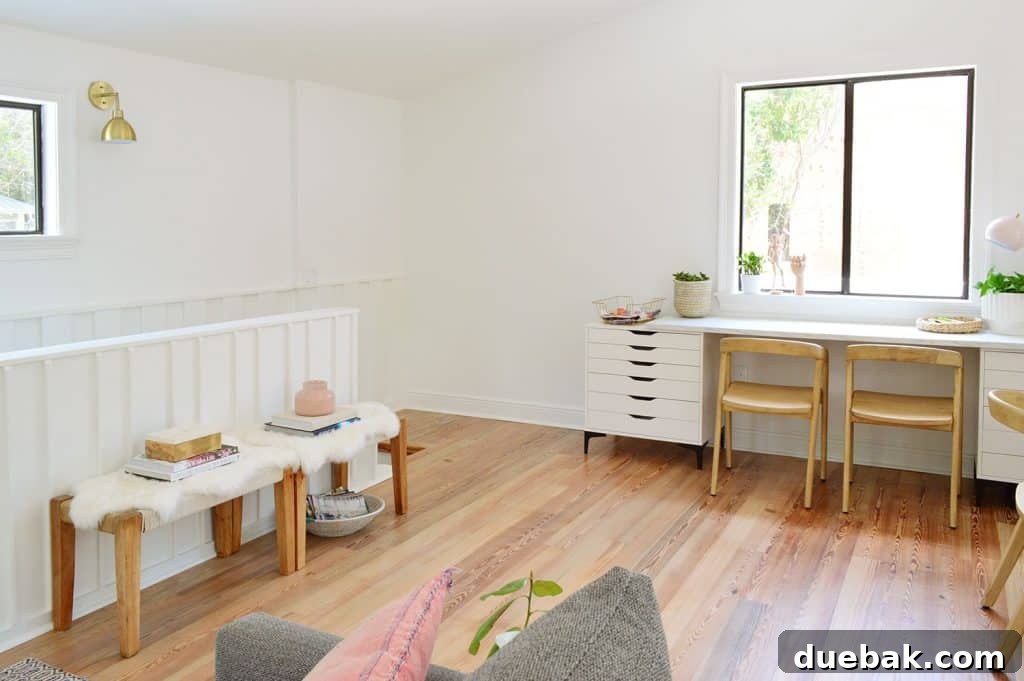
You might recognize the kids’ desk setup as a streamlined version of the “mega desk” we originally constructed for their dedicated art room in our previous home. For this new space, we efficiently repurposed two out of the three IKEA Alex drawer bases, augmenting them with sturdy iron legs. We then paired these with one of our two marble-look countertops. The unused components from the original mega desk were thoughtfully donated once we finalized the layout here. This adaptable, modular system is a fantastic example of how to maximize functionality in a smaller footprint, providing ample surface area and storage for creative and academic pursuits alike.
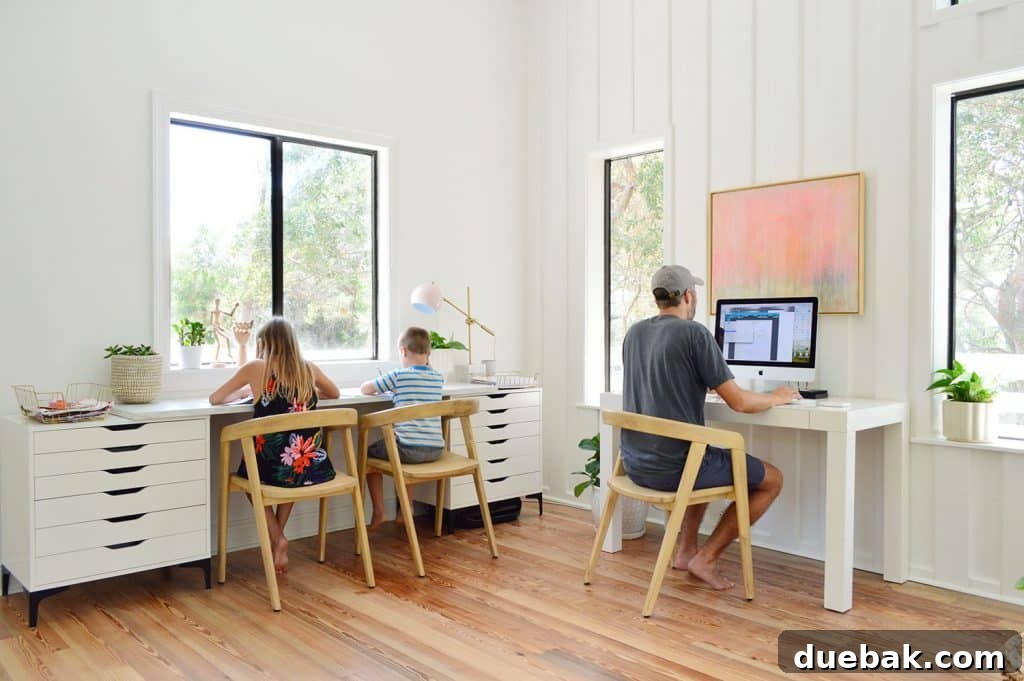
You might notice a slight visual discrepancy: the current countertop isn’t quite long enough to perfectly span both desks while allowing for two chairs to be comfortably positioned in the middle. While IKEA does offer a longer, 8-foot version of this countertop, the substantial $249 delivery cost makes it seem hardly worth it for what is currently a non-issue in terms of functionality. For now, it works perfectly fine. Perhaps someday, if we find ourselves on a road trip past an IKEA, we might consider picking up the longer counter or adding butcher block extensions to the ends. But for the time being, this minor aesthetic detail doesn’t impede our daily use or enjoyment of the space.
The Adult Workspace: Efficiency Meets Serenity
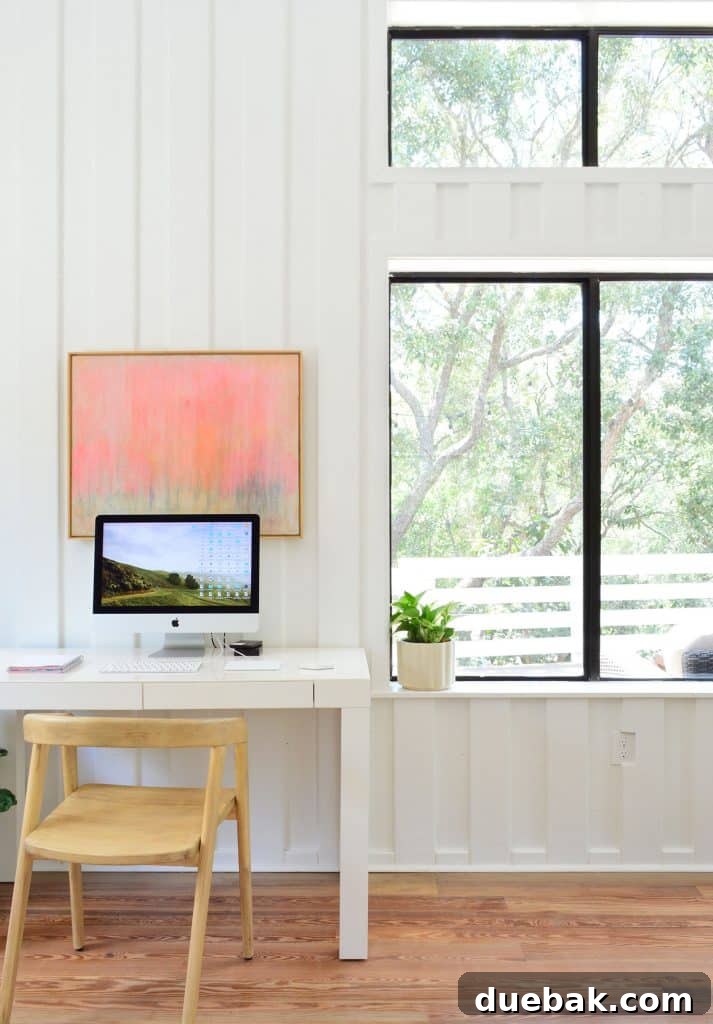
The adult workspace here is centered around my old desk—well, technically, it’s Sherry’s old desk from when we first got married, meaning it has been a faithful companion for over 13 years! Before our move, we embarked on a significant decluttering mission, drastically paring down our files and paperwork. This involved digitizing some documents and, more extensively, shredding anything we no longer needed. As a result, our need for vast file storage is a fraction of what it once was. We’ve even ingeniously borrowed a few drawers from the kids’ desk that they weren’t utilizing, and less frequently accessed files are neatly stashed away in the bedroom for now. This approach keeps our workspace minimalist and focused.
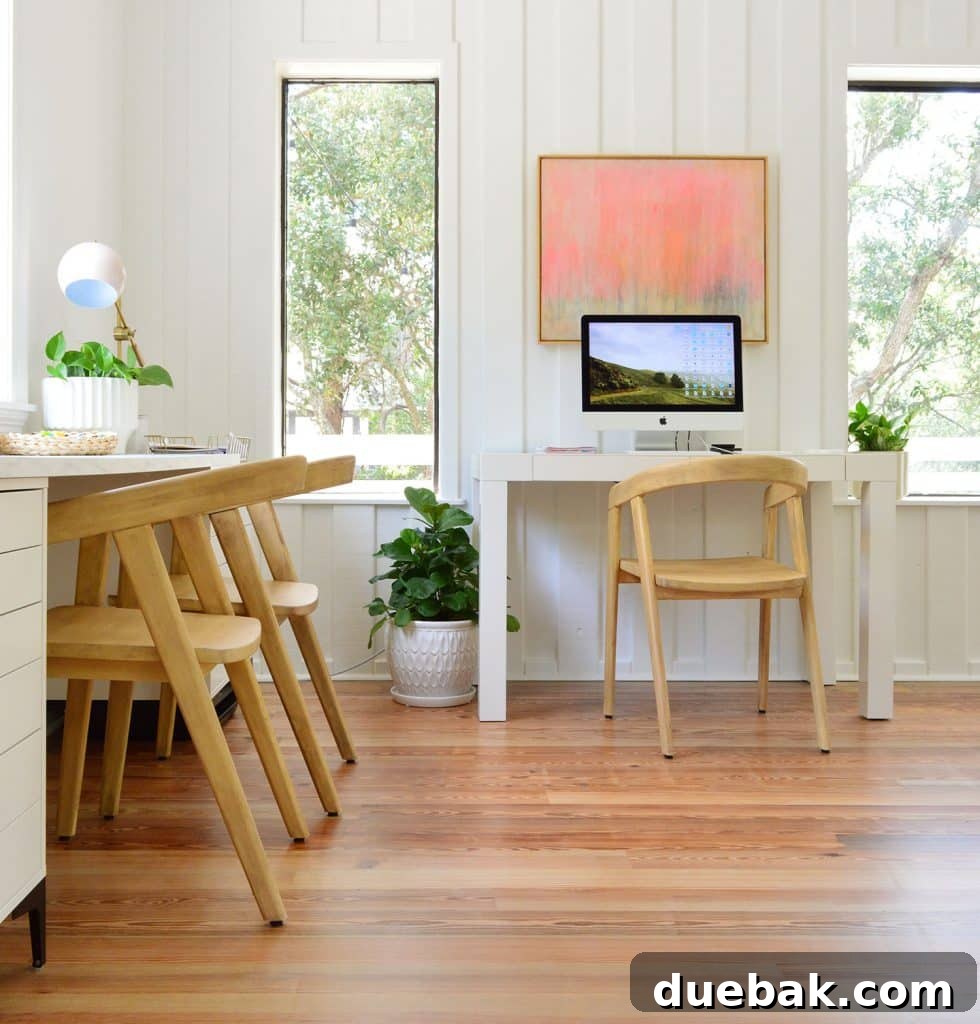
Eventually, we’ll likely consolidate all our “office stuff” into one dedicated location, but for now, I’m particularly proud of how I managed to tuck my printer discreetly under one of the drawer bases. If you look closely at the photos, you’ll spot it lurking in the shadows, wirelessly spitting out documents as needed. While this placement makes using the scanner a bit more challenging, it’s rarely an issue, as we almost exclusively scan documents using a free app on our phones (the HP Smart App, for those curious – not sponsored, just genuinely easy and fast). As I type this very sentence, I’m seated in this exact spot, and I have to say, after seven years of facing a plain wall while working, it is absolutely amazing to have such expansive views of lush greenery from my desk chair. With windows on two sides, I enjoy not only incredible natural light but also the bonus perk of watching our dog, Burger, sunbathe on the deck, often with a smug, “Jealous, bro?” look on his adorable little chihuahua face. It’s a workspace that truly blends productivity with serene environmental connection.
Embracing the “Slow Design” Approach: Future Possibilities
What might not be immediately apparent from these photographs is the considerable amount of empty space still present on this side of the room. In fact, we could easily accommodate a second 8×10 foot rug here. While adding another rug is a possibility we might explore down the line, for now, we’re content to let the room “percolate.” This “slow design” approach allows us to live with the space, observe its natural flow, and truly understand our needs before making any hasty decisions. It’s a deliberate strategy to avoid the common trap of buying items merely to fill a void, only to find later that the space needs to be rearranged or tweaked anyway. This patient observation ensures that any future additions will be intentional, functional, and genuinely enhance the room’s overall utility and aesthetic.
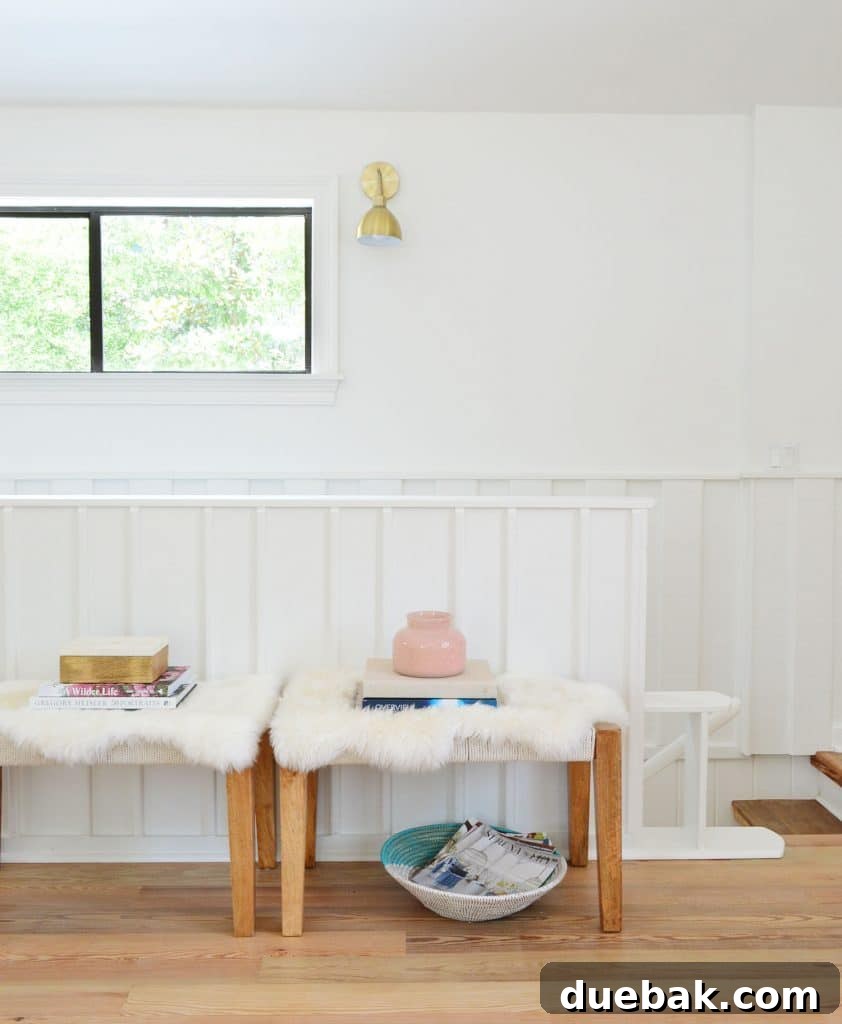
And speaking of simply filling space, those charming benches to the left in the photo above are currently doing precisely that. They are pieces we already owned, and we weren’t quite ready to part with them yet—they hold future potential, perhaps at the foot of a bed in a guest room, for instance. Given there was an empty spot perfectly suited for them, they currently reside there. It’s a practical, no-fuss solution that allows us to retain beloved items without feeling pressured to find their ultimate permanent home just yet. This adaptability is key to making a new house truly feel like home, without rushing the process.
Concluding Thoughts: A Well-Loved & Evolving Space
So there you have it: the current, evolving state of our upstairs living area. Will it always look exactly like this? Absolutely not. But I am overwhelmingly grateful that so much of what we already owned and carefully moved down here—including the sofa, which we quite literally had to wrestle up the stairs—is functioning so beautifully for us. It’s a testament to thoughtful design and the enduring quality of pieces collected over time. This room is a vibrant reflection of our family’s needs and our commitment to creating a home that is both practical and deeply personal. We look forward to seeing how it continues to evolve and adapt with us.
Now, if you’ll excuse me, I think I’ll go gaze out the windows for a little while, soaking in the serene green views. Or perhaps it’s time to take my laptop out to the deck for some fresh air and inspiration. The possibilities in this versatile space are endless!
P.S. Discover our full Florida house renovation journey and design tips right here. Explore everything from exterior transformations to clever interior projects and our recent floor refinishing updates. We’ve covered a lot of ground, and there’s much more to see!
*This post contains affiliate links, meaning we may earn a small commission from purchases made through our links, at no extra cost to you. We only recommend products we genuinely love and use in our own home.