
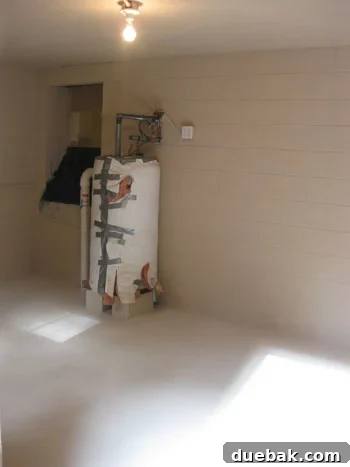
After a challenging start to our basement transformation project, we’re finally back on good terms with our subterranean space. What began as a Dryloking adventure, quickly interrupted by the unwelcome discovery of mildew, has now turned into a resounding victory. We’ve successfully navigated the initial, crucial steps towards converting our damp, uninviting cinder block basement – once more akin to an insect shelter – into a clean, dry, and highly functional storage area. The journey has been fraught with unexpected hurdles, moments of frustration, and a steep learning curve, but the progress we’ve made fills us with immense satisfaction and a renewed sense of purpose for the remainder of this ambitious home improvement endeavor.
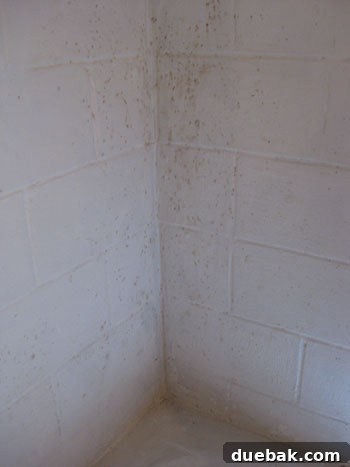
You might recall the initial setback: the disheartening sight of stubborn mildew spots emerging stubbornly through our very first coat of white latex-based Drylok. Applying this initial product was an experience in itself, feeling remarkably similar to painting with thick, sticky Elmer’s glue – a task that proved more strenuous and less effective than anticipated. This unexpected hurdle forced us to halt our progress, re-evaluate our strategy, and confront the underlying moisture issues head-on. The presence of mildew not only compromised the aesthetic appeal of our efforts but also raised concerns about air quality and the long-term integrity of our basement environment. It became clear that a more robust and resilient solution was desperately needed to truly waterproof our basement and prevent any future recurrence of this unwelcome visitor.
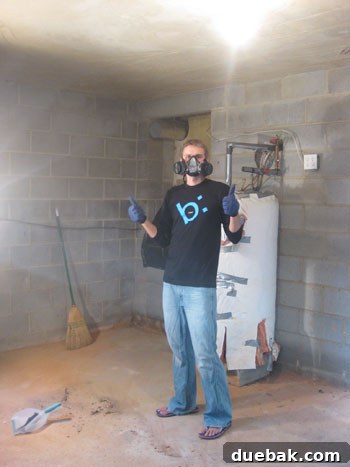
Undeterred by the initial disappointment, we embarked on a second, more intensive bleach treatment to thoroughly eradicate the persistent mildew. With renewed hope and a firmer plan, we then moved on to the heavy-duty solution: a powerhouse oil-based Drylok formula, highly recommended by the knowledgeable experts at True Value for its superior protective qualities and enhanced durability. The contrast to the latex version was immediate and striking. This oil-based variant came with its own set of challenges, most notably an incredibly potent odor. “Stinky” barely begins to describe it – a pungent, chemical aroma that permeated the entire space. We were profoundly thankful for our professional-grade gas masks; anecdotal warnings about people passing out from the fumes during oil-based applications were not to be taken lightly. In terms of consistency, it felt like we had traded Elmer’s glue for natural peanut butter – the kind that requires vigorous stirring to integrate the separated oil. Despite the physical demands and the strong fumes, we pressed on, making the most of a convenient “heat wave” that blessed us with 70-degree temperatures last week. This was a critical factor, as Drylok requires application at temperatures above 50 degrees Fahrenheit, making the unheated conditions of our basement typically challenging. The warm spell was an unexpected ally, allowing the product to cure correctly and bind effectively, ensuring the long-term success of our waterproofing efforts.
Our dedication paid off. After two exhaustive 5-hour days, and consuming an additional eight gallons of Drylok – bringing our total to a staggering thirteen gallons – we finally completed the monumental task. Every cinder block wall received a thorough second coat, the concrete floor was generously treated, and even the ceiling received two complete applications. With the final brushstroke, we officially sealed our formerly porous basement. This considerable investment, totaling 325 beans (or $325), was significantly cushioned by our timely True Value gift card, a fortunate stroke of luck that made this substantial purchase a little easier to manage. Yet, even without the gift card, a few hundred dollars is a small price to pay for the invaluable peace of mind that comes with a completely weatherproofed basement, now ready to serve as a reliable, moisture-free storage area for decades to come. The true test came quickly; shortly after applying the first coat, we experienced about a week of relentless rain, and not a single drop of moisture seeped through. This initial success solidified our confidence, and the subsequent second coat reinforced our conviction that our basement was now unequivocally waterproofed for the long haul, securing it against future water damage and humidity. We opted for the premixed tan Drylok color, which, while initially feeling a little “fleshy” for our tastes (it’s available in white, tan, gray, and blue), actually looks remarkably good. It’s a vast improvement, especially when compared to the raw, unfinished cinder block “before,” offering a warmer and less stark aesthetic to the newly protected space.
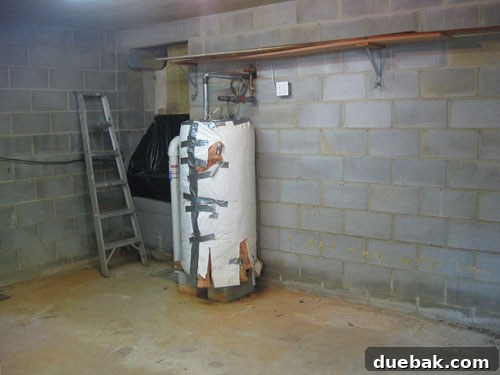
But without a doubt, the most gratifying outcome of this entire endeavor is the complete absence of mildew. Zero. Zilch. Nada. Even a week later, after enduring at least two significant rainstorms, there’s no trace of the unsightly, unhealthy growth that plagued our initial attempts. This undeniable success unequivocally proves that the guys at True Value were right: the oil-based Drylok truly is vastly superior to its latex counterpart when it comes to tackling serious moisture issues and providing long-lasting mildew prevention. This critical choice has transformed our basement from a constant source of worry into a dry, healthy environment, safeguarding our belongings and contributing positively to our home’s overall air quality. The meticulous application process, combined with the potent formula, has delivered the exceptional results we tirelessly worked towards, making all the effort and expense incredibly worthwhile for a truly waterproof basement.
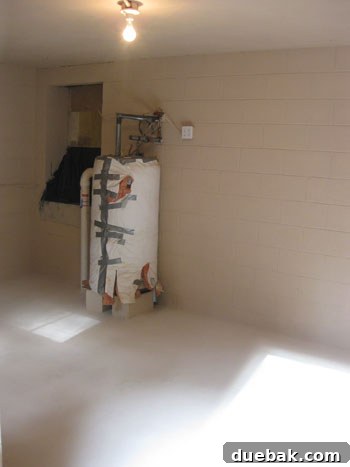
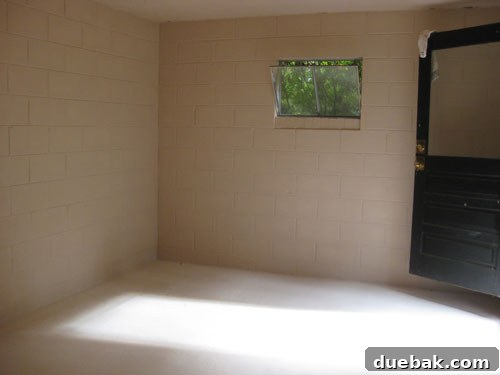
With the Drylok application finally complete and our waterproofing project successfully behind us, this past weekend shifted our focus to the next crucial phase: preparing and painting the basement floor. Our decision to use tan Drylok on all surfaces, rather than painting with tan latex paint over white Drylok, was a strategic one. Drylok is recommended for re-application every 15 years or so, and painted Drylok cannot be re-Dryloked directly. By applying tan Drylok everywhere, we maintain the ability to easily re-seal the walls in the future if needed, without the extra step of paint removal. However, we were keen to introduce some contrasting color to the floors, to visually break up what would otherwise be a rather monolithic “beige box” of a basement. Our moisture problems were primarily attributed to the porous cinder block walls, not the concrete floor itself, which we found to be structurally sound and free from significant dampness. This assessment gave us the confidence to proceed with painting over the floor without concern that we would need to re-Drylok this specific surface in the foreseeable future – a decade or two at least. This approach allows us to infuse personality and visual depth into the space while maintaining the highest level of waterproofing where it matters most: the foundation and walls.
Embracing the spirit of resourcefulness – and frankly, a bit of frugality – we delved into our stash of leftover paint. We unearthed a can of chocolate brown porch and floor paint, a remnant from our previous sunroom floor-painting project. For those curious about the specifics, it’s Valspar’s Oil-Based Porch & Floor Paint in the rich shade of “Brownstone.” With a renewed sense of purpose, we applied one thick, even coat to the concrete floor, transforming its appearance dramatically. We are particularly fond of this dark, earthy color choice for several practical reasons. Firstly, its deep tone is incredibly effective at camouflaging dirt, dust, and any footprints brought in from outside. This is a significant advantage, especially since our basement features a separate entry, meaning there will inevitably be frequent foot traffic from outdoors. Secondly, we appreciate how the warm, rich tone of the brown floor harmonizes beautifully with the existing mocha flooring found throughout the rest of our home. This subtle but impactful design choice helps to visually connect the basement with our main living spaces, making it feel less like an isolated utility area and more like an integrated part of our casa, even if it remains physically somewhat disconnected. The result is a floor that is not only highly durable and functional but also aesthetically pleasing and cohesive with our home’s overall design scheme.
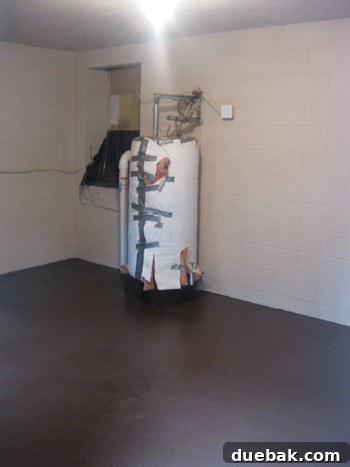
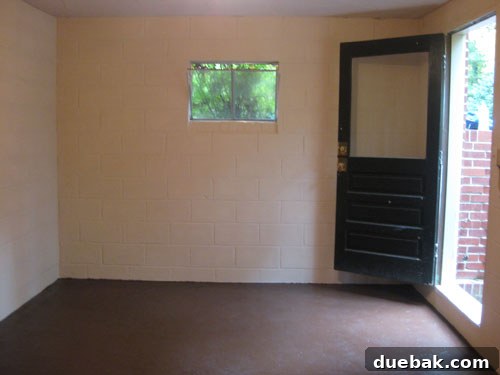
Of course, the Drylok application and floor painting are merely the foundational steps in what promises to be a comprehensive basement overhaul. Once the floor paint has had ample time to thoroughly dry and cure – a process we’re allowing a few days for – we’ll be eagerly returning to the space to tackle the next phase of its transformation. Our immediate agenda includes planning creative solutions to minimize the visual impact of existing eyesores, such as the large water heater prominently situated in the middle of the room. We’ll be brainstorming a variety of storage solutions, considering everything from built-in shelving units to modular storage systems, to maximize functionality and organization within the newly waterproofed space. Additionally, we plan to tidy up several other areas, including improving the accessibility and aesthetics of our crawl space entry. Our ultimate goal is to complete this significant basement makeover before the inevitable chill of the upcoming colder months descends, as the current lack of heating downstairs would undoubtedly make further DIY projects significantly less comfortable. The vision is clear: to create a truly functional, organized, and inviting basement that seamlessly integrates with the rest of our home, moving far beyond its former role as a simple, damp storage area.
And while we’re on the subject of basements, we’re genuinely curious to hear how you utilize your own subterranean spaces. Do they serve purely as storage areas, perhaps housing seasonal decorations, old files, or extra belongings? Are they completely abandoned, becoming forgotten zones accumulating dust and disuse? Or have you embraced the potential of your basement, transforming it into livable square footage complete with extra bedrooms, bathrooms, or even a home office? Perhaps you’ve crafted the ultimate “man cave” or “she shed,” a dedicated retreat for hobbies and relaxation. Or, tell us honestly, are they still rooms where monsters live, much like in the iconic movie *Home Alone*? Share your basement stories, your triumphs, your challenges, and your creative solutions. We’d love to hear all about how you make the most of your lower levels. Spill it!
*I actually had the opportunity to discuss our basement project with a very knowledgeable friend, who happens to be an expert in construction, just last weekend. This conversation, somewhat awkwardly, took place at his wedding – I know, impeccable “you just got married, but let’s talk about Drylok” conversational timing on my part! His very first question was, “You used oil-based, right?” I quickly responded with a confident “Of course,” too embarrassed at the moment to confess our initial mistake with the latex-based formula. It was a valuable lesson learned, highlighting just how crucial the right product choice is for effective basement waterproofing, a lesson confirmed by an industry professional.