
The sanctuary of home is a place we often take for granted, a canvas where dreams are painted and memories are forged. Yet, for countless families, this haven can transform into a scene of unimaginable devastation in mere moments. House fires, swift and unforgiving, steal not only possessions but also a sense of security, leaving behind a profound emptiness. We recently encountered two powerful and poignant stories from our readers, Melanie and Robin, whose lives were irrevocably altered by such events. Their experiences, shared with incredible bravery and generosity, offer invaluable lessons in fire preparedness and recovery. By relaying their harrowing journeys and the critical insights they gained, we hope to empower you to safeguard your own home and loved ones against the unforeseen.
Melanie’s story begins with the dream of a lifetime. In September 2009, she and her family made an offer on a short sale home, envisioning it as their “forever home.” The subsequent months were a labor of love, a testament to their dedication to transforming the house into their ideal living space. Every wall and ceiling received meticulous attention, washed, primed, and painted to perfection. They replaced every hinge, doorknob, and light fixture, installed new window treatments, and laid down beautiful hardwood floors across both main levels and the stairs. Virtually every detail of the house was lovingly updated and personalized. It was more than a house; it was the embodiment of their aspirations, meticulously crafted through their own hard work and DIY spirit.
Tragically, this idyllic dream was shattered in the early hours of Thursday, January 6th. Just before 6 AM, Melanie awoke to the jarring sound of two second-story windows shattering, followed almost immediately by bright, ominous lights. A quick peek into their guest bedroom revealed flames already beginning to encroach, with smoke detectors blaring seconds later. In a frantic scramble, Melanie, her husband, and their 2.5-year-old son managed to escape safely, with nothing but the clothes on their backs. In subfreezing temperatures, they found themselves outside without shoes, socks, coats, or hats, clutching only each other. The immediate aftermath brought an outpouring of love and support from neighbors, friends, and family. It was quickly determined that the fire was accidental, but the devastation was absolute: they lost everything, including Melanie’s car. Their 2.5-story, 2,000+ square foot home, complete with an in-law suite, was consumed by flames with shocking speed, estimated by some to have burned to the ground within 30-60 minutes. Within hours, the warmth of empathy extended even further, as acquaintances and strangers from their community and beyond reached out with offers of assistance.
While Melanie and her family were incredibly fortunate to have escaped with their lives, the emotional toll of losing their cherished home and all the hard work they had poured into it was immense. The immediate challenge of rebuilding began with the grueling task of documenting the structure of the house, a five-hour ordeal, followed by the even more daunting prospect of itemizing every single personal belonging. Through this harrowing experience, Melanie identified crucial lessons – the “what would we do differently” – that she generously shared, hoping to spare others from similar pain and inspire proactive preparedness. These invaluable insights serve as a powerful reminder for all homeowners:
- Embrace Cloud-Based Data Backup: Melanie learned the hard way that an external backup drive sitting next to a laptop in an office is just as vulnerable to fire as the laptop itself. Subscribe to a reliable online data backup service (e.g., Google Drive, Dropbox, iCloud, OneDrive). This ensures that your irreplaceable digital memories – family photos, important documents, financial records, creative projects – are stored securely offsite, accessible from anywhere, even if your physical devices are destroyed. Regularly back up your data to the cloud, making it a habit, to safeguard your digital life.
- Secure Vital Documents Offsite: Passports, birth certificates, marriage licenses, social security cards, deeds, and other critical identification and legal documents are incredibly difficult and time-consuming to replace. Keep them in a safe deposit box at a bank or a truly fireproof, waterproof safe that is anchored in a secure location and certified to withstand extreme conditions. Access to these documents after a disaster can significantly expedite recovery processes.
- Document Your Home with Photos and Videos: Take comprehensive pictures and videos of each room, inside and out, immediately after moving in or completing major renovations. Document the condition of walls, floors, fixtures, and unique features. Update these visual records regularly as improvements are made or new items are acquired. Store these photos and videos offsite, perhaps on a cloud storage service like Flickr or Google Photos, or on an encrypted USB drive stored with your vital documents. This visual evidence is invaluable for insurance claims, providing clear proof of the value and condition of your possessions and property before the fire.
- Catalog Valuable Purchases: For all expensive purchases, including jewelry, electronics, art, and high-value furniture, keep detailed records. Take clear photographs, note serial numbers, and retain receipts or digital links to where they were purchased. Storing this information digitally in your cloud backup or a secure, offsite location will greatly simplify the insurance claims process and help ensure you receive appropriate compensation for your losses.
- Maintain Detailed Home Documentation: Beyond simple photos, consider creating a detailed architectural layout of your home. If you have an architect in the family, as Melanie did with her dad, leverage their expertise. Otherwise, utilize online tools like Floorplanner.com to document each floor layout. Include precise wall and ceiling measurements, the location of every outlet and light switch, details on crown molding and other trim, the type of flooring in each area, and any unique structural items or built-ins. This comprehensive structural documentation is crucial for insurance adjusters when assessing rebuilding costs and for future contractors.
- Establish a Consistent “Home” for Phones: In a panicked evacuation, finding your phone can be a matter of life or death for contacting emergency services or loved ones. Make it a habit to put all phones in a consistent, easily accessible place each night, such as a charging station near the main exit or in a designated spot on a bedside table. This simple routine can save precious seconds during an emergency.
- Install Fire Escape Ladders for Upper Floors: For any second-story or higher bedrooms, invest in sturdy, easily deployable fire escape ladders. Practice using them safely in a drill scenario so that every family member knows how to operate them quickly and effectively. These ladders provide a vital secondary escape route when stairwells are blocked or compromised by fire and smoke.
- Digitize and Store Important Records: Scan all important physical photos, receipts, legal documents, and warranties. Once digitized, store these files on an online data backup service or a secure, offsite physical drive. This not only preserves precious memories that could otherwise be lost but also provides crucial documentation for insurance and personal record-keeping after a disaster.
- Invest in Comprehensive Homeowner’s Insurance: This is perhaps one of the most critical financial safeguards. Do not be frugal when it comes to homeowner’s insurance. Spending an extra $50 or even $100 per year for the most comprehensive coverage, including extended replacement cost and personal property coverage, can make an astronomical difference in your ability to rebuild and replace your belongings. Review your policy annually and ensure it reflects the current value of your home and possessions.
We are profoundly grateful to Melanie for her courage in sharing these deeply personal and incredibly insightful recommendations. Her story is a powerful reminder that while we hope for the best, we must always prepare for the worst. It underscores the immense value of proactive planning in the face of such devastating loss. We encourage all our readers to reflect on these lessons and take concrete steps to enhance their own home safety and preparedness.
To truly grasp the horror Melanie and her family endured, watch this video of her house during the fire:
Melanie’s experience is echoed by another reader, Robin, who also faced a terrifying home fire. A while back, we received an email from Robin detailing how her house nearly burned down at 2 AM on a Saturday morning. Thankfully, she and her family managed to escape safely, and their home was expected to be livable again within about three months. Robin’s story, too, brought invaluable lessons to light, particularly highlighting how quickly the unexpected can turn catastrophic. She generously shared her insights, enabling us – and all of you – to learn from her ordeal and bolster our own home safety measures.
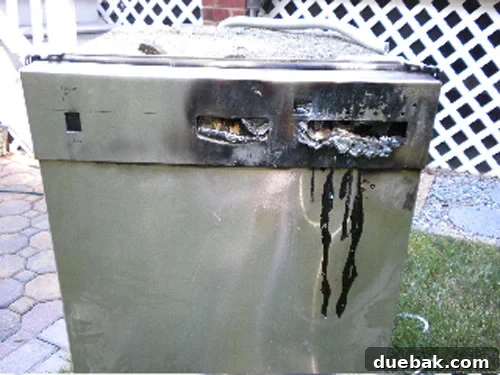
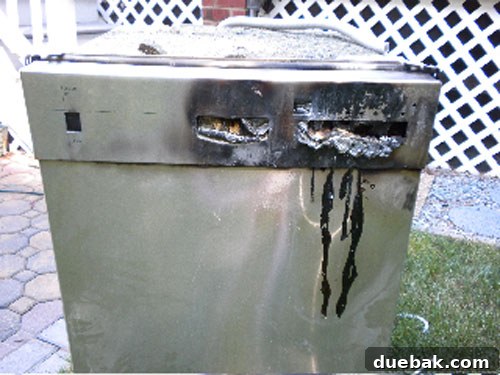
- Beware of All Appliances, Not Just Toasters: Robin’s experience delivered a surprising and critical lesson: the source of her fire was her dishwasher. Her family, like many others (including us!), had a common habit of starting the dishwasher as they headed to bed. On that fateful night, it malfunctioned and sparked the fire. This incident profoundly reminds us that any appliance, not just those with heating elements, can pose a fire risk. Robin’s advice extends to avoiding running dishwashers, washing machines, or dryers overnight or when you are not home. Furthermore, she emphasized the crucial importance of sending in the warranty card for all electronics and appliances. Registering your products ensures that you will be directly notified if there’s a defect or a recall, allowing you to take preventative action before a potential disaster strikes.
- Install Both Hard-Wired and Battery-Powered Smoke Detectors: While hard-wired smoke detectors are generally reliable, Robin’s insight highlighted their vulnerability during a power outage, which frequently accompanies a fire. She strongly recommends having a combination of hard-wired detectors (which typically have battery backups but can still be affected) and additional, purely battery-powered smoke alarms strategically placed throughout your home. This dual system provides an essential backup in case of a power failure, ensuring continuous detection. It’s also vital to check the batteries in all detectors twice a year; a simple and effective way to remember is to do it when you change your clocks for daylight saving time in the spring and fall. For families with children, Robin suggests considering Talking Smoke Alarms in their rooms. Studies show that children under 17 often sleep through traditional alarms, but they are more likely to respond to a parent’s voice. These innovative alarms allow you to record a personalized message that can include clear instructions or comforting words, significantly increasing the chances of waking and guiding a child to safety.
- Develop and Practice a Comprehensive Fire Escape Plan: Despite living in her house for over two decades, Robin learned firsthand that the panic and disorientation caused by a fire – especially when compounded by smoke – can make it incredibly easy to lose your bearings. This profound realization led her to recommend establishing at least two distinct escape routes from every room in your house, ensuring an alternative path if one is blocked. For homes with multiple levels, it’s crucial to identify at least one escape route that does not rely on a stairwell, as fire and smoke rapidly ascend stairs. The most vital part of this advice is to practice your fire escape plan regularly with all family members until it becomes second nature. Regular drills help instill muscle memory and reduce panic, enabling everyone to act quickly and decisively in a real emergency.
Robin’s practical tip about talking smoke alarms resonated deeply with us, recalling an anecdote shared by my sister, Emily. As a diligent parent, Emily was teaching fire safety to her children. After discussing the escape routes, emphasizing the importance of staying low, and explaining that the environment might be hot and smoky, she initiated a fire drill with a “Ready, set, go-go-go!” command. Her daughter Olivia, who was around seven years old at the time, froze in place and burst into tears, completely overwhelmed by the scary scenario. This was a profound wake-up call for everyone involved. If Olivia’s reaction during a simulated drill was so intense, one could only imagine her response in a real fire, with actual darkness, heat, and suffocating smoke. While Olivia’s fear was palpable, Emily was incredibly grateful for the opportunity to talk her through it, to practice the drill repeatedly, and to help improve her daughter’s response and confidence in an emergency. This incident powerfully illustrates that fire drills are not just theoretical exercises; they are vital, practical training sessions that build resilience and crucial life skills.
The stories of Melanie and Robin serve as stark reminders of fire’s unpredictable and devastating power, yet also highlight the resilience of the human spirit and the strength of community. We extend our deepest gratitude to both Melanie and Robin for their immense courage in sharing their deeply personal experiences and their incredibly thoughtful, life-saving tips. While we can scarcely imagine the emotional and logistical challenges they faced, we are profoundly relieved and thankful that their families emerged unharmed. The outpouring of love and support they received from friends, family, and their communities speaks volumes about human kindness in times of crisis. We are sending abundant love and appreciation to these remarkable women for taking the time to share such an important and impactful message. Their wisdom is a gift, empowering us all to be better prepared, more vigilant, and ultimately, safer in our homes.