

Succulents are undoubtedly some of the most beloved and easiest houseplants to grow and care for, but did you know they are also incredibly simple to propagate? With just a few basic tools and a bit of patience, you can transform a single succulent into an entire collection, creating a vibrant display for your home or thoughtful gifts for friends and family. This comprehensive guide will walk you through the simple yet rewarding process of succulent propagation, demonstrating how one plant can multiply into a dozen or more new succulent babies!

Beyond expanding your green family, propagation serves as an essential aspect of succulent maintenance. It’s a fantastic way to revitalize an overgrown succulent, rescue a leggy plant, or simply prune for healthier growth. By learning these simple steps, you’ll be able to turn an awkward or stretched-out plant into a thriving collection of new life.
Understanding Plant Propagation: The Basics of Growing New Succulents
Plant propagation is the fascinating process of creating new plants from various parts of an existing “mother” plant. This could involve using leaves, stems, roots, or even seeds. While virtually any houseplant can be propagated, the specific techniques often vary depending on the plant species. Common methods include water propagation, where you can observe roots developing in a clear jar of water, and soil propagation, where new roots emerge directly in potting mix. Succulents, known for their resilience, can even be propagated in the air! Regardless of the method chosen, once your cuttings develop a healthy root system, they can be potted into soil and nurtured just like their parent plant.
For a visual guide on these techniques, you can also watch our video on YouTube.
The Ideal Time to Propagate Succulents
The most favorable time for succulent propagation is during their active growing season, typically spring and summer. During these months, plants are more robust, produce growth hormones more readily, and have ample energy reserves, leading to quicker and more successful rooting. However, don’t let the season deter you! Succulents are remarkably adaptable, and propagation can be achieved at any time of the year. Results may simply take a little longer in the cooler, darker months of fall and winter, so a little extra patience might be required. Often, pruning a succulent that has become leggy or overgrown provides the perfect, unplanned opportunity for propagation, as was the case with the Echeveria you’ll see in this guide!

Our featured Echeveria, residing in a somewhat shaded bathroom window, began to exhibit “etiolation.” This occurs when a plant stretches out its stem and leaves, becoming “leggy” as it desperately seeks more light. While we didn’t necessarily mind its elongated appearance, we recognized it as a prime candidate for multiple propagations. Indeed, this single leggy stem ultimately yielded over ten vibrant new succulent plants!
Popular Methods for Propagating Succulents
One of the most appealing aspects of propagating succulents is the versatility it offers. You can utilize various parts of the plant and employ several distinct techniques, often resulting in a bounty of new plants from just one specimen. While we won’t delve into every single method today, here’s a concise overview of the most common and effective ways:
- Leaf Propagation: This method involves gently removing individual succulent leaves and placing them in or on a chosen medium—be it soil, water, or even air. New roots and tiny “pups” (small, new baby plants) will typically emerge from the base of the leaf, where it was originally attached to the stem. This is a highly productive method for multiplying your collection.
- Stem Propagation (Beheading): Ideal for leggy succulents, stem propagation involves taking a cutting from the main stem. After allowing the cut end to callous, the bare stem cutting can be placed in air, soil, or water. New pups will often sprout from the nodes where old leaves were removed along the stem, or roots will form directly from the cut end.
- Soil Propagation: A widely favored and straightforward technique, soil propagation involves placing succulent leaves or bare stem cuttings directly into or atop a well-draining soil mix. The consistent contact with moist soil encourages rapid root development and the formation of new plantlets.
- Water Propagation: While less common for succulents due to their drought-tolerant nature, water propagation can be effective. This method requires suspending the tips of leaves or stem cuttings just above or barely touching the surface of water in a jar. Observing the roots grow in water can be satisfying, but careful monitoring is needed to prevent rot before transferring to soil.
- Dry or Air Propagation: A unique and surprisingly effective method for succulents, air propagation involves simply laying or hanging leaves or stems without any soil or water. The plant parts draw on their stored moisture and energy to develop new roots in the open air before they are eventually transferred to soil. This method can be a fun experiment for curious gardeners.
Step-by-Step Guide to Succulent Propagation
Propagating succulents is a process that begins with a few crucial upfront steps, followed by several weeks of patient waiting and occasional care until new growth makes its appearance. To ensure the best success, it’s always wise to review all steps thoroughly before you begin your propagation journey.

- Water your parent or “mother” succulent thoroughly, then wait 3 days.
- Carefully cut the main stem of the succulent at the soil line.
- Remove the bottom leaves from the cut stem.
- Allow all cut pieces (leaves and stems) to “callous over” for 3-5 days.
- Replant the bare stem (with its rosette) in fresh, new soil.
- Lay, hang, or plant the individual leaves you removed.
- Place all propagated pieces in a location with bright, indirect sunlight.
- Maintain light watering for the leaves and monitor for root growth.
- Once pups form and roots are established, pot any new plants into individual nursery pots.
Essential Supplies for Succulent Propagation
One of the beauties of succulent propagation is how few specialized supplies are actually needed. You likely have most of these items already! Here’s a list of what you should gather before embarking on your propagation project:
- Pruning snips or a sharp pair of scissors: Essential for making clean, precise cuts on stems, which helps prevent damage and disease.
- Cactus or succulent potting soil: A well-draining soil mix is crucial to prevent root rot. Standard potting mix can be amended with perlite or coarse sand for better drainage.
- Shallow tray, dish, or bowl: Perfect for laying out leaves for propagation, providing a stable and easy-to-monitor environment.
- Small nursery pots: Ideal for potting up your new succulent pups once they have developed roots and are ready for their own homes.
- Small spray bottle with water: For light and controlled misting of developing roots and leaves, ensuring moisture without oversaturation.
- Rooting hormone (optional): While not strictly necessary, dipping cuttings in rooting hormone can significantly accelerate root development and increase success rates, especially for stem cuttings. We found it to be very helpful in our trials!
Step 1: Hydrate Your Mother Succulent
Before making any cuts, thoroughly water your parent succulent and then allow it to rest for approximately 3 days. Succulents store water and nutrients within their leaves and stems, and a good watering beforehand ensures they are fully hydrated. This provides the cuttings with ample moisture and energy reserves to draw upon during the initial stages of propagation, giving them the best possible start on their journey to becoming new plants. Always ensure your pot has drainage holes so any excess water can escape, preventing waterlogging.
Step 2: Make a Clean Cut at the Soil Line
Begin the propagation process by making a clean cut through your succulent’s stem, ideally right at the soil line. Always use clean, sharp scissors or pruning snips to minimize damage and prevent the introduction of bacteria or fungal diseases. A quick wipe with rubbing alcohol before cutting is a good practice. Don’t be alarmed if your pot suddenly looks quite bare; this is completely normal and part of the process!

Crucially, this “bare stump” that remains in the pot is not waste. The existing root system is very much alive and capable of producing new growth. Place this original pot in a location that receives bright, indirect light and continue to care for it as you normally would. Within a few weeks, you may be pleasantly surprised to see new “pups” emerging from the soil line or along the remaining stem, giving you even more new plants!
Step 3: Prepare the Stem Cutting and Leaves
Now, shift your focus to the stem you just cut from the parent plant. If your succulent stem was particularly long or leggy, like ours, you might consider cutting it again further up to create a shorter, more manageable piece for replanting and additional stem cuttings. This might not be necessary for all succulents.

With your selected stem piece, gently remove the leaves from the bottom upwards, leaving a small rosette of healthy leaves at the top. The key to successful leaf propagation is a clean break at the base. To achieve this, gently twist or move each leaf side-to-side until it detaches cleanly from the stem. Avoid tearing the leaves, as ripped or damaged leaves are unlikely to propagate successfully. Take your time with this step, as a clean base is vital for new roots and pups to form.

Additionally, inspect the removed leaves for any signs of decay or damage. Yellow, brown, or mushy leaves are unlikely to be healthy enough to propagate and should be discarded. Only vibrant, firm leaves with an intact base have the potential to produce new growth.

This careful leaf removal process will provide you with numerous individual leaves for propagation, as well as a short, bare stem crowned with a small rosette. This stem-top cutting will be replanted after the next crucial step, resulting in a new, compact, and healthier succulent plant.
Finally, depending on the length and condition of your original leggy stem, you might find that you have additional bare stem pieces after removing all the leaves. These stem clippings can also be propagated. Simply treat them similarly to the leaves, allowing them to callous before proceeding.
Step 4: Allow All Cuttings to Callous Over
This is a critical, non-negotiable step for successful succulent propagation. Before moving forward, you must allow all your freshly cut leaves and stem pieces to “callous over” for 3 to 5 days. Callousing involves the formation of a dry, hard scab or seal over the cut end. This protective layer is vital because it prevents the cuttings from absorbing too much moisture in the next steps, which could lead to rot—a common cause of propagation failure for succulents. Think of it as the plant’s natural healing process. If in doubt, always err on the side of more callousing rather than less; waiting up to a full week can often increase your chances of success, especially in humid environments.
Step 5: Replant Your Bare Stem with Rosette
Once the stem with the rosette has properly calloused, it’s time to give it a new home. This bare stem is ready to regrow roots, whether placed in soil or water. For an immediate “finished” look and often robust growth, we opted for the soil method. To do this, select a new nursery pot that isn’t excessively large – succulents generally prefer to be a bit snug in their pots. Fill it with a high-quality, well-draining potting soil specifically formulated for cacti and succulents. Alternatively, you can create your own by mixing standard potting soil with extra perlite or pumice to enhance drainage.

Using a finger or a chopstick, create a small hole in the center of the soil. If you choose to use rooting hormone, dip the calloused end of your stem into it before planting – this step is optional but can significantly boost root development. Gently insert the stem into the prepared hole. After planting, lightly shake or tap the pot to help the soil settle firmly around the stem. Good soil-to-stem contact is crucial for root initiation. Once firmly planted, set this new succulent aside and turn your attention to the individual leaves.
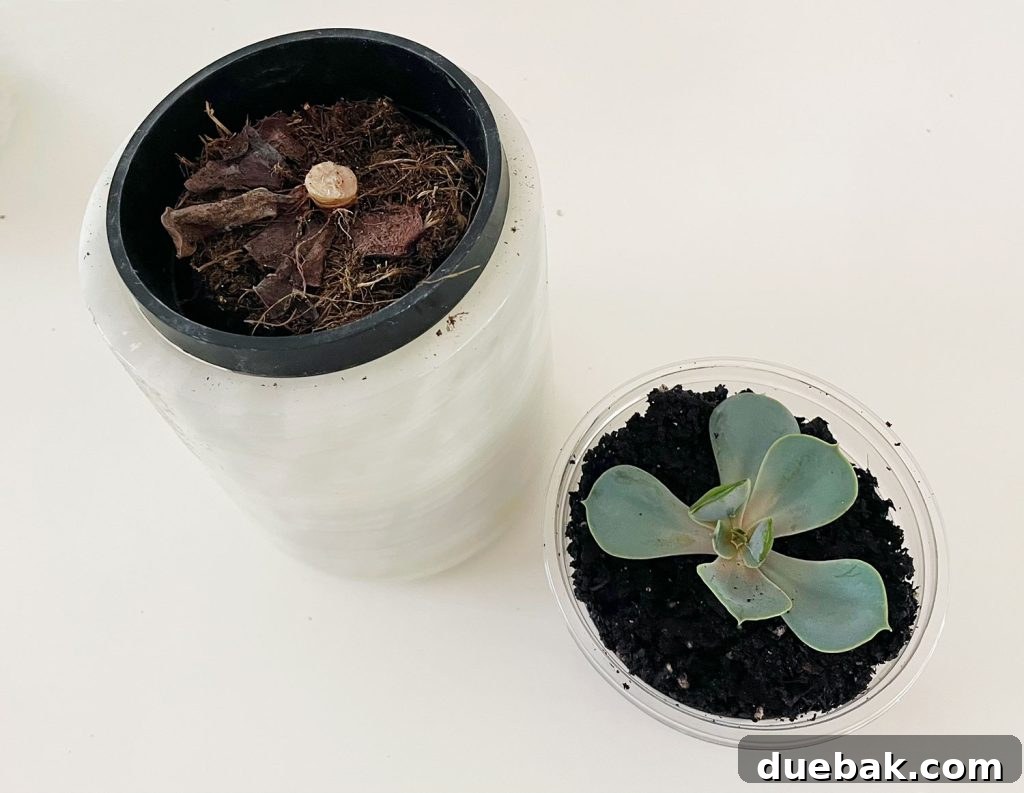
Step 6: Initiate Leaf Propagation: Laying, Planting, or Hanging
This is where the true marvel of succulent propagation unfolds, as each individual leaf holds the remarkable potential to become a brand new plant! There are several effective ways to encourage this transformation. For this guide, we experimented with three distinct methods, just for the fun of observing the differences in outcomes.

One method we decided to skip was traditional water propagation for leaves. While possible, it often requires meticulously suspending the leaves just above or barely touching water, which can feel unnecessarily complex compared to the simplicity and high success rates of other techniques.
Method 1: Planting Succulent Leaves Directly In Soil
For this method, select a shallow tray, dish, bowl, or small nursery pot and fill it with your well-draining cactus or succulent potting mix. Lightly mist or water the soil until it is damp, but never soggy. Carefully take each calloused succulent leaf and gently insert its calloused end into the soil at a slight angle. The leaf only needs to be deep enough to remain firmly in place, allowing the base to make good contact with the moist soil without being completely buried. This method helps anchor the leaf and provides immediate access to moisture.

Method 2: Laying Succulent Leaves On Top of Soil
An even simpler approach is to merely lay your calloused leaves flat on top of the moist soil. Many propagators prefer this method due to its sheer simplicity and the added benefit of easily observing the development of new roots as they emerge from the base of the leaf. This method works wonderfully and requires minimal effort.

Method 3: Hanging or Air Drying Succulent Leaves
Surprisingly, succulents are so resilient that they can even develop roots and pups without any direct contact with soil or water. For this intriguing method, you can simply find a dish or tray to lay them on, much like the “laying on soil” method but without the soil, or you can get creative and string them up! While this method can sometimes be a bit more finicky, it’s incredibly fun to observe the magic unfold.

To create our unique hanging propagation display, we first tied fishing wire around a small stem scrap to act as a stopper, preventing the leaves from sliding off. Then, using a sewing needle, we carefully threaded each calloused leaf onto the fishing wire, much like stringing a popcorn garland. The key is to pierce the leaf gently through a non-vital part, ensuring it doesn’t damage the base where roots will emerge.

Once all the leaves were strung together, we tied a loop at the top and hung our beautiful succulent garland from a small cup hook near a window. This method not only propagates the leaves but also creates an attractive, living decoration.
Step 7: Provide Ample Bright, Indirect Sunlight
Regardless of the propagation method you choose, consistent and appropriate lighting is crucial for success. Find a spot in your home where your propagating succulents will receive several hours of bright, indirect sunlight each day. Ideal locations include a windowsill, a sunny bookshelf, or a side table positioned near a well-lit window. The goal is to provide plenty of light to encourage growth without exposing the delicate new roots and leaves to harsh, direct sunlight, which can scorch them. Strong morning sun is often ideal, as it provides intensity without the extreme heat of direct afternoon light.

For our hanging string of leaves, we carefully positioned it in a windowsill that received abundant morning sun. This ensured it was bright enough to stimulate growth, yet shielded from the more intense and potentially damaging direct rays of the afternoon sun.
Step 8: Maintain Consistent, Light Moisture
During the propagation phase, your succulent leaves and cuttings will have different watering needs compared to mature succulents. While established succulents prefer their soil to dry out completely between waterings (typically every 1-2 weeks), propagating leaves and newly rooted stems benefit from consistent, light moisture. Aim to keep the soil (or the surrounding air for hanging leaves) lightly damp, but never soggy. A good rule of thumb is to water lightly every 2-3 days, adjusting based on your home’s humidity and temperature. You’ll find that trays with many leaves tend to dry out more quickly.

We discovered that using a small spray bottle for misting was the easiest and most effective way to provide this light moisture. It allowed for precise watering, preventing over-saturation and making it simple to hydrate both the soil-based leaves and our hanging strand. This method ensures the leaves receive the moisture they need to initiate root growth without drowning them.
Step 9: Pot Your New Succulent Plants
Patience is a virtue in succulent propagation, as it will take several weeks, if not months, for your new plants to show significant signs of growth. The timeline largely depends on your specific succulent variety, environmental conditions, and the propagation method used. Gradually, you will begin to observe tiny new roots emerging from the calloused ends of your leaves, followed by the formation of miniature new plants, often called “pups,” sprouting from the same area.
Here’s a glimpse into the typical progression:
After about 1 month, you should start seeing initial signs of root development:

By 2 months, you will likely see more pronounced roots and perhaps the beginnings of small pups. It’s common to notice that some leaves progress faster than others, and a few might not take root at all, shriveling up and withering away – this is a normal part of the process, so don’t be discouraged.

We typically waited a full 3 months before gently transferring our new succulent plants into their individual pots. When they are ready, carefully lift the leaf from the soil. If possible, gently separate the new pup from the mother leaf. The mother leaf will eventually shrivel and fall off as the pup matures, having provided all its stored energy for the new growth. If a pup isn’t ready to detach, it’s best to leave it connected to the mother leaf and pot them together, allowing it more time to grow. You can always remove the shriveled mother leaf later.

Our hanging leaves showed similar exciting progress after 3 months. It’s challenging to definitively say if this method yielded better or faster results, but the clear visibility of root and pup development made it particularly engaging to watch.

To plant your newly rooted pups, prepare a small nursery pot with fresh, moist, well-draining soil. Create a small indentation in the soil and carefully place the new roots into it, ensuring they are gently covered. Avoid burying the entire pup; only the roots need to be covered.

Once planted, transition the new succulent pup to the care regimen of a mature succulent: place it in a spot with abundant bright, indirect sunlight and water only when the soil has completely dried out. This careful transition ensures your new plant thrives and grows into a healthy adult succulent.
Choosing the Best Method to Propagate Succulents
After experimenting with various propagation techniques, it’s genuinely difficult to declare a single “best” method, as each one proved successful and surprisingly simple in its own right. The ideal choice often comes down to personal preference, the type of succulent, and your desired outcome.

Here’s a quick comparison of our results:
- The trimmed stem with the rosette displayed the most dramatic and rapid growth. This method essentially gives the plant a significant head start, resulting in a robust, ready-to-grow succulent that will likely be ready for another trim and propagation cycle sooner than the others.
- The leaves placed directly on soil consistently produced a greater number of successful new pups compared to leaves propagated in the air. However, the resulting growth tended to be a bit thinner and more elongated (leggy).
- The leaves hanging in the air yielded fewer pups overall, but the ones that did form developed into smaller, yet noticeably thicker and more compact rosettes. This method was also, by far, the most captivating to observe!
Ultimately, while all methods offer a rewarding experience, it’s helpful to remember that succulents are not fast-growing plants. Patience is key, as you won’t see results as quickly as you might when propagating faster-growing plants like Pothos. Embrace the journey, and enjoy the magical process of turning one succulent into many!
Explore More Plant Care Guides

If you’re looking to further expand your houseplant knowledge and cultivate a thriving indoor jungle, explore some of our other popular plant care posts below:
- Best Low-Light Indoor Plants
- Best Air-Purifying Plants
- What Is Keiki Paste For Plants?
- Marble Queen Pothos Care Guide
- Neon Pothos Care Guide
- Golden Pothos Care Guide
- Aglaonema Care Guide
- Snake Plant Care Guide
- Fiddle Leaf Fig Care Guide
- Tree Philodendron Care Guide
- How to Build An Easy Plant Shelf
- Make A DIY Wire Trellis
*This post contains affiliate links, meaning we may earn a small commission when you make a purchase through links on our site at no additional cost to you.