
Transforming Your Kitchen: The Unsung Heroes of Renovation Details
A successful kitchen remodel often hinges on the less glamorous, yet fundamentally crucial, details. While knocking down walls and selecting stunning countertops capture our imagination, it’s the meticulous execution of foundational tasks that truly elevates a space from good to exceptional. This post delves into the essential, often overlooked, steps we undertook to prepare our kitchen for its grand reveal, focusing on precision, functionality, and seamless integration – all before the much-anticipated countertop installation.
These preparatory stages, though not as visually dramatic as opening up our kitchen wall, are vital for achieving a polished, professional finish. Our primary goal was to complete these tasks with utmost accuracy, particularly those directly impacting the countertop templating process. After all, the perfect kitchen experience begins with perfect measurements.
Bridging the Gaps: Custom Stove Filler Installation
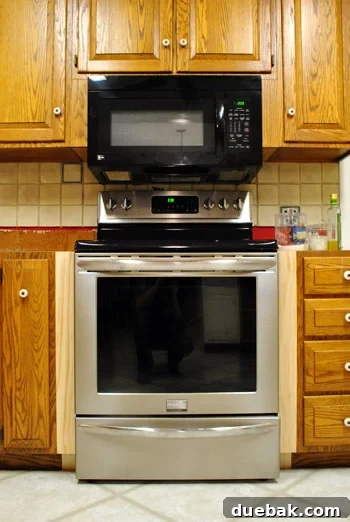
First on our list of critical, smaller projects was addressing the unsightly and impractical gaps surrounding our new stove. This seemingly minor issue held significant implications for both aesthetics and functionality.
The Gap Dilemma: Why Filler Was Our Best Solution
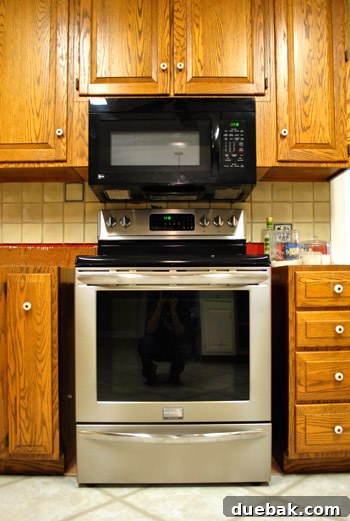
The original base cabinet we carefully removed measured a generous 36 inches wide. However, our new stove, a standard appliance, spanned approximately 30 inches. This left us with an awkward void of just under three inches on either side. These gaps, while small, could accumulate dust and debris, look unfinished, and detract from the sleek lines we envisioned for our kitchen.
We thoroughly explored various options, including installing narrow pull-out drawers for spices or utensils. However, most functional pull-out mechanisms require at least three inches, if not more, making our 2 ¾-inch gaps too narrow for effective use. Furthermore, opting for pull-outs would have introduced several complications:
- Hood Alignment: Shifting the stove to one side to accommodate a wider pull-out would have thrown our range hood off-center, necessitating a costly and complex widening of the ceiling exhaust hole. This was a drama we were keen to avoid.
- Aesthetic Inconsistency: Finding pull-out drawer fronts that perfectly matched our existing kitchen cabinetry proved challenging, risking a mismatched and disjointed appearance.
- Cost vs. Benefit: The expense and effort involved in custom narrow pull-outs simply weren’t justified for the minimal utility they would provide, especially compared to the clean, integrated look of simple filler pieces.
After careful consideration, we decided that elegant, thin wood filler pieces were the most practical, cost-effective, and aesthetically pleasing solution. While we briefly entertained ideas of ornate legs or intricate braided details, we ultimately opted for a minimalist approach. Our vision for the kitchen emphasized other design elements, such as the stunning penny tile backsplash and the curated items on our floating shelves, as the true focal points. Two thin, basic wood fillers would provide the necessary seamlessness without competing for attention.
The DIY Process: Precision and Simplicity
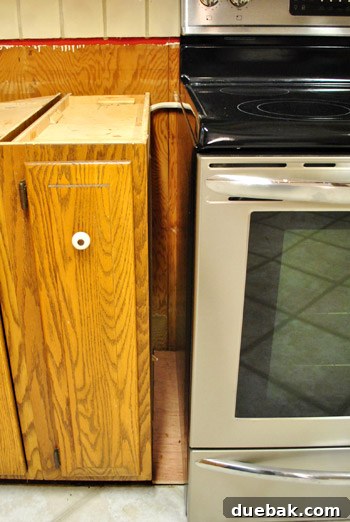
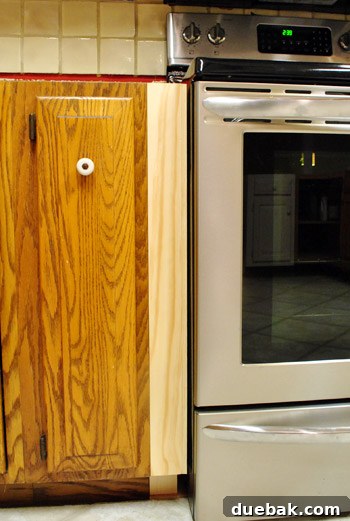
To execute this task, I sourced several pine “project boards” from Lowe’s. Pine was an excellent choice for its affordability, ease of cutting, and paintability, making it ideal for these subtle integration pieces. Precision was key during the cutting phase; each board had to be perfectly sized to ensure a snug, professional fit. To secure these pieces firmly, I employed my trusty Kreg jig to drill pilot holes. This tool is invaluable for creating strong, pocket-hole joints and preventing wood splitting, ensuring the filler pieces would be robust and securely attached to the adjacent cabinet frames. Once the pilot holes were ready, the boards were carefully screwed into place, aligning them flush with the cabinet faces.
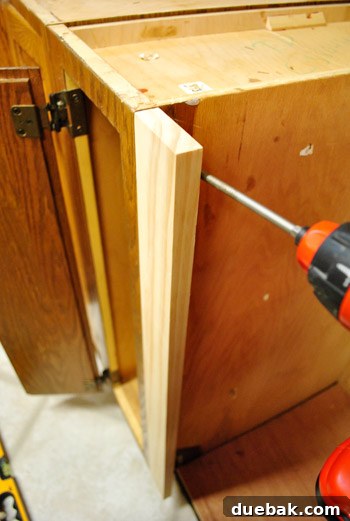
Beyond the visible front fillers, we also strategically placed additional support pieces at the back. This foresight ensured that when the countertop fabricator came to template, they would have a solid, level surface to work with, preventing any potential sagging or instability in the future countertop installation.
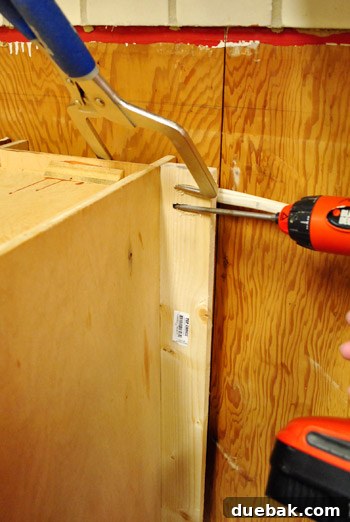
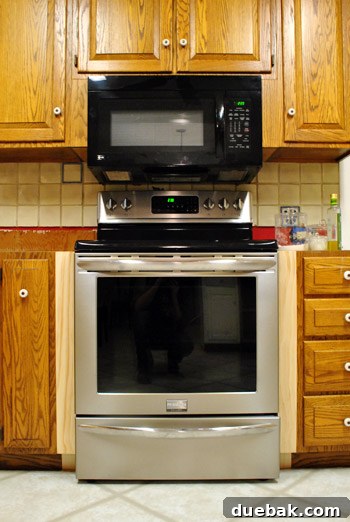
In total, each side of the stove received three separate filler pieces. While two might have sufficed for visual purposes, the added stability and peace of mind from the third piece were well worth the minimal extra cost. This entire project, surprisingly, cost us only about $11 – a significant saving compared to the hundreds of dollars a custom pull-out solution would have demanded.
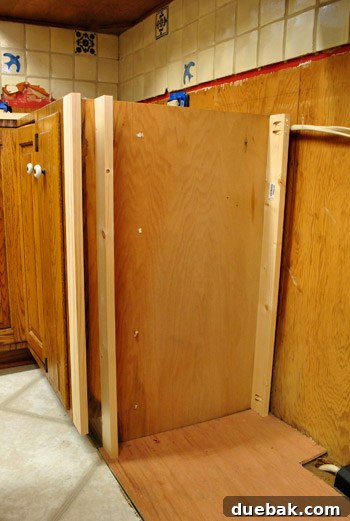
With both sides completed, the area was now perfectly prepared for the stove to slide back into its designated space, anticipating the arrival of our new countertops.
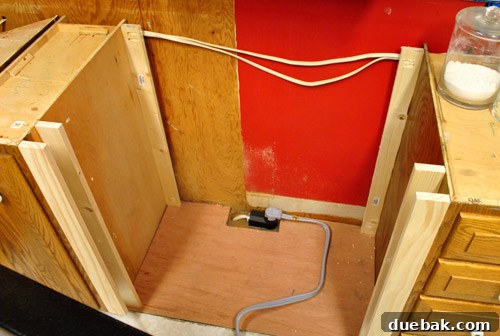
The initial results were promising. Once the counters are installed and the cabinets are primed and painted, these subtle filler pieces will blend seamlessly, becoming virtually invisible. This outcome is further enhanced by the fact that many other base cabinets in our kitchen already incorporate similar filler strips, typically around 2.5 inches, ensuring a consistent design language throughout.
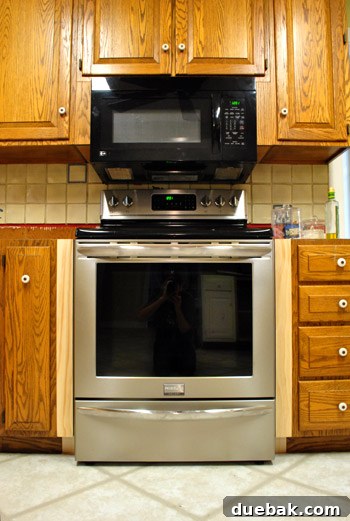
The Pursuit of Perfection: Fine-Tuning the Fit
However, upon closer inspection, donning our “Picky Pants,” we noticed a slight, yet perceptible, remaining gap. It was just over a quarter of an inch, and we knew we could achieve a more impeccable fit. The thought of buying a bigger stove was, of course, entirely facetious!
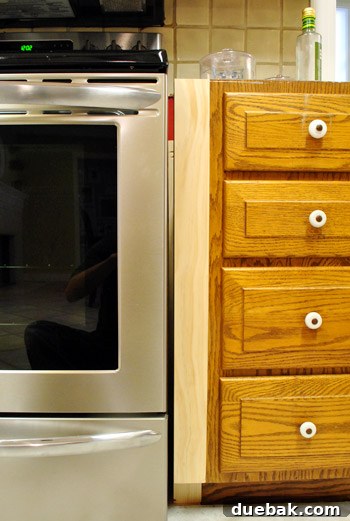
To remedy this, I made another quick trip to Lowe’s and procured a couple of 3/8-inch thick project boards. These thinner pieces were the perfect solution for the slightly-too-big gap, providing that crucial extra snugness. While they added another $4 to my total budget, bringing the grand total to $15, the investment in a truly flush finish was undeniable. I meticulously nailed these additional strips into place, taking extra care to ensure they were perfectly flush with the existing filler pieces along the front edge, maintaining a uniform and clean appearance.
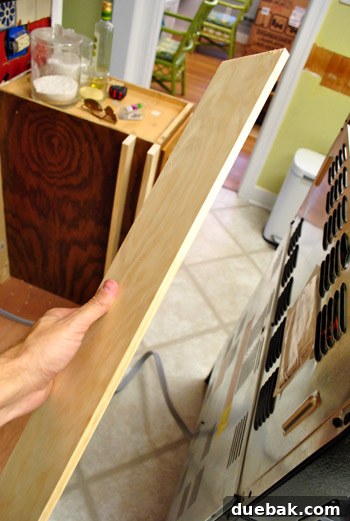
These supplementary pieces, being primarily aesthetic, were only installed for the visible front sections. The difference they made was immediately apparent, transforming the fit from “good” to “perfectly snug.”
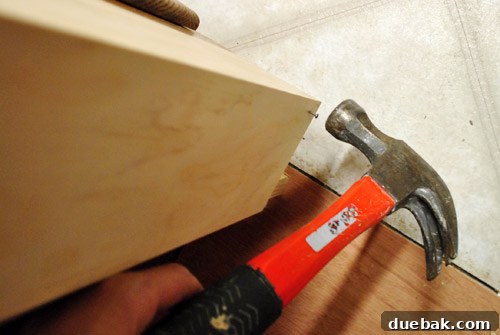
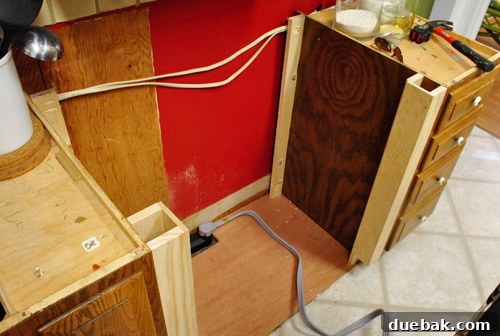
With the stove gently slid back into its newly refined cavity, the fit was significantly improved. It’s challenging to capture the subtle perfection in a photograph, but trust us, it was precisely the snugness we desired – tight enough for a seamless look, yet allowing for easy removal when necessary. Future plans include demoing the old tile backsplash behind the stove, which will allow the appliance to sit even further back against the wall for an even more flush profile. Additionally, once the toe kick is installed across the base of all the cabinets, the bottom section will achieve a truly seamless finish.
Defining the Peninsula: Installing the Back Panel
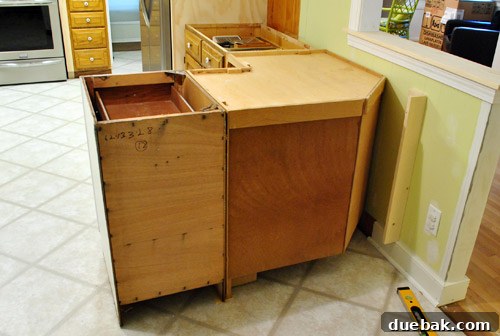
With the stove gaps meticulously addressed, our attention shifted to another crucial preparatory task: installing a flat panel on the back of our kitchen peninsula. This step was essential for defining the space, creating a finished look, and, most importantly, ensuring the countertop templating would be accurate.
We wanted to present a clear, squared-off edge to the countertop fabricator, leaving no room for misinterpretation or an unintended angled corner. This panel was a task we knew we’d eventually need to tackle, so completing it while awaiting the countertops was an efficient use of time.
Building the Foundation for a Clean Edge
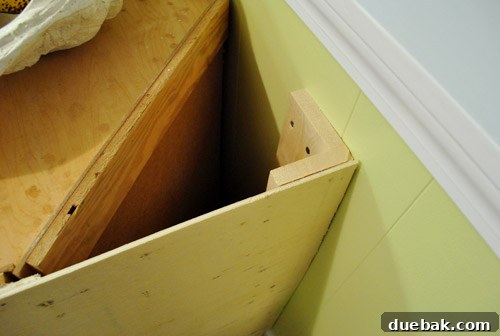
To anchor the large panel against the existing half-wall, I first created and installed a small corner piece. This seemingly minor component was critical for providing a solid, flush surface for the main panel to attach to. It consisted of two scrap pieces of wood, precisely screwed together at a 90-degree angle using my Kreg jig. This ensured a strong, square corner that would hold up to the weight and tension of the plywood panel. Once assembled, I securely screwed this anchor into the wall, ensuring its flat edge was perfectly flush with the back of the base cabinets. This meticulous preparation was key to achieving a truly seamless and professional finish for the peninsula panel.
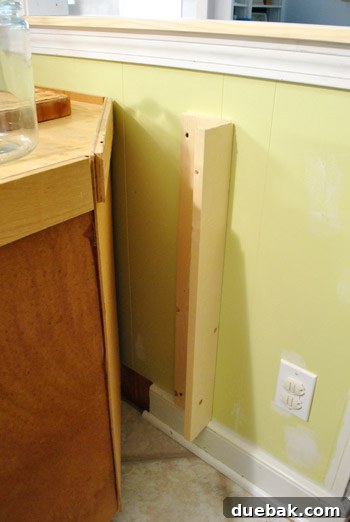
With the corner anchor firmly in place and perfectly aligned, the stage was set for attaching the main plywood panel, which would transform the peninsula’s exposed backside into a smooth, finished surface.
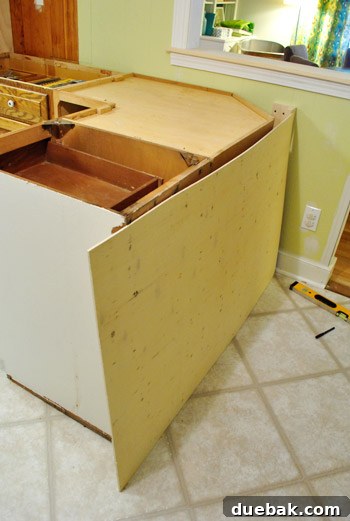
The Peninsula Panel: From Plywood to Polish
This particular piece of wood was a testament to forward-thinking planning. I had actually purchased it alongside the plywood for our refrigerator built-in, allowing me to transport both in one go using a rented Lowe’s truck. The Lowe’s associate had recommended “utility plywood” – a durable yet cost-effective option, costing a mere $9. While they initially cut it to size in the store, a later design change from a 21-inch end cabinet to an 18-inch one meant I had a three-inch overhang that required trimming. My trusty jigsaw made quick work of this adjustment, ensuring the panel fit precisely. Once perfectly sized, the plywood was meticulously nailed into place, creating a clean, flat surface that dramatically improved the peninsula’s appearance.
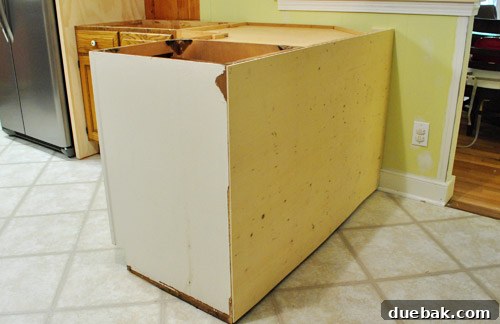
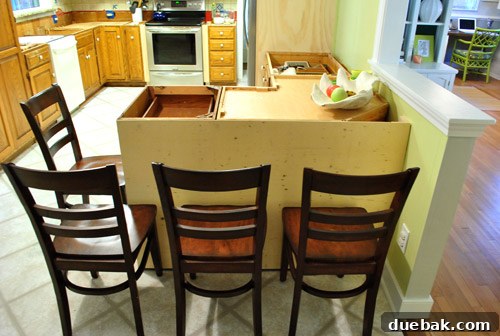
Admittedly, in its current raw state, the panel doesn’t look particularly exciting. However, this is just the foundation for future enhancements. We plan to add decorative trim, including baseboards and corner pieces, and are even considering a stylish three-paneled board and batten look to add architectural interest. Naturally, this panel will eventually be painted to seamlessly match the newly updated cabinetry, integrating it fully into the kitchen’s aesthetic. For now, its primary function is fulfilled: squaring off that corner, providing a perfect base for the countertop measuring process. The final design will include a generous 12-inch overhang of Corian on two sides, creating ample space for four stools and transforming the peninsula into a functional and inviting seating area.
Can you begin to visualize how the space is evolving? The existing chairs are merely placeholders; we envision replacing them with lighter, airier stools, perhaps made of acrylic, to enhance the open and spacious feel of the kitchen and dining area.
The Unsung Hero: Strategic Paint Touch-Ups
Did you notice another significant, yet subtle, improvement in the image above? It begins with “p” and ends with “aint touch-ups.” Indeed, strategically applying paint was our next critical step.
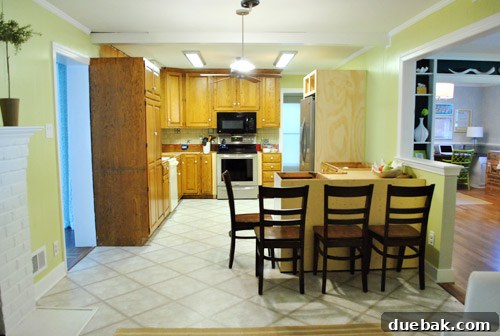
While painting wasn’t strictly necessary for the countertop templating process, it was a vital step for our sanity and overall morale. Having all the necessary paint on hand made it a “free” project, allowing us to immediately see a tangible improvement. There’s still a substantial amount of painting ahead, particularly the cabinets, but those must patiently wait until our new countertops are installed to prevent any accidental dings or damage. So, we focused our efforts on painting the raw trim, newly installed drywall, and paneling left over from the pantry/fridge shuffle and our recent wall opening. The immediate impact was remarkable; these careful touch-ups instantly made our still-unfinished kitchen feel a significant step closer to completion.
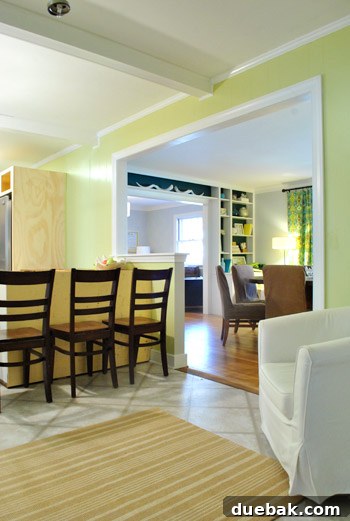
Thoughtful Color Choices and Seamless Transitions
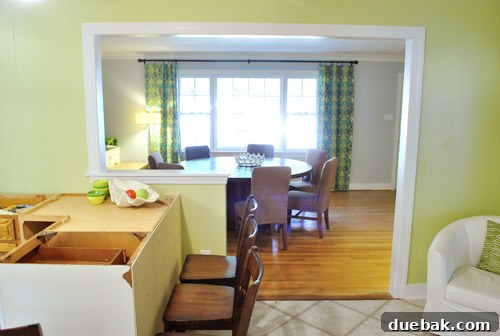
A specific detail we meticulously considered was the paint color for the inside edge of the half-wall separating the kitchen and dining room. We opted for a light grey, consistent with the dining room’s palette. Our reasoning was practical: since the side of the half-wall facing the dining room is drywall, mirroring the dining room’s light grey felt much more cohesive than extending the “grellow” (a grey-yellow) color from the kitchen paneling. The soft grey is remarkably subtle, almost appearing white, which perfectly complements the rest of the door jamb and contributes to a harmonized, sophisticated flow between the two spaces.
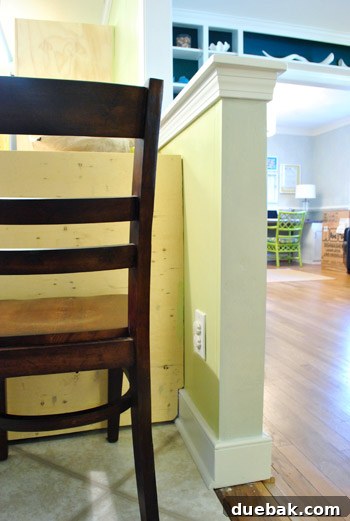
And please, disregard the paint drip on what we affectionately call our “temporary threshold.” This piece is actually leftover paneling from the wall opening project, cut down, flipped painted-side-down, and nailed in place to bridge the gap created by the wall’s removal. This functional, temporary solution will eventually be covered with cork flooring, and a very small, elegant threshold will be added to seamlessly join the new cork with the original hardwood floors – a technique we successfully employed in our first home when blending original hardwoods with new additions.
Glimpses of Progress: The After-Painting Tour
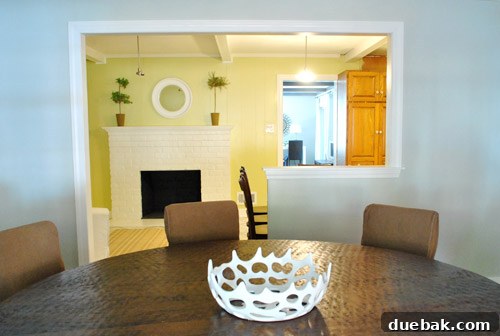
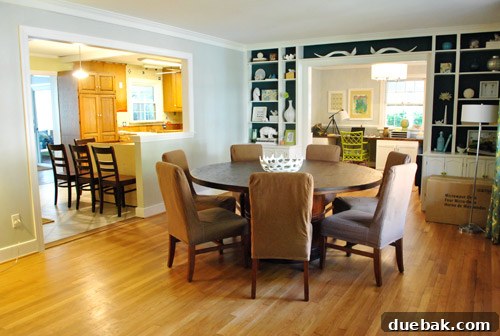
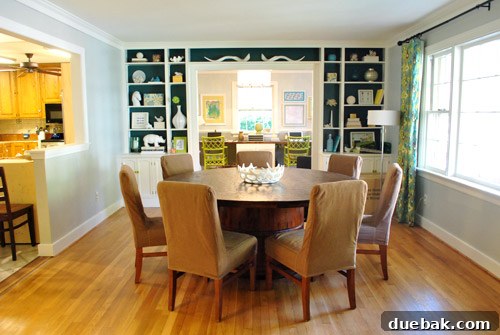
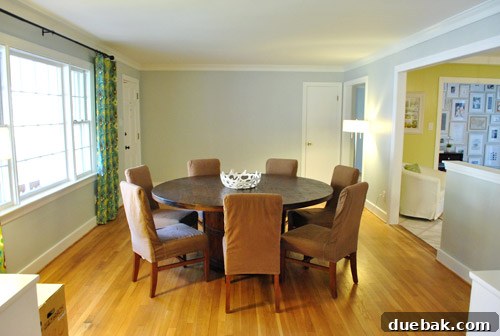
Now, let’s take a visual tour with a collection of “after painting” pictures of the kitchen and dining room. These represent the closest approximation to a polished “after” that we’ll have for at least a few months, as the journey continues. Please overlook the two rather awkwardly placed floor lamps in the dining room – we’re eagerly anticipating the arrival of a grand chandelier to grace our dining table. Similarly, the new microwave box is currently residing near the built-ins, and the dishwasher box is patiently waiting its turn in the office until installation day.
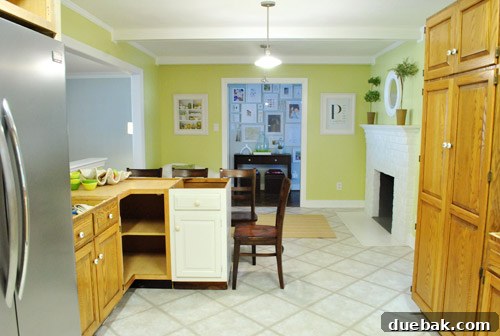
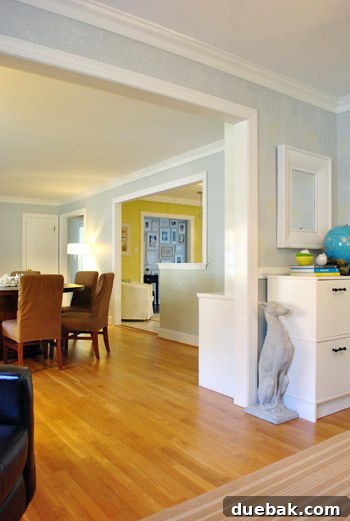
The Living Room Perspective: Balancing Openness and Privacy
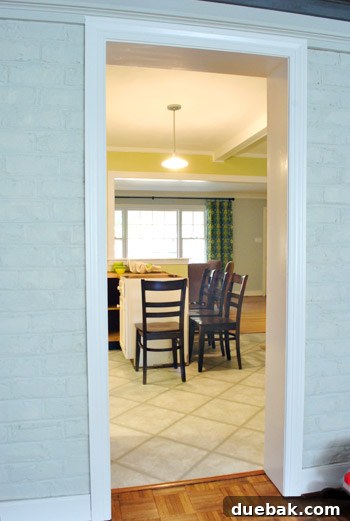
Although it might not be the most glamorous angle, several readers requested a view from the living room, so here it is. We absolutely adore the fact that we can now see the magnificent picture window from the very back of the house, drawing natural light deep into our home. While widening this doorway would undoubtedly create an even more expansive feel, we’re acutely aware of the complexities involved. Having previously widened a former-exterior brick wall in our first house, we know it’s a messy, often challenging endeavor. This particular doorway used to be the back of our house before an addition was built, meaning it’s highly load-bearing and could easily open up a “big ol’ can of worms” in terms of structural work. For now, it remains on our “maybe someday” list. Interestingly, we sometimes appreciate the retained privacy in the living room; it prevents a completely wide-open, straight shot from the front window to the back of the house, preserving a sense of coziness and separation.
The Impact of Meticulous Details in Your Home Renovation
It’s quite remarkable how many images were generated to illustrate a post about seemingly minor tasks: filling gaps around the stove, installing a panel on the peninsula, and performing essential paint touch-ups. I counted exactly 30 photos! We seem to have been a bit “trigger-happy” with the camera lately, but perhaps it’s a direct reflection of the joy and satisfaction we derive from our glorious new doorway. And yes, we still find ourselves walking into the kitchen and grinning like fools at the transformation.
These detailed, foundational steps, while not always the highlights of a renovation, are the silent heroes that ensure a flawless and lasting finish. They contribute significantly to the overall functionality, aesthetic appeal, and long-term value of your home. Taking the time to address these ‘little things’ before the major installations (like countertops) saves immense headaches and ensures the subsequent stages can proceed smoothly and accurately.
What small updates or significant progress have you been making on projects around your house? Are there any last-minute tasks you’re diligently tackling before the upcoming weekend or holiday season?