
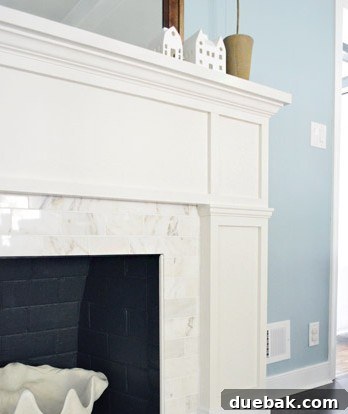
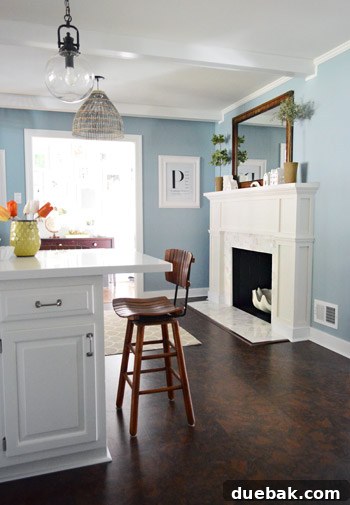
The moment we’ve all been waiting for has finally arrived! After weeks of planning, tiling, and building, our fireplace makeover project is officially complete. What started as a vision for a refreshed living space has culminated in a stunning focal point that completely transforms the room. We’re thrilled to unveil the dramatic before-and-after, showcasing how strategic design choices and a touch of DIY determination can elevate a home.
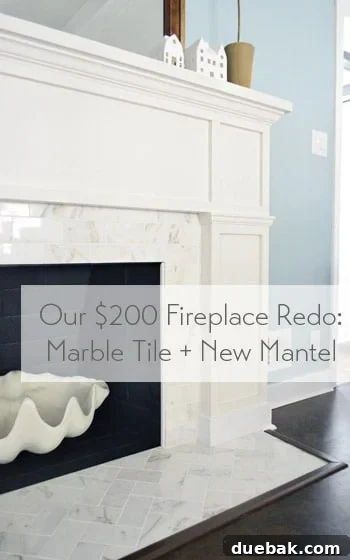
For those of you who’ve been following along, you’ve witnessed the evolution of this exciting renovation. We began by meticulously devising a comprehensive plan for this refacing makeover, laying the groundwork for a truly impactful transformation. This initial phase involved considering various styles, materials, and the overall aesthetic we wanted to achieve, ensuring our vision was clear before a single tile was laid. Following the planning, we dove into the intricate process of adding the exquisite marble subway tile, a choice that instantly added a layer of sophistication. Finally, we meticulously built out the surround, creating a substantial and elegant frame that enhances the fireplace’s presence in the room. This multi-step approach allowed us to tackle each part of the project with precision, ensuring a professional and polished finish.
Before embarking on any fireplace renovation, it’s imperative to consider local building codes. Fireplace regulations can differ significantly depending on your geographical area, and requirements vary greatly if you have a wood-burning fireplace, a gas insert, or an electric unit. Always consult your local municipality and a qualified professional to ensure your project complies with all safety standards and legal mandates before proceeding. This due diligence can prevent costly mistakes and ensure the safety of your home.
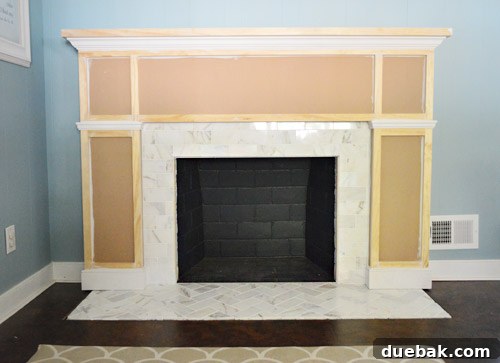
Our particular fireplace is currently non-working, which simplified some aspects of the renovation, particularly concerning material choices for the interior firebox. While we envision adding a gas insert and potentially even converting it to a double-sided feature in the future, for this phase of the project, the primary goal was aesthetic transformation. The focus was entirely on creating a visually appealing centerpiece that enhances the living space, regardless of its immediate functionality. This allowed us more flexibility in design without the constraints of high-heat considerations for every component.
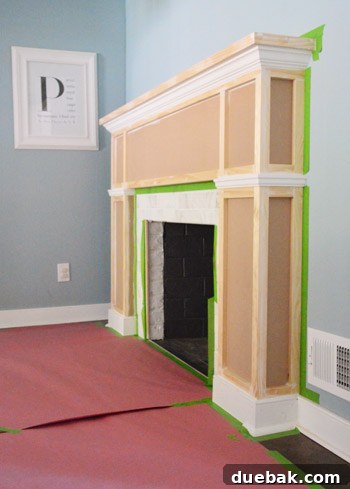
The final steps involved the crucial elements of priming and painting, which truly brought the entire project together. After all the construction and tiling, the right paint color and finish are essential for a cohesive and polished look. We began by applying a high-quality primer, using a product we already had on hand, to ensure optimal adhesion and a smooth base for our topcoat. This step is vital for durability and a professional finish, especially when painting over new materials like MDF and trim. For the main body of the fireplace surround, we selected Benjamin Moore’s Cloud Cover. This choice was deliberate: not only is it a beautifully soft, neutral white that brightens the space, but it also matches the nearby cabinetry in our kitchen, ensuring a harmonious flow between the two areas. Using leftover paint from a previous project was also a fantastic way to keep costs down. After the main painting was complete, we turned our attention to the firebox itself, giving it a fresh coat of its original color, Benjamin Moore’s Temptation. This deep, rich shade provides a wonderful contrast to the lighter surround, adding depth and definition. A crucial note for those with working fireplaces: always use fireplace-approved high-heat paint for the interior firebox. Regular paint cannot withstand the extreme temperatures and could pose a fire hazard. We allowed the paint to cure for a couple of days, ensuring it was fully hardened and ready for daily life before moving on.
Once the paint had fully cured, the most satisfying part of the project unfolded: carefully replacing all the surrounding furniture and decor. Seeing everything come back together, with the newly transformed fireplace as the undeniable star, was incredibly rewarding. The space now feels refreshed, sophisticated, and inviting. It’s truly become a cozy nook that exudes warmth and charm, even without a roaring fire. Sherry has even been known to pet the smooth, cool marble, a testament to its tactile appeal and the luxurious feel it brings to the room.
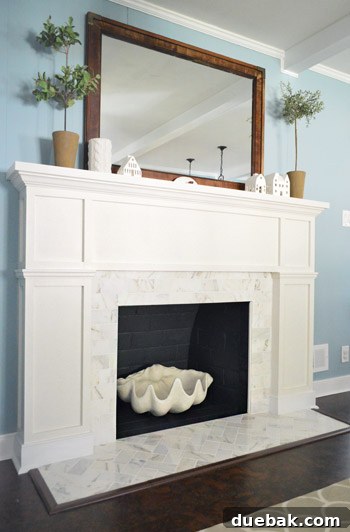
Update: Addressing a Common Question About the Hearth Design
We’ve received a few inquiries regarding our decision not to widen the tiled hearth to match the width of the built-out sides of the fireplace. It’s a valid design consideration, and we definitely explored it during our planning phase. Ultimately, we decided against it for a practical reason: the existing flooring is cork, and widening the hearth would have necessitated ripping up a significant portion of it. Given that the current hearth edge is simply a bit of shoe molding – which seamlessly extends around all of our kitchen cabinets – the slight variation in width didn’t bother us enough to undertake the extensive work and expense of modifying the cork flooring. While a perfectly flush look can be appealing, sometimes practicalities and existing architectural elements guide design decisions. Perhaps in the future, if it starts to stand out, we might opt to paint the brown floor trim white. This subtle change would visually blend the trim with the fireplace, creating the illusion of a wider, more integrated hearth without the need for major demolition. It’s a simple trick to create visual continuity and a testament to how minor adjustments can have a significant impact on perception.
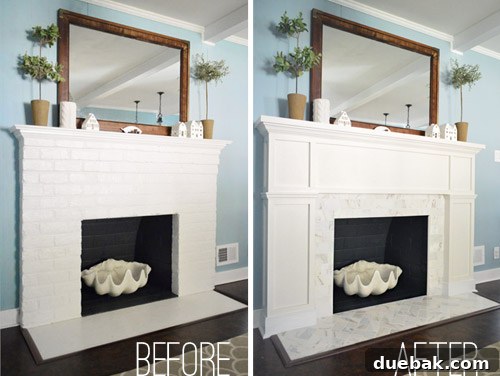
Every great home transformation deserves a compelling before and after, and our fireplace is no exception. Here’s an essential comparison for you, highlighting the remarkable journey of this centerpiece.
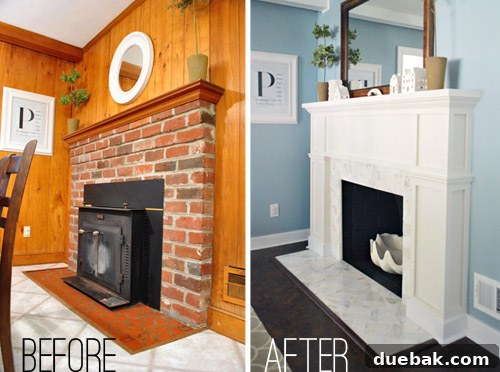
However, for a truly impactful illustration of its evolution, I much prefer to look back even further, at what the fireplace resembled when we first purchased our house in 2010. This image truly encapsulates the scope of the transformation.
One of the most satisfying aspects of this project was its affordability, especially considering the dramatic aesthetic upgrade. Since the painting step incurred no additional costs (we strategically used supplies we already owned, including primer and paint), the total budget for the entire project is simply the sum of the two previous phases we shared. The tiling phase amounted to a budget-friendly $99, while the building out of the surround came in at an equally impressive $98.75. This demonstrates how careful planning, DIY effort, and utilizing existing resources can lead to significant savings without compromising on quality or style. Here’s a full breakdown of the material costs, illustrating where every dollar was spent to achieve this luxurious look on a budget:
- Cement board (2 sheets): $16 (Essential for a stable and moisture-resistant tile base)
- Masonry screws: already owned (A great example of leveraging existing toolkits)
- Liquid Nails Heavy Duty: $2 (For secure adhesion of structural elements)
- Subway tile: $5.50/sq ft, totaling $70 (The heart of our elegant marble look)
- Thinset: already owned (Another cost-saving item from previous projects)
- Tiling tools (saw, trowel, float, etc): already owned (Investing in tools pays off over time for DIYers)
- Grout: $11 (Crucial for finishing the tile and preventing moisture intrusion)
- Tile sealer: already owned (Important for protecting porous marble tile)
- MDF frame: $35 (Versatile and cost-effective for building the surround)
- Mantle top: $17 (The crowning glory of the fireplace, adding functional style)
- Crown, baseboard, & decorative trim: $22.75 (Adds architectural detail and a custom feel)
- 1 x 2″ boxes: $24 (Used for structural support and framing elements)
- TOTAL PROJECT COST: $197.75 (*Thanks to some generous holiday gift cards from family, our out-of-pocket expense was actually only $147.75. However, without gift cards or already owned supplies, a similar upgrade might typically range closer to $250, still an incredible value for such a dramatic transformation.)
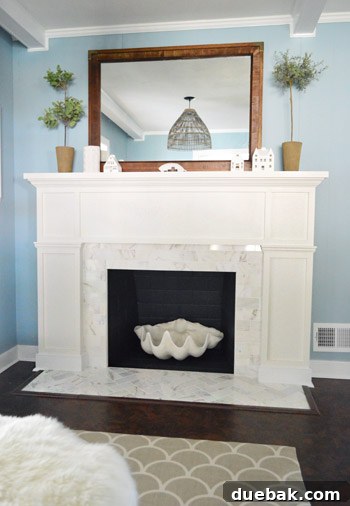
While this wasn’t our absolute cheapest DIY project to date, the investment was undeniably worth every penny. The combination of the sophisticated herringbone marble tile and the custom-built surround exudes a sense of high-end luxury that far surpasses its actual cost. It truly looks expensive, at least in our humble opinion, and has elevated the entire ambiance of the room. Having never had a tiled fireplace before, we suddenly feel exceptionally swanky indeed. Perhaps I’ll even start sporting an ascot to match the newfound elegance!
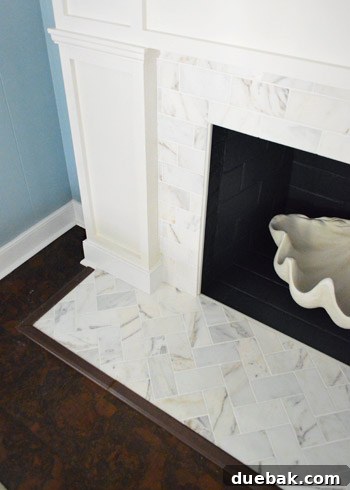
Many of you expressed curiosity about how we managed to conceal the exposed edge of the cement board around the firebox, an important detail for a clean, finished look. Our solution was quite simple and effective, thanks to our well-stocked scrap pile! We utilized a piece of trim that had a slight curve on both sides, which proved perfect for the job. Before the final grouting, we carefully glued this trim piece into place, creating a smooth, clean edge for the grout to butt up against. Once painted to match the rest of the surround, it seamlessly blended in, providing a polished transition. It’s important to note, however, that this approach is ideal for a non-working fireplace like ours. For a functioning wood-burning fireplace, using combustible wood trim is a definite no-go due to heat safety regulations. In such cases, you would absolutely need to use a non-combustible material, such as metal tile edge profiles specifically designed for high-heat applications, or a fire-resistant cement board trim. If we ever decide to convert our fireplace to a wood-burning one (which is unlikely, as it would require extensive and costly chimney work), we would simply remove the existing wood trim and install appropriate fire-rated tile edge pieces to ensure safety and compliance.
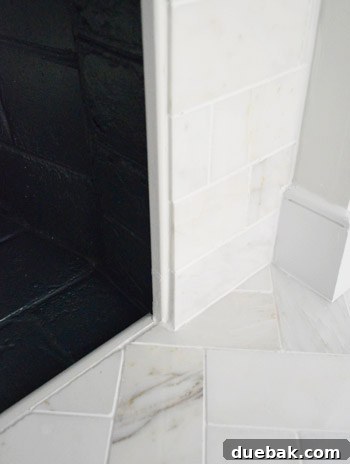
Now, let’s indulge in a few more gratuitous after shots, because when a project turns out this beautifully, you just can’t help but admire it from every angle.
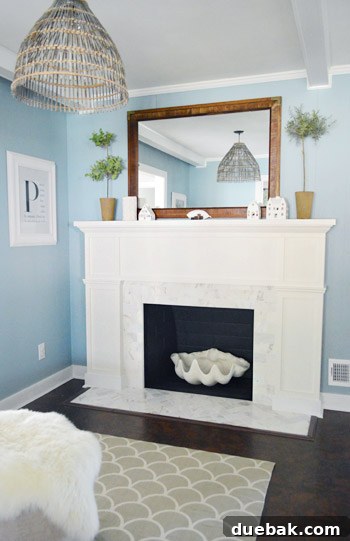
Okay, just one more final glimpse, showcasing the elegant lines and inviting presence of our newly transformed fireplace, and then we’re truly done with the picture parade.
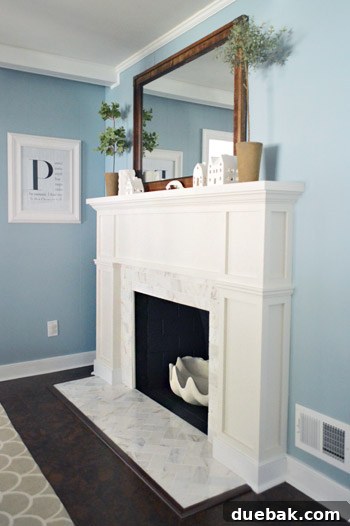
And here’s just one last shot, for good measure, highlighting the exquisite detail of the herringbone pattern and the overall clean aesthetic. With this, I’m truly out!
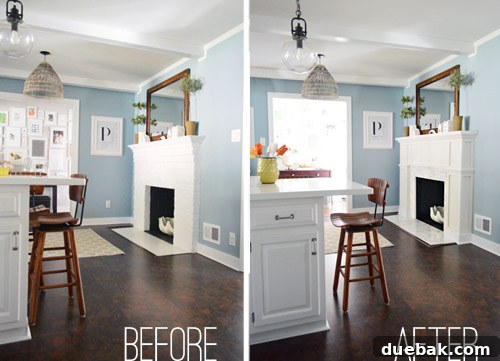
Oh, wait! I found a truly valuable comparison shot that effectively illustrates the transformation. The original fireplace suffered from a somewhat thin and even slightly top-heavy appearance, lacking the visual weight and presence to truly anchor the room. In stark contrast, our new, chunkier tiled-and-framed-out version exudes a much more substantial and “focal-point-ish” feel. In person, the new design boasts even more dimension and textural interest. Unfortunately, capturing all the nuances of texture and depth in photos of a mostly white surround with white-ish tile can be challenging, as the subtle variations are often lost. However, the difference in overall proportion and impact is undeniable, making the fireplace a true statement piece.
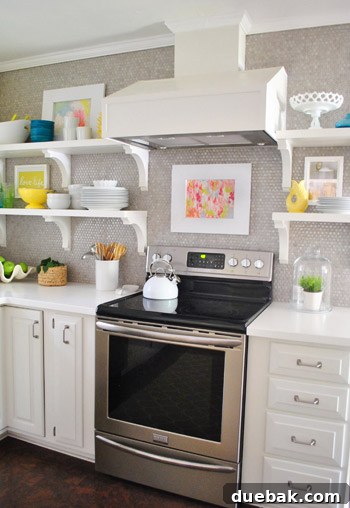
Perhaps best of all, our magnificent wall of penny tile on the opposite side of the room no longer feels like the sole “fancy wall” dominating the kitchen’s aesthetic. Before this renovation, the rest of the kitchen seemed to struggle to keep pace with its luxurious charm. Now, the herringbone marble fireplace finally gives the penny tile a run for its money, in the most delightful and complementary way possible. According to Sherry, “it’s a swank-off in our kitchen!” The sophisticated elegance of the new fireplace now perfectly balances the intricate beauty of the penny tile wall, creating a cohesive and high-end feel throughout the entire space. Fireplace versus wall of penny tile – who will win the ultimate battle of style? It’s anyone’s guess! (Spoiler alert: Sherry playfully declares the wall of penny tile wins because she admits to petting it slightly more than the marble, but she emphasizes that it’s an incredibly close competition.) This healthy design rivalry has truly elevated our home’s interior.
And so, that concludes our exciting journey with this little fireplace update. We are incredibly glad to have it finished and are already eagerly looking forward to our next big projects: some much-needed porch and carport updates. So, come on end-of-March snow, give it a rest so we can finally get outside and start working on those outdoor improvements! What exciting DIY projects are you currently tackling? Are you engaged in any tiling, mantel building, priming, or painting? Or perhaps, like Sherry, are you busy placing giant faux clam shells around the house, adding your unique touch to your home decor? Whatever your projects may be, remember that every effort contributes to creating a space you truly love. That’s all in a day’s work for my remarkable lady!
P.S. If you’re inspired to embark on your own fireplace makeover and want to delve into the specifics from the very beginning, be sure to check out our detailed posts on our initial planning process, a step-by-step guide on how we tackled the tiling, and an in-depth look at how we built out the custom wood frame around it. These resources offer comprehensive insights into each stage of our renovation.
Update – Curious about where we sourced specific items in our home or which exact paint colors we used for other projects? Simply click on the button below to explore our “Shop Our House” page, where we share all our favorite finds and design choices: