

Strike up the band! Fire the cannons! Whatever the appropriate celebratory action is, bust it out because our once very wallpapered house is officially wallpaper-less! After months of dedicated effort, the last stubborn remnants of wallpaper have been vanquished from our bathroom, marking a significant milestone in our ongoing home renovation journey. This isn’t just about peeling off paper; it’s about reclaiming our walls, preparing them for a fresh start, and bringing our vision for a beautiful, functional bathroom to life.
Understanding that a standalone post on just wallpaper removal might be a tad dry, we’ve bundled that satisfying update with other crucial bathroom progress. This comprehensive guide details not only the final stages of wallpaper stripping but also the intricate steps we took to restore the damaged walls, transform the tired trim, and lay the groundwork for a stunning new aesthetic. Get ready to dive deep into the world of:
- How we meticulously puttied, prepped, and primed the walls to perfection after the paper was gone.
- The process of priming and painting all the outdated cream trim and old wood quarter-round, giving the room a crisp, modern edge.
- Our exciting new paint plans for this freshly de-wallpapered space, revealing how we intend to cleverly balance the existing bold floor tiles with some captivating interest up high.
But first, let’s truly soak in the glorious, wallpaper-free moment. Considering that we’ve collectively spent over 45 hours of our lives battling wallpaper across five different rooms over the past six months, the sense of relief is immeasurable. Truly, profoundly relieved. This endeavor was even one of Sherry’s personal “before the baby comes” goals, and to achieve it with a few months to spare feels like a significant victory. This precious extra time means we can now wholeheartedly dive into more enjoyable bathroom projects before the little one arrives. But more on those exciting plans in just a moment.
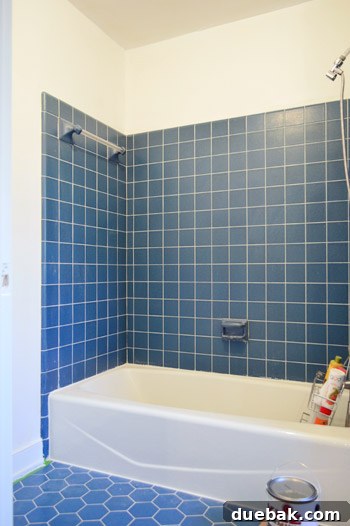
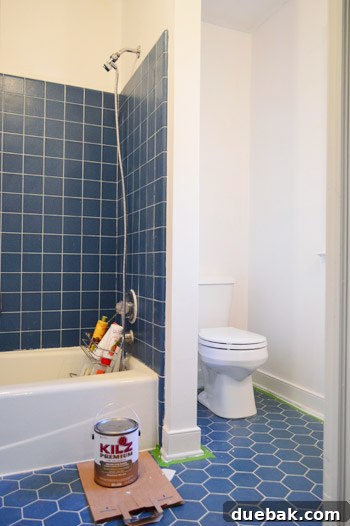
To fully appreciate the transformation, let’s briefly recall the state of this room for the better part of a year. The image above shows the walls after they’ve been primed, and the difference is already a colossal improvement. Gone are the busy patterns and dated textures, replaced by a clean, neutral canvas ready for its next chapter. It’s truly amazing what a fresh coat of primer can do to rejuvenate a space.

The Stubborn Saga of Wallpaper Removal
While the final stripping was just completed last week, the peeling process actually began quite serendipitously a while ago. One morning, Sherry was enjoying a shower when I heard an excited yell, “Hey, come take a picture!” Intrigued, I hurried into the bathroom, only to find she had spontaneously stripped off several panels of wallpaper right off the wall, mid-shower! It turns out, years of shower steam had caused many corners to curl up, making that particular section virtually effortless to remove (and apparently requiring zero clothes, according to Sherry).

Given how effectively the shower steam worked its magic in that specific area, we hypothesized that some extra assistance from my sister’s clothes steamer might prove equally successful for the rest of the bathroom. We’d previously found it slightly faster than other methods when we tackled the foyer wallpaper. This time, I decided to add a new preparatory step we’d heard could significantly aid in loosening things up: liberally spraying the walls down with a mixture of 50% warm water and 50% Seventh Generation fabric softener before steaming. Since the bathroom is a relatively small space, I ambitiously decided to tackle it early one morning on a whim, fully assuming it would be so speedy that I didn’t even bother inserting my contact lenses or hiding my bedhead under a hat.
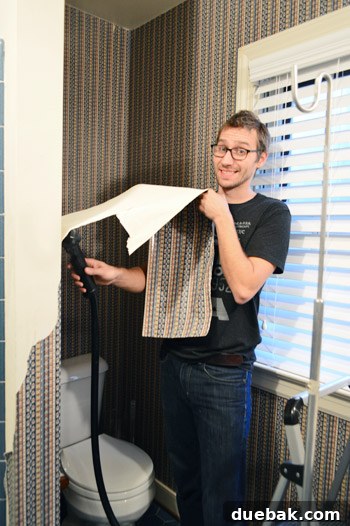
Fast forward several grueling hours later, and I had made dishearteningly little progress. My initial optimism had evaporated, replaced by a weary demeanor that was far from amused, much to John’s visible lack of sympathy. What began as a hopeful morning task had transformed into an epic, full-day battle.
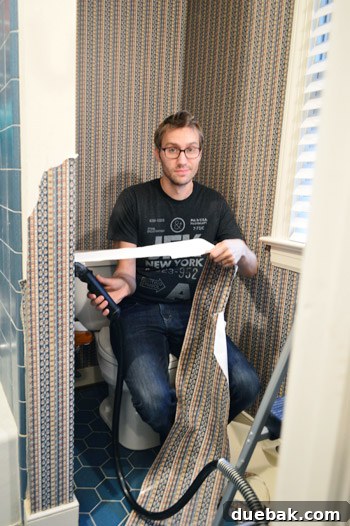
Okay, perhaps there wasn’t “several hours” between those two photos, but the project certainly consumed my entire day (while Sherry, meanwhile, was diligently working on this grout project). Despite deploying the steamer and the fabric softener concoction, most of the wallpaper clung tenaciously, coming off in frustratingly small strips and flakes, a stark contrast to the large, satisfying sheets we managed to peel in the foyer. It was a true test of patience and endurance, but by sunset, every last scrap of that persistent paper was finally gone, leaving behind a blank slate.
Mastering Wall Preparation: Repairing and Priming for Perfection
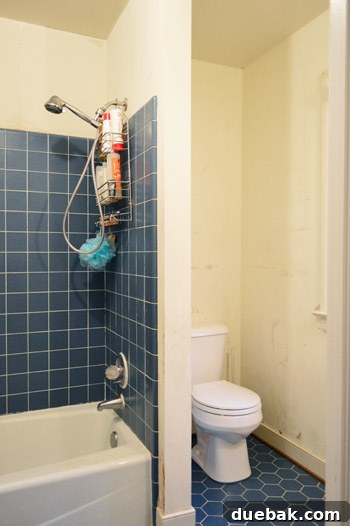
The bad news, however, was that the walls underneath were in significantly rougher shape than any other room we had de-papered. This led us to speculate whether a special, extra-strong adhesive or treatment had been used here, perhaps anticipating the enduring humidity of a bathroom environment that might be too powerful for standard glue. Regardless of the reason, the aftermath left us with a look that I affectionately, or perhaps despairingly, christened “gas station bathroom.”

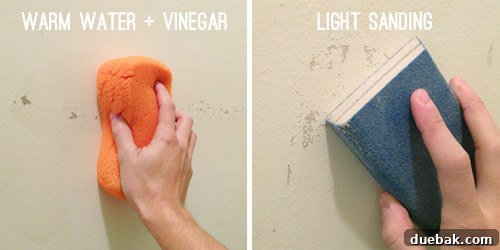
Unlike those other rooms where a quick clean was sufficient, this bathroom demanded some pretty intensive preparation. Our first crucial step was to meticulously remove the last vestiges of wallpaper glue. This involved a light yet thorough scrubbing with a warm water and vinegar solution – typically our final “prep step” before painting. However, this time, we had to go much further. We moved on to sanding all the walls with a sanding block, diligently filing down every rough spot, raised edge, and uneven patch left behind by the departed wallpaper. This process was messy but absolutely vital for achieving a smooth, flawless base.
Despite the sanding, numerous dimples, low points, and areas where the drywall paper had torn remained. To address these imperfections, we decided to fill things in with a meticulous coating of spackle. My approach was to apply a super thin layer, scraping it firmly against the wall, which proved incredibly effective for filling in those slightly recessed, peeled-looking spots. This method ensured that we were only filling the necessary areas without adding unnecessary bulk.
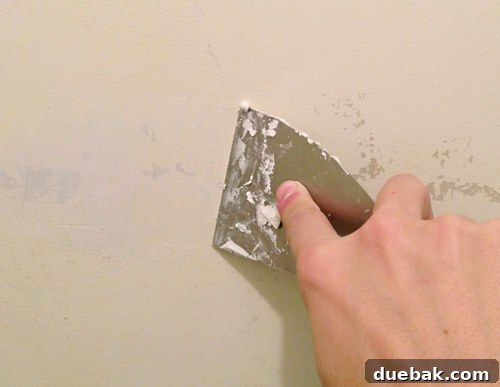
This spackling process was far from fast, as evidenced by the sheer number of spackle spots visible in the subsequent photos. While a full-wall skim coat could have arguably achieved a similar smooth outcome, we deliberately opted against it. A skim coat would have been far more time-consuming to apply, and crucially, it would have generated an overwhelming amount of sanding dust. By strategically applying small pats of spackle wherever needed, we minimized the mess and streamlined the repair work, making it a more manageable DIY task.
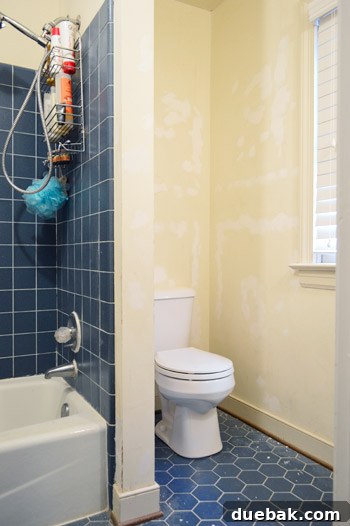
Even with our targeted spackle job, sanding was still a mandatory step – always a messy task that is anything but “fun.” I truly cannot imagine the level of dust and chaos that would have engulfed the bathroom if we had pursued a full skim coat. The thought alone makes me grateful for our chosen, albeit still dusty, method of repair.
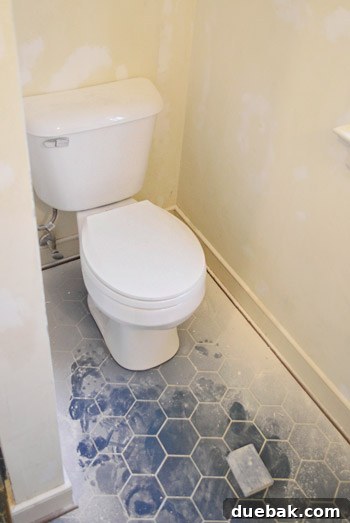
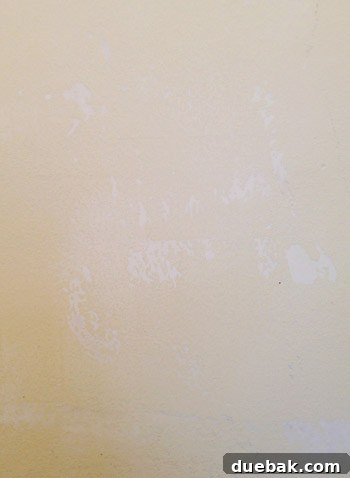
Once all the sanding dust was meticulously brushed off the walls and thoroughly swept and wiped up from the floor and surfaces, the impact of the spackle became strikingly clear. It had successfully leveled out all the areas where the wallpaper had unforgivingly torn off bits of the drywall, creating a much smoother and more uniform surface, finally ready for the next crucial step in our renovation.
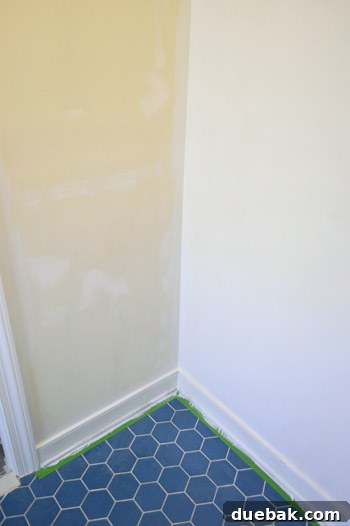
Next up was the primer, a truly transformative step. Notice the distinct yellow tint of the walls on the left side of the image, contrasting sharply with the fresh, clean look of the primer on the wall to the right. This was, without a doubt, one of my most satisfying priming projects ever. The primer effortlessly evened out the formerly spotty, patchwork wall, effectively sealing any remaining imperfections and creating a uniform base. More importantly, it dramatically brightened the entire room, instantly making it feel larger and more inviting – a truly refreshing change after all the challenging prep work.
Transforming Trim: From Cream to Crisp White
You’ll also notice in the photos that the floor is carefully taped off. That’s because Sherry seized the opportunity to tackle another important update: painting all the existing cream trim a crisp, clean white while we were already deep in renovation mode. Not only was the trim a dated cream color, but the quarter-round molding was actually raw wood, which further contributed to the tired look of the room. This was definitely one of those time-consuming tasks – the window panes, in particular, are always a meticulous pain – but the effort was unequivocally worth it in the end to have it finally done. Sherry diligently applied two coats of Kilz no-VOC primer to ensure excellent adhesion and stain blocking, followed by two coats of Simply White, the same semi-gloss trim paint we’ve consistently used throughout our house. The result was a triple “ahh” moment: the trim is now a pristine white, the unsightly wooden quarter-round is gone, and the wallpaper is officially, gloriously dead.
Our Ultimate Guide to Wallpaper Removal Methods: What We Learned
Before I dive into the truly fun “what we’re going to do next” stuff, here’s a quick, comprehensive wallpaper removal recap. Many of you have asked for a summary of what methods worked best, and crucially, what we’d never attempt again. Our journey across five different rooms has given us a wealth of experience, and we’re happy to share the insights:
- Powder Room: The Hot Water & Peel Method. In the powder room, Sherry experimented with boiling hot water, applied generously with a spray bottle. The process involved spraying, letting it soak, and then meticulously peeling the wallpaper by hand, respraying and peeling the underlayer as needed. This was undeniably not a fast process, demanding significant patience, but it was effective in getting the job done.
- Foyer: Steaming for Speed. For the foyer, we gave my sister’s clothes steamer a spin. We noted that it seemed to be marginally faster than our initial hot water method. However, a key drawback was the physical exertion involved, especially when lifting and holding the steamer to reach those higher spots. It worked, but it was a workout.
- Kitchen: Soap & Water Soak. In the kitchen, Sherry tried a solution of warm water mixed with a few drops of Dr. Bronner’s soap, sprayed onto the wall. This was followed by using a wet cloth to thoroughly soak the underlayer before peeling it off. This method was probably on par with the hot water & peel method (bullet #1) in terms of ease, speed, and overall effectiveness.
- Dining Room: The Dry-Peel Technique. For the dining room, Sherry attempted a dry-peeling approach. This meant she didn’t spray the top layer of the wallpaper at all. Instead, she focused solely on applying water (using a large, damp sponge) to remove the underlying paper layer. Like all the other methods, this was not a speedy process, but it ultimately worked to get the wallpaper off.
- En-Suite Bathroom: The Ultimate Challenge. Finally, in the en-suite bathroom we just finished, we circled back to the steamer. Our memory was that it had been slightly faster than our other methods (though it was certainly no silver bullet, perhaps offering a modest 5% speed increase). We also introduced a pre-treatment spritz of warm water mixed with Seventh Generation fabric softener (a 50/50 combo applied with a spray bottle). Ironically, this time around, this combined method proved to be *slower* than any other approach we’d tried, and it left the walls in a truly deplorable, messy state. Out of sheer curiosity and desperation, we even tried the three other methods outlined above at various points in this bathroom, and none of them worked well either. Our conclusion? This bathroom’s wallpaper must have been adhered by some truly evil, ninja-esque glue that was too legit to quit.
In summary, our extensive experience has taught us that the type of adhesive used to install the wallpaper, coupled with the initial preparation of the walls before application, significantly dictates how easy (or, as we’ve learned, how utterly impossible) it will be to remove the wallpaper. Nothing we tried proved to be a miraculously fast and amazing solution. However, most methods, when applied consistently and with perseverance, did eventually work over the course of approximately 8 hours per room. We sincerely hope that by detailing our trials and tribulations with these five different techniques, our journey will offer some helpful guidance to others who are staring down a wall of wallpaper, wondering what daunting method to try next.
____________________________
Designing Our Dream Bathroom: Beyond the Walls
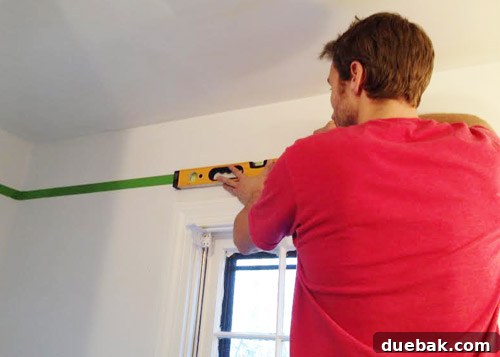
Now that the boring-but-absolutely-essential prep work is finally behind us, we are incredibly excited about a specific paint treatment we’re planning to try in here. After much deliberation and brain-wracking about the best way to work harmoniously with the existing bold blue floor tiles for the foreseeable future, while simultaneously drawing the eye upwards to make the room feel taller and less squat (a common issue when all the visual focus is on the floor), we’ve decided to strategically reintroduce some blue into the room. This time, however, it will be in a much smaller, lighter dose than the departed wallpaper, and crucially, placed in a nice, high position.
For a fantastic visual of where we’re headed, you absolutely must check out Heather’s amazing bathroom transformation (you can find more details here). Yup, our plan is to create a simple yet elegant wood border around the top part of the wall. Above this border, we intend to carry a soft-but-complementary blue color up that section of the wall and seamlessly onto the ceiling itself. Furthermore, this inspiring room on Houzz also beautifully demonstrates a similar effect, and significantly, it features a blue floor much like ours. This example perfectly illustrates how incorporating a softer blue high up can effectively balance out and soften the visual impact of a somewhat demanding or dominant floor color, creating a more cohesive and expansive feel.
So, our immediate next steps involve painting those perfectly primed walls with our chosen base color, followed by the installation of the decorative wood trim around the top perimeter of the room. Finally, we’ll apply our carefully selected accent color above the trim, extending it onto the ceiling. Our hope is that once the tall, crisp white shower curtain is rehung, and we thoughtfully add some carefully curated art, we’ll completely forget the old, dated room we started with, and instead, step into a beautifully cohesive and serene new bathroom space.
Are any of you currently diving into a bathroom update, or perhaps planning any unique wood-border-plus-paint projects? Have you recently been battling the beasts of de-wallpapering, spackling, priming, trim-painting, or sanding? We’d love to hear about your experiences! Feel free to toss out any tips, tricks, or cautionary tales for anyone else who’s bravely tackling these challenging home renovation tasks.
Psst – If you’re looking for more from Sherry, she’s currently over on Young House Life chatting about her maternity clothing M.O.!