
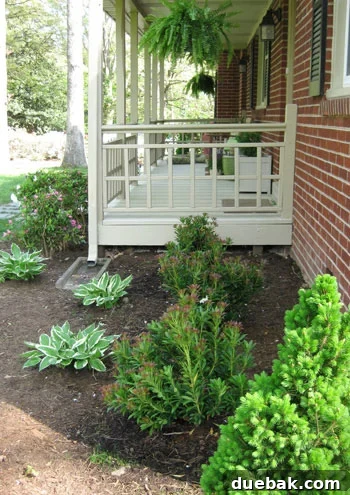
Welcome back to the complete overhaul of our front yard landscaping – a project that has truly transformed the face of our home. For years, our charming, short-and-stout rancher was quite literally overshadowed by an unruly collection of aging bushes. These 50-plus-year-old behemoths were not only overgrown and overcrowded but also actively dwarfing the architectural appeal of our beloved home. This isn’t just a story about pulling out old plants; it’s about reclaiming curb appeal, embracing budget-friendly DIY solutions, and creating a welcoming entryway that reflects our style.
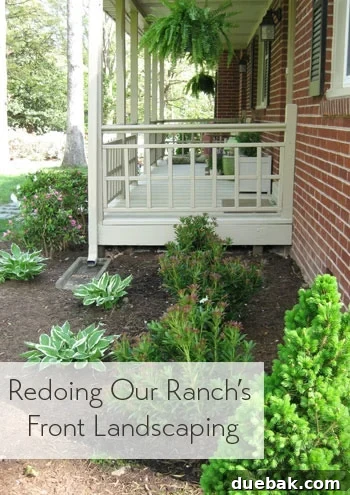
When we first mentioned the dire state of the landscaping surrounding our ranch house, we weren’t exaggerating the extent of the problem. These mature bushes had grown far beyond their intended size, creating a dense, almost impenetrable wall that swallowed the front of the house. They were so dense, in fact, that they contributed to a perpetually damp environment near the foundation, offered little aesthetic value, and made routine maintenance a significant chore. The visual impact was undeniable: our home, despite its inherent charm, looked hidden and neglected behind this green jungle.
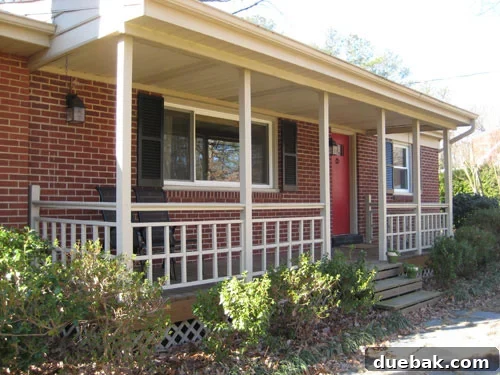
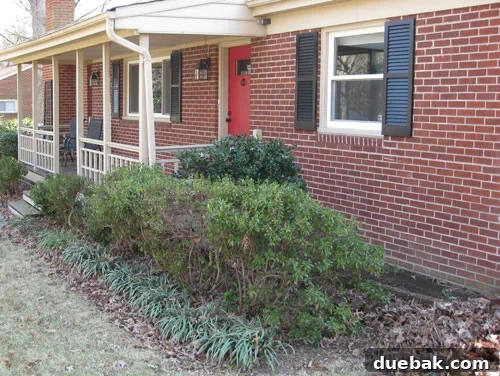
Honestly, we were quite embarrassed by the state of our front yard. The dense thicket obscured our windows, made the house appear smaller, and generally detracted from the welcoming curb appeal we envisioned for our home. However, as seasoned DIY enthusiasts, we’ve learned a clever trick or two about scoring free landscaping labor when tackling large plant removal projects. Recognizing an opportunity to not only clear our yard but also to give these established plants a new lease on life, we decided to put up a simple ad. Our offer was straightforward: free azaleas and several large holly bushes to anyone willing to put in the work to dig them out and haul them away themselves.
To our delight, the response was fantastic. Within a short period, eager gardeners arrived, equipped with shovels and trucks, ready to transplant these mature specimens into new, more suitable homes. This ingenious strategy allowed us to clear out massive, entrenched root systems without incurring significant labor costs or the hassle of disposal. Before we knew it, the front of our rancher was transformed into a clean, open slate, ready for a fresh start. It was an incredibly satisfying feeling to watch those monster bushes, which had once felt like an insurmountable challenge, depart for bigger and better homes, leaving behind a blank canvas for our creative landscaping ideas.
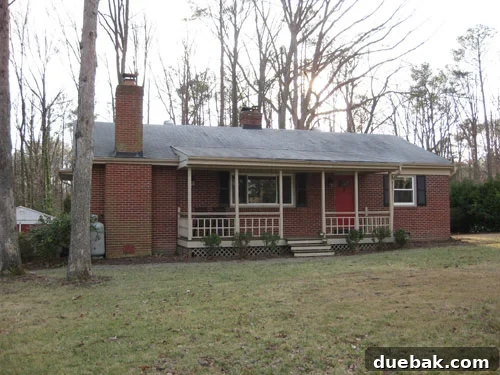
Even after the main event of bush removal, we were left with a few stubborn remnants. Nobody seemed to want the sprawling loriope, commonly known as monkey grass, which had intricately woven itself throughout the former garden beds. Furthermore, an odd, low-lying brick ledge remained, a relic from the previous landscaping design that had featured giant bushes both in front of and behind it. This ledge, while seemingly minor, disrupted the clean lines we envisioned and served no practical purpose in our new design. It was clear that these last vestiges of the old landscape needed to go.
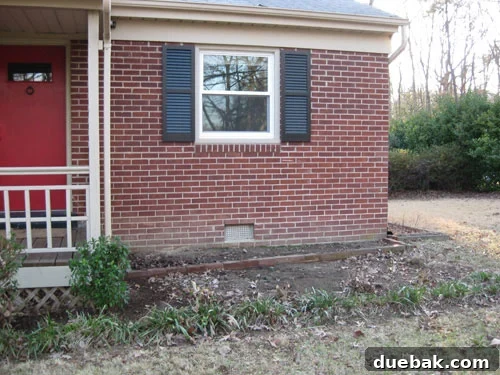
Tackling the loriope required patience and persistence, as its dense root mat needed careful digging to ensure complete removal and prevent future regrowth. The brick ledge, however, called for a more decisive approach. With a trusty sledgehammer, a bit of muscle, and a dose of determination, we systematically broke apart the old structure. Each swing of the hammer was a step closer to a completely unobstructed and adaptable space. This final clearing, though physically demanding, was incredibly cathartic. It paved the way for a truly fresh start, allowing us to implement our new front yard landscaping vision without compromise.
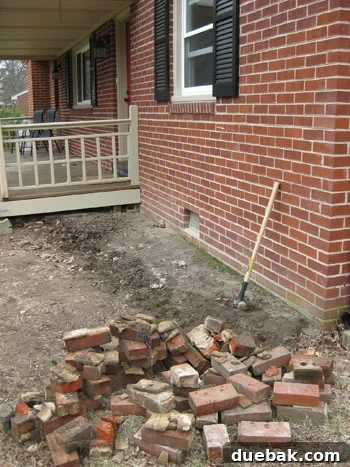
With the old landscape completely cleared, the next crucial step in our front yard transformation was soil preparation. This phase is often overlooked but is absolutely vital for the long-term health and success of new plantings. Our existing soil, having supported massive, mature bushes for decades, was likely depleted of nutrients and compacted in many areas. To create an optimal growing environment, we began by thoroughly roughing up the soil beds, breaking apart any compacted clumps and integrating fresh, nutrient-rich amendments. Our secret weapon for this? A generous supply of free compost, diligently brewed in our backyard over the winter months. Compost is a gardener’s gold; it improves soil structure, enhances drainage, increases water retention, and provides essential nutrients, creating a fertile foundation for our new plants.
With the soil expertly prepared, it was time for the exciting part: selecting and planting our new additions. Our primary goal was to choose plants that would grow to be the appropriate size for our short little rancher, ensuring they wouldn’t overwhelm the house in a few years as their predecessors had. Strategic spacing was also critical to avoid any future overcrowding, allowing each plant ample room to thrive and reach its full potential. The beauty of this careful planning is that we can now easily mulch the beds – a task that was nearly impossible before due to the dense growth. Mulching will not only suppress weeds and conserve moisture but also contribute to the overall neatness and health of our new landscape, making maintenance a breeze.
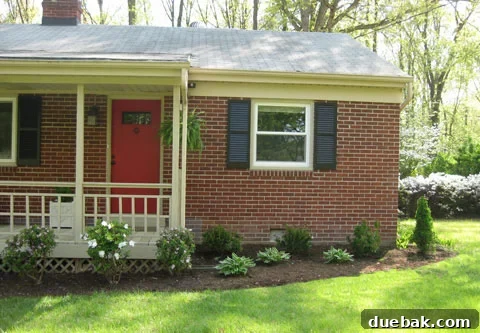
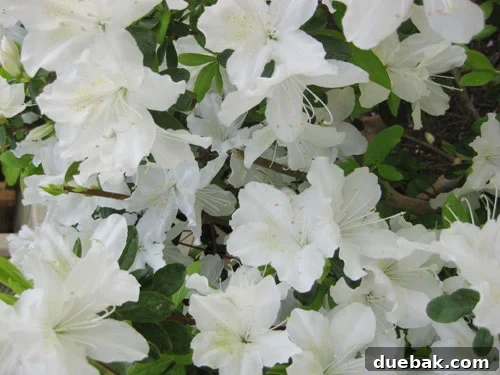
For the main planting scheme, we carefully curated a selection of low-maintenance, appropriately-sized plants that would enhance our rancher’s exterior without overpowering it. We strategically retained six of the original azaleas, three positioned on each side of the porch, valuing their established presence and beautiful seasonal blooms. To add varied texture and year-round interest, we introduced three elegant Japanese Andromeda (Pieris japonica) in the back row. These shrubs offer striking spring flowers and attractive new foliage that emerges in vibrant shades, providing a dynamic visual element. For much-needed vertical emphasis and balance, we flanked each side of the house with a dwarf Alberta spruce (Picea glauca ‘Conica’). These slow-growing evergreens provide a refined, conical shape that adds architectural definition without ever reaching an imposing size, making them perfect for a ranch-style home.
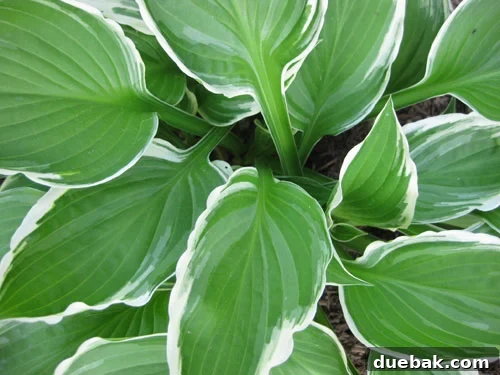
In a testament to budget-friendly landscaping, we also incorporated several hostas directly against the foundation of the house. These versatile, shade-loving perennials were literally transplanted from our backyard, costing us zero dollars and zero cents – a truly satisfying win for our budget. Their lush foliage adds wonderful texture and greenery, softening the hard lines of the house. Our only regret from this entire project, in hindsight, is not having added a simple dry creek bed under the downspout. This would have provided not only an attractive design element but also a practical solution for managing rainwater runoff, a lesson learned for future projects. Nevertheless, the combination of these carefully selected plants created a cohesive and appealing landscape design that perfectly complements our home.
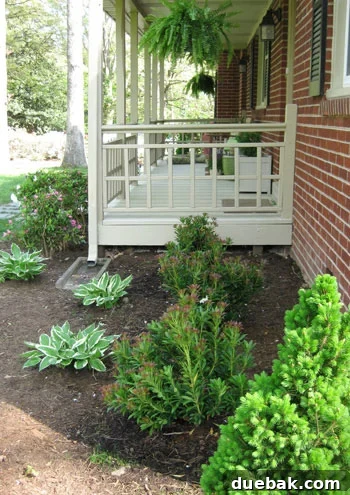
On the opposing side of the porch, we continued our theme of balanced and appropriate plant choices. Here, we thoughtfully filled the beds with a cluster of happy little boxwoods (Buxus sempervirens). These classic evergreen shrubs are renowned for their dense, compact growth and versatility, allowing us to create neat, defined borders that provide year-round structure. Beside them, we placed our second dwarf Alberta spruce, maintaining symmetry and repeating that valuable vertical element. To further enhance the lushness and continue our cost-saving efforts, we incorporated a few more free hostas, once again transplanted from the abundant supply in our backyard. This thoughtful combination of evergreen structure, varied textures, and vibrant greenery created a harmonious and visually pleasing landscape on both sides of our entryway, significantly enhancing our home’s curb appeal.
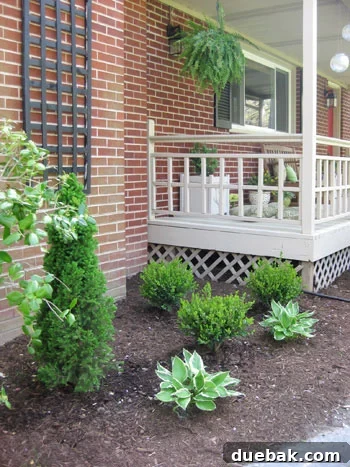
With all the new plants carefully positioned and nestled into their prepared beds, the final step was to lavish them with a generous layer of mulch. Using the fantastic compost we had lovingly brewed all winter, we spread it across the entire landscaped area. This wasn’t just about making things look tidy; mulching with compost provides a multitude of benefits for new additions. It helps retain crucial soil moisture, suppresses pesky weeds, insulates plant roots from temperature extremes, and gradually releases nutrients back into the soil, creating a truly welcoming and happy environment for our plants to thrive. It’s the finishing touch that truly brought the whole design together, giving our front yard a polished and professionally maintained appearance.
And now for the exciting part for any budget-conscious DIYer: the cost breakdown! Our goal was to keep the entire front landscaping project under $250, and we are absolutely thrilled to report that we succeeded marvelously. The two dwarf Alberta spruces, which provide such excellent structure, cost us a combined $50. All our beautiful hostas were completely free, thanks to strategically transplanting them from our existing backyard. The three charming boxwoods came in at $57, and the three unique Japanese Andromeda added another $57 to our tally. Finally, the additional mulch we needed cost us a modest $15. This brings our grand total for this entire front yard transformation to an incredible $179! This outcome exceeded our expectations and proves that a stunning landscape doesn’t have to break the bank if you’re willing to put in the effort and get creative with your resources. It’s a testament to the power of thoughtful planning, resourceful sourcing, and dedicated DIY spirit.
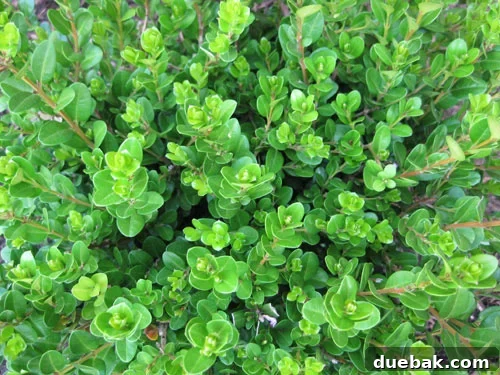
The transformation is truly remarkable. We honestly can’t believe the difference this landscaping overhaul has made to the entire feel and appearance of our home. Every day, coming home feels like arriving at a brand new house. The fresh, clean lines, the thoughtfully chosen plants, and the welcoming entry have elevated our rancher’s curb appeal significantly. It’s no longer hidden behind an overgrown tangle but proudly showcased with a vibrant, inviting landscape that truly complements its architecture. This project not only beautified our exterior but also instilled a renewed sense of pride in our home.
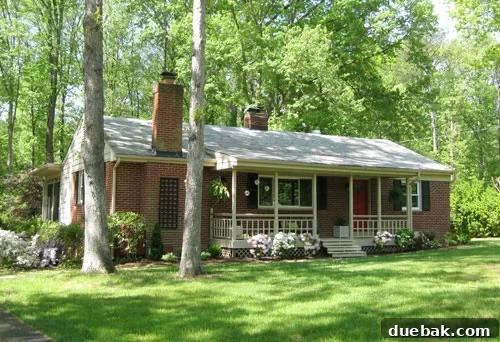
When you consider the “before” state from just three years ago, when we first made an offer on this house, the current transformation is nothing short of astounding. Back then, it was a diamond in the rough, with a front yard that certainly required a leap of faith to envision its potential. The dramatic change from that initial neglected state to the vibrant, welcoming landscape we enjoy today is a powerful testament to the impact of dedicated DIY efforts and a clear vision. It’s a complete evolution that speaks volumes about what can be achieved with a bit of planning, hard work, and a commitment to enhancing your home’s exterior.
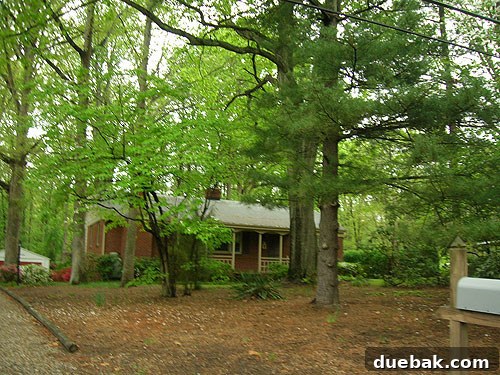
What do you think of our front yard transformation? We’d love to hear your thoughts! Are you planning a major landscaping overhaul for your home this year, perhaps tackling overgrown bushes or designing new garden beds? Share your challenges, successes, and any budget-friendly tips you’ve discovered along the way. And to answer a question we often get: yes, we truly did fall in love with this house even when it looked like that! Its potential, structure, and location spoke to us, and we knew with some elbow grease and vision, we could turn it into the beautiful home it is today. What kind of hidden gems have you discovered and brought back to life?