
Navigating Our Front Yard Transformation: From Problematic Camellia to Pristine Pavers
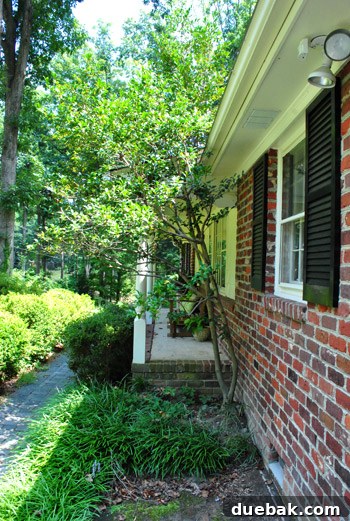
Every homeowner knows the ongoing saga of outdoor maintenance and aesthetic improvements. It’s a journey often taken in small, manageable steps to prevent overwhelm, budget overruns, or sheer physical exhaustion. Our latest outdoor update, a significant stride in our ongoing quest to enhance our home’s curb appeal and structural integrity, tackled a long-standing issue right at our doorstep. For those who’ve followed our previous updates, or perhaps recall a glimpse of our old header, a familiar face once dominated the scene:

The Camellia Conundrum: Roots and Foundation Risks
Indeed, that grand Camellia tree, which many of you helped us identify back in March when we first introduced it, was a plant of striking beauty. Its vibrant foliage and potential for stunning blooms were undeniable. However, its charm was perpetually overshadowed by a pressing concern: its alarming proximity to our home’s foundation. Growing mere inches – possibly even a single inch – from the concrete slab, it presented a significant, escalating risk of permanent damage to our home’s structural integrity. This situation made us incredibly apprehensive about the long-term implications of allowing it to remain.
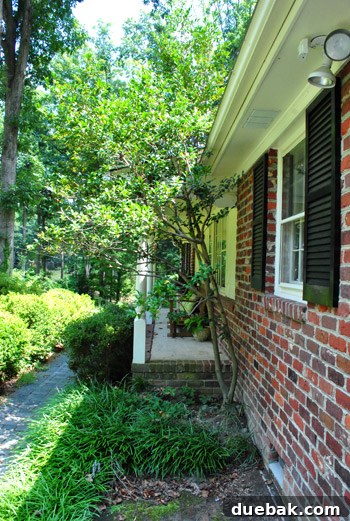
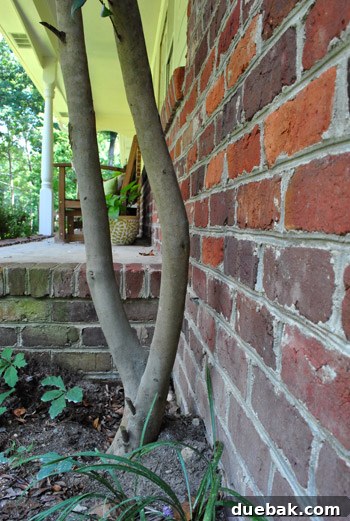
Seeking professional guidance, we consulted several plant expert friends. Their unanimous recommendation was clear and urgent: remove the tree as soon as possible to prevent its extensive root system from causing irreversible damage to the foundation. Beyond the structural concerns, we had to admit the tree had become somewhat of an unruly feature, like an overgrown, bushy sideburn on our home’s otherwise charming facade. It was the arboreal equivalent of a disproportionate mutton chop or those strangely long, stray “feeler” eyebrow hairs that just don’t belong. Whatever quirky facial-hair analogy best describes it, its presence was less than ideal, impacting both aesthetics and safety.
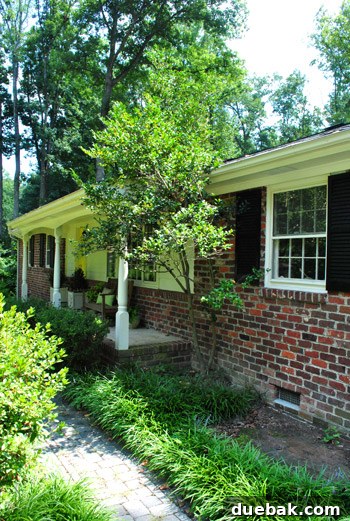
Unless, of course, you’re particularly fond of the “tree-tickling-the-gutters” aesthetic, which, frankly, we were not. The branches constantly brushing against the eaves were not only a nuisance but also a potential pathway for pests and moisture, further underscoring the need for action.
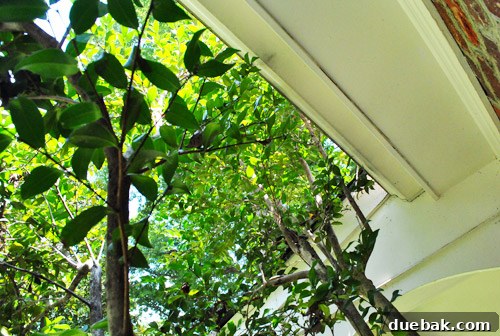
After much deliberation and weighing the pros and cons, the decision was made. It was time to issue an eviction notice to Miss Camellia.
The Dilemma of Tree Relocation vs. Removal: Our Experience
Our initial instinct, naturally, was to transplant the tree. We genuinely appreciated its form and character, believing there was no harm in attempting to salvage it. With optimism, I grabbed my shovel and dedicated a solid 30 minutes to carefully digging around its base. This was the extent of my progress:
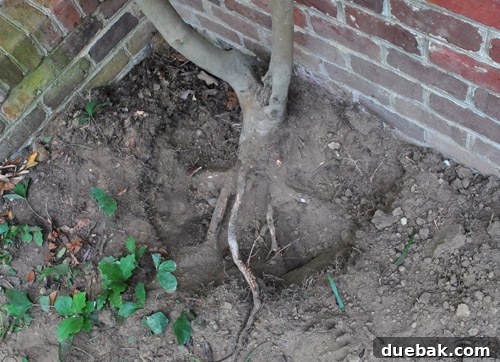
While the image might suggest some headway, the reality felt far from it. The root system was incredibly dense and intertwined, making maneuvering around them a Herculean task. Each forceful plunge of the shovel into our very dense, hard soil brought with it a jolt of anxiety, as I feared dislodging bricks or compromising the foundation. After another hour of strenuous digging, during which we uncovered just how intimately some of the roots were intertwined with the house’s foundation, a somber realization set in. Following a thoughtful discussion, the difficult truth became apparent: full removal was the only responsible course of action. We silently apologized to the tree, acknowledging our best efforts and the unfortunate reality that it was simply in the wrong place at the wrong time. With a heavy heart, I reached for the saw. It was a sad moment, but a necessary one for the long-term health and safety of our home. As a testament to our appreciation for its presence, we made a promise to plant another camellia, perhaps in a more suitable spot in the backyard, to honor our former gutter-tickling friend.
Executing the Tree Removal and Foundation Protection
The tree removal process began with systematically taking off the larger limbs, a crucial first step for safety and manageability. The bulk of my time was then dedicated to sawing through the main trunk, precisely at ground level. Approximately 30 minutes later, I was left with a low-lying stump. After capturing a photograph, I ensured the stump was cut flush enough to be easily covered with level dirt, rendering it invisible and preventing any tripping hazards. While I briefly contemplated excavating the stump entirely, the persistent apprehension of disturbing the ground further around the foundation, and potentially causing more issues than I solved, led me to a pragmatic decision. I opted to leave the stump in place, covering it thoroughly with soil to create a seamless, level surface. This approach minimized ground disturbance and protected the foundation while achieving the desired aesthetic outcome.
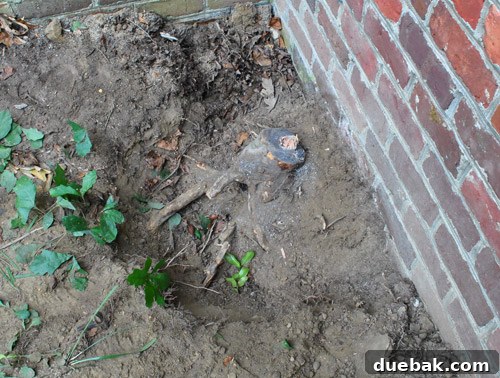
Admittedly, felling a perfectly healthy tree is something I generally abhor. This particular task left both Sherry and me feeling more disheartened than we’d perhaps like to admit. However, we found solace in the broader context of our landscaping efforts. Since moving in, we’ve already planted six new trees, a testament to our commitment to greenery (you might remember these previous projects). We reminded ourselves that removing this one poorly positioned camellia wasn’t an act of destruction, but rather a strategic decision to make room for new, better-fitting plantings in that specific spot. These future additions would, crucially, not lean against our house or pose a threat to its invaluable foundation, ensuring both beauty and structural peace of mind.
Beyond the Camellia: Reshaping Our Landscape Vision for Enhanced Curb Appeal
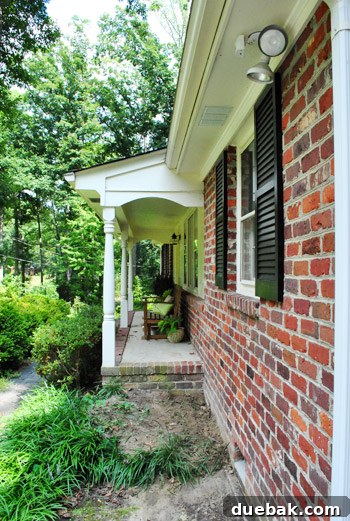
Our vision for the replacement plantings in this area is distinct: they will be significantly smaller and boast a much lower profile. This aligns with our general landscaping philosophy, especially for short, stout houses like ours. We believe that such homes benefit immensely from lower, airier landscaping, which paradoxically helps them appear taller and less “squat.” We experienced this firsthand at our previous residence, which was visually weighed down by a dense row of azalea bushes upon our arrival, making the house seem half its actual height (a transformation we documented in this old post). Therefore, removing this house-height-tall tree immediately restored some much-needed visual height to our home’s facade, eliminating the dwarfing effect it once created.
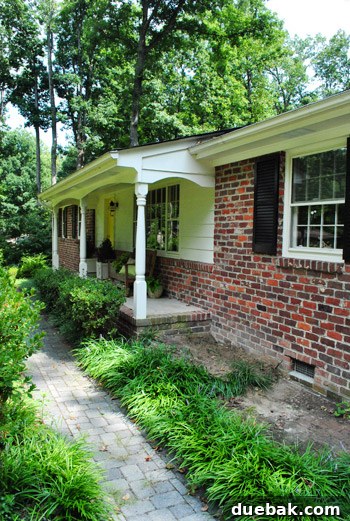
However, stepping back to admire the newly cleared space, I quickly noticed another landscape culprit undoing some of my hard work: a vastly overgrown bush. It was a comical, yet frustrating, realization that we were in trouble when a bush proudly towered over our house!
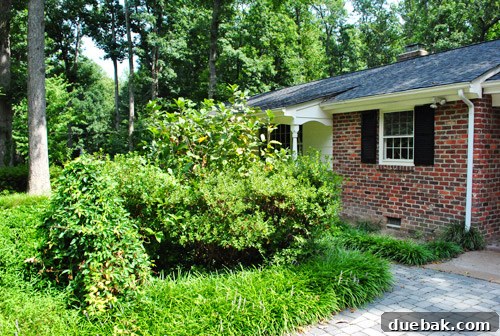
So, armed with the trusty clippers, I gave that overgrown bush a much-needed haircut.
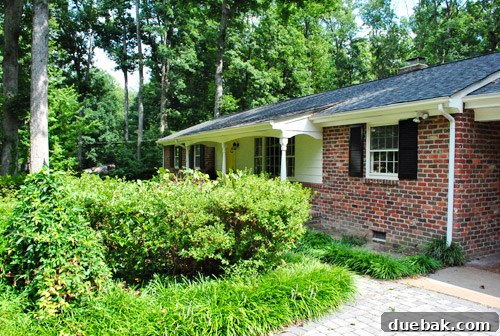
While not a miraculous transformation, it certainly looked better. That entire cluster of bushes is a prime candidate for future transplanting, with the ultimate goal of opening up the front yard further as we continue our landscaping journey. We’re genuinely excited about the prospect of completely revamping our front yard, as the house still feels quite closed off due to dense greenery. Presently, the carport is virtually the only area not obscured by plants, and while it has grown on me, it’s not the architectural feature we wish to highlight. Our long-term plan still involves transforming that space into a proper garage, which will dramatically alter the front yard’s dynamics and curb appeal.
Conquering the Driveway Weeds: An Eco-Friendly Approach to Paver Maintenance
Now that the weather has cooled down slightly, we’re hoping to finally gain some serious momentum on our outdoor projects. Just last week, the weather was so delightful that Sherry joined me outside, diligently weeding our expansive driveway. Clara and Burger, our furry and not-so-furry companions, “helped” in their own unique ways – prancing, toddling, and playfully interacting with sticks and leaves. And yes, you heard that right: Sherry was weeding the driveway. As much as we adore our double-wide paver driveway, the reality that we are among the few homeowners who constantly battle driveway weeds is not lost on us, especially when compared to the blissfully weed-free paved surfaces of our neighbors.
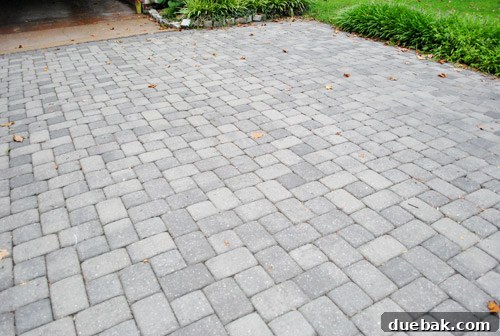
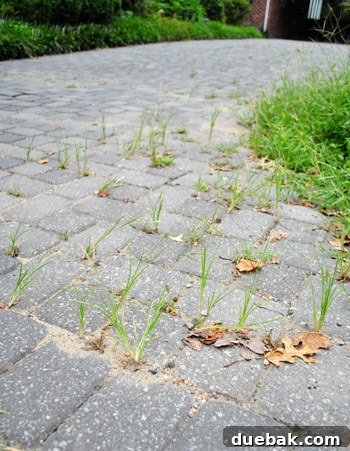
Our driveway is exceptionally long, and its very nature as a paver installation, with countless weed-friendly cracks, makes keeping it free of those incredibly annoying green sprouts a seemingly impossible task. We are firmly against using chemical spray-on weed killers, primarily because our daughter (our “bean”) and our pup frequently play outdoors. Furthermore, we are mindful of their detrimental impact on the environment. Consequently, we’ve invested a considerable amount of time researching more natural, eco-friendly weed killing alternatives, exploring options such as:
- Pouring boiling water directly onto the weeds.
- Utilizing coarse driveway salt.
- Implementing a vinegar-based mixture.
Regrettably, after more in-depth research – including a direct consultation with the paver manufacturer – we discovered that both salt and vinegar can permanently damage our pavers, leading to issues like erosion, cracking, and discoloration. This left us with only the boiling water method. We repeatedly applied gallons of scalding water from the stove to various sections of the driveway. The result? A disheartening silence, as the weeds remained completely unaffected. Even after waiting several days, clinging to the hope that it might take time for the heat to penetrate to the roots, those resilient weeds continued to thrive, seemingly smiling back at us. It was incredibly frustrating!
So, we reluctantly abandoned the “boiling-pots-and-pots-of-water” technique and have, for now, resigned ourselves to the good old-fashioned method of hand-pulling weeds every so often. This isn’t an everyday occurrence, which means, yes, we are those neighbors with the sometimes weedy driveway. Therefore, should you ever visit, please forgive us if the front section of our driveway isn’t perfectly pristine – it’s often only partially weeded, a pattern we’ve come to accept. We hold onto the hope that someday we’ll get around to applying polymeric sand, a specialized joint sand that is supposed to significantly cut down on weed growth by hardening to form a durable, impenetrable barrier between the pavers, offering a more long-term, low-maintenance solution.
Your Advice Needed: Tree Removal and Paver Weed Control Solutions
Now, we could really use some encouragement regarding the camellia removal! Has anyone else faced the challenging decision of having to relocate or completely remove a tree or other planting that simply wasn’t working for their property? We’d particularly appreciate hearing from anyone who has successfully moved a tree with dense, tight roots situated precariously close to a foundation. What were your strategies and tips? My attempts were constantly hampered by crippling “don’t-break-the-house” anxiety, making deep digging almost impossible. Furthermore, we’re always eager for any and all driveway weeding tips, especially natural, paver-friendly alternatives that won’t risk damaging our beautiful surface like salt and vinegar can. Share your wisdom – we’re ready to learn!