The Ultimate Guide to Downsizing: What We Kept, What We Learned, and How Our Smaller Home Evolved
Welcome to a comprehensive exploration of our downsizing journey. If you’re contemplating a move to a smaller home, or simply seeking inspiration for living more intentionally with less, grab a warm beverage and join us. This deep dive into our experiences over the past few years offers a detailed look at the challenges, triumphs, and profound lessons learned during our transition. We’re about to unpack:
- Invaluable Tips & Insights: Practical advice we’ve gathered about downsizing successfully.
- Furnishings That Made the Cut: Which cherished items from our larger home seamlessly integrated into our new, smaller space.
- The ‘Why’ Behind Our Choices: Understanding the underlying reasons certain pieces thrived in our downsized environment while others didn’t.
- Hindsight is 20/20: Crucial lessons learned about packing and preparing for a significant move.
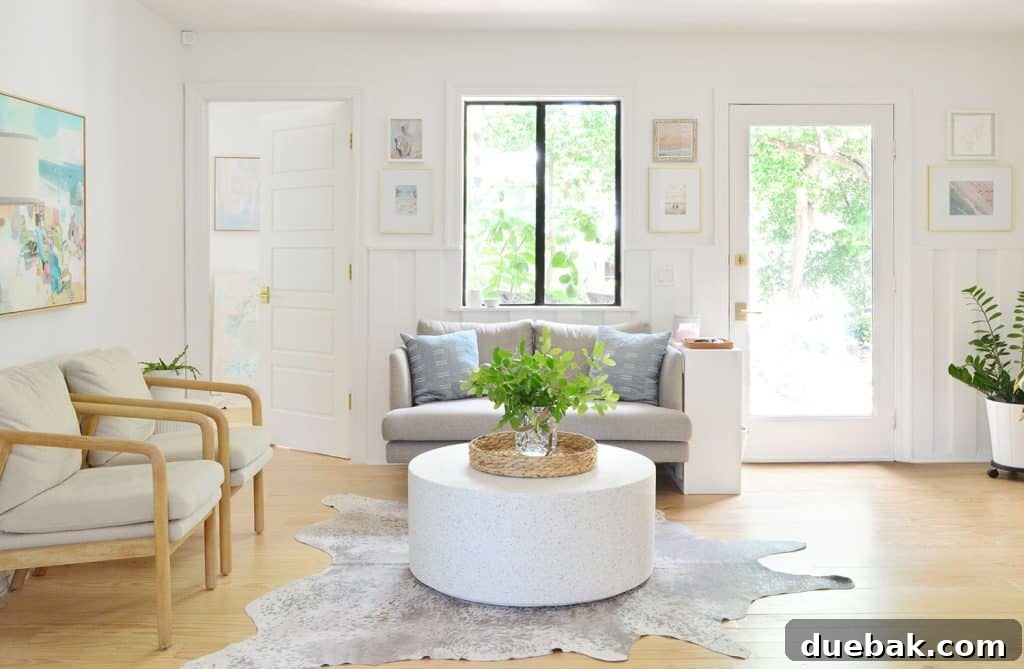
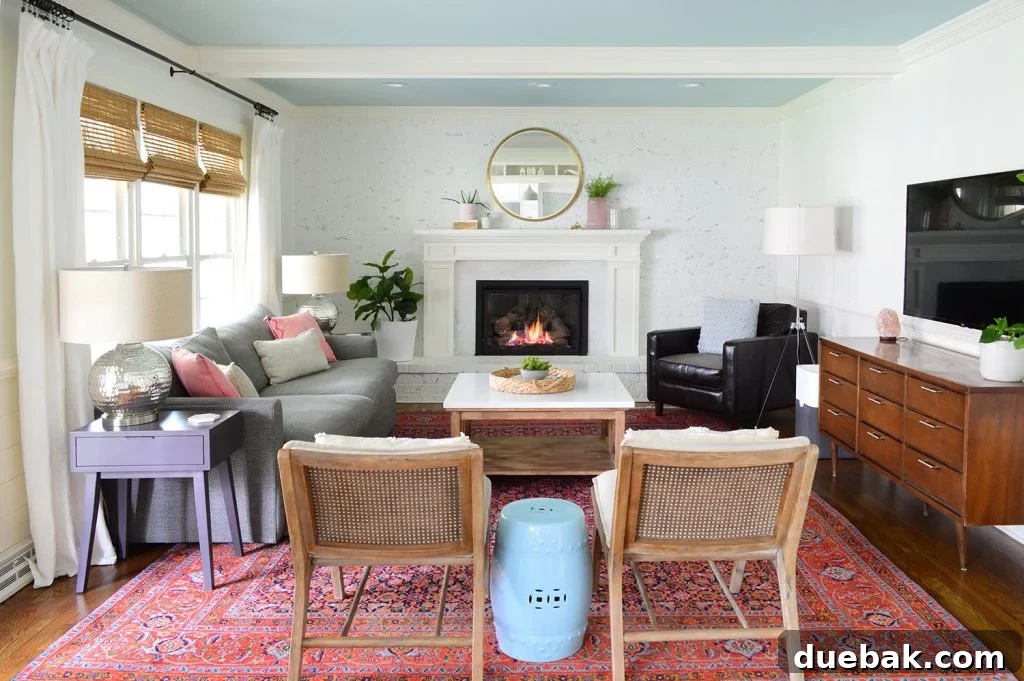
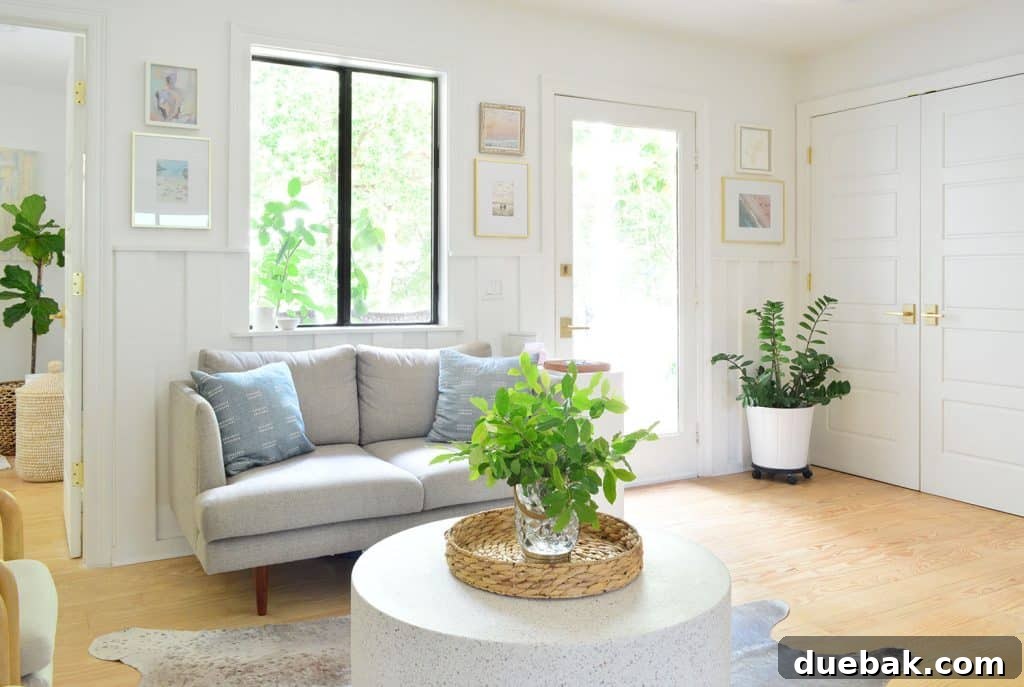
Our realization for this post began in our current downstairs sitting area. We noticed a striking fact: much of the furniture here was purchased *after* we moved from our expansive Richmond home. The cozy loveseat, the inviting chairs, and the stylish coffee table were all carefully selected to perfectly complement this new, more intimate space. It took time, experimentation, and a clear understanding of our daily needs to curate this area to feel just right.
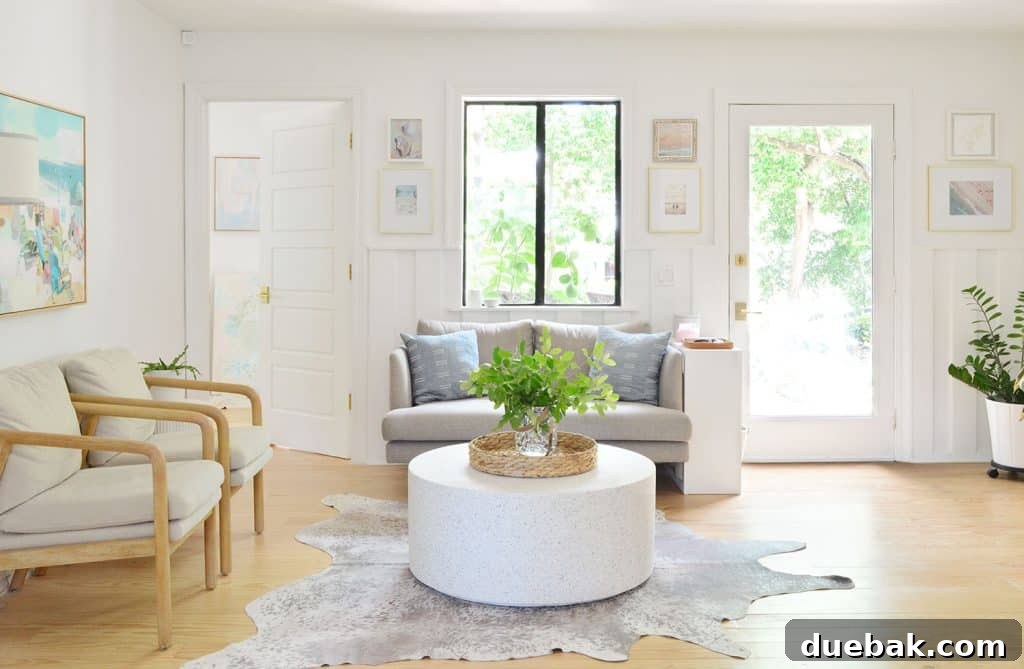
In contrast, many other elements did make the journey with us. Items like the rug, a beloved tray, a cherished vase, a distinctive planter, all of our artwork, and a nearby bookcase were staples from our previous home. This sparked our curiosity: after three years in our downsized house, how much of our original furniture and decor truly endured? What pieces, some of which we’ve owned for over a decade, do we still adore? And what factors allowed certain items to find a permanent place in our smaller residence, while others simply didn’t serve our needs as effectively as we had hoped?
Ideally, we would have packed only items perfectly sized and suited for our new residence into that 16-foot moving pod, which contained all our earthly possessions. However, downsizing doesn’t come with a crystal ball. While we meticulously measured rooms and engaged in extensive pre-planning, nothing truly compares to the experience of inhabiting a new space, experimenting with various layouts, and discovering what genuinely “feels right” in person. The practicalities of a smaller footprint often dictate unforeseen changes.
Moreover, there’s absolutely nothing wrong with acquiring new items that precisely fit the dimensions, aesthetic, or functional demands of a new home. This becomes especially true when you’re significantly reducing your living space, needing to maximize every square inch. Our own transition was dramatic: we moved from a 3150-square-foot, 14-room house to a 1400-square-foot, 6-room dwelling (with only one bathroom!). This drastic change was precisely why we opted to sell half of our previous home’s furniture directly with the house. We understood that not everything would fit, so we made our best educated guesses about what pieces might successfully integrate into our new life. Some items we brought worked for a while before being eventually sold or donated in favor of “the actual long-term solution” that emerged from living in the space.
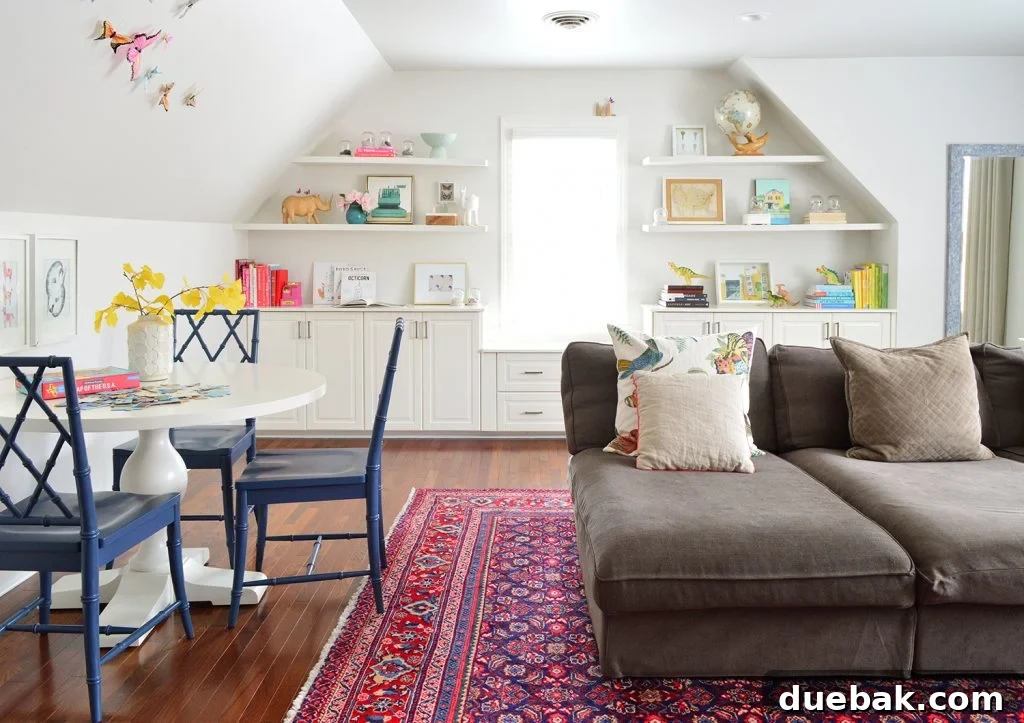
Below is a glimpse of our last house’s bonus room. Almost everything pictured was purchased by the new owners, except for the versatile pedestal table, which we briefly tried as an eat-in kitchen table in our new home. For a comprehensive look at the items we sold, including side-by-side photos of rooms before and after packing, explore our previous tours.
Downsizing, at its core, is a delicate balance. It involves intentionally surrounding yourself with possessions that bring you *the most* joy and function *as effectively as possible* for your lifestyle, while joyfully letting go of everything else. The outcome, however, will undoubtedly be unique for everyone, reflecting individual tastes and priorities.
Our personal “this is coming with us” criteria were based on a thoughtful combination of factors:
- Measurements: Some items were simply too large to fit, making this an easy elimination factor.
- Previous Experience & Usage: If an item wasn’t regularly used or cherished in our larger home, it was a clear candidate for removal. “If not, bye!” became a mantra.
- Educated Guesses: Lacking a crystal ball, we made calculated decisions based on our envisioned lifestyle in the new space.
- Functional Considerations: We rigorously evaluated practicality. Would a particular rug, for instance, become a sand trap in a beach house?
- Good Old-Fashioned Gut Feelings: Instinct played a significant role. Phrases like “I feel like I won’t miss this” or “I’ll regret not having this” guided many decisions.
- Emotional Attachment to Sentimental Items: Meaningful objects, even small ones, hold a special place and were prioritized for their emotional value, regardless of home size.
While there isn’t a simple A + B = C formula to share, these principles guided our evaluation as we packed our possessions into that large blue moving pod. Looking back a few years later, the clarity afforded by hindsight has been incredibly illuminating, revealing many “very visible” lessons. We’ll share these insights after detailing what truly endured the move.
Before we delve deeper, here’s a crucial piece of advice applicable to any homeowner, whether you’re moving into a grand mansion or a minimalist studio: be open to allowing your new home to evolve organically. Just like all the residences we’ve documented before, our downsized home truly began to take shape over time. Our experience has shown that a process of trial and error, combined with observing how you genuinely use a space, invariably leads to the most successful and comfortable outcome. For context, take a look at what our sitting area looked like when we first arrived. It was, quite frankly, a bit chaotic!
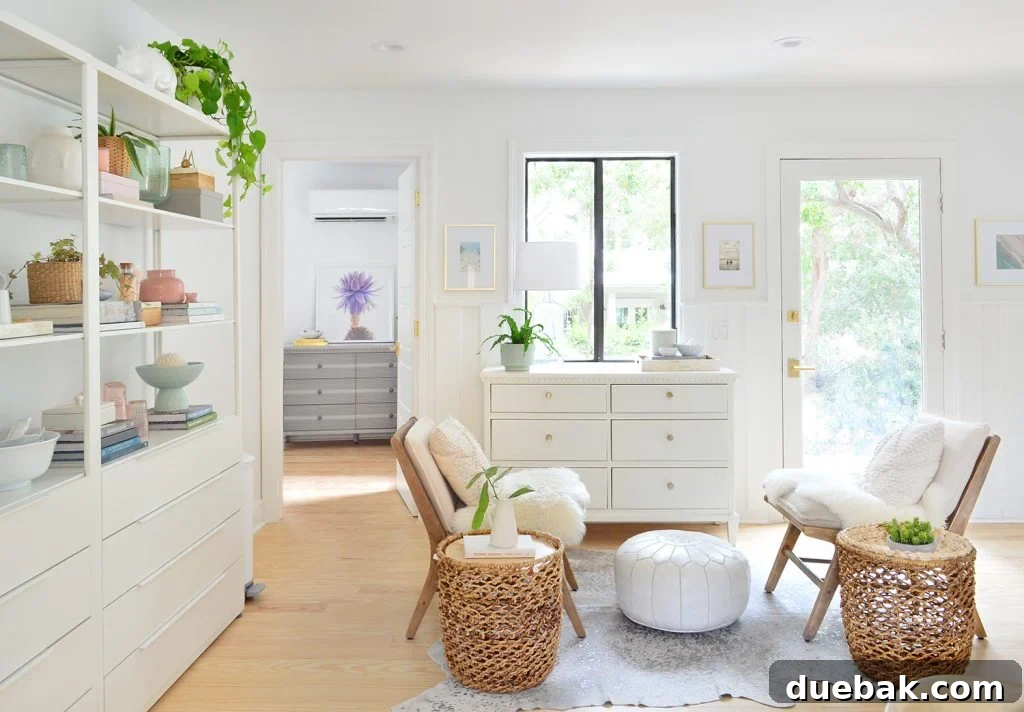
That initial picture now brings us a good laugh, but at the time, we were genuinely trying to make things work with what we had. We were actively learning how we would truly utilize the space and gradually moving towards a more functional arrangement. We are pleased to report that a much improved and harmonious layout eventually materialized, as seen below.
Indeed, items entered our home, performed their “hokey pokey” of movement and rearrangement, and eventually found their ideal spots – or were gracefully exited. Consider the bookcases visible in that initial “bananas” photo of our sitting area. These eventually migrated upstairs, where they fit perfectly against a wall, almost as if custom-built for that specific location (cue the angelic chorus and celebratory praise hands!). Psst – for more creative shelving solutions, explore our post featuring 16 innovative projects for adding shelves to any home.
Some pieces, after a period of adjustment, truly found their long-term home. Others, however, drifted aimlessly from room to room until we conceded that they simply weren’t serving us as effectively as items of a more suitable size or shape could. These pieces were then thoughtfully donated or sold via platforms like Facebook Marketplace, making way for more appropriate solutions.
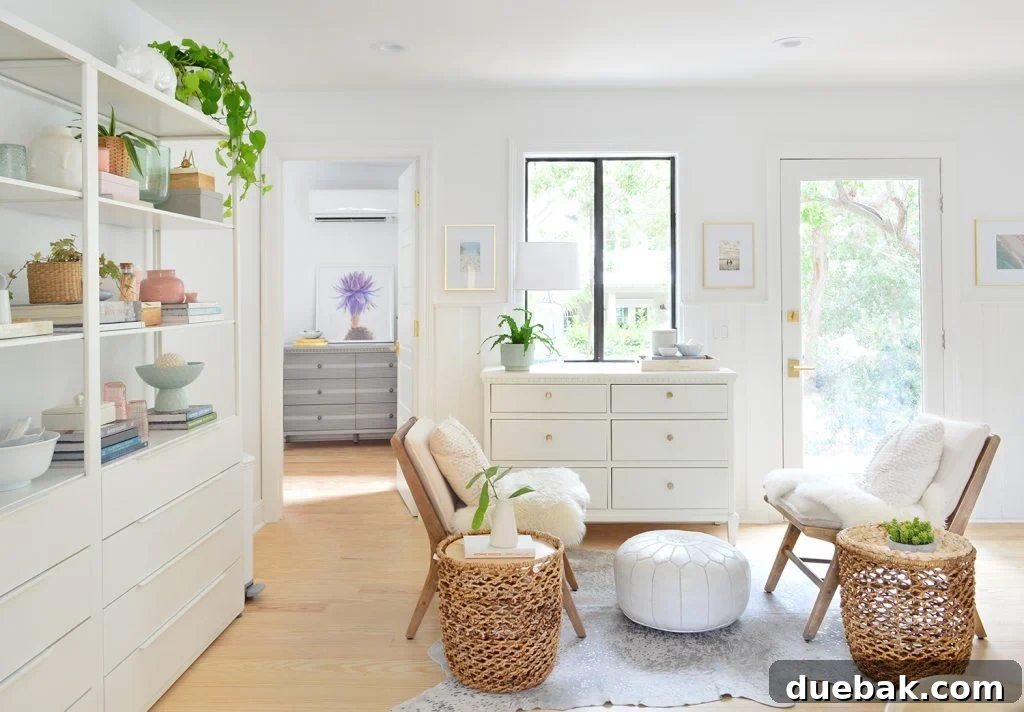
rug / chairs / similar dresser / bookshelves / pouf ottoman / similar basket table
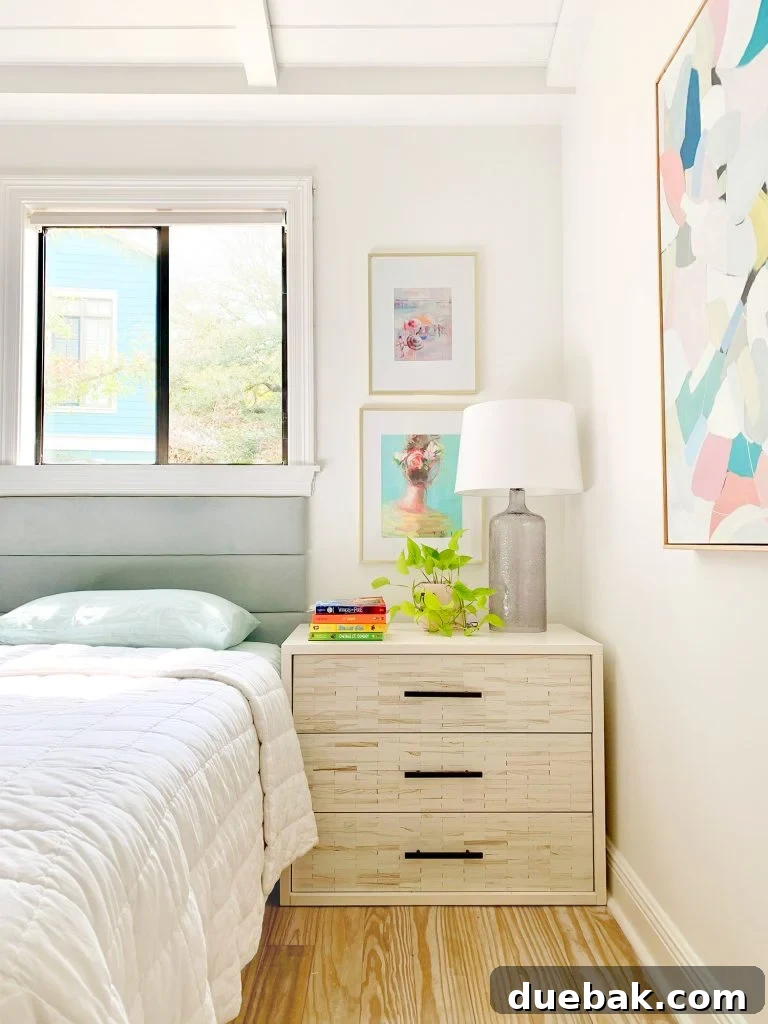
A prime example of this evolution is the pair of white and gray 6-drawer dressers also seen in that revisited “bananas” photo. We ultimately discovered that the only dressers we truly kept were all narrower, 3-drawer models. It makes perfect sense in a smaller house that these more compact units fit better, maximizing space efficiency, and can even serve a dual purpose – like functioning as a nightstand, as seen with the dressers in our daughter’s room below.
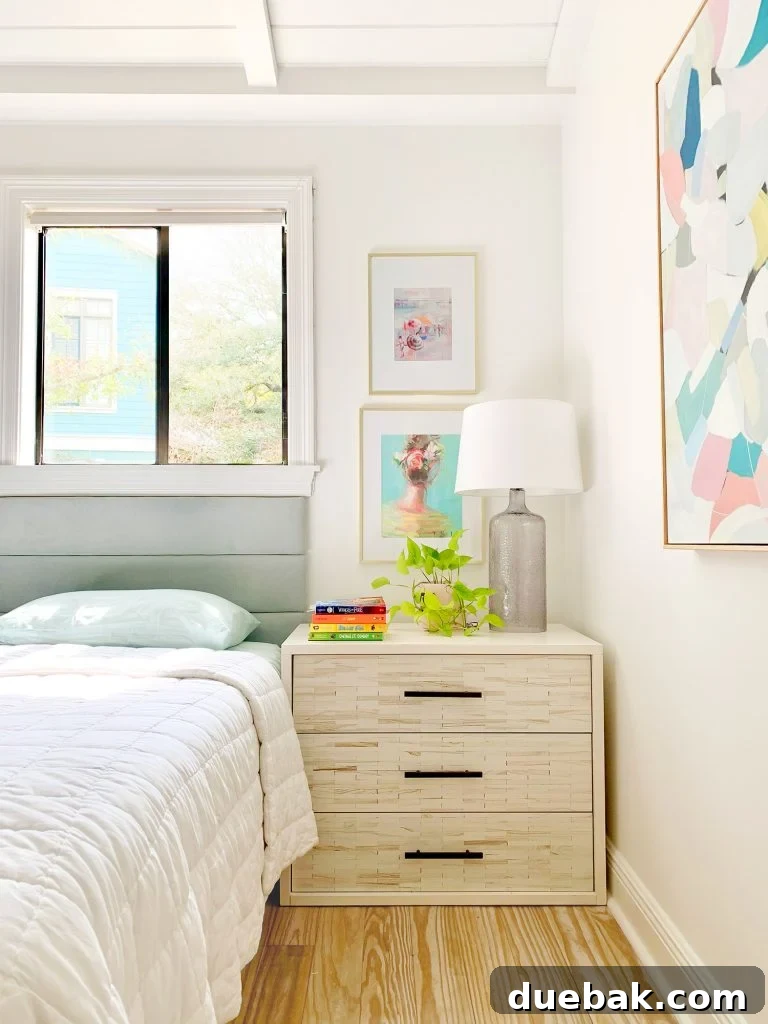
What we’ve unequivocally found to be true is that new spaces—especially those that are considerably smaller—often necessitate specific types or sizes of furniture that might not have been suitable for your previous, larger home. The loveseat in our current sitting room stands as an excellent illustration of this principle.
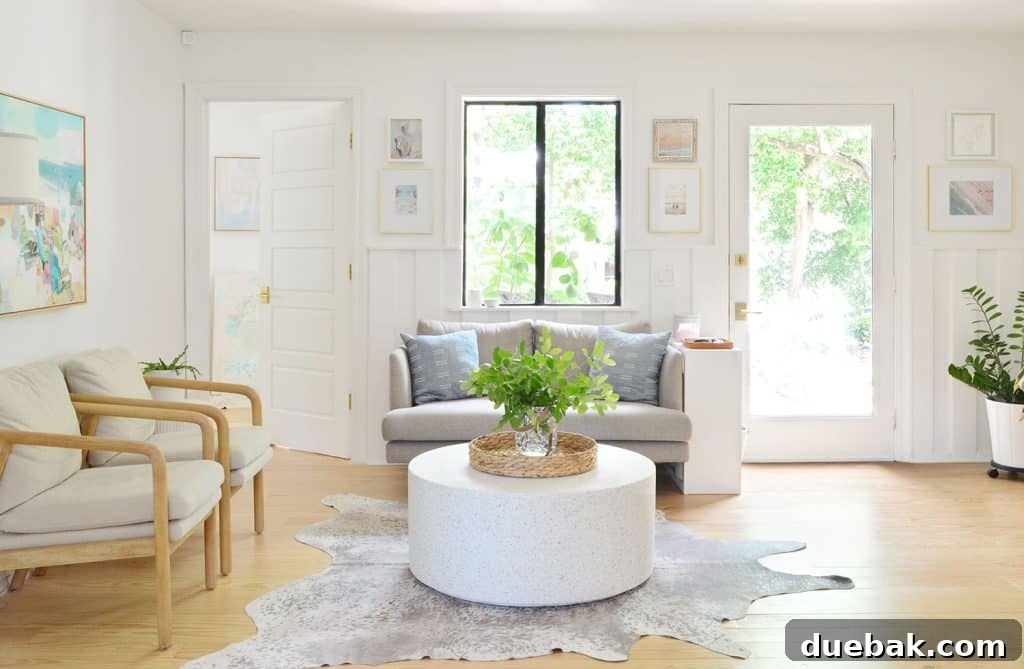
We never had a need for a loveseat before; our last house comfortably accommodated two generously sized sofas. Consequently, we left our largest sofa behind, knowing it wouldn’t fit our new downstairs lounging area. The other sofa, however, made the journey and now resides upstairs in our family room, which brings us to our next point…
The Upstairs Family Room: A Hub of Multi-Functionality
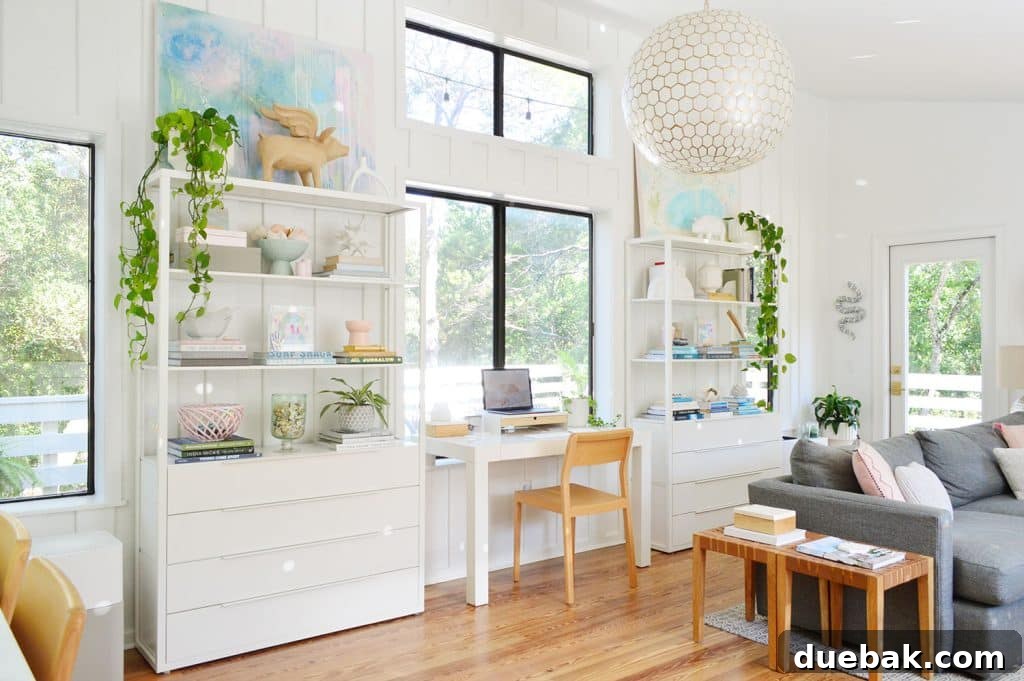
Interestingly, had we been reflecting in our upstairs family room on that same day, our observations would have been dramatically different. This space is almost entirely furnished with items from our last home. Nearly every single piece of furniture here has a history with us, predating our move.
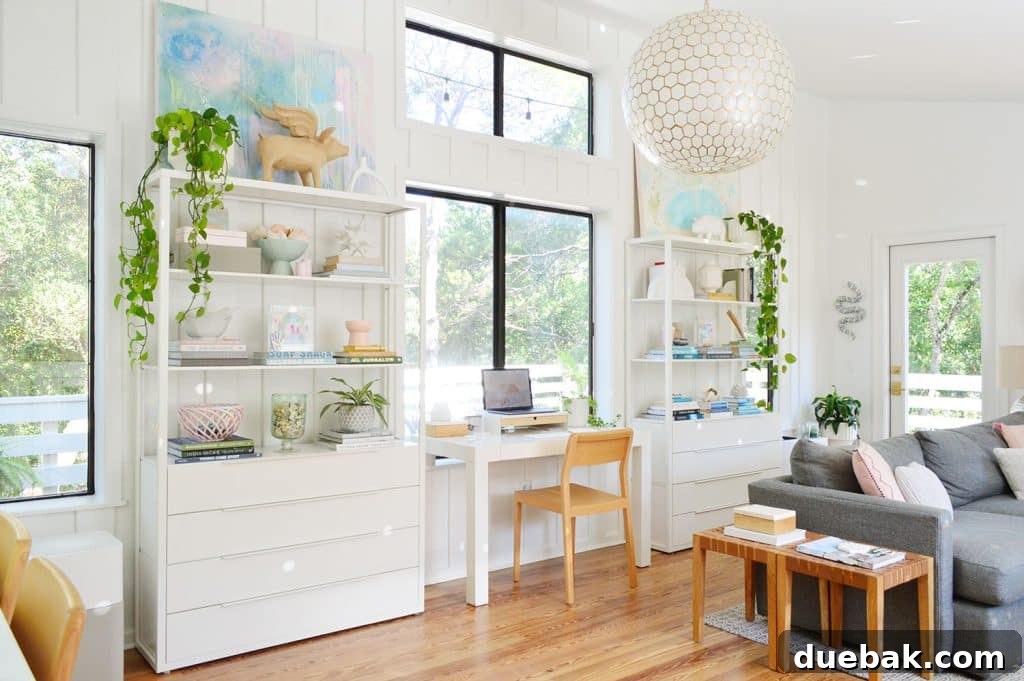
Upon closer reflection, this shouldn’t have been such a surprise. Our upstairs family room is the largest communal living space in our current house. Naturally, it possesses the capacity to comfortably accommodate more substantial items from our previous, larger home. It presented significantly less of a challenge to furnish than our smaller downstairs sitting area, which required more specialized pieces and iterative adjustments to truly “come together” over time. (A gentle reminder: it’s perfectly normal for a new space to evolve; don’t feel pressured to have everything perfectly figured out within the first month or even the first year of moving!)
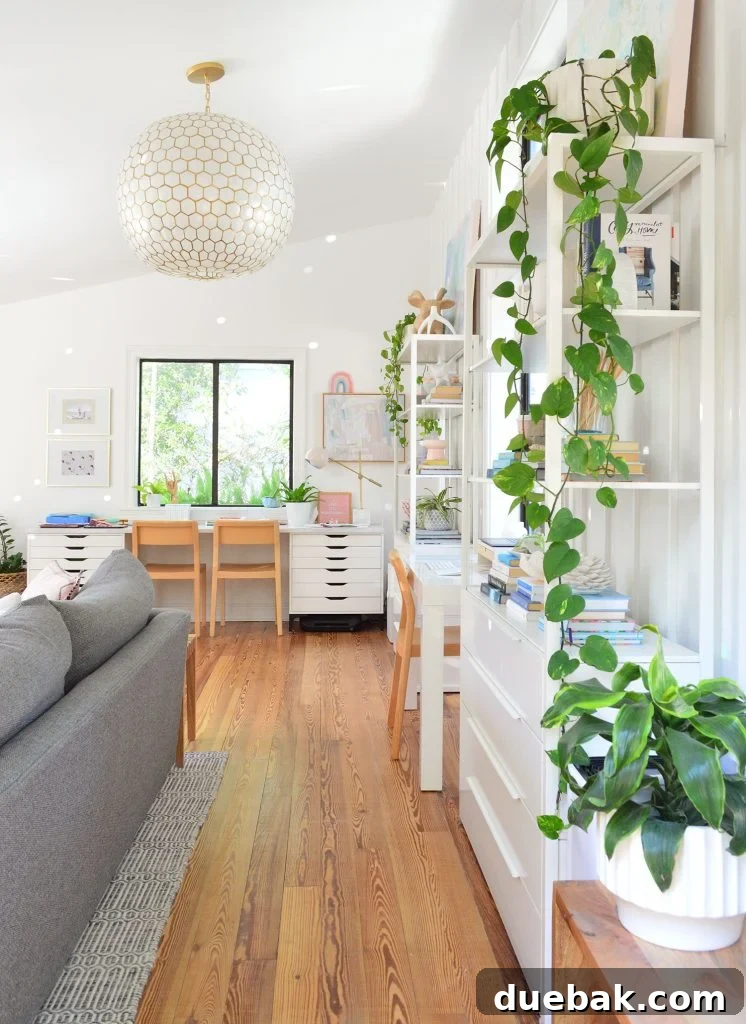
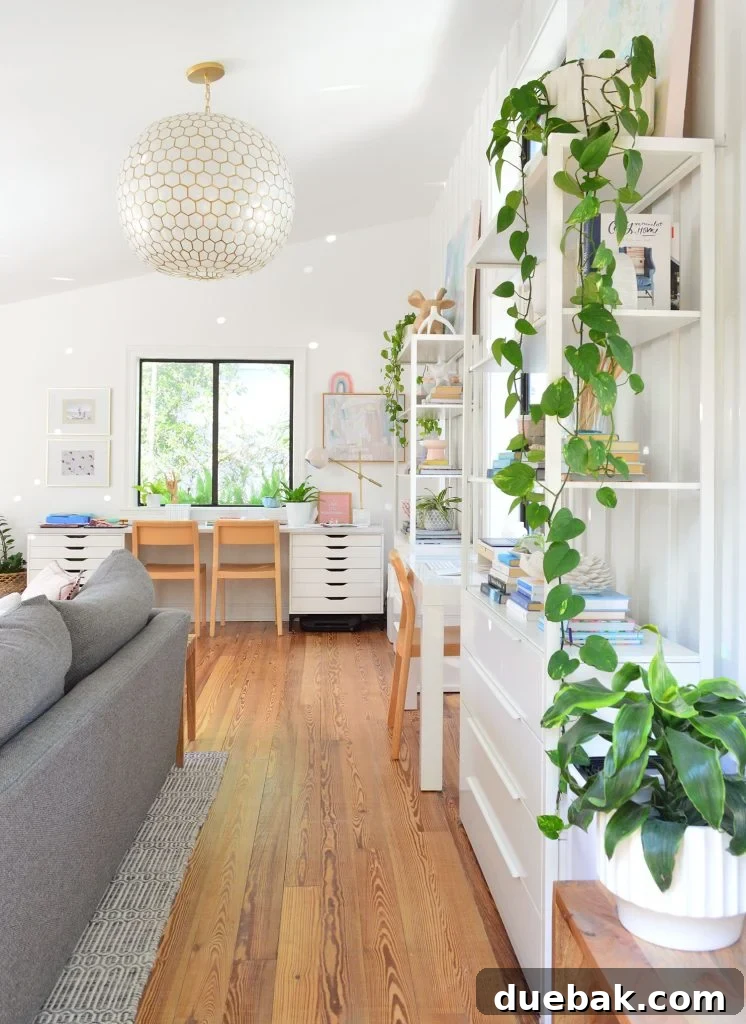
The remarkable aspect of this room is how it has effectively absorbed the functions of three distinct rooms from our previous house, serving us exceptionally well due to its now highly multifunctional nature. Let’s take a closer look at those three original spaces and how their essence was integrated into our current family room.
Our Previous Home’s Office: Seamless Transition to a Productive Nook
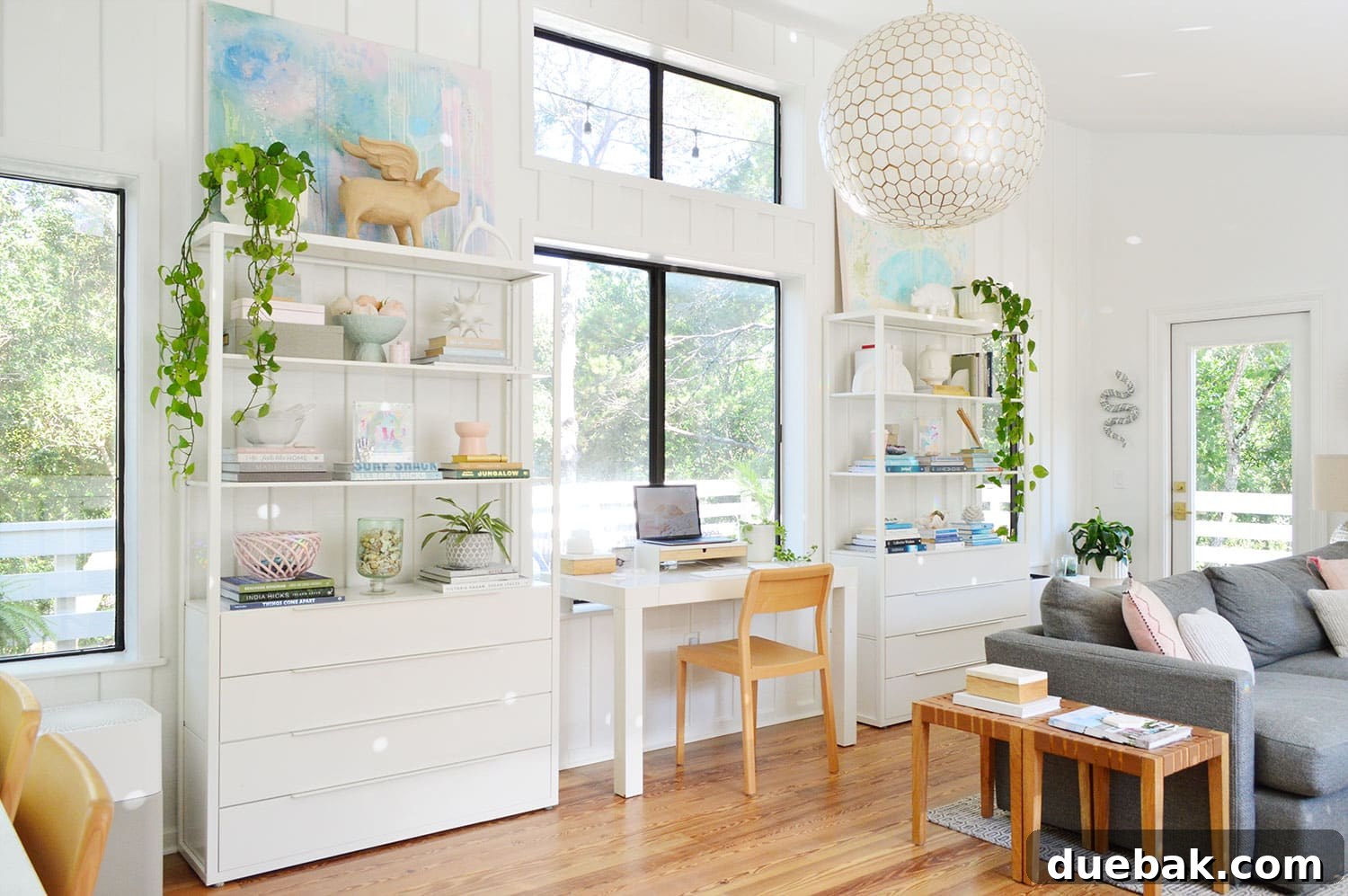
Perhaps the most recognizably integrated zone within our spacious upstairs room is our former office area. While we no longer enjoy a dedicated room for work as we did in our last house (pictured below), we successfully recreated the productive setup featuring our Parsons desk, flanked by two familiar Ikea Fjalkinge shelves. A definite upgrade in our new configuration is the presence of three large windows along this wall, offering an unparalleled view from our desk – a significant improvement!
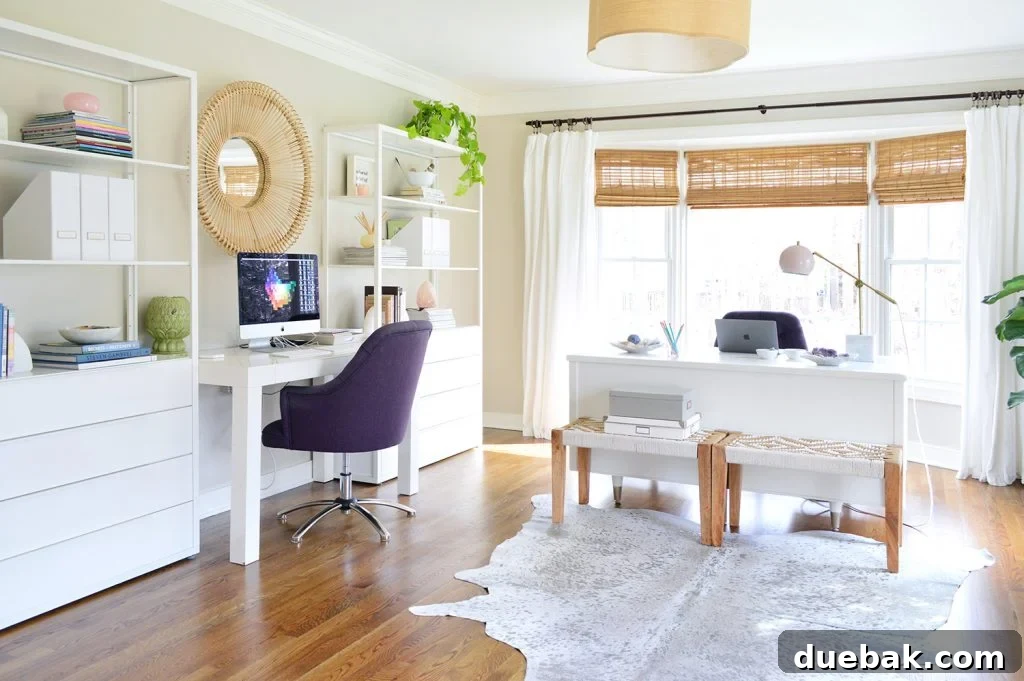
That Parsons desk is, remarkably, one of the longest-tenured pieces of furniture we have ever owned. It was a wedding gift to us back in 2007 and has truly proven its enduring quality and timeless design. Fifteen years and counting, it still looks as good as new, a testament to its durability and classic aesthetic that never feels dated. Its sustained functionality and appealing look make its continued presence in our home entirely understandable.
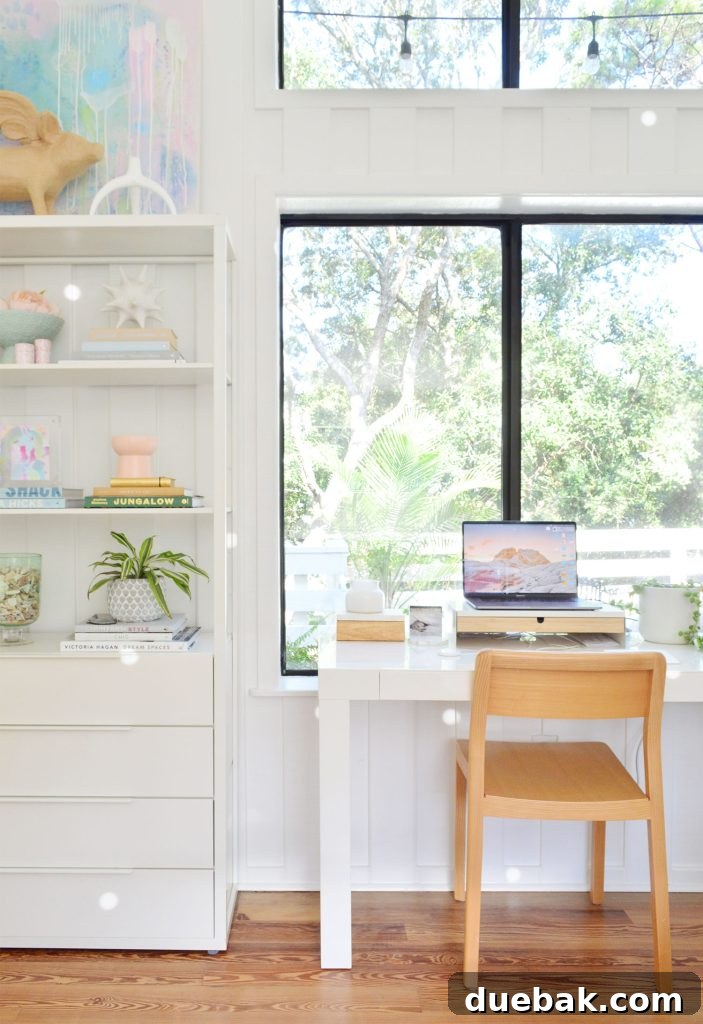
A clever adaptation was made when we positioned the desk in front of the middle window: we removed the two back legs, allowing the desktop to rest directly on the window ledge. This ingenious modification recessed the desk about five inches closer to the wall, significantly improving the flow and ease of movement for passing behind it on the way to the deck. We carefully stored the removed legs, anticipating future needs, but this simple tweak enhanced the desk’s flexibility and functionality beyond our initial expectations.
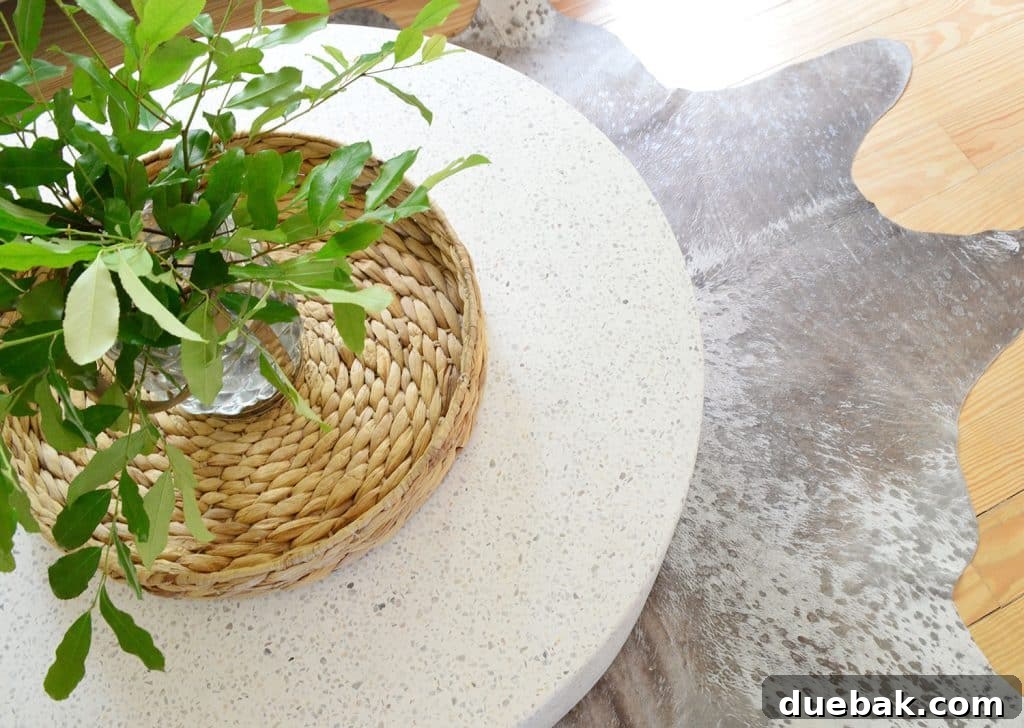
If you scroll back up to the photo of our previous office, you’ll notice the metallic cowhide rug. This versatile piece now elegantly grounds our downstairs sitting room. Its enduring appeal is no mystery: it’s gloriously neutral, perfectly sized, and effectively defines the sitting area without presenting a rectangular border that could snag at the front door. This rug is truly a design chameleon, adaptable to countless spaces – it could just as easily work in our son’s room or even by the art desk upstairs. It’s the proverbial “little black dress” of rugs.
Our Previous Home’s Family Room: Comfort Carried Forward
At first glance, our current upstairs TV area may appear quite distinct from our former family room (shown below). However, many of the foundational pieces remain, such as our Crate & Barrel Lounge II sofa, which has been a comfortable fixture in our lives for five years. A closer inspection of the image below reveals that even smaller details, like the lamps and the subtle pink pillows, are direct transfers from our old living space, proving that cherished comfort finds a way.
To fully round out this new family room, we ingeniously incorporated many items from other areas of our former home. The distinctive leather stools, for instance, were relocated from our beach house. The elegant woven mirror, previously adorning our old office (visible over the Parsons desk if you scroll up), now adds character here. Even the side table beneath the mirror has a clever origin story: it’s actually comprised of two of our daughter’s old bedside tables, wedged back-to-back to create the illusion of one extra-deep side table, perfect for our old lamp and a stack of favorite books.
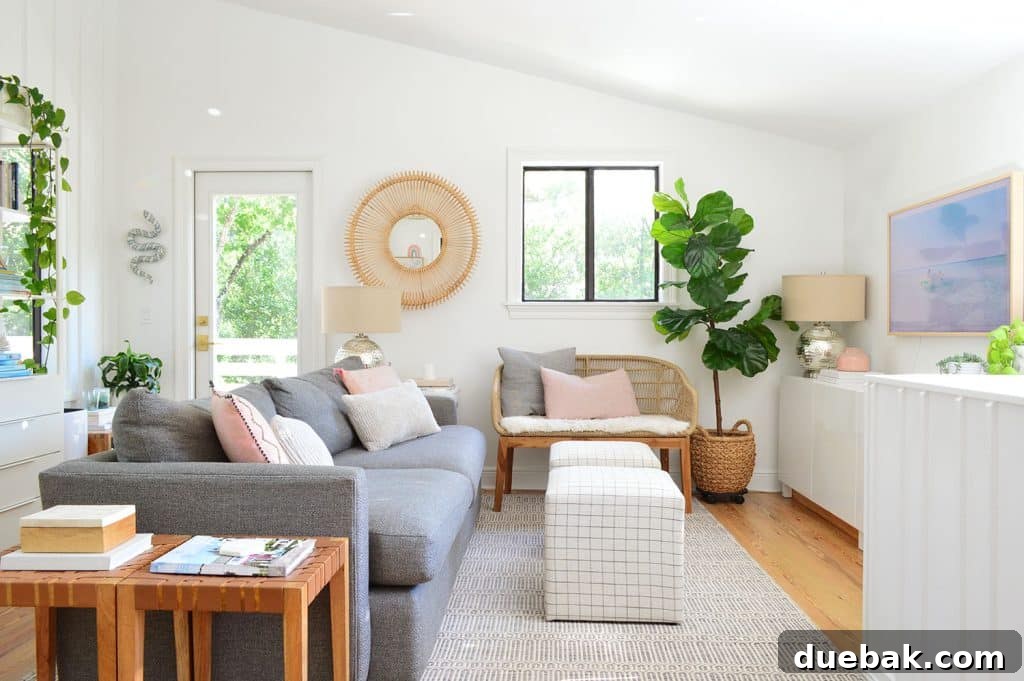
The rug currently gracing our upstairs family room actually hails from our son’s old bedroom (seen below). This HomeGoods discovery has been with us for over eight years, since it was his nursery (and here’s something similar if you’re looking). The longevity of this rug is easily explained: its neutral palette allows it to effortlessly transition into virtually any room with any color scheme. We also deeply appreciate its subtle yet captivating design, its comfortable and soft texture, and, crucially, its perfect dimensions for our new family room.
Our Previous Home’s Art Room: Cultivating Creativity in a New Layout
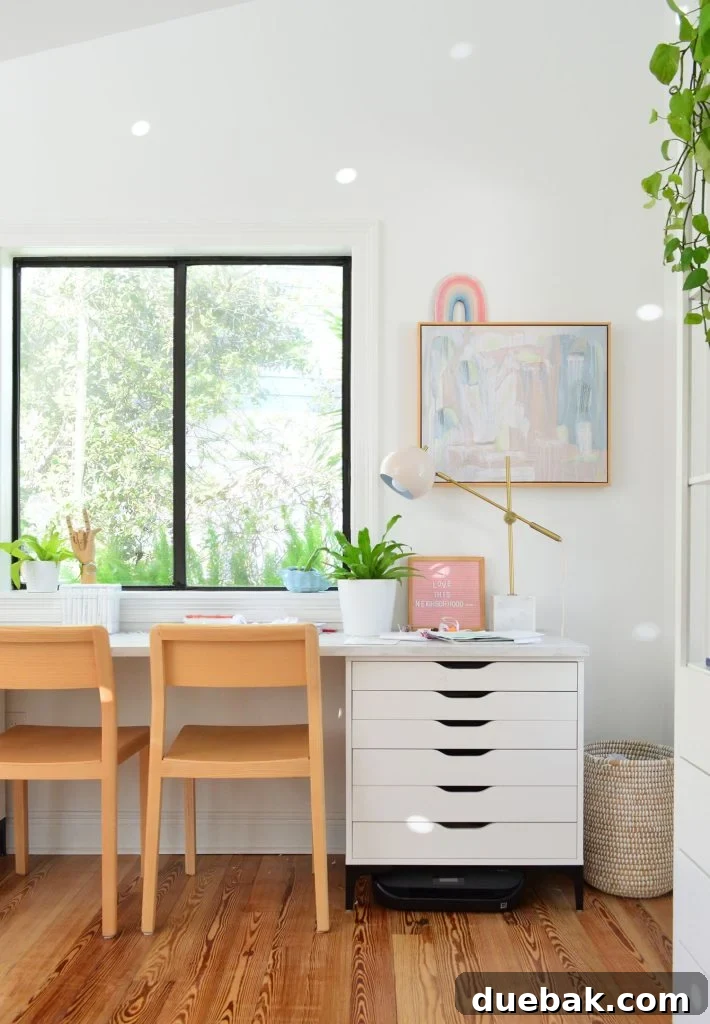
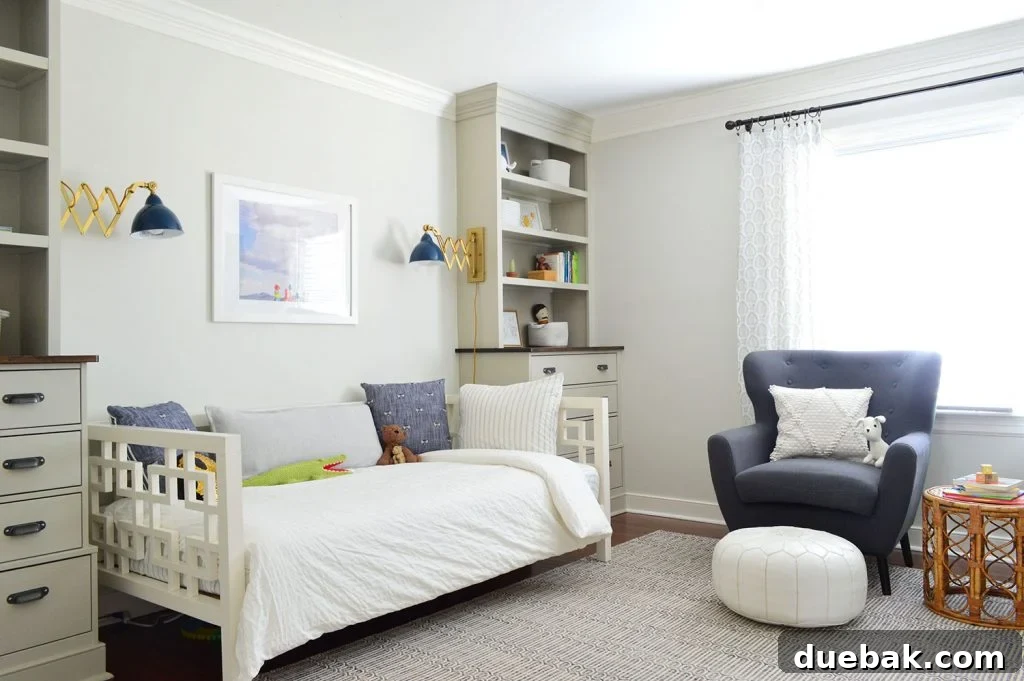
The final of the three distinct zones we skillfully integrated into our new family room is our dedicated kids’ arts and crafts area. This space is a vibrant reincarnation of the homework/art room we meticulously created in our old home’s guest room (pictured below). The goal was to maintain a creative hub, adapted for our new spatial constraints.
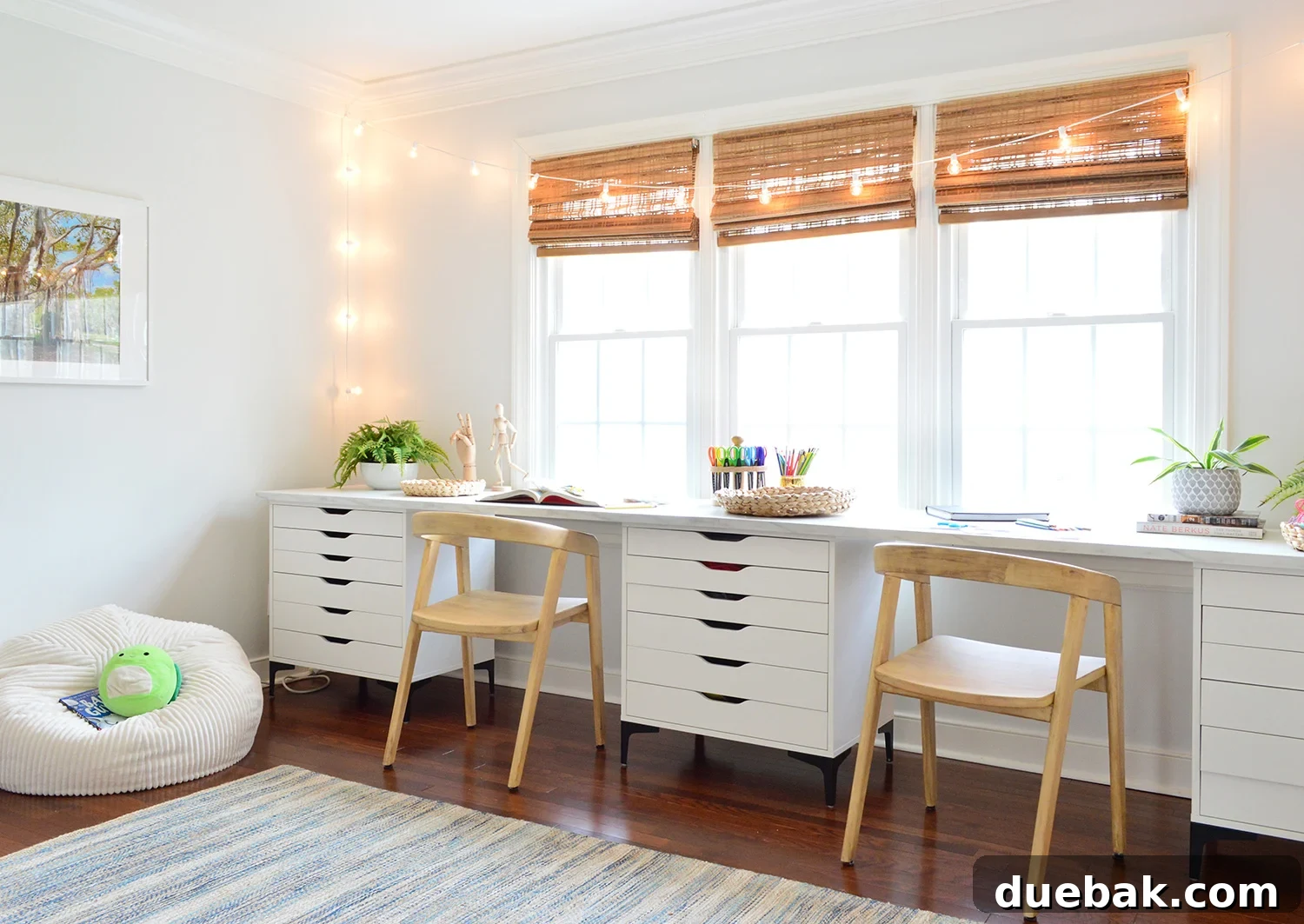
Due to reduced wall space in our new house, a fact confirmed by our meticulous measurements, we donated one of the three drawer bases. We also swapped out the two 6-foot counters for a single 8-foot counter. While technically a new countertop, we intentionally reordered the same faux marble laminate because it has proven incredibly durable and mess-friendly, an essential quality for an active art space. We initially moved the old chairs with us, but eventually upgraded to slimmer, armless ones. These new chairs fit much better side-by-side and can be pushed in completely without scratching the arms, a common issue with our previous set.
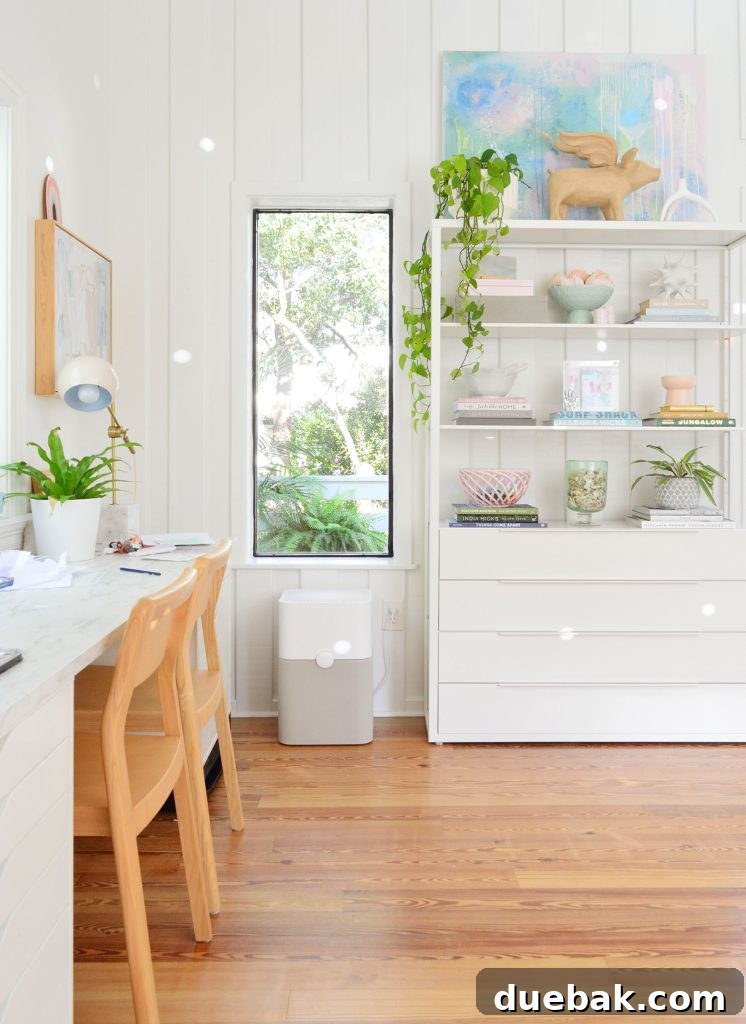
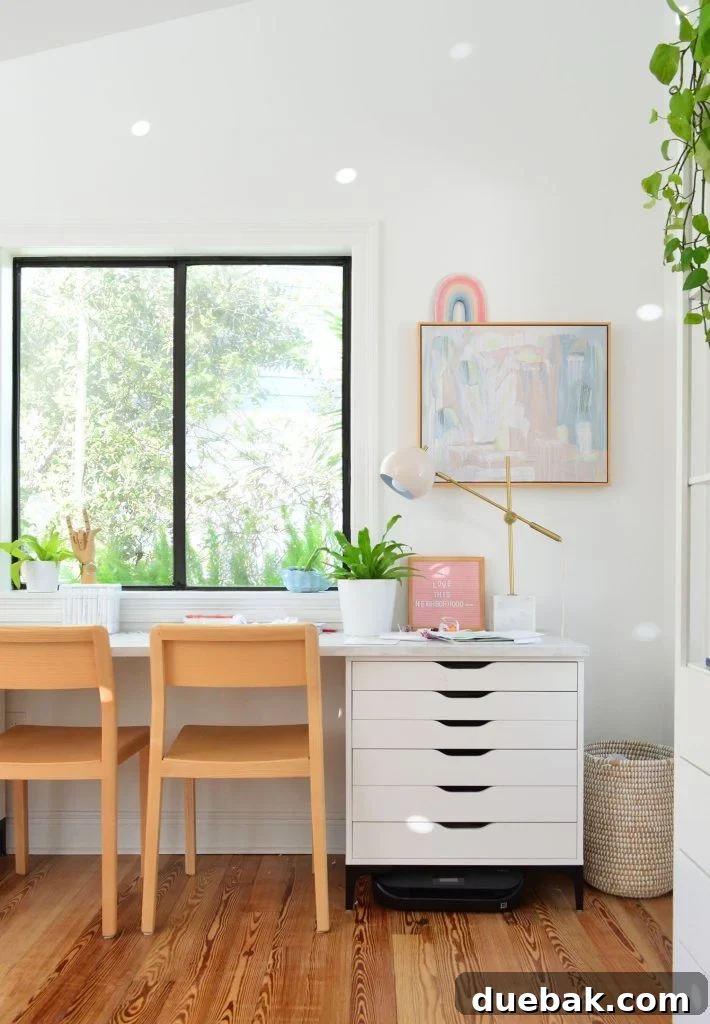
Many smaller, beloved items seamlessly survived the move and found easy placement in our new home. The lamp (here’s a similar one), the playful pink letterboard, the elegant gold picture frames, the sturdy basket (similar here), and our reliable printer (a similar model) were all cherished possessions that easily integrated. Generally, the smaller items we genuinely loved and valued above other less-loved decor objects effortlessly found a home in our downsized space. The key is to be discerning: rid yourself of “filler stuff” you don’t truly adore or frequently use. For instance, instead of relocating a dozen vases, identify the three or four you consistently use and donate the rest.
Our Outside Spaces: Embracing the Generous Outdoor Footprint
Our various decks and porches have proven to be another area where we successfully repurposed larger furniture from our previous house. Much like our spacious upstairs family room, these outdoor zones are generously sized and can comfortably accommodate items that once lived in a bigger home, demonstrating the versatility of quality outdoor pieces.
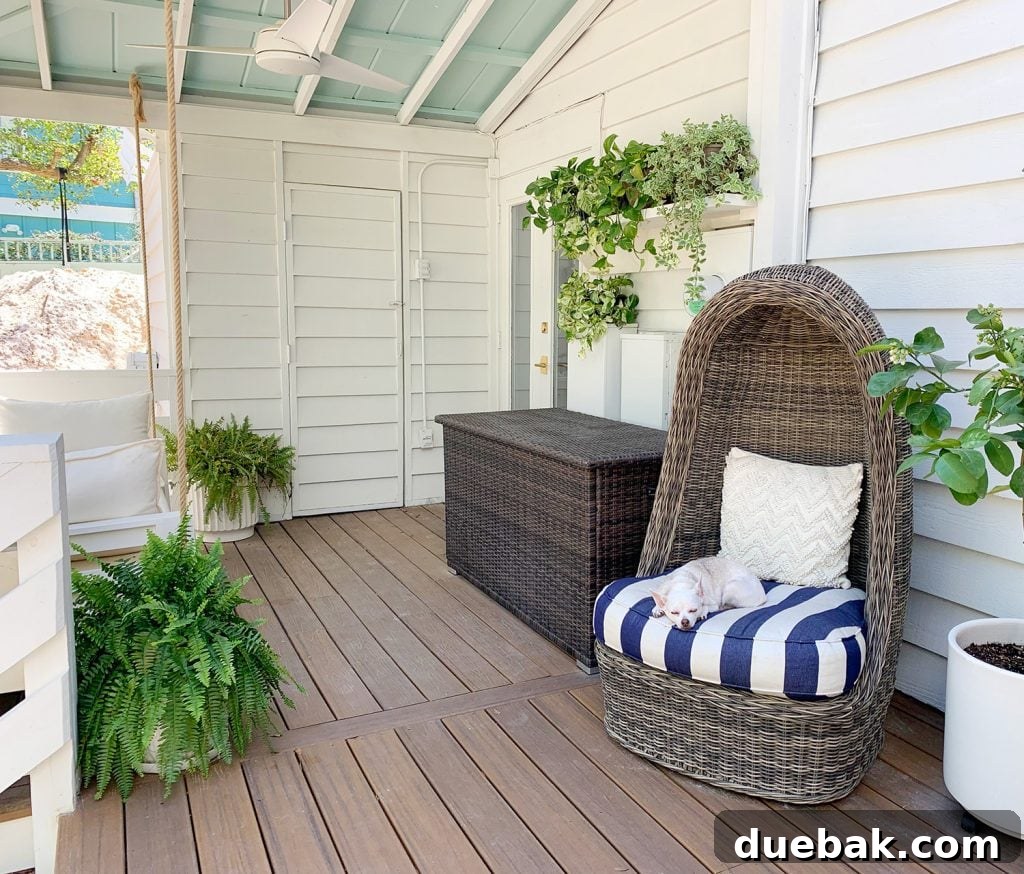
For example, our current front porch (above) proudly features the woven egg chair we acquired in 2014, which previously graced our old back porch (seen below). Please excuse the vintage photo above; we simply couldn’t resist including a cameo of our beloved Burger. We miss that sweet boy every single day. Fun fact: the pile of dirt visible beyond the hanging daybed is a relic from our pool construction! Such memories.
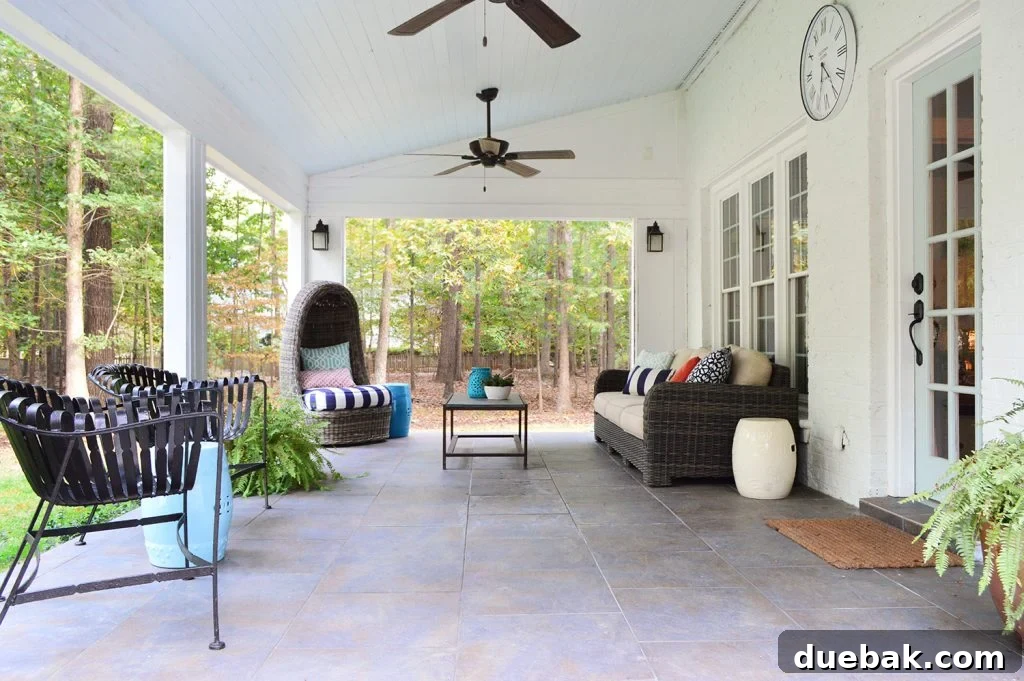
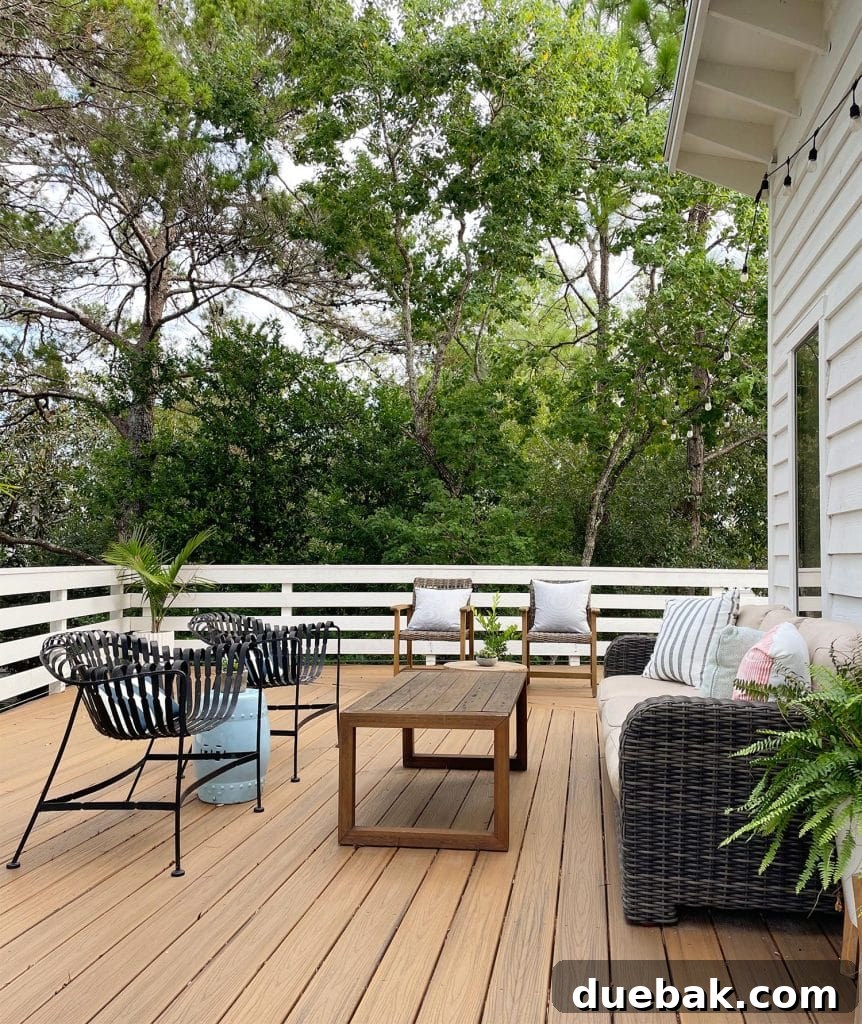
The outdoor sofa and the charming vintage black metal chairs pictured above also successfully made the move to Florida. Both now comfortably reside on our upstairs deck. This outdoor space is currently in a state of “transition,” as we borrowed the dining table to experiment with in our newly expanded, twice-as-big pool area (if you missed our Instagram stories about pushing that fence back approximately 20 feet, we’re planning a detailed post about it once we’re further along and the fence is beautifully painted). But rest assured, those fantastic vintage chairs and the durable outdoor sofa from Richmond are still very much alive and well here. We’ve also had that versatile blue drum stool for what feels like 15 years; these are truly indispensable pieces that can seamlessly fit into almost any room or outdoor setting!
Our Bedroom: A Personal Haven of Cherished Pieces
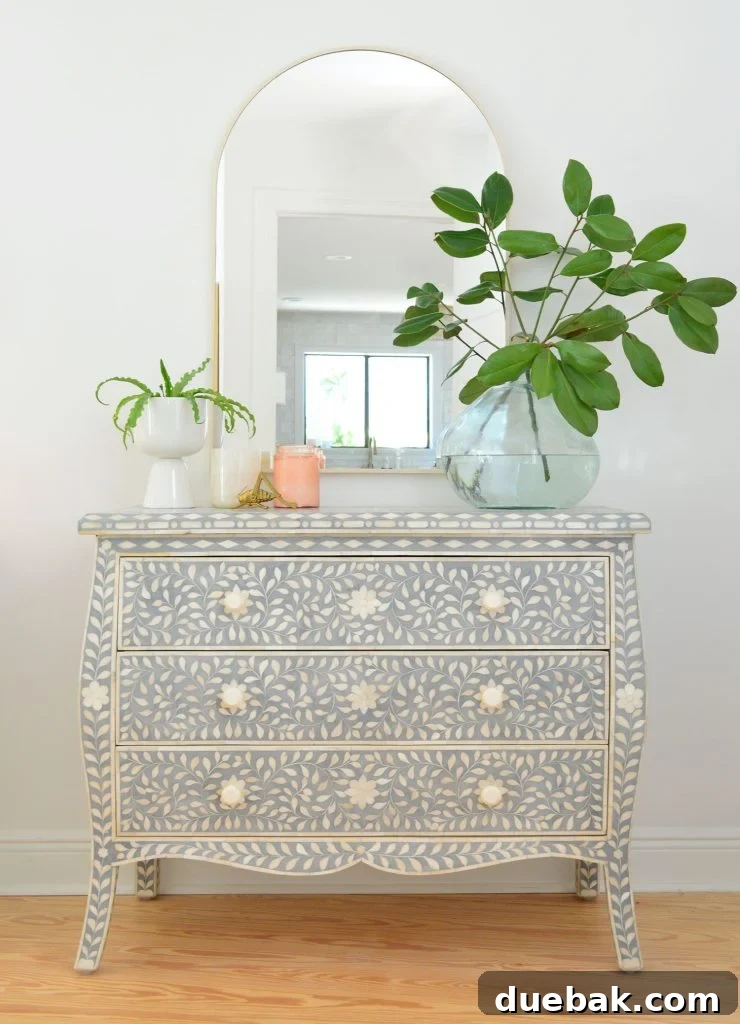
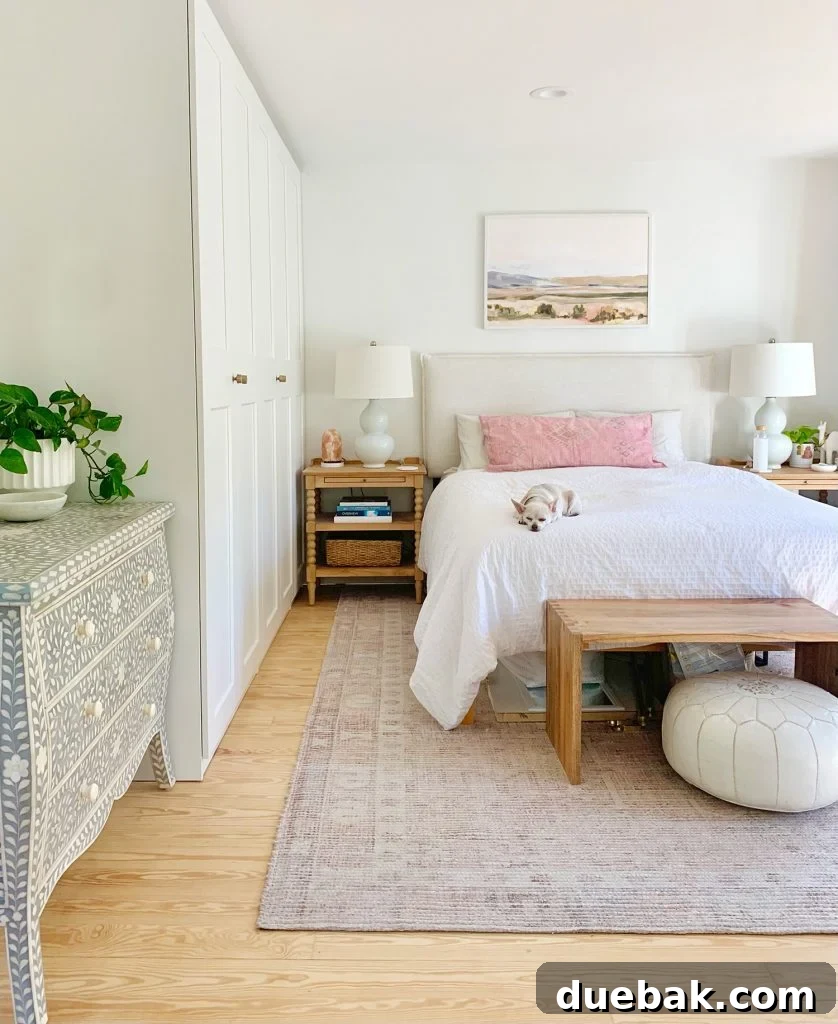
The most substantial item that made its way into our new bedroom is this exquisite blue inlay dresser. It once graced the front bedroom of our beach house and remains one of my all-time favorite secondhand finds. When we sold the beach house furnished, we made sure to swap out a few beloved items beforehand, and this dresser was unequivocally on that select list.
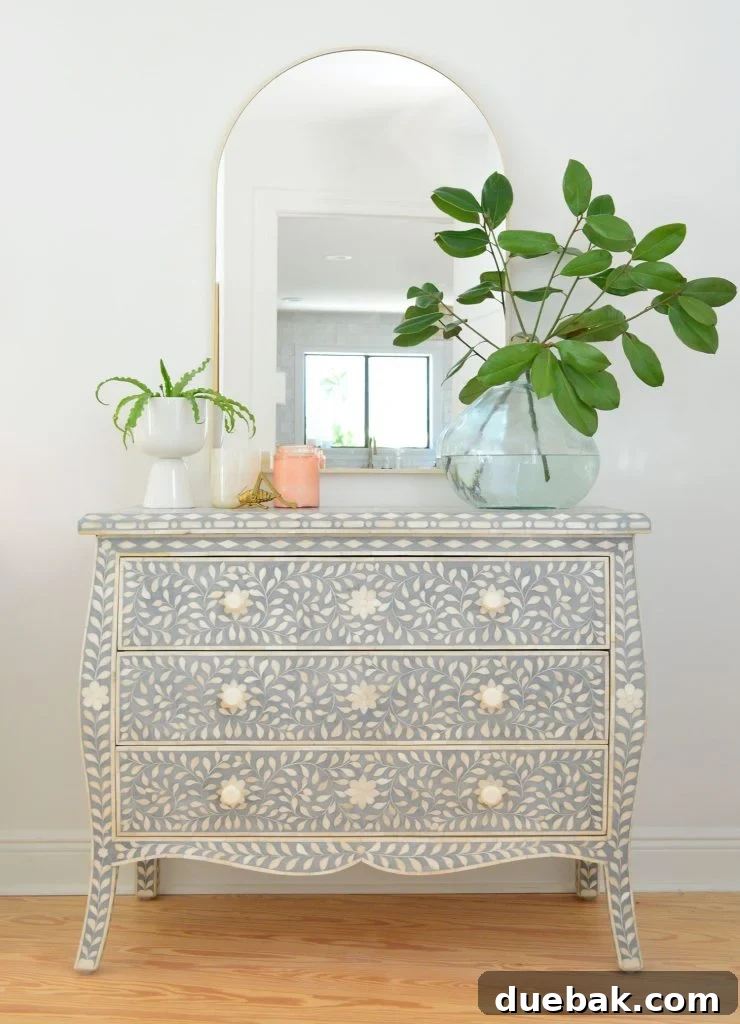
It now elegantly occupies a corner of our bedroom, a space we initially earmarked for a second bathroom. However, those plans are currently on indefinite hold. Although we anticipated an immediate need for a second bathroom upon moving here, we’ve all managed perfectly well sharing just one for the past 2.5 years. In fact, with the kids back in school, it feels even more manageable than during our first year here, when all four of us were home almost constantly due to at-home learning.
Our decision to put the bathroom renovation on hold embodies the very spirit of downsizing. Embarking on a dusty, major renovation to add a bathroom seems impractical and unnecessary until there’s a genuine, pressing need for one, doesn’t it? Should our bathroom plans ever resume (perhaps when the children are older?), we’ve even discussed converting my beloved inlay dresser into a bathroom vanity, complete with plumbing and a sink. That’s how deeply I adore this piece. Of course, who knows, it might find another purpose or location before then.
Here it is, residing in the beach house’s front bedroom after I acquired it secondhand and dedicated considerable effort to repairing its intricate details. Its beachy yet complex aesthetic is something I truly treasure, making it a perfect example of an item worth the effort of preservation and relocation.
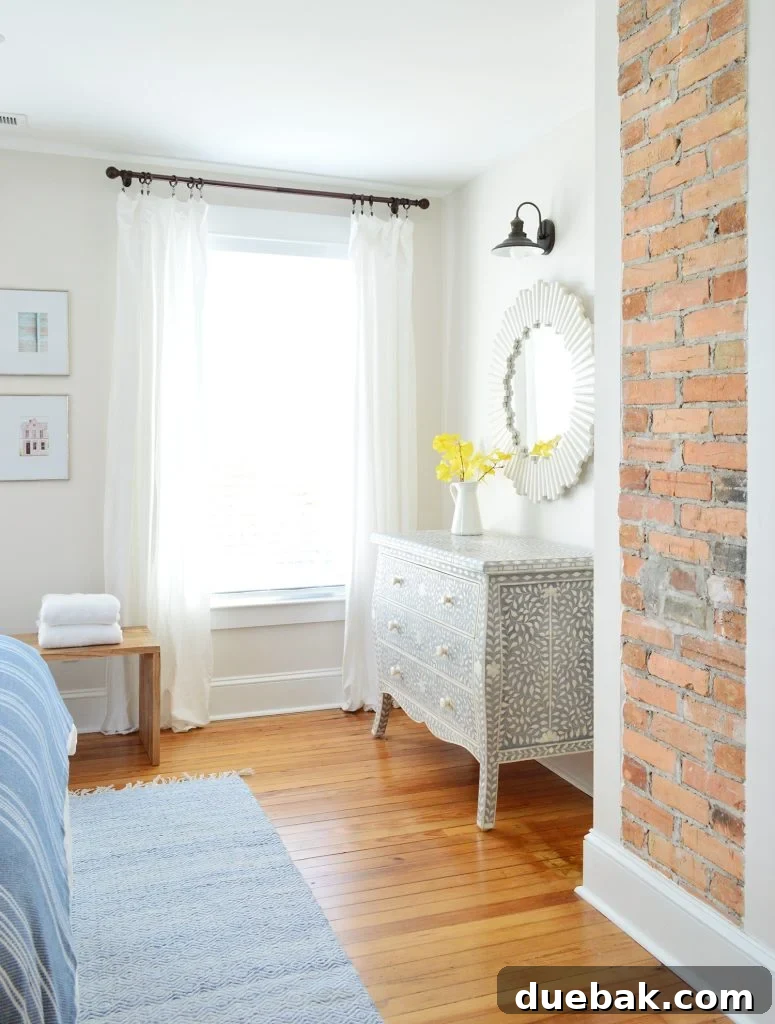
This illustrates a core principle of downsizing: we don’t possess ten dressers; we have three in the entire house. But these are our three all-time favorites (the other two also feature beautiful wood inlay fronts, making each feel exceptionally special and unique). As previously mentioned, they are all narrower, 3-drawer models, rather than the wider 6-drawer variety. This thoughtful selection allows the other two to ingeniously serve as both nightstands and clothing storage in our daughter’s room. Hooray for pieces that are not only beautiful but also excel at double duty! We’ll touch more on this versatility shortly.
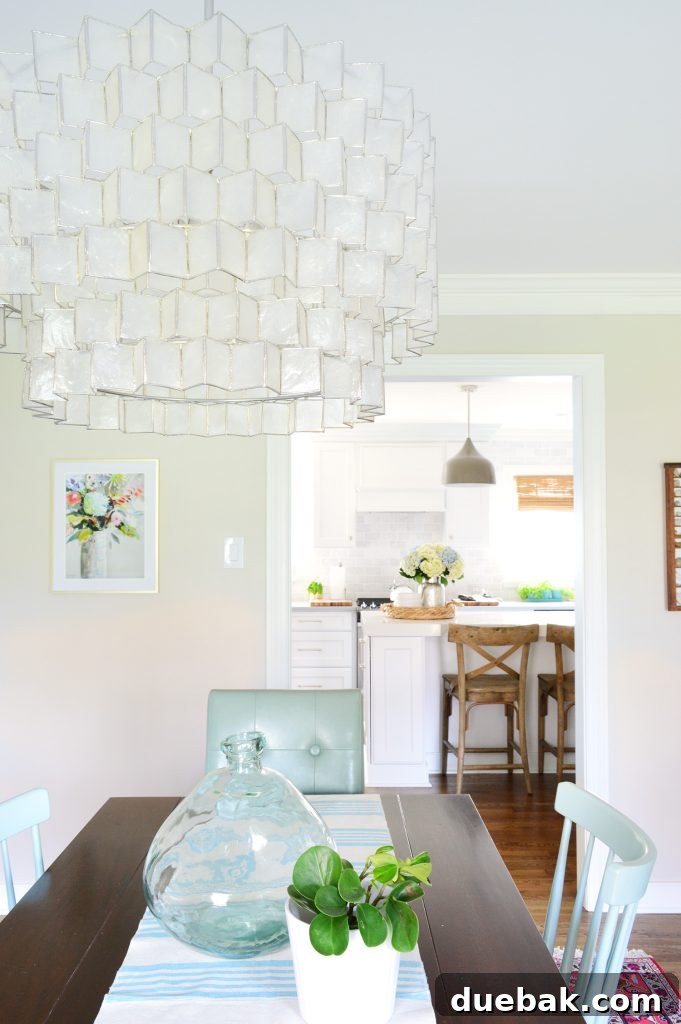
And that large glass vase sitting atop the inlay dresser two photos up? Here it is, making a statement in our previous dining room. It has been a cherished companion for over 15 years! Sometimes I marvel at the fact that it hasn’t broken after all this time – it’s often filled with water and quite heavy! (I hope I haven’t just tempted fate). Other beloved Richmond holdovers in our bedroom include smaller items such as the lamps (here are some similar ones), the gold frames, the pouf, and the woven belly basket nestled in the corner (a HomeGoods find from years ago, but here’s something similar).
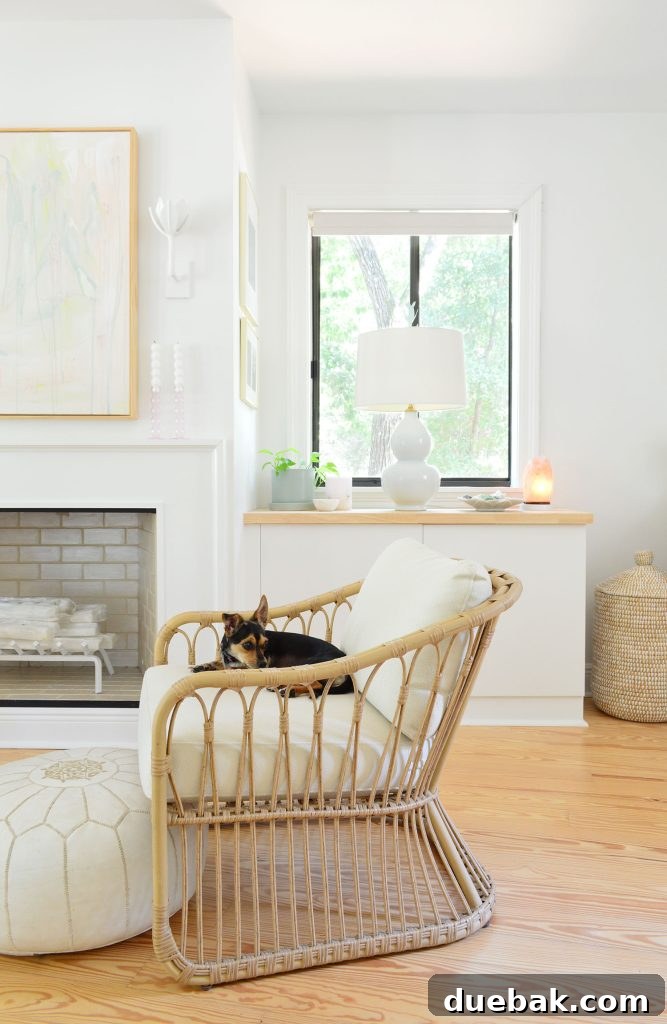
You might recall those baskets from our old foyer (seen below), where they primarily served a decorative purpose. More often than not, they held nothing but random items our children would momentarily stash inside. Now, the larger basket functions practically as a laundry hamper in our bedroom, while the smaller one serves as a discreet trash bin next to the kids’ art desk (scroll back up to see it in action). This repurposing demonstrates how even decorative items can gain renewed utility in a downsized home.
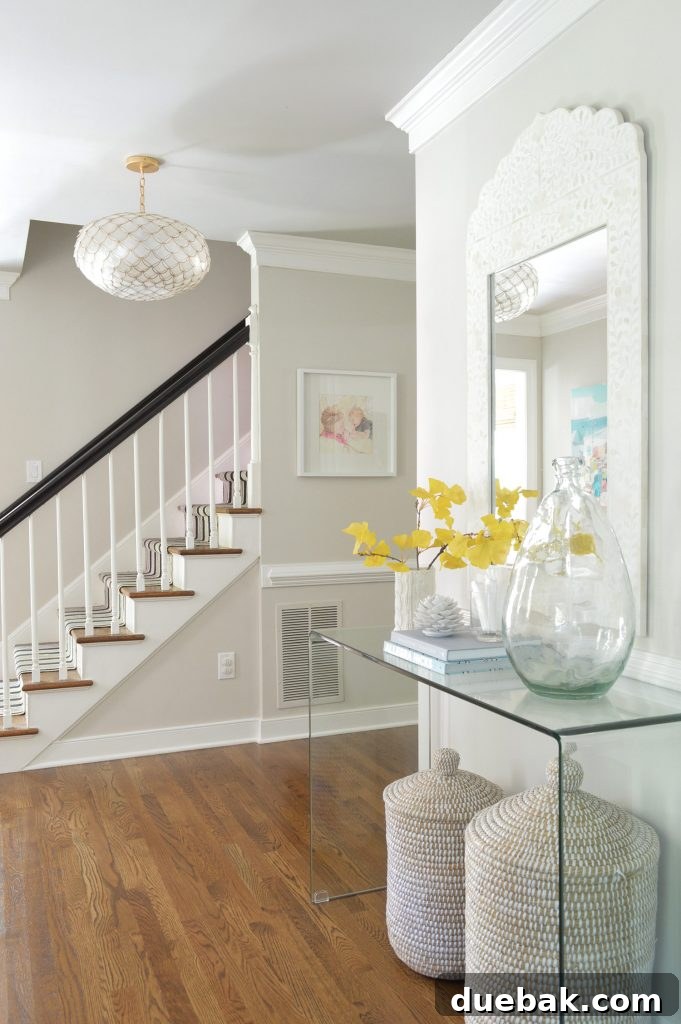
And speaking of our foyer, you might just recognize that mirror in 3… 2… 1…
Our Bathroom: Elevated Functionality in a Single Space
The prominent capiz mirror from our old foyer has found a magnificent new purpose as the over-the-vanity mirror in our only bathroom. Not only did we retain this beautiful piece, but it now enjoys constant daily use, undoubtedly accumulating a few more toothpaste splatters than in its previous, purely decorative role! It continues to hold up perfectly, a testament to its quality. The key to this item’s longevity in our home boils down to two simple factors:
- A) We discovered the perfect, functional spot for it.
- B) We genuinely love its design and aesthetic.
It triumphed over other more basic mirror options because it possesses a unique “specialness” – we adore its subtle pattern and the elegant curve of its top. Overall, we are incredibly pleased with this purchase (made about 10 years ago from Serena & Lily) and sincerely hope it remains a cherished fixture in our home forevermore.
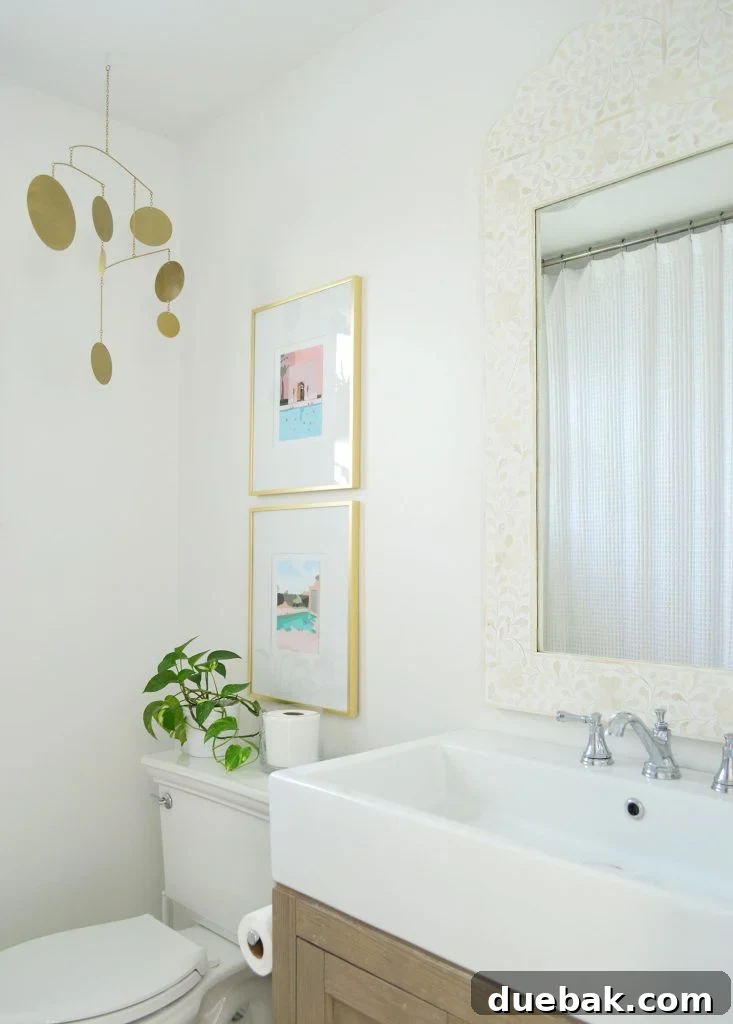
Our bathroom also proudly displays gold frames and artwork that previously adorned our last house. Additionally, a brass mobile, which first charmed me in the middle bedroom of our beach house, now adds a touch of whimsy here. If you’re pondering whether to keep a mobile during a downsize, thinking it might be too random, my advice is simple: if you love it and it’s tiny, bring it! We even brought a second mobile, a seagull design from our duplex, which also hangs in this house. We have since acquired two other mobiles, totaling four in our six-room home. No regrets. The lesson: keep what you love, especially if it’s small; a mobile certainly won’t break the bank or the moving truck!
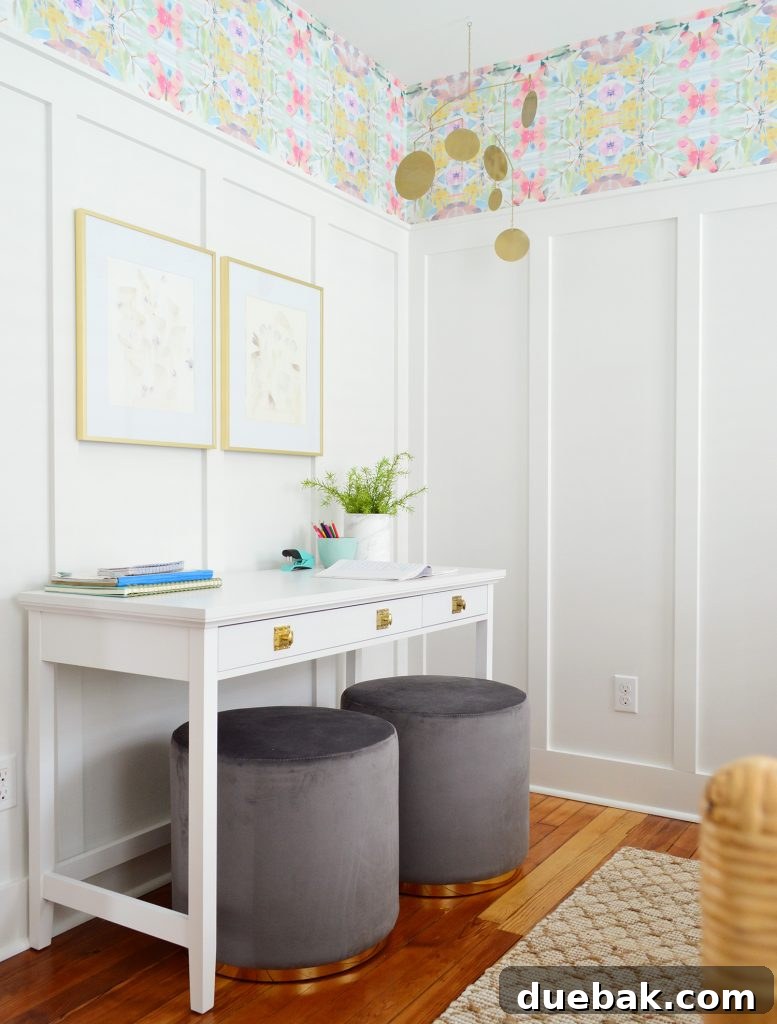
The Kids’ Rooms: Combining Practicality and Personality
Beyond bringing their favorite books, toys, and stuffed animals, our children’s rooms also accommodate larger items from our previous home. A prime example is the striking gold mirror in our daughter’s room (below), which once hung majestically above the fireplace in our old living room (scroll up to see its former glory). It’s particularly effective above her desk, as the entire area cleverly doubles as a vanity for her to get ready, while also serving as a functional desk for homework, laptop use, and other activities—a testament to thoughtful design in smaller spaces.
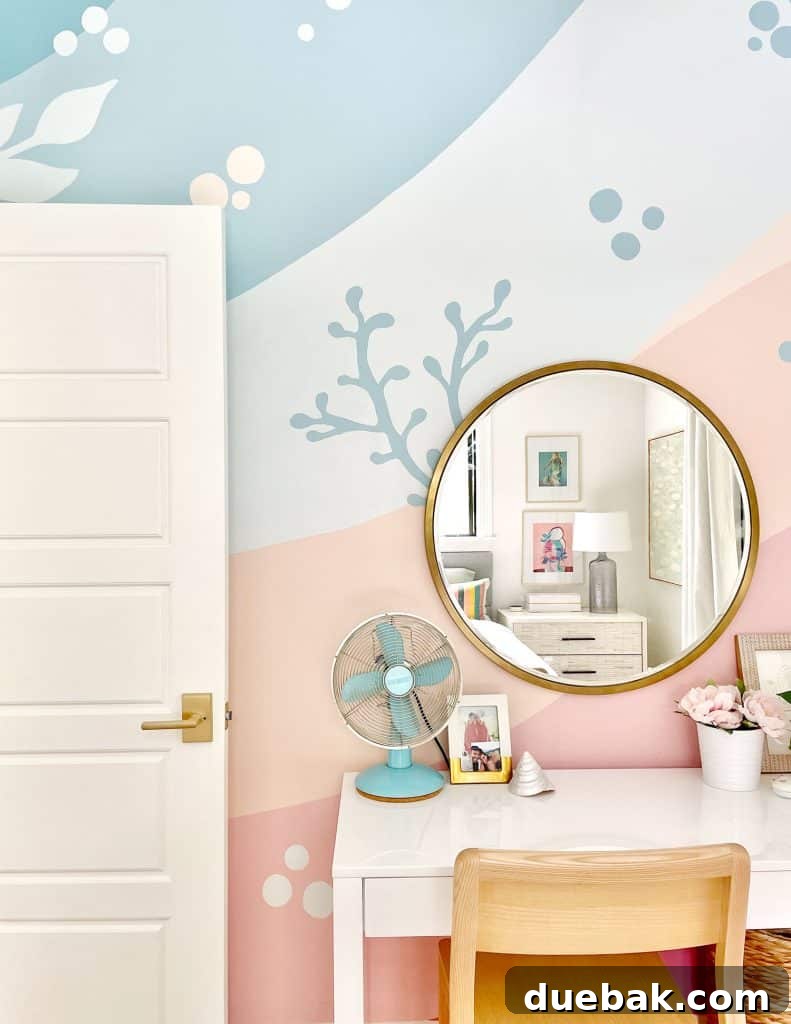
The inlay dresser reflected in the mirror above is another cherished holdover from our last home. We’ve owned it for quite some time, and it has gracefully adapted to various functions over the years, including a seven-year stint as the only attractive feature in our walk-in closet before we embarked on its transformation. Its ability to serve different needs across homes and rooms speaks volumes about its inherent versatility and timeless appeal.
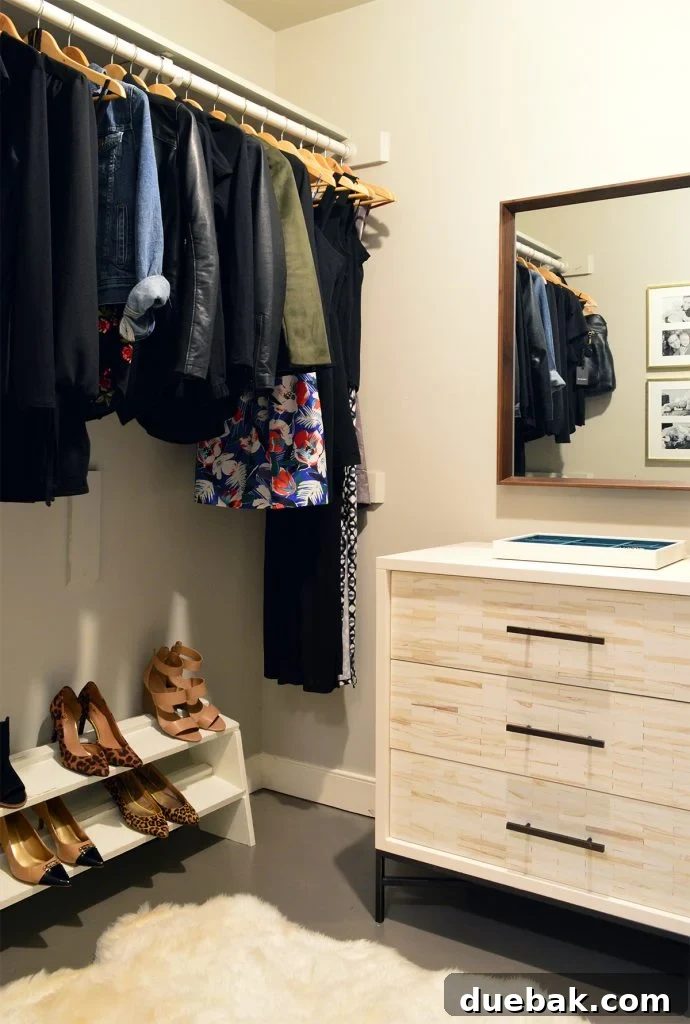
Not only did we transport that dresser from Richmond to Florida, but we were so impressed by its functionality that we actually ordered another one shortly after moving. We love the concept of these dressers pulling double duty as both bedside tables and practical clothing storage. During this brief iteration of our bedroom, they served as matching nightstands and were our sole clothing storage solution in the room, proving their worth even in transitional phases.
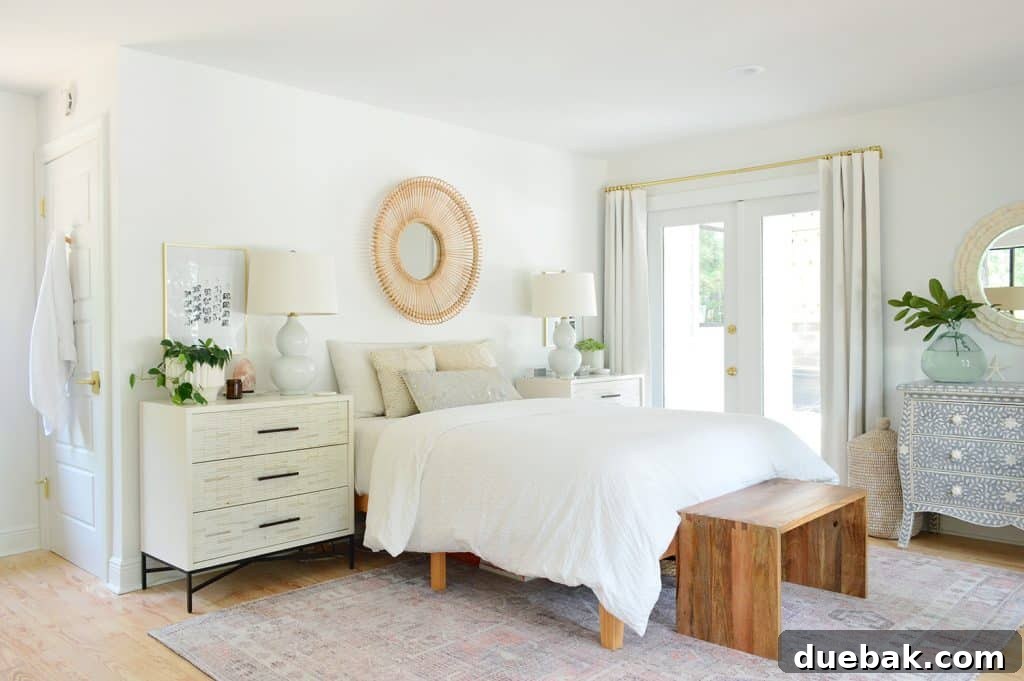
Once we finally added built-in closets to our room (this is an older photo, but it conveys the idea)…
…we relocated both dressers to flank our daughter’s bed. Here, they continue their double duty, providing essential clothing storage for her while also functioning as convenient bedside tables. We opted to remove their black metal feet to achieve a more suitable height for her bed, carefully storing the legs in our utility closet just in case they’re needed in the future. They’re keeping company with the back legs of the upstairs desk!
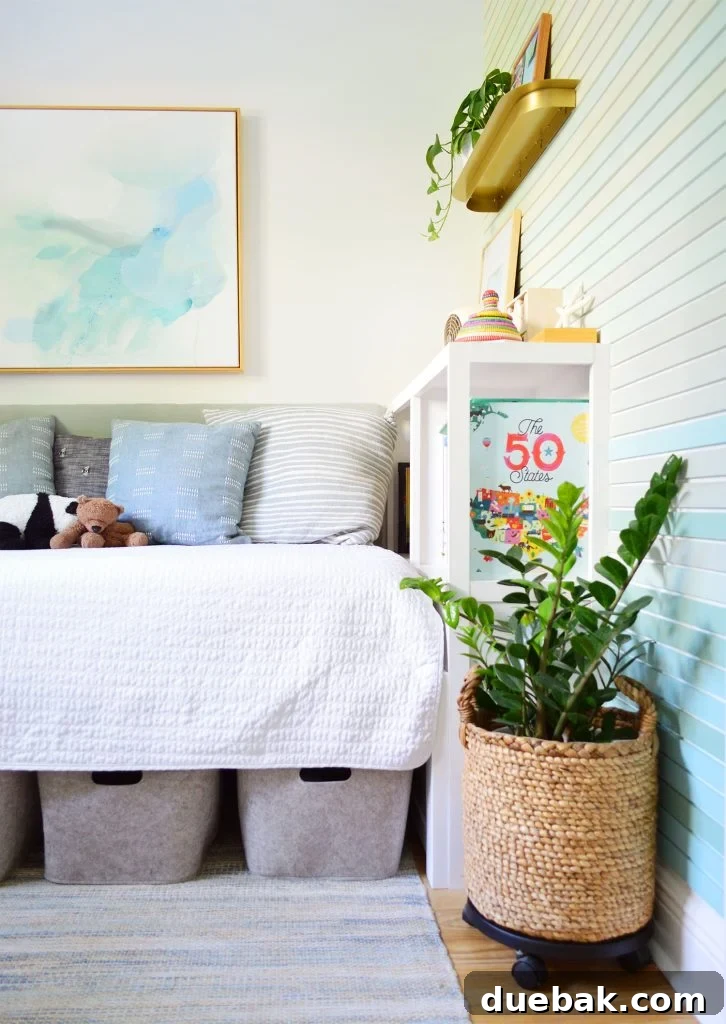
Our son’s room benefited greatly from a series of custom-built small-space solutions, including a floating desk and bookshelf that we crafted ourselves (both visible here). This approach felt particularly fitting, as we had also incorporated many built-in elements into his last bedroom. His vibrant rug, originally from our kids’ old art room (which you can scroll back up to view), also found a new home. Furthermore, many of his pillows, baskets, frames, and planters/plants are cherished items from our previous house, proving that even in a highly customized room, favorite smaller pieces seamlessly integrate.
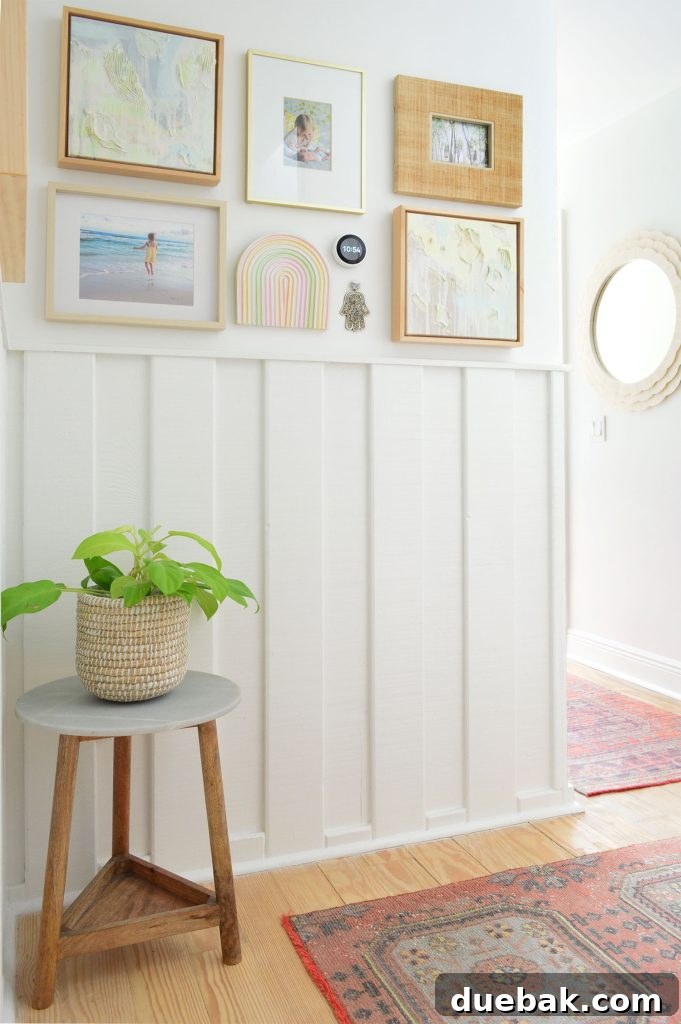
Of course, the vast majority of our smaller, everyday functional items—like our silverware, plates, pots, pans, toaster, and tools—are the same ones we had in Richmond. The detailed photos and descriptions above primarily focus on the furniture and decor in our main living spaces. There are also numerous other items strategically placed in various nooks, like hallways. For instance, the marble table below and the charming pink rug, which came from our old closet, illustrate how even unexpected items can find new homes. However, to avoid overwhelming you with every minute detail of every vase or picture frame, let’s now transition to the broader insights this entire exercise illuminated about the downsizing process itself.
Key Lessons Learned: Navigating the Downsizing & Moving Process
1. Prioritize Large Pieces for Large Spaces
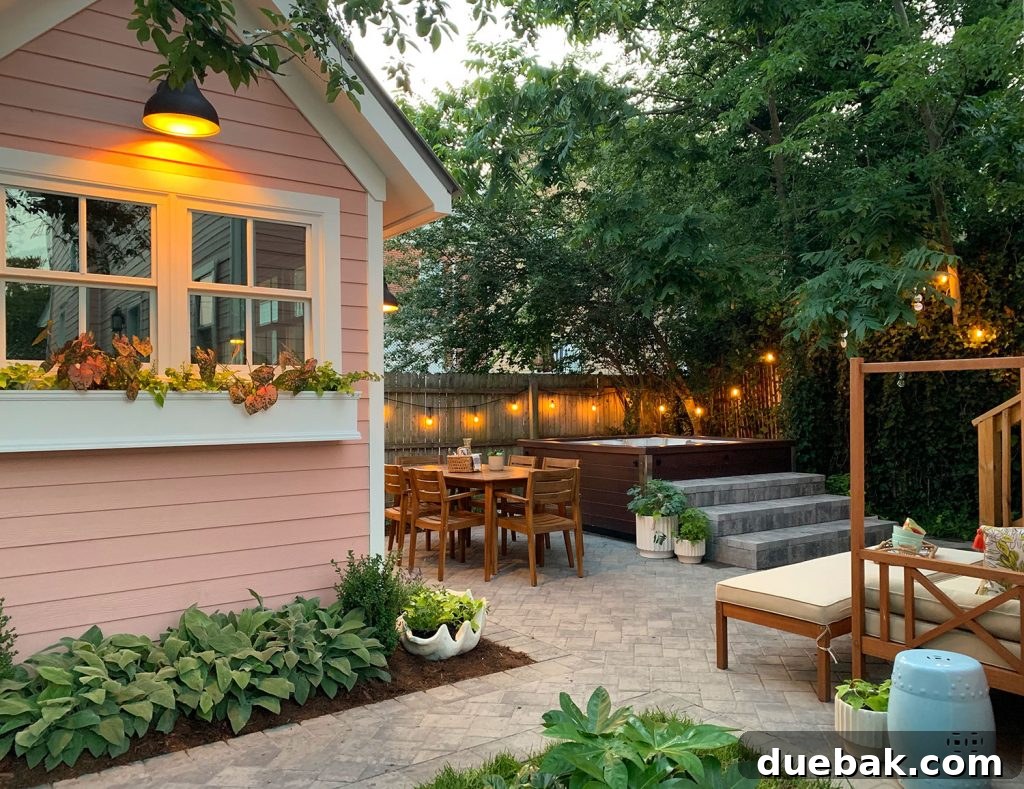
In hindsight, we acknowledge that we allocated valuable space in our moving pod to a few large items that ultimately didn’t have suitable large spaces in our new home. Those two 6-drawer dressers, for example, were useful for a brief period immediately after our move but have since been sold or donated. Looking back, I wish we had made more room in the pod for additional outdoor furniture, perhaps even some pieces from the beach house backyard (shown below). Our new home boasts an abundance of porches and patios that we’ve had to furnish from scratch, making that a clear missed opportunity for maximizing our moving resources. It’s crucial to map out your new home’s layout and truly visualize which large pieces will genuinely fit and serve a purpose before packing.
2. Cherish and Keep the Small Things You Love
When faced with limited moving space, like we were with our compact pod, there’s a natural temptation to forgo smaller items such as art, lamps, and decorative objects in favor of larger pieces that might be more expensive to replace. However, we are incredibly glad we meticulously filled every last corner of our pod with “the small stuff” that held genuine meaning or sentimental value. This included even our living plants, which we literally wedged between our kids’ car seats for the drive down! Favorite framed photos, beloved lamps, and potted plants proved remarkably easy to integrate into our new home, and they provided an immediate, comforting sense of “us” in the new space. These small, familiar anchors are invaluable for making a new house feel like a home right away.

Ultimately, if an item is small and you truly love it, bring it along. It’s far better to donate or sell it at your new location if it doesn’t fit than to regret letting go of a sweet piece of art, a cherished mobile, or a beloved lamp. A crucial note: this advice applies ONLY to items you genuinely LOVE and those with significant sentimental value. It does NOT mean you should bring every small item you feel indifferent about. Being highly discerning *before* you leave your old place will make landing and unpacking infinitely easier. Ruthlessly get rid of all excess “filler stuff” well before packing begins!
3. Cultivate Flexibility & Embrace the Evolution
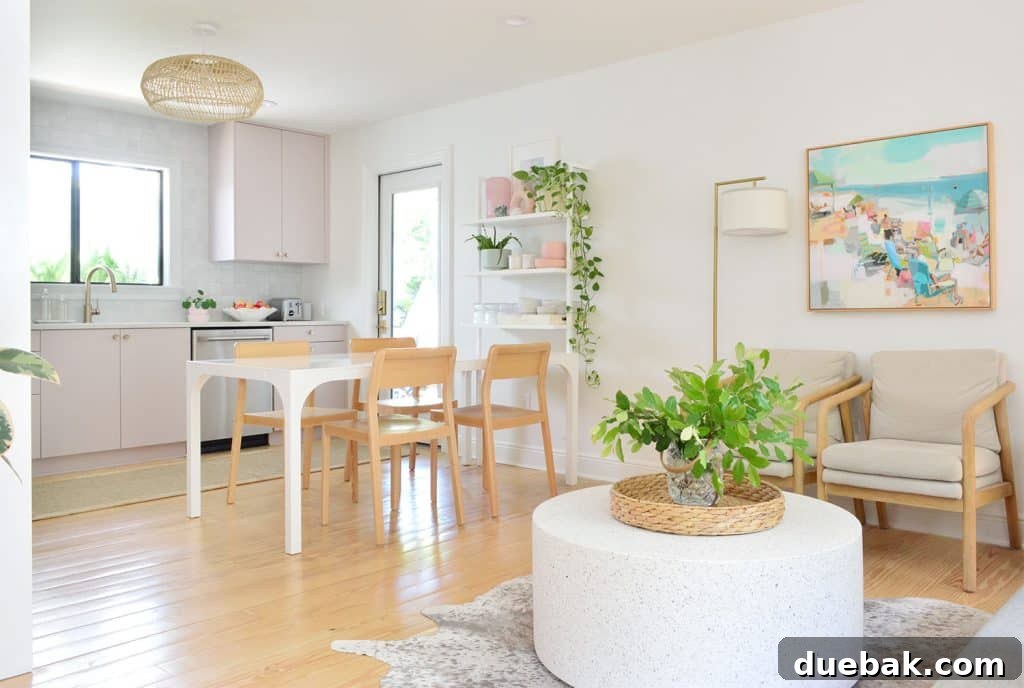
As our journey demonstrates, we have consistently avoided being rigid about items belonging to a specific room or serving a singular function, simply because that was their role in our previous house. For instance, the white shelf pictured below, which was a purely decorative element in our beach house living room, now serves as highly functional kitchen storage in our current home. Had we adhered to stricter rules about placement or purpose, significantly fewer items would have survived the move, leading to considerably more new purchases. Embracing adaptability in how you use your possessions can unlock unexpected solutions and extend the life of your favorite pieces, saving both money and resources. Think creatively about how each item can best serve your evolving needs.
4. The Power of Cohesive Design: Thinking Holistically Pays Off
Most people naturally gravitate towards this, but maintaining a consistent style or “vibe” throughout your home significantly simplifies the flexibility aspect of downsizing. You’ll discover a wider array of options for placing furniture and decor if individual pieces or rooms don’t present an aesthetic jarring note compared to the rest of your house. This cohesive approach has been instrumental in our ability to successfully move dressers, rugs, mirrors, artwork, and countless other items around our home until they found their perfect fit. Essentially, almost everything we own “goes” with everything else in our house, creating a harmonious and versatile environment.
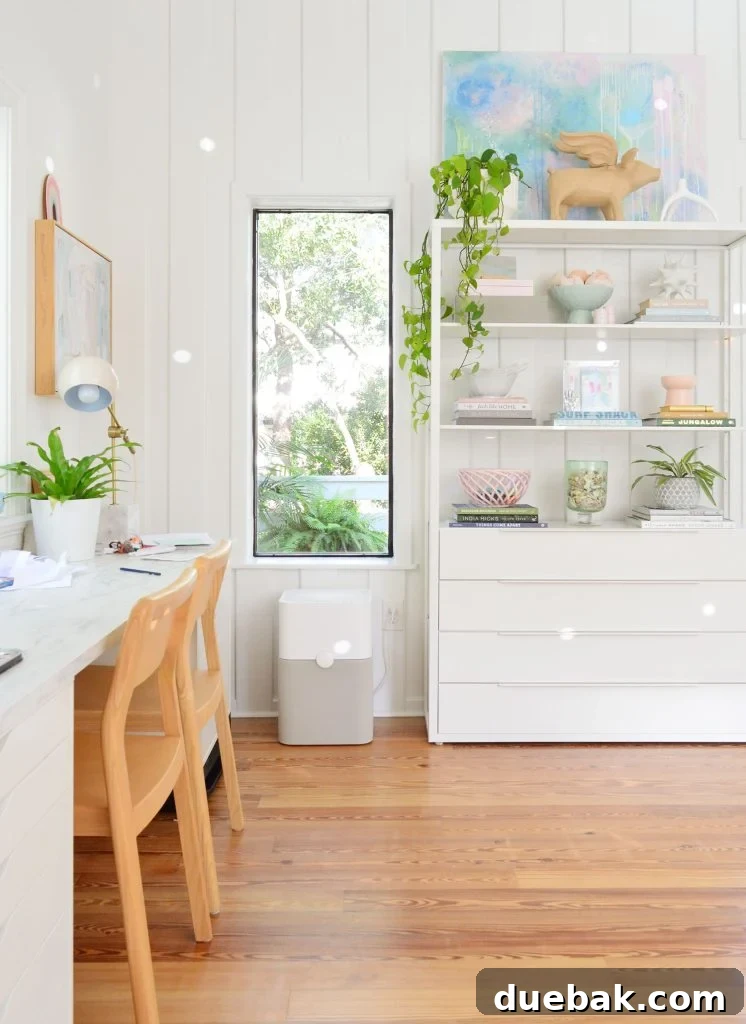
One strategic decision that greatly contributed to this cohesion was our careful selection of items during the packing phase. We consciously chose to leave behind all our huge, thick, deep-colored rugs, not just because they wouldn’t physically fit in many of our rooms, but also because their aesthetic didn’t align with our vision for a light, airy, and sand-friendly beachside home. The same principle applied to dark wood furnishings and decor. The items we loved most and decided to keep typically fell into categories like:
- Light wood finishes
- Crisp whites
- Versatile neutrals
- Intricate inlay details
- Iridescent capiz accents
- Warm brass elements
- Elegant marble pieces
- Soft pink hues
- Calming light blues
- Pastel artwork
- An abundance of lush plants
Look for a discernible pattern in your preferred items and lean into bringing things that naturally complement each other! A vital word of caution: absolutely do not bring anything that “works with everything else” if you feel lukewarm about it or rarely use it. Trust us. Downsizing demands ruthlessness and the unwavering commitment to leaving all “filler stuff” behind. If it’s not genuinely your favorite, it will invariably end up in storage, transforming into unused cabinet clutter that defeats the purpose of downsizing.
5. Embrace Patience: Downsizing is a Journey, Not a Destination
Downsizing is unequivocally a journey, not a singular destination. Our current house, like every home we’ve ever owned, has taken years to truly “come together.” For an extended period, it admittedly looked somewhat chaotic as we diligently figured out what worked where and what simply wasn’t effective—a common thread in all our past residences. Are you sensing a theme here? Please, do not chastise yourself for taking your time to discover the optimal arrangement or the perfect pieces that best serve your family’s needs in your smaller home. This patient, iterative process is often the only way to achieve the very best and most enduring results.
We are grateful that, overall, we harbor no major regrets about the items we chose to bring or those we opted to leave behind. This likely stems from our unwavering commitment to taking *only* the things we loved most and used frequently, while ruthlessly eliminating the rest. It truly can be that straightforward. While the physical act of sorting through everything demands considerable time and effort, maintaining that core philosophy—constantly asking ourselves “do we love and use this?”—was our guiding light. We’re immensely glad we granted ourselves the space and time to figure things out once we landed in our smaller place, and we certainly don’t stress when, for instance, our bedroom looked like this for a few months. Ha!
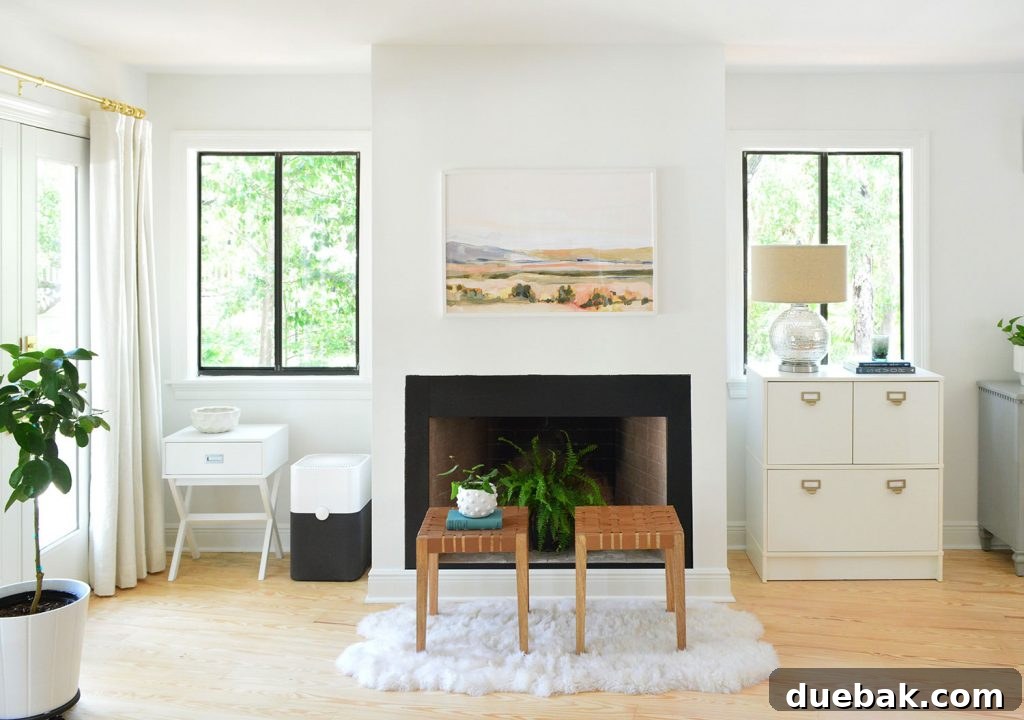
Oh, and one unexpected MVP of our entire move has turned out to be the most unassuming item: our white Ikea planters. You can spot one in the picture above and another in the shot below. These have been such reliable staples over the years, with many accompanying us since our very first home—making them a remarkable 15 years old! Again, it’s a small miracle they’ve survived unbroken for so long! (*immediately knocks on wood*)
I’ll leave you with one final, liberating thought. Many people grappling with the idea of downsizing are tormented by the “what if I get rid of this and then really want it later?” dilemma, especially concerning kitchen gadgets. For example: “I never use the slow cooker now, but what if I get into it later and have to buy one again?” Honestly, we had an old, cobweb-covered slow cooker that saw no use, so we donated it before this move. It’s been 2.5 years, and we DO NOT MISS IT. If, by some chance, you genuinely do find a need for such an item later, you can always purchase a new one. But imagine the sheer amount of cabinet space you’ll reclaim by simply having only the items you actively use.
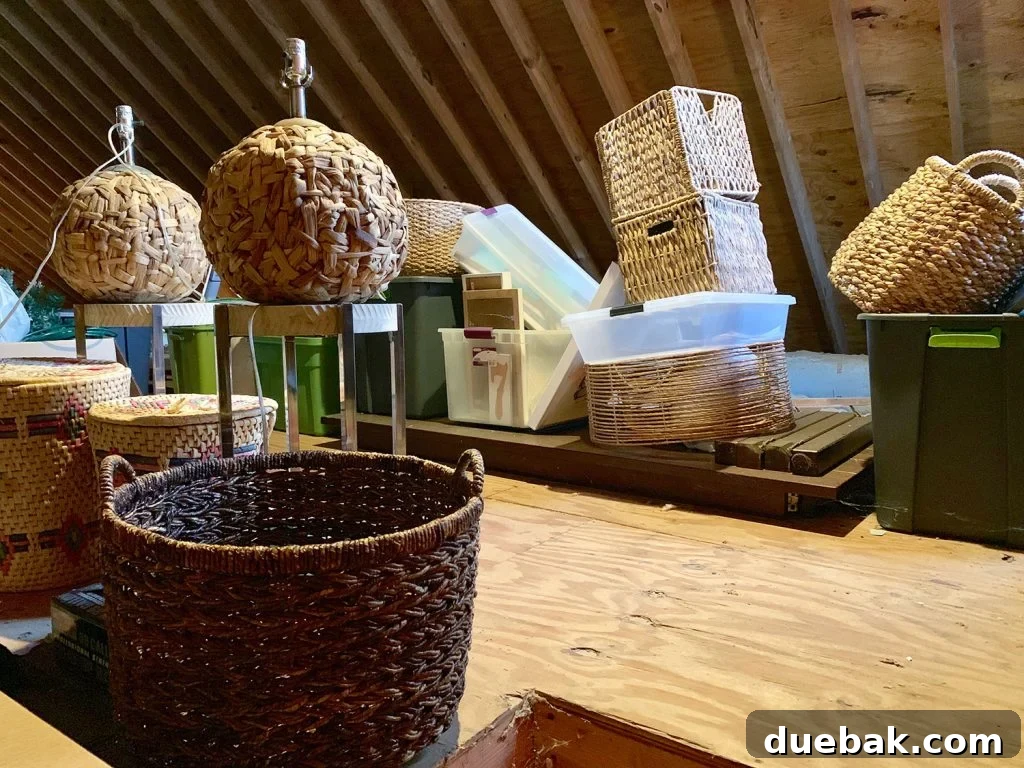
Our actual experience confirms that we genuinely cannot even recall, let alone list, many of the things we downsized and donated. If an item wasn’t actively being used in our lives at the time of downsizing, that was our definitive answer: it belonged in the donate/sell pile. This principle applies universally, even if you’re not moving but simply aiming to create more breathing room in an overstuffed drawer or cabinet. I’d wager that 10 out of 10 people who have undertaken a major downsize would echo the same sentiment. We honestly don’t even remember what used to fill up our massive garage (we don’t have one now!) or our giant walk-up attic. Okay, I do recall an abundance of baskets up there—which was a clear indicator that I wasn’t using them—but I certainly don’t miss having a huge space to merely fill with forgotten items for years on end!
We sincerely hope this extensive reflection has been helpful, or at the very least, an enjoyable journey down memory lane with us. We deeply appreciated looking back at all the items that have accompanied us on this significant transition. We are profoundly grateful for our current reality: living in a smaller house, enjoying abundant beach and pool time, and relishing the distinct perks of no yard to mow, no garage to organize, and only five rooms and one bathroom to clean! The reduced maintenance and increased leisure time are invaluable benefits of this lifestyle choice.
If you’re eager to delve further into our complete downsizing adventure, we have more resources for you:
- This dedicated page offers a wealth of additional information and photos detailing our journey.
- For insights into our downsizing mindset and the philosophy behind our choices, listen to this podcast episode.
- To understand how we truly felt six months after downsizing, read this reflective post.
*This post contains affiliate links, meaning we may earn a small commission when you make a purchase through links on our site, at no additional cost to you.