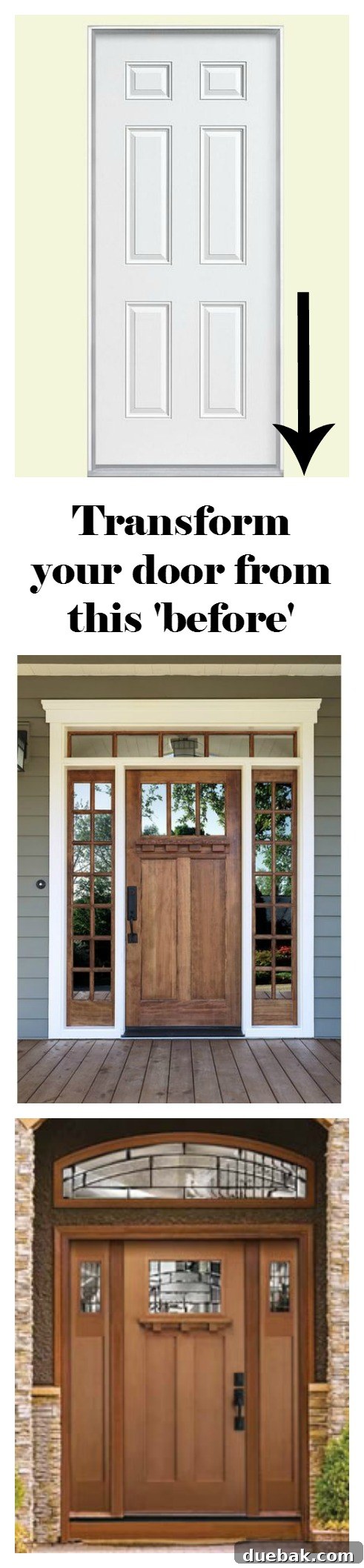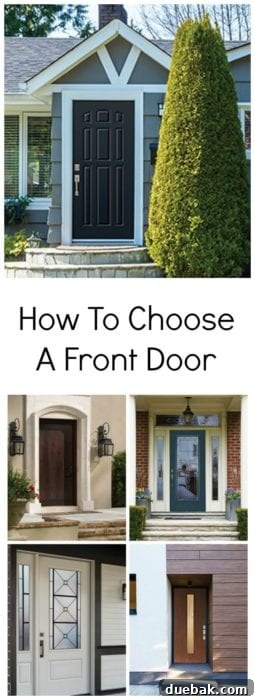
The Front Door: A Grand Statement for Your Home’s Exterior
More than just an entry point, your front door serves as the focal point of your home’s exterior design. It’s the very first impression guests and passersby get, and it significantly contributes to your home’s overall curb appeal and perceived value. While functionality and security are paramount, the front door offers an unparalleled opportunity to infuse style, personality, and intricate detail into your home’s aesthetic. A well-chosen and well-maintained front door doesn’t just welcome; it makes a statement, setting the tone for the entire dwelling.
My Journey to a Grand Entrance: Recognizing the Need for Change
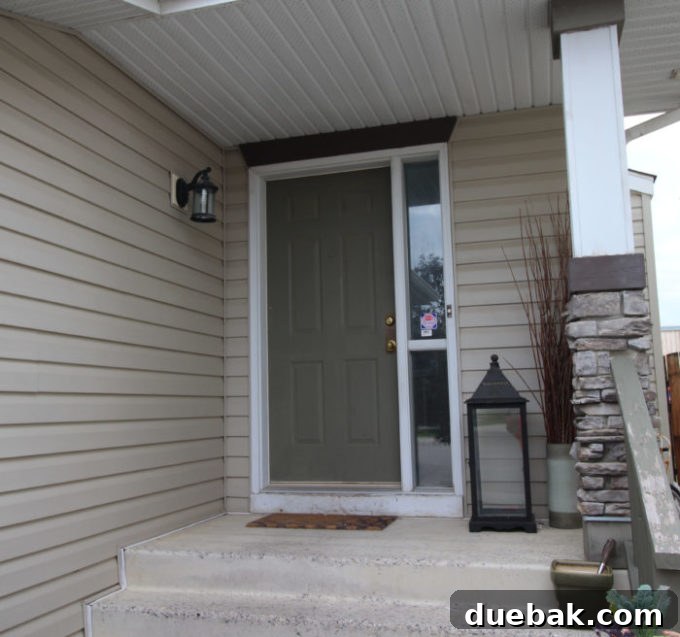
For too long, the front door of my house embodied a purely utilitarian purpose. It opened, it closed, and a trusty deadbolt provided a basic level of security, making potential intruders think twice. However, beyond its functional attributes, its design was strikingly simple, and time had not been kind. The once vibrant paint job was now faded and peeling, marred by noticeable dents that spoke of countless encounters with moving furniture or playful children. The accompanying sidelight suffered from a broken seal, perpetually fogging up and obscuring any view or natural light. The most striking ‘accessory’ was a collection of half-peeled security stickers, adding to the general air of neglect. While I had tackled smaller, more manageable home improvement tasks after moving in – like updating the exterior light fixture and installing a charming new doorbell – the formidable challenge of the front door remained, a large undertaking I had continuously postponed.
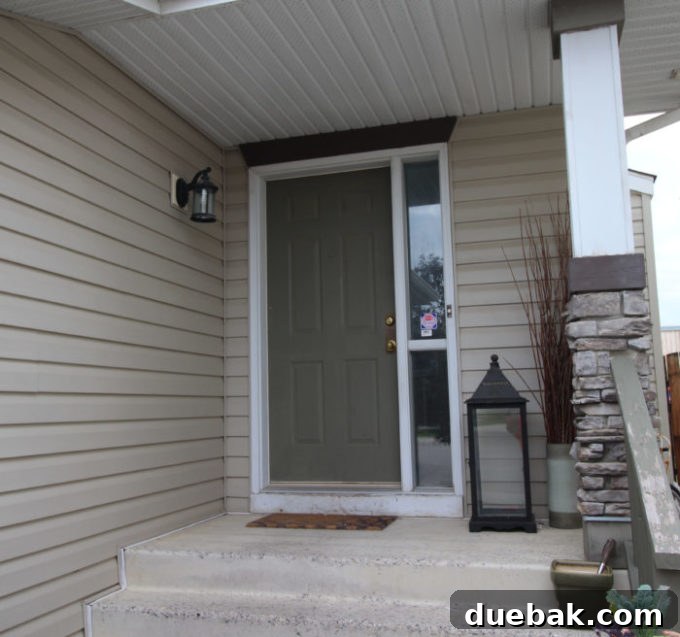
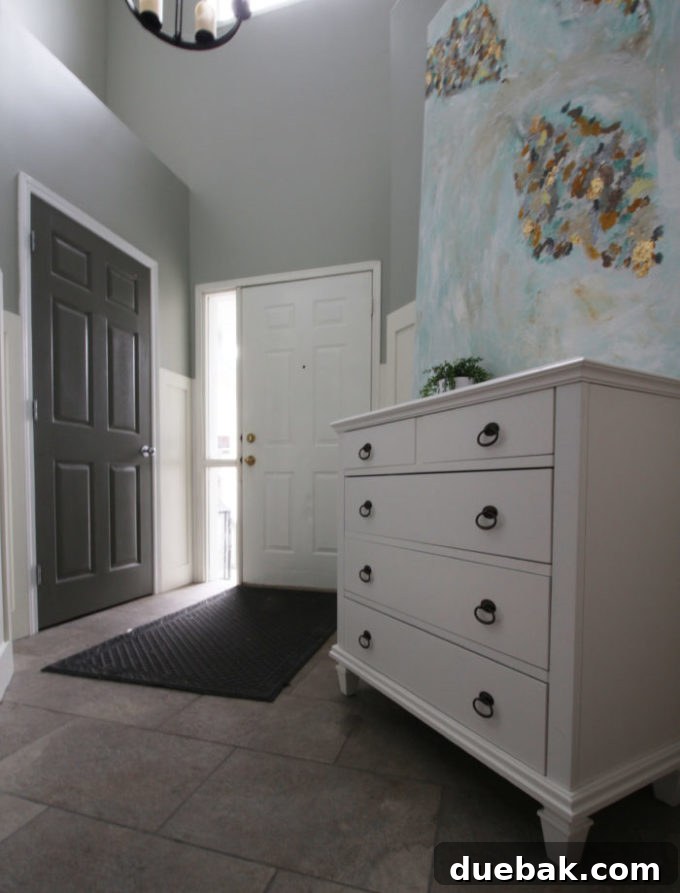
Stepping inside, the door presented an equally uninspiring sight. The interior side revealed more of the unsightly dents, confirming that its wear and tear were not limited to the exterior. While still technically functional, it was entirely unremarkable. In fact, if a prospective buyer were touring the house, this door would likely be the last detail they’d consciously notice – and perhaps, the lingering final impression – as they exited the property. This realization underscored the urgent need for an update that would elevate the entire entryway, transforming it from a forgettable exit to a memorable, stylish welcome.
Door Replacement 101: Understanding Your Options
My home’s front door was undeniably in desperate need of an upgrade, yet the process felt daunting. I honestly had no prior experience with such a project and found myself wondering about the logistics. Specifically, I pondered whether it was feasible to replace just the door slab itself while retaining the existing frame. To navigate this uncertainty, I consulted with several professionals, including an experienced door installer. Their insights proved invaluable, shedding light on the complexities and best practices of door replacement.
Can You Just Replace the Door Slab and Not the Frame?
The short answer is: yes, it’s possible, but it comes with significant caveats. For a successful slab-only replacement, several critical conditions must be met. First and foremost, the existing door frame must be perfectly square and plumb. Any warp or misalignment in the frame will inevitably lead to a poorly fitting door, causing issues with sealing, operation, and even security. Secondly, the dimensions of the new door slab must precisely match the old one. Even a slight discrepancy can make installation a nightmare, requiring tedious sanding or shimming. Lastly, the hinge placements on the new door must perfectly align with the existing hinge mortises in the frame. Mismatched hinges necessitate chiseling new mortises, a skill-intensive task that can easily go wrong.
Because of these intricate requirements and the specialized carpentry skills often needed for a proper slab-only installation, it can often be more cost-effective and significantly less stressful to opt for a pre-hung door. A pre-hung unit comes with the door slab already mounted within its own new frame, complete with hinges, and often includes the threshold and weatherstripping. This integrated approach ensures a perfect fit, simplifies the installation process, and usually offers superior insulation and security right out of the box. While a professional can certainly handle a slab replacement, especially in custom or historic applications, for most homeowners seeking a straightforward upgrade, a pre-hung door is the recommended solution.
Front Door Materials: Making the Right Choice
When selecting a new exterior door, you’ll generally encounter three primary material options: wood, steel, and fiberglass. Each material offers a distinct combination of aesthetics, durability, energy efficiency, and maintenance requirements, making the choice dependent on your specific needs and priorities.
- Solid Wood Doors: Revered for their timeless beauty and classic appeal, solid wood doors offer unmatched natural aesthetics and can be customized with intricate carvings and unique designs. However, they are typically the most expensive option. Wood is susceptible to warping, cracking, and rotting when exposed to extreme temperature fluctuations and moisture. To maintain their pristine condition, wood doors require regular maintenance, including re-staining or repainting every few years. They perform best when protected by an overhang or storm door, which helps shield them from direct exposure to the elements. While stunning, their maintenance demands and susceptibility to environmental factors are important considerations.
- Steel Doors: Often the most budget-friendly choice, steel doors are celebrated for their exceptional strength, security, and energy efficiency. They typically feature a foam core for insulation, making them effective at reducing energy loss. However, steel doors are prone to denting upon impact, and once dented, repair can be challenging. They can only be painted, limiting the aesthetic options compared to wood or fiberglass, as they cannot mimic the rich grain patterns of natural wood. Despite these limitations, their robust nature and cost-effectiveness make them a popular choice for many homeowners.
- Fiberglass Doors: Fiberglass doors offer a compelling balance, combining the best advantages of both steel and wood. They are highly energy-efficient, thanks to their insulated cores, and boast remarkable durability, resisting dents, scratches, and warping much better than their counterparts. One of their most significant advantages is their low maintenance; they don’t require the frequent upkeep of wood doors. Fiberglass doors are available in both smooth finishes and textured options that meticulously mimic the look and feel of real wood grain. This versatility allows them to be either painted to match any exterior palette or stained to achieve the deep, rich appearance of natural wood, offering homeowners immense design flexibility without the associated maintenance headaches. Their longevity and ability to withstand various climates make them an increasingly popular and practical choice.
My Personal Choice: Embracing the Fiberglass Advantage
After carefully weighing the pros and cons of each material, it became unequivocally clear that fiberglass was the perfect solution for my home and lifestyle. The combination of high-end aesthetics and maintenance-free durability made it an absolute “no-brainer.” I desired the sophisticated look of a premium door without the constant worry of warping, rotting, or frequent re-staining. Fiberglass promised to deliver on both fronts.
To ensure I made the best decision, I had the pleasure of working with an incredibly helpful person named Lisa at Masonite, who, serendipitously, lived in my community. Lisa’s expertise was invaluable throughout the selection and ordering process. She meticulously double-checked my measurements, ensuring accuracy for a perfect fit. More importantly, she walked me through all the “nitty-gritty details” that I, as a first-timer, would have easily overlooked. Questions like, “Which way does the door swing?” (left-hand inswing vs. right-hand outswing), “What color should the threshold be?” (dark bronze, mill, or clear anodized to match the home’s style), and “What about the door frame color?” were all meticulously addressed. I was immensely grateful for her ability to clearly explain what information she needed and, more importantly, her trusted advice on what was typically done or what might look aesthetically odd. Her guidance made a complex decision feel straightforward and confident.
Are You Curious to Know What I Chose? Styling My Craftsman Entrance
Staying true to the overarching architectural style of my home’s exterior, I ultimately selected a sophisticated Craftsman-style door. This choice seamlessly integrates with the home’s aesthetic, which favors clean lines, natural materials, and an emphasis on skilled craftsmanship. The specific door profile I chose was the Belleville textured door, featuring the elegant Marco glass. The “textured” aspect of the fiberglass is crucial here, as it beautifully mimics the natural grain of wood, adding depth and authenticity to the door’s appearance.
The door was then painted in Masonite’s exquisite in-house paint color ‘Sable.’ The decision between painting and staining was genuinely difficult for me because I deeply desired the appearance of real wood. I anxiously hoped that the combination of the fiberglass texture with the chosen paint color would still achieve that rich, natural wood look I coveted, without the high maintenance. The ‘Sable’ color offered a sophisticated, muted tone that I believed would complement my home’s exterior palette beautifully.
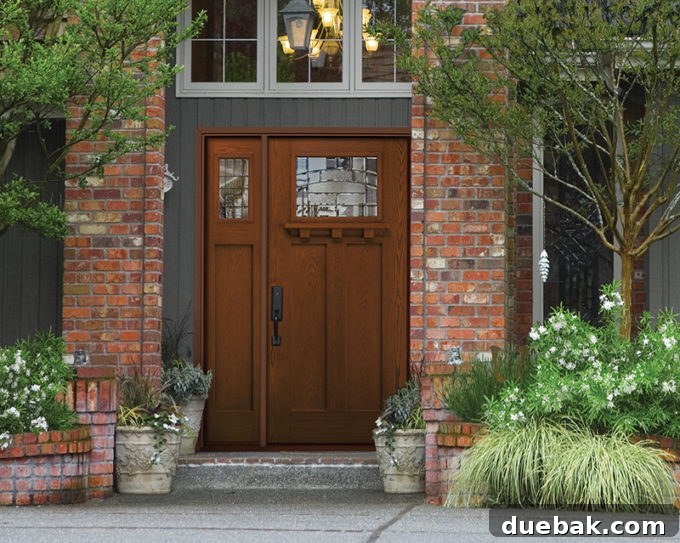
This image showcases the distinct Belleville Craftsman textured door style, highlighting its panel configuration and the subtle texture that mimics wood grain.
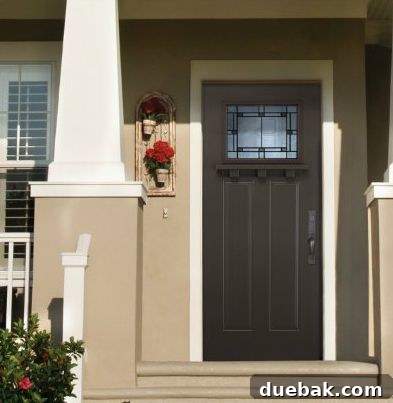
And here, you can see the intricate detailing of the Marco glass, which adds both visual interest and a touch of privacy to the Craftsman design.
Beyond the Slab: Hardware, Accessories, and the Complete Entryway
While the door material and style are central to the transformation, the overall impact of your entryway extends to the hardware and surrounding accessories. Choosing the right handleset, deadbolt, and hinges is not merely about functionality; it’s about complementing the door’s style and contributing to the home’s security. Options range from traditional oil-rubbed bronze to modern brushed nickel, and consistency in finish across all exterior hardware (including your new light fixture and doorbell) creates a cohesive and polished look. Consider a decorative kickplate for added protection and visual appeal, or a door knocker that adds a touch of classic charm.
For those with sidelights or transoms, their glass inserts also play a significant role. Whether you opt for clear glass to maximize light, obscured glass for privacy, or intricately decorative glass for artistic flair, these elements work in concert with the main door to define the entryway’s character. Every detail, from the color of your threshold to the style of your house numbers, contributes to the overall impression your front door makes.
The Journey Continues: Anticipate the Stunning Transformation!
The process of selecting and planning for a new front door is an exciting journey, one that culminates in a dramatic enhancement to your home’s character and appeal. And now, the moment you’ve been waiting for is almost here! Stay tuned for the final reveal. I promise it will truly surprise you how profoundly a single, thoughtfully chosen door can transform the entire feel of your home, elevating it from mere functionality to a true statement of style and welcome. A new front door is more than an upgrade; it’s an investment in your home’s beauty, security, and energy efficiency, capable of making an immediate and lasting impact.
** See the captivating before and after pictures of the front door transformation! **
Pin for later: Ideas for Your Own Front Door Makeover!