
Tiling an entire duplex can feel like an Everest-sized challenge, and for us, it certainly topped our renovation to-do list this year. With four bathrooms, two mudrooms, and two backsplashes still on the horizon, the sheer scale of the project was daunting. We are absolutely thrilled, and frankly, hugely relieved, to announce that all those floors, showers, and tub surrounds are now officially complete – or about 95% there, with just a few finishing touches remaining. Today, we’re excited to give you a detailed tour of how each space turned out, sharing the invaluable lessons we learned along the way. We’ll reveal which tiles we’d enthusiastically choose again and which ones we’d seriously reconsider attempting in future projects.
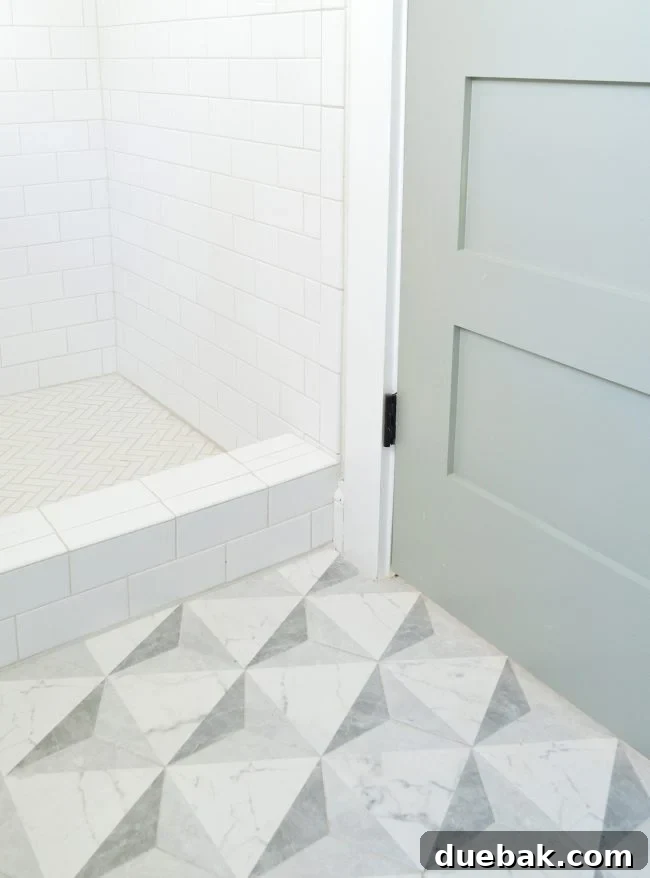
Floor Tile | Wall Tile | Shower Floor | Grout: Frost | Door: SW Oyster Bay
For those who tuned into last week’s podcast, you already know the story: after two intense weekends, we successfully tiled all six floors ourselves, covering two mudrooms and four bathrooms. However, to keep our ambitious renovation schedule on track, we made the strategic decision to hire out the installation for the four shower surrounds. What would have taken us several more weekends was expertly completed by our contractor’s skilled crew in under a week. For each of the four shower and tub surrounds, we opted for classic white subway tile. This choice was deliberate: simple, timeless, incredibly affordable, and designed to recede into the background, allowing the bolder, more patterned floor tiles to truly shine. Therefore, this post will primarily delve into our experiences with the various floor tiles in each space, as our subway tile adventures have been extensively documented here and here.
Floor Tile | Wall Tile | Shower Floor | Grout: Warm Gray | Door: SW White Truffle
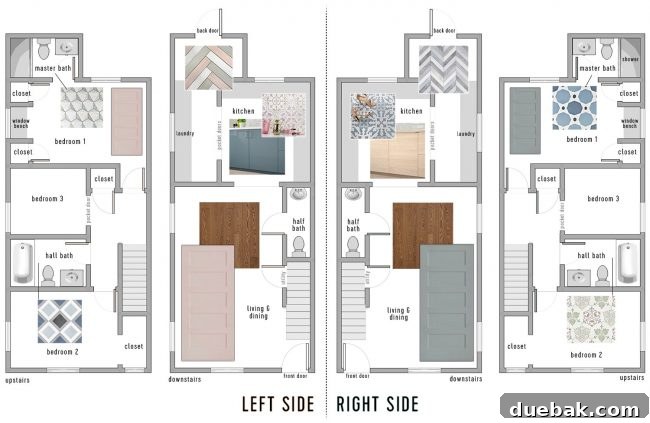
Regarding the subway tile, we chose this incredibly affordable 3 x 6-inch option, installed in a standard running bond pattern. It’s the same reliable material we used and loved for the beach house kitchen backsplash. For the two en-suite showers, we opted for white herringbone tile on the shower floors, adding a subtle touch of visual interest without overwhelming the space. Our initial floor tile selections were outlined in a previous post detailing how we chose our tile, cabinets, and paint colors. However, even with meticulous planning, design decisions sometimes evolve on-site. We made one crucial, last-minute adjustment: swapping the tile choices for the two en-suite bathrooms. The marble-look tile simply paired more harmoniously with the blue-green doors than the pink ones. This experience underscored the importance of seeing materials in the actual space, alongside other design elements, before making a final commitment.
In that same post, we also shared our strategy of limiting ourselves to larger tiles with engaging patterns, rather than smaller mosaics. This wasn’t just an aesthetic choice; it was a practical one. We knew that larger tiles would significantly speed up the installation process. While we adore the main bathroom floor in our pink house, that particular mosaic took what felt like an eternity to lay. Even within our “larger tile” parameter, we quickly discovered that some tiles were inherently faster, easier, and more forgiving to install than others. Ultimately, we are thrilled with how every floor turned out. However, some definitely tested our patience and consumed considerably more time. If speed, ease of installation, and a foolproof process are high priorities for your next tiling project, or if you’re a tiling novice seeking straightforward options, this guide should prove invaluable.
Let’s begin with the easiest ones:
The Square Patterned Tiles: Effortless Elegance
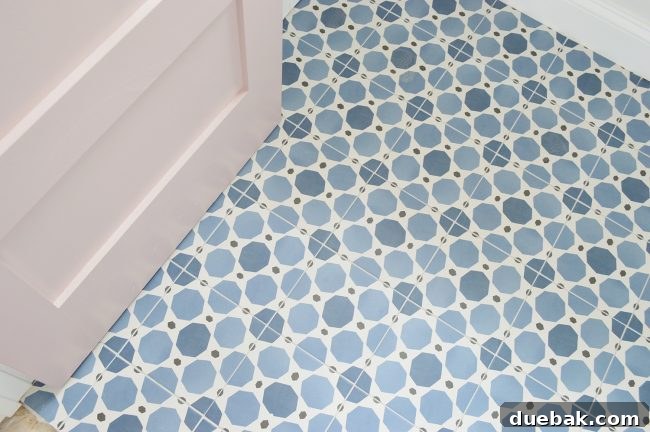
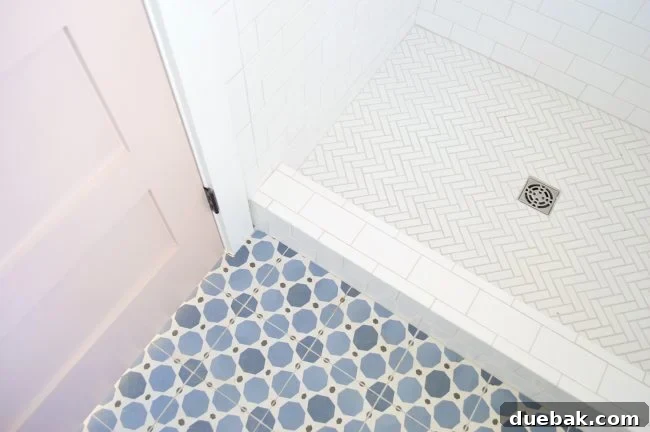
Floor Tile | Grout: Warm Gray | Door: SW White Truffle
Without a doubt, the blue patterned tiles we installed in the bathrooms on the left side of the duplex were the fastest and most straightforward to work with. There were two key reasons for this remarkable ease. Firstly, their square shape meant we were consistently working with right angles, which simplifies layout, cutting, and placement immensely. Secondly, and perhaps even more importantly, the pattern on these tiles was perfectly symmetrical on all sides. This brilliant design meant that we could lay the tile down in any orientation, and it would always line up correctly with its neighbors. This combination of factors not only accelerated the installation but also significantly reduced waste. Since the pattern was identical on every edge, we could efficiently reuse cut pieces in smaller areas, like around edges or corners, minimizing material loss and keeping costs down.
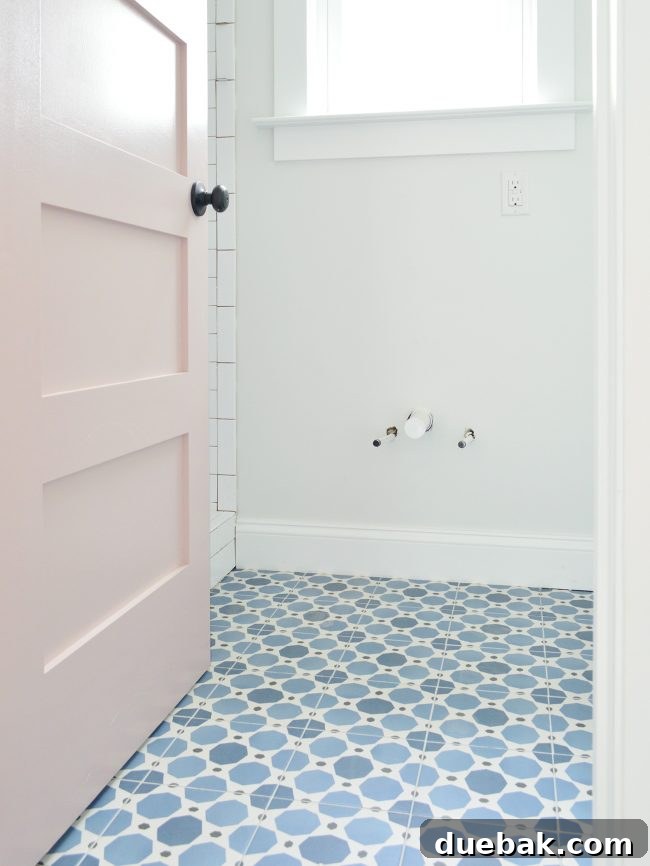
Floor Tile | Grout: Warm Gray | Door: SW White Truffle | Wall: SW Spare White
The size of these tiles also contributed significantly to their ease of installation. The en-suite bath tile, shown above, measured approximately 8 x 8 inches, while the hall bath tile, pictured below, was a slightly larger 9 x 9 inches. These dimensions struck a perfect balance: they weren’t so large as to be cumbersome or heavy, a common challenge with oversized tiles, yet they offered far quicker coverage than a tiny mosaic would have. We estimated that each room took us roughly two hours to lay the tile, a remarkably short time frame compared to some of our other, more intricate tiling endeavors. The efficiency and straightforwardness of these square tiles truly made them a standout choice.
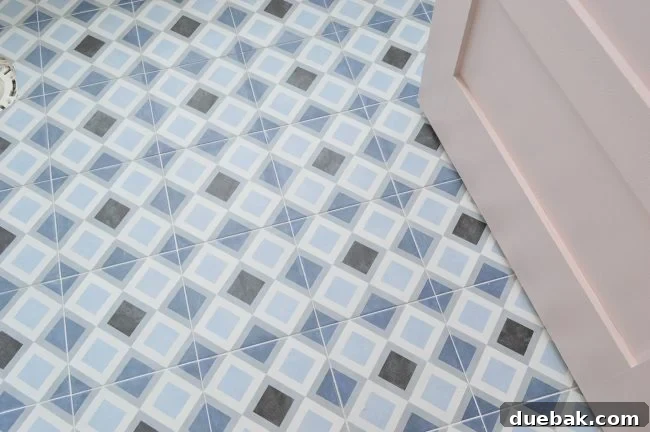
Floor Tile | Grout: Frost | Door: SW White Truffle
Despite their simple square shape and easy installation, the finished floors in these bathrooms exude an intricate and interesting aesthetic, which was precisely our goal. We are absolutely thrilled with the outcome of these tiles. They earn a perfect ten stars and our highest recommendation. Final Verdict: If your aim is to achieve a stunning patterned floor while keeping your tiling project as simple and manageable as possible, we wholeheartedly suggest opting for square tiles like these and these. Both options are made of durable porcelain, a significant advantage as they require no sealing or the delicate care often associated with more finicky materials like cement tile.
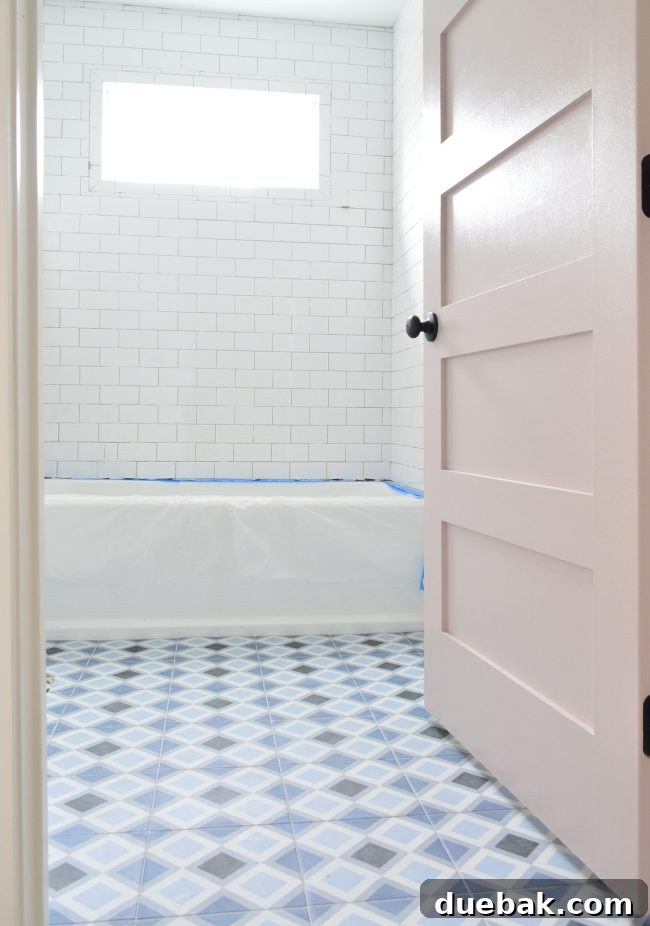
Floor Tile | Wall Tile | Grout: Frost | Door: SW White Truffle | Drop-in Tub
The only slight change we’d consider for a future project involving these tiles is using a darker gray grout in the room pictured above. In an effort to streamline the process and minimize costs, we stuck to one grout color for all rooms (and for the showers, some of which hadn’t been grouted when these photos were taken). However, Sherry believes a darker gray would have allowed the grout lines to recede even further, enhancing the visual pop of the diamond pattern. After all, who doesn’t love a striking diamond pattern?
Now, let’s move on to the next simplest tile to install…
The Marble-Look Hex Tile: Classic Appeal, Moderate Challenge
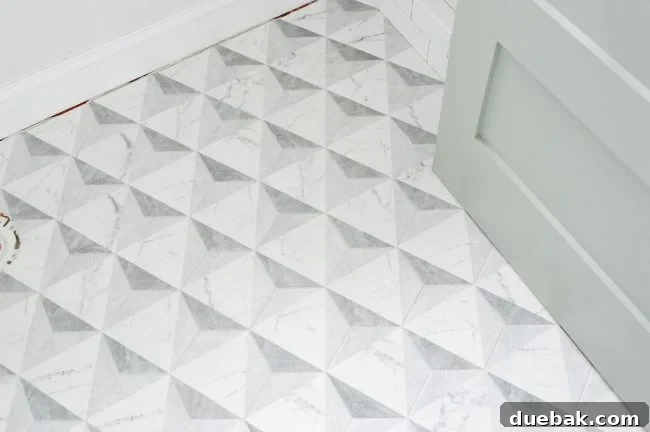
Floor Tile | Grout: Frost | Door: SW Oyster Bay
While we refer to it as “marble-look,” this particular tile is actually porcelain, just like all our other selections. This choice was deliberate, prioritizing extra durability and eliminating the need for sealing. Despite not being genuine marble, it might just be our favorite tile in the entire duplex. Its marble-like finish exudes classic elegance and brightness, but it’s the geometric pattern layered on top that truly makes it unique and distinctive. We’re so enamored with this tile that we’ve even considered using the same design in our own bathroom back home in Richmond.
(A quick note: any visible gaps between the tile and the tub or baseboard in various photos throughout this post will be seamlessly covered by white quarter-round molding in the final stages of the renovation, ensuring a polished look.)
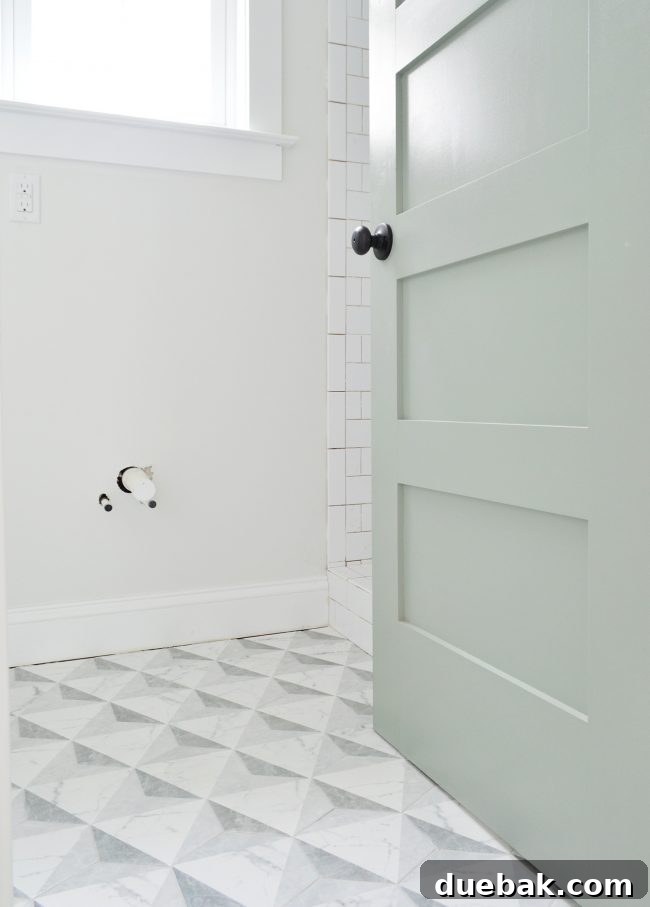
Floor Tile | Wall Tile | Grout: Frost | Door: SW Oyster Bay | Wall: SW Spare White
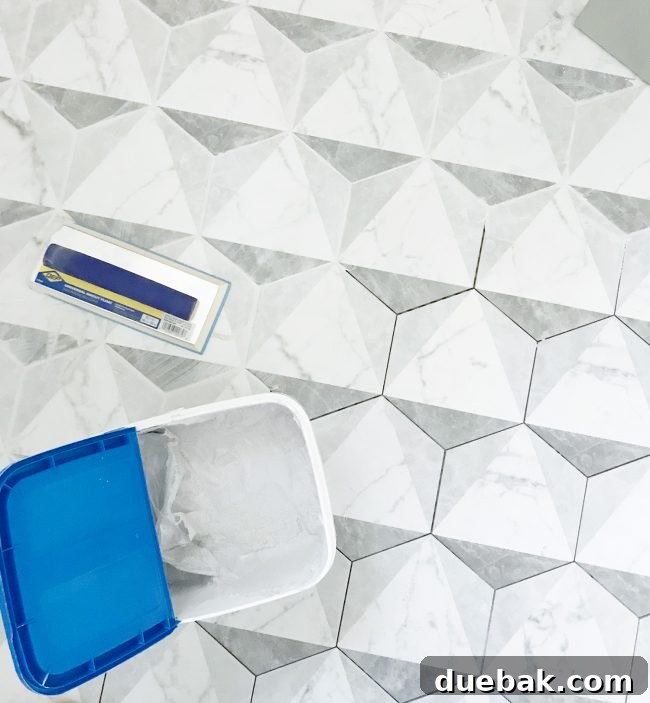
Similar to the square tiles, this hex tile measured approximately 8 x 8 inches, making it a very manageable size for handling and providing efficient coverage in the room. While the square tiles took us about two hours, this hex tile likely consumed around three to four hours for installation. This slight increase in time can be attributed primarily to two factors: firstly, the hexagonal shape required more meticulous cutting and careful placement compared to simple squares. Secondly, its asymmetrical pattern demanded greater concentration to avoid errors in orientation. On that note, it’s worth mentioning that this tile offers two distinct visual arrangements. Observe the image below: in the left picture, the triangles within the pattern are uniformly colored, while in the right, they appear differently shaded due to a rotation of the hexes. We experimented with both options and ultimately chose the look on the right, but the alternative is equally valid, depending on personal preference.
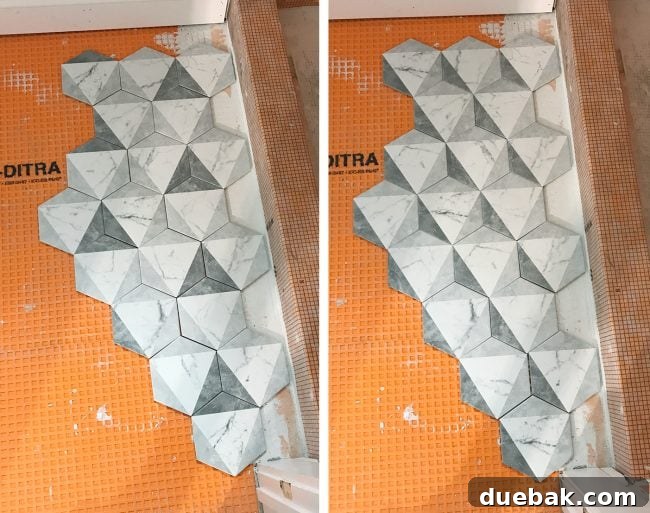
Beyond the mental exercise of maintaining the pattern, hex tiles generally demand more precision when it comes to spacing to prevent the layout from drifting. A slight misplacement of a single tile in your initial corner can lead to significant headaches down the line, as that minor inconsistency becomes magnified with each subsequent row. To preempt such issues, we adopted a crucial strategy: we meticulously laid out a substantial number of tiles *before* even mixing the Thinset. This dry run allowed us to thoroughly check how everything aligned and ensure we wouldn’t end up with awkward, tiny slivers of tile at the edges. While this might seem like an extra step, it significantly streamlined the process once we actually began setting the tiles permanently.
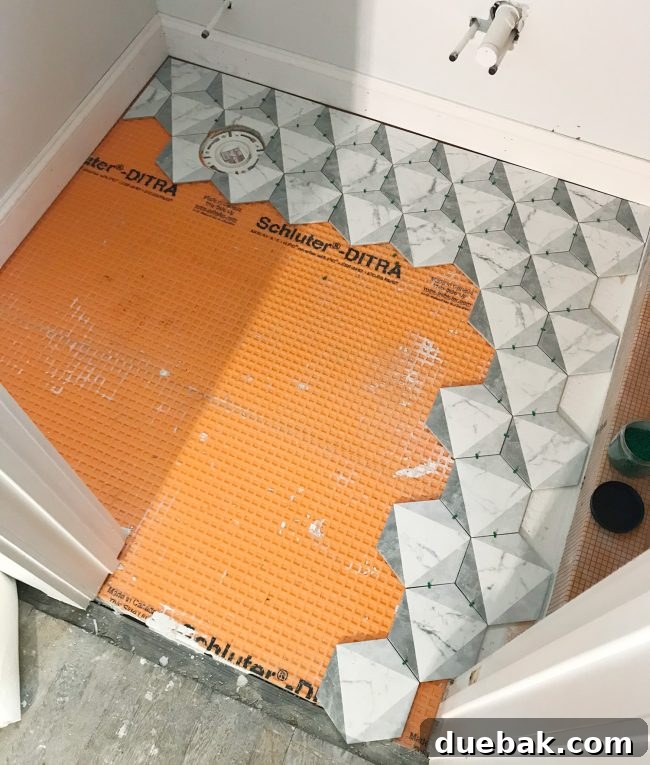
Final Verdict: Ultimately, installing this hex tile was noticeably, though not dramatically, more challenging than the square tiles. However, with careful attention and the use of appropriate spacers (we opted for 1/16th spacers), we successfully maintained consistent alignment and spacing throughout the installation. Even if our spacing had drifted slightly, the grout color we chose proved highly effective in disguising any minor imperfections.
Sidenote on Grout: We’re huge advocates for Mapei grout for several reasons. Firstly, it comes conveniently premixed, saving valuable time and effort. Secondly, and a major plus, it doesn’t require sealing, offering exceptional durability, flexibility, and stain resistance. Once it’s dried and any grout haze is buffed away, it’s truly good to go. Our contractor swears by it and refuses to use anything else. We’ve used it extensively throughout our pink house, and after more than a year of heavy use, all the grout in the bathrooms and mudroom still looks pristine – no scrubbing required! This product is a game-changer for long-term maintenance.
However, just because *this* hex tile went down smoothly, doesn’t mean all hex tiles are created equal…
The Patterned Hex Tile: A Test of Patience and Precision
This other hex tile, installed in the hall bathroom on the same side as the previous one, was an entirely different beast. Let’s just say it’s a good thing we absolutely adore the final look, because the installation felt, at times, downright cursed.
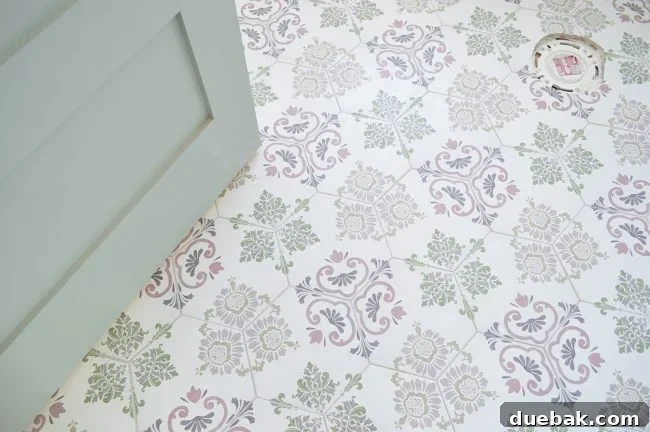
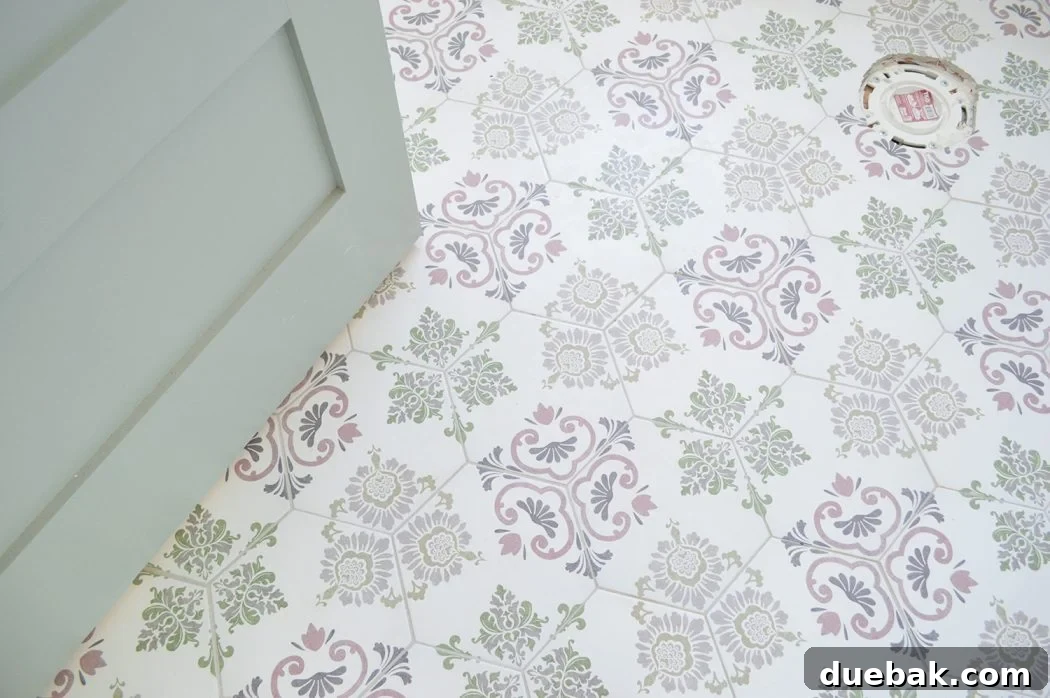
Floor Tile | Grout: Warm Gray | Door: SW Oyster Bay
This tile presented many of the same challenges as the previous hex tile – a non-square shape and an asymmetrical pattern. However, its pattern was even more intricate and demanding to keep consistently straight, leading to a few regrettable cuts along the way. Furthermore, reusing cut pieces became significantly harder due to the pattern’s highly specific nature, contributing to more material waste. In a particularly frustrating moment, I actually laid one tile in the *wrong* direction. We remained blissfully unaware of this error until a week later, when it was time for grouting. Can you spot it in the image below?
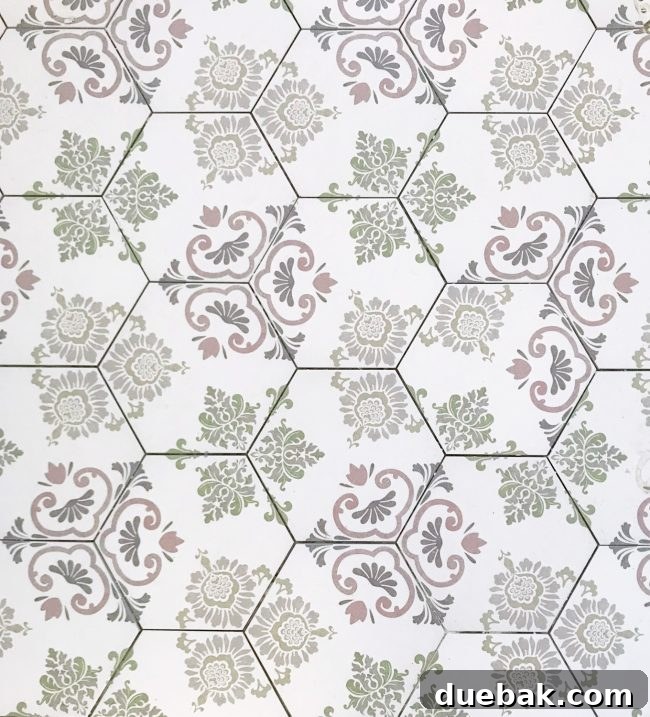
Thankfully, rectifying the error wasn’t overly complicated. I simply used a hammer to break up the offending tile, carefully removed the shattered pieces, and installed a new one in its place. However, this incident did push back our grouting schedule by a day, as we had to allow the new thinset to cure properly. To add insult to injury, this all happened *after* we had already run out of tile during the initial installation. Yes, we were approximately 80% finished when we realized we needed to order another box. This room, therefore, brought us two rather frustrating setbacks. Despite these challenges, we eventually conquered it.
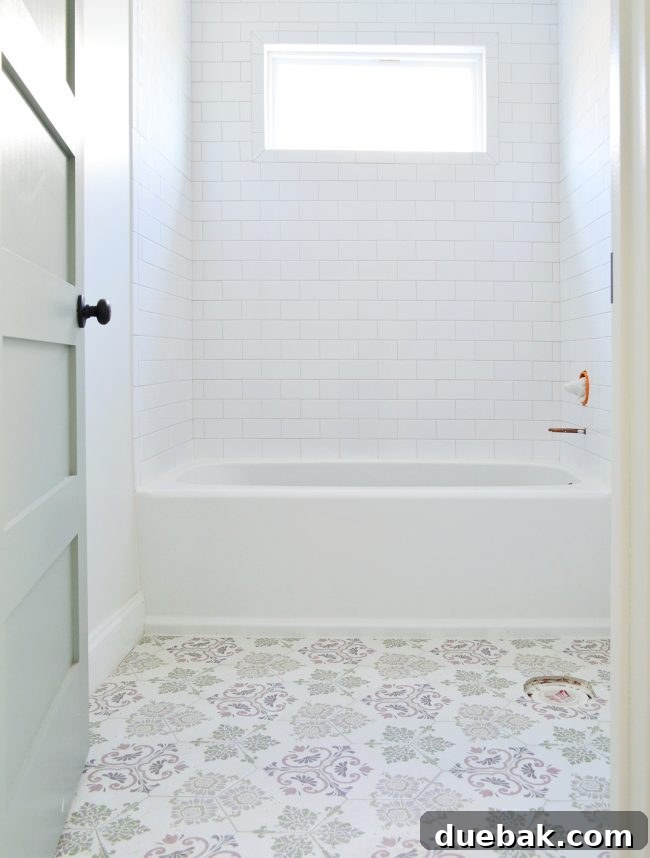
Floor Tile | Grout: Warm Gray | Door: SW Oyster Bay | Wall: SW Spare White | Drop-in Tub
We actually suspect the square footage calculations provided on the website for this specific tile might be inaccurate, as several other readers reported similar shortages. Even without our installation errors, we doubt we would have had enough. Again, it’s exceptionally difficult to reuse scraps with such a specific pattern. Therefore, if you decide to use these tiles, we strongly recommend ordering approximately 25% extra, rather than the typical 10-15% overage usually suggested. Final Verdict: If ease and speed are crucial factors in your tile selection, we would NOT recommend this particular tile. While the finished result is undoubtedly stunning, maintaining the pattern’s alignment was a significant mental strain. This specific tile proved to be short based on the listed square footage for us and others, and we now know that equally interesting patterns can be achieved with simpler square tiles, saving considerable time and frustration.
The Chevron Mudroom Tile: Big Impact, Manageable Scale
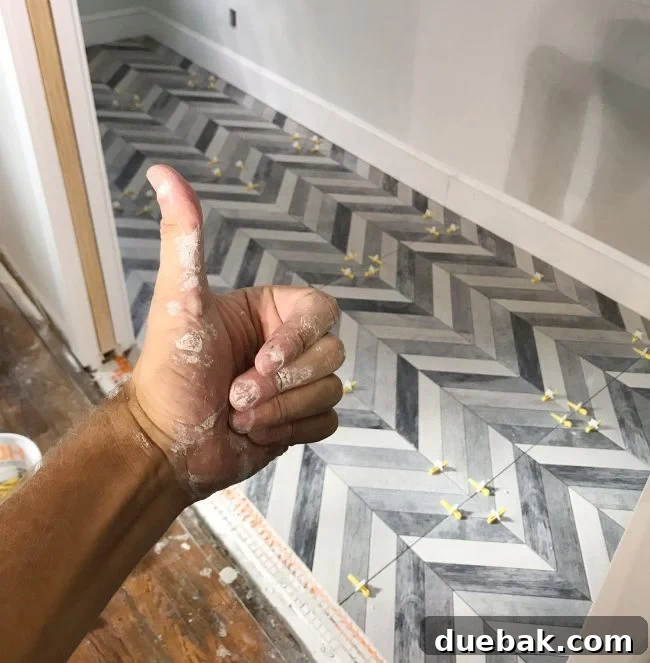
Now, let’s head downstairs to the two mudrooms/laundry rooms. I don’t have “after” photos of these spaces yet because they haven’t been grouted. Since the back doors serve as the primary entrances for our renovation crew, the mudrooms are still experiencing heavy foot traffic and accumulating grime. Currently, both floors are protected by paper, and we’ll proceed with grouting once the construction activity calms down. This means the best photos I have for these areas are primarily progress shots.
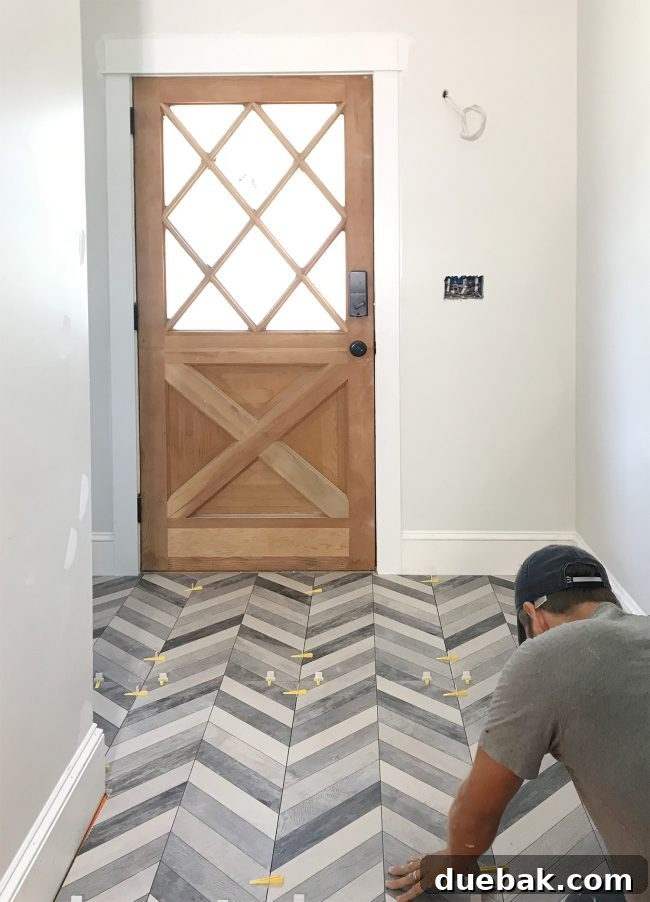
Floor Tile | Spacers | Wall: SW Spare White | Trim: SW Extra White
We genuinely enjoyed installing this chevron tile. Its rectangular shape made layout and cutting surprisingly straightforward. Furthermore, its generous size (17 inches x 35 inches) meant that the room – which is nearly as large as all four bathrooms combined – was tiled very quickly. The only minor drawback to these large tiles was their weight and bulk, making them a bit cumbersome to maneuver. I had to get creative with how I positioned them on the guide of my wet saw to ensure they fit properly under the blade for cutting. Additionally, maintaining a perfectly level surface with such large tiles can be challenging. This is why we always strongly recommend using LASH spacers, which provide crucial leveling support. You can read more about our experience with these indispensable tools in this detailed post.
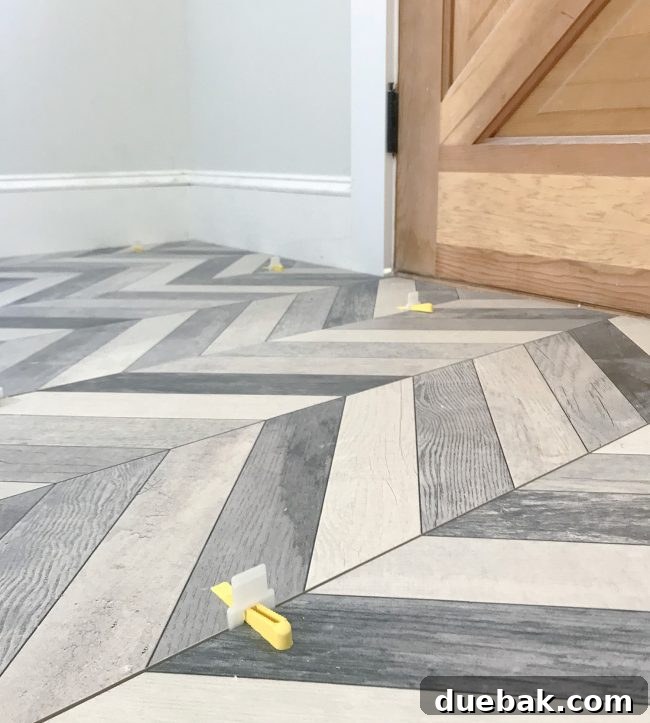
My only real quibble with this tile revolves around spacing. Ideally, the grout spacing between the installed tiles should perfectly match the spacing of the zigzags *within* the tile itself. To achieve this, the manufacturer recommends a (wait for it) 2/17th inch spacer. Who on earth sells a two-seventeenths inch spacer?! Fortunately, a standard 1/8th or 1/16th inch spacer (which is what we ultimately used) comes quite close to 2/17ths. Nevertheless, I find it an unnecessary complication that could easily lead to an imperfectly aligned chevron pattern if not meticulously planned. Even with this minor annoyance, for a large room, I would absolutely choose this tile again for its dramatic visual impact and quick coverage. Final Verdict: Larger tiles can indeed be more challenging to handle, cut, and level. However, these tiles were unequivocally worth the effort. Their size allowed us to complete the room remarkably fast, making them an efficient choice for expansive areas. Aesthetically, this is one of our most complimented tile choices – it truly makes a statement in person. Being porcelain, it’s also extremely durable. We wholeheartedly recommend this tile, especially when paired with the invaluable assistance of LASH spacers to ensure a perfectly level installation.
The Herringbone Mudroom Tile: The Ultimate Challenge (But Worth It!)
I’ve saved the best – or rather, the hands-down most challenging – for last. Yes, folks, this is the one we probably would NOT attempt again… which is incredibly difficult to say, because it looks so undeniably cool (even in this ungrouted state). (Just a reminder: any gaps between the tile and the baseboard in these progress shots will be concealed by white quarter-round molding for a finished, seamless look.)
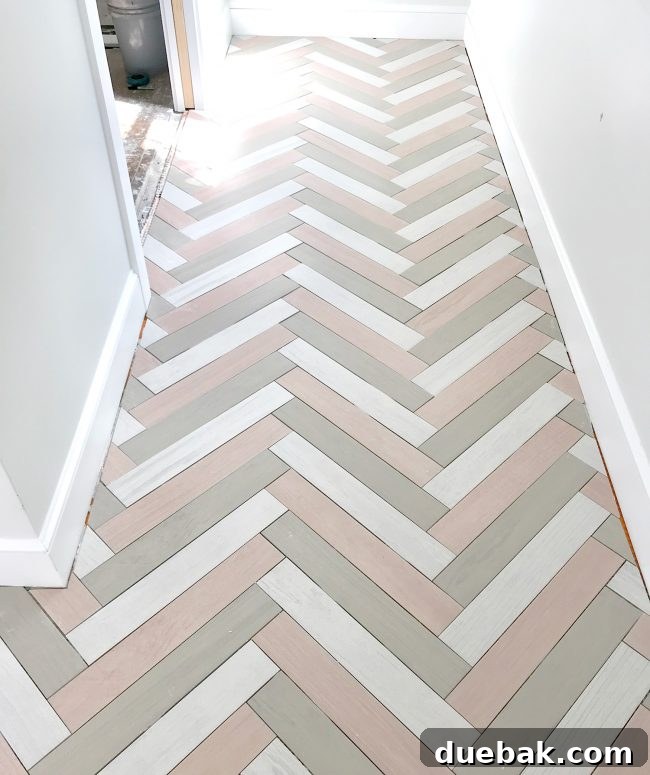
Floor Tiles: pink, white, and taupe | Wall: SW Spare White | Trim: SW Extra White
To create this visually striking floor, we laid three distinct colors of long porcelain tiles – pink, white, and taupe – in a sophisticated herringbone pattern. This combination created a perfect storm of all the challenges we encountered in previous rooms, multiplied:
- The intricate tri-color pattern demanded intense concentration to maintain its straight alignment and visual integrity.
- Despite using long rectangular tiles, executing a herringbone pattern necessitated an abundance of angled cuts, which are inherently less forgiving than straight cuts.
- Reusing cut pieces was exceptionally difficult due to the alternating colors and the specific nature of the angled cuts, leading to considerable material waste.
- Achieving a successful herringbone pattern requires absolutely meticulous spacing to prevent the pattern from drifting or becoming skewed.
Because of these compounding factors, and given the substantial size of the room, this was the *only* space that consumed an entire day to complete. In fact, just planning the pattern and making the initial cuts took us over two hours before we even began laying tile. Perhaps we were simply exhausted (this was room five of six, tackled across two consecutive weekends), but it required nearly every ounce of our mental energy to precisely measure all those angled cuts, keep everything square to the walls, and simultaneously ensure the color sequence remained flawless. It was a true test of our tiling fortitude.
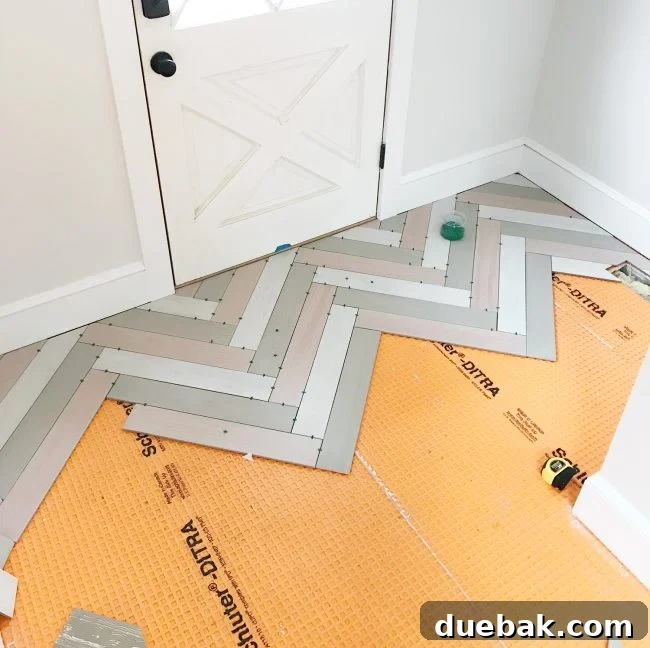
Final Verdict: This was, by a significant margin, the hardest tile choice we made. It took the longest to install and demanded the most mental calculations – from intricate angled cuts to the complex task of creating our own pattern with three different colored tiles. I believe the process could have been simpler if it were a smaller room, or perhaps a wider room with more opportunities for full, uncut pieces. Alternatively, choosing a simpler pattern instead of herringbone would have also reduced the difficulty. Therefore, I don’t want to completely dissuade anyone from recreating this stunning look, especially since we are genuinely *really* happy with the end result. However, I do want to ensure you are fully aware of the significant commitment and challenges involved before embarking on such an ambitious project.
And One More Thing… About Toilet Flange Cuts
This post intentionally didn’t delve extensively into “how-to” guides for general tiling, as it’s a topic we’ve covered numerous times over the years (and I’ll link to some of our previous tutorials at the end of this article). However, I did want to address one specific detail that sparked a surprising amount of interest and questions on Instagram: cutting around the toilet flange on the floor. See that neat, round cut below? Who knew so many people would notice it and ask about our technique. So, here’s how we tackle it.
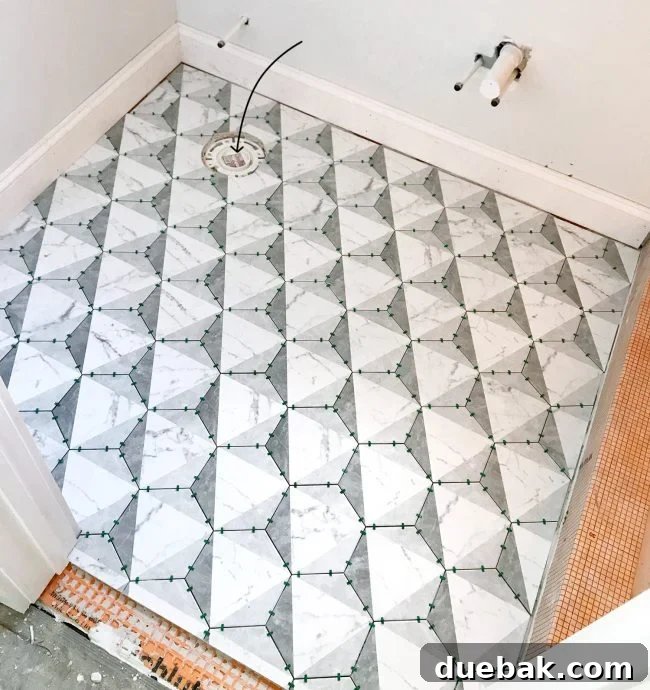
Unfortunately, I didn’t document this specific process with photos or video as it happened, and the job was already done by the time requests for tips started pouring in. So, I’ve done my best to illustrate the technique I use to create those round cuts around the toilet flange. While many professionals opt for an angle grinder to achieve a perfectly smooth, circular cut, I don’t own one. My process, utilizing my wet saw, is admittedly less ‘pretty’ in execution, but it gets the job done effectively. Here’s a breakdown:
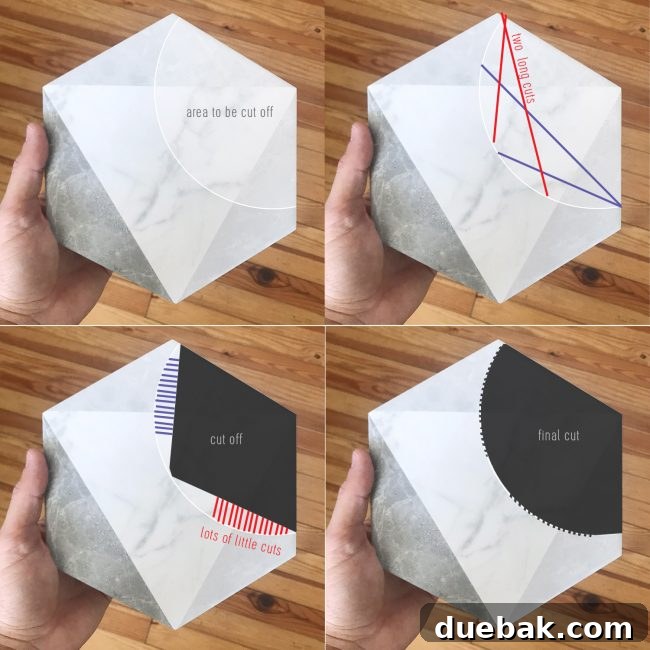
Essentially, once I’ve precisely marked the area that needs to be cut for the flange, I begin by making two long cuts from each side, at the shallowest angles I can manage (these are marked in red and purple in the top-right illustration). This initial step effectively removes a few larger chunks of tile, significantly easing the subsequent cutting process. Next, I make a series of short, closely spaced cuts along the marked edge of the circle, almost creating a ‘toothed’ effect (illustrated in purple and red in the bottom-left picture above). These ‘teeth’ usually break off during the process, or if they’re a bit too thick, I simply run my blade against them again to remove them. The final result is rarely a perfect circle; it often has small indentations where those individual ‘teeth’ cuts were made. However, since this area will be completely covered by the toilet base, absolute perfection isn’t necessary.
In fact, I probably don’t need to be quite as meticulous as I tend to be, given that it will be hidden. However, it’s crucial not to become *too* lazy. Your toilet requires a flat, solid surface to rest securely, and if your chosen porcelain throne has a particularly small base, an excessively large or irregular cut could end up peeking out, compromising the finished look. Speaking of which, the upstairs toilets and vanities were installed last week, and we’re planning a trip out there this weekend to see everything firsthand! Things are truly coming together beautifully!
More Tiling Projects & How-To Guides:
If you’re eager for more in-depth tutorials on tiling or wish to explore some of our past tile projects, you’ll find a wealth of information here:
- How to Install a Subway Tile Backsplash (complete with a helpful video!)
- How to Mix Thinset and How to Install Penny Tile
- How to Install Subway Tile in a Herringbone Pattern
- How to Install Cement Board and Large Floor Tiles
- How to Install a Herringbone Marble Backsplash Using Mastic
- How to Install Oversized Tile in an Outdoor Area
- How We Customized a Hex Mosaic in the Beach House
*This post contains affiliate links, which means we may earn a small commission if you make a purchase through our links, at no extra cost to you. Thank you for supporting our work!*