
Updated January 2022
Do your kitchen cabinets sometimes feel as if something is missing? Perhaps they don’t quite reach the ceiling, leaving an awkward, empty gap that detracts from your kitchen’s overall aesthetic? We understand that feeling of wanting to elevate your kitchen’s style without embarking on a full-scale renovation. Today, we’re excited to share a simple yet incredibly impactful DIY project: installing crown molding on your upper kitchen cabinets. This upgrade is one of our absolute favorite home improvements, transforming an unfinished look into a polished, custom design – and the best part? We completed it in just about three hours! Get ready to give your kitchen that refined, upscale appearance it deserves with this surprisingly straightforward project.
Why Elevate Your Kitchen with Crown Molding?
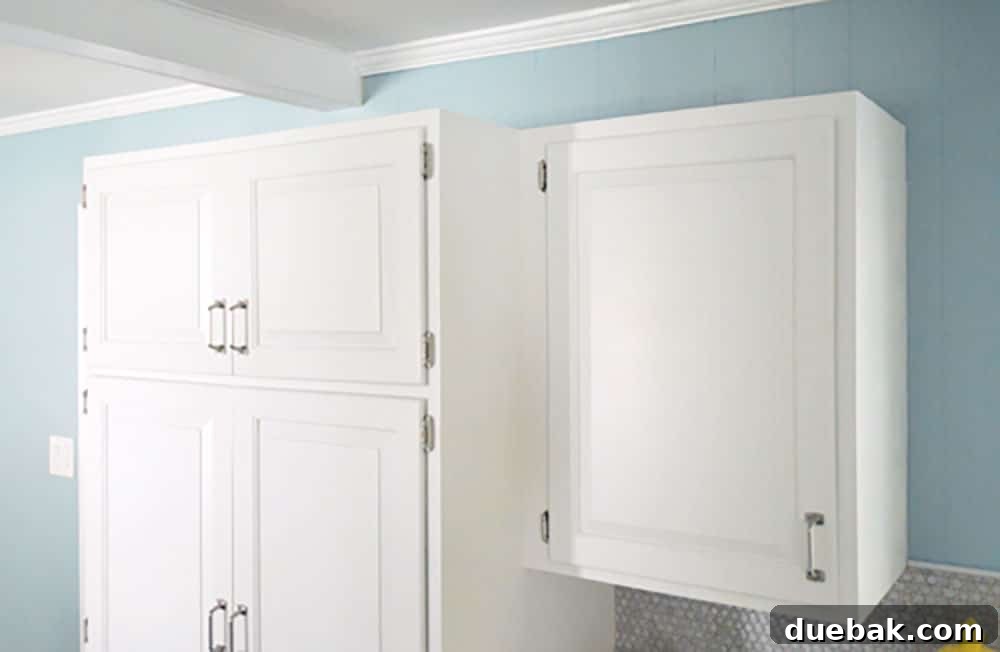
When we finished our kitchen renovation last year, we made a conscious decision to initially skip adding crown molding to the tops of our upper wall cabinets. Our reasoning at the time was a preference for a clean, minimalist look, believing the squared edges contributed to a more modern aesthetic. Additionally, having never tackled crown molding installation before, we admit there was a subconscious intimidation factor preventing us from trying something new.
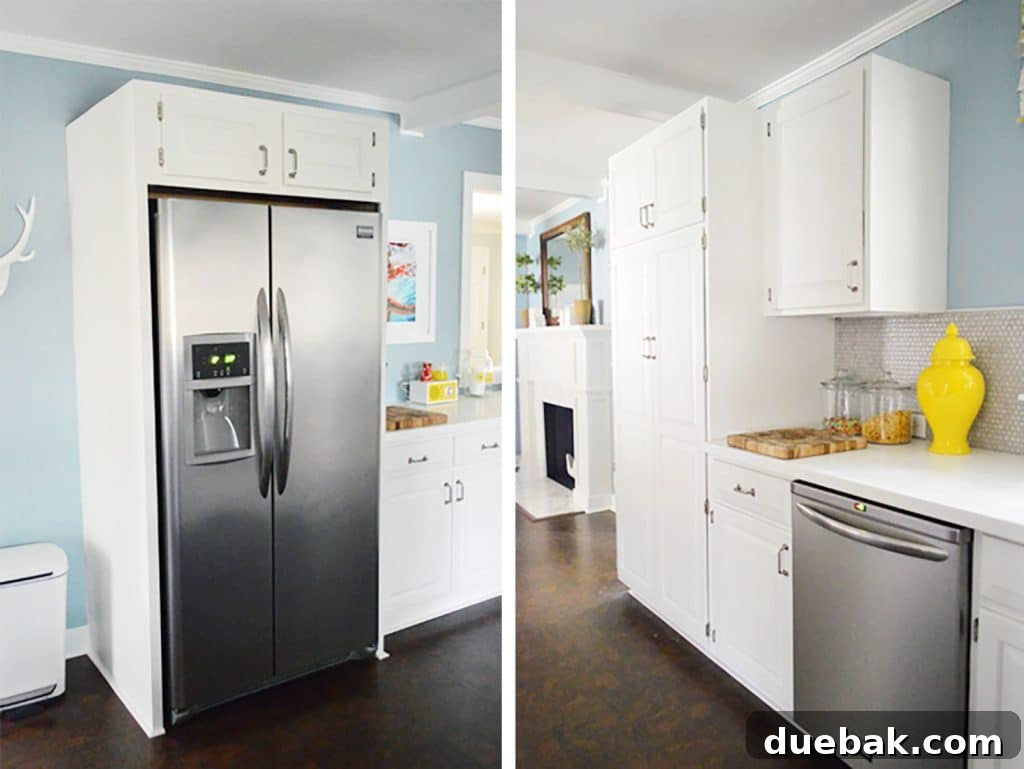
However, after successfully learning to install crown molding on a ceiling, our confidence grew, and we reconsidered. We realized the true potential of crown molding to not only bridge those awkward gaps but also to add a sophisticated, built-in feel to our cabinetry. The desire for a more finished, custom look ultimately led us to embark on this cabinet crown molding project. It’s remarkable how a single design element can so dramatically change the perceived value and style of an entire room, seamlessly transitioning it from functional to fabulous.
The Transformative Power of Cabinet Crown Molding
Installing crown molding on kitchen cabinets is more than just adding a decorative strip of wood; it’s about achieving a refined, high-end finish that truly completes your kitchen’s design. This simple addition can drastically improve the aesthetic appeal of your space in several key ways:
- Eliminates Gaps: It perfectly bridges the space between the top of your cabinets and the ceiling, removing dust-collecting voids and creating a seamless, custom look.
- Adds Architectural Detail: Crown molding introduces an element of classical architecture, enhancing visual interest and elevating the overall style from basic to bespoke.
- Increases Perceived Value: Cabinets with crown molding often appear higher-quality and more expensive, contributing to a sense of luxury and increasing your home’s appeal.
- Creates Cohesion: It provides a visual connection between your cabinets and the ceiling, making the entire kitchen feel more cohesive and intentionally designed.
- Conceals Imperfections: Minor inconsistencies in ceiling height or cabinet installation can be artfully hidden by carefully installed crown molding, resulting in a flawless finish.
This project is an excellent way to achieve a custom kitchen look without the custom kitchen price tag. It’s a DIY venture that pays dividends in both aesthetics and satisfaction.
Steps for Adding Cabinet Crown Molding: A Quick Overview
Don’t let the professional appearance of crown molding fool you; this is a surprisingly manageable project that most DIY enthusiasts can tackle with confidence. With just four basic steps, you can easily complete this transformation in a single day, or even a few hours, depending on the size of your kitchen. Here’s a quick glance at the process:
- Prepare Your Cabinets: Attach scrap wood above your cabinets to create a stable nailing surface for the crown molding.
- Measure and Cut: Precisely measure your cabinet runs and carefully cut your crown molding pieces to size, paying close attention to corner angles.
- Secure the Molding: Nail the pre-cut crown molding into the scrap wood, ensuring a snug and secure fit.
- Finish with Caulk and Paint: Seal any gaps or nail holes with caulk and then paint the molding to match your existing cabinetry for a seamless finish.
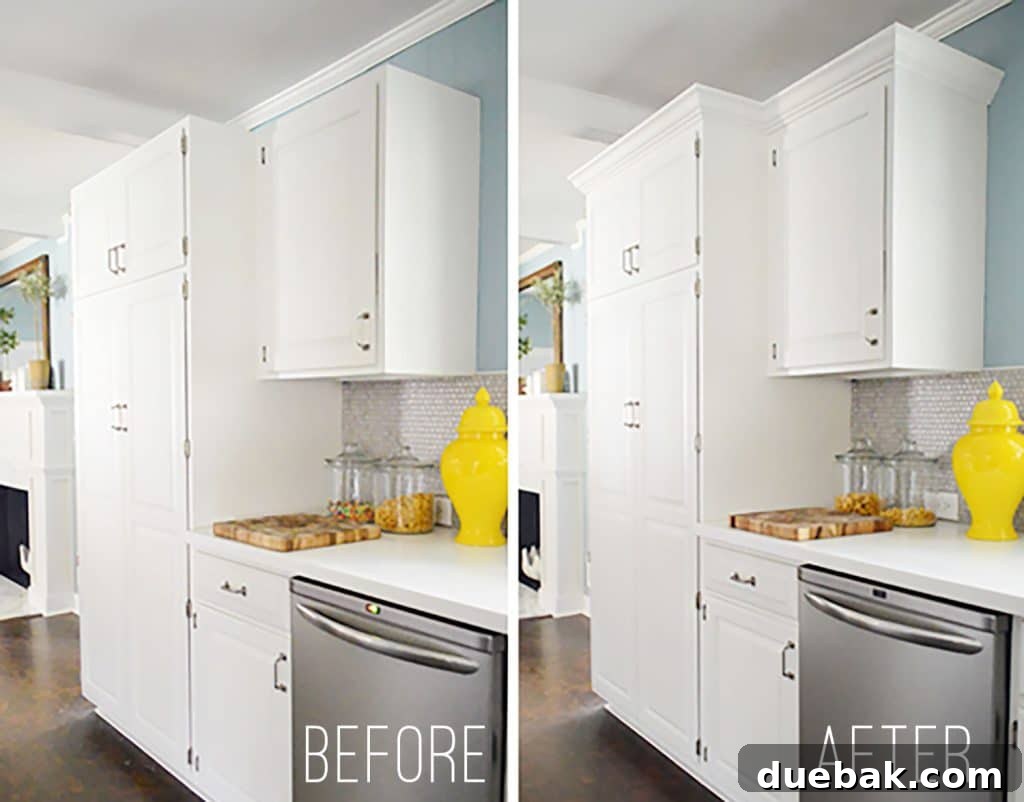
As you can see from the striking before-and-after comparisons, this small change makes an incredibly significant difference, elevating the entire room.
Essential Tools & Materials for Your Cabinet Crown Molding Project
To successfully add crown molding or other decorative trim to the top of your cabinets, having the right tools on hand will undoubtedly make the process faster, smoother, and more enjoyable. Investing in these items will ensure a professional-looking result, even for a DIYer:
- Crown Molding: Choose a profile and material that complements your kitchen’s style. Ensure it’s primed if you plan to paint it.
- Measuring Tape: Essential for accurate measurements, “measure twice, cut once” is your mantra here.
- Nail Gun: A cordless finish nailer (like the one we use, which doesn’t require an air compressor) makes quick work of securing the molding without splitting wood.
- Wood Glue: Crucial for strong, lasting corner joints and for securing scrap wood.
- Kreg Crown Pro: This specialized jig is a game-changer for consistently cutting crown molding at the correct angle, simplifying what can be a tricky task.
- Miter Saw: Indispensable for making precise angle cuts on your molding. A good miter saw will ensure tight, seamless joints.
- 1 x 2″ White Wood or Pine (Scrap Wood): This provides the necessary backing and nailing surface above your cabinets. Leftover lumber works perfectly.
- Paintable Caulk: Essential for filling small gaps, nail holes, and seams, creating a smooth, finished appearance. Fast-drying caulk is a bonus.
- Paint*: Match your cabinet color precisely for a cohesive look. Bring a cabinet door or sample to the paint store if needed.
- Short Handle Paint Brush: Ideal for precision painting in tight spaces and for working on the molding.
- Painter’s Tape: Protects adjacent surfaces (walls, cabinet doors) during painting and can be used to hold glued corners while they dry.
*Important Note: If your kitchen cabinets are made of wood with a visible grain, you’ll want to carefully source crown molding in a matching stain color and wood species. Many cabinet manufacturers offer an assortment of coordinating trim pieces, so it’s always a good idea to check with them first for a perfect match. For painted cabinets, ensure your crown molding is primed white for easier painting.
Step 1: Precise Measurement and Molding Selection
Before you even think about purchasing your crown molding, precise measurement is absolutely critical. Take your time to carefully measure the entire top edge perimeter of your cabinets where the molding will be installed. Use a reliable tape measure and jot down every dimension.
A crucial consideration when buying crown molding is to understand that due to the angled cuts required for corners, your cut pieces will always be longer than the linear length of the cabinet runs. Therefore, it’s always recommended to purchase more molding than your initial linear measurement suggests. A good rule of thumb is to add at least 10-15% extra to account for waste, miscuts, and challenging angles, especially if this is your first time working with crown molding. It’s far better to have a little extra than to run short in the middle of your project and have to make an unplanned trip to the hardware store.
While measuring, also consider the style of crown molding. Different profiles offer distinct looks – from classic to contemporary. Choose one that harmonizes with your existing kitchen decor. Most common crown molding for cabinets comes primed and ready for paint, simplifying the finishing process.
Step 2: Preparing the Foundation – Attaching Scrap Wood
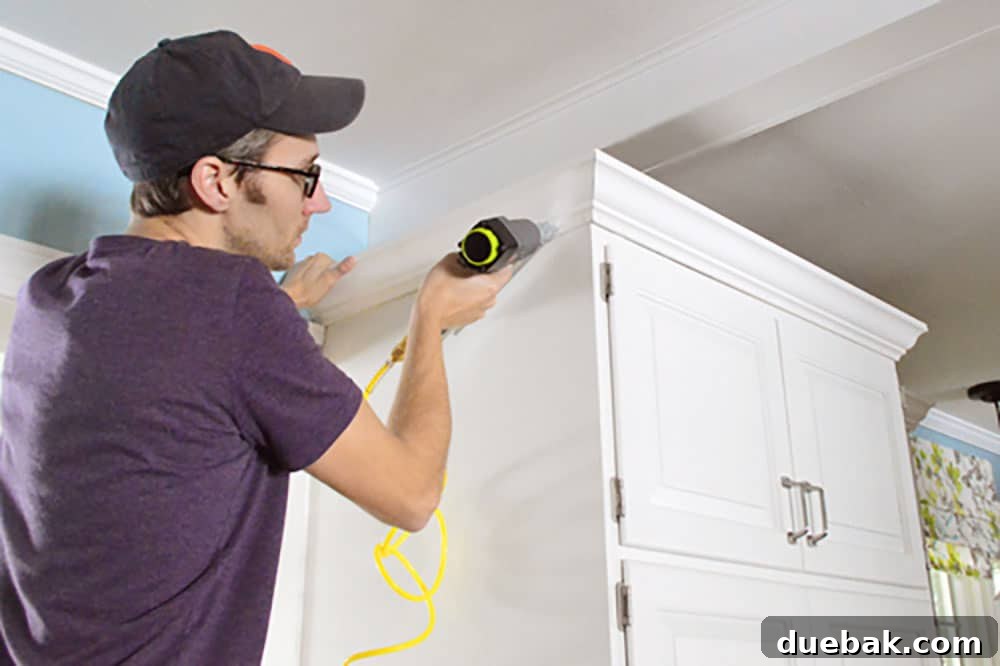
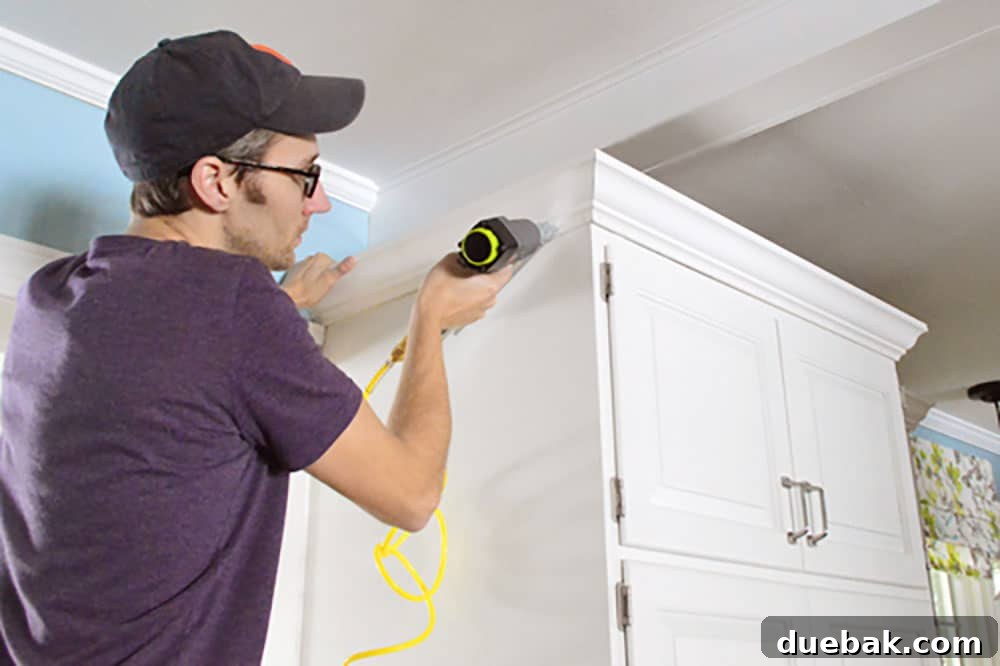
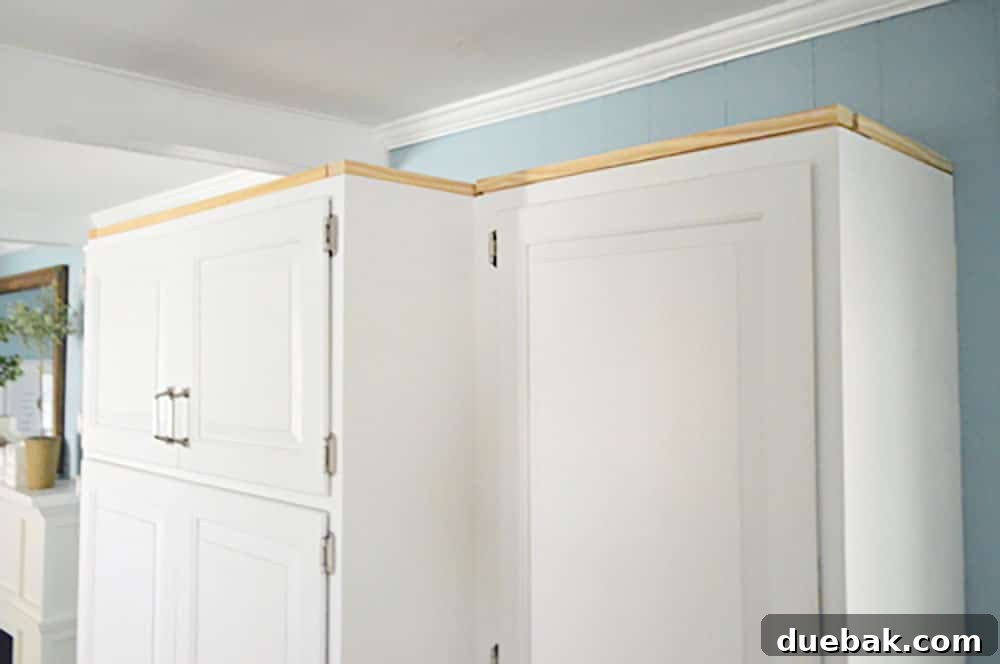
The next crucial step is to create a solid and level nailing surface for your crown molding. We began by attaching strips of 1 x 2-inch scrap wood (left over from a previous fireplace build) to the very tops of our upper cabinets. We used a combination of our reliable nail gun and a bit of wood glue for a secure attachment.
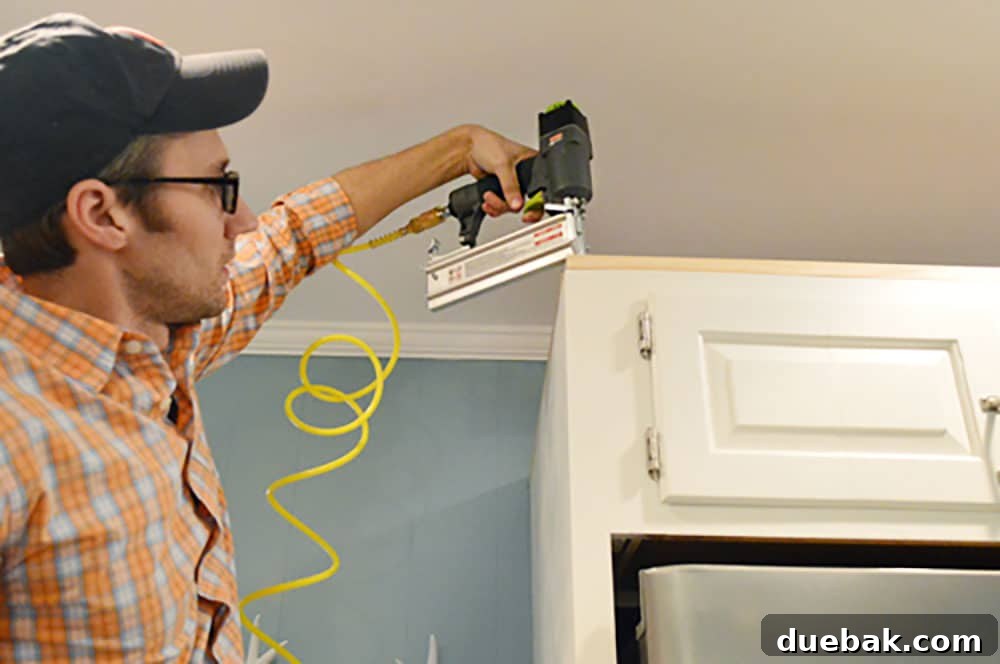
This scrap wood serves several vital purposes. Firstly, it provides much-needed extra height and a robust surface for the crown molding to rest against and be securely nailed into. In many cabinet designs, the cabinet doors extend close to the very top, leaving little solid wood space above them for nailing. This additional strip ensures you have plenty of purchase for your nails, preventing the molding from pulling away over time.
Secondly, by attaching the scrap wood precisely along the top perimeter, you can ensure a perfectly level base for your crown molding. This is especially helpful if your cabinets aren’t perfectly aligned or if you want the crown to slightly extend past the top edge of the cabinet face. The beauty of this step is that this wood will be entirely hidden by the crown molding itself, so it doesn’t need to be aesthetically perfect – hence, why scrap wood is ideal. Just focus on making it flush, secure, and running continuously along the entire perimeter of your upper cabinetry. Avoid extending it too far down, as this could visually shorten your cabinets, which is the opposite of the desired effect.
Step 3: Mastering the Cuts – Crown Molding Precision
This step often feels like the most daunting, but with the right tools and a little patience, it’s entirely achievable. If you’ve previously installed crown molding on walls, the fundamental principles here are largely the same. For those new to crown molding, we highly recommend checking out our detailed how-to install crown molding tutorial on YouTube for a visual guide.
The essence of this step involves:
- Accurate Measurement: Measure each section multiple times to ensure the correct length. It’s often helpful to mark where the molding will begin and end on the actual cabinet.
- Precision Cutting: Use your miter saw to make the necessary angled cuts for inside and outside corners. This is where a specialized tool truly shines.
We make all our cuts using our miter saw, which is indispensable for achieving clean, precise angles. What truly simplifies this intricate process, however, is using a Kreg Crown Pro. This ingenious jig holds your crown molding at the perfect 45-degree spring angle while you cut, effectively eliminating the complex compound miter settings often associated with crown molding. It transforms what could be a frustrating trial-and-error process into a smooth, straightforward task, ensuring consistent and tight-fitting joints. Always remember to prioritize safety when operating power tools; wear appropriate eye protection and keep hands clear of the blade.
Understanding Crown Molding Angles
Crown molding typically sits at an angle between the cabinet and the ceiling (or in this case, the scrap wood). This “spring angle” is crucial for correct installation. When cutting, you’ll need to set your miter saw to specific bevel and miter angles. For standard crown molding with a 45-degree spring angle, typical inside corners require a 45-degree miter cut, while outside corners require a 45-degree miter cut in the opposite direction. The Kreg Crown Pro simplifies this by allowing you to cut the molding “flat” on the saw table, guiding the blade for the correct angles. Practice on scrap pieces first to get a feel for how the molding sits and how the cuts interact.
Step 4: Securing Your Crown Molding with a Nail Gun
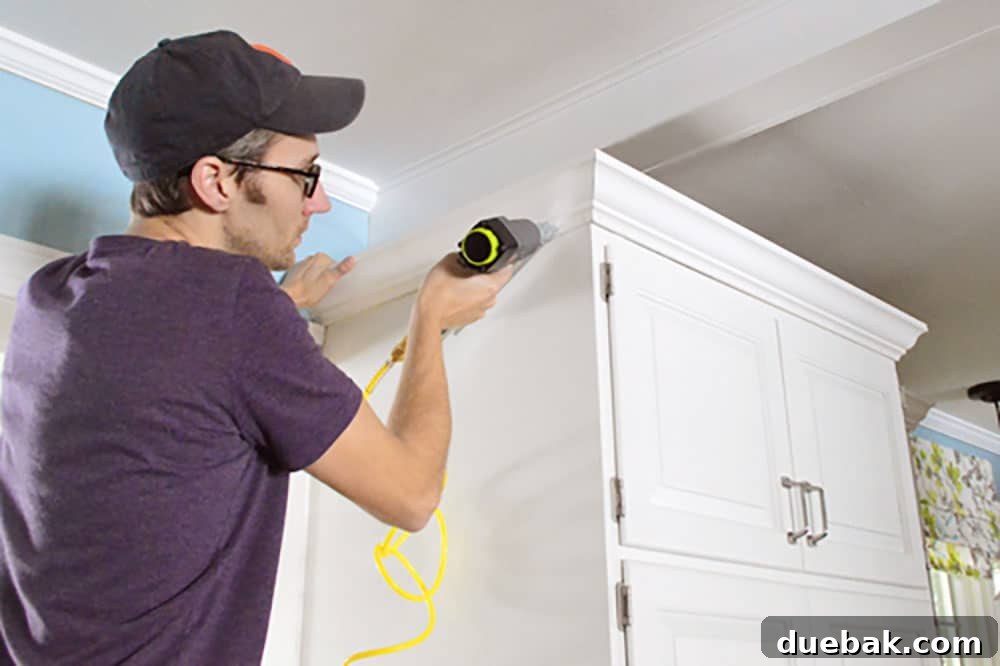
With all your crown molding pieces expertly cut, it’s time to bring your design to life by attaching them to your cabinets. This step is where your handy nail gun truly shines. Position each piece of molding firmly against the top of your cabinet and the pre-installed scrap wood. Using your nail gun, secure the molding by driving small nails every few inches. Aim for the scrap wood whenever possible to ensure a strong hold. Be careful to apply consistent pressure to keep the molding tight against both surfaces (cabinet face and scrap wood) as you nail, which will help minimize gaps.
Pro Tip: Mastering Outside Corners with Glue & Tape
Outside corners are notoriously tricky to get perfectly seamless and secure. While you want them to hold tightly together, nailing directly into such small, angled points of the wood can often lead to splintering or even breaking the molding. To circumvent this common issue and achieve a professional-grade finish, we employ a clever technique:
First, apply a small, even bead of wood glue to the mitered edges of both crown molding pieces that form the outside corner. Press them together firmly, ensuring they align perfectly. Then, use strong painter’s tape to hold the joint securely while the glue dries. The tape acts as a clamp, providing gentle but continuous pressure, allowing the wood glue to bond the pieces together effectively. After a few hours (or as directed by your wood glue’s drying time), you can carefully remove the tape, revealing a strong, virtually invisible joint. This method avoids the risk of splintering from nails and ensures a lasting, clean corner.
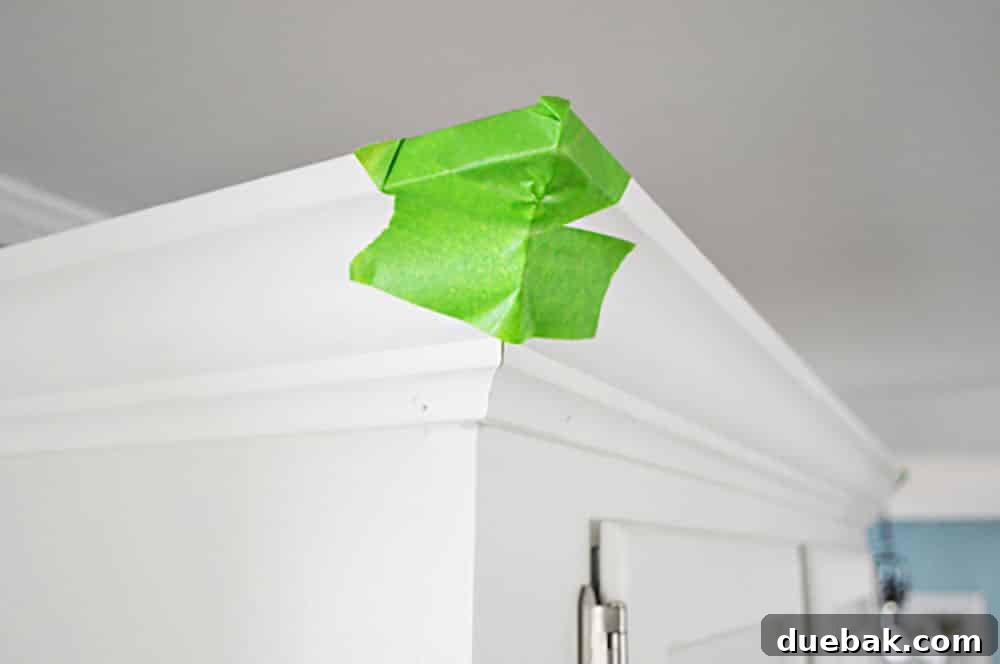
Alternatively, for added stability, you could also cut a small, triangular piece of scrap wood to fit snugly behind the corner. Once in place, you can then nail both pieces of crown molding into this hidden backing for an extra robust connection, especially useful in high-traffic areas or for larger molding profiles.
Step 5: The Finishing Touches – Caulk & Paint for Perfection
Once all your crown molding pieces are firmly installed around the entire perimeter of your upper cabinets, the final step is to refine the look with caulk and paint. This is where the magic truly happens, transforming a functional installation into a flawlessly finished design element.
Grab your trusty caulk gun and a tube of paintable caulk (we prefer Alex Plus Fast Dry caulk because it’s typically ready to paint within an hour, speeding up the process). Carefully apply a thin bead of caulk along all seams where the crown molding meets the cabinet and where it meets the ceiling or wall. Also, use a small dab of caulk to fill in any visible nail holes. Use a damp finger or a caulk tool to smooth out the beads, creating seamless transitions. Wipe away any excess caulk immediately with a damp cloth for a clean finish.
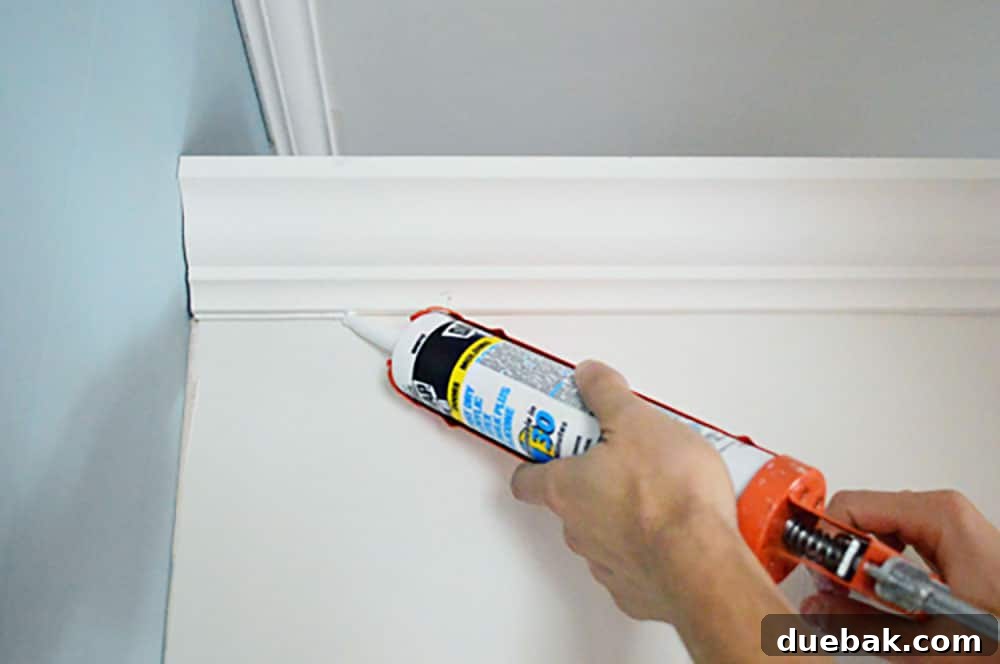
After letting the caulk dry for about 45 minutes to an hour (or according to product instructions), it’s time to paint. Using a short-handled paintbrush, apply a coat of paint that precisely matches your existing cabinets. We used Benjamin Moore’s Cloud Cover to perfectly blend our new molding with our white cabinetry. Since most crown molding comes pre-primed, a single coat of paint is often sufficient for lighter colors. However, if you’re using a darker or more vibrant paint color, you might need two coats to achieve full, even coverage and a rich finish. Take your time with painting to avoid drips and ensure clean lines. Painter’s tape can be invaluable here to protect adjacent surfaces and create crisp edges.
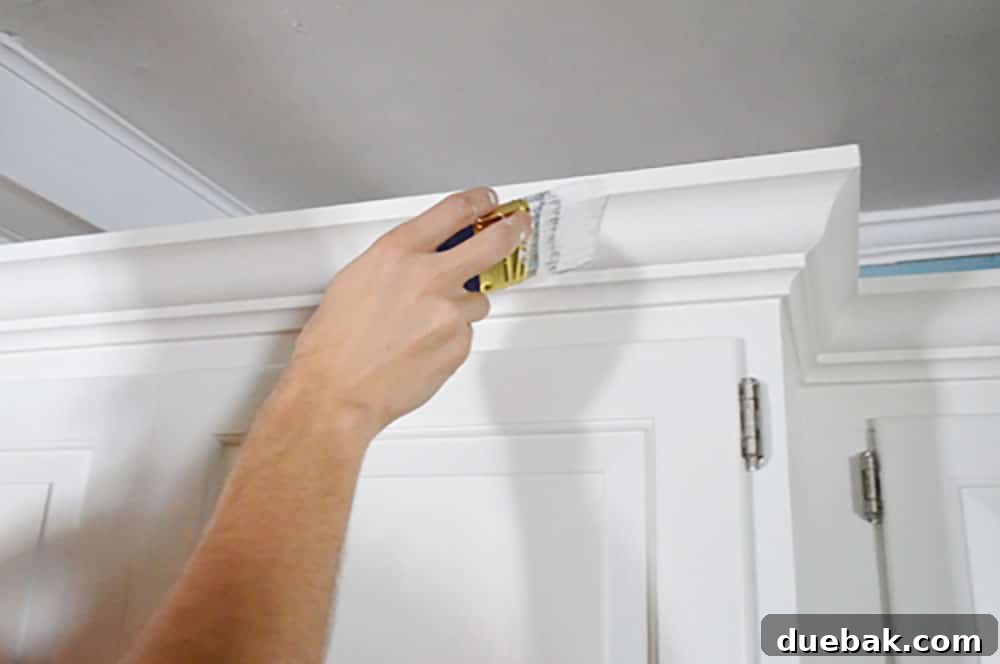
Once your paint is completely dry, step back and admire your handiwork! You’ve successfully transformed your kitchen with a custom, high-end look that will be enjoyed for years to come. Woo hoo!
The Unbeatable Value: Cost & Impact of this DIY Upgrade
One of the most appealing aspects of this project, beyond its ease and quick completion time, is its incredible affordability. This isn’t a renovation that will break the bank; it’s a smart investment with a high return in terms of visual impact and perceived home value. For our entire kitchen, our only significant expense was the purchase of three standard 8-foot pieces of crown molding. This brought the grand total for the project to an astonishingly low about $35. Considering the dramatic transformation, that’s an absolutely fantastic deal, offering immense value for such a minimal outlay. Compare that to the cost of replacing cabinets or undertaking other major kitchen overhauls!
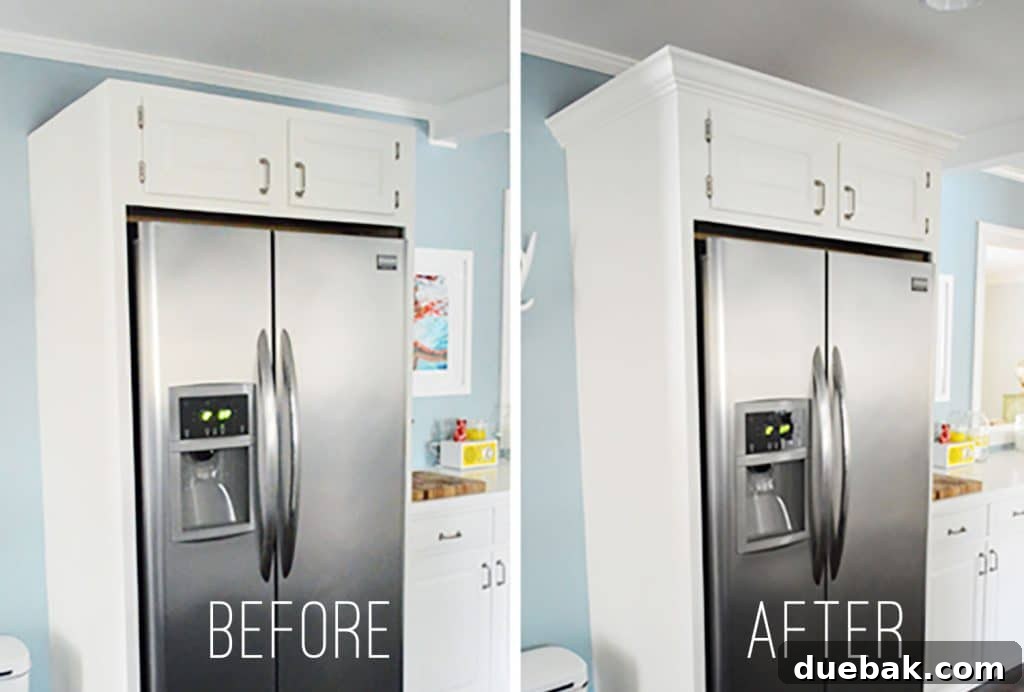
It’s definitely one of those projects that Sherry and I now kick ourselves for not tackling sooner. The “before” kitchen felt a bit unfinished, almost like it was missing its cap. Adding the crown molding provided that essential finishing touch, giving the cabinets a substantial, built-in appearance. But as they say, better late than never! We’re incredibly happy that we eventually hopped aboard the S.S. Molding and embraced this classic design element. Ahoy, indeed!

The addition of crown molding has played a pivotal role in helping us transition our kitchen’s style from a purely modern space to one with a more traditional and elegant feel. We believe the result is quite stately, adding character and timeless appeal that will enhance our home for years to come.
Explore More DIY Molding & Trim Projects
Inspired to tackle more trim work around your home? Crown molding is just the beginning! Check out some of these other engaging do-it-yourself molding and trim projects we’ve successfully completed, proving that a little trim can go a long way in adding character and value to any space:
- Cheap & Easy DIY Board and Batten Wall: Transform a plain wall into a statement piece with this classic architectural detail.
- Installing Crown Molding Around Built-in Bookshelves: Learn how to seamlessly integrate crown molding with custom built-ins for a truly bespoke look.
- How to Add “Chunky” Crown Molding Using Baseboard: Discover a clever trick to achieve a more substantial crown molding profile without the custom price tag.
- Making Base Cabinets Look Built-in with Trim: Extend the custom look beyond upper cabinets by adding trim to your lower cabinetry.
- Adding Traditional Trim Framing to Our Bathroom Walls: Create elegant wall panels and architectural interest in any room with this decorative molding technique.
- A Colorful Planked Accent Wall: Step outside the box with a unique planked wall treatment that adds texture and a pop of color.
Further Enhance Your Kitchen: More DIY Cabinetry Projects
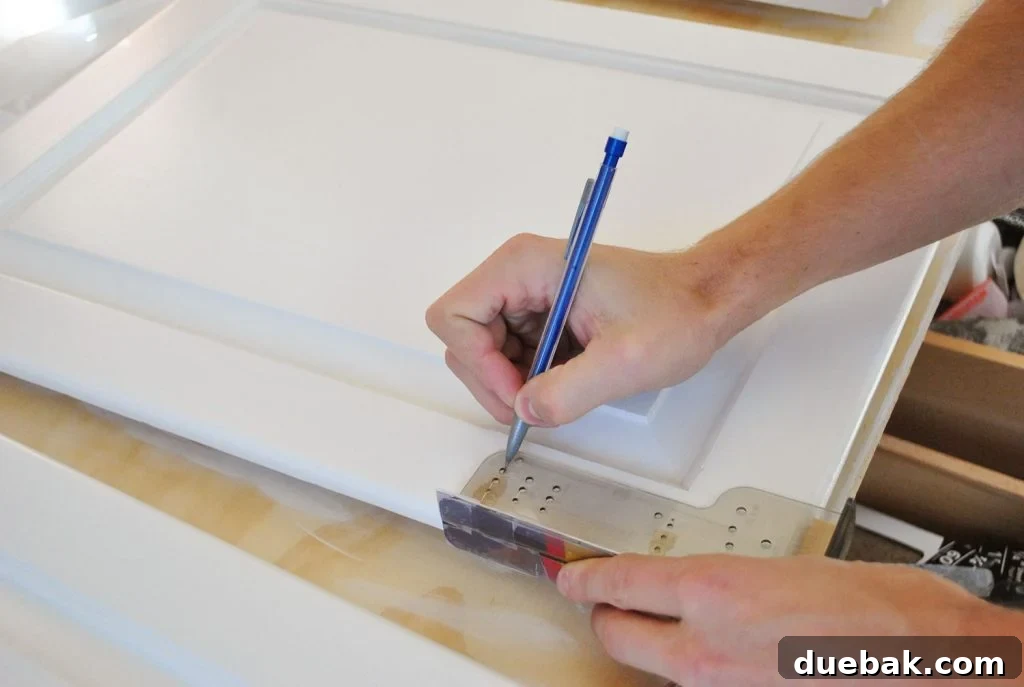
Beyond adding crown molding, there are numerous other ways to refresh and update your kitchen cabinets without the expense of a full replacement. If you’re looking for more impactful do-it-yourself solutions for your kitchen cabinetry, explore these projects we’ve tackled in our own homes:
- The Proper Way to Paint Wood Cabinets for a Durable Finish: Master the techniques for achieving a smooth, professional, and long-lasting paint job on your existing wood cabinets.
- Installing Hidden Hinges on Old Cabinets for a Modern Look: Upgrade the functionality and appearance of outdated cabinets by replacing visible hinges with sleek, concealed ones.
- How to Strategically Remove Upper Cabinets for an Open Feel: Learn how to open up your kitchen space and create a lighter, airier ambiance by thoughtfully removing select upper cabinets.
- Staining Wood Cabinets Darker Without Extensive Sanding: Discover a less labor-intensive method to change the color of your wood cabinets for a refreshed look without the arduous task of full sanding.
- How to Successfully Paint IKEA Kitchen Cabinets: Get expert tips and tricks for painting popular IKEA cabinetry to customize their look and extend their lifespan.
*This post contains affiliate links. As an Amazon Associate and member of other affiliate programs, we may earn a small commission when you make a purchase through links on our site at no additional cost to you. Your support helps us continue to provide valuable DIY content.