
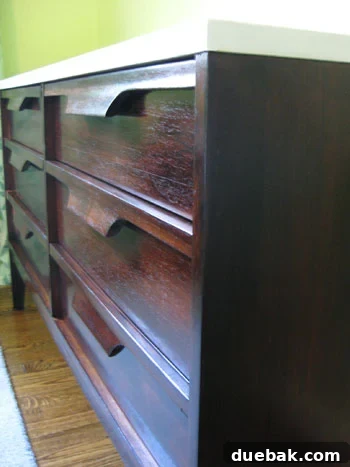
Transform Your Furniture: A Comprehensive Guide to Two-Tone Dresser Refinishing (Stain & Paint)
Embarking on our most ambitious nursery project yet, we successfully transformed an old dresser into a stunning, two-tone masterpiece. This detailed guide not only covers the art of staining any wooden or veneered furniture piece but also dives into the techniques for painting, as demonstrated by our recent budget-friendly dresser flip. If you’re looking to revitalize a piece of furniture with a durable, beautiful finish, you’ve come to the right place.
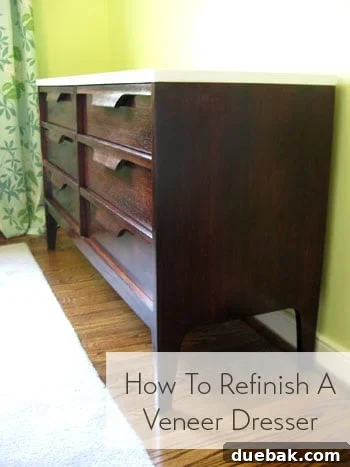
Our project involved giving a humble six-drawer dresser a sophisticated makeover: a deep, rich brown stain on its base complemented by a crisp, glossy white painted top. The result is a piece that feels custom-made and perfectly integrated into our nursery’s aesthetic. Here’s an in-depth look at how we brought this vision to life, step by step, ensuring a professional and long-lasting finish.
The Hunt for the Perfect Piece: Scoring a Vintage Dresser on a Budget
Our nursery, with its charmingly tiny closet, desperately needed additional storage. We measured the designated wall space for a double dresser, knowing we needed something under 60 inches wide to fit comfortably. Our ideal dresser would also feature elevated legs for an airy feel, and crucially, be deep enough to accommodate a 17-inch changing pad, as the top would double as a diapering station. With a strict budget of $150 in mind, we scoured Craigslist, hoping to unearth a solidly built, decades-old piece, rather than something flimsy from a modern big-box store. We also sought clean lines to harmonize with our modern crib, avoiding overly ornate or curvy designs.
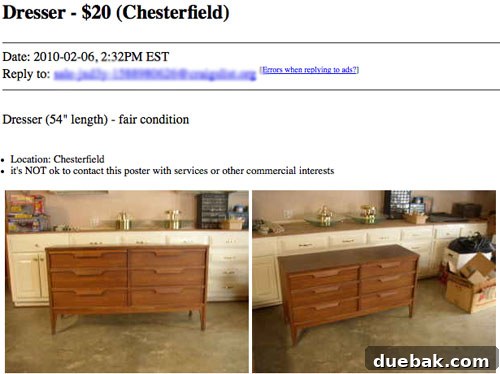
After a few days of diligent searching, this gem appeared on Craigslist: a dresser with charming small legs and a perfect 54-inch length. Its clean, mid-century lines promised to pair beautifully with our crib. And the price? An unbelievable twenty dollars! We quickly sent an email, fingers crossed, and within three hours, we heard back – we were first in line. Before committing, we had two critical questions: its exact depth (to confirm the changing pad fit) and whether it was solid wood (easier to refinish than laminate or thin veneer).
Navigating the Veneer Challenge: What to Know Before You Stain
The depth was perfect for our changing pad, a huge relief. The “bad” news was that it was veneered. However, for a $20 find, we couldn’t complain! The dresser was still exceptionally well-made, boasting sturdy dovetailed joints. Our original plan had always been to stain the dresser’s base a rich color and paint the top a glossy white, inspired by the two-toned look of our crib. The critical factor for veneered furniture, unlike solid wood, is the veneer’s thickness. Too thin, and sanding through it to the plywood underneath is an all-too-common hazard.
Fortunately, upon inspection, this Craigslist crush revealed an impressively thick veneer, approximately 1/4 inch. This immediately assured us that it could withstand sanding and staining without issue. Pro Tip: To assess veneer thickness, open a drawer or check the back of the piece. If it’s paper-thin, it’s generally not sandable. If it’s thicker than a dime, you’re usually good to go for sanding and refinishing.
With our dresser hunt successfully concluded, twenty dollars exchanged hands, and thanks to Emily’s borrowed SUV, our “new” double dresser was home. It was time for the transformation! We set up our workstation on the patio, protecting the surface with a large piece of cardboard to catch any drips from stain, paint, or primer throughout the multi-phase project.
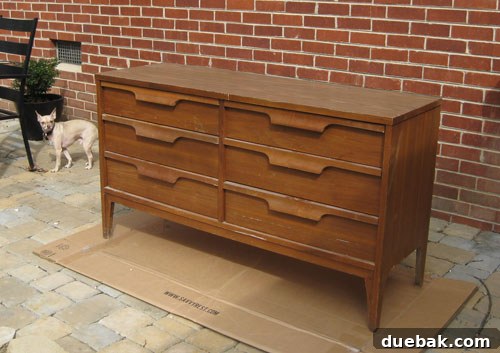
Upon closer inspection, the dresser showed signs of wear, with scraped and stained areas, and a dull, uninspired finish that didn’t match the deeper wood tones elsewhere in our home, including the drawer of our new crib. This further solidified our decision to refinish. It’s important to note that this staining and painting tutorial is effective for both solid wood items and veneered pieces, provided the veneer is not exceptionally thin. Important Note: This method is not suitable for laminate furniture, as laminate is not a true wood layer and will not absorb stain effectively.
Step-by-Step Guide: Refinishing Your Furniture Like a Pro
1. Essential Preparation: Cleaning and Sanding for a Flawless Base
Our first step was a thorough cleaning of the entire dresser, both inside the drawers and out, using a moist rag. This removed years of dust, spiderwebs, stray pen caps, and pennies, providing a clean slate for the upcoming steps. Though sanding would soon reintroduce dust, this initial clean served as a crucial “reset,” preventing small debris from interfering with the sanding process. During this initial cleaning, we discovered a fascinating label inside the top right drawer:
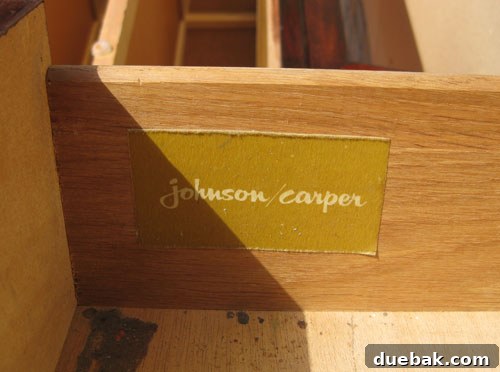
It turned out our $20 find was an original Johnson/Carper mid-century dresser from the 1950s or 60s! This discovery explained its exceptional build quality and the wonderfully thick veneer – they truly don’t make them like they used to. Next, we moved on to sanding. We used our trusty electric sander, starting with 80-grit sandpaper to rough up the existing finish and create a good “tooth” for the new stain. We then followed up with a softer 200-grit sanding to smooth everything out. Always remember to sand with the grain of the wood to achieve a natural, even look. Sanding against the grain or with circular motions (especially with an orbital sander) can leave visible marks that become more pronounced and unevenly absorb stain, ruining the final finish.
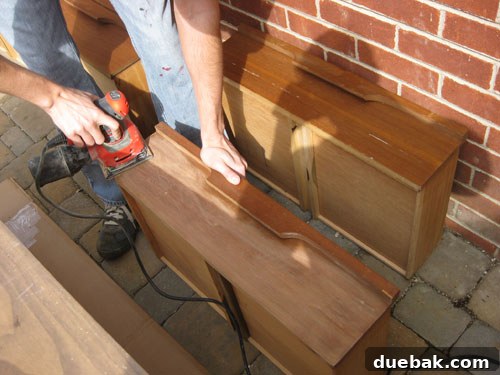
Our sanding setup involved John tackling the larger, flat surfaces like the dresser top, sides, front, and drawer fronts with the electric sander. I focused on the smaller crevices and the built-in bentwood drawer pulls, areas where the bulky electric sander couldn’t reach. We also set up a separate staining station for the drawers on another piece of cardboard nearby. For safety, especially during pregnancy, a mask was worn to avoid inhaling sanding dust and fumes.
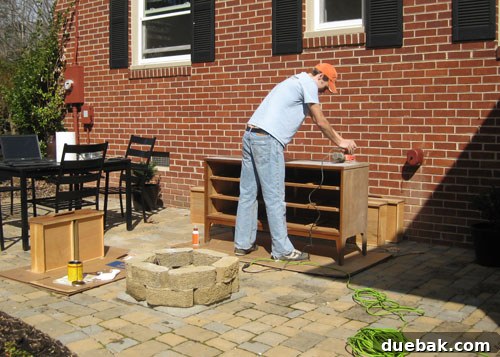
Once all surfaces were thoroughly sanded with both 80-grit and 200-grit sandpaper (always with the grain), it was time for another meticulous wipe-down with a moist rag. This step is crucial for removing all fine sanding dust, which can otherwise interfere with stain absorption and the smoothness of the finish. After cleaning, we ensured everything was completely dry before proceeding to the staining process; applying stain to a damp surface can lead to uneven results and adhesion issues.
2. Mastering the Art of Staining: Achieving a Rich, Deep Tone
For our stain, we selected Minwax Wood Finish stain in “Red Mahogany.” We achieved a perfect color match by taking a photo of our crib drawer with a digital camera and using it as a reference while shopping in the stain aisle. We also picked up a cheap 2-inch angled synthetic brush (knowing stain would likely render it unusable for other projects) and a pack of clean rags for wiping off excess stain. This type of stain requires a top coat of polyurethane to seal and protect it. We intentionally chose a stain without built-in poly so we could use our eco-friendly Safecoat poly, which is low-VOC, odor-free, and 100% non-toxic – a crucial consideration for a nursery piece.
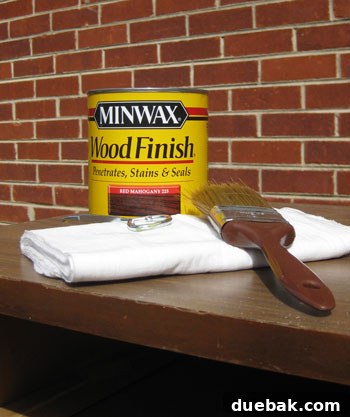
While poly-plus-stain-in-one products offer a quicker approach by eliminating an extra step, they often come with stronger fumes and chemicals. For a nursery, minimizing chemical exposure was paramount. However, if strong odors aren’t a concern for your project, these “shortcut” products from brands like Minwax are readily available at home improvement stores, though their color palettes can be more limited. We prefer liquid stain (like our choice) over gel stain due to our experience, but gel stain can be excellent for pieces that can’t be thoroughly sanded or for vertical surfaces (like wood trim) where liquid stain might be too runny. Always consult with professionals at your local hardware store or conduct preliminary research to select the best stain type for your specific project.
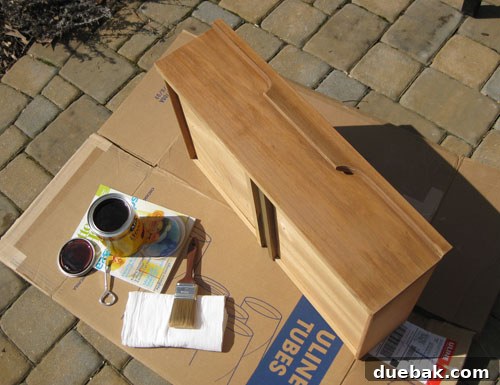
With our surfaces prepped and dry, I used the 2-inch brush to apply one thin, even coat of stain, moving always with the grain of the wood on all surfaces intended for staining (the drawer fronts and the dresser’s sides and front). The watery consistency of the stain allowed it to glide on smoothly, and the freshly sanded veneer happily absorbed it. Troubleshooting Tip: If your wood or veneer isn’t readily soaking up the stain, it’s likely you haven’t sanded thoroughly enough. Go back and ensure you’ve completely removed the existing poly or finish to allow the raw wood beneath to absorb the stain effectively.

After application, we allowed the thin, even coat of stain to penetrate for a full twenty minutes on each surface. Our goal was to achieve the richest, deepest absorption possible, which we believed would best hide any remaining imperfections and leave us with a beautifully saturated, dark tone. This penetration time is crucial for the stain to properly set into the wood fibers.
Once the twenty minutes were up, we used a clean, dry rag to gently rub away the excess stain, again moving in the direction of the wood grain. Because we allowed ample penetration time, very little excess stain came off onto the rag, which remained dark brown, but we observed minimal change in the dresser’s tone – a sign of excellent absorption. It’s vital to remember to apply gentle pressure with the rag, merely catching excess stain. Applying too much pressure can result in a streaky, uneven, or worn-down appearance. “Slow and light” is the mantra here.
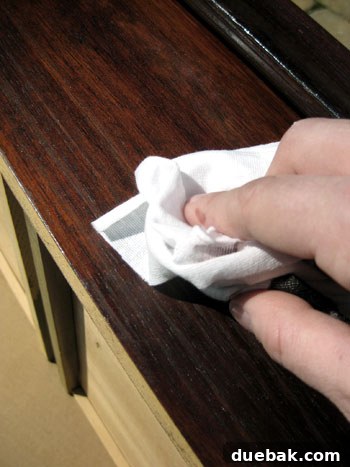
At this point, your furniture piece is officially stained! We definitely celebrated this milestone on our patio with a little victory dance. If you desire a deeper or more uniform look, you always have the option to apply a second coat of stain. Simply follow the same steps: brush on the stain, allow it to penetrate for a set amount of minutes (we suggest 20-25 minutes for a second coat to maximize absorption), and then gently wipe away the excess with a clean, dry rag. This extra step can significantly enhance the depth and consistency of your finish, especially on older or more porous woods.
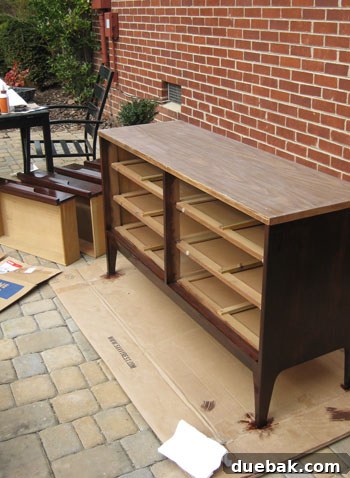
3. Painting the Dresser Top: Achieving a Crisp, Glossy White Finish
Now, let’s turn our attention to painting the dresser top (we’ll return to polying the stained portion shortly). A key to our success was strategically sanding the dresser top thoroughly *before* we even began the staining process on the base. This pre-planning prevents sawdust from contaminating the newly stained areas. The next step was to apply one thin, even coat of oil-based primer to the dresser top using a small foam roller, taking extreme care to avoid any contact with the recently stained parts of the dresser. If you don’t have a steady hand, you can use a rigid piece of cardboard as a shield, holding it firmly under the lip of the dresser top to protect the stained edges.
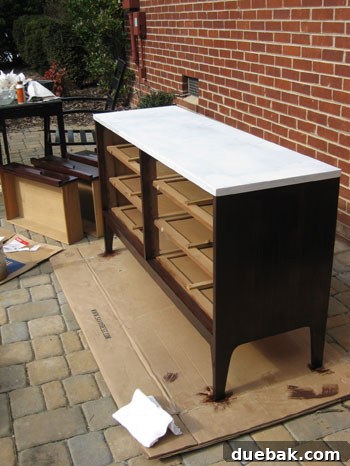
One thin, even coat of oil-based primer is usually sufficient. Don’t worry if the coverage doesn’t look perfectly flawless; its primary role is to provide “tooth” for the paint to adhere to and to block any potential bleed-through from the wood. As long as the entire surface is coated, even if it appears patchy in some areas and thicker in others, the primer is doing its job. We strongly advocate for oil-based primer over water-based formulas or “primer-and-paint-in-one” products, purely based on extensive personal experience. Water-based primers have often led to bubbling, tackiness, and frustrating bleed-through on furniture projects, issues we’ve never encountered with oil-based options.
While oil-based formulas are indeed smellier and require more effort for cleanup, we believe it’s a worthwhile trade-off to get the job done right the first time. Having to re-do a project because of bubbles or bleed-through (which often only becomes apparent after your final coat of paint dries!) is far more annoying. Always prioritize safety: apply primer in a well-ventilated area (preferably outdoors) and wear a mask. This is potent stuff, so work efficiently but always with safety in mind.
Following the primer, we applied three thin, even coats of semi-gloss latex paint using a second small foam roller. It’s crucial to remember that you can safely apply latex paint over oil-based primer without issue, but you should never use latex paint over oil-based *paint*, as this will invariably lead to bubbling and separation. We applied each coat of paint meticulously, keeping it extremely thin and even, and avoiding rolling too quickly, which can introduce air bubbles. For our white top, we used Freshaire’s off-the-shelf white semi-gloss paint from Home Depot. This is our go-to for all our home’s trim and many other furniture projects, appreciated for its no-VOC formulation and its quality and coverage, which are highly comparable to less eco-friendly brands.
After the final coat of paint, we allowed everything – both the painted top and the stained base – to dry for a full 48 hours. We moved the dresser into our sunroom to protect it from potential rain, but kept all screen doors open to ensure excellent ventilation, allowing both the stain and paint to cure properly and solidly.
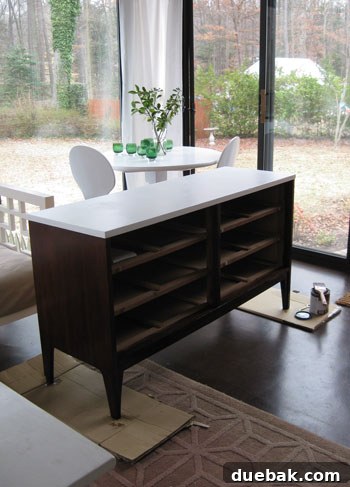
4. The Final Touch: Applying a Protective, Eco-Friendly Top Coat
After two full days of drying, it was time to apply a protective, glossy, and entirely wipeable top coat to both the painted dresser top and the stained base. We chose Safecoat Acrylacq, an excellent eco-friendly option. While a standard quart of water-based polyurethane (found alongside Minwax stain) would work, Safecoat is truly worth exploring. We first discovered it when creating a bathroom vanity from a nightstand (details here) and happily used our leftover supply to seal the dresser. It provides a durable, non-toxic, and odor-free finished product – essential for a nursery. Where to Find Safecoat: We found ours at a local green boutique called Ecologic, but you can also search online or check out greendepot.com to find a supplier.
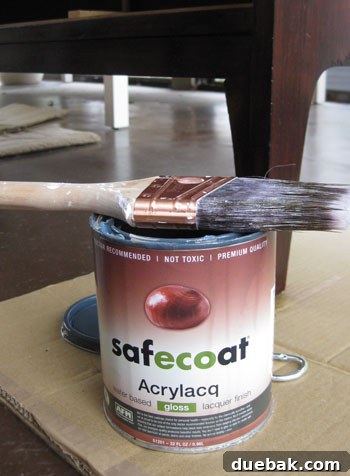
We applied two thin, even coats of Safecoat Acrylacq with a brush, ensuring ample drying time between coats (approximately five hours) to prevent any tackiness or drag marks. When applying this (or any other water-based poly), aim for extremely thin coats, almost like an eggshell or a piece of paper, to avoid brush strokes. Always brush with the grain of the wood and gently brush out any visible bubbles as you go, as dried bubbles can become permanent imperfections. The only way you’ll end up with a marred finish or unsightly brush strokes is by applying it too thickly or by not allowing a section to thoroughly dry before attempting to touch it up. Patience is key: apply very thin, even coats, wait for proper drying, and resist the urge to “clean up” areas you’ve already covered a minute or two before, as this will likely do more harm than good.
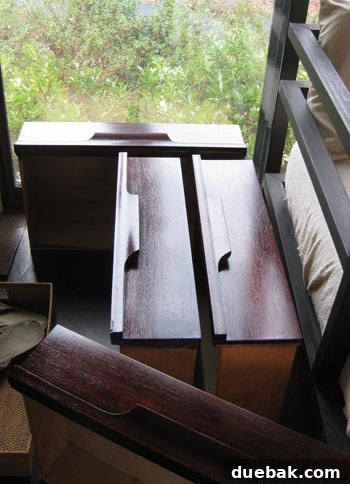
We allowed the dresser a full three days to completely cure in our well-ventilated sunroom. By the time it was moved into the nursery over 72 hours later, the finish was solid and fully cured, eliminating any worry about placing objects on the tabletop. Furthermore, thanks to the Safecoat, the entire piece was 100% odor-free and non-toxic, making it a joy to introduce into the baby’s room without any lingering chemical smells. We love revisiting our completed projects, just like we spent weeks enjoying our recently renovated bathroom after its big makeover.
The Stunning Final Reveal: Our Two-Tone Nursery Dresser Masterpiece
Behold the “after” – our revitalized dresser, now a proud resident of the nursery:
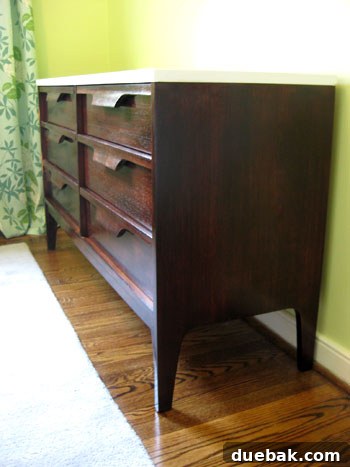
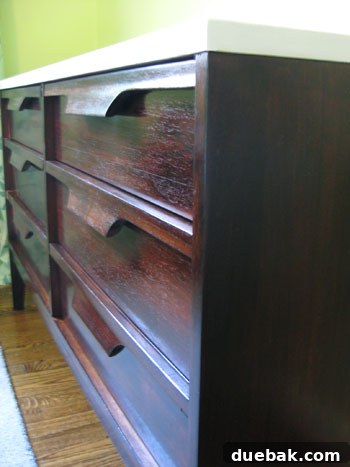
Isn’t the two-tone finish delightful? We believe it perfectly complements our crib, creating a cohesive and stylish look. It even evokes a “kitchen island effect” – reminiscent of rich, dark cabinetry paired with a glossy white countertop. The added bonus is the incredible protection and wipeability provided by the Safecoat. We’re confident this dresser can withstand anything a little one might throw at it, whether it’s a diaper mishap or a spirited attack with a wood block!
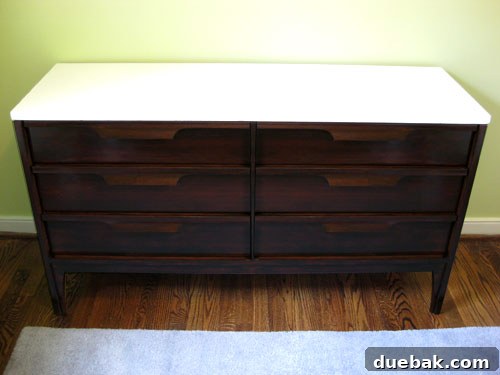
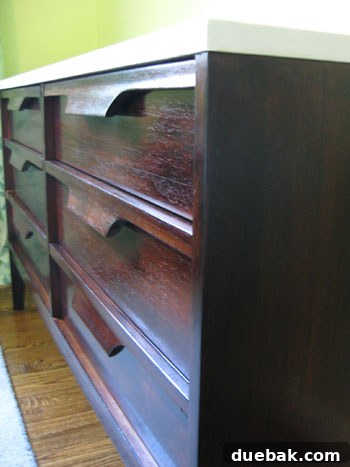
We also adore the dresser’s unique hardware-free handles, which add an interesting design element. Beyond aesthetics, the six spacious drawers provide ample storage for everything from clothes and diapers to books and toys, making it as functional as it is beautiful – truly the icing on the cake for a nursery piece.
Budget Breakdown: An Incredibly Affordable Furniture Flip
For those who love a good budget breakdown, here’s how our furniture flip costs tallied up:
- Dresser: $20 from Craigslist
- Sandpaper: already owned (80 grit and 200 grit)
- Electric Sander: already owned (Black & Decker from Home Depot, approx. $50 value)
- Stain: $7.02 (Minwax Wood Finish stain in “Red Mahogany” from Home Depot)
- Ten cloth rags: $2
- Cheap synthetic brush for stain: $2.49
- Two small foam rollers for primer/paint: already owned
- Oil-based primer: already owned
- Freshaire White Semi-Gloss paint: already owned
- Safecoat: already owned
- TOTAL: $31.51
Not bad at all, right? We had originally budgeted around $175, factoring in the dresser and supplies, so ending up at just $31.51 left us with a fantastic surplus. This extra budget means more funds for other fun nursery projects we have planned, including custom art, DIY shelving, a homemade mobile, closet organization, and much more. And speaking of dressers, stay tuned – we have another dresser project to share later this week, complete with exciting details about how we lined the drawers!
Join the DIY Conversation: Share Your Furniture Makeover Stories!
While we’re discussing furniture staining and painting, have you taken on any significant makeovers of your own? We’d love to hear about your projects and what you’ve been creating. And since we owe this beautiful dresser makeover to Craigslist for providing such a stunning base piece (we’re still amazed it’s an original 1950s or 60s dresser!), feel free to share any and all of your recent Craigslist finds. DIY is always more fun when shared!
Explore More Nursery Progress & DIY Guides:
Psst: Wanna see our nursery progress from the very beginning? Here’s our painting post, our big shopping spree, our crib hunting rundown, our curtain-making tutorial, and our fun little chair search, our mirror-painting extravaganza, and our DIY faux sheepskin project.
Update: We finally created this Shop Our House page to help you hunt down any furniture/accessories that you see in our house, along with all of our paint colors.