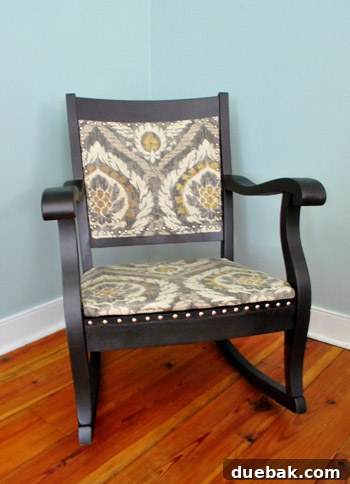
Welcome back to the thrilling conclusion of our DIY upholstery adventure, where we tackle the formidable task of transforming a humble Craigslist find into a stunning, custom-designed rocking chair. If you missed the exciting start of this journey, where we laid the groundwork for this incredible makeover, be sure to check out Part One of our Dastardly Rocking Chair saga. As I mentioned before, this entire process was a creative whirlwind, a true hands-on experiment where I embraced a “learn-as-you-go” philosophy. Drawing inspiration from countless online tutorials, invaluable tips from fellow DIY enthusiasts, and the wisdom of a particularly talented friend who’s a wizard with upholstery, I ventured into uncharted territory. After all, this wasn’t a priceless antique; it was a mere $25 rocking chair with immense potential. With the groundwork laid and the initial seat upholstery complete, it was time to confront the most challenging and visually critical aspect of this transformation: the chair’s backrest. Let’s dive in and uncover the ingenious, yet surprisingly simple, solution that brought this project to life.
While a sneak peek of the nearly completed rocker might have appeared at the close of our previous post, we were actually at a pivotal moment in the step-by-step process. The seat had been beautifully redone, and the frame had received a fresh coat of paint, leaving us with this foundation:
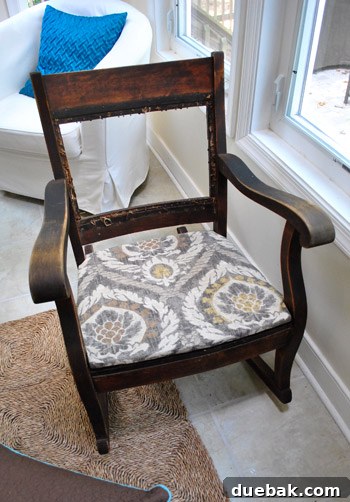
After completing the seat and refreshing the wooden frame, the focus shifted to the remaining challenge: the open upper section of the chair’s back. This area demanded a flawless finish from both the front and back, a detail that initially seemed daunting. Many upholstery projects fall short when it comes to such exposed elements, making a professional appearance crucial. This was, without a doubt, the most intimidating part of the entire rocking chair restoration. However, after extensive research through expert advice on my original call for upholstery tips and numerous conversations with my experienced friend, I decided to embrace a method that, at first glance, sounded entirely unconventional: heavy-duty cardboard. I know, it sounds counterintuitive, perhaps conjuring images of flimsy, uncomfortable dollhouse furniture. Yet, this technique is surprisingly common among professional upholsterers for its unique blend of flexibility and strength. My friend had successfully applied it to an entire dining set, achieving stunning double-sided upholstered panels, much like what my rocking chair required. Convinced by the evidence and the promising results, I committed to this surprising solution. And I can confidently say, it was a decision that paid off handsomely, delivering fantastic results.
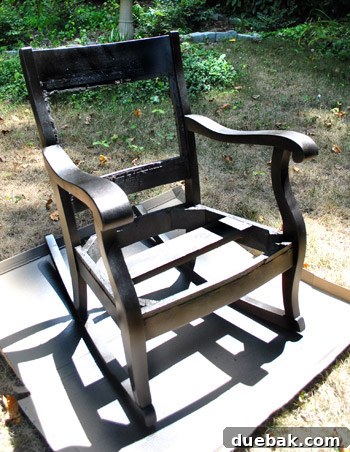
Creating the Perfect Backrest Panels: The Cardboard Secret
The initial step in crafting the backrest involved precision templating. I began by using four pieces of sturdy cardstock, carefully piecing them together to create an exact pattern for the opening. This template was essential for ensuring the new upholstered panel would precisely fit the space, effectively concealing any unsightly holes or rough edges of the original frame that the previous upholstery had covered. Achieving a snug fit here was paramount for a professional finish.
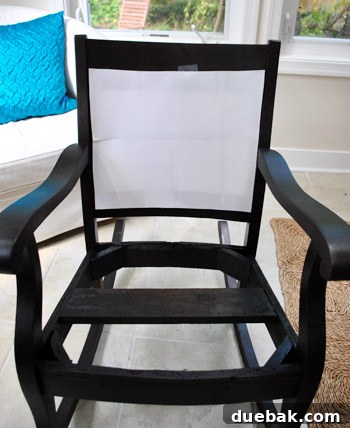
Once the template was perfected for the front, I carefully positioned it on the back side of the chair. This crucial step confirmed that a second upholstered panel of the same dimensions would seamlessly integrate into the rear, effectively covering all the rough, unfinished areas of the frame that are typically hidden. With both sides confirmed, I transferred this precise template onto a piece of heavy-duty cardboard. This wasn’t just any cardboard; it was robust, thick material repurposed from the packaging of our Ikea file cabinet – a perfect example of upcycling in action! Tracing the template onto the cardboard provided the exact shape for our panels.
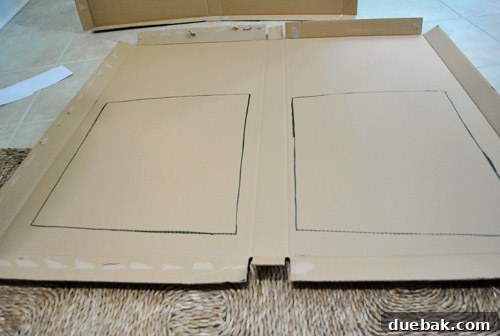
With the shapes traced, I meticulously cut out each cardboard panel. The next phase involved upholstering these panels, mirroring the technique used for the seat in the first part of this tutorial. Each panel received a single layer of extra-loft batting, followed by our chosen fabric, carefully centered and pulled taut around the perimeter. Unlike the five layers of batting used for the plush seat, a single layer was sufficient for the backrest, providing subtle cushioning without excessive bulk, as people lean rather than sit directly on this part of the chair. I admire the simplicity of all-wood rockers, such as this style, so I wasn’t aiming for an overly plush back. The primary goal of the batting and fabric here was to add extra strength, durability, and a smooth, professional finish to the heavy-duty cardboard base. To secure the batting and fabric initially without risking staple marks showing through the front, I used duct tape on the back. This temporary hold was crucial until the panels could be firmly stapled to the chair frame, ensuring long-term stability. The finished upholstered panel looked surprisingly legitimate and sturdy, defying its humble cardboard origins. The inherent slight flexibility of the cardboard also proved advantageous, making it easier to conform to the chair’s subtle curves without any buckling or creasing.
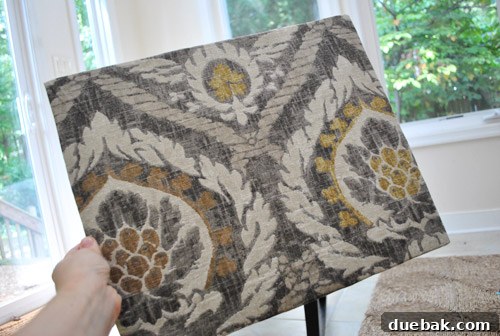
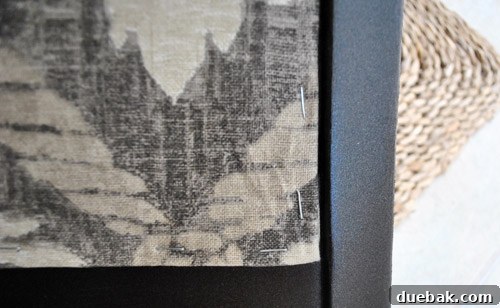
Once the upholstered panel was carefully positioned, I used my trusty staple gun to secure it firmly to the chair frame, placing staples about a quarter of an inch from the edge. This process anchored the panel, transforming its initial flexibility into remarkable rigidity and strength. It became incredibly robust, capable of withstanding significant pressure—certainly enough to deter even the most adventurous child armed with an umbrella! The combination of the heavy-duty cardboard, batting, fabric, and the surrounding staples along the wooden frame created an exceptionally sturdy and rigid surface. The initial slight pliability of the cardboard was, in fact, a blessing. Had I chosen a completely inflexible material, like metal flashing, attaching it to the chair’s subtly curved frame would have been an immense challenge. The cardboard’s ability to gently flex allowed it to perfectly follow the contours of the chair, resulting in a smooth, custom-fit appearance. In summary, what sounded like a peculiar choice proved to be an ingenious one: reinforced with batting and fabric, the thick cardboard yielded a professional-looking, comfortable, and surprisingly durable backrest that truly elevates the entire piece. No one would ever suspect its core material by touch or sight.
Concealing the Staples: The Elegant Nail Head Solution
Despite the impressive strength and smooth appearance of the newly installed panels, a significant aesthetic challenge remained: the visible staples along the perimeter. While functional, these industrial fasteners detracted from the chair’s overall elegance. My initial thoughts gravitated towards traditional solutions like gluing on decorative trim or a rustic burlap ribbon, a common approach in upholstery. However, after exploring various options, none seemed to complement my chosen fabric. I was wary of adding contrasting elements that might cheapen the look or, more importantly, peel away over time with the constant use our furniture endures.
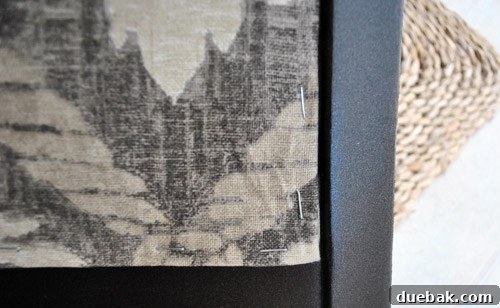
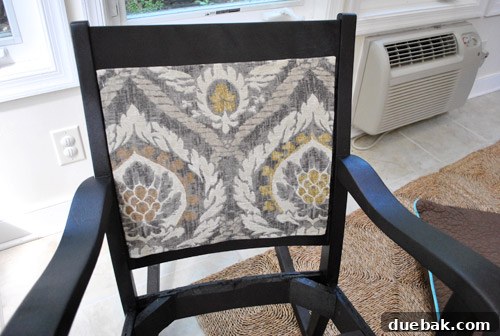
Faced with this dilemma, I decided to temporarily sidestep the issue and moved on to upholstering the second panel for the back of the chair. This involved the same meticulous process: a single layer of batting, carefully stretched and taut fabric, initially secured with duct tape from the back, and then firmly stapled to the chair frame for lasting durability. This step reinforced the importance of the cardboard’s slight flexibility, allowing it to seamlessly follow the frame’s gentle curvature without any awkward bunching or distortion, a critical factor for a polished finish.
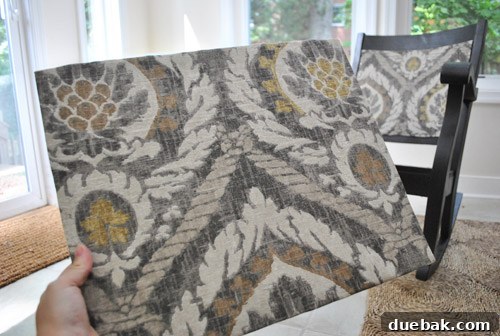
This closer view clearly illustrates the subtle curve of the chair’s frame, highlighting why selecting a panel material with just the right amount of flexibility was absolutely crucial. A rigid material would have fought against this natural shape, resulting in an uneven or buckled finish. The upholstered cardboard, however, adapted perfectly, ensuring a smooth and integrated look.
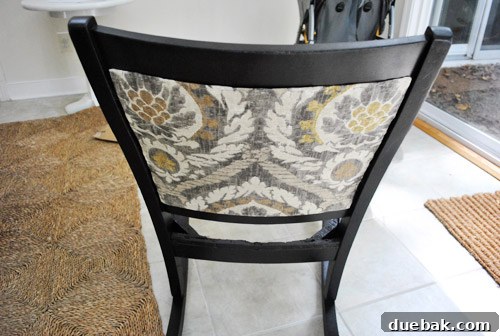
From a distance, the rocking chair was already looking remarkably refined and stylish – a vision of its transformed self. This view, in fact, was the very sneak peek I shared in yesterday’s post, hinting at the stunning outcome of our efforts.
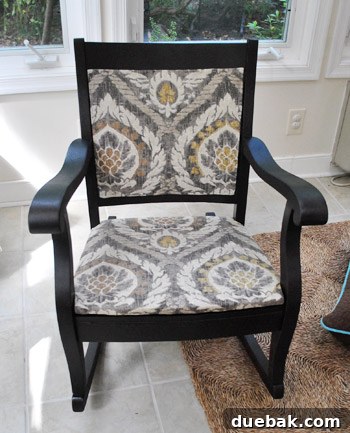
However, up close, the unsightly staples persisted, demanding a more elegant solution. After careful consideration of various trimming options at JoAnn Fabric, a brilliant idea struck me: upholstery nail heads. These small, decorative elements offered the perfect blend of refinement and durability. I’ve always admired the sophisticated detail nail heads add to furniture, evident in pieces like our living room ottoman. They bring a touch of classic elegance that I felt was essential for this project. Purchasing packs of 24 nail heads for just $1.50 each, I began the meticulous process of replacing each visible staple. Using a flat-head screwdriver, I carefully pried out one staple at a time, immediately replacing it with a nail head hammered gently into place with a small hammer. The nail heads themselves resemble heavy-duty thumbtacks, making them relatively easy to work with once you get the rhythm.
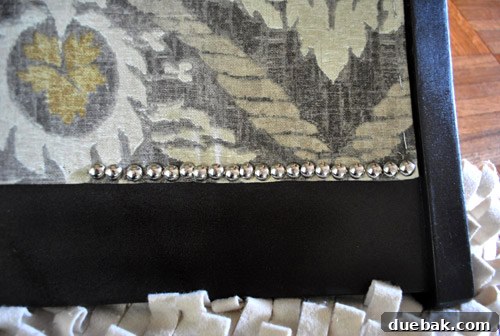
Finding the Perfect Spacing for Nail Head Trim
My initial attempt at applying the nail heads involved placing them very close together, aiming for a dense, continuous line. This led to quite a bit of hammering, much to the dismay of our chihuahua! However, stepping back, I was disheartened by the result: a lumpy, uneven line that lacked the clean, sophisticated look I envisioned. Despite my best efforts to hammer them straight, a slight ‘wiggled’ effect was undeniable, and it simply wasn’t working. I had hoped to find the pre-lined nail head strips sold on spools, which would have simplified the process immensely, but they weren’t available at JoAnn, necessitating the purchase of individual nail heads. It was clear I needed to rethink my approach. I decided to experiment with spacing the nail heads further apart, similar to the original spacing of the staples, rather than trying to create a tightly packed row.
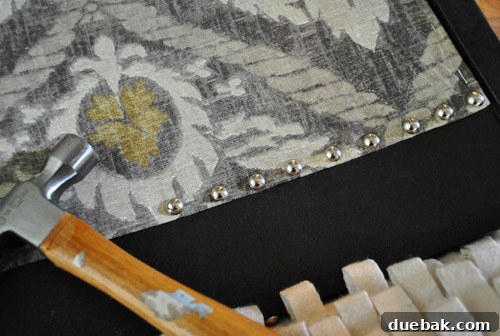
This adjustment made an incredible difference. The wider spacing immediately transformed the appearance, allowing me to breathe a sigh of relief. Any minor variations in height or alignment became far less noticeable, contributing to a more airy and less crowded aesthetic. To maintain consistency, I adopted a systematic approach: I would remove one staple with the flat-head screwdriver and immediately replace it with a nail head. It’s crucial not to remove all staples at once, as this would compromise the panel’s stability. Moving around the chair, one staple out, one nail head in, proved to be the most effective method. For perfect equidistant spacing, a small piece of paper or cardboard used as a temporary spacer between each nail head worked wonders. This simple trick ensures a consistently professional and visually appealing trim, a detail my math-teacher dad would certainly appreciate!
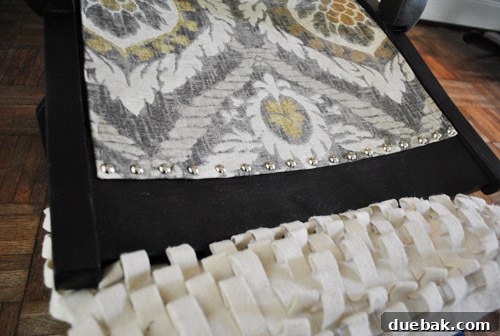
You might notice a ruffled cream item at the base of the chair in the images above and below. That’s simply a pillow from our sofa, strategically placed to protect the floor from repeated impacts during the hammering process. Thankfully, the pillow survived its protective duty! After meticulously applying the nail heads to three of the four sides of the front panel, the transformation was evident:
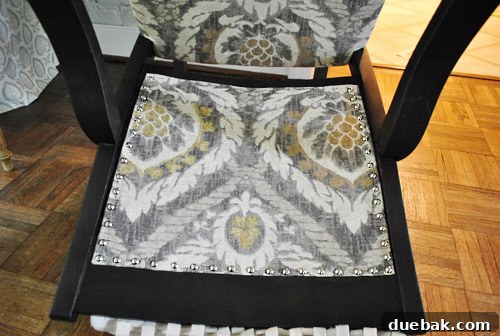
The outcome was truly remarkable. The nail head trim imparted a custom, high-end feel to the entire chair, a sophistication that I doubted glued cording or ribbon could achieve. However, I won’t sugarcoat it: this step was by far the most physically demanding. The repetitive, forceful hammering left me sweaty, tired, and occasionally frustrated. It was particularly annoying when a nail head inexplicably bent upon impact, rendering it completely useless and contributing to a surprising amount of waste. Just look at this pile of “brokens” – a testament to the challenges faced!
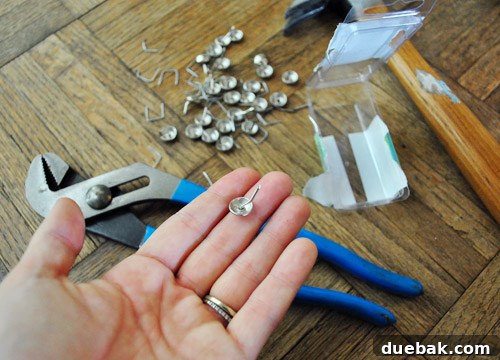
I even attempted to salvage some of the bent nail heads with pliers, hoping to straighten them for reuse. Unfortunately, once compromised, they simply wouldn’t go in straight or sit correctly, often breaking entirely. A definite bummer, but a reality of the DIY process.
Despite the physical toll, the final aesthetic of the front panel, after about an hour and a half of dedicated effort, was so captivating that I decided to extend the studding. I added nail heads along the wooden trim underneath the seat, wrapping them around the sides and front. This subtle addition created a beautiful sense of balance, bringing the intricate detailing from the upper panels down to the base of the rocker. While it might be difficult to fully appreciate in photographs, the contrast between the shiny nail heads on the upholstered panel and those along the wooden edge prevents the chair from appearing top-heavy, creating a more harmonious and balanced look in person. The overall effect is one of thoughtful design and meticulous craftsmanship.
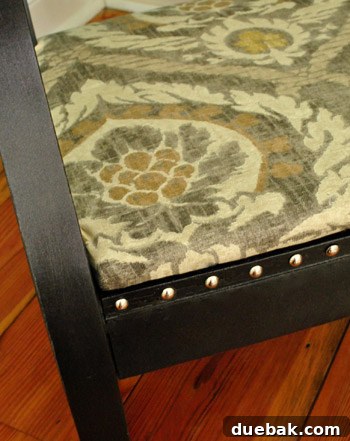
Confession time: I haven’t yet tackled the nail head trim on the back panel. My arms are still recovering from the exhaustive hammering session! For now, the chair faces forward, its stunning front presentation concealing the minor unfinished detail. But now you know my secret, so much for being smooth! Regardless, from every angle – the front, the side – I am absolutely smitten with the results.
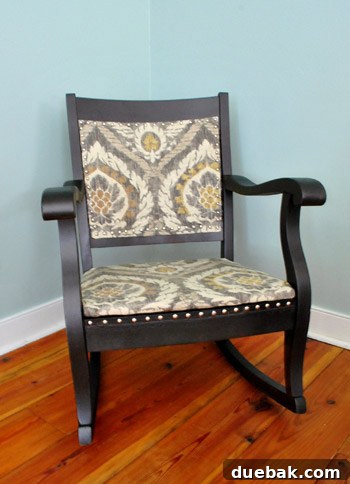
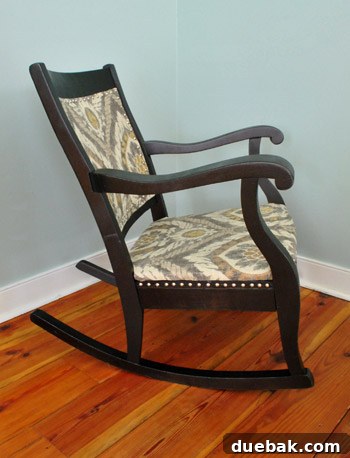
Isn’t “he” absolutely captivating? The combination of elegant studs and inviting curves creates a unique aesthetic. Speaking of the studs, I’ve noticed that in these photos, the row of nail heads along the bottom wooden rail under the seat has a slight “medieval” vibe. However, I assure you, in person, there’s no hint of “Knights of the Round Table” about it; the camera simply captured them differently than they appear in real life. It’s truly a sophisticated detail that enhances the chair’s overall appeal. Back to the practicalities of nail heads, here’s a crucial piece of advice: always purchase significantly more boxes than you anticipate needing. They’re typically very affordable, around $1.50 a box at our local JoAnn, and you can often apply coupons for additional savings. The frustration of running out mid-project and having to make another sweaty trip to the store far outweighs the minor inconvenience of returning a few extra boxes at the end. To give you an idea, I ultimately needed five boxes due to the frustrating number of bent nail heads. Had none inexplicably bent, three boxes likely would have sufficed.
The Grand Reveal: Pillows and Placement
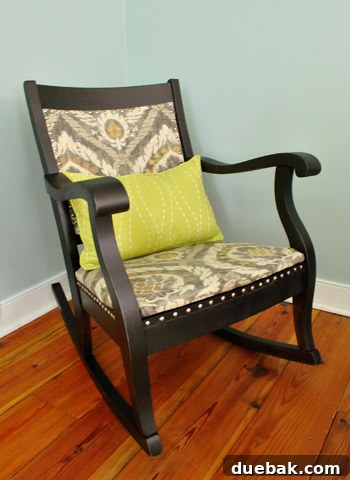
To celebrate the near completion of this extensive project (we’re at a proud 95%, with just the back panel’s studding remaining), I decided to indulge in a playful pillow fashion show. First up, our dapper rocker showcases a random green HomeGoods pillow, pulled from my embarrassingly extensive collection, demonstrating how a simple cushion can instantly change the chair’s character.
Next, the chair takes on a charming, Anthropologie-esque flair with a fun, patterned yellow pillow. This vibrant cushion, originally from Target and borrowed from our guest room, adds a delightful pop of color and personality.
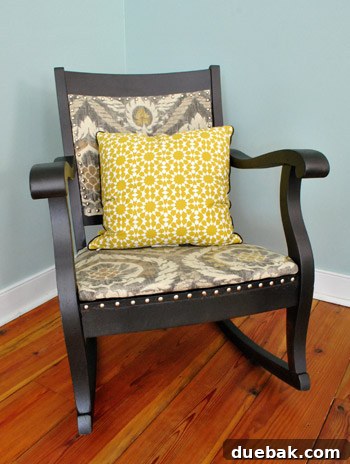
Currently, the rocker is adorned with the small green pillow, gracing a corner of our bedroom. However, the patterned yellow pillow was a fun, temporary addition that truly brightened the space. We envision this beautifully restored rocking chair eventually finding its permanent home in our office. This would be an ideal spot, as we spend considerable time there reading to Clara, and our large green sofa doesn’t quite align with the evolving floor plan we’re aiming for. We’ll certainly share updated photos once the rocker settles into its final, designated space.
For a truly dramatic comparison, let’s take a moment to look back at our $25 Craigslist rocker as it appeared before this extensive nine-month labor of love. The transformation is nothing short of incredible, a testament to patience and creative vision.
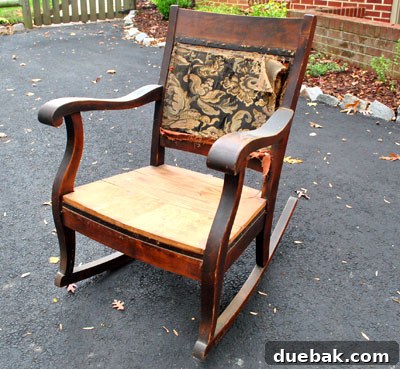
Rocky has truly come a long way! Here’s a detailed breakdown of the budget for this remarkable rocking chair makeover:
- Rocker (from Craigslist): $25
- Extra-loft batting (from JoAnn): $6 (with a 50% off coupon)
- Staple gun: $0 (already owned – typically around $19 at Home Depot if purchased new)
- Oil-rubbed bronze spray paint (from Home Depot): $7
- Heavy-duty cardboard: $0 (repurposed from Ikea file cabinet packaging)
- Kravet fabric (clearance remnant at JoAnn): $4 (for two yards)
- Nail heads (from JoAnn): $6 (five boxes at $1.50 each, with two coupons applied)
- Total Project Cost: $48
Perhaps the most astonishing discovery was learning that Ballard Designs sells the exact same Kravet fabric, which we found as a clearance remnant for just $4 for two yards, for an astounding $32 per yard! This means two yards from Ballard Designs would have cost $64 – more than our entire $48 rocking chair makeover. This incredible savings makes the entire roller-coaster upholstery adventure feel like time and money exceptionally well spent. Even with the minor frustration of bent nail heads requiring extra purchases, the overall value is undeniable. As they say, there’s no crying in upholstery!
So there you have it: a comprehensive, step-by-step account of our rocking chair transformation, featuring an incredible 44 photos spread across this post and Part One. As for the comfort of this revitalized rocker, in a word: divine. It’s wonderfully comfortable, incredibly smooth, and offers a fantastic rocking motion. Best of all, there’s absolutely no hint that its robust back panels conceal humble cardboard – a detail for which I am eternally grateful. Has anyone else out there successfully employed the cardboard panel trick for chair backs or other upholstery projects? Or is anyone bravely embarking on an even more intricate chair makeover, perhaps something as intimidating as a wingback? Share your experiences and insights! Good luck and godspeed on your next DIY furniture flip!
Psst – We’ve just announced this week’s giveaway winners. Click here to see if you’re one of the lucky recipients!