
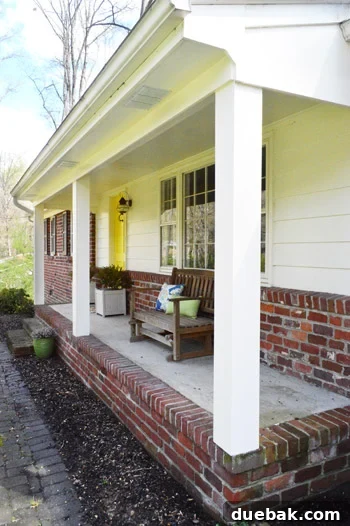
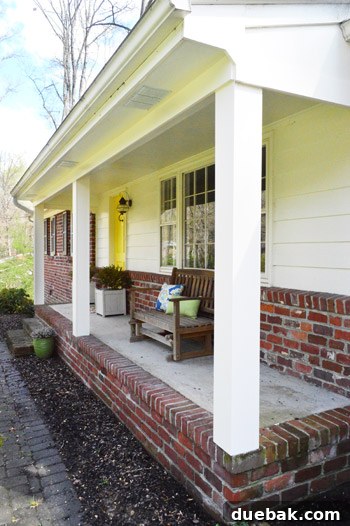
The journey to transform our home’s exterior has reached a pivotal milestone, and we are absolutely thrilled to declare this ambitious porch column project officially complete! A wave of satisfaction washes over us as we admire the crisp, clean lines that now define our home’s entry, a profound improvement that truly brings our mid-century ranch closer to its intended architectural spirit. From the outset, our primary motivation for boxing in those existing columns was twofold, aiming for both aesthetic harmony and historical accuracy.
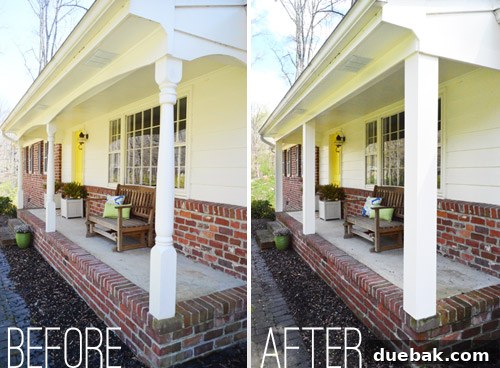
- Firstly, our carport already featured four robust, square columns, creating an undeniable visual dissonance with the three curvy, more traditional columns supporting the front porch. This stylistic clash resulted in our house having a rather split personality, which we were determined to resolve for a cohesive and intentional look.
- Secondly, the architectural essence of a mid-century ranch truly shines with squared-off, substantial columns. This design choice is not only historically accurate for the era but also prevalent in many other beautiful ranches within our neighborhood, providing a clear blueprint for the authentic aesthetic we aimed to achieve. We wanted to honor our home’s heritage and bring it back to its roots.
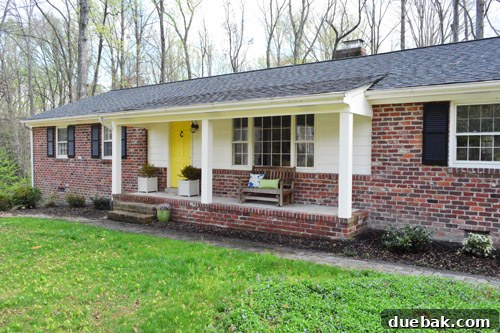
Reflecting on the final stages of this project, it’s fair to say we approached the finishing touches with high expectations for speed. After making significant progress on the initial structural work within a single afternoon – a momentum detailed in our previous post, “Take That Porch!” – we optimistically envisioned the remaining tasks flying by. Surely, completing one final column, meticulously caulking all the seams, and applying a fresh coat of paint couldn’t take that long, right? As many DIY enthusiasts know, such optimism, while admirable, often meets the reality of unexpected detours and time-consuming details.
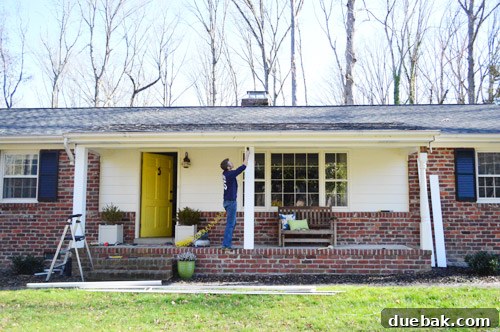
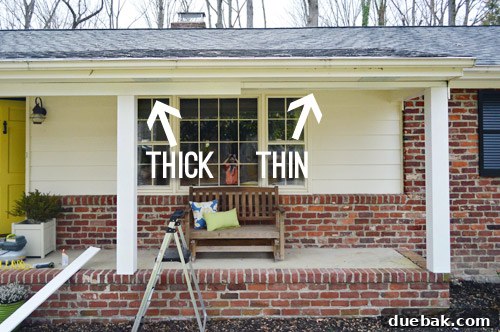
Indeed, our journey toward completion encountered a slight, yet impactful, redirection even before we had the chance to unholster our caulk gun. Upon stepping back to admire the three newly boxed-in columns, we instantly recognized that while the de-scalloped header looked significantly better than its ornate predecessor, it appeared somewhat unsubstantial when contrasted with the newly beefed-up, square columns. The visual balance was off; the columns commanded a presence that the original 1×3 inch header simply couldn’t match. This realization prompted an impromptu trip to Home Depot where we picked up three additional 1×6 inch boards. We then affixed these directly over the existing 1×3 inch header, using a combination of durable wood glue, strategic nails, and screws for maximum security. This upgrade was crucial for achieving a proportionate and robust look, truly completing the structural aesthetic of the porch. You can observe this enhancement in progress, where the thicker header is clearly visible:
The Art of Caulking: A Crucial Step for Longevity
Even with that minor structural detour, which ultimately added only a modest amount of time to the overall project, the task that genuinely felt endless was the caulking. There were, quite literally, so many seams to meticulously seal. Every joint, every edge where wood met wood or wood met the house needed attention. This wasn’t merely about achieving a smooth, professional finish; it was a critical step for protecting our newly renovated porch columns from the elements. Ignoring any of these seams would be akin to inviting rain and moisture to seep behind the wood, leading to potential rot, warping, and costly damage down the line – a scenario we emphatically wished to avoid. Our commitment to thoroughness stemmed from past experience; we employed this very same meticulous caulking method five years ago when we rebuilt the header on our first house’s porch. That previous project, involving primed wood, paint, and comprehensive caulking, has held up exceptionally well, showing no signs of rotting or warping. Therefore, replicating that proven process, with an equal dedication to detail, was non-negotiable for ensuring the longevity and durability of these new columns.
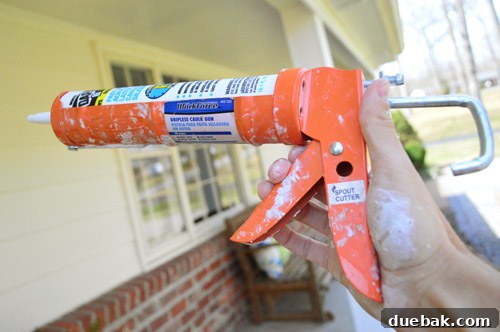
For those frequently inquiring about our preferred caulk (and we understand the intimidation of navigating a vast wall of caulk tubes at the hardware store!), we consistently recommend Dap window and door caulk. Specifically, we opt for the white, paintable finish. The “paintable” characteristic is absolutely key, as it allows for a seamless integration with your chosen exterior paint color, ensuring a professional and aesthetically pleasing result that protects your investment for years to come.
Applying the Finishing Touches: Painting for Perfection
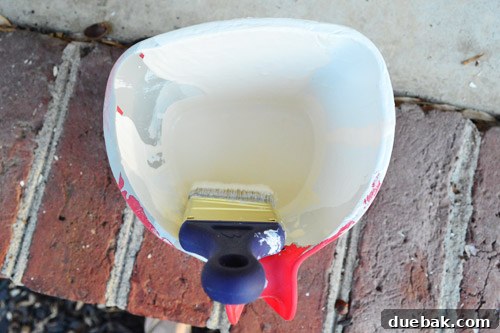
Once the caulk had completely cured and dried, it was finally time to introduce color and bring the project to its visual crescendo. Since the high-quality wood boards we selected came conveniently pre-primed, a significant preparation step was already complete. Our primary task was to perfectly match the existing “Creamy Color” of the porch, ensuring a cohesive look with the rest of the trim. Thankfully, the previous owners had left us a couple of gallons of this specific exterior house paint, a fortunate discovery that happily meant zero additional cost for paint – a small win that always feels good in a DIY project! While the label declared it “Creamy Color,” a name we jokingly deem one of the lazier paint color designations we’ve encountered, we’re secretly pleased to find it’s no longer a standard in the system, hinting at the potential for future, more inspired color choices.
A brief, internal debate arose regarding whether this column renovation presented the perfect excuse to finally repaint all our exterior trim from the existing “Creamy Color” to a brighter, more contemporary white. However, after careful consideration of the scope, which includes trim wrapping around the entire house and even reaching up to the two-story sections at the rear, we ultimately decided against tackling such a monumental project at this particular moment. Sometimes, knowing when to hold back on expanding a project is just as important as knowing when to push forward!
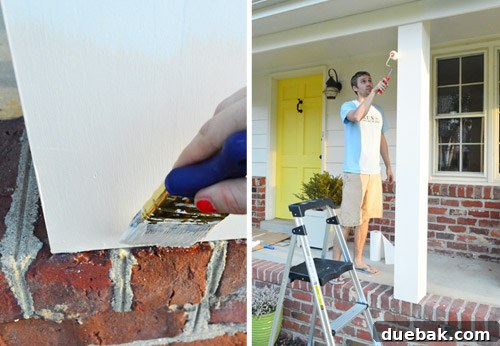
As is often the case with our DIY endeavors, the painting process saw a predictable division of labor. Sherry, with her steady hand and keen eye, took on the precision work of “cutting in,” meticulously painting the edges and corners. Her audacious approach, confidently painting the base of that column without so much as a strip of painter’s tape, always impresses! Meanwhile, I embraced my role as “Roller Man,” efficiently covering the broader surfaces and ensuring a smooth, even coat across the substantial new column faces.
With a single coat of paint applied, followed by a few careful touch-ups, our transformation was complete. And as you might recall from the very beginning of this post, the moment of stepping back and seeing the final result truly warranted the unbridled rejoicing we felt. The satisfaction of a well-executed home improvement project, especially one that so dramatically enhances curb appeal, is truly unparalleled.
A Transformed Exterior: Reflecting Our Style
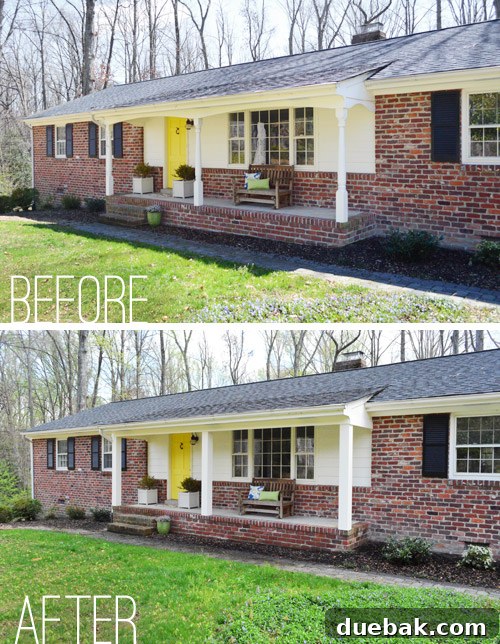
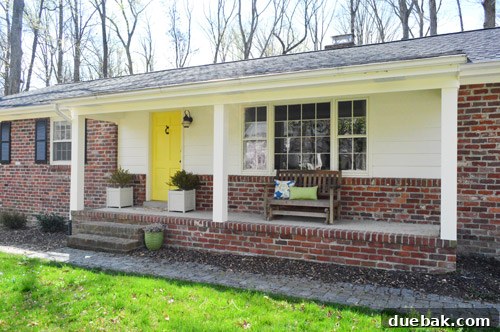
Now, every time we approach our house, the exterior greets us with a refreshed aesthetic that feels distinctly more “us.” The removal – or rather, the strategic concealment – of those more ornate and traditionally styled columns has imparted a crisper, more contemporary, and undeniably updated feel to our home’s facade. This change is not merely cosmetic; it’s a deep alignment with the architectural principles that define a mid-century ranch, bringing our home’s exterior much closer to the classic, clean lines that such a style inherently demands. Furthermore, that nagging visual conflict between the three curvy front porch columns and the four utilitarian square ones in the carport is now entirely resolved. The exterior now presents a unified, harmonious statement. Hurrah indeed!
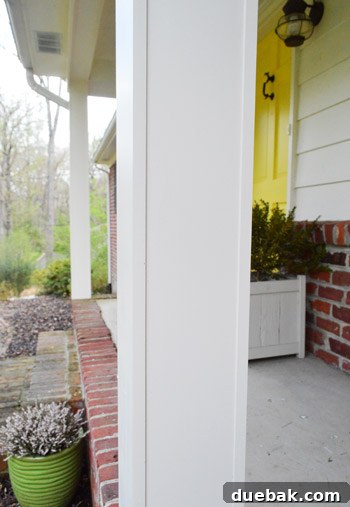
To provide a clearer understanding of the construction detail, here’s a close-up view where you can observe the subtle yet significant joinery on each of the posts. This detail illustrates precisely how the 1×8 inch boards, which form the front and back faces of the column, seamlessly meet the 1×6 inch boards that were securely nailed to the sides. This specific configuration is crucial for achieving the desired square dimension and robust appearance. For those interested in the precise calculations and reasoning behind why square columns typically require two 8-inch boards and two 6-inch boards, a helpful sketch outlining these dimensions can be found in our very first porch post here.
Budget and Material Selection for Your DIY Porch Column Project
From a financial perspective, our total expenditure for this porch column renovation was incredibly reasonable, primarily due to leveraging existing supplies. Our main cost was invested in the primed lumber, as we already had both the house paint and a tube of caulk on hand. Here’s a detailed breakdown of the material costs:
- Four 1×3 inch boards for the initial, thinner header: $20.50 (This was our initial attempt, later upgraded)
- Four 1×6 inch boards for the revised, thicker header: $41.33 (A necessary upgrade for better visual balance)
- Six 1×6 inch boards for the sides of the new posts: $62.08
- Six 1×8 inch boards for the front and back of the new posts: $74.12
- TOTAL PROJECT COST: $198.03
A note on potential savings: if we had accurately anticipated that the 1×3 inch boards for the header would ultimately prove too narrow, we would have bypassed that initial purchase entirely. This means you could potentially recreate this entire project for approximately $20 less. Furthermore, one could opt for less expensive lumber, such as basic whitewood, for the structural elements. However, we intentionally chose to work with pine. Our preference for pine stems from its noticeably smoother finish and straighter grain compared to the cheapest available options, which significantly eases the construction process and results in a cleaner final product. An added benefit was that these boards were pre-primed, allowing us to skip an entire preparation step. This choice also aligns with our long-term confidence in materials; we used the exact same type of wood for our first house’s porch makeover five years ago, and knowing that it has held up remarkably well for half a decade provides immense peace of mind and justifies the slightly higher initial investment for quality and durability.
Embracing the Outdoors: Spring Projects Await
With this significant exterior project now successfully completed, a renewed enthusiasm for more outdoor home improvements has undoubtedly taken hold. The timing couldn’t be more perfect, as spring has finally graced Richmond with its vibrant presence, bringing with it warmer weather and longer days – ideal conditions for tackling those exterior tasks. We are truly looking forward to what’s next on our outdoor to-do list, eager to continue enhancing our home’s connection with its natural surroundings.
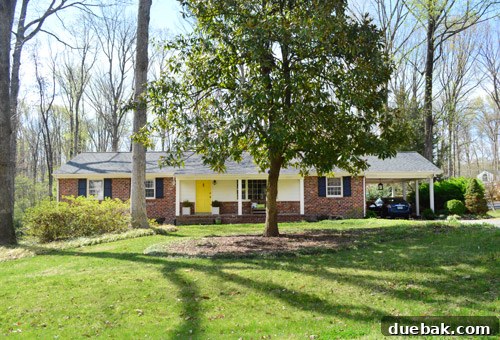
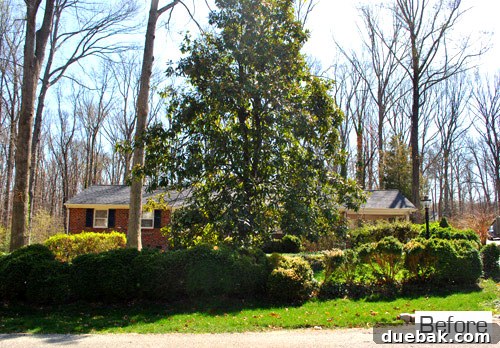
It’s incredibly satisfying to reflect on how much our house has evolved in terms of curb appeal over the past three springs since we first moved in. Each season brings new opportunities for growth, both in our garden and in our ongoing efforts to make this house truly feel like home. The transformation has been gradual but consistent, culminating in a front facade that now perfectly reflects the modern yet classic appeal we envision for our mid-century ranch.
As the weather warms and the days lengthen, what exciting projects are currently gracing your spring to-do list? Are there any significant undertakings you’re hoping will gain momentum, perhaps transforming a long-held vision into a tangible reality? Or are you simply looking forward to enjoying the season, perhaps with a refreshing glass of lemonade in hand, and cherishing the simple pleasure of a day well spent?
PS: A quick, humorous confession – I was momentarily tempted to title this post “Porch-a de Rossi.” It was honestly the only porch-related pun that sprang to mind at the time, and I can only blame my excitement for the latest season of Arrested Development for the momentary lapse in more conventional titling!