
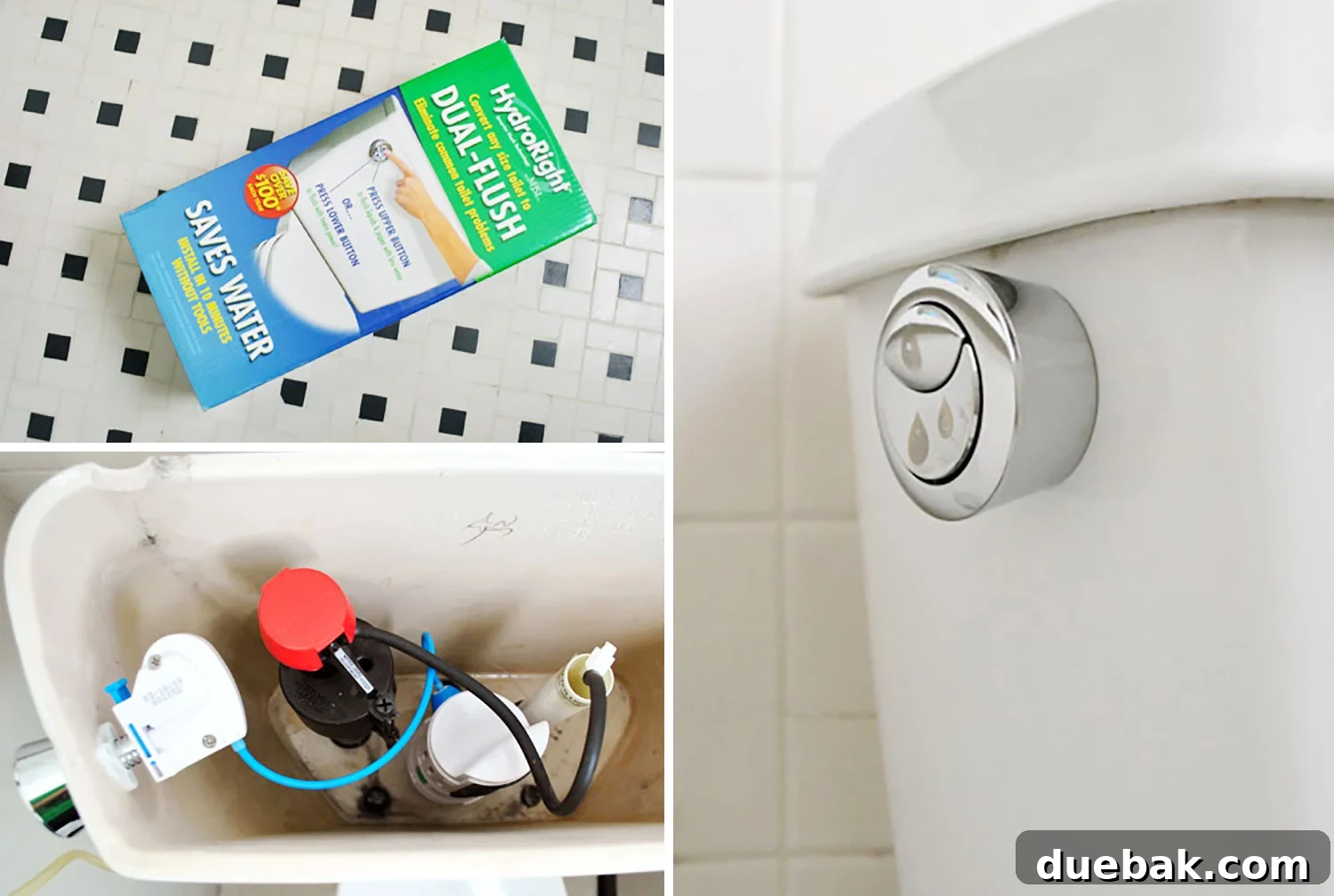
Are you looking for a smart, simple, and impactful way to enhance your home’s efficiency and environmental footprint? Imagine transforming your ordinary toilet into a sophisticated, water-saving dual-flush model without the hassle and expense of a full replacement. It’s not only possible but surprisingly easy! This DIY project requires no specialized plumbing experience and can typically be completed in less than an hour. It’s like getting a brand new, eco-friendly toilet for a fraction of the cost, all while making a significant positive impact on your water consumption. By significantly reducing your household water usage, you stand to save a considerable amount on your monthly water bill, making this upgrade a win-win for both your wallet and the planet. Follow our comprehensive guide for a quick, effortless, and highly rewarding water-saving upgrade.
What Exactly Is a Dual-Flush Toilet and Why Does It Matter?
In an era where water conservation is paramount, the dual-flush toilet stands out as an ingenious innovation. Unlike older, traditional single-flush models that use the same amount of water for all waste types, a dual-flush toilet provides two distinct flushing options: one for liquid waste and a more powerful flush for solid waste. This clever design allows you to use considerably less water when a full-power flush isn’t necessary, which, surprisingly, is most of the time.
Consider this: a standard toilet typically uses 1.6 gallons of water per flush (GPF). While this volume is essential for effectively clearing solid waste, it’s often excessive for liquid waste. Research indicates that, on average, four out of five bathroom visits only require a lighter flush. Dual-flush toilets address this inefficiency by offering a reduced water volume option, typically ranging from 0.8 to 1.1 GPF, for liquid waste. This seemingly small adjustment accumulates into substantial savings over time. According to the U.S. Environmental Protection Agency (EPA), incorporating dual-flush toilets into your home can astonishingly **reduce household water usage by up to 67%**, translating into thousands of gallons saved annually. This not only benefits your utility bills but also significantly lessens the strain on local water resources and treatment facilities, contributing to broader environmental sustainability efforts.
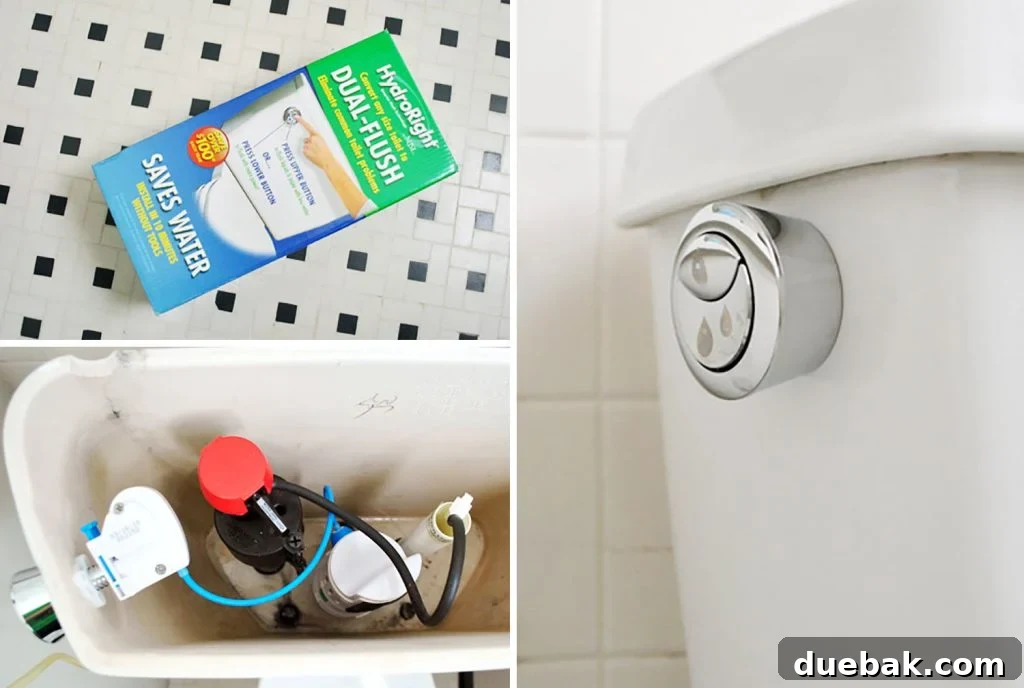
Identifying a dual-flush toilet is quite straightforward. They typically feature a distinct push-button mechanism on the top of the tank lid, or sometimes a split lever on the side. These buttons or levers are often marked with symbols, such as one water droplet for the lighter flush and two water droplets for the full flush, clearly indicating their water-saving capability. This visual cue not only serves as a functional indicator but also as a constant reminder of your contribution to water conservation.
Transform Your Existing Toilet: A Step-by-Step Conversion Guide
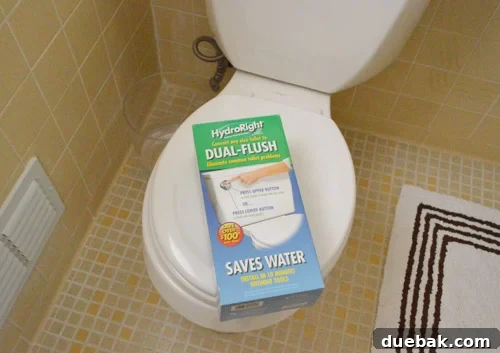
The exciting news for homeowners is that converting most standard, single-flush toilets into water-efficient dual-flush models is a surprisingly simple DIY project. Thanks to readily available dual-flush conversion kits, you can achieve this eco-friendly upgrade without replacing your entire toilet. For this guide, we utilized **the highly-rated HydroRight converter**, which proved to be a cost-effective solution at approximately $25. Our installation process took less than an hour and required minimal tools, making it an ideal weekend project for anyone. Here’s a detailed breakdown of the steps to convert your toilet and start saving water immediately:
Preparation and Essential Tips Before You Begin
Before diving into the conversion, it’s a good practice to turn off the water supply to your toilet. Locate the shut-off valve, typically found on the wall near the base of the toilet, and turn it clockwise until the water flow stops. Then, flush the toilet to drain most of the water from the tank. This makes the process much cleaner and easier, as you won’t have to reach into a full tank of water. Also, prepare your workspace with a few basic tools: a wrench (for stubborn handles), a pair of pliers, and an old towel for any drips. While many kits claim “tool-free” installation, a wrench can be a lifesaver for securely tightened components.
Step 1: Carefully Remove the Old Flush Handle
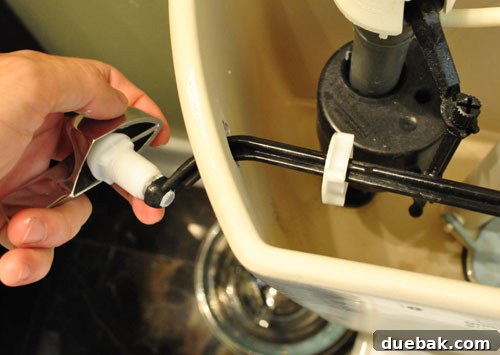
The first step involves detaching the existing single-flush handle. On the inside of the toilet tank, you’ll find a large nut securing the handle in place. While some handles can be loosened by hand, many older or tightly installed ones will require a wrench. Turn the nut counter-clockwise to loosen and remove it. Once the nut is off, you can simply pull the handle out from the exterior of the tank. Don’t worry if it’s a bit stiff; a gentle wiggle usually helps. Remember to set the old handle aside, as you won’t need it for your new dual-flush system.
Step 2: Disconnect and Remove the Toilet Flapper
Next, focus on the toilet flapper. This is the rubber or plastic component, often gray or black, located at the bottom of the tank, covering the drain hole. The flapper is usually attached to two small “ears” on the overflow tube and connected to the flush handle by a chain. Simply unhook the chain from the handle’s lever (if still attached) and then gently unclip the flapper from the overflow tube ears. This step typically requires no tools and is quite straightforward. The flapper is a crucial component of a single-flush system, but your new dual-flush converter will replace its function entirely, offering superior water management.
Step 3: Securely Attach the Dual-Flush Converter Base
With the old components removed, it’s time to introduce the heart of your new dual-flush system: the converter. Begin by sliding the bottom part of the dual-flush tower assembly into place, precisely where your old flapper once sat. This piece needs to create a tight, secure seal over the drain opening at the bottom of the tank. A perfect fit here is absolutely critical to prevent any water leaks from the tank into the toilet bowl, which would cause your toilet to “run” continuously and defeat the purpose of water saving. Apply gentle, even pressure to ensure it seats firmly against the existing flush valve gasket.
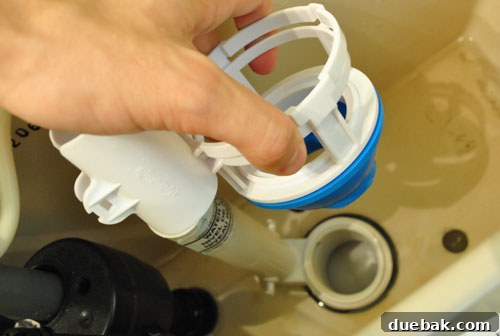
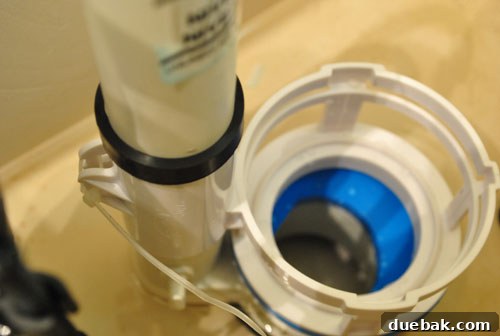
To further secure this base piece and ensure it remains firmly pressed against the opening, most kits include additional fastening mechanisms. In our case, a snug black rubber band was wiggled over the fill tube, providing additional pressure. Additionally, a zip-tie at the back of the piece was pulled tight. These secondary fasteners are vital for maintaining the integrity of the seal, especially during repeated flushing cycles. (A quick tip from experience: be careful not to accidentally cut off any zip-ties or bands, thinking they are packaging – thankfully, our kit included a backup!)
Step 4: Install the Main Flush Tower Assembly
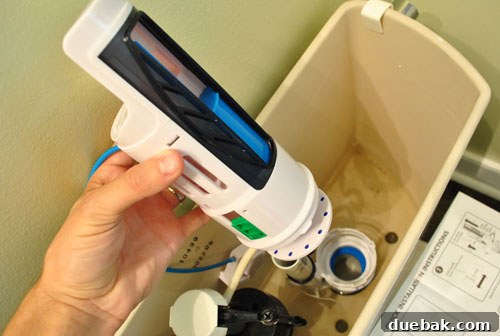
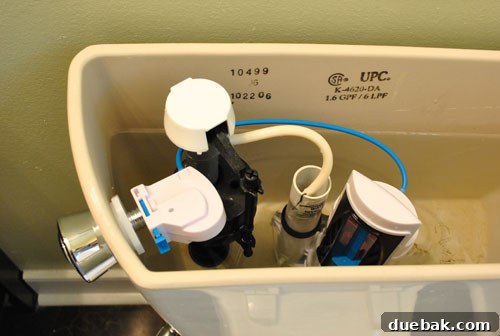
Now, it’s time to integrate the main flush tower. This component might look complex due to its internal mechanisms, but it’s designed for simple installation. It typically clicks or twists easily into place on top of the base you just installed. The design often incorporates advanced technology, such as adjustable sliders, to regulate water usage. For instance, a blue slider might control the water level for the quick flush, while a green switch might adjust the full flush volume. These adjustable features are key to customizing your water savings based on your specific toilet model and desired flush performance. Take a moment to familiarize yourself with these components, as you’ll likely fine-tune them later.
Step 5: Attach the New Dual-Flush Button Mechanism
With the internal components in place, your next task is to install the new dual-flush button where the old handle once resided. This modern button mechanism is designed to replace the traditional lever, offering the two distinct flushing options. Most kits allow for secure hand-tightening of the button’s securing nut from inside the tank, meaning no tools are typically required here. Hand-tightening is always recommended to avoid over-tightening, which could potentially crack the porcelain of your tank or bowl, leading to costly damage. The button itself will usually feature two distinct sections, often marked for “single flush” (for liquids) and “double flush” (for solids, or “when you need more power,” as some packaging aptly describes it).
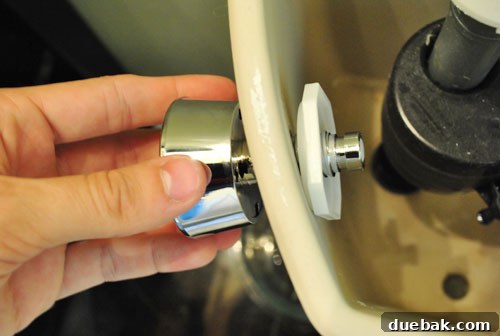
Observe the design of the button, which clearly illustrates the two flushing choices. One side typically offers a lighter, shorter press for liquid waste, while the other provides a longer, more forceful press for solid waste. This intuitive design ensures that anyone using your toilet can easily understand and utilize its water-saving capabilities.
Finally, connect the button device (often a small white box at the end of a blue cord) to the back of the flush button mechanism. Despite its somewhat intricate appearance at this stage, resembling something more complex, rest assured that these systems are purely mechanical. There’s no electricity or battery involved; the button simply translates your press into a mechanical action to operate the flush tower.
Step 6: Calibrate and Test Your New Dual-Flush System
Once all components are connected, turn the water supply back on and allow the tank to refill. This is the moment of truth! It took us about 20 minutes to reach this stage, but our initial excitement was momentarily dampened when the buttons didn’t work immediately. However, through a few minutes of trial and error – a familiar approach in many DIY projects – we quickly identified the culprit: the precise level of the blue slider (or similar adjustable mechanism) within the flush tower. If it was positioned too high or too low relative to the water level, the button’s action wasn’t strong enough to properly lift the tower’s built-in flapper. About ten minutes of careful adjustment, finding that “magical placement” for the blue slider, and our toilet was flushing perfectly every single time, with both buttons working flawlessly. This calibration step is crucial for optimal performance, so don’t rush it. Refer to your kit’s instructions for specific guidance on adjusting flush volumes and button sensitivity.
Step 7: Witness the Water Savings in Action
With your dual-flush toilet fully operational, take a moment to observe the tangible difference in water usage. Flush the toilet using the “single flush” setting and note how little water is used compared to the “full flush” setting. The visible difference in water level within the bowl and tank after each flush is striking. You’ll likely also notice that the toilet operates much quicker for the lighter flush, demonstrating its efficiency. This immediate visual and auditory feedback truly reinforces the value of your upgrade and the water you’re saving with every use. Score!
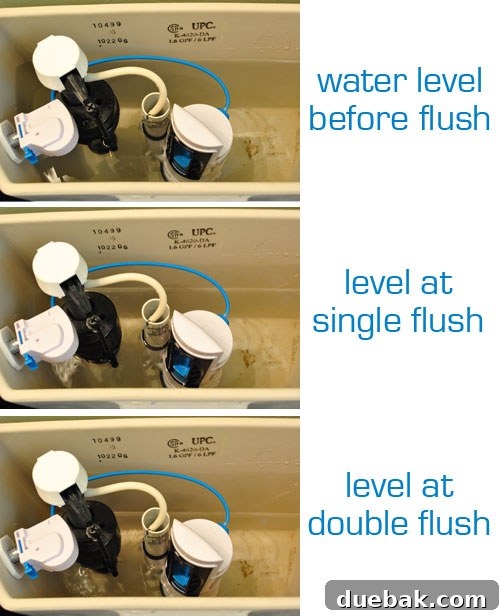
A Testament to Success: We were so impressed with the performance and water-saving benefits of this dual-flush conversion kit that we replicated the installation not once, but twice more when we moved into our new home! It now enhances both our guest room toilet and our hall bathroom toilet, making water conservation a consistent feature throughout our household. This enduring satisfaction speaks volumes about the effectiveness and ease of this simple home improvement project.
Considering a New Dual-Flush Toilet? Your Purchase Guide
While converting your existing toilet is an excellent, cost-effective option, some homeowners might prefer the aesthetics or advanced features of a brand-new dual-flush toilet. The good news is that dual-flush models have become significantly more affordable since their introduction, with many now priced competitively with standard, single-flush toilets. Furthermore, as we’ve demonstrated in various tutorials, installing a new toilet yourself is a manageable DIY task for most handy individuals. Here are some highly-rated options available, with approximate prices as of this writing, to help you make an informed decision:
- Project Source Dual-Flush Toilet (Budget-friendly, around $99)
- Glacier Bay Dual-Flush Toilet (Mid-range, around $160)
- American Standard Dual-Flush Toilet (Reputable brand, around $260)
- Kohler Dual-Flush Toilet (Premium quality, around $315)
When selecting a new dual-flush toilet, consider features that enhance both efficiency and comfort. Many modern dual-flush toilets come equipped with a wider trapway – the S-shaped pipe connecting the bowl to the sewer line. A wider trapway is a significant advantage, as it inherently helps reduce the likelihood of clogs, especially when utilizing the lower water volume flush. This ensures reliability and minimizes maintenance.
Additionally, for optimal comfort and accessibility, we highly recommend choosing a toilet with an elongated bowl and comfort or “chair” height. Elongated bowls offer more space and are generally perceived as more comfortable than round bowls. Comfort height toilets, which are typically 17 to 19 inches from the floor to the top of the seat, are designed to mimic chair height, making them easier to sit on and stand up from, particularly beneficial for taller individuals or those with mobility challenges. Look for models with a WaterSense label from the EPA, which guarantees they meet strict efficiency criteria without compromising performance. Investing in these features upfront ensures a toilet that is not only water-efficient but also user-friendly and durable for years to come.
Further Enhancing Your Toilet Expertise: Related How-To Guides
Now that you’ve successfully navigated the world of toilet upgrades and conversions, you’ve gained a deeper understanding of this essential household fixture. Your journey into plumbing doesn’t have to stop here! For those eager to continue their home improvement adventures or simply maintain their commodes in top condition, we’ve compiled a list of other helpful tutorials and information. These resources will equip you with the knowledge to tackle common toilet issues and even take on more advanced installations, ensuring your bathroom remains functional and efficient.
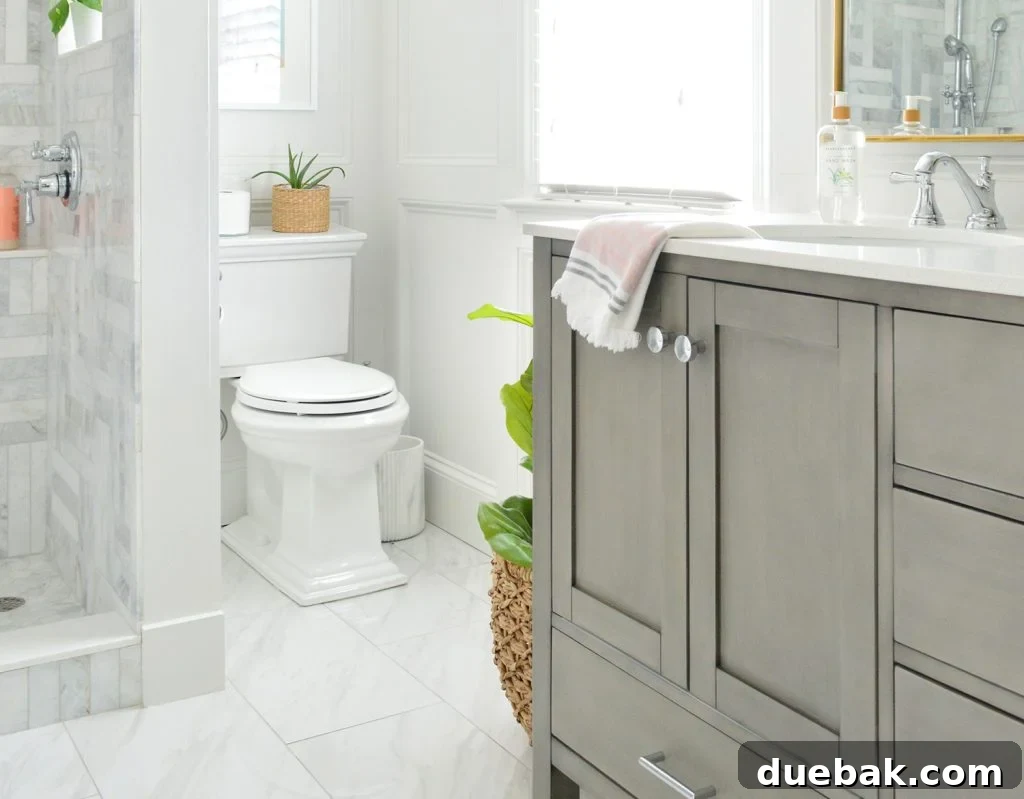
- How to Install A Toilet: A complete guide for replacing your old toilet with a new one.
- Our Favorite Toilet (Yes, We Have One!): Discover why we love this particular model and its benefits.
- How to Fix A Rocking Toilet: Learn to stabilize your toilet for a secure and comfortable experience.
- How To Unclog A Bathtub Drain Without Chemicals: Essential tips for environmentally friendly drain maintenance.
- Understanding Toilet Leaks and Prevention: A crucial guide to identifying and fixing common toilet leaks to save water.
- Fixing A Backed Up Toilet Line: Solutions for resolving more serious toilet blockages.
*This post contains affiliate links, meaning we may earn a small commission when you make a purchase through links on our site, at no additional cost to you. We only recommend products we trust and believe will provide value to our readers.