
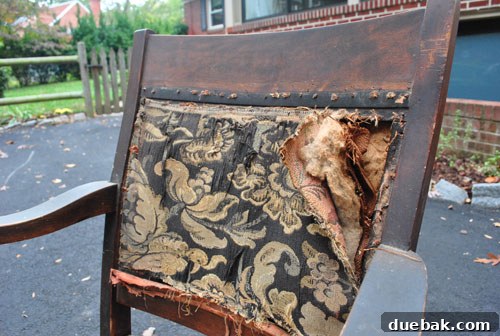
Our recent venture into furniture renovation began with a fantastic find on Craigslist: a vintage rocking chair, acquired for an incredible $25. From the moment we laid eyes on it, we were captivated by its timeless simplicity – the elegant, low back, the beautifully chunky, rich wood grain, and its overall classic silhouette. This wasn’t just any chair; it was an opportunity to bring a piece of history back to life, to infuse our new home with character, and to add a much-needed functional element to our living space.
The decision to bring this particular rocker home was multi-faceted. Primarily, I had been dreaming of adding a comfortable rocking chair to our living area. As a new parent, much of my time is spent feeding our little one, Clara, and doing so in the main living space, rather than retreating to a separate nursery or bedroom, fosters a wonderful sense of togetherness. We envision countless hours of snuggles and quiet moments right in the heart of our home. Furthermore, Clara absolutely adores rocking when we visit John’s mom, a clear sign that a dedicated rocker in our own home would contribute immensely to those precious, quality moments with our little bean. Despite its obvious charm, the chair arrived in a state typical of a budget vintage find: it was severely lacking in the comfort department, particularly concerning its seat and back cushions. But for $25, this wasn’t a deterrent; instead, it presented an exciting DIY challenge. Our immediate thought was, “No worries, we’ll just reupholster it!” A sentiment that, as we soon discovered, was a touch optimistic given the unique complexities of this specific piece.
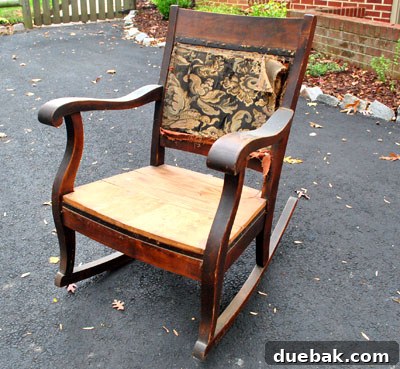
Our initial enthusiasm, however, quickly met the perplexing reality of the chair’s construction, especially when it came to the double-sided back cushion. While the seat presented a relatively straightforward path, the back became an immediate point of concern, leaving us utterly stumped. For the seat, our plan is quite clear: we intend to meticulously remove the existing thin boards that form its base. Following this, we’ll introduce a generous layer of high-density foam for superior comfort and support. To ensure a smooth, professional finish and to prevent any shifting, we’ll then wrap the foam with a layer of upholstery batting, carefully stapling it around the back of the seat base. Finally, we’ll apply our chosen upholstery fabric, treating it much like any removable chair seat project we’ve tackled before. Once complete, the revitalized seat will be securely screwed back into the chair frame from the bottom, offering a plush, inviting place to rest.
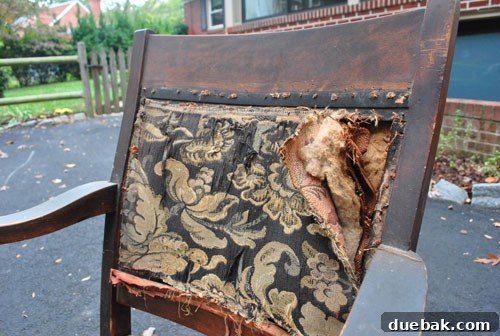
It’s the back, though, that has us truly scratching our heads, marked with a capital ‘UM.’ A closer inspection reveals its unique and challenging design: if you were to remove the current, likely aged fabric, you would see straight through the chair. This isn’t a solid backrest; rather, it’s designed with two separate upholstered panels on each side. We speculate these original panels were probably stapled directly to the inner frame, with decorative trim then applied to cleverly conceal the staples and provide a finished edge. The primary concern, however, isn’t just aesthetic; it’s structural. We’re grappling with the question of whether we need to introduce some underlying structure to the back before applying new fabric. Relying solely on fabric to support a person’s weight against the back seems precarious and inherently flawed. Our worry is that such a design would inevitably sag over time, leading to discomfort and an ultimately unappealing finish. The last thing we want is for our lovingly restored rocker to feel like a flimsy piece of furniture.
This structural dilemma has led us down several rabbit holes of thought. How can we ensure the back offers robust support without compromising the chair’s elegant aesthetic or becoming overly complicated for a DIY project? We’ve encountered various solutions in our research, including the use of upholstery webbing – that resilient, seat-belt-looking material often woven to create a supportive base for cushions. We’re seriously considering whether a similar approach is necessary for our rocking chair’s back. The idea is to weave this webbing across the open frame, creating a firm yet slightly yielding support structure. This would prevent anyone from feeling as though they’re falling into a hole when leaning back, ensuring genuine comfort and longevity. However, the complexity arises from the double-sided nature of the back. How do you integrate this webbing cleanly and then, even more perplexing, how do you attach two separate fabric panels – one for each side – onto this new foundation? We’re envisioning some sort of “seat-belt sandwich” approach, where the webbing forms the core, flanked by two beautifully upholstered panels. The challenge lies in achieving a seamless, professional finish on both sides, ensuring that no staples are visible and the fabric panels are taut and perfectly aligned. The execution of such a method remains a significant unknown for us.
To elaborate on the potential solutions for the back, let’s consider the specifics. If we opt for upholstery webbing, we’d need either jute webbing for a firm, traditional feel or elastic webbing for a bit more give. Securing it correctly to the internal frame would require a webbing stretcher and heavy-duty staples, ensuring adequate tension to prevent sagging. Once the webbing provides the foundational support, the next hurdle is the “sandwich” concept. One option might be to create two distinct, padded panels. Each panel could consist of a thin piece of plywood or sturdy cardboard as a base, with a layer of foam and batting applied, then upholstered with our chosen fabric. These upholstered panels could then be mounted onto the webbing structure, perhaps using hidden fasteners or a combination of adhesive and delicate, concealed tacks. Alternatively, we could attach the outer fabric directly over the webbing, pulling it taut and securing it on the internal frame, and then repeat the process for the inner fabric, creating a truly seamless, padded double-sided back. This approach would necessitate extremely precise measurements and expert fabric tensioning to avoid wrinkles or unevenness.
Choosing the right materials is paramount for a successful outcome. For the foam, we’ll need medium-density upholstery foam that will maintain its shape and provide lasting comfort, cut precisely to fit the seat and any potential back panels. The batting, typically Dacron, will add a layer of softness, smooth out the foam edges, and help the fabric glide on without friction, ensuring a crisp finish. As for the fabric itself, the possibilities are endless. We’re looking for something durable, perhaps a woven blend or a robust linen, that complements the rich wood of the chair and stands up to daily use, especially with a baby in the house. Pattern or solid, texture or smooth – these decisions will define the chair’s final aesthetic. Then, for the back’s structural support, if we go with webbing, we’ll require a sufficient quantity, along with a heavy-duty staple gun and staples appropriate for wood and fabric. Concealing the raw edges and staples will likely involve gimp trim or decorative cording, carefully glued or tacked into place for a refined look.
Beyond the materials, having the right tools makes all the difference in a project of this scale. A reliable electric staple gun is a must, along with a staple remover for any mistakes or initial deconstruction. Sharp fabric shears will ensure clean cuts, and a good measuring tape and straightedge are indispensable for accuracy. For the more intricate work on the back, specialty tools like a webbing stretcher, if we choose that route, and potentially a hot glue gun for trim, will be invaluable. This project, while exciting, has truly highlighted the vast difference between simply recovering a flat cushion and completely rebuilding the structural and aesthetic integrity of a complex furniture piece. The journey from a $25 Craigslist gem to a comfortable, stylish, and functional rocking chair in our living room is proving to be a rewarding, albeit challenging, endeavor.
This is where our collective wisdom comes in! We are openly admitting that our understanding of how to elegantly and structurally tackle this double-sided back is limited. We’ve explored some options, but the practical application and professional finish are still elusive. Can you tell we have no idea what we’re doing when it comes to this specific problem? If you’ve ever reupholstered a similar rocking chair, dealt with open-back designs, or have expertise in upholstery webbing and panel attachment, please, somebody help us! We’re eager for your insights, suggestions, and tried-and-true methods to transform this beautiful antique into the comfortable, long-lasting centerpiece we envision for our home.