Remember the playful debate about transforming our bathroom – the “bathroom race” as we affectionately called it? One person envisioned a sleek framed mirror, while the other was on a mission to create a charming, budget-friendly DIY window shade. Well, sometimes the simplest ideas yield the biggest wins, and in this case, the DIY window shade project emerged victorious, proving that transformative home improvements don’t always require extensive time or a hefty budget.
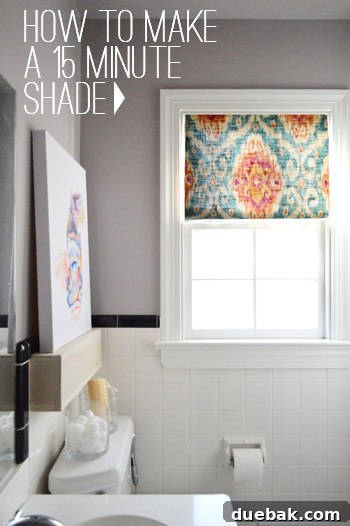
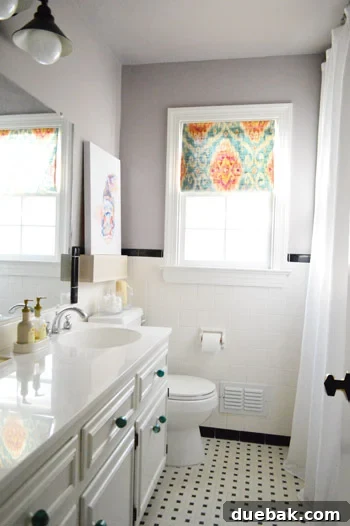
Our journey to this delightful DIY window treatment began with finding the perfect fabric. We discovered this vibrant pattern at a fantastic outlet called Mary Jo’s some time ago. For those not in our area, a similar style can often be found online (here’s an affiliate link to a comparable option on Amazon). When it came to selecting fabric for our hall bathroom – a space that sees a lot of action during our daughter Clara’s potty and bath times – I was drawn to the playful pattern and its bold colors. It reminded me of Clara’s favorite pink and orange, which we even incorporated into her recent “wormy” birthday party. This bathroom, with its neutral foundation of white tile, crisp trim, and soft gray walls featuring a subtle plum undertone, was the perfect canvas for a splash of personality. The new window shade joins other colorful accents like the turquoise knobs on the vanity and some cherished artwork, collectively transforming the space into a cheerful and inviting haven.
The Easiest Window Shade DIY: No Sewing Machine Required!
This particular project set out to be as simple as possible, building on the success of a previous kitchen shade I made. Surprisingly, this bathroom shade proved to be even quicker and more straightforward! Imagine, an entire custom window treatment completed for just $8 and in a mere fifteen minutes – a stark contrast to the hour-long kitchen project. The secret? Absolutely no sewing machine was involved, and this time, I even skipped the pinning phase, requiring significantly less fabric (a mere half-yard did the trick!). This makes it an ideal project for DIY beginners or anyone looking for an instant room refresh. Ready to discover how quickly you can achieve a stylish, custom look? Let’s dive into the minute-by-minute breakdown.
Materials You’ll Need:
- Half-yard of your chosen fabric
- No-sew iron-on hem tape (like heavy duty Heat N Bond)
- Iron
- Scissors
- Measuring tape
- Cardstock or printer paper
- Painter’s tape or masking tape
- Scrap piece of 1″ x 2″ wood
- Staple gun and staples
- Drill and screws
- Optional: Scrap dowel for the bottom edge
Minutes 1 – 3: Crafting a Precise Paper Template
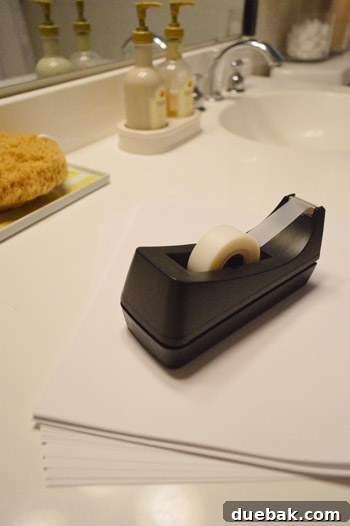
The first crucial step in creating a perfectly fitted window shade is to make an accurate paper template. I gathered six pieces of cardstock and some tape to construct a quick, mock-up template that precisely matched the width and length of the window opening. This step, though simple, is invaluable. It removes the guesswork and allows you to visualize the exact dimensions and how the fabric will fit before making any cuts to your chosen material.
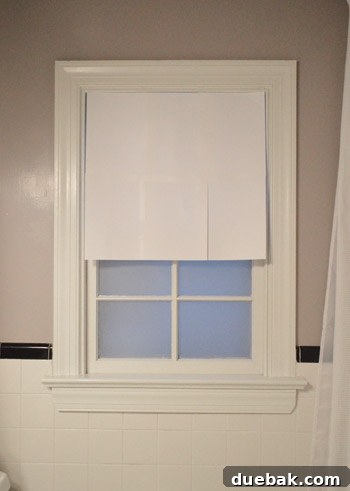
Once assembled, I temporarily taped the paper template into the window frame. This allowed me to confirm the measurements, ensuring a snug fit and preventing any potential miscalculations. Sometimes, seeing the actual size and shape in place is the best way to gain confidence before committing to your fabric cut. It’s a simple trick that saves time and prevents costly mistakes.
Minutes 4-5: Precise Fabric Cutting for Your Custom Shade
With the paper template perfected, it was time to move on to the fabric. I carefully laid my template onto the fabric, paying close attention to centering the pattern – a detail that significantly impacts the final aesthetic. I then cut the fabric, leaving an inch-wide border on both sides and the bottom. This one-inch allowance is specifically for the hem tape. For the top edge, I allowed a wider three-inch border. This extra fabric at the top is essential for mounting the shade securely to the window frame. The precision in this step ensures that once hemmed, your fabric will perfectly match the dimensions of your initial paper template, guaranteeing a flawless fit for your window.
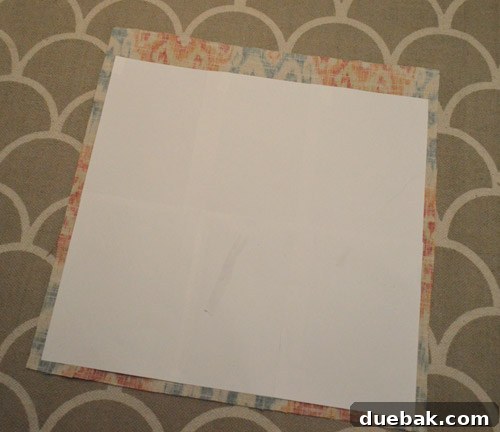
The choice to leave exactly an inch on three sides wasn’t arbitrary; it corresponds directly to the width of my chosen hem tape. This meticulous planning ensures that after applying the hem tape, the finished fabric panel will be the exact desired width, perfectly aligning with the window opening. This attention to detail is what makes a DIY project look professionally executed.
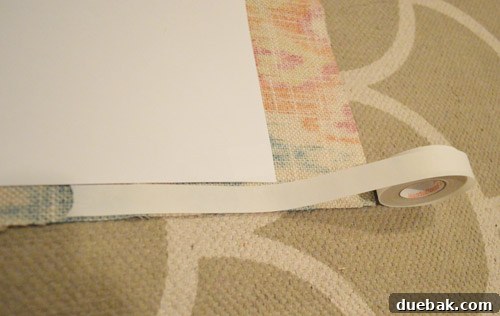
Minutes 6-8: Achieving Clean Edges with No-Sew Iron-On Hem Tape
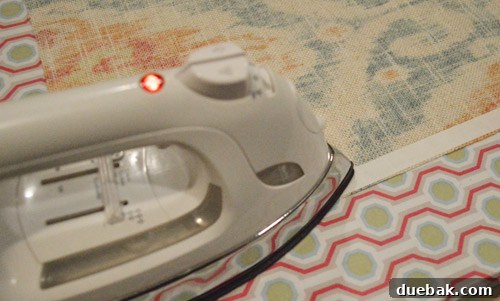
Now for the magical no-sew part! I carefully hemmed all four sides of the fabric using no-sew iron-on tape. For this project, I prefer using heavy-duty Heat N Bond, known for its strong adhesion and durability. This method is incredibly fast and produces a clean, professional finish without the need for a sewing machine or any intricate stitching. For those new to using no-sew tape, a helpful video tutorial can be found here, demonstrating the simple technique. The key is to apply consistent heat and pressure with your iron, allowing the adhesive to bond firmly with the fabric, creating crisp and lasting edges.
Minutes 9-11: Structuring Your Shade with a Wood Mounting Piece
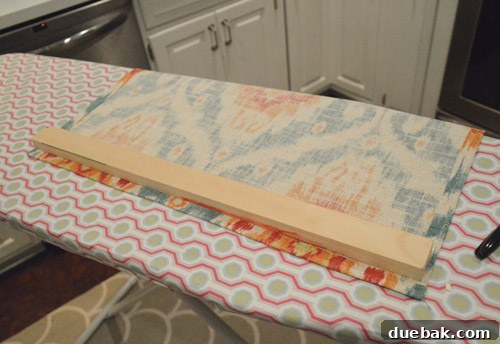
Once all four sides were neatly hemmed, the fabric now perfectly matched the width of my paper template, with an additional two inches of height at the top specifically for mounting. To provide structure and a secure mounting point, we retrieved a piece of 1″ x 2″ scrap wood from our basement. This piece was cut to be just a tiny bit narrower than the finished width of the fabric shade. This slight difference ensures that the wood piece remains discreetly hidden behind the fabric when installed, creating a seamless look.
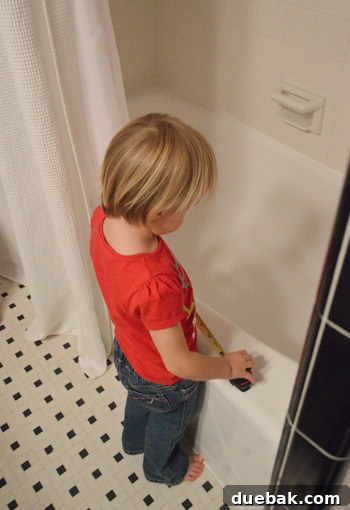
During this stage, our little helper Clara decided to contribute in her own unique way, charmingly running off with the measuring tape to “help us measure the tub.” Her playful antics are always a reminder of the joy and occasional chaos that comes with family DIY projects. Even with playful distractions, this step is quick and straightforward, bringing us closer to the final installation.
Minutes 12-15: Securely Installing Your Custom Window Shade
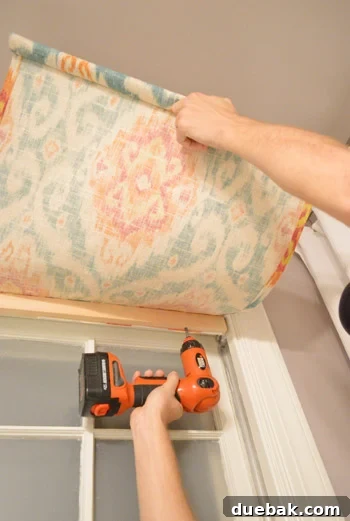
The final steps involve securely attaching the fabric to the wood piece and then mounting the entire assembly into the window frame. As you can see in the photo, we used a staple gun to firmly secure the top edge of the fabric to the wooden strip. This creates a strong, durable bond that will hold the shade in place. The wood piece is then screwed directly into the top of the window frame, mimicking the installation method of a traditional inside-mount shade. This provides a clean, integrated look that appears custom-built for the window. Notice the neatly rolled bottom edge in John’s left hand in the picture below? That’s another finishing touch.
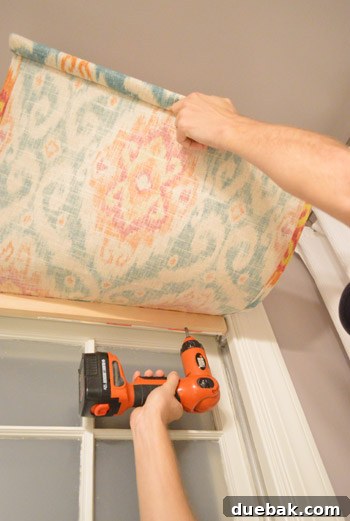
To give the shade a polished and weighted bottom edge, I opted to incorporate a scrap dowel we had on hand. I cut the dowel to be slightly narrower than the shade’s width and carefully rolled it into the fabric at the bottom. This adds a subtle weight, allowing the shade to hang beautifully and smoothly. I secured this rolled edge with just a few hand stitches in several places – no sewing machine was needed, just a minute of “tacking” the fabric to keep the dowel snugly in place. This dowel is entirely optional; the kitchen shade I made previously doesn’t have one and still looks perfectly clean and straight. Perhaps I was just in a “dowel mood” for this project, adding that extra touch of refinement.
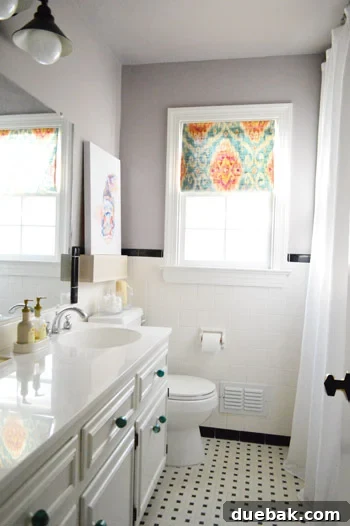
And just like that, in a remarkably short amount of time, our custom window shade was complete! The bathroom window itself is also frosted (a DIY project we completed last week), ensuring privacy while still allowing abundant natural light to stream in, preventing the space from feeling dark or enclosed. I absolutely adore how the colors in our charming fish canvas art beautifully complement the gray-plum walls and are seamlessly echoed in the fabric of the new window treatment. If you can’t have fun with whimsical fish art and bold window fabrics in a bathroom – a space meant for comfort and personality – then where can you? #fishcanvas4eva, indeed!
Maintenance & Longevity: Keeping Your DIY Shade Pristine
Update: We’ve received a few inquiries regarding “how to wash your DIY window shade?” It’s a great question! Much like many store-bought Roman shades or blinds, this type of fabric shade is not designed to be machine washable. Our experience with similar white Ikea shades in our first house, which lasted over four years without washing, showed us that they hold up remarkably well. For general cleaning, we recommend spot cleaning any marks or gently vacuuming with a brush attachment to remove dust. If complete washability is a top priority for you, a clever modification would be to attach the fabric to the wood mounting piece with washable Velcro instead of staples. This would allow you to easily remove the fabric for hand washing or gentle machine washing (depending on your fabric’s care instructions) and then reattach it.
While the bathroom is still a work in progress – with plans to frame out the mirror and introduce a few more color accents to perfectly tie everything together, including this vibrant curtain – it’s undeniably taking shape. The beauty of the overall design is that the opposite side of the bathroom already features a lovely array of bright colors, which provides a fantastic balance and cohesion to the space.
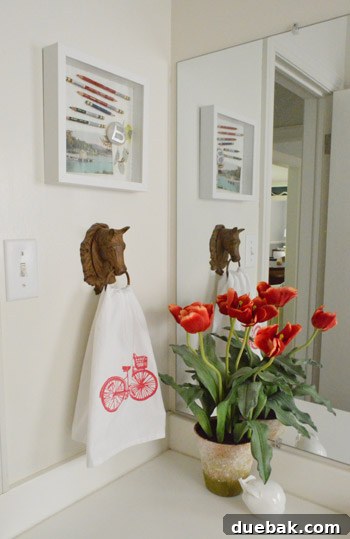
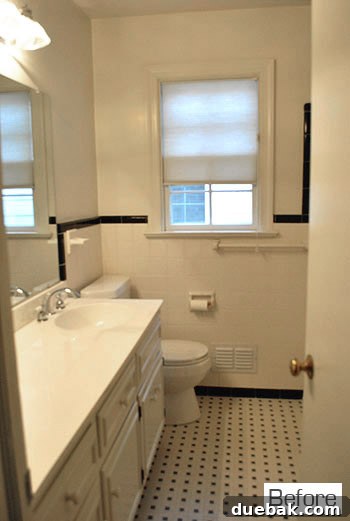
Looking back at where we started, the room as a whole is certainly beginning to reflect “us” much more authentically than its initial builder-basic state. It’s a testament to how thoughtful, incremental changes can lead to a profoundly personalized and comfortable environment.
So, if you’re facing a somewhat uninspired or basic bathroom, armed with just a half-yard of cheerful fabric and a handful of bright accessories, you possess the power to infuse it with character and charm without the need for a daunting, full-scale renovation. A vibrant, patterned curtain like this isn’t just an instant upgrade; it’s also a low-commitment choice, as its ease of creation means it can be readily swapped out for a different look down the line. Oh, and did you happen to catch my little Photoshop trick in the photo below? I digitally colored that brassy doorknob black for a sneak peek – a one-second magic trick! One day, I’ll give him a real spray paint makeover.
Our Ongoing Bathroom Transformation Checklist:
Here’s the continuously evolving list of tasks for our bathroom, highlighting completed projects and what’s next:
Rehang the shower curtain at ceiling height
Trim out the unbalanced window(explore more about this transformation here)Switch out the light fixture(details on the new fixture here)Add some meaningful art(discover our art choices here)Build in a shelf over the toilet for some leaning art(see the shelf project here)Paint the walls a fresher color to help the original tile pop(learn about our paint selection here)Upgrade the vanity hardware(find out more about our knob choices here)
Frost the window(for privacy and diffused light, documented here)Make a bold fabric shade for the window- Frame out the mirror over the vanity for a less builder-basic look
- Transform that brassy gold doorknob with an Oil Rubbed Bronze finish
- Paint the whitewashed shelf in a solid white tone (as the room evolves, this feels like the right step – we’ll keep you updated!)
- Add final touches, accessories, and compile a comprehensive budget breakdown for you all
Curious about specific items in our home or the exact paint colors we’ve used? Simply click the button below to explore our curated selection and get all the details!