

From Primed to Polished: Our Half Bathroom Vanity Makeover Journey
Every home renovation project tells a story, and our half bathroom vanity makeover is no exception. It’s a tale of ambitious visions, unexpected detours, and ultimately, the triumph of persistence. We’re diving back into the heart of this transformation, picking up exactly where we left off, with our humble sink vanity patiently waiting, primed and ready for its dramatic reveal. What began as a simple painting task evolved into a valuable lesson in design adaptability, proving that sometimes, the best results emerge from unexpected course corrections.
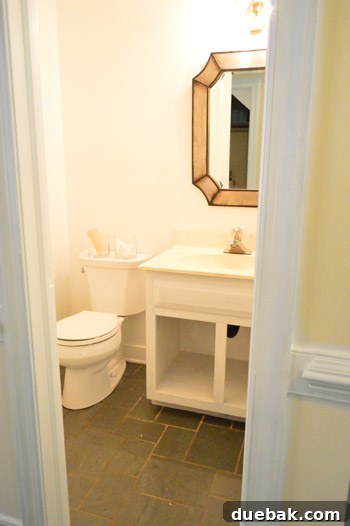
The Bold Beginning: A Green Dream Turns into a DIY Dilemma
Our journey began with a bold splash of color in mind. After countless hours poring over paint swatches – a painstaking process many DIY enthusiasts can surely relate to – we finally settled on what we believed would be a show-stopping kelly green. Our vision was clear: a vibrant pop of color in an otherwise serene white room, creating a playful yet sophisticated focal point. The inspiration drawn from various design boards and images online fueled our excitement, promising a fresh, modern aesthetic for our small bathroom update.
With high hopes, we headed to the store and returned with a quart of “Baby Fern” by Benjamin Moore, chosen in their semi-gloss Natura paint for its durable finish and eco-friendly properties. The first brushstrokes were filled with anticipation. However, as the paint dried, a sinking feeling began to set in. What looked like a cheerful kelly green on the swatch transformed into something quite different on the vanity’s surface. We applied a second coat, clinging to the hope that it would somehow work a miracle, deepen the shade, or perhaps just make it “right.” But alas, our optimism was quickly replaced by a stark realization:

It was a truly, unequivocally bad call. The vibrant green we envisioned was nowhere to be found. Instead, we were greeted by a shade that, as our keen-eyed family member Clara astutely pointed out, bore an uncanny resemblance to Kermit the Frog. It was a moment of hilarious yet genuine DIY disappointment, a classic example of a common design dilemma. How could something that looked so perfect on paper (and on fifty different swatches) go so wrong in practice? This unexpected turn became a prime example of the unpredictable nature of paint colors, where lighting and surrounding elements can dramatically alter a shade’s appearance, making careful consideration for bathroom paint ideas crucial.
A Stylish Second Act: Embracing “Silhouette” Sophistication
After a brief but essential period of comedic relief (and a little bit of good-natured whining), we did what any seasoned DIYer would do: we regrouped. Our garage, a treasure trove of past projects and leftover supplies, became our sanctuary. We scoured our collection of paint cans, searching for a shade that could rescue our vanity from its verdant fate. And there it was, gleaming like a beacon of hope: “Silhouette.”
Silhouette is not just any paint color; it’s a complex, moody brown-gray tone with the subtlest hint of plum undertones. It’s a shade that truly needs to be seen in person to be fully appreciated, as photographs rarely capture its depth and richness. We first discovered this magnificent color during several book design projects and instantly fell in love. It was our reliable “rebound guy,” a trusted choice when we needed a sure win for our home improvement projects. We were determined not to let our hearts be broken by another paint choice, and we instinctively knew Silhouette would exude sophistication, perfectly complementing the existing slate elements in the bathroom, contributing to a modern bathroom design.
And happily, our instincts proved correct:

The transformation was remarkable. What started as an attempt at a white bathroom with a colorful vanity quickly evolved into a chic, refined space. The “Silhouette” paint, while not truly black, provides that sophisticated dark contrast, creating an undeniable black and white (or rather, dark and light) bathroom vibe. This darker hue instantly elevated the vanity, making it feel more substantial and luxurious. We were particularly thrilled with how beautifully it harmonized with the dark doorknob and hinges already present, tying the entire look together with a cohesive, polished finish that speaks to a chic bathroom aesthetic.

Accents That Elevate: Discovering the Perfect Knobs and Fixtures
Just when we thought our luck with paint was a bit shaky, the universe decided to throw us a bone in the hardware department. The search for the perfect knobs can be surprisingly challenging, often involving a trade-off between style and budget. Our usual haunts, like Anthropologie, often tempt us with exquisite designs, but at $14 a knob, they can quickly push a budget-conscious DIY project into luxury territory. We visited with no intention of buying, merely to “look around,” a dangerous game for any decor enthusiast searching for accent knobs and bathroom hardware.
However, fate had a delightful surprise in store. Tucked away amongst the regular-priced items, we stumbled upon these incredibly cool, faceted octagonal knobs, marked down to an unbelievable $2.95 each! It was an instant decision; a true design steal that felt like a reward for navigating our earlier paint mishap. These weren’t just any knobs; their unique shape and subtle sparkle added an immediate touch of elegance and character to the newly painted vanity, demonstrating how small details can make a monumental difference in a room’s overall aesthetic and contribute to a stylish bathroom vanity makeover.

One of the most satisfying aspects of these specific knobs is their octagonal shape, which beautifully mimics the angles of our existing bathroom mirror. This subtle echoing of geometric forms creates a sense of intentional design and cohesion that truly elevates the space. The similar tone in the mirror’s frame further enhances this visual connection, making the entire vanity area feel thoughtfully curated rather than merely assembled. Such serendipitous finds are a DIYer’s dream, turning a simple functional element into a significant design statement that enhances the half bathroom transformation.

How lucky can one get? It’s these moments of unexpected fortune that add an extra layer of joy to the DIY process, making the previous setbacks all the more worthwhile and reinforcing the value of persistence in home improvement projects.

Beyond the vanity, we also tackled another small but impactful upgrade: the toilet paper holder. Our old one, a rather dated wooden fixture, simply didn’t fit the evolving aesthetic of the bathroom. A quick trip to Lowe’s proved fruitful, yielding a sleek, modern replacement found on clearance. It’s often the overlooked elements that can surprisingly detract from an otherwise updated space, and this simple swap made a significant difference in bringing the entire room into the present day, showcasing smart budget bathroom reno tactics.

For those who remember, the previous wooden toilet paper holder was quite a stark contrast to our current style. The updated version not only provides better functionality but also contributes to the streamlined, contemporary feel we’re aiming for. Sometimes, the smallest changes create the biggest visual impact in a sink vanity update.

Indeed, a definite upgrade.
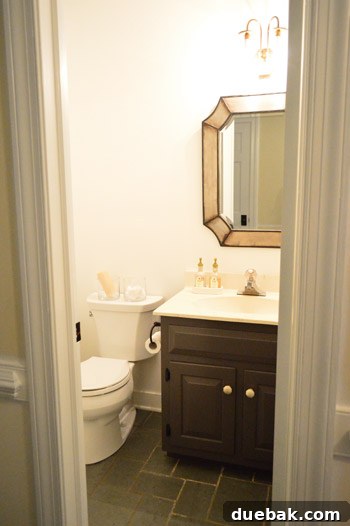
The Half Bathroom’s Journey: From Functional to Fabulous
Reflecting on the progress, it’s truly amazing to see how far this half bathroom has come. What was once a purely functional space is steadily evolving into a stylish and welcoming area for guests and residents alike. Each decision, from the choice of paint to the smallest hardware detail, contributes to its unique character and charm. The journey of transforming a bathroom, even a small half bath, is a testament to the power of thoughtful design and persistent effort, embodying the spirit of DIY bathroom renovation.
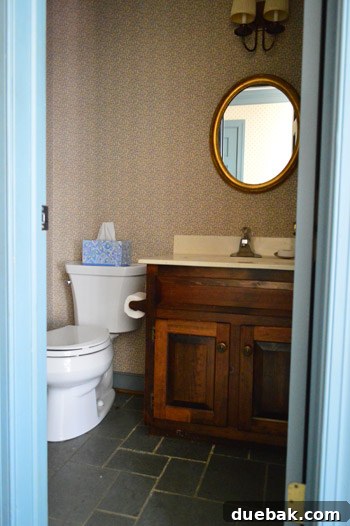
This entire experience underscores a crucial lesson in DIY and home improvement: you win some, and you undoubtedly lose some. There will always be those surprise speedbumps, those moments of doubt, and those unexpected color mishaps – common DIY challenges. However, as long as you keep pushing forward, remain open to course-correcting, and maintain a sense of humor, things usually work out more than okay. The ability to adapt and pivot is perhaps the most valuable tool in any DIYer’s arsenal, turning potential failures into stepping stones for greater success in any project, big or small.
Addressing the Finer Details: Grout, Faucet, and Lighting Quirks
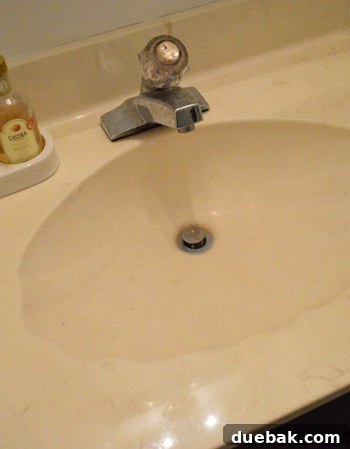
While the vanity’s transformation is largely complete, our half bathroom update is still in its Phase 1 stages, with a few crucial items remaining on the to-do list. Next up on our agenda is the grout. The decision looms: do we embark on the tedious task of scrubbing the existing grout back to its former glory, or do we opt for the more definitive solution of replacing it entirely? It’s a common dilemma in older bathrooms, and one we’re carefully considering for both aesthetic and practical reasons.
Equally pressing is the leaky faucet. A persistent drip is not only annoying but also wasteful, making its replacement a top priority. Selecting a new faucet provides another opportunity to refine the bathroom’s overall style, ensuring it complements the newly updated vanity and hardware. These functional upgrades are just as important as the cosmetic ones, contributing significantly to the comfort and efficiency of the space, highlighting the importance of functional bathroom hardware.
And then there’s our distinctive, upside-down light fixture. We intentionally turned it around in a previous stage of this renovation to accommodate a larger, more impactful mirror above the vanity. This unconventional placement, however, has given it a quirky personality. Doesn’t it look a bit like two beady little eyes, with the mirror serving as the mouth? It’s almost as if the bathroom itself is making the same slightly bemused face we are in this super flattering picture, showcasing unique bathroom lighting solutions!
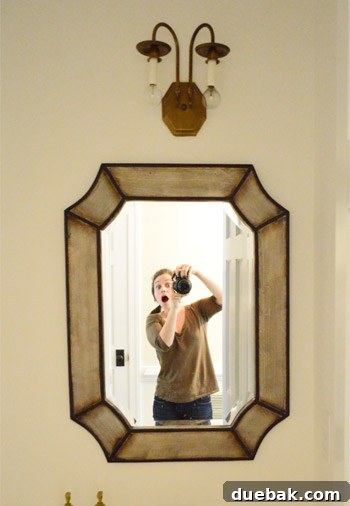
A persistent design challenge in this area is the slight misalignment of the light fixture relative to the mirror. Furthermore, the faucet and the light don’t quite line up perfectly. Our solution, for now, has been to “split the difference,” positioning the mirror in a way that minimizes the discrepancy, making it less noticeable to the casual observer. This kind of careful compromise is often necessary in DIY projects, especially when dealing with existing plumbing and electrical placements that aren’t easily changed, and demonstrates how to handle design dilemmas in a practical way.
Looking Ahead: Phase 1 Completion and Beyond
So, yes, there are still a few more exciting elements we’re eager to tackle for this initial Phase 1 update of the half bathroom. Our primary focus remains on addressing the grout – whether it’s meticulous cleaning or a full replacement – upgrading the quirky light fixture, and installing that much-needed new faucet. I find myself oddly excited about the prospect of light shopping, envisioning how a new fixture can truly transform the ambiance of the space. Conversely, I’m expertly (or perhaps not so expertly) avoiding the grout project for as long as possible – a common procrastination tactic among DIYers!
Even though we have grander, more major bathroom upgrade plans envisioned for further down the line – think luxurious grasscloth wallpaper, a stunning tiled accent wall, or perhaps a chic pedestal sink to open up the floor space – it genuinely feels wonderful to implement these more immediate, budget-friendly tweaks. These smaller changes make the bathroom significantly more welcoming and stylish in the interim, bridging the gap between its past and its future potential. They prove that you don’t always need a complete overhaul to make a noticeable and positive impact on your home, making even a small bathroom update feel grand.
We’re curious to hear from our fellow home improvement enthusiasts! Is anyone else currently working on a half bathroom update or facing similar design dilemmas? How is your project progressing, and what lessons have you learned along the way? Share your experiences and insights; after all, the DIY community thrives on shared stories and collaborative problem-solving!