
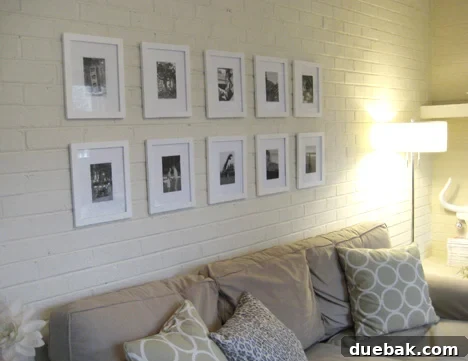
Create a Stunning Grid Gallery Wall: Your Ultimate DIY Guide to Elegant Black and White Photo Frames
Do you stare at your blank walls, feeling a pang of design despair? Are you yearning for a touch of personalized elegance that speaks volumes without uttering a word? Look no further! This comprehensive guide will walk you through the surprisingly simple process of creating a breathtaking grid gallery wall featuring timeless black and white photographs. It’s a project that delivers maximum visual impact with minimal effort, transforming any room into a sophisticated, curated space. Get ready to turn those empty canvases into cherished memories and artistic statements!
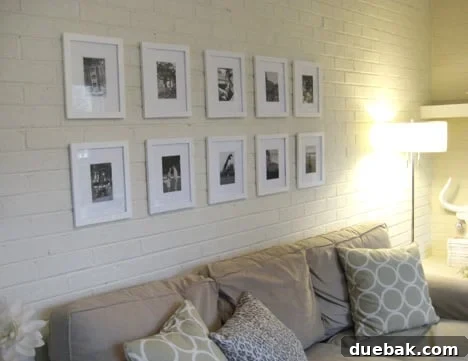
Why a Grid Gallery Wall? The Timeless Appeal of Black and White
A grid gallery wall is more than just a collection of pictures; it’s a meticulously arranged display that brings order, symmetry, and sophistication to your interior design. The uniform spacing and identical frames create a clean, modern aesthetic that effortlessly complements various decor styles, from minimalist to bohemian. When you introduce black and white photography, you elevate this concept even further. Black and white images possess a unique power to transcend trends, emphasizing emotion, texture, and composition without the distraction of color. They create a cohesive narrative, regardless of the original photo subjects, lending an artistic and classic feel to your space. This approach ensures your gallery wall remains elegant and captivating for years to come.
Before You Begin: Planning Your Perfect Photo Gallery Wall
Success in any DIY project lies in careful planning, and a grid gallery wall is no exception. Taking the time to strategize beforehand will save you headaches later and ensure a professional-looking finish.
Choosing the Ideal Location and Size
- Wall Space Assessment: Identify the wall that could benefit most from a striking focal point. Consider the size of the wall, its proximity to furniture, and how much natural light it receives. A larger wall allows for more frames and a grander statement.
- Viewing Angle: Think about where the gallery wall will be viewed from most often. Is it a hallway, a living room, or a bedroom? This can influence the scale and content of your photos.
- Measuring Your Canvas: Accurately measure the height and width of the available wall space. This measurement will be crucial in determining the optimal size and quantity of your frames, as well as the spacing between them.
Selecting and Curating Your Black and White Photos
The heart of your gallery wall lies in the images you choose. For a truly cohesive and impactful display, we recommend a theme:
- Quality Over Quantity: Opt for high-resolution photos that will print clearly. Grainy images can detract from the overall aesthetic.
- Visual Storytelling: While the black and white conversion will unify them, consider photos that share a common theme – perhaps family milestones, travel adventures, architectural shots, or abstract compositions. This adds another layer of depth and personal meaning.
- Variety in Composition: Even with a consistent theme, select images with varied compositions – some close-ups, some wider shots, some landscapes, some portraits. This keeps the eye engaged as it moves across the grid.
- The Power of Contrast: When converting photos to black and white (as we’ll discuss later), prioritize images with good contrast. Strong lights and darks will make your subjects pop and add dramatic flair to your finished prints.
Gather Your “Ingredients”: Essential Materials for Your DIY Grid
Just like a delicious recipe, the right ingredients are key to a successful outcome. Here’s what you’ll need to assemble your elegant black and white grid gallery wall:
- An Even Number of Identical Frames: For a classic grid, uniformity is paramount. We recommend starting with at least six to ten identical frames. Opt for frames that are simple in design and a consistent color (white, black, or natural wood are excellent choices for black and white photos). Common sizes like 8×10 inches or 11×14 inches work wonderfully for creating an impactful grid. Many retailers like Target, IKEA, or craft stores offer affordable multi-packs of frames perfect for this project.
- The Same Amount of Black & White Photos: Each frame needs a beautiful photograph. As discussed, ensure these are high-quality digital images ready for conversion and printing. Standard print sizes such as 4×6, 5×7, or 8×10 inches are popular choices, depending on your frame size and desired mat border.
- White Paper to Create a “Mat” Behind Each Framed Photo: This is a crucial element for enhancing your black and white prints. A crisp white mat creates a border that draws the eye to the photograph, adds depth, and provides a professional, gallery-quality finish. Choose a heavy-weight paper or cardstock for best results. Acid-free options are ideal for longevity.
- Plain Ol’ Scotch Tape: Simple clear tape works perfectly for securely positioning your printed photos onto the white paper mats. Ensure it’s strong enough to hold the photo in place without being visible. Acid-free archival tape is an excellent alternative if you want to preserve your photos long-term.
- Additional Essential Tools:
- Measuring Tape: Absolutely critical for precise spacing and placement.
- Pencil: For marking measurements and initial layout ideas on the wall.
- Level (Spirit or Laser): Ensures every frame is perfectly straight, which is essential for a grid layout. A laser level can be a game-changer for speed and accuracy.
- Hammer: For gently tapping in picture hanging hooks or nails.
- Picture Hanging Hooks/Nails: Choose appropriate hardware based on the weight of your frames and the type of wall (drywall, plaster, etc.).
- Scissors or Craft Knife & Cutting Mat: For precise cutting of your white paper mats. A craft knife with a metal ruler offers the cleanest edges.
- Painter’s Tape or Kraft Paper: For creating templates to plan your layout on the wall before making any permanent marks.
“Directions”: Step-by-Step Guide to Hanging Your Masterpiece
Now that you have all your materials, let’s get to the fun part: bringing your vision to life!
Step 1: Curating and Prepping Your Photos for Black and White Magic
This is where your chosen images truly transform. While many phones have built-in black and white filters, for professional results, consider using photo editing software. Programs like Adobe Lightroom, Photoshop, or even free online editors and smartphone apps offer more control over the conversion process.
- Convert to Grayscale: The first step is to remove all color information.
- Adjust Contrast: This is the most crucial step for black and white photography. Increase the contrast to make the darks deeper and the whites brighter, creating a more dramatic and impactful image. Don’t be afraid to experiment!
- Refine Tones: Play with the highlights, shadows, whites, and blacks sliders to fine-tune the image. You want detail in both the brightest and darkest areas.
- Sharpening (Optional): A subtle touch of sharpening can enhance the crispness of your photos.
- Exporting: Save your edited photos as high-resolution JPEG files, ready for printing.
Step 2: Professional Prints for Lasting Memories
Once your photos are perfectly edited, it’s time to get them printed. The quality of your prints will significantly impact the final look of your gallery wall.
- Choose Your Printer: Many online photo printing services (e.g., Shutterfly, Snapfish, mpix.com) offer excellent quality and convenience. Local drugstores with photo centers (like CVS or Walgreens, as mentioned in the original inspiration) are also great for quick turnaround. These often provide options for adding a crisp white border to your prints, which can further enhance the “matted” look even before you add your custom paper mat.
- Select Print Size and Finish: Ensure your chosen print size (e.g., 4×6 inches) will fit nicely within your frames, allowing enough space for the custom paper mat. For black and white photos, a matte or lustre finish often works beautifully, reducing glare and giving a sophisticated feel.
- Order with Care: Double-check your order for correct sizes and quantities.
Step 3: Crafting Your Custom Photo Mats
The custom white paper mat is a simple yet powerful design element. It provides a visual breathing room around your photo, making it stand out and appear more polished.
- Measure Precisely: Carefully measure the interior opening of your frames where the photo and mat will sit. Then, measure your printed photos. You’ll need to cut your white paper to a size that fills the frame opening, with a center cutout for your photo.
- Cut with Precision: Place your white cardstock on a cutting mat. Using a craft knife and a metal ruler, carefully cut the paper to the exact outer dimensions required to fit your frame. Then, measure and mark the opening for your photo, ensuring it’s perfectly centered within the paper mat. Cut this inner rectangle. Precision here is key for a clean look.
- Secure the Photo: Take one of your black and white prints. Form a small loop with a piece of scotch tape (sticky side out) and place it on the back center of your photo. Carefully position the photo in the center of your newly cut white paper mat. Gently press down to secure it. Repeat for all your photos and mats. Ensure all photos are consistently centered within their mats.
Step 4: Assembling Your Frames
With your photos matted and ready, it’s time to place them into their frames.
- Clean the Glass: Before inserting your matted photo, give the frame glass a good clean with a lint-free cloth and glass cleaner. Fingerprints can be very noticeable once the frames are hung.
- Insert and Secure: Carefully place your matted photo into the frame, ensuring it’s facing the correct way and sitting flat. Secure the frame backing according to its design (flaps, tabs, clips). Repeat for all frames.
Step 5: Planning Your Grid Layout on the Wall
This is arguably the most critical step for achieving that perfect grid look. Do not skip this!
- Create Templates: The easiest and most accurate method is to cut out pieces of kraft paper, newspaper, or even grocery bags to the exact size of your assembled frames.
- Tape to Wall: Use painter’s tape (which won’t damage your paint) to arrange these paper templates on your wall. Start from the center of your desired layout and work outwards, or from a prominent corner.
- Determine Spacing: Decide on a consistent distance between each frame, both horizontally and vertically. Typical spacing ranges from 2 to 4 inches. Measure this spacing meticulously between each template.
- Use a Level: Crucially, use your level to ensure all templates are perfectly aligned, both horizontally and vertically. Step back frequently to assess the overall balance and symmetry. Adjust as needed until you’re completely happy with the arrangement. This pre-visualization prevents unnecessary holes in your wall.
- Mark Hanging Points: Once your templates are perfectly placed, mark the exact spot where the nail/hook for each frame should go. If your frames have a single hook, measure from the top of the frame to the hook’s resting point and transfer that measurement to your template. Mark it with a pencil.
Step 6: Hanging Your Masterpiece
With your marks in place, the final step is to hang your frames.
- Install Hardware: Carefully remove one paper template. Using your pencil mark as a guide, gently hammer in your picture hanging hook or nail. Ensure it’s sturdy and angled correctly.
- Hang the Frame: Hang the corresponding framed photo onto the newly installed hardware.
- Check and Repeat: Use your level again to ensure the frame is perfectly straight. Then, move on to the next template, remove it, install the hardware, and hang the next frame. Work systematically across your grid.
- Final Adjustment: Once all frames are hung, take a final step back. Make any minor adjustments needed to ensure every frame is perfectly aligned and spaced.
Tips for a Perfectly Polished Grid Gallery Wall
- Double-Check Everything: Measure twice, cut once; plan twice, hammer once. Precision is your best friend here.
- Consistency is Key: Stick to the same frame style, mat color, and spacing for that clean, gallery-like aesthetic.
- Don’t Rush the Planning: The template method might seem time-consuming, but it’s essential for a flawless result.
- Consider Lighting: Think about how natural and artificial light will interact with your gallery wall. Avoid hanging frames where direct sunlight might cause glare or fade photos over time.
- Maintain a Theme: Even if not strictly black and white, a consistent visual theme for your photos will enhance the overall impact.
- Clean Regularly: Dust your frames and wipe the glass occasionally to keep your gallery looking its best.
Troubleshooting Common Issues
- Frames Are Not Level: This is the most common issue. Use your level and make small adjustments. Sometimes a slight tap on the nail or hook can shift it just enough. For persistent wobbles, consider re-marking and re-hanging.
- Uneven Spacing: This usually stems from rushing the planning stage. If it’s minor, you might be able to subtly adjust the frames. If it’s significant, it’s best to remove the frames and re-plan using the template method.
- Photos Sliding in Frames: This means your tape wasn’t strong enough or the photo wasn’t secured properly to the mat. Carefully remove the frame backing and reinforce the tape.
- Wall Damage: If you make a mistake and create an unwanted hole, don’t worry! Small holes can be easily patched with spackle, sanded, and touched up with paint.
Beyond the Basic Grid: Variations & Personalization
While the classic black and white grid is stunning on its own, once you’ve mastered the technique, you might want to explore variations:
- Mixed Frame Sizes: For a slightly more dynamic look while maintaining cohesion, you could use two alternating sizes of identical frames (e.g., 8×10 and 5×7 frames) in a structured grid pattern.
- Adding Textures: Introduce a few frames with abstract art, minimalist illustrations, or textured fabric pieces, all in black and white tones, to add visual interest.
- Colored Mats: While white mats offer a clean look, consider a subtle grey or even a bold single color mat in one or two frames for a pop of individuality within the black and white theme.
- Different Frame Colors: Instead of all white, perhaps all black frames for a more dramatic effect, or natural wood for a touch of warmth. Just ensure consistency across the grid.
- Themed Collections: Dedicate an entire wall to a specific theme – a collection of vintage family photos, travel snapshots, or nature photography, all unified by the black and white grid.
Congratulations! You’ve successfully transformed a blank wall into a sophisticated and deeply personal art installation. Creating a grid gallery wall with black and white photo frames is not just a decorating project; it’s an act of preserving memories, showcasing your style, and adding a timeless elegance to your home. Step back and admire your handiwork. You’ve earned that big ol’ slice of pie (or whatever celebratory treat you prefer)! Enjoy your beautifully curated space.