
Mastering the Art of Organization: A 10-Step Guide to a Clutter-Free Life
Beyond our previous discussions on creating dedicated spaces, like establishing a wrapping paper station, we haven’t truly dived deep into the systematic approach of tackling significant organization projects. If you’ve been dreaming of a more serene, functional, and inspiring environment, whether it’s a bustling craft room, a chaotic linen closet, an overflowing toolbox, or even cluttered kitchen cabinets, this guide is for you. We’re sharing our tried-and-true, step-by-step method designed to bring order to any corner of your home, transforming daunting tasks into rewarding achievements.
Embracing an organized lifestyle is more than just tidying up; it’s about reclaiming your space, time, and mental clarity. A well-organized area fosters creativity, boosts productivity, and reduces daily stress. This comprehensive framework, while using the craft room as its primary example, is universally applicable. Follow these practical steps, and you’ll not only declutter your physical space but also cultivate a more harmonious living environment where everything has a designated home, making it easier to find what you need and enjoy what you have.
The 10 Essential Steps to Transform Your Space
Step #1. Get Everything Out & About: The Crucial Unveiling
The very first, and arguably most vital, step in any organization project is to completely empty the space you intend to tackle. Take absolutely everything out from its current hiding spots – every drawer, every shelf, every box, every bin – and lay it all out. Spread your items across a large table, an unused bed, or even a cleared section of the floor. The goal here is complete visibility. Seeing every single item you possess for this area in one glance is transformative. While your initial instinct might be to skip this seemingly tedious step, resisting that urge is crucial. This full inventory allows you to truly understand the volume and variety of items you’re dealing with, uncover forgotten treasures, and identify duplicates or items that have long outlived their purpose. It provides a fresh perspective that is impossible to gain when items are still tucked away, making it the bedrock of effective organization.
Step #2. Be Decisive & De-clutter: The Art of Letting Go
With all your items laid bare, it’s time for the ruthless but incredibly liberating act of decluttering. Go through each item with a critical eye, asking yourself: “Do I use this? Do I need this? Do I love this?” Select everything you no longer want, need, or find useful and immediately place it into designated bags or boxes. Don’t look back; dwelling on past purchases only hinders progress. A simple rule of thumb: if you haven’t used those stickers, ribbons, stamps, decorative papers, fabrics, or tools for two years (or even one year for high-turnover items), it’s highly probable you never will. Distinguish between items for donation, recycling, or the trash. Pare down to only the “good stuff” – the items that genuinely serve a purpose, bring you joy, or are essential for your activities. This process not only frees up physical space but also clears mental clutter, allowing you to appreciate and actually use the items you truly value.
Step #3. Play Matchmaker: Grouping Like with Like
Once you’ve purged the unnecessary, turn your attention to the remaining items. This is where you begin to create order from the initial chaos. Take the keepers and group them into logical categories, placing “like with like” in clusters on your table, bed, or floor. Think broadly and functionally: all painting supplies together, various types of paper together, stationery items grouped, and all cutting tools (scissors, hole punchers, craft knives) in one area. Consider sub-categories as well; for example, within “painting supplies,” you might have acrylics, watercolors, and brushes. The idea is to create distinct, coherent piles. This visual grouping is a critical step because it clearly illustrates the volume of each category, which will directly inform your storage container needs in the next stage. It also makes it much easier to assess what kind of storage solutions will best accommodate each collection.
Step #4. Take Note: Planning Your Storage Needs
Now, stand back and observe all the meticulously created piles. This bird’s-eye view will instantly illuminate the types of storage containers, folders, caddies, or bins you’ll need to keep everything neatly organized and easily accessible. Grab a pen and paper – this step is about thoughtful planning, not impulsive shopping. For each pile, consider its size, how frequently you use the items, and whether they need to be visible or can be stored away. For instance, you might note: “one large box for bulky ribbons and bows,” “five slim folders for different types of stationery,” “three clear, stackable plastic cubes for various paints and small supplies,” or “a tall container for long rolls of wrapping paper.” This detailed list acts as your shopping blueprint, ensuring you acquire exactly what’s needed without buying excess or unsuitable items. Accurate planning prevents future clutter and wasted resources.
Step #5. Stop And Shop (Your Own Home First): Repurpose & Reimagine
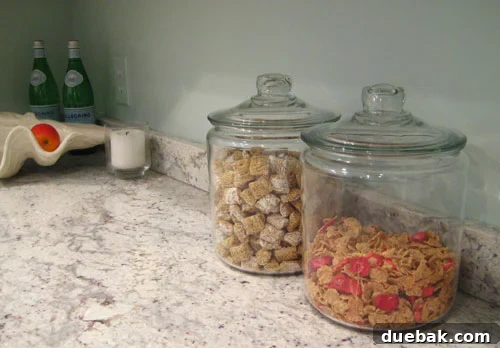
Before you even think about heading to a store, embark on a scavenger hunt within your own home! It’s surprising how many suitable storage solutions you might already possess, simply being underutilized or in the wrong place. Check other rooms – the garage, the laundry room, other closets, even kitchen cabinets. Could a too-large caddy currently residing under the bathroom sink be perfectly suited for the bulging basket of ribbons in your craft room? Perhaps those elegant glass cereal jugs could be repurposed to stylishly corral ribbons, yarn, or small crafting beads. Look for baskets, decorative boxes, unused planters, sturdy shoeboxes, or even old jars and tins that could be given a new lease on life. Repurposing not only saves money but also contributes to a more sustainable lifestyle. This step encourages creativity and mindful consumption, ensuring you exhaust all existing options before making new purchases.
Step #6. Go Get ‘Em: Strategic External Shopping
Once you’ve exhausted all the repurposing possibilities within your home, revisit your meticulously crafted list from Step #4. This is your definitive shopping guide for any remaining items. Now you can confidently hit up retailers known for their organization solutions – think Target, Ikea, The Container Store, Staples, or even local hardware stores. Stick strictly to your list. Resist the powerful urge to browse or buy anything that isn’t specifically noted on your paper. Impulse purchases, even seemingly useful ones, are the primary culprits for creating new clutter right after an organization project. Focus on acquiring containers that precisely fit the needs you’ve already established – the right size, material, and type for each categorized group. This disciplined approach ensures that every new item brought into your home serves a direct, pre-identified purpose, contributing to lasting organization rather than temporary relief.
Step #7. Keep It Common: The Power of Cohesive Aesthetics
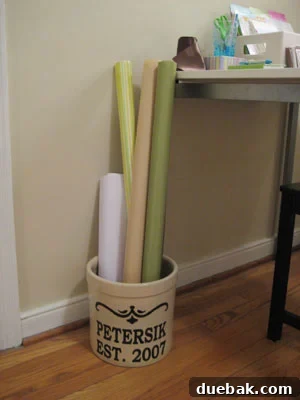
As you select your final containers, folders, boxes, and caddies, give some thought to maintaining a common color palette or material theme. While functionality is paramount, aesthetic cohesion plays a significant role in making your organized space feel calm, intentional, and inviting. Imagine a craft room where all storage items share a consistent look – perhaps all white containers, a collection of natural woven baskets, a unified theme of clear plastic bins, or even a specific color scheme like all green boxes, folders, caddies, and tins. This uniformity elevates the visual appeal of the entire room, making it feel more polished and less chaotic, even when full of supplies. Furthermore, don’t shy away from creative solutions for practical items. For a woven theme, a large woven basket can serve as an elegant garbage can, with a plastic liner discreetly hidden inside. Similarly, a wire basket theme can be beautifully complemented by metal tins and other wire organizers. A large, attractive planter, such as those often found at Ikea for around $8, can make an excellent, stylish garbage can or even a perfect vertical storage solution for wrapping paper rolls, just like our repurposed wedding present planter shown below.
Step #8. Up And At ‘Em: Maximizing Vertical Space
Never underestimate the organizational power of vertical space, especially in smaller rooms or areas with limited floor space. Think beyond just floor-level storage and look upwards! Get creative by hanging storage baskets or boxes – whether they are wire, woven, wood, or bright plastic – directly from the wall. Installing sturdy shelves, like Ikea’s popular Lack series, can provide expansive surface areas to corral more supplies and display your organized collections. Consider pegboards with various hooks and shelves for tools and smaller items, or rolling utility carts that offer mobile, multi-tiered storage. By utilizing wall space, investing in tall shelving units, or even adding over-the-door organizers, you can significantly expand your storage capacity without sacrificing precious floor area. Maximizing every inch of your space, from floor to ceiling, ensures that even the most abundant collections can be stored efficiently and accessibly.
Step #9. Work The Room: Thoughtful Arrangement for Access and Appeal
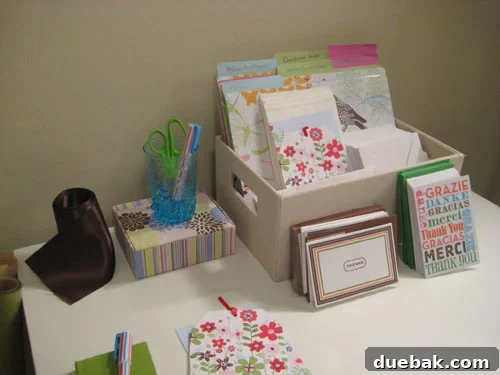
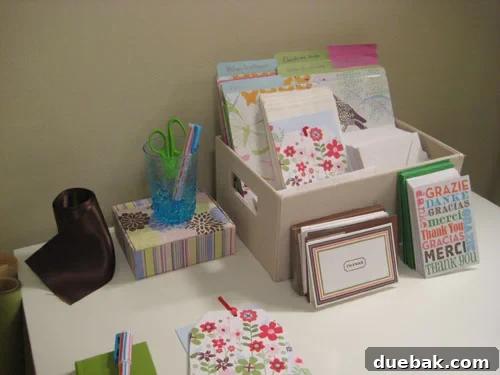
With all your items categorized and housed in their new containers, the next step is to arrange everything within your designated space. This isn’t just about putting things away; it’s about optimizing for both function and aesthetic appeal. Place each group of items in its designated box, basket, bin, or tin, then arrange these containers in a logical and visually pleasing manner. Consider how frequently you’ll access certain items: frequently used supplies should be within easy reach, while less common items can be stored on higher shelves or in less prominent spots. Experiment with stacking smaller boxes on top of larger ones for tiered storage, or display all your neatly categorized folders in a stylish wire organizer, decorative basket, or fabric box (as demonstrated in the first image above). The goal is to create a system where you can easily see, access, and return as much as possible, making your creative process smoother and more enjoyable.
Step #10. Polish It Off: Infusing Personality and Comfort
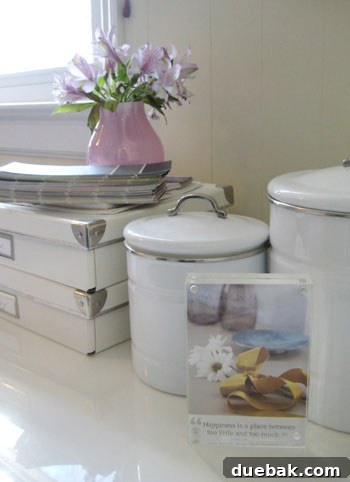
Finally, to truly complete your newly organized space, add a few thoughtful, completely decorative touches. An organized space is functional, but a welcoming space makes you want to stay and create. These personalized elements contribute significantly to the overall feel and atmosphere of the room. Consider adding a soft, inviting rug underfoot, a sculptural lamp for both task lighting and ambiance, a fresh vase of flowers, or a framed piece of inspirational artwork. Even the smallest and most budget-friendly details can make a monumental difference. For instance, a pretty mug in your chosen color scheme, filled with pencils and paintbrushes, acts as both storage and a decorative accent. Displaying your prettiest ribbons or stationery in an open, appealing box or basket allows their beauty to be seen and appreciated, turning functional items into decorative displays. These final touches infuse the space with your unique personality, making it a true haven for creativity and productivity.
Your Transformed Space Awaits
While this might sound like a significant undertaking, approaching home organization with these structured steps can genuinely be both fun and incredibly rewarding. Imagine the relief and satisfaction of finally organizing those items you’ve been “meaning to get to” for years, perhaps even a decade. You’ll sleep better, knowing your space is under control, and you’ll undoubtedly get far more use out of the beloved things that were once buried amidst a sea of less-than-great clutter. There’s truly nothing quite like the calm and efficiency of a clean, functional crafting space, a well-ordered office, or a perfectly neat closet. Once you embark on this journey, you’ll be pleasantly surprised by how smoothly you progress from the initial chaos to a beautifully organized result. Before you know it, you’ll be sipping tea, perhaps writing a sweet letter to a long-lost friend at your newly organized desk, and wondering why you didn’t tackle your craft corner (or any other space) sooner!
For a truly inspiring glimpse into a beautifully organized creative sanctuary, we encourage you to explore Nicole’s studio from Making It Lovely.