
Crafting Love: A DIY Hand-Stitched Baby Quilt for Our Little Man
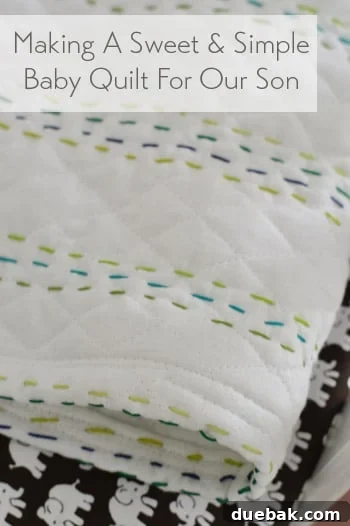
There’s something uniquely special about handmade items, especially when they’re crafted for the newest member of your family. The joy, the anticipation, and the sheer love poured into every stitch create not just a physical object, but a cherished heirloom. This is the story of how I embarked on a creative journey to make a truly unique and adorable little quilt for our baby boy, bringing a touch of personalized warmth to his nursery.
The Enduring Charm of a Handmade Quilt: Lessons from Clara’s Beloved Blanket
Just a few years ago, my journey into the world of quilting began quite unexpectedly. Despite not being a seasoned seamstress, I felt an undeniable urge – almost a delightful possession – to create a quilt for our daughter, Clara. That initial endeavor, chronicled with a mix of humor and sincerity, resulted in a blanket that quickly became more than just a piece of fabric; it became an integral part of Clara’s world.
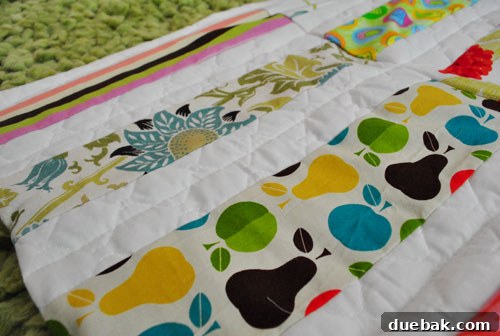
Fast forward a few years, and here I am again, fresh from navigating a whirlwind of threads and another surprisingly successful date with my sewing machine. This time, the project was for our soon-to-arrive little man. The motivation? Clara’s unwavering attachment to her quilt was the strongest testament to the enduring value of a handmade treasure.
Her quilt isn’t merely a bed covering; it’s a constant companion. She’s slept with it almost every night since its completion, finding comfort and security within its soft folds. But its use extends far beyond bedtime.

It accompanies her on car rides, transforming long trips into cozy adventures. It even makes its way downstairs for those lazy Saturday snuggling sessions on the sofa. This tangible connection, this visible sign of comfort and love, truly solidified my desire to create something equally meaningful for our son.
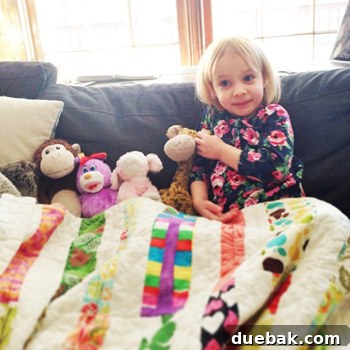
The sweetest moments often come unbidden. John has often reminded her that “Mommy sewed this just for you,” and in response, every so often, as she hugs me goodnight, she whispers, “Thank you for my beautiful quilt.” Such heartfelt expressions bring tears to my eyes every time I recall them. She truly is the best, and it’s these moments that underscore the deep emotional impact of a handmade gift. With our second baby on the way, the idea of him having his own special, handmade quilt felt like a necessary, loving gesture.
Finding My Muse: The Charm of Imperfect Hand-Stitching
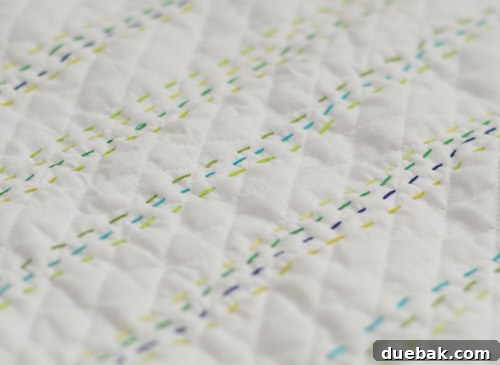
Driven by the success of Clara’s quilt, I wanted to create something equally cherished for our little man, but with a fresh approach. I hesitated for a while, unsure where to begin with a new method, until I stumbled upon an inspiring hand-stitched quilt online. It was a beautiful piece by Citta Design (sadly no longer available), and it immediately struck a chord. The unique character of its sweetly imperfect, hand-done stitching was exactly the inspiration I needed.
I was captivated by how each line, slightly irregular and varied, unmistakably conveyed the touch of a human hand rather than a machine. It radiated warmth and love through its charmingly uneven dashes. This aesthetic spoke to me, promising a quilt that felt deeply personal and full of character. So, with newfound enthusiasm, I decided to embrace the beauty of imperfection and give hand-stitching a try.
Gathering Your Essentials: Materials for Your Hand-Stitched Baby Quilt
Before diving into the stitching, the first step was to gather all the necessary materials. One of the pleasant surprises of this project was its affordability, proving that beautiful, handmade items don’t have to break the bank. Here’s a detailed look at what I used:
- Quilt Fabric: I purchased one square yard of white diamond-quilt fabric from JoAnn. This type of fabric is ideal because it features a quilted cotton front and back with a thin layer of batting already sandwiched in the middle. This eliminates the need to layer and baste separate pieces of fabric and batting, simplifying the process considerably. Thanks to a 40% off coupon found with a quick phone search, it cost a mere $4.
- Embroidery Floss: I sourced 17 small packs of embroidery floss in a delightful spectrum of blues and greens from Michaels. The specific shades included chartreuse, kelly green, pale green, teal, navy, and lime. Initially, I bought 5 packs of each color, totaling 30, but ended up using only 17. At 27 cents per pack, the floss for the actual quilt came to a very reasonable $4.59. Choosing a variety of colors allows for a vibrant and dynamic design.
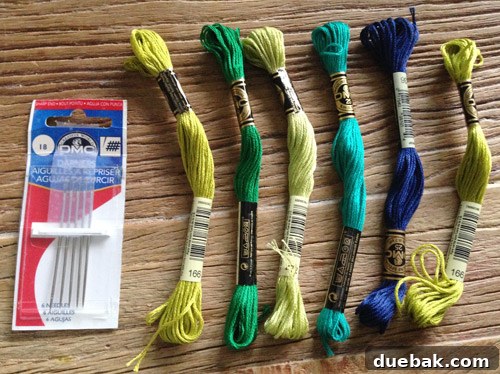
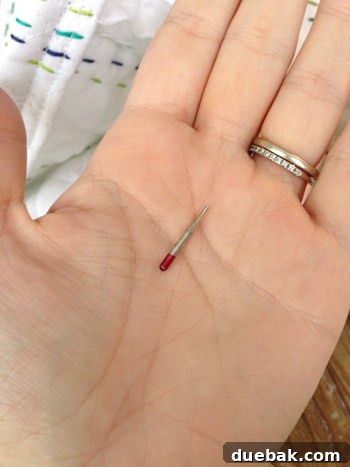
- Embroidery Needles: I used a leftover pack of embroidery needles I had from a previous project. These needles are distinct from standard sewing needles; they are typically larger with a wider eye, making them perfect for threading with thicker embroidery floss rather than regular sewing thread. They were originally purchased for 99 cents at JoAnn a few years back.
- Sewing Machine: While the primary technique for this quilt was hand-stitching, my trusty sewing machine, affectionately named “Oh Brother,” was indispensable for the final hemming steps. It was already loaded with white thread, ready for action.
In total, the financial investment for this heartfelt project was under $10. While the monetary cost was low, the true investment came in the form of dedicated “man-hours” – approximately ten million love-filled ones, spread across several evenings. But we’ll delve into that aspect in just a moment.
A Journey of Stitches: Step-by-Step Hand-Stitching Your Baby Quilt
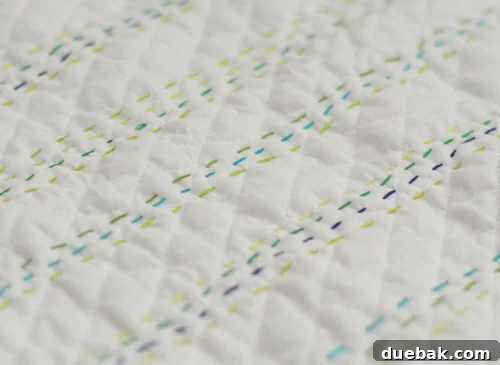
My first practical step, after pre-washing the quilt fabric to allow for any initial shrinkage before embroidering, was to decide on the stitched pattern. I pondered various options: evenly spaced lines reminiscent of the inspiration quilt, diagonal patterns, or even a crosshatched design. Ultimately, the simple elegance of stripes in varying tones of blue and green won me over. This decision allowed for both structure and creative freedom within the design.
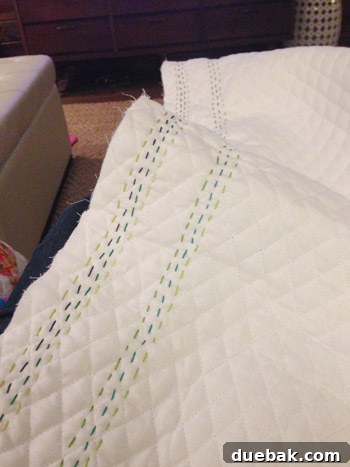
Starting from the left side of the quilt, I began hand-stitching four distinct lines of embroidery floss, each in a different color. This formed the first “stripe” of the quilt, a delightful burst of color and texture.
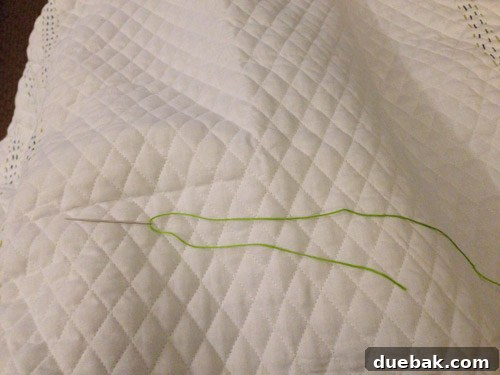
A crucial detail for maintaining the delicate look of the inspiration quilt was to ensure I didn’t double up my thread. I kept it single, meaning I threaded the needle with a slight excess but avoided looping it all the way down and knotting it as I would with regular thread for sewing a button. This single-strand method contributed to the quilt’s light, airy, and distinctly handmade feel.
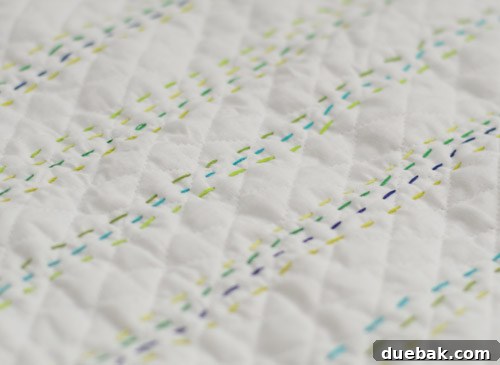
Once my first multi-colored stripe was complete, I used the diamond pattern inherent in the quilted fabric as a guide for spacing. I roughly positioned the next stripe about two diamond widths away. This method allowed me to keep the spacing somewhat consistent, while still embracing the charm of a handmade item. For added visual interest and to reinforce the “perfectly imperfect” aesthetic, some stripes were composed of four stitched lines, while others featured three. This subtle variation truly embodies the spirit of the inspiration quilt, which celebrated its unmistakably handcrafted nature.
The diamonds in the embroidery fabric proved invaluable for more than just spacing; they also helped me keep my lines relatively straight from top to bottom. For instance, if I started a hand-stitched line at the peak of a diamond, I made a conscious effort to connect each subsequent diamond peak as I stitched my way from the bottom to the top of the fabric. This simple technique prevented my lines from veering too far off course, contributing to a cohesive yet beautifully organic pattern.
The Time Factor: A Labor of Love, Not a Race
Now, let’s talk about time – because I believe in keeping it real. While this quilt is undeniably adorable, it’s not a “fast and easy” project. I don’t know if it’s my stitching pace or my tendency to get deliciously distracted by Housewives drama (which provided excellent background entertainment while I worked on the sofa each evening for about a week), but each night, I averaged about 3-4 stripes, each consisting of three or four colors, which typically took around 2 hours. Therefore, this 16-stripe (or technically, 57 individual stitched lines spaced to look like 16 wider stripes) one-yard quilt took approximately 11 hours of dedicated hand-stitching. This estimate also includes an additional hour spent on hemming the outside seams with my sewing machine, which was surprisingly manageable.
Despite the time commitment, this project was far from torturous. Unlike wrestling with blue trim paint or peeling stubborn wallpaper, hand-stitching offered a wonderfully relaxing, repetitive motion. It’s the kind of activity you can enjoy nightly from the comfort of your sofa, perhaps while your butt is already parked there anyway. Instead of mindlessly scrolling through Instagram or taking Buzzfeed quizzes, you get to create something beautiful, snuggled under a blanket with your furry companion, feeling utterly quaint and productive. It’s a meditative process that allows your mind to unwind while your hands create. This quiet, focused effort truly infuses the quilt with extra love and intention.
Securing Your Stitches: The Knotting Technique
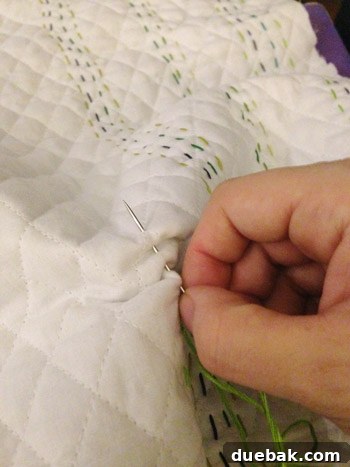
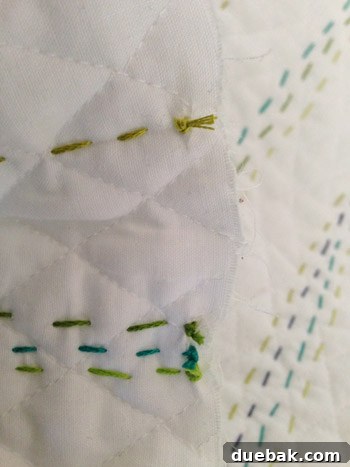
When it came to securing each stripe, my method was straightforward and effective. At the top edge of the quilt’s back, I simply tied off each stripe with the thread still on the needle. At the bottom edge, I cut the embroidery floss, leaving about 7 inches of excess. This allowed me to re-thread the needle onto that end and tie a secure knot there as well. This process resulted in a neat line of knots along both the top and bottom edges on the backside of the quilt.
Crafting Symmetry: Working Towards the Middle
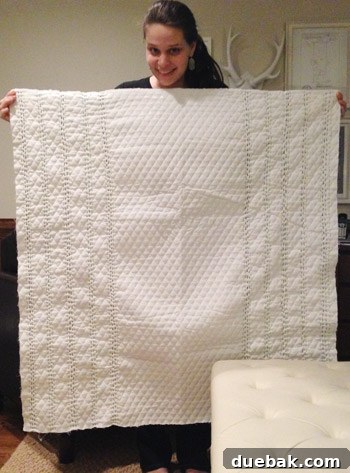
To ensure a balanced and somewhat symmetrical design, I didn’t just work from one side straight across. Once I completed about a third of my stripes from left to right, I switched to the right side and worked inwards, completing another third of the quilt by stitching from right to left. Then, as I approached the middle of the quilt, I bounced back and forth, alternating between stripes on each side. This allowed me to fine-tune the spacing and ensure everything lined up harmoniously, resulting in a beautifully balanced finished product. While simply working from left to right with the two-diamond spacing might have been an option, this alternating approach gave me greater control over the final symmetry, reducing the chance of needing to trim precious inches from the quilt to make everything fit, and ultimately preserving my desired square shape.
Allow me to share this slightly eerie, low-lit iPhone picture to illustrate how I gradually worked my way towards the center of the quilt, ensuring a cohesive design.
The Finishing Touch: Hemming Your Hand-Stitched Quilt
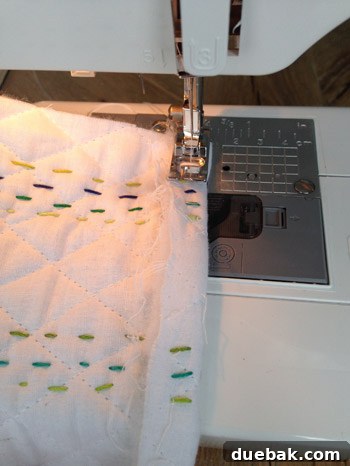
With all the intricate hand-stitching complete, it was time for the final, crucial step: hemming the edges. This is where “Oh Brother,” my trusty sewing machine, made its grand appearance. Before I even touched the pedal, I offered a few silent prayers to the sewing machine gods. These prayers, paraphrased for politeness, were essentially pleas for a smooth process, hoping to avoid any machine-induced frustration that might unleash my less-than-sweet alter ego upon my unsuspecting husband in the next room. Taking three deep, cleansing breaths, I carefully folded each raw edge of the quilt over to the back and then stitched them securely in place. This initial fold hid all the individual knots along the top and bottom edges, providing a much cleaner look.
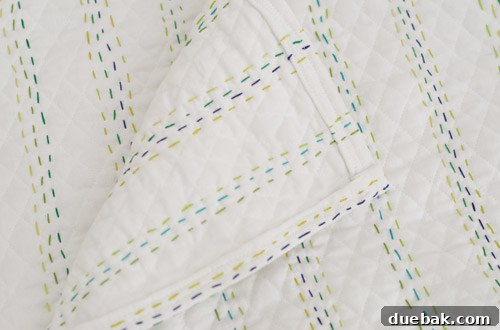
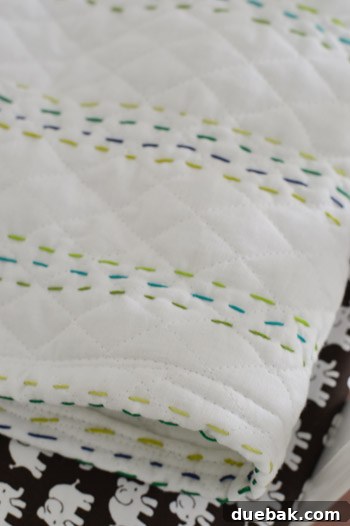
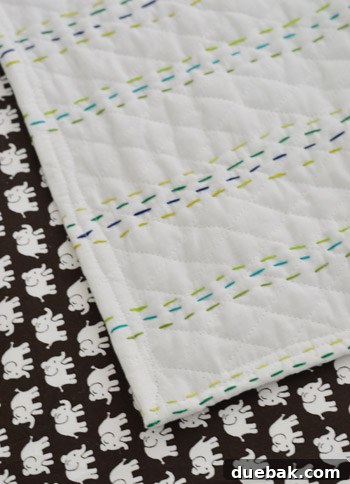
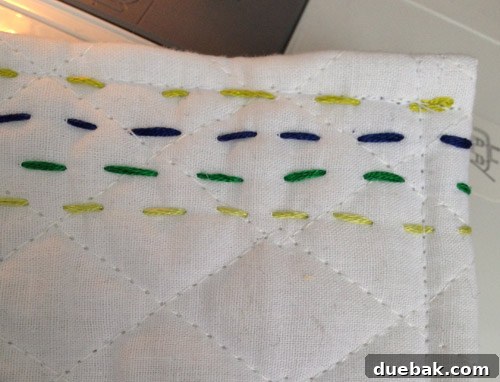
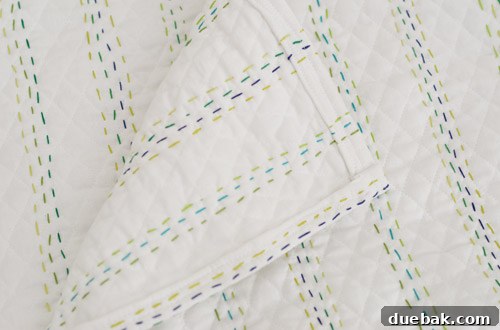
However, an initial single fold often leaves a slightly unfinished edge on the back. To achieve a truly polished appearance from both the front and back, I folded each hemmed edge over one more time. This created a clean, double-folded edge, and with one final stitch-session for each side, the quilt had a beautifully neat and professional finish. This attention to detail truly elevates the overall quality and longevity of the quilt. Here’s a glimpse of the finished front:
And for those curious about the meticulous work on the reverse side, here’s what it looks like from the back:
The Final Reveal: A Labor of Love
And behold, after countless stitches and only two (yes, truly, two!) broken needles, the quilt was complete. Despite the minor equipment casualties, I genuinely believe it turned out incredibly sweet, a true labor of love ready to welcome our little one.
I simply cannot wait to meet this precious little bun and wrap him up in all sorts of love and cozy, quilt-y snuggles. The thought of him finding the same comfort and attachment to this blanket as Clara did to hers fills my heart with immense joy and anticipation.
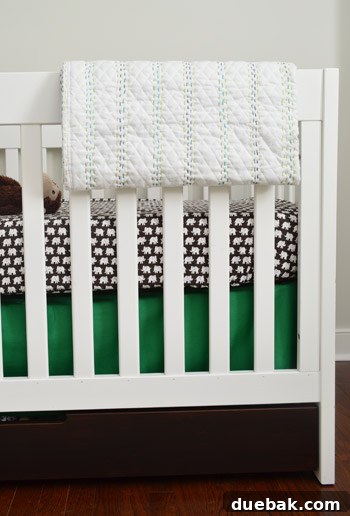
For now, it’s peacefully residing in the nursery, a colorful and tender symbol, patiently awaiting the big arrival. It adds a vibrant, personal touch to the room, making it feel even more ready for its newest occupant.
Embrace the Art of Hand-Stitching: Your Next Creative Project
Has this post inspired you to pick up a needle and thread? Are you currently sewing or crafting anything special for your kiddos, friends, relatives, or even your beloved four-legged babies? Have you ever ventured into the world of hand-stitching or embroidery? There’s an oddly restful, almost hypnotic quality to it, a mindful meditation that yields beautiful, tangible results. It’s a wonderful way to unwind and create something truly meaningful. Share your projects and experiences in the comments below!
Psst- Curious about where we found something in our home or what specific paint colors we’ve used? Just click the button below to explore our curated selections and find inspiration for your own space!