
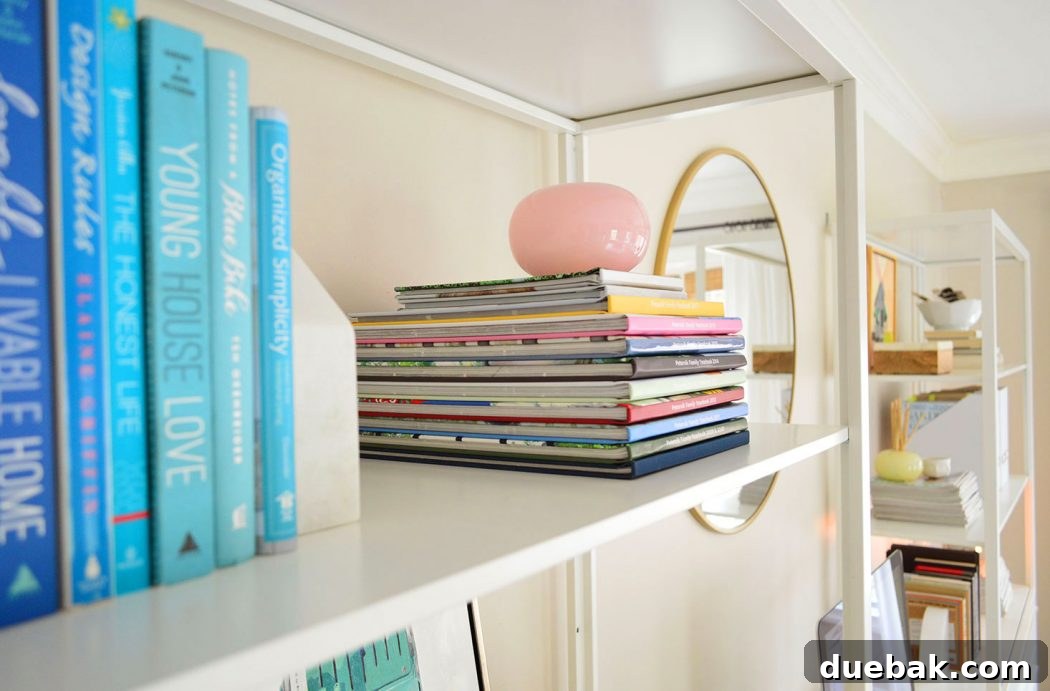
The sudden closure of MyPublisher last year left many loyal customers, including us, in a quandary. For years, our cherished annual tradition of creating a family yearbook depended entirely on their reliable service. The most pressing question echoing in our community quickly became, “Who will you trust with your precious family memories now that MyPublisher is gone?” For months, we had no definitive answer, as our annual “family yearbooks” are meticulously compiled and printed each January, encapsulating the entirety of the preceding year. You can explore examples of our past yearbooks here to understand the depth of our commitment to this tradition. However, with 2018 well underway, we’ve successfully added our 2017 album to the ever-growing stack, and we couldn’t be more delighted with the outcome. This detailed review will walk you through our journey and reveal our new go-to photo book service.

The Quest for a MyPublisher Alternative: Finding a New Home for Our Family Yearbooks
While we don’t claim to be experts in the vast world of photo printing services, our extensive experience with MyPublisher certainly gave us a refined sense of what we valued. We were dedicated users for over seven years, purchasing our first annual album from them way back in 2011. Over time, we grew incredibly accustomed to their intuitive service, their consistent quality, and, perhaps most importantly for us, the beautiful, uniform stack of yearbooks that graced our shelves as each year passed. The outpouring of sentiment from our readers confirmed that we were far from alone in our disappointment when MyPublisher unexpectedly closed its doors last spring, leaving countless families scrambling for a worthy replacement.
Understanding the collective concern, we reached out to our incredible community for recommendations. The response was overwhelming, with hundreds of suggestions pouring in across Instagram and Facebook. We carefully sifted through these recommendations, noting the services that consistently emerged as favorites. Among the most frequently mentioned were Blurb, Mixbook, Artifact Uprising, and Shutterfly (the company that ultimately absorbed MyPublisher’s operations). After careful consideration and weighing the community feedback, Blurb quickly rose to the top, closely followed by Mixbook. Shutterfly, while frequently mentioned, appeared to be polarizing, with many users expressing dissatisfaction after trying it.
Our Experience with Blurb: A Detailed Review for Former MyPublisher Users
Based on the overwhelming positive feedback from our community and a bit of preliminary research on their respective websites, we decided to give Blurb a try for our 2017 family yearbook. While we can’t speak to how Blurb stacks up against Mixbook, Artifact Uprising, or Shutterfly (as our only point of comparison remains our collection of MyPublisher albums), we can confidently say that for anyone familiar with MyPublisher’s quality, diverse photo layouts, and overall service, Blurb offers a remarkably close match. In several key areas, we found Blurb to be even better. It’s crucial to note that this is an entirely unbiased review; this is not a sponsored post, and Blurb has no idea who we are. We paid for our book out of pocket, just like any other customer, and eagerly awaited its arrival on our doorstep.
Achieving Consistency: Blurb’s Photo Book Size
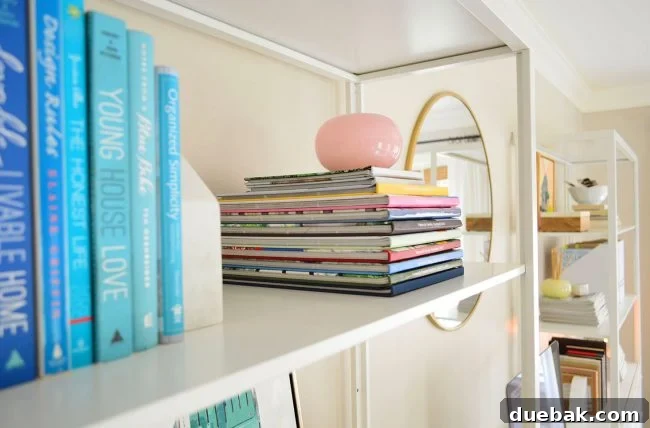
One of our primary concerns when transitioning to a new service was maintaining the aesthetic consistency of our existing yearbook collection. The visual harmony of a uniform stack is an integral part of our tradition, representing years of captured memories. We were delighted to discover that the spine of Blurb’s Standard Landscape Photo Book measures just half an inch shorter than the old standard size we habitually ordered from MyPublisher. This minor difference allows it to stack quite naturally on top of our existing collection, as you can see with the yellow-spined book in the image below. While it’s also about an inch and a half less wide, this dimension is largely imperceptible when the books are stored flat or even leaned vertically, as it primarily affects the back edge. We understand that obsessing over such precise measurements might seem peculiar, but for us, the joy of this tradition is inextricably linked to watching our stack of family history grow harmoniously. Finding a service that enables us to continue building upon the same cherished pile was a significant win.

Understanding the Value: Blurb’s Photo Book Pricing
The final cost of our Blurb photo book came in at approximately $43. This was roughly $5 less than what we typically spent on our MyPublisher albums. It’s important to acknowledge that this year’s Blurb book contained 15 fewer pages, so it’s not a perfectly exact “apples-to-apples” comparison. However, the pricing structure reveals some interesting insights. With MyPublisher, a significant portion of our cost often stemmed from purchasing extra pages. We consistently utilized their maximum of 99 pages, which, in some years, could have cost us nearly $130. To mitigate this, we always strategically waited for their “Free Extra Pages” promotions, which typically saved us around $80. Blurb’s discount codes, while appreciated, didn’t seem quite as generous (we secured a 30% discount via email). However, their base pricing structure proved to be substantially more affordable. Without any discounts whatsoever, we would have spent LESS THAN HALF of what MyPublisher would have charged for a comparable book (approximately $60 versus $130). This suggests that Blurb offers a much better value proposition even without major promotions, making it a more consistent and predictable choice for budget-conscious creators.

Designing Your Memories: Blurb’s BookWright Software & Layout Options
Just like MyPublisher, Blurb provides users with complimentary desktop software for laying out their photo books offline. Their offering, named BookWright, proved to be a streamlined and efficient tool. While it admittedly had fewer “bells and whistles” compared to MyPublisher’s software, its performance was notably faster, especially during the crucial image upload process – a task that used to consume a considerable amount of time with MyPublisher. BookWright’s initial offering of preset photo layouts felt somewhat limited. However, this potential drawback is easily circumvented by its excellent feature allowing users to save their own custom templates. This means you can design your preferred layouts once and reuse them effortlessly across pages and future projects, fostering consistency and saving time. One minor initial frustration was the less intuitive photo swapping mechanism compared to MyPublisher. Furthermore, a key learning point for us was discovering the “trim area” guides *after* we had already ordered our book. These invaluable guides, which appear as a subtle purple border (as shown below), are essential for preventing important text or faces from being inadvertently trimmed during the printing process. As a result, some of our pages in the first Blurb book ended up being cropped a little more tightly than intended. But now that we’re aware of how to activate and utilize this feature, it’s a simple adjustment that will ensure perfectly framed photos in all future yearbooks.

Evaluating the Final Product: Blurb’s Print Quality
As mentioned, our expertise lies in cherishing memories, not in professional printing analysis. Nevertheless, our discerning eyes found no discernible difference in the final product’s quality between Blurb and MyPublisher. In fact, we observed that Blurb’s book spines possessed a slightly sharper, more refined finish than MyPublisher’s – a subtle detail that could potentially be attributed to the 15 fewer pages in this particular volume, resulting in a more compact spine. The photo-wrapped cover, a hallmark of our desired aesthetic, and the internal pages all met our high standards for color accuracy, vibrancy, and crispness. This was particularly reassuring, especially since BookWright had issued warnings that many of the iPhone photos included were of “too low resolution.” While a professional photographer or graphic designer might scrutinize every pixel with a magnifying lens, to our (admittedly somewhat picky) naked eye – an eye that often has strong opinions on undertones and lighting – the images looked absolutely stunning. We have zero complaints about any of the more than 400 photos meticulously arranged within the book’s pages. The colors popped, the details were sharp, and the overall feel was premium, making it a true joy to flip through.


The Enduring Magic of the Family Yearbook: Why We Love This Tradition
We’ve delved into the technicalities, but it’s important to underscore the profound emotional value that these family yearbooks hold for us. They are far more than just photo albums; they are tangible narratives of our lives, year by year. They transform fleeting digital images into enduring family heirlooms, capturing not just faces, but also the spirit and essence of each passing year. The excitement our children express when the new book arrives is truly heartwarming. It’s an eagerly anticipated event when we can gather together and “read” the story of our past year for the very first time. They frequently pull down the older volumes from the shelf, reliving cherished memories and marveling at how much they (and we!) have grown and changed. In an increasingly digital world, these physical books serve as a powerful anchor to our shared history, fostering a deeper connection to our memories and to each other. We are immensely grateful that, thanks to Blurb, we can confidently carry on this invaluable “Family Yearbook” tradition.

Tips for Creating Your Own Unforgettable Family Yearbook
Inspired by our journey? Here are some actionable tips to help you embark on or continue your own family yearbook tradition with ease and enjoyment:
- Organize as You Go: Don’t wait until the end of the year to sort through thousands of photos. Create monthly or quarterly folders on your computer or cloud storage, dropping in your favorite shots regularly. This makes the final compilation much less daunting.
- Curate Wisely: You don’t need every single photo. Select the best ones that tell the story of your year. Focus on moments, emotions, and variety. A diverse range of photos, from major events to everyday joys, paints a richer picture.
- Utilize Software Features: Take the time to explore your chosen photo book software, like Blurb’s BookWright. Learn how to use custom templates and, crucially, activate guides like the “trim area” to ensure professional-looking results.
- Backup, Backup, Backup: Before you even start compiling, ensure all your photos are securely backed up, ideally in multiple locations (e.g., external hard drive, cloud service).
- Embrace Your Style: Don’t feel pressured to mimic anyone else’s yearbook. Your family’s story is unique. Whether you prefer minimalist layouts or vibrant collages, let your book reflect your personal style.
- Look for Deals: Sign up for newsletters from photo book companies. While Blurb’s discounts might not be as dramatic as MyPublisher’s “Free Pages” historically were, consistent smaller discounts can add up to significant savings over time.
- Start Small: If the idea of a full year’s book feels overwhelming, consider starting with a project that covers a specific trip, a season, or a significant family event. This builds confidence and familiarizes you with the process.
A heartfelt thank you once more to everyone who recommended Blurb to us! We are thrilled to have discovered such a fantastic alternative and are excited for many more years of “Yearbooking” to come!
P.S. For those curious about why we passionately prefer this photo book system over traditional photo albums or purely digital storage, we’ve explored the significant advantages, particularly regarding how much space and money they can save you, in a previous post. Dive in to understand the practical benefits of this method of memory keeping.
*This post contains affiliate links, meaning we may earn a small commission if you make a purchase through our links, at no extra cost to you. We only recommend products and services we genuinely use and love.*