
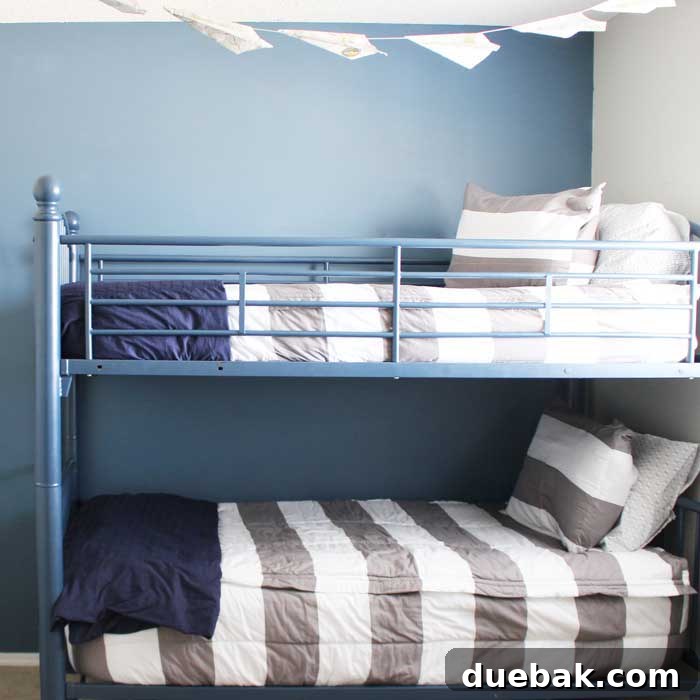
Embarking on a home renovation project, especially painting, can be both exciting and daunting. A few weeks ago, I made the significant decision to tackle a project that many DIYers might shy away from: painting over the bold stripes in my sons’ bedroom. My primary concern, and one I imagine many can relate to, was the fear that despite my best efforts, the ghost of the old stripes would still show through. Would the lines where the different colors met create an unwelcome texture or visible ridge beneath the new, solid coat of paint? This apprehension is a common hurdle when attempting to transform a previously striped or heavily patterned wall.
Fortunately, navigating this challenge didn’t have to be a solo endeavor. I utilized CIL’s invaluable “Ask An Expert” service, a free resource that allowed me to pose a myriad of paint-related questions. From critical color choices that would stand the test of time in a boys’ room to selecting the optimal product for maximum coverage, the CIL Experts provided tailored, practical advice. Their suggestions were instrumental, specifically offering brilliant strategies on how to effectively smooth out the textured differences where the old paint stripes met and how to perfectly hide any subtle height variations, particularly those pesky lines often left behind by painter’s tape. Armed with expert guidance, I was ready to transform a striped canvas into a beautifully uniform wall.
With the expert advice firmly in hand and a clear vision for the room, my excitement to introduce a fresh burst of color onto the walls was palpable. However, as any seasoned painter or DIY enthusiast knows, before the satisfying sweep of the roller can begin, there’s an often-overlooked yet critically important phase: preparation. This foundational work ensures not just a beautiful finish, but a durable and professional-looking one that will last for years to come. It’s the silent hero of any successful paint job.
The Essential Art of Wall Preparation
While the act of painting itself delivers instant gratification and visible progress, the meticulous process of preparing the walls is, without a doubt, the most critical step to achieving a truly professional end result. Skipping or rushing this stage can lead to frustrating imperfections, poor paint adhesion, and a finish that falls short of expectations. Although it lacks the immediate visual reward of applying color, proper preparation lays the groundwork for success. For this particular project, transforming my sons’ striped bedroom, my preparation routine included several key tasks: safely removing all outlet covers and switch plates, meticulously taping off adjacent walls and baseboards, and, most importantly, extensive sanding.
Mastering the Challenge: How To Paint Over Striped Walls Effectively
Painting over striped walls presents a unique challenge: eradicating the physical lines and textures created by the previous paint application. This isn’t just about covering color; it’s about creating a perfectly smooth surface. The most crucial step in achieving this seamless transition is diligent sanding. I specifically used sanding blocks, working them meticulously across each stripe line where the different paint colors met. This focused approach allowed me to target the subtle ridges and raised edges that accumulate over time from multiple layers of paint.
My goal was simple yet demanding: to sand until I could run my finger across a former stripe line and feel absolutely no discernible ledge or bump. The walls had to be perfectly flush. Some rows, perhaps those with less paint build-up or softer lines, were quicker to smooth out than others. There were moments when I longed for the efficiency of a power sander to expedite the process – as long as it was gentle enough to remove the paint texture without inadvertently sanding through the drywall itself. It requires a delicate balance of pressure and patience. Once I was satisfied that I couldn’t possibly sand any more, ensuring every stripe transition was imperceptible to the touch, the walls were thoroughly wiped down with a damp rag. This step is vital for removing all residual dust and sanding debris, which could otherwise compromise paint adhesion and the final finish.
Every DIY project comes with its own set of logistical hurdles, and this paint project was no exception. I found myself with a rather restricted window of time to actually get the painting done. Anyone with young children will understand the delightful chaos that ensues when little ones “help.” While their enthusiasm is endearing, it isn’t always conducive to efficient, precise painting. Consequently, I strategically reserved my painting sessions for the evenings, hoping that my wonderfully supportive husband could keep the kids entertained and safely away from wet paint. And, to my relief, it mostly worked!
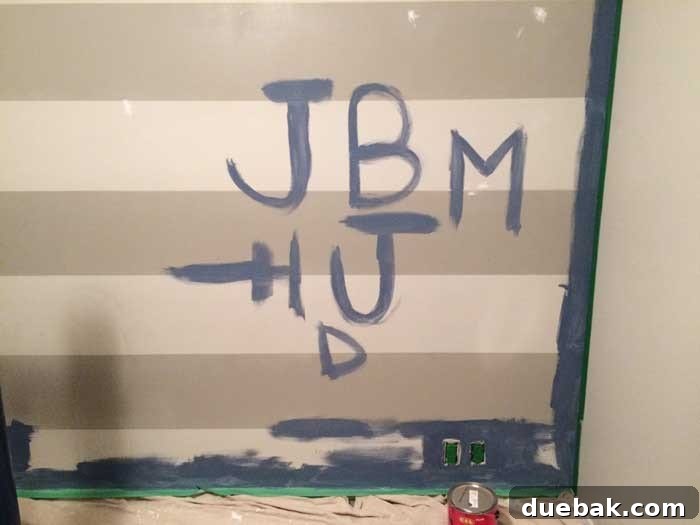
With the extensive prep work behind me, it was finally time for the satisfying application of paint. The first area I tackled was along the baseboards and meticulously “cutting in” on the edges. This precise brushwork is critical for achieving clean, crisp lines where the wall meets the ceiling, trim, and adjacent walls. As I began, a ripple of nervousness ran through me – had I truly sanded enough? Would the old stripe lines still show through? To alleviate my anxiety, I painted a small test line, observing closely to see if any evidence of the previous stripes transferred through. The relief was immense when I saw a perfectly smooth, uniform coat.
It was at this crucial juncture that the boys, sensing the late hour and perhaps the allure of a parent engrossed in a project, made their grand entrance, readying themselves for bed and, naturally, wanting to “help.” Appeasing their eagerness, I allowed them to “paint” their first initials onto a small, inconspicuous section of the wall. This quickly escalated, as expected, into demands for their brothers’ initials, an “M” for Mom, and a “D” for Debbie, their beloved grandma. It was a sweet, memorable moment, and a testament to the paint’s quick-drying nature and low odor, which allowed for such close proximity without concern. The following night, with the edges expertly cut in, I transitioned to the main event: rolling out the paint across the broader wall surfaces. The paint glided on smoothly, truly like butter, confirming the quality of the product and the thoroughness of the preparation.
The Perfect Paint Choice: CIL Plus
Choosing the right paint is paramount to a successful project, especially when dealing with the unique demands of covering existing stripes and painting a high-traffic area like a kids’ room. For this project, I opted for the self-priming CIL Plus paint, exclusively available at RONA. The specific shade, “Pebble Drift 90BG17/120,” was expertly recommended by a CIL color specialist through their “Ask An Expert” service, specifically chosen for its superior ability to effectively cover the underlying stripes. The beauty of a self-priming paint is its dual function: it primes the surface, promoting better adhesion and hiding power, while simultaneously delivering color, often reducing the number of coats required.
As for the sheen, an eggshell finish was the clear choice. In a bustling kids’ room, durability and washability are non-negotiable. Eggshell strikes the perfect balance – it’s less reflective than semi-gloss or gloss, which helps to hide minor wall imperfections, yet it’s significantly more durable and easier to clean than a flat finish. This means everyday scuffs, fingerprints, and minor mishaps can be wiped away without damaging the paint, keeping the room looking fresh and vibrant for longer.
First Coat is on. Time to grab a stool to reach the top!
After the first coat of paint was applied, a moment of doubt crept in regarding the chosen shade of blue. Initially, it appeared quite light, almost a stereotypical “little boy blue,” and I worried it might not achieve the sophisticated yet playful look I envisioned. This common phenomenon, where wet paint appears lighter or slightly different from its dry state, can be a source of anxiety for many painters. Luckily, my concerns were quickly alleviated. As the first coat began to dry, the color settled into a deeper, richer hue. With the application of the second coat, the transformation was complete; the walls took on the exact shade I had envisioned – a calming yet vibrant blue that perfectly suited the space.
A notable aspect of this project, as seen in the picture above, involved pushing the bunk beds to the side of the room. This was a practical necessity, as the painting extended over a couple of evenings, and the boys still needed to sleep in their room. However, there was absolutely no cause for concern, thanks to the remarkable quality of CIL PLUS paint. It is virtually odorless, a feature I truly came to appreciate. It meant no harsh fumes or lingering chemical smells, ensuring a comfortable and healthy environment for my children to sleep in, even with fresh paint on the walls. The absence of that characteristic “fresh paint” smell was incredibly refreshing and solidified my impression of the product. Beyond the odor-free experience, I was also genuinely impressed by how effortlessly the CIL PLUS paint applied, flowing smoothly and providing excellent coverage with minimal effort. This made the entire painting process far more enjoyable and efficient than I had anticipated.
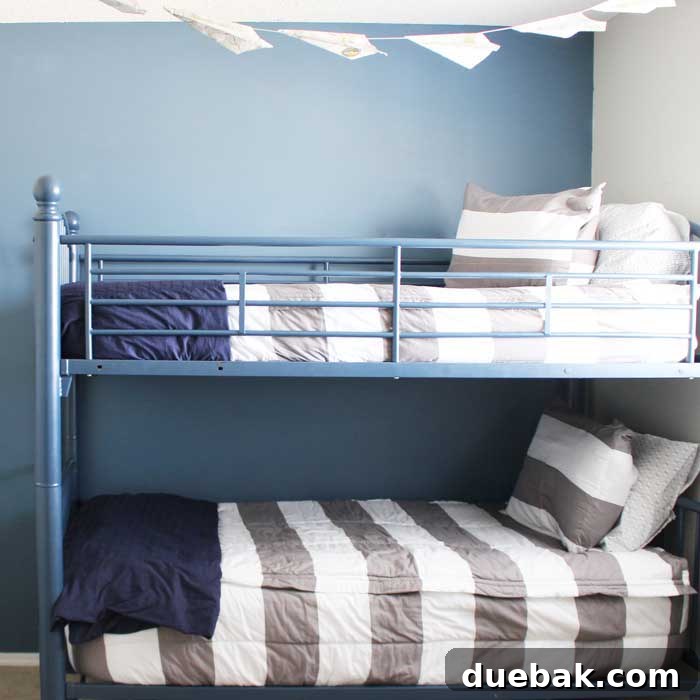
Now that the extensive painting project in the boys’ room is successfully completed, with the old stripes seamlessly covered and a beautiful new blue gracing the walls, I can move on to the more enjoyable phase of adding the final decorative touches. This involves selecting new bedding, artwork, and other accessories that will truly bring the room to life and reflect their personalities. The transformation is remarkable, and the room feels entirely new. What are your thoughts on the final paint color?
— Brooke
For anyone facing similar painting dilemmas, from tricky coverage issues to difficult color decisions, I highly recommend visiting www.cil.ca/ask-an-expert. This invaluable resource provides free, personalized advice directly from the CIL team of experts, guiding you through every step of your project. You can also follow my entire journey and discover more tips and insights by searching for #CILAskAnExpert on social media.

Disclosure: This post was brought to you by CIL paint via Mode Media Canada. The opinions expressed here are entirely my own and reflect my genuine experience with the products and services. Your support for brands that collaborate with Brooklyn Berry Designs is greatly appreciated.