
“How should I stage my house to sell? Should I take down all of my family photos? I’m not selling, but I want my house to look good for company – give me some tips! Do I need to add a lot of decorative accessories? Or, wait, am I supposed to be taking things away and decluttering?!”
These questions, along with countless others, are frequently directed my way whenever I mention my side hustle as a home stager for a local realtor. For over a year, I’ve been helping homeowners transform their spaces, and the results have been consistently impressive. If you’re curious to dive deeper, you can catch up on some bonus stories and tips by listening to podcast Episode #53, Episode 41, and Episode 88. But in this comprehensive guide, I’ll reveal why I’m so passionate about staging, share my favorite money-saving strategies, and present compelling before-and-after transformations of homes I’ve prepared for sale. My goal is to equip you with actionable insights, whether you’re selling your home or simply aiming to create a more serene and inviting living environment.
The Power of Home Staging: Why It Matters for Selling Your House
For me, the fundamental purpose of home staging is to ensure that every room feels as expansive, bright, and welcoming as possible. This approach diverges significantly from everyday decorating, where the focus might be on showcasing personal style or specific decor pieces. When staging, your primary objective is to highlight the inherent qualities of the house itself. Therefore, you must resist the urge to overfill a space, which can inadvertently detract from desirable features like gleaming hardwood floors, generously sized windows, naturally lit nooks, integrated storage solutions, or any other architectural elements that are part of the property. Do you have a room that feels perpetually small and dark, seemingly devoid of these appealing features? While it might be tempting to fill it with items to mask these shortcomings, resist that impulse! Doing so will only exacerbate the cramped and cluttered sensation. Any accessories or furnishings introduced during staging should subtly guide potential buyers to envision their own lives unfolding within that space. My entire staging philosophy is encapsulated in the acronym K.I.S.S. (Keep It Simple, Stager).
I find immense satisfaction in the immediate and profound transformation that home staging offers. In just a few hours, a house can undergo a complete metamorphosis, often with minimal or even no financial investment. Unlike some staging services that arrive with a truckload of rental furniture and decor, my method is more focused. I am typically hired through a local realtor to assist homeowners who possess a good amount of belongings but require expert guidance in editing, refining, and strategically enhancing their existing style. This tailored approach helps these homeowners sell their properties more quickly and, ideally, secure a higher sale price.
And let me assure you, staging delivers tangible results! While I hesitate to jinx myself by stating this aloud, every single house I have staged has sold within three days of hitting the market – with one remarkable property even selling within 12 hours for above the asking price. As uncomfortable as it is to boast, I hope sharing my “track record” reinforces the profound impact that professional staging can have. It demonstrably increases buyer interest, generates more offers, and ultimately contributes to achieving a more favorable sale price for your home.
The Strategic Art of Decluttering: My Home Staging Process
My core approach to staging revolves around the meticulous removal of unnecessary items. This includes oversized furniture that overpowers a room, as well as general clutter that contributes to a chaotic or disorganized atmosphere. These are straightforward adjustments that any homeowner can implement before listing their property, or simply at any time, to cultivate a more serene and peaceful home environment. It’s truly astonishing to witness the dramatic difference these simple edits make in other people’s houses. The impact is so compelling that I often return home inspired to apply the same principles to our own rooms, even though we have no plans to sell our house for decades, if ever!
When I arrive to stage a home, I bring very little with me – usually just a large bag or two filled with carefully selected accessories. These items are specifically chosen to add a refined polish to areas that I’ve simplified or decluttered. My staging kit typically includes items like neutral art pieces, elegant vases, fresh bedding, accent pillows, and small, practical items such as a crisp white ceramic soap pump. This curated selection underscores my philosophy: the vast majority of my work involves optimizing what the homeowner already possesses. I’ll delve deeper into this concept and share photos of some of the specific items I bring later in this post. However, in most instances, I characterize the staging process as approximately 3% addition (a few carefully chosen new decorative items) and a powerful 97% subtraction (removing existing items that crowd the home and obscure its true potential).
mirror
So, where does all the “subtracted” stuff go? Typically, the realtor and homeowner work together to predetermine a designated area for larger items I remove. This might include an overstuffed armchair that’s dominating a living space or a bench at the foot of a bed that makes a small bedroom feel even smaller. Common predetermined storage locations include a garage, an outdoor storage pod, or an attic. For smaller clutter, homeowners often provide a few empty storage bins or large laundry baskets. This allows me to move efficiently from room to room, filling them with miscellaneous items that don’t need to be on display. Afterward, these items can be neatly tucked into drawers or cabinets if they’re needed in that room, or stored in the attic if not.
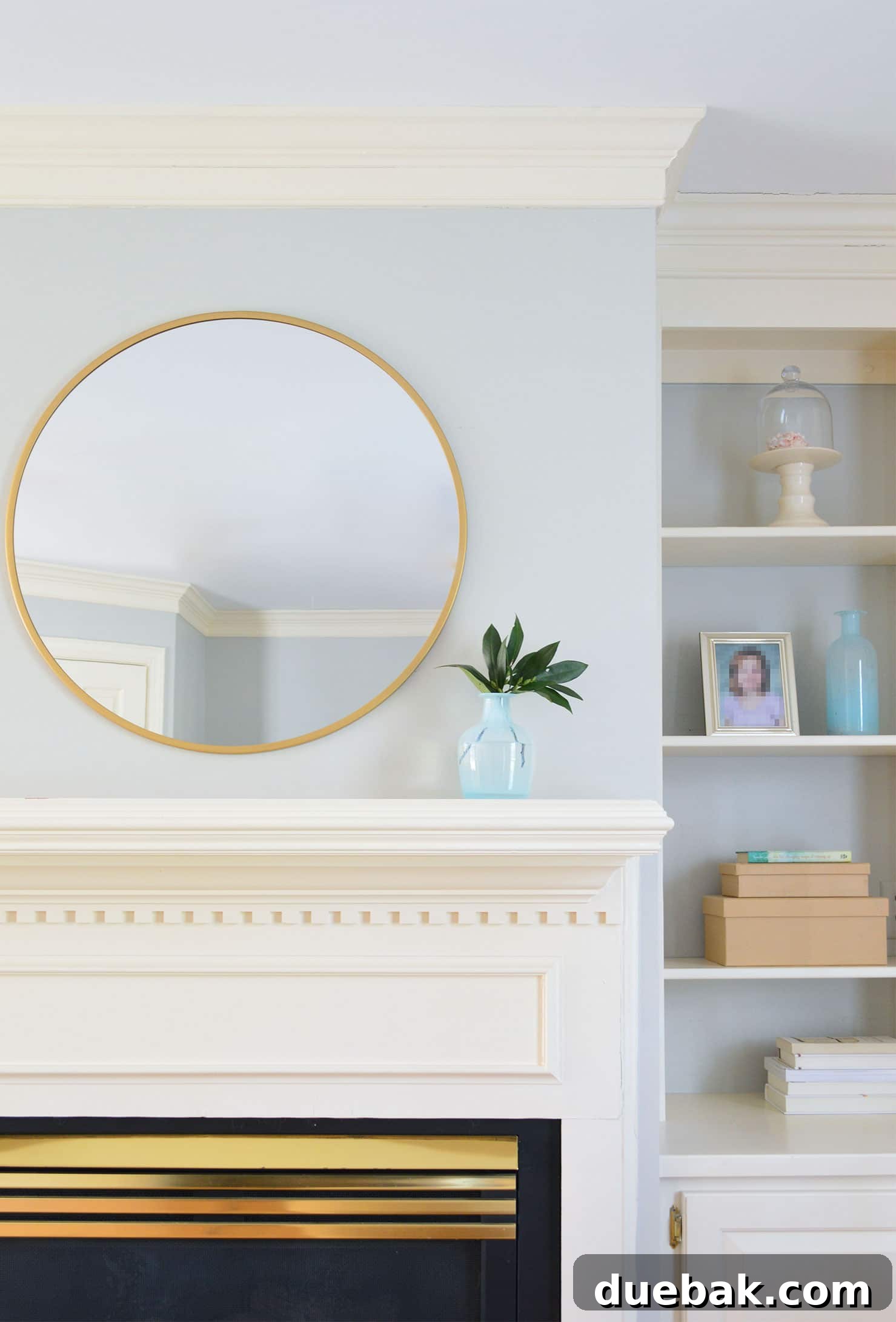
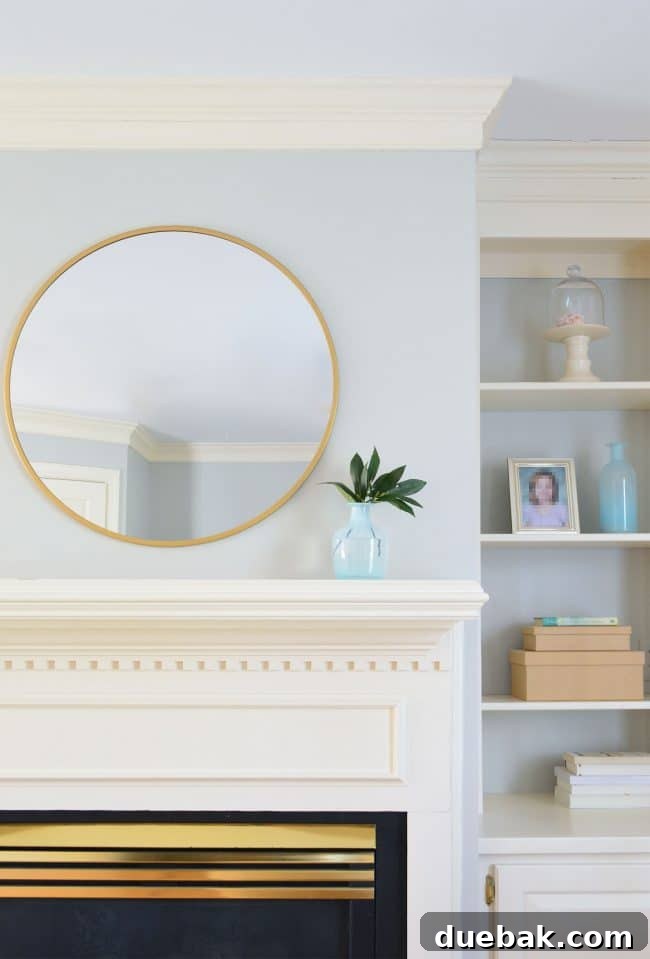
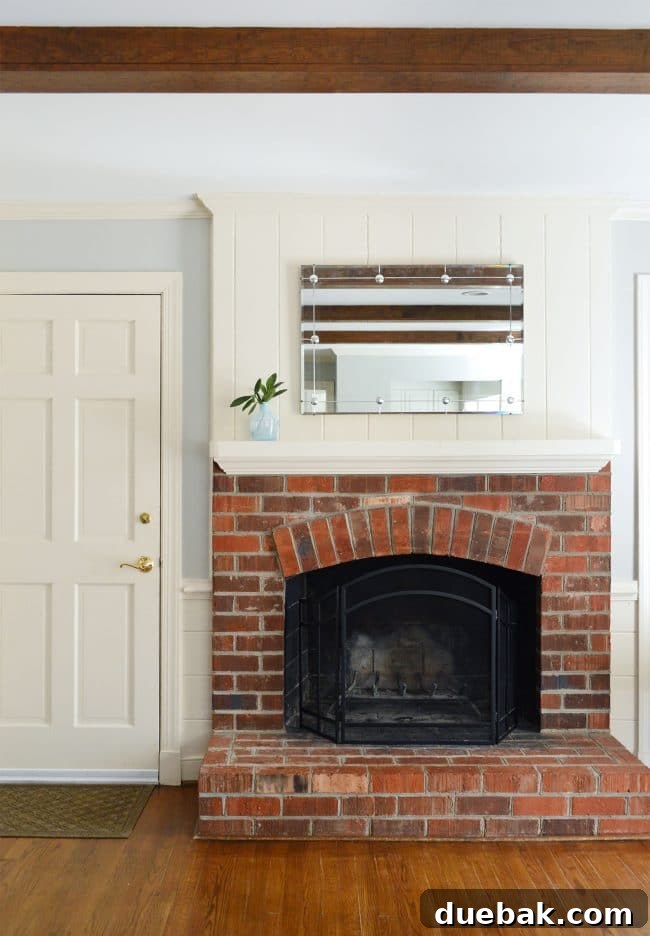
Homeowners don’t hire me for my muscle; they need an objective eye to **EDIT RUTHLESSLY**. They seek firm and decisive guidance on what should stay and what needs to go. My role involves simplifying mantels, bookshelves, tabletops, and all the other surfaces we become accustomed to over time. We often become “blind” to the visual noise of our own belongings until an outside perspective provides a crucial reset. For instance, the bookshelves and mantel shown here originally held about 50% more items before I streamlined them in preparation for professional listing photos.
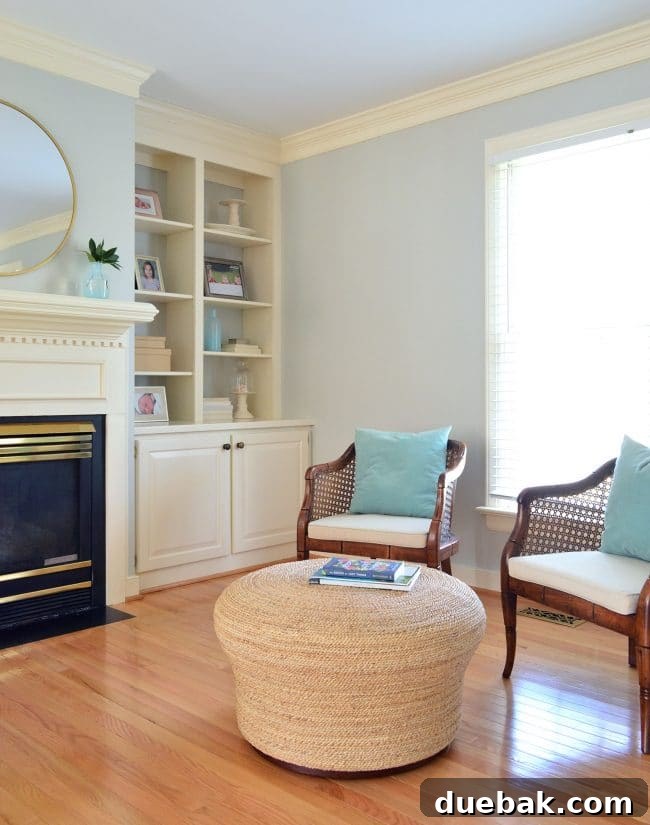
The image above depicts a main bedroom that I staged. While I don’t have a “before” photo, allow me to paint a vivid picture: imagine a **GIANT BLACK ELLIPTICAL MACHINE** resting squarely on those beautiful hardwood floors, partially obstructing both the fireplace and the built-in shelving. My first step was to help the homeowners relocate it to their garage. This immediately opened up the space, allowing us to stage it as a proper, inviting seating area. We utilized existing furniture the homeowners already owned, supplemented by a few accent pillows I provided. While we could have added more, such as a rug, the essence of staging isn’t about achieving a “perfectly decorated” look; it’s about crafting an appealing vision of life within that home. Moreover, a rug would have concealed those attractive, shiny hardwood floors!
The overarching point is to enhance the aspirational fantasy of living in the house. Who wouldn’t want to picture themselves enjoying a morning coffee in their main bedroom’s sunny sitting area, with a cozy fireplace glowing, large windows inviting natural light, and elegant built-ins completing the serene scene? That single sentence alone highlights at least four significant selling features of the home!
Practical Home Staging Techniques: Easy Tricks You Can Implement Now
I understand you’re looking for more specific guidance than just “simplify and declutter.” While we’ll get to some compelling before-and-after pictures shortly, I first want to outline a few easy, high-impact staging techniques you can implement immediately. Many of these cost absolutely nothing and are among the first things I do when I enter a house for staging, instantly making entire rooms feel lighter and more spacious.
Clear Countertops for a Spacious Feel
In both kitchens and bathrooms, the rule is to remove almost everything from countertops. Clutter, regardless of how fancy the kitchen, can instantly diminish its appeal. Stow away as much as possible, paying particular attention to stacks of paper, small appliances, and personal items. The same principle applies rigorously to bathrooms: hide those everyday toothbrushes, makeup compacts, and personal care products. I often find that these countertop items can easily be relocated to kitchen or vanity drawers, stored neatly under the sink, or tucked away in a medicine cabinet. While it’s perfectly understandable to prefer having these items accessible for daily use, when you’re trying to sell your house, you want potential buyers to appreciate the expansive counter space, not to be distracted by your immersion blender and its tangled cord, or to conjure images of you poking your ears with Q-tips in their potential future bathroom. Tucking these items away allows buyers to clearly see and appreciate the generous surface area, imagining it filled with their own belongings.
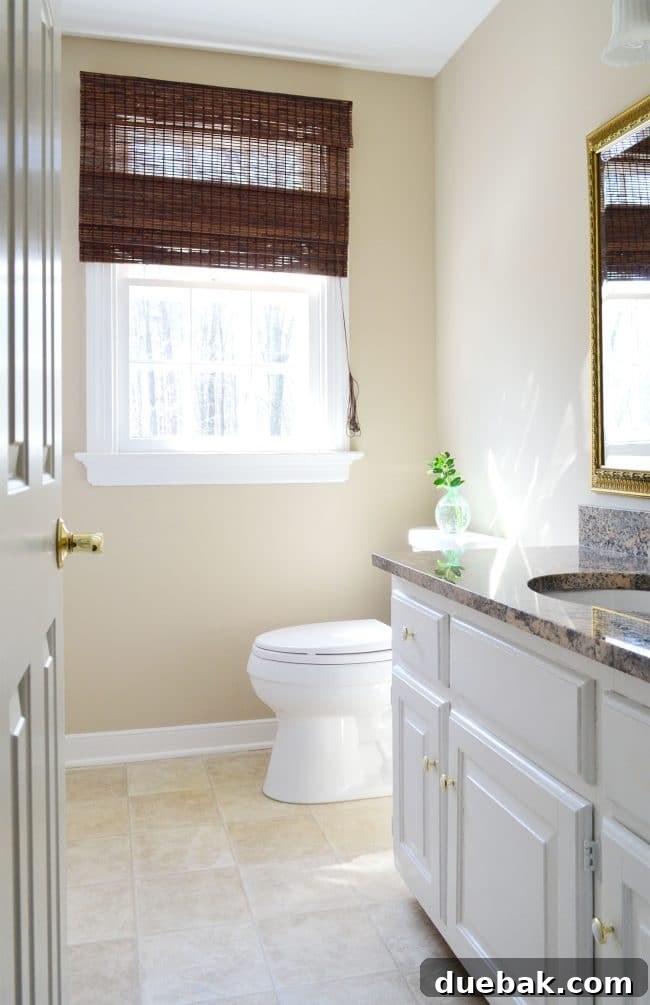
Here’s an example of a bathroom after I staged it. Notice the complete absence of any hygiene-related items on display, promoting a pristine and spa-like atmosphere.
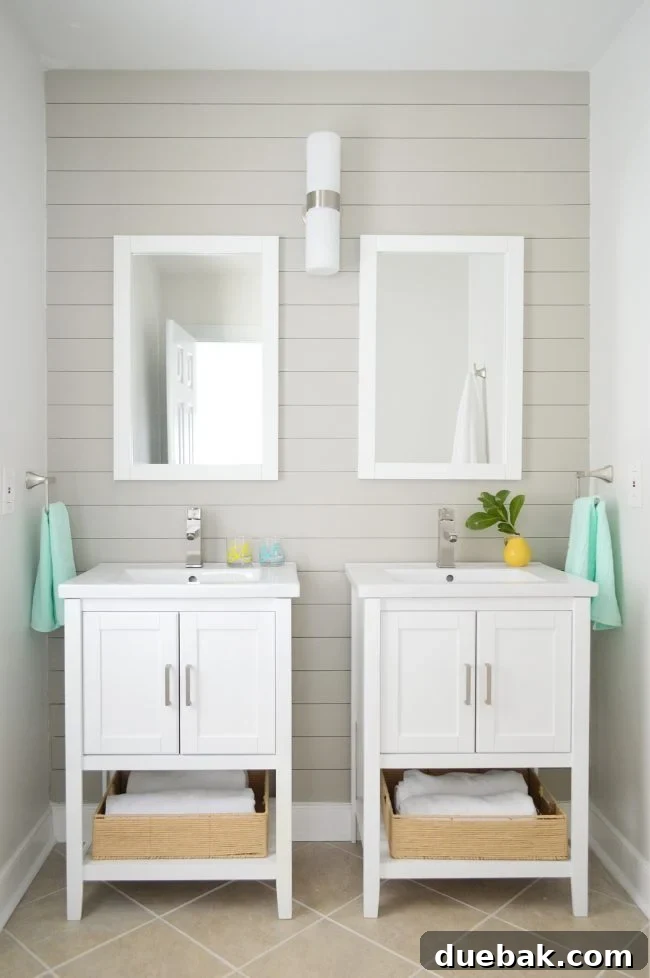
vanities (they’re the same ones we have in gray at our beach house!)
Simplify Other Surfaces to Maximize Appeal
Extend the decluttering effort to other common household “clutter-zones.” This includes kitchen tables, coffee tables, nightstands, and bookcases. Even I, with my staging experience, sometimes have to consciously fight my instinct to “over-style.” In our daily lives, seeing our personal belongings around makes a house feel like home. However, when the goal is to help someone else envision the house as their future home, you want to eliminate anything that might steal their attention from the property’s features. Buyers should be absorbing what makes the house unique and appealing, not noticing your collection of frog figurines or heart-shaped rocks.
For instance, consider this kids’ homework room. I helped my friend create it last year from an unused home office (you can read more and see all sources and before & after pics here). This is how it appeared when fully functional and ready for daily use, bustling with personal touches:
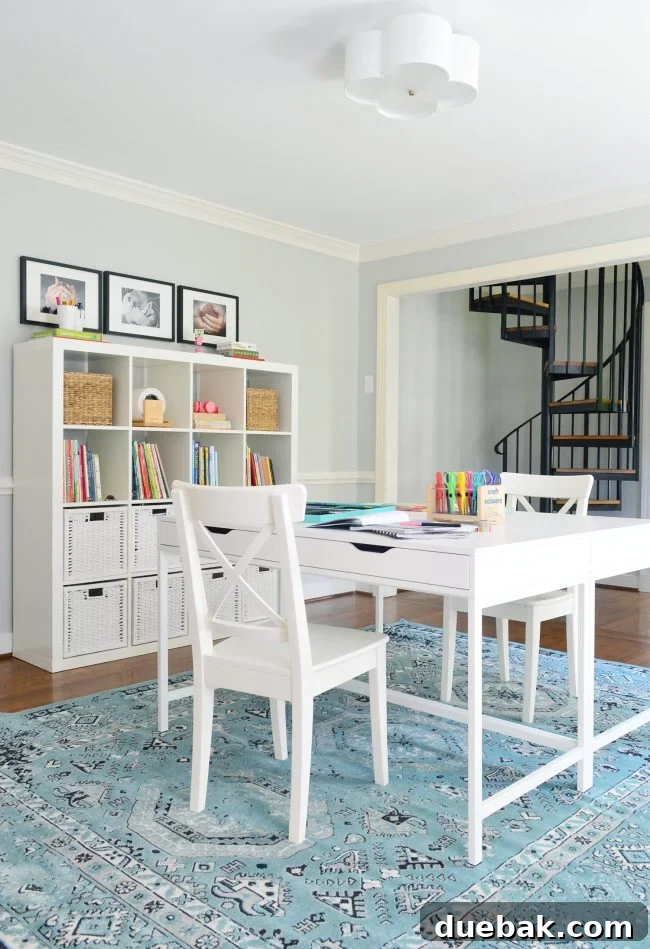
rug / light fixture / desks / chairs
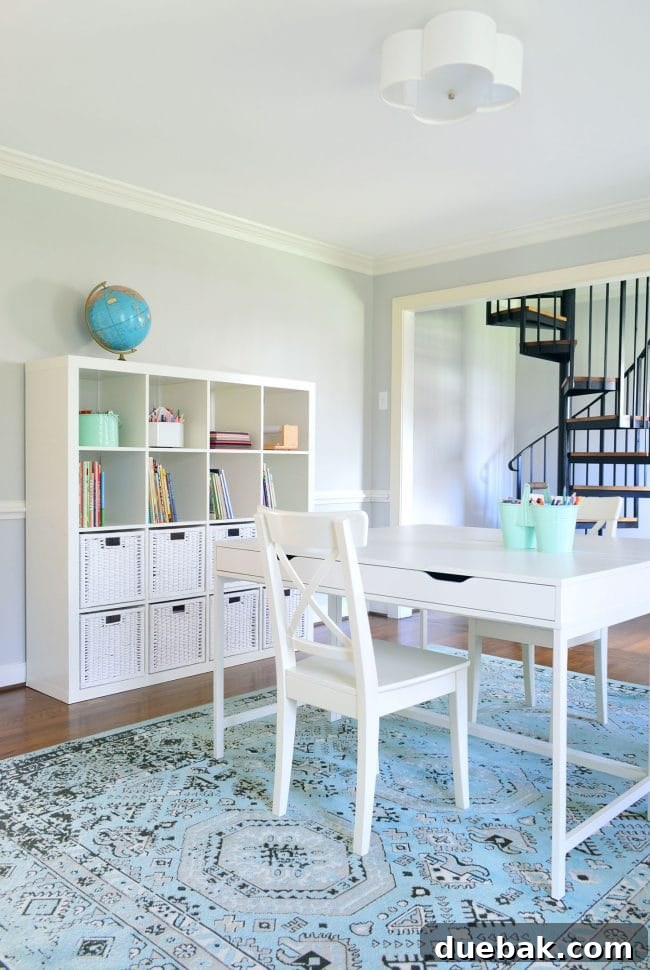
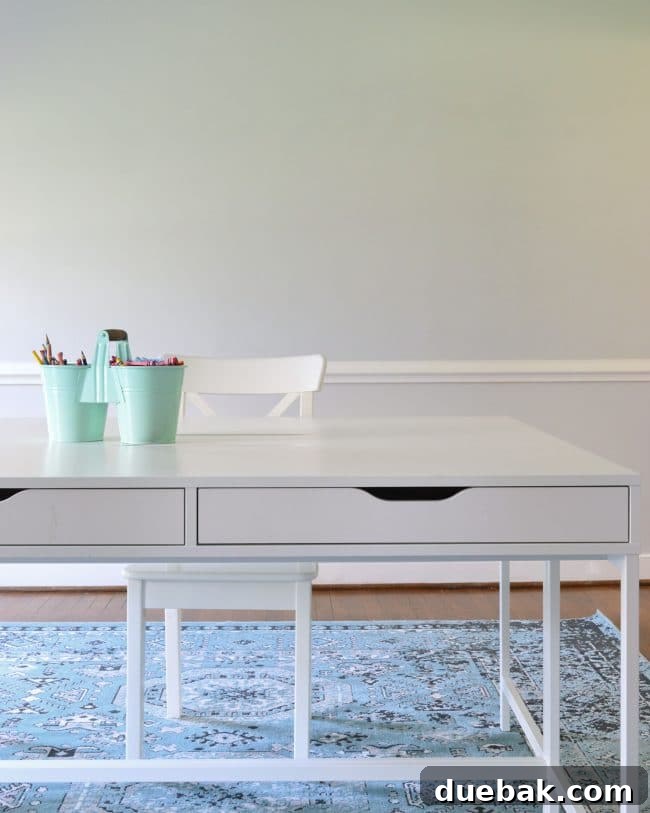
Now, here’s the same room, strategically staged to sell. The difference might not seem dramatic at first glance, but the desk surface has been completely cleared, preventing the eye from getting sidetracked by crafting supplies. The top of the bookcase now features a single, carefully placed globe (which I brought), with all other objects and framed photos removed. Even though it was a relatively simple set of changes, scroll back up to the previous photo, then glance again at this one. Do you notice how that strikingly cool spiral staircase – a definite selling feature – now truly stands out and captures attention in this simplified setting?
Remove Small Rugs & Unnecessary Floor Coverings for Enhanced Flow
Flooring plays an unexpectedly significant role in effective home staging. Buyers want to clearly see the material and perceive a seamless, natural flow throughout the house. Therefore, minimizing interruptions from doormats, hallway runners, or other small rugs instantly makes a space appear larger and more cohesive. Consider the difference: imagine your eyes smoothly following a long hallway leading directly to a bathroom. Now, imagine that same hallway with a small area rug, causing your gaze to “bounce” from the rug, back to the floor, and then onto a fluffy bath mat in the bathroom. This visual interruption detracts from the perceived size and flow. Removing those smaller rugs and bath mats before listing photos or showings creates a much cleaner, expansive visual experience.
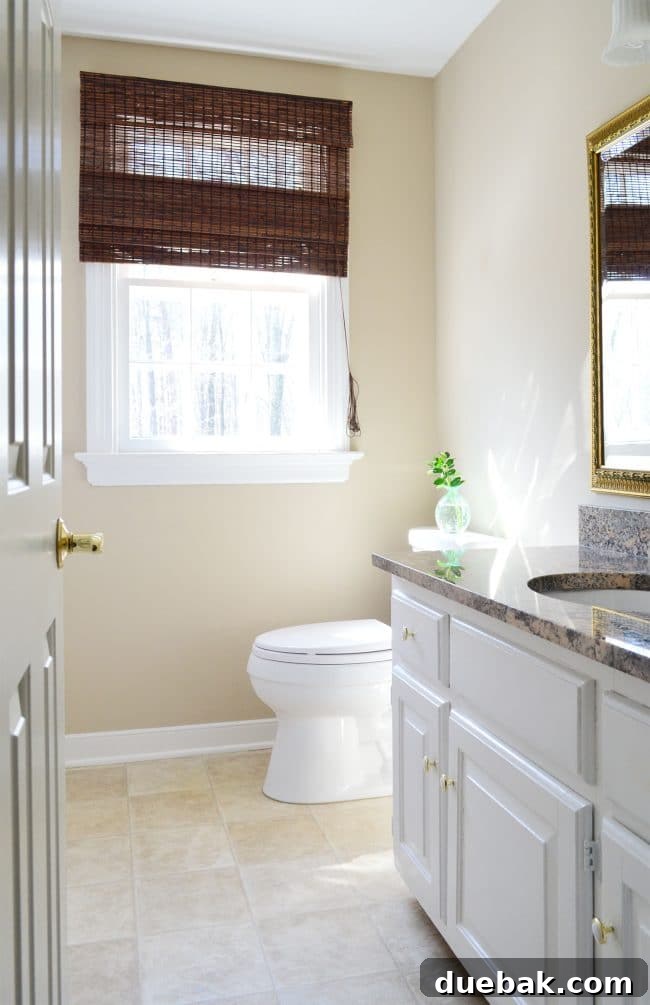
Yes, you undoubtedly use a bath mat every day. However, for listing photos and walk-throughs, I strongly advise folding it up and storing it with your extra towels. The same recommendation applies to small hallway runners and mats in front of the kitchen sink. This isn’t to say you should eliminate all rugs from the house; on the contrary, a large area rug that defines a living room, bedroom, or dining room can actually help a space feel more expansive and grounded. It’s specifically those small, disjointed rugs – especially the bath mat – that buyers don’t need to see (or track dirt onto during a showing).
Let Walls Breathe: Maximizing Space and Light
One minor regret we harbored after selling our second house was not simplifying the extensive frame gallery in our hallway. While it certainly didn’t impede the sale, I distinctly remember the buyer’s expression as they mentally tallied the multitude of nail holes that would require spackling (a task we, of course, completed before leaving). The key takeaway here is: do not allow items on your walls to distract from the size, architectural details, or natural flow of the space. While completely blank walls aren’t always necessary – I appreciate a well-placed large mirror or a striking framed painting – if your walls feel even slightly “busy,” it’s generally safer to err on the side of taking things down. Always remember, you are selling the inherent space, not your personal decor choices.
For example, in the same homework room I showcased earlier, we had installed wall-mounted organizers to store flyers, school paperwork, and camp schedules. These were incredibly functional for the family and saw frequent use. However, when it came to staging, the situation changed dramatically.
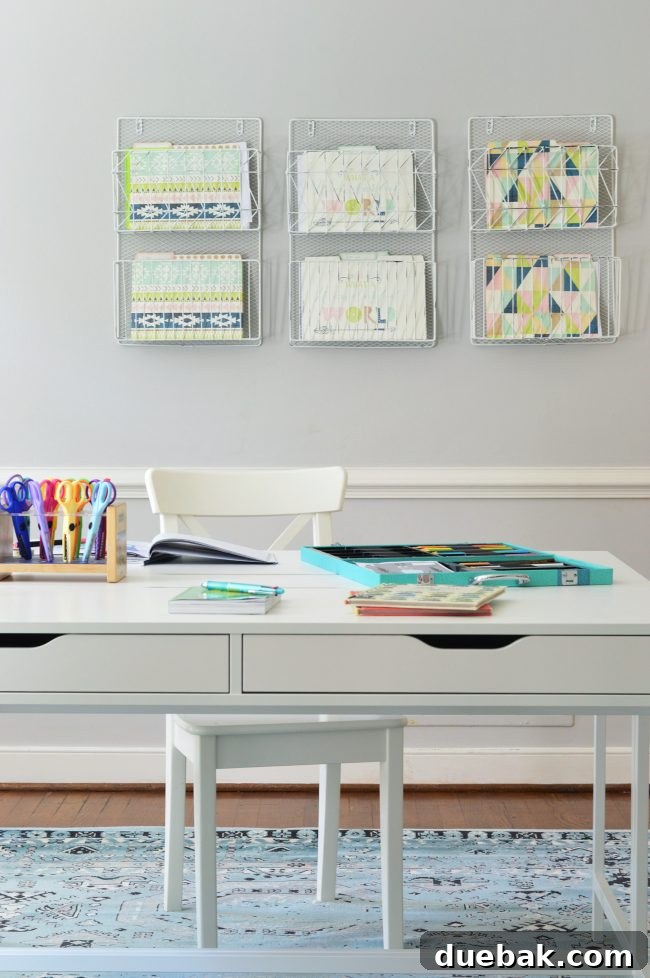
Now, observe that same room staged to sell. The hanging file baskets protruded a few inches from the wall, creating a visual and physical interruption that could make passersby perceive the room as more confined than it actually was. Removing them and patching the minor holes took mere minutes. Although this wall was left bare, the room still boasts a substantial bookcase, other strategically placed art, and even a unique spiral staircase in adjacent areas, ensuring it doesn’t lack interest. A bare wall is perfectly acceptable, especially if there’s an engaging focal point nearby, and particularly if the alternative is an arrangement that makes the room feel smaller or more cluttered.
The Nuance of Personal Items: Don’t Remove Everything
On the subject of removing framed photos, some stagers and realtors advocate for a complete absence of family pictures to prevent buyers from being “pulled out of the fantasy that it could be their home.” I don’t entirely subscribe to this strict rule. We didn’t remove all family photos when selling our own homes, and I’ve yet to completely strip them from any of my staging projects. I’d argue that most individuals are perfectly capable of envisioning their own family photos in a particular spot, just as they can imagine their own bed in a bedroom or their own sofa in a living room. However, I do caution against an excessive display of family photos everywhere, primarily because walls generally need to breathe to convey an open and less crowded ambiance. Furthermore, too much of anything can be overwhelming, so moderation is key. A few well-placed family photos, used sparingly, are likely fine.
My point is this: I am just as likely to remove a multitude of frames containing non-family photos or art as I am to remove actual family photographs (especially clusters of smaller ones). My primary goal is a general decluttering of walls, floors, and all surfaces. What’s specifically within the frames rarely dictates my decision; I simply want the walls to feel open and expansive, preventing the room from appearing visually choppy or interrupted. This strategic simplification ensures that architectural details like crown molding, large windows, a welcoming wide doorway, or pristine flooring are noticed and appreciated instead.
Accessorize With Caution: Less is Always More
I feel like I’ve dedicated so much discussion to the act of removal that you might be wondering what exactly I leave in! Once spaces have been effectively simplified – meaning I’ve retained only a few essential and aesthetically pleasing items such as lamps, attractive storage baskets or boxes, elegant glassware, or neatly stacked books – I often introduce a small number of additional accents and accessories. These are chosen specifically to further neutralize the space or enhance its inherent simplicity. For example, I might swap out an old, bright green plastic soap bottle by the sink for a chic white ceramic soap pump. Or, instead of a jumble of mixed-and-matched silicone baking spoons in a distractingly patterned jug, I’ll arrange some wooden spoons neatly in a white ceramic utensil holder beside the stove.
At the conclusion of this post, I’ll provide a roundup of my favorite staging-friendly items. However, my general rule for areas where decorative objects are typically expected – such as mantels, bookshelves, entry tables, and even countertops – is to **DON’T OVERDO IT**. When staging the living room pictured below, I limited each shelf to just one or two carefully chosen items. The result is a space that feels complete and styled, but never overwhelmed.
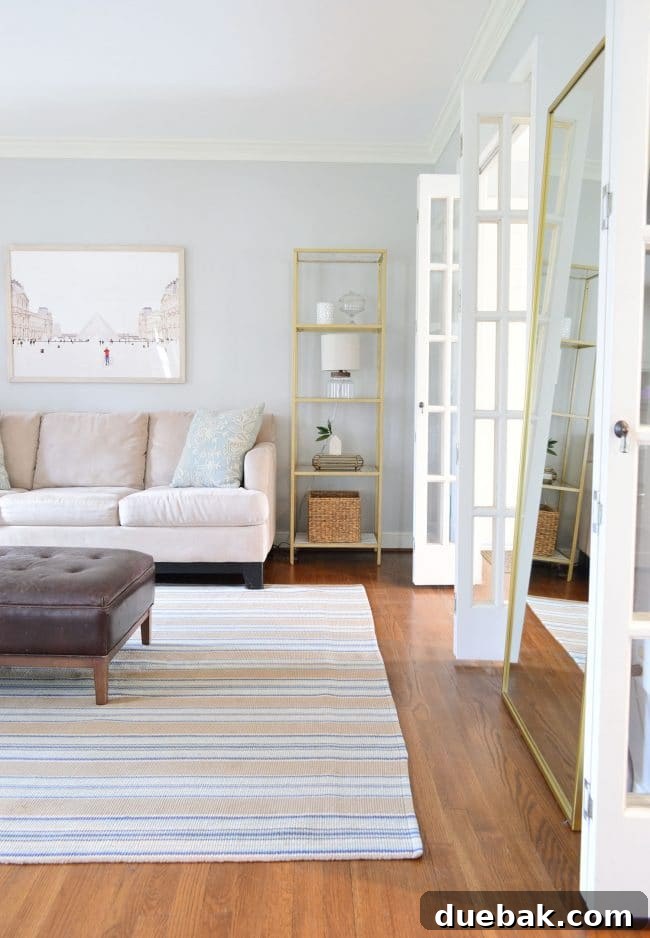
art / similar rug / similar ottoman / shelves (painted gold) / floor mirror
While I’ve spent countless hours meticulously arranging tables and mantels in my own home (the term “mantlescape” is definitely part of my vocabulary), when I’m staging, I resist the urge to obsess over perfectly layered arrangements on every surface. Instead, a simple approach triumphs: one elegant vase paired with free, fresh greenery sourced from the yard creates an instant impression of lightness and warmth. I have yet to purchase flowers for any house I’ve staged, thanks to the readily available and equally charming natural greenery that still conveys a fresh and welcoming ambiance. “Free” is the ultimate staging jackpot, especially when the execution is this straightforward and impactful.
Let’s revisit that bathroom for another moment. After decluttering and clearing all surfaces, and strategically removing the bath mat, what single item did I reintroduce? Simply one small bud vase containing fresh clippings from the yard. That’s it. Are you sensing a pattern here? Fresh, free greenery provides such a delightful pop of vibrancy and freshness to a room, particularly once the counters have been cleared, drawing the eye to natural elements rather than clutter.
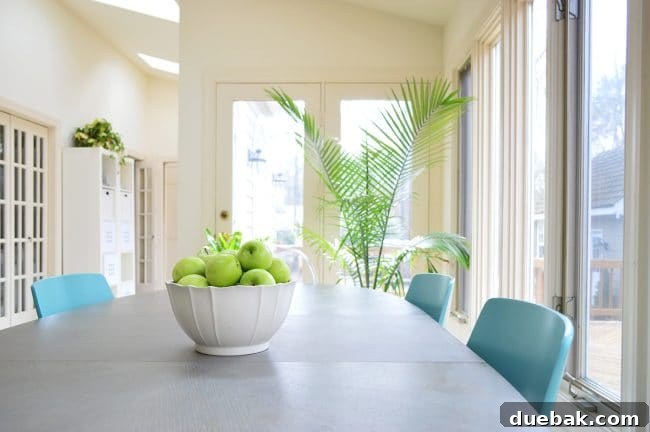
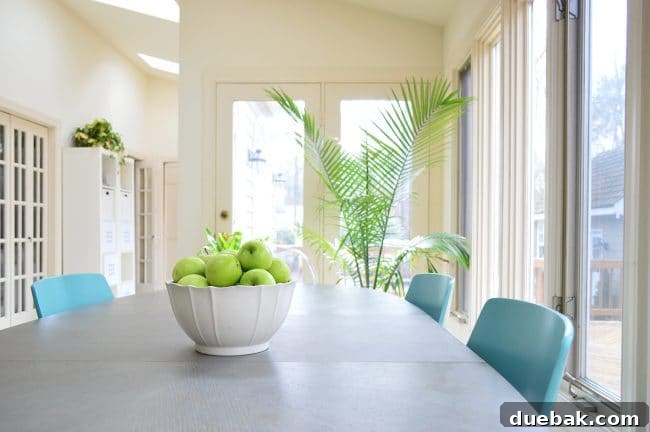
My absolute favorite formula for both dining tables and kitchen tables is, say it with me, a beautiful bowl of fruit. It’s incredibly easy to either bring a nice, simple bowl (or find a suitable one within the house!) and fill it with fresh apples, bananas, clementines, or any appealing seasonal fruit. I’ve even invested in a bag of high-quality faux green apples that I carry to every job; they never spoil, and they’re a perfect stand-in when fresh fruit isn’t immediately available. There’s no need to meticulously arrange elaborate place settings or grand candelabras; these would only introduce unnecessary clutter into listing photos and distract from the actual room itself. This isn’t a dinner party; it’s a house-selling party, and you’re invited to make it a success!
Room-by-Room Staging Transformations: Before & After Examples
Staging A Kitchen for Maximum Buyer Appeal
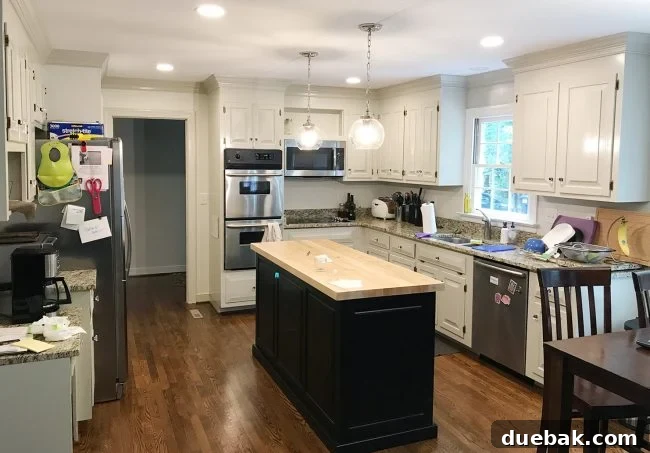
Alright, let’s proceed room by room, starting with the kitchen – often considered the make-or-break space for potential buyers. Take a moment to examine this “before” photo of a kitchen I staged. Observe what immediately catches your eye before scrolling further. How much of the actual kitchen architecture and features are you noticing, and how much of the accumulated stuff within the kitchen is registering instead of the space itself?
Now, here’s the same kitchen after I staged it, as captured in a professional listing photo. The first image was a quick phone snapshot, while this one was taken by a professional photographer, which accounts for slight variations in cabinet and island color due to lighting and camera settings. However, it’s crucial to understand that **NOTHING MAJORLY STRUCTURAL WAS CHANGED IN THIS ROOM**.
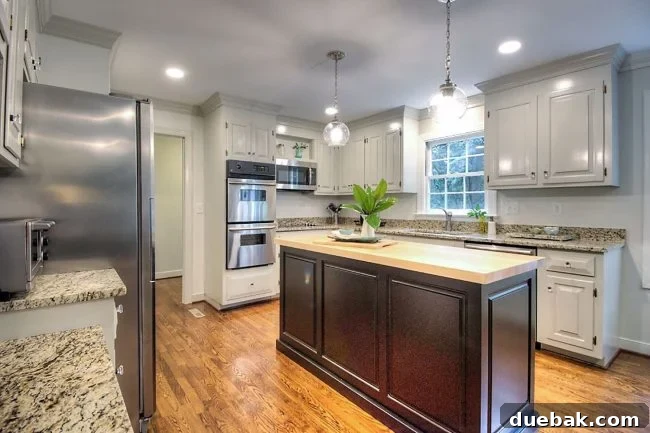
Here’s a breakdown of the specific actions I took:
- I removed almost every item from the countertops, leaving only a few essential “anchor” pieces to ground the space.
- Everything on the side and top of the refrigerator was cleared away, instantly creating a cleaner, more expansive look.
- I introduced a clean white soap pump and a simple white pitcher filled with fresh cuttings from the yard, adding a touch of freshness without clutter.
- A few carefully chosen decorative objects were placed on the shelf above the microwave, providing visual interest without overwhelming the space.
This strategic simplification helped potential buyers truly **SEE THE KITCHEN ITSELF**. Suddenly, the attractive stainless double oven becomes a focal point, the side of the fridge appears pristine, and even the pendant lights, previously blending into a sea of small items, now command their proper attention. Remarkably, with the exception of the soap pump and the pitcher, every single item I used to stage this room was already present in the home. This underscores my firm belief: editing and subtraction are generally far more impactful than purchasing or adding new items.
Here’s another kitchen that required a bit more effort to prepare for sale. The homeowners had initially planned an extensive update, but a sudden job change necessitated a move. I strongly encouraged them to prioritize painting the room, a task they were skilled and willing to undertake. Below is the “before” photo from the previous seller’s listing. Take a moment to truly absorb this kitchen; this is where they started. Then, scroll down to witness the incredible “after” transformation.
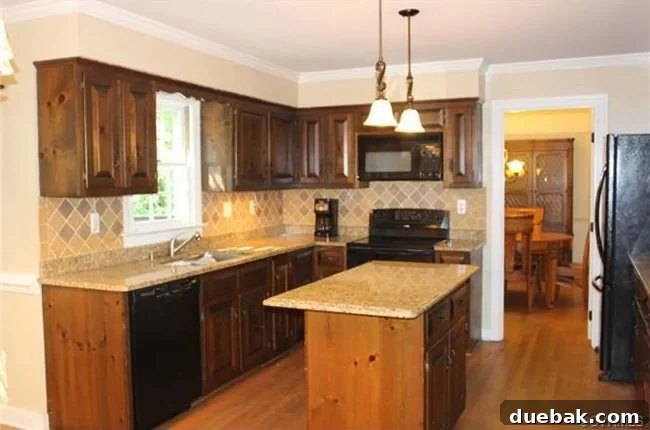
Yes, this is indeed the same room! Some changes had already been implemented before I arrived: they had upgraded their appliances to stainless steel, replaced the island counter with an IKEA butcher block, and installed simpler, more contemporary pendant lights. The only additional recommendation they followed from me was to paint those cabinets… and incredibly, **THEY EVEN PAINTED THE BACKSPLASH!**
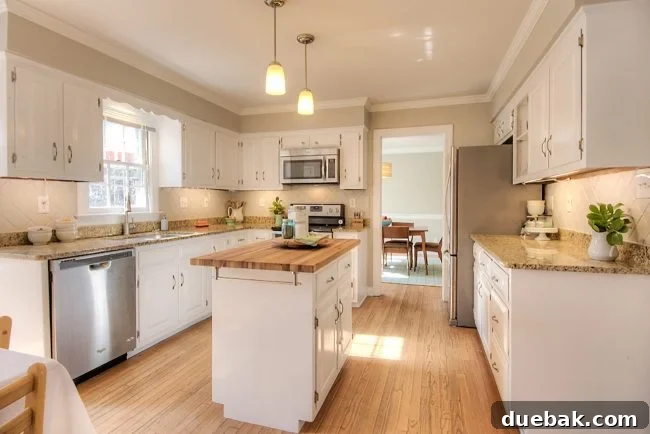
The original backsplash was made of porous travertine tile, a material that surprisingly accepts paint exceptionally well, soaking it up much like brick (which we’ve been successfully painting for over a decade). Generally, any unsealed tile is excellent for painting; it’s the sealed ceramic and shiny porcelain surfaces that are prone to chipping or flaking. So yes, if you have unsealed travertine or any other porous stone you dislike, painting it might be a viable and highly impactful solution. In this case, it undeniably helped to make the kitchen feel significantly fresher and more spacious.
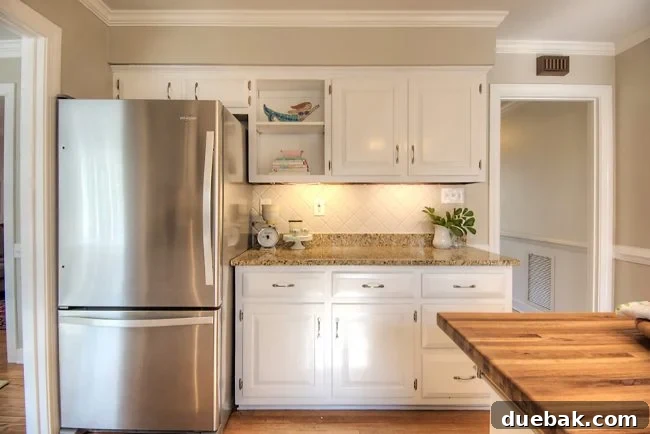
Beyond these more substantial, paint-related updates, I applied the same meticulous editing and careful accessorizing that I always do when staging a kitchen. While I didn’t capture a “before” photo of their immediate “lived-in” state, you can easily imagine the typical paper-cluttered side of the fridge and the busy, overworked countertops that most of us maintain in our homes, especially during demanding seasons of life. However, when staging a house, all of that “stuff” simply must be stashed away. It’s truly amazing how simplifying a space can instantly make it appear so shiny, new, and utterly buyer-ready. And yes, there’s my trusty white pitcher with those familiar free clippings from outside – let’s call him Old Faithful!
Staging A Living Room for Openness and Light
This first living room is located in the same house as the previously showcased painted kitchen. Once again, the homeowner’s willingness to undertake a painting project was crucial, as the original blue walls were visually overwhelming the space and detracting from its many positive attributes. Additionally, an abundance of furniture was making the room feel cramped, despite its generous actual dimensions.
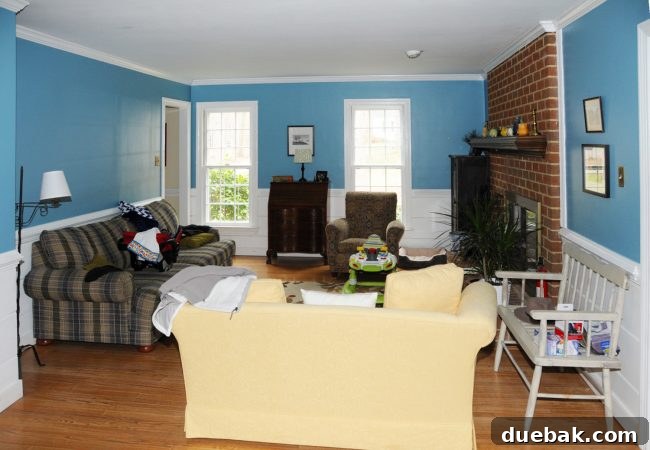
Here’s the room after the homeowner painted the walls and the fireplace, and I returned to stage it. **SUCH A DRAMATIC DIFFERENCE, right?** Now, scroll back up and compare the two photos. Which room instantly appears larger, brighter, and more inviting? I would confidently argue that this staged room looks nearly twice as deep as the “before” image, despite being the exact same physical space.
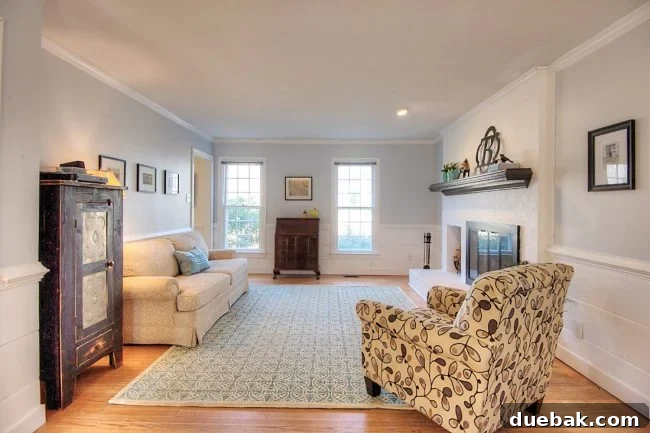
Here’s what I did to transform this space, after the walls received a more neutral paint color and the fireplace was painted white to seamlessly match the existing wainscoting:
- I significantly reduced the overall amount of furniture in the room and strategically swapped in lighter, more appropriately scaled furnishings that the homeowners already had in another room.
- A large area rug, also borrowed from another part of the house, was introduced to help define the space and visually demonstrate its generous size.
- The room was thoroughly decluttered, and only a few carefully selected, simple accessories were brought in to enhance its appeal.
Crucially, not a single piece of furniture or the rug was purchased for this transformation. The homeowners possessed more furniture than necessary across several of their rooms, including another family/TV room and an upstairs bonus room. Therefore, the process was primarily about removing the surplus items (many of the larger, darker furnishings were relocated to the attic) and judiciously distributing the lighter, more scaled-down pieces to create a simplified and less crowded arrangement in each area.
This also serves as an excellent illustration of how staging fundamentally differs from real-life living. In everyday life, a homeowner might desire a large sectional or an additional armchair in this room (and definitely a coffee table!). However, for staging purposes, lightness and an undeniable sense of openness are paramount. So, just because your living room can currently accommodate ten people (and you love that!), it doesn’t mean you should retain all that seating when preparing your house for sale. Especially if simply relocating a few items can make a room feel twice as large. A living room that feels expansive and airy will always be more attractive to a potential buyer than one that is so crammed with seating and furniture that it feels confined every single time they enter.
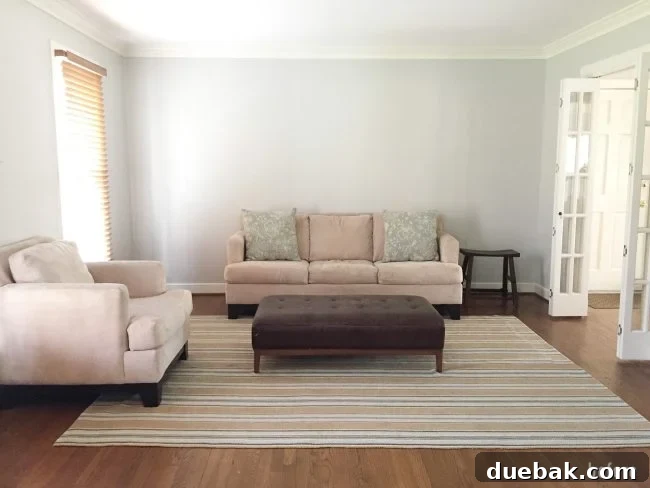
Speaking of that distinct difference, here’s a living room I photographed first after I designed and decorated it for my friend, and then later after I staged it to sell. This particular room started off looking like this:
Last year, I helped her update the space primarily using a wealth of items she already owned, complemented by a few inexpensive new additions from retailers like Ikea and Amazon (you can find more details here). The image below represents the room when our goal was to create a polished, accessorized living room that felt layered and significantly more interesting than its previously bland state.
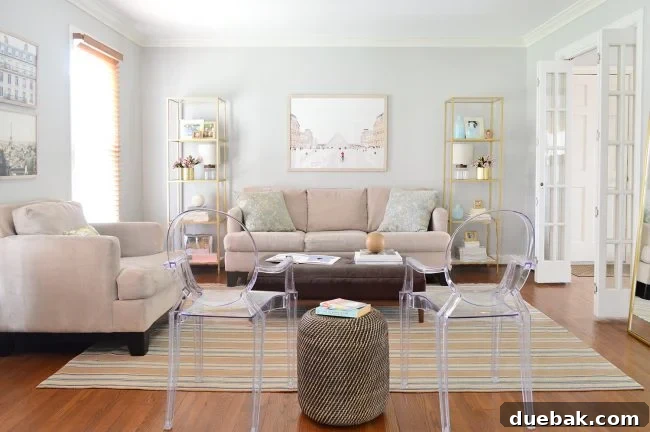
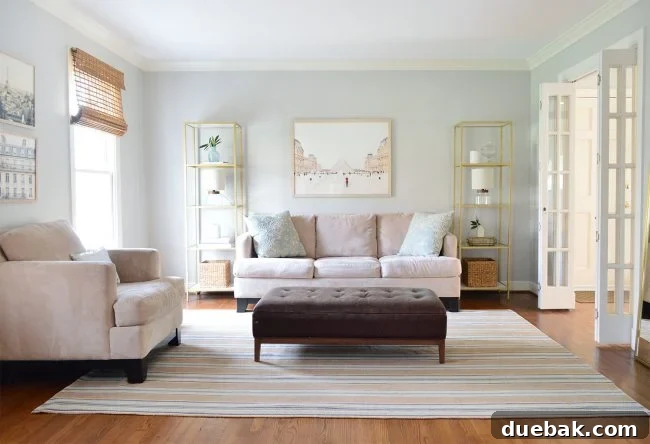
You might instinctively think you want your living room to appear beautifully layered and accessorized, resembling a magazine spread, in your listing photos and during showings. However, I would argue against going to that extreme. You run a significant risk of potential buyers becoming overly focused on all the intricate details, accessories, and textures you’ve meticulously introduced, rather than truly noticing the fundamental structure and inherent charm of the actual room. And once again, it’s the house itself that they should be noticing! This next image shows that same room, strategically staged to sell:
art / similar rug / similar ottoman / shelves (painted gold) / floor mirror
While the difference isn’t monumental, my objective was to make the room feel noticeably more open. Here’s how I achieved that:
- I removed the secondary seating area located in the foreground, allowing the eye to sweep further into the room without obstruction.
- The ottoman was completely cleared, presenting a clean, uncluttered surface.
- The number of items on the shelves was reduced by approximately half, ensuring visual simplicity and preventing distraction.
These adjustments took roughly ten minutes to implement (most of which involved relocating the ghost chairs to the attic), but the impact was significant. They undeniably help potential buyers focus on the true stars of the room: those stunning glass doors and the exceptionally tall, light-filled windows, which are significant selling points.
Staging A Dining Area for Elegance and Space
Here’s an excellent illustration of how a room itself isn’t inherently dated, but the existing furniture and window treatments can create that dated perception. The fundamental “bones” of this room are actually superb: elegant crown molding, a classic chair rail, a generously sized window, and beautiful hardwood floors. But do you notice these desirable features in the “before” image? Likely not. The dark, imposing (and quite oversized!) china cabinet, coupled with those ornate window treatments, were making this room feel antiquated and significantly less fresh than its true potential.
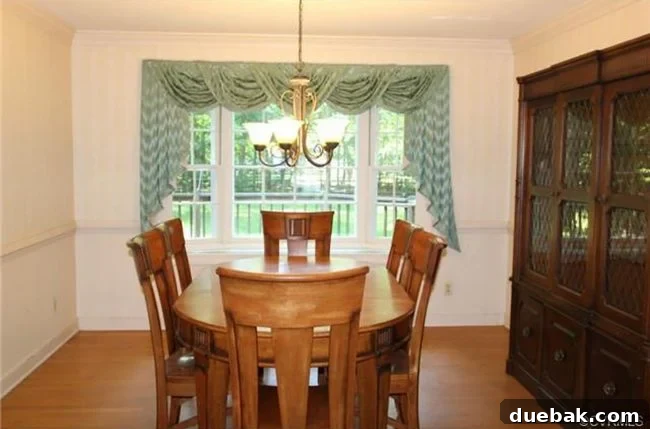
These homeowners had already proactively repainted, removed the heavy curtains, and swapped out the original chandelier for a more contemporary, inexpensive pendant light before they enlisted my help. Thus, the room had already undergone a significant transformation. The remaining finishing touches, implemented with my guidance, propelled it even further:
- We sourced and brought in a simple secondhand dining table with chairs, which was a fantastic score at just $72, providing functional elegance without a hefty investment.
- A large area rug from another room was carefully moved into the dining area, effectively anchoring the space and visually enhancing its dimensions.
- The room was thoughtfully accessorized with – you guessed it – a fresh, inviting bowl of fruit, adding a touch of natural color and life without clutter.
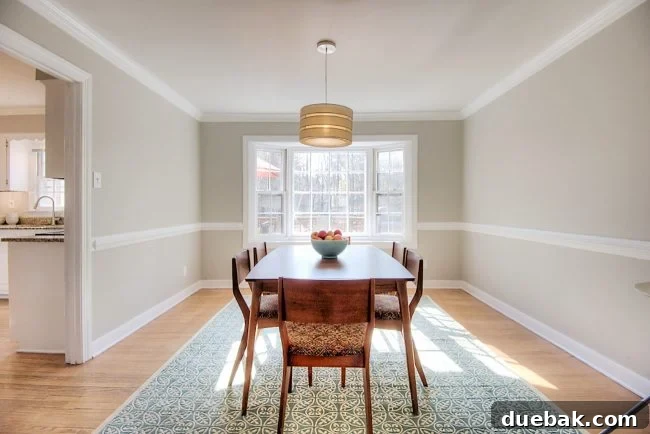
Would I consider this room “finished” if I were decorating it for a glossy magazine spread? No, I would likely add curtains, art, a buffet, and other decorative layers. However, when it comes to the specific objective of staging, this room now feels remarkably spacious, bathed in light, and you finally notice and appreciate those key architectural details like the elegant crown molding and that beautiful, large window. Mission accomplished: the room is now poised to impress potential buyers.
Essential Staging Accessories: Items to Elevate Your Home’s Appeal
I hope I’ve thoroughly emphasized throughout this post that you may not need to purchase a single new item when staging your home. Whether your goal is to sell, or simply to cultivate a more airy and peaceful living environment for your everyday enjoyment, the acts of decluttering and incorporating free, natural elements from your yard can make an enormous difference on their own. However, if you feel your efforts could use a boost, or if you’re looking to build a curated collection of versatile items for your own staging business (or simply desire some attractive, universally appealing objects for your home), here are some tried-and-true essentials I keep in my staging arsenal:
- Fluffy White Bath Towels: These instantly evoke a luxurious, spa-like feeling, making bathrooms feel fresh and inviting.
- Extra-Long White Shower Curtain: Brightly colored or heavily patterned curtains can make a bathroom feel busy and visually smaller. A crisp white curtain creates an expansive, clean backdrop.
- White Duvet Cover: This is perfect for neutralizing busy or bold bedding, which can be polarizing to potential buyers. White provides a clean, serene, and universally appealing foundation.
- White Utensil Holder for Next to the Stove: Helps maintain mostly clear counters by neatly containing essential cooking tools in a non-distracting way.
- A Few Solid Colored Accent Pillows: These are ideal for adding a subtle pop of color and texture to a sofa, loveseat, or bed without overwhelming the space.
- Various Small Bud Vases for Yard Clippings: I always have at least three on hand. They are perfect for showcasing free greenery and adding organic freshness to any surface.
- One Large Accent Vase: A single, statement vase, perhaps placed on top of a dresser or an entry table, is often all you need to create a sophisticated focal point.
- A Plain White Pitcher: Incredibly versatile, this can double as an elegant vase for larger clippings or even a stylish utensil holder in the kitchen.
- Neutral Affordable Rug: Available in a variety of sizes (an 8×10 can be found for around $200!). A well-chosen large rug can ground a room and define a living area, making it feel expansive.
- Large Framed Art: Essential for breaking up expansive, empty walls, adding visual interest and scale without clutter.
- Smaller Framed Art: Ideal for addressing those “weird dead spaces,” such as the wall area above a toilet, adding a thoughtful touch.
- White Soap Pump: An easy and inexpensive way to instantly simplify a sink area often cluttered with mismatched plastic pumps, elevating the bathroom or kitchen’s aesthetic.
Indeed, I truly am a passionate enthusiast when it comes to house staging (hence just pouring out over 900 words on the subject!). My genuine hope is that even if you’re not currently selling your house, perhaps something within these pages has sparked an idea or inspired you to make your own home feel a little more peaceful and intentional. Or perhaps, it simply made you crave a delicious bowl of fresh apples. That, too, is certainly not a bad thing!
P.S. If you’re interested in even more staging insights, you can hear a few bonus stories and additional tips on our podcast (Episode #53, Episode 41, and Episode 88). They’re always free to listen to, and you can learn how to subscribe so they automatically pop up on your phone each week right here.
*This post contains affiliate links*