
Embracing your natural curls is a journey of self-discovery and a celebration of unique beauty. While curly hair is undeniably gorgeous, it often comes with its own set of challenges, from battling frizz to finding the perfect balance of moisture and definition. This comprehensive guide is designed to empower you with the essential knowledge and practical tips for optimal curly hair care, helping you unlock your best, most vibrant curls yet.
Understanding Your Unique Curly Hair Type
Before diving into a specific curly hair routine, it’s incredibly beneficial to understand your unique curl pattern and hair characteristics. While a deep dive into all the intricate curl types, hair density, hair porosity, and coarseness could fill an entire book, a basic understanding can significantly impact your care regimen. Your curl type, ranging from wavy (Type 2) to curly (Type 3) to coily (Type 4), influences how products interact with your hair and what kind of moisture it truly needs. Similarly, knowing your hair’s porosity (how well it absorbs and retains moisture) and density (how many individual strands you have) allows for a more personalized and effective approach to care. For today, however, we will focus on a foundational, general curly hair care routine that provides a fantastic starting point for anyone looking to nurture their natural texture.
Expert Tip: The more consistently you embrace your natural curls and commit to a specialized curly hair wash process, the more defined, healthy, and beautiful your curls will become. Trust the process and be patient with your hair’s transformation.
The Foundational Curly Girl Method
Many individuals with curly hair have found incredible success by adopting principles from the Curly Girl Method (CGM). Pioneered by Lorraine Massey in “The Curly Girl Handbook,” this approach has become a revered guide for achieving optimal hair health and curl definition. While the CGM provides a robust framework, it’s often adapted by individuals to best suit their specific hair needs. It’s not a rigid set of rules that must be followed precisely, but rather a powerful educational tool for beginners seeking to understand the fundamentals of curly hair care. The core philosophy of the Curly Girl Method revolves around avoiding harsh ingredients that can strip natural oils, cause dryness, and lead to frizz.
Key Ingredients to Avoid for Healthy Curls
One of the most critical aspects of the Curly Girl Method, and indeed any effective curly hair care routine, is the careful selection of products. Certain ingredients commonly found in conventional hair products can be detrimental to the delicate structure and moisture balance of curly hair. The primary culprits to steer clear of are sulfates, silicones, and parabens.
- Sulfates: These are harsh detergents (like Sodium Lauryl Sulfate or Sodium Laureth Sulfate) found in many shampoos. While they create a satisfying lather, they are incredibly effective at stripping away not only dirt and product buildup but also the natural, protective oils (sebum) that curly hair desperately needs. This stripping action leads to excessive dryness, frizz, and can even irritate the scalp.
- Silicones: Often used in conditioners and styling products to create a smooth, shiny finish, many silicones (especially non-water-soluble ones like Dimethicone or Cyclopentasiloxane) can build up on the hair shaft. This buildup forms a barrier that prevents moisture from penetrating the hair, leading to dry, dull, and lifeless curls over time. Since sulfates are avoided, these silicones become even more problematic as they are difficult to remove without harsh cleansers.
- Parabens: These are preservatives (like Methylparaben, Propylparaben) used to extend the shelf life of products. While their direct impact on hair health is less about stripping or buildup, some individuals choose to avoid them due to concerns about potential health implications. Many curly hair product manufacturers have recognized this preference.
Fortunately, with the increasing popularity of natural hair movements, most products specifically formulated for curly hair are now clearly labeled as “sulfate-free,” “silicone-free,” and “paraben-free.” Prioritizing products with a higher concentration of natural ingredients and botanical extracts will further enhance the health and vitality of your curls.
Crafting Your Essential Curly Hair Routine
Developing a consistent and gentle curly hair routine is paramount for achieving beautifully defined and healthy curls. Think of your wash day as a luxurious self-care ritual, a time to nourish your hair and relax. Put on your favorite podcast, don some comfortable clothes, and transform your bathroom into a mini-spa.
The Art of Washing Curly Hair
Curly hair is inherently more prone to dryness compared to straight hair due to the natural oils from the scalp struggling to travel down the curvy hair shaft. Therefore, the primary goals during the washing process are to cleanse gently, maintain moisture, and minimize frizz. Traditional shampoos are formulated to strip oils, which can exacerbate dryness in curly hair.
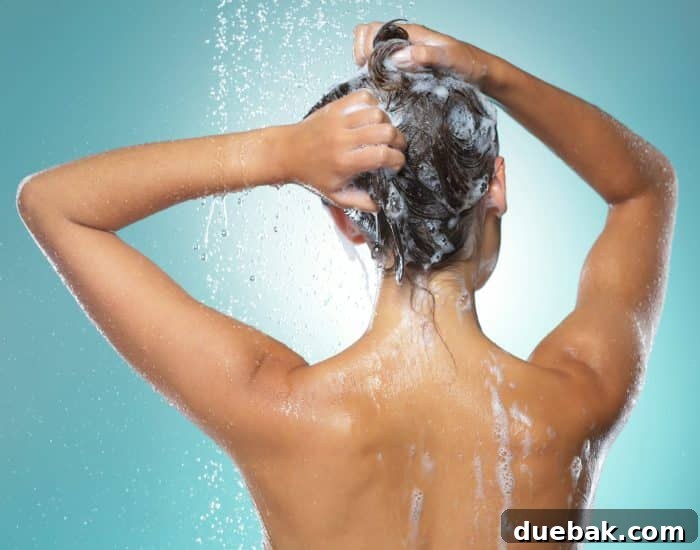
For these reasons, washing your hair less frequently is highly recommended. As a general guideline, the curlier your hair, the less often it typically needs a full shampoo. This allows your natural scalp oils to provide much-needed hydration. If your curls need a daily refresh between washes, a simple rinse with water in the shower can revive them without stripping away moisture. When it’s time to shampoo, focus the product exclusively on your scalp. Take your time to gently massage the shampoo into your scalp using your fingertips. This not only cleanses but also stimulates blood flow, promoting a healthy environment for hair growth. For individuals with thicker hair, sectioning your hair can help ensure the shampoo reaches all areas of the scalp effectively. Always be incredibly gentle when separating and handling your curls to prevent breakage.
Selecting the Best Cleanser for Curly Hair
For curly hair, the choice of cleanser is crucial. A mild clarifying shampoo, used occasionally to remove buildup, or a co-wash (conditioner wash) is generally recommended for regular use. These specialized products are typically low-lather or non-sudsing and often have a creamy texture, much like a conditioner. This can feel unusual if you’re accustomed to foamy shampoos, but rest assured, effective cleansing is still happening without severely stripping your hair of its essential moisture. Co-washes, in particular, are designed to clean while simultaneously conditioning, making them an excellent choice for maintaining hydration.
“Three years ago, I discovered I had curly hair. It was always wavy and damaged. I started down the ‘curly girl’ path to see if I could get my hair to be more healthy. I found out that my hair is not like anyone else’s hair, and no one has hair like anyone else really. So I had to start experimenting with products and methods. And over three years later, I finally love my curly-wavy hair!”
—Laura Sampson, Little House Big Alaska
The Power of Conditioning Curly Hair
Whether your hair has been fully washed or simply rinsed, conditioning is a non-negotiable step in any curly hair care routine. Conditioner is your best friend when it comes to combating frizz, enhancing moisture, and encouraging beautiful curl definition. Like the shampooing process, working in sections, especially for thicker hair, ensures an even and thorough distribution of the conditioner. Apply conditioner generously to the mid-lengths and ends of your hair, consciously avoiding the scalp. Focusing on the ends, which are the oldest and often driest parts of your hair, provides targeted hydration.
Mastering Detangling with a Wide-Tooth Comb
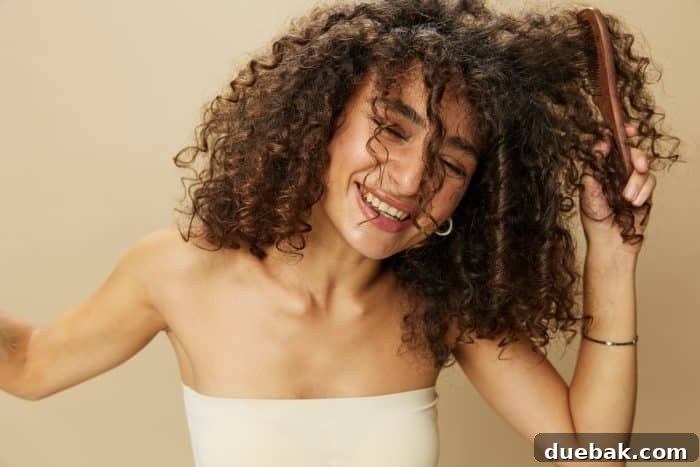
While the conditioner is still in your hair, take this opportunity to gently detangle using a wide-toothed comb or a specialized detangling brush designed for curly hair. It is absolutely normal to see some hair coming out during this process, as you’re safely removing shed hairs that would otherwise remain tangled. Allow the conditioner to sit in your hair for several minutes to fully penetrate and soften the strands before rinsing. The goal is for the wide-tooth comb to glide through your hair with ease. If you encounter any stubborn tangles, you may then switch to a slightly smaller comb or a brush designed to work through knots without causing damage. During this brushing phase, remember to gently brush your scalp as well. Given that curly hair is washed less frequently, this step is crucial for stimulating the skin, promoting healthy blood flow, and fostering a healthy scalp environment, which is vital for healthy hair growth. Plus, it feels incredibly soothing! For an extra boost of hydration and nourishment, consider incorporating a hair mask or deep conditioner into your routine once a week. These intensive treatments provide profound moisture and repair, contributing significantly to healthy hair growth and overall vitality.
Once your hair is thoroughly detangled and rinsed (you can leave a small amount of conditioner in for added moisture), resist the urge to brush through your curls again. From this point forward, handle your curls as little and as gently as possible, especially as they dry. Apply your chosen curl products, scrunching gently, but avoid further brushing to maintain your curl pattern and minimize frizz.
Optimizing Your Drying Process for Frizz-Free Curls
The way you dry your curly hair is just as critical as your washing and conditioning routine, significantly impacting frizz levels and curl definition. To ensure a good hair day, treat your clean curls with the utmost care during drying. Instead of a traditional terry cloth towel, opt for a jersey-knit material, such as an old t-shirt or a specialized microfiber towel. Terry cloth towels have rough fibers that create friction, leading to frizz and disrupting your delicate curl pattern. Gently blot and scrunch your hair with the t-shirt or microfiber towel, or try the “plopping” method (explained below). Keep your damp hair wrapped until you are ready to apply your styling products. This is also a perfect opportunity to incorporate more self-care into your morning routine: let your hair sit while you enjoy breakfast, apply makeup, or engage in other morning activities.
“The key to curly hair that doesn’t frizz is drying it properly. A friend once showed me how to ‘plop’ or scrunch soaking wet hair with a t-shirt, essentially letting the water be soaked out rather than towel dried. For me, it has made all the difference in bouncy curls that don’t frizz. I rarely blow dry my hair anymore, but I always use a diffuser when I do.”
— Susannah Brinkley Henry, Feast + West
Choosing and Applying Curly Hair Products
The market is rich with an array of curly hair products, and finding the right ones for you will depend on your specific hair type, desired style, and environmental factors. After gently drying your hair, apply your chosen hair serum, curl cream, or gel while your hair is still quite wet. Start by scrunching the product into the ends of your hair, working your way upwards towards the roots. Look for products enriched with nourishing ingredients such as argan oil, coconut oil, shea butter, jojoba oil, or vitamin E, as these provide deep moisture and enhance shine. If you use a gel, you might notice a “cast” or “crunch” once your hair is dry. To soften your curls and break this cast, simply use the “scrunch out the crunch” technique: gently scrunch your dry curls with your hands or a soft jersey towel until the stiffness disappears, revealing soft, defined curls. Whenever possible, allow your curls to air dry completely to avoid any harsh heat damage. If you must use a blow dryer, always attach a diffuser and use it on a low heat, low speed setting, gently “cupping” sections of your hair to preserve the curl pattern.
To refresh your curls on non-wash days, when they might look a bit flattened or frizzy, use a moisturizing spray or a diluted leave-in conditioner. You can easily create your own DIY leave-in conditioner by adding a small drop of your favorite conditioner to a spray bottle filled with water. Lightly mist your curls to re-wet them, then gently scrunch or reshape them with a bit more product if needed, allowing them to air dry again. This helps to rehydrate and reactivate your curl pattern, giving your hair a fresh look without a full wash.
Essential Tools & Products for Your Curly Hair Arsenal
Beyond shampoos and conditioners, certain accessories and tools can significantly enhance your curly hair care journey and protect your precious curls:
- Satin Pillowcase: A budget-friendly yet highly effective option for reducing friction and preventing frizz while you sleep. Satin allows your hair to glide smoothly, minimizing tangles and preserving your curl pattern overnight, leading to beautiful, frizz-free curls in the morning.
- Silk Pillowcase: A luxurious upgrade from satin, silk offers even greater benefits for curly and coily hair. Its smooth, natural fibers not only reduce friction and frizz but also help to retain your hair’s natural moisture, making it an excellent investment for optimal hair health.
- Diffuser Attachment: If you choose to blow dry your hair, a diffuser is an absolute must-have. This attachment disperses the airflow, reducing direct heat and preventing frizz. It helps to gently dry your curls while maintaining their natural shape and volume. Always use it on a low heat and low speed setting.
- Wide-Tooth Comb: Indispensable for detangling hair when wet and saturated with conditioner. Its wide spacing prevents breakage and preserves curl clumps.
- Spray Bottle: Perfect for refreshing curls on non-wash days or for evenly distributing water when applying products to damp hair.
- Hair Clips/Picks: For sectioning hair during washing/conditioning or for adding volume at the roots while drying.

Final Thoughts: A Journey of Patience and Discovery
The overarching goal of caring for naturally curly hair is to achieve healthier, more defined, and consistently beautiful curls. It’s crucial to remember that this process is a journey, not a destination, and it will undoubtedly take time and dedication. Patience is your most valuable virtue as you wait to see significant results. Your hair needs time to heal and adjust to new products and routines. A general recommendation is to commit to a new routine for at least four to six weeks before making any drastic adjustments. During this initial period, focus on consistency. After this foundational period, you can begin to experiment with different methods of applying products, varying quantities, and exploring new product formulations to discover what truly works best for your unique curl pattern and personal preferences. Embrace the learning curve, celebrate every small improvement, and enjoy the transformative journey of embracing your gorgeous natural curls!