
Mastering Family Organization: The Essential Role of Calendars in a Busy Home
In the whirlwind of modern family life, staying organized can often feel like an Olympic sport. From school events and extracurricular activities to doctor’s appointments and work commitments, the sheer volume of information to track is staggering. Even the smallest deviation from routine can send a carefully planned week spiraling, leading to forgotten appointments and missed deadlines. Like many busy parents, I’ve experienced the frustration of realizing too late that I’d forgotten a weekly event, despite my best intentions. With a bustling household of five, each family member has a unique schedule, making it incredibly challenging to find a single organizational system that caters to everyone’s needs. While smartphone calendars offer convenience, their individual nature often falls short when it comes to keeping an entire family on the same page.
The Challenge of Digital Overload vs. The Clarity of a Centralized System
Many of us rely heavily on digital calendars. They sync across devices, send reminders, and can be updated on the go. However, for a multi-person household, relying solely on individual digital calendars can inadvertently create information silos. One person might update their phone calendar, but if it’s not immediately visible and accessible to everyone, critical information can still be overlooked. How often do we check another family member’s digital calendar? Rarely, if ever. The constant notifications can also lead to “reminder fatigue,” making us tune out important alerts. What was truly needed in our home was a centralized, always-visible system – a true “command center” – that transcended the limitations of individual screens and brought all our commitments into clear view for the entire family.
Building Our Family’s Command Center: A Three-Month Visual Timeline
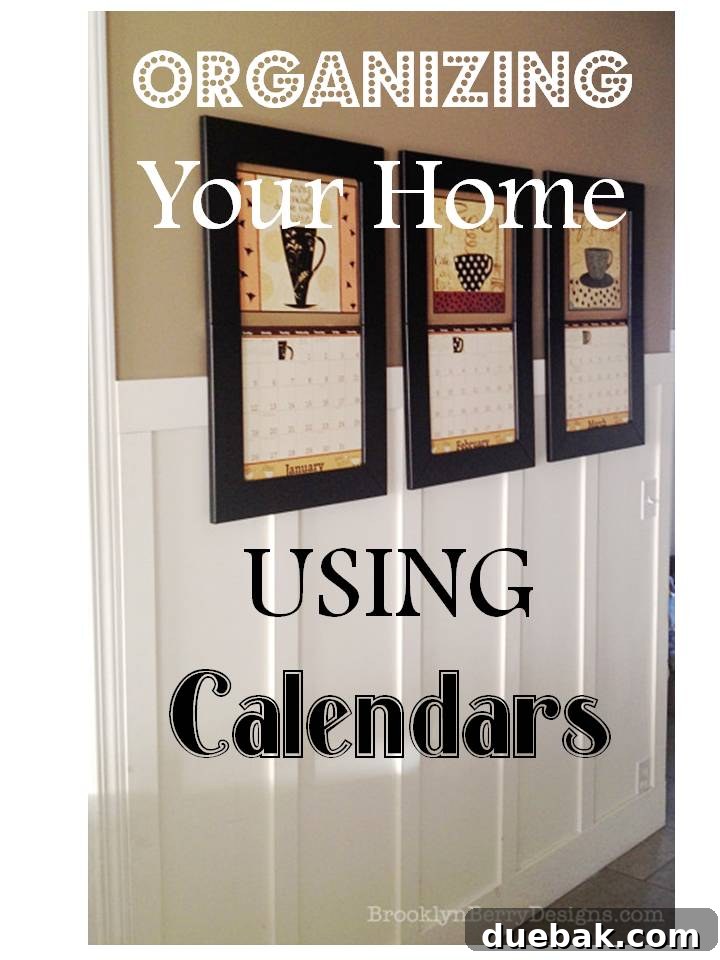
Recognizing the gaps in our existing methods, I decided to take a proactive approach and establish a dedicated family schedule hub. I chose a high-traffic, yet easily accessible, spot in our home: the back hall, nestled between the door and the home office. This location ensures that everyone passes by it multiple times a day, making it impossible to ignore. To create a consistent and aesthetically pleasing setup, I opted for three identical calendar frames and three copies of the same calendar design. Grouping them together this way allows us to view three months at a glance. This multi-month perspective is incredibly powerful. It’s not just about what’s happening this week or next; it allows us to see upcoming deadlines for school projects, important due dates for bills, long-term travel plans, and other significant events that require more than a week or two of advance notice. This foresight has been a game-changer, reducing last-minute scrambles and fostering a sense of calm predictability in our daily lives.
Beyond Appointments: Calendars as a Holistic Family Management Tool
Our family calendar has evolved into much more than just a place to jot down appointments. It’s a dynamic hub for various aspects of our home life, transforming chaos into order. Beyond scheduled activities, we utilize it for:
- Meal Planning: Assigning theme nights or specific meals helps with grocery shopping and decision fatigue.
- Chore Rotations: Clearly outlining who is responsible for what chore on which day promotes fairness and accountability.
- Project Deadlines: For school projects or home maintenance, visualizing deadlines three months out ensures ample preparation time.
- Budget Tracking: Marking bill due dates helps us stay on top of our finances and avoid late fees.
- Family Goals: Whether it’s saving for a vacation or training for a marathon, seeing shared goals keeps us motivated.
- Important Milestones: Birthdays, anniversaries, and other celebrations are highlighted, ensuring no special occasion is forgotten.
- Kid’s Activities: Beyond just music class, it includes playdates, sports practices, and school club meetings.
- Vacation Countdown: Ticking off days until a family trip builds excitement and anticipation.
By centralizing this information, every family member, from the youngest to the oldest, gains a clearer understanding of what’s happening in our collective world. It encourages shared responsibility and fosters better communication, as everyone has a visual reference point for discussions about upcoming events and commitments.
The Art of Organization: Aesthetics Meets Functionality
One of the unexpected joys of our calendar system is its dual functionality. Not only does it serve its primary purpose of keeping us organized, but the framed calendars also double as charming wall art. The consistent framing and design create a cohesive visual element that enhances the decor of our hallway. I particularly love that at the end of the year, once the calendars have served their purpose for scheduling, the individual prints can be repurposed. I can carefully remove them and use them as beautiful, inexpensive prints to replace existing artwork in frames around my house or to create new decorative arrangements. This sustainable and creative approach to home decor is something I truly appreciate. It demonstrates that practical solutions don’t have to be purely utilitarian; they can also contribute to the beauty and personality of a living space. Using calendars for easy and inexpensive art is a simple hack that adds both character and charm to our home, making organization a visually appealing endeavor rather than just a necessity.
Tips for Creating Your Own Effective Family Calendar System
Inspired to bring more order to your own home? Here are some actionable tips to help you establish a family calendar system that truly works for you:
- Choose the Right Location: Select a prominent spot where every family member will see it daily, such as a kitchen wall, mudroom, or hallway.
- Select the Right Type: Consider your family’s needs. Options include large wall calendars, dry-erase whiteboards for flexibility, magnetic calendars for fridge placement, or even a digital display synced to a shared account if a physical one isn’t feasible.
- Involve the Family: Make it a collaborative effort. Encourage kids to add their own activities (with supervision) and discuss upcoming events during a weekly family meeting. This fosters ownership and reduces resistance.
- Use Color-Coding: Assign a different color pen or marker to each family member or type of activity (e.g., school, work, appointments, social). This makes it easy to visually scan and understand who is doing what.
- Establish a Routine for Updating: Pick a consistent time, such as Sunday evenings, to review the upcoming week and month together. This ensures the calendar remains accurate and up-to-date.
- Keep it Simple at First: Don’t try to track everything at once. Start with the most critical appointments and gradually add more layers of information as your family adapts.
- Embrace Aesthetics: Choose calendars and frames that complement your home decor. If it looks good, you’ll be more inclined to use it and keep it tidy.
- Integrate with Digital (if desired): While a physical calendar is central, you can still use digital tools for personal reminders or to share events with people outside your immediate household. The physical calendar serves as the central truth.
- Review and Adapt: Periodically assess if the system is still working for your family. As life changes, your organizational needs might too. Be prepared to tweak your approach.
By implementing these strategies, you can transform a simple calendar into a powerful tool for family management, reducing stress and fostering a more harmonious home environment.
The Undeniable Benefits of a Structured Family Calendar
The transition to a centralized calendar system has brought numerous advantages to our home. Beyond merely remembering events, it has significantly reduced stress for everyone. There’s a palpable sense of calm when everyone knows what to expect. Communication has improved dramatically; fewer “what are we doing today?” questions arise because the information is readily available. It teaches responsibility to the children, allowing them to see their own commitments and learn time management skills. Moreover, it creates dedicated family time by helping us identify open slots for quality bonding. The seemingly simple act of putting a calendar on the wall has profound effects, turning potential chaos into a well-oiled machine, and proving that sometimes, the most effective solutions are the most straightforward ones.
Conclusion: Reclaiming Order and Serenity
In a world that constantly pulls families in different directions, having a reliable system to keep everyone connected and informed is invaluable. Our three-month visual calendar setup has become the backbone of our family’s organization, bringing clarity, reducing missed appointments, and significantly lowering our collective stress levels. It’s a testament to the idea that a thoughtfully designed physical system can often outperform individual digital solutions for the complex needs of a busy household. If your family is grappling with schedule management, consider creating your own command center. It’s an investment in peace of mind, better communication, and a more harmoniously organized home life.
Thank you Calender Club for providing me with materials to make this project possible.