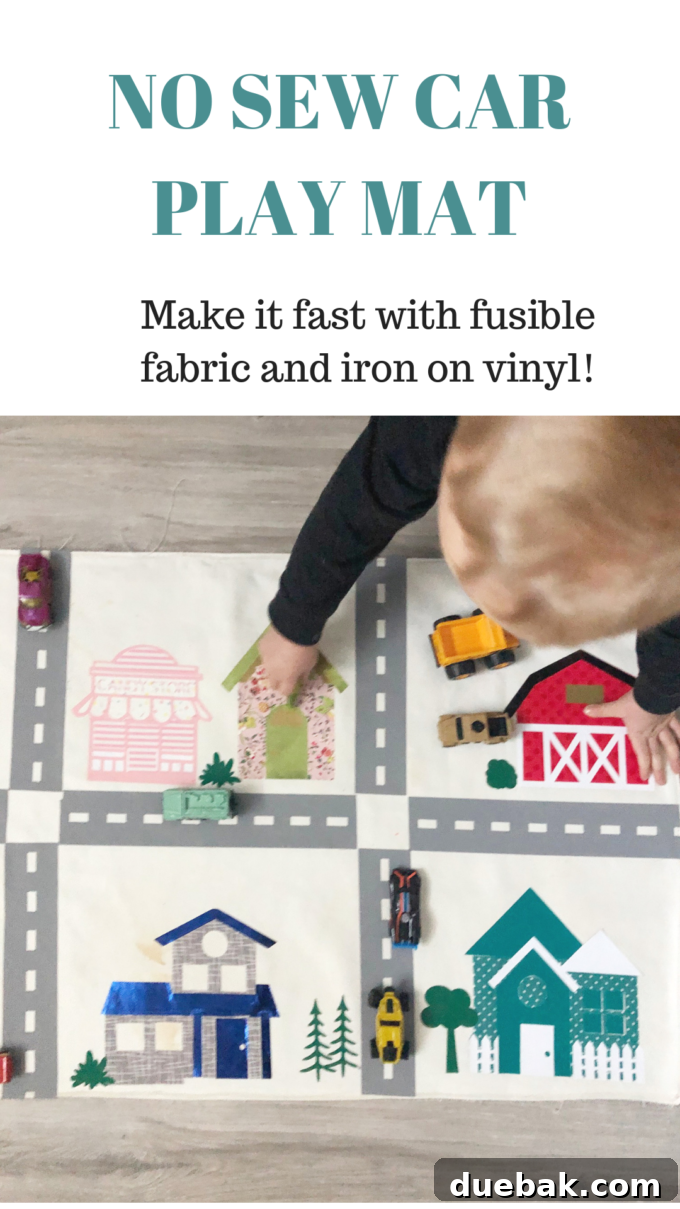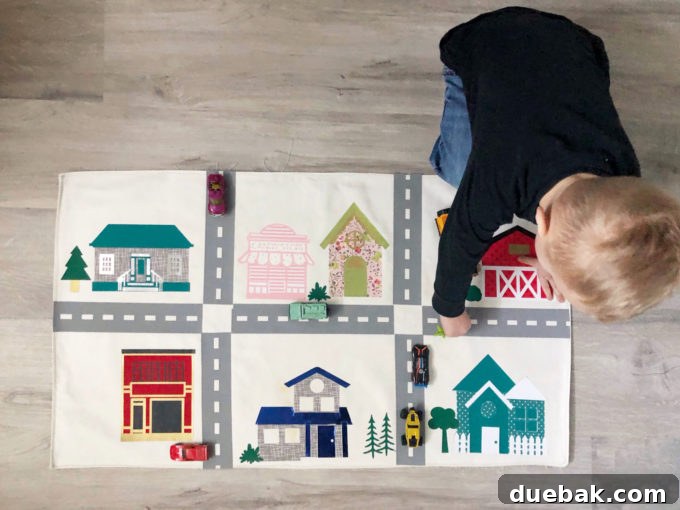
Crafting Joy: Create Your Own No-Sew Car Play Mat with Cricut Maker
Are you looking for a fun, engaging, and personalized gift for the little car enthusiast in your life? Imagine a vibrant, custom-designed play mat where toy cars can race, explore, and create endless adventures. While the idea of a handmade car play mat might conjure images of tedious sewing and intricate fabric cutting, we’re here to revolutionize that perception! This comprehensive guide will show you how to craft a beautiful, durable, and completely no-sew car play mat in just a few hours, all thanks to the incredible precision and ease of the Cricut Maker machine.
This project is perfect for crafters of all skill levels, offering a fantastic way to unleash creativity without the need for a sewing machine. Whether you’re a seasoned DIYer or just starting your crafting journey, the Cricut Maker streamlines the process, making it enjoyable and stress-free. Get ready to transform ordinary fabric into an extraordinary world of imaginative play!
This is a sponsored conversation written by me on behalf of Cricut. The opinions and text are all mine.
Why the Cricut Maker is Your Ultimate Crafting Companion for Fabric Projects
For years, creating fabric projects like a car play mat meant wrestling with scissors, uneven cuts, and the daunting task of sewing multiple pieces together. The thought of cutting intricate shapes from various fabrics could deter even the most enthusiastic crafters. That all changed with the introduction of the Cricut Maker, a true game-changer in the world of DIY. When I first discovered its unparalleled precision in cutting fabric details, my mind instantly filled with possibilities.
I recall making a large toy car play mat many years ago. It was a beloved item, played with by my boys until the fabric began to fray from years of enthusiastic use. Back then, I wasn’t familiar with fabric stabilizers or adhesive backings, leading to a much more challenging and less durable outcome. The idea of remaking it lingered, but the sheer effort involved was a significant barrier. That is, until I encountered two critical innovations: fusible fabric and the Cricut Maker. Fusible fabric, with its pre-applied adhesive, eliminates the guesswork and stress of traditional methods, making the entire process incredibly straightforward. Coupled with the Cricut Maker, which meticulously cuts all the intricate pieces, the dream of a new, improved play mat became a fun, achievable reality.
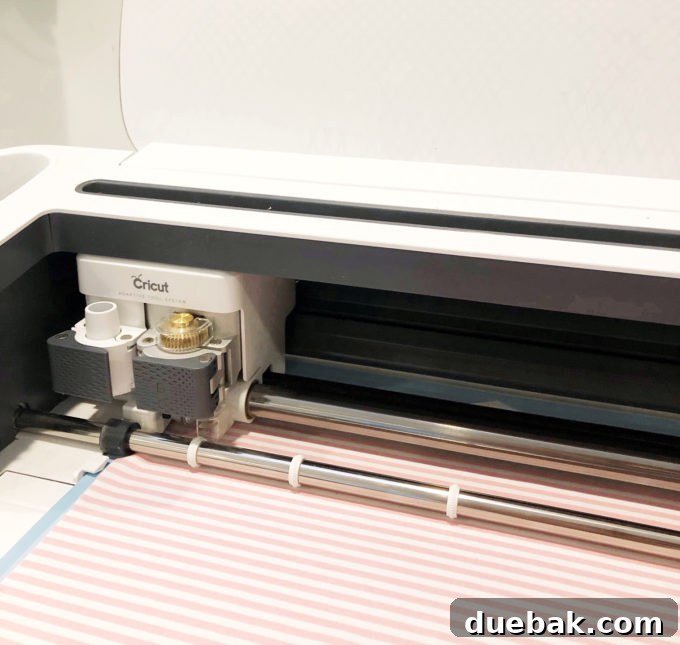
The Cricut Maker’s adaptive tool system, particularly the rotary blade, is revolutionary for fabric crafting. Unlike traditional blades, the rotary blade glides through virtually any fabric, from delicate silk to thick denim and, crucially for this project, fusible fabric, with incredible accuracy. This means no more jagged edges, misaligned cuts, or hours spent with scissors. It handles the most complex designs effortlessly, ensuring every piece fits together perfectly. This precision is what transforms a time-consuming, frustrating project into a delightful and rewarding experience. If you’re ready to create a car play mat that’s not only adorable and easy but also personalized and built to last, then you’re in the right place!
Designing Your Dream Play Mat: Utilizing Cricut Design Space Files
The heart of any successful Cricut project lies within Cricut Design Space, where creativity meets precision. For this car play mat, many of the core elements were sourced from the “My Community” cartridge, offering a fantastic array of vehicles, buildings, and landscape features. However, to achieve the layered, professional look you see, a bit of clever manipulation with the “slice tool” was essential.
The “slice tool” in Design Space is incredibly powerful, allowing you to separate overlapping layers and create custom cut-outs. I extensively used it with the “knock out method” to isolate specific parts of images, making them suitable for different materials. For instance, the main structures of buildings (the “base layers”) were cut from fusible fabric, providing a sturdy, adhesive foundation. Conversely, the smaller, more detailed accents like windows, doors, and unique architectural features were cut from various types of iron-on vinyl. This strategic material choice allows for dynamic textures and colors, bringing the play mat to life.
It’s important to note that layering patterned or metallic vinyl directly on top of other patterned or metallic vinyl is generally not recommended, and sometimes not even possible, as it can affect adhesion and appearance. Similarly, layering more than three layers of vinyl can become tricky and prone to peeling over time. By utilizing the slice tool, we can cut out individual elements, ensuring each piece adheres cleanly and securely without excessive bulk. With these considerations in mind, here are the specific Design Space files that formed the foundation of our vibrant car play mat:
- Roads and trees: The essential framework for endless journeys.
- Houses: Diverse residential buildings to populate your miniature town.
- Barn: A charming addition for a countryside feel.
- Fire Station: An exciting feature for emergency play scenarios.
- Post office: A community staple for imaginative delivery routes.
- Candy Store: A sweet stop for any toy car adventure.
Feel free to customize these files, explore other images within Design Space, or even upload your own SVG designs to make your play mat truly unique. The possibilities are boundless!
Essential Materials and Supplies for Your Car Play Mat Project
Gathering your materials before you begin ensures a smooth and enjoyable crafting experience. The beauty of this project lies in its simplicity and the minimal tools required, primarily centered around your Cricut Maker. Here’s a list of everything you’ll need to bring your car play mat to life:
- Cricut Maker Machine: The star of our show, providing precise cuts for all your fabric and vinyl elements.
- Cricut Rotary Blade: Absolutely essential for clean, effortless fabric cutting with your Maker. Ensure it’s properly installed.
- Fusible Fabric: This is the magic ingredient for a no-sew project! Choose a sturdy base fabric (like canvas or felt) with an adhesive backing. You’ll need various colors for your buildings and landscape elements.
- Iron-On Vinyl (Heat Transfer Vinyl – HTV): A selection of colors and finishes for accents like windows, doors, signs, and other details. Consider metallic or patterned vinyl for extra flair, but remember the layering considerations mentioned above.
- StandardGrip or FabricGrip Mat: Depending on the fabric type, ensure you have the appropriate cutting mat for your Cricut Maker.
- Heat Press or Iron: A heat press offers more consistent pressure and temperature, but a good quality iron will work perfectly for this project.
- Pressing Cloth or Teflon Sheet: Crucial for protecting your vinyl layers and your iron/heat press.
- Weeding Tools: To easily remove excess vinyl from your intricate cuts.
- Scissors: For any minor trimming or preparing your fabric/vinyl sheets.
- Fabric Marker or Chalk (Optional): For planning your layout on the base fabric.
Having these items ready will allow you to move seamlessly through each step of the crafting process, from cutting to final assembly. Now, let’s get those creative gears turning!
Step-by-Step Guide: From Cutting to Adhesion
1. Prepare Your Design in Cricut Design Space
Once you’ve finalized your design and loaded the chosen Design Space files, it’s time to send them to your Cricut Maker. Before cutting, double-check that all layers are correctly assigned their material type (e.g., fusible fabric, iron-on vinyl) and that your cut settings are accurate. For all fabric layers, make sure the Cricut Design Space prompts you to load the Rotary Blade.
2. The Art of Cutting Fabric and Vinyl
This is where the Cricut Maker truly shines. When cutting fusible fabric, I recommend placing it adhesive-side down on your FabricGrip mat, with the pretty fabric face up. This might differ from the usual “pretty side down” mantra for some materials, but it ensures the adhesive is correctly exposed after cutting. Crucially, do NOT mirror your fusible fabric cuts. For your iron-on vinyl layers, however, you will need to mirror the image in Design Space before cutting, as iron-on vinyl is typically applied face-down onto the transfer sheet.
A quick tip from personal experience: I’ve made the mistake of mirroring fabric layers or forgetting to mirror vinyl layers a couple of times, leading to re-cuts. Always double-check your mirror settings in Design Space for each material to save time and material!
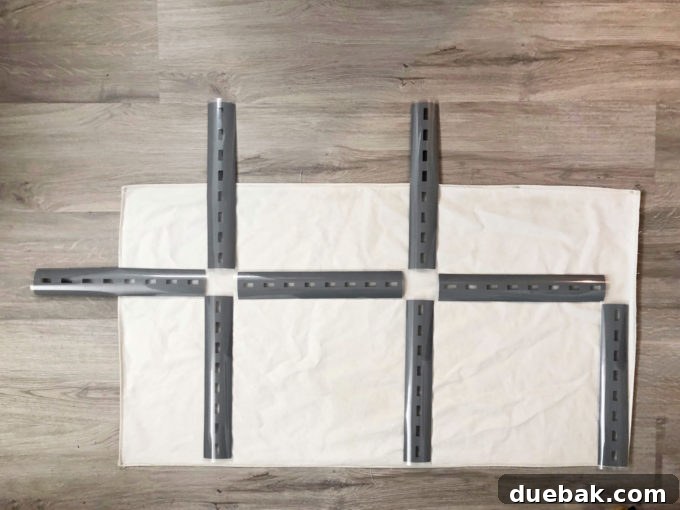
3. Plan Your Play Mat Layout
Once all your pieces are cut, the fun of assembly begins! Lay out your main base fabric (your largest piece, if using a background fabric) and arrange your fusible fabric buildings and iron-on vinyl accents. This is your chance to plan the general layout, decide on the placement of roads, houses, and other features, and experiment with color combinations. Don’t worry about adhering anything yet; simply arrange the pieces to visualize your final project. Think about how the different buildings will interact and create a cohesive, inviting play scene.
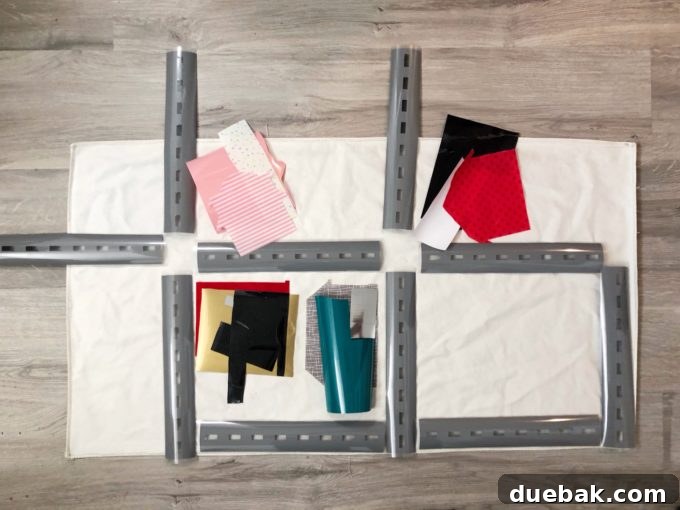
4. Adhering Your Materials: The Ironing Process
Now, it’s time to bring your design to life with heat! Carefully follow the heat settings guide provided by your fusible fabric and iron-on vinyl manufacturers. These settings (temperature, time, and pressure) are crucial for proper adhesion and durability. If you have a Cricut EasyPress or a heat press, this is the ideal tool for consistent results. Otherwise, a household iron will work perfectly.
Start with your base layers of fusible fabric. Place them in your desired position and apply heat according to the instructions. Once they’re adhered, move on to your iron-on vinyl accents. When layering vinyl, always remember to leave the protective clear plastic carrier sheet over the vinyl that has already been ironed on, especially when pressing subsequent layers. Why? Because the heat from your iron can easily melt previous vinyl layers if they are exposed. Trust me, I learned this the hard way! To further safeguard your hard work, always use a pressing cloth or a Teflon sheet between your iron/heat press and your project, particularly when working with multiple vinyl layers or heat-sensitive materials.
Looking for more project ideas? Get inspired with these Cricut Projects!
Iron-On Vinyl Tricks for a Flawless Finish
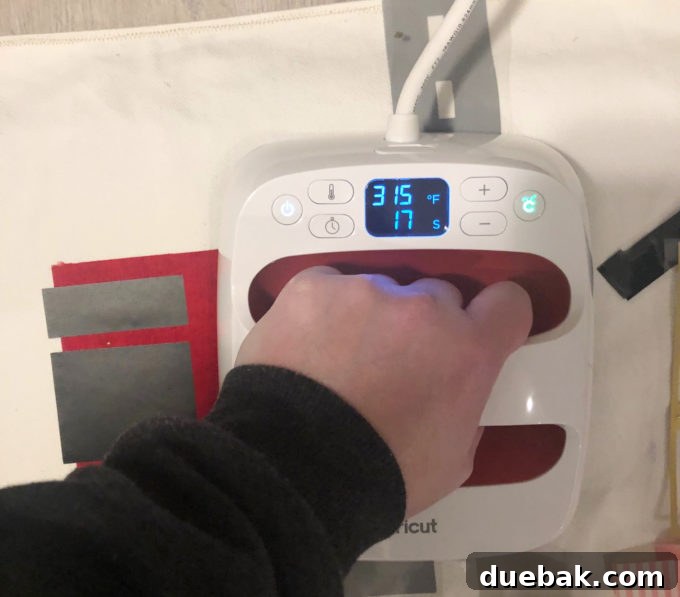
Once all your layers have been ironed on and cooled completely, here’s a professional trick: flip your play mat over and apply heat from the underside. This helps ensure that the adhesive has fully bonded with the fabric, creating a stronger, more durable bond. Let it cool again, then carefully and slowly peel off all the plastic carrier sheets from your iron-on vinyl. Take your time with this step to prevent any lifting. And just like that, your handmade car play mat is ready for action!
Unleashing Imagination: The Joy of a Handmade Play Mat
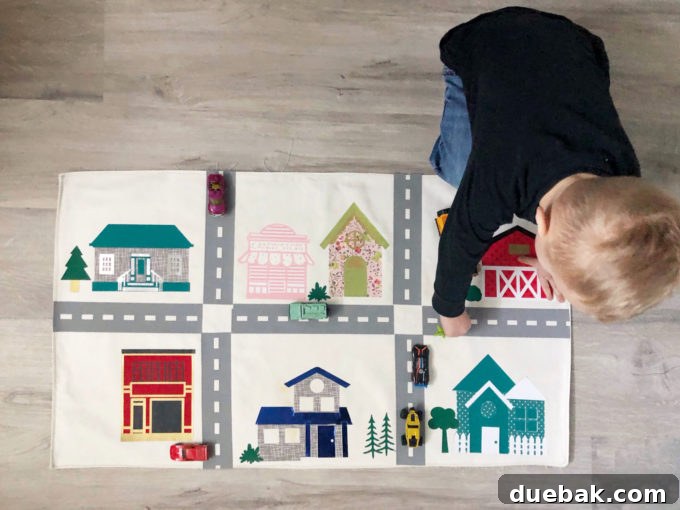
The moment you present this personalized car play mat to a child is truly magical. My son couldn’t wait to line up all his little cars and immediately began creating stories and adventures on his brand-new mat. He even told me I was his best friend because I played with him – a total win in my book! This isn’t just a mat; it’s a gateway to hours of imaginative play, fostering creativity, storytelling, and fine motor skills.
Beyond the immediate joy, a handmade play mat offers lasting benefits. It’s a durable, reusable toy that encourages open-ended play, allowing children to build their own worlds rather than being constrained by electronic screens. It’s also a thoughtful, personalized gift that carries sentimental value, showcasing the love and effort put into its creation. While this project is designed to be completely no-sew and will last for years with proper care, for ultimate longevity and to prevent any fraying on exposed fabric edges, you could optionally go back and sew a simple stitch around the seams where fabric isn’t covered with vinyl. However, it’s absolutely not necessary for a long-lasting and beloved toy.
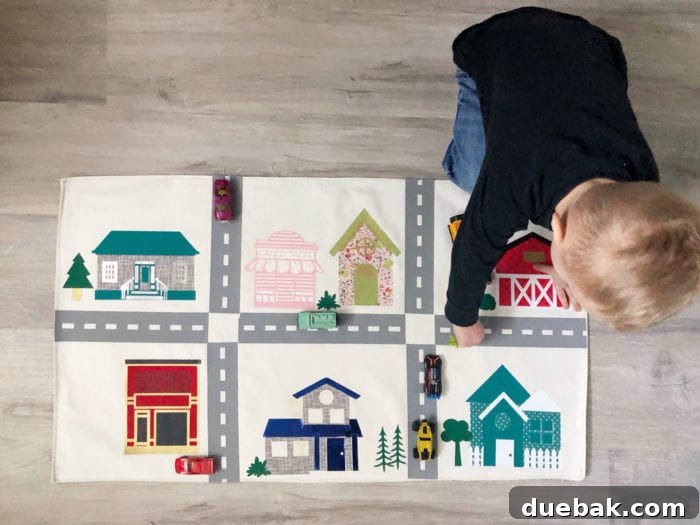
This project exemplifies how modern crafting tools like the Cricut Maker empower us to create intricate, beautiful, and meaningful items with ease. It turns what could be a complex endeavor into an accessible and rewarding experience, demonstrating that stunning handmade gifts are within everyone’s reach. So, gather your materials, fire up your Cricut, and prepare to bring a world of play to life!
Happy crafting, my crafty friends!