
Sunroom Saga: From “Stinky” Carpet to Sparkling Concrete (and Beyond!)
Every home has its quirks, and for us, our new sunroom came with a memorable one: a perpetually damp, deeply entrenched rug we affectionately dubbed “Stinky.” This wasn’t just a quirky name; it was a literal description of a significant moisture issue that plagued the space. Poorly sealed old sliders and noticeable wood rot allowed moisture to persistently seep into the sunroom, creating an environment that was, to put it mildly, less than inviting. The previous owners were undoubtedly aware of this persistent dampness and the accompanying serious odor – a factor that almost certainly influenced the house’s listing price, which fortunately brought it within our reach. While some buyers might have seen this as a major deterrent, for us, it was a hidden opportunity. The chance to tackle a challenging but solvable problem meant we could afford a house that we absolutely adored. For any dedicated DIY homeowner, a project like this isn’t a curse; it’s a blessing in disguise, a chance to infuse new life into a space and make it truly our own.
Our journey to reclaim the sunroom began with the most immediate and impactful task: removing Stinky. This wasn’t just about pulling up a rug; it was about systematically dismantling layers of a moisture-compromised history, including the deeply glued-down rug pad beneath it, and the surprisingly formidable nails and staples lurking unseen. We knew this would be a multi-stage process, demanding patience, the right tools, and a fair bit of elbow grease. But with every layer we peeled back, we were moving closer to transforming this neglected space into a vibrant, functional extension of our home.
Phase 1: Conquering the Odor – Our DIY Carpet Removal Journey
Tackling the Perimeter: Freeing the Old Rug
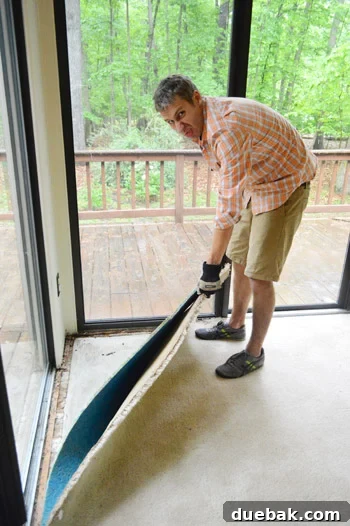
The first step in our sunroom liberation was to detach the carpet from its anchors. Around the entire perimeter of the room, robust tack strips, bristling with sharp nails, held the carpet firmly in place. These strips are designed for secure installation, but they pose a challenge during removal. To get started, we strategically chose a corner where the rug felt a bit looser. Using a small, but sturdy, crowbar, we carefully worked its flat end underneath the edge of the rug. With a bit of leverage, we were able to pry the rug free from the grip of the tack strip nails. This initial separation was crucial, allowing us to begin pulling the carpet away from the walls without tearing it excessively, thus making the subsequent steps much more manageable. The goal was to minimize resistance and get the bulk of the carpet moving.
Rolling and Cutting: A Strategic Retreat for ‘Stinky’
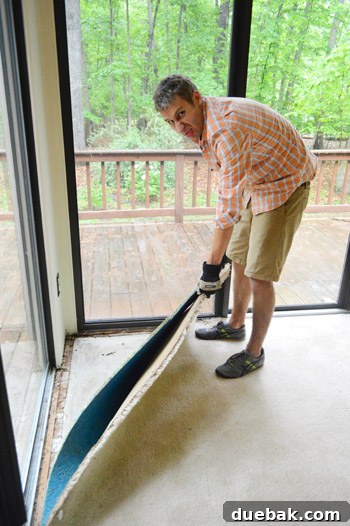
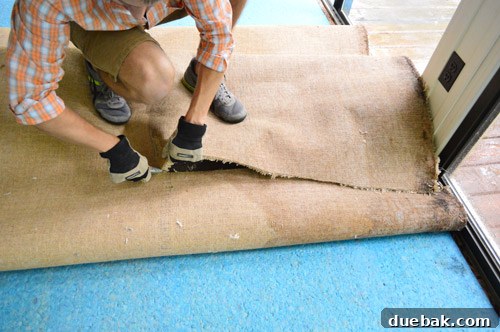
Once the carpet was successfully detached from the perimeter tack strips, we shifted our focus to managing its sheer size and weight. A damp, old rug can be incredibly heavy and unwieldy, making it difficult to carry out in one piece. Our strategy involved rolling each side of the rug inward, much like unfurling a giant scroll, towards the midpoint of the room. This not only compressed the bulk but also provided a cleaner, more manageable edge for the next step. Once both rolled sections met in the middle, we used a sharp box cutter to slice the rug cleanly in half. This division into two more manageable sections dramatically reduced the weight and awkwardness, making it infinitely easier to transport out of the sunroom and dispose of. While some might consider cutting the rug before rolling, we found that the slight slack created by the initial rolling process actually made the cutting action smoother and more efficient once the rug was positioned in the center. As we carried each section away, the lingering, musty odor was a stark reminder of the transformation underway, urging us to complete the task swiftly and thoroughly. It was a moment of mixed emotions – relief that it was going, and a slight aversion to its lingering presence.
Phase 2: The Glued-Down Gauntlet – Removing Stubborn Rug Pad
The Unexpected Challenge: A Fully Adhered Rug Pad
With the main carpet sections removed, our attention turned to the rug pad underneath. In an ideal world, we hoped for a “floating” rug pad – one that simply lay beneath the carpet without being adhered to the subfloor. This would have meant a relatively simple lift-and-remove process, leaving the concrete foundation clean and free of adhesive residue. However, our hopes were quickly dashed. As we began to pull at the rug pad, it became painfully clear that it was extensively glued down across the entire concrete floor. This discovery was certainly a setback; glue stains on concrete are notoriously difficult to remove completely and often require specialized treatments. The sudden shift from a simple removal to a much more intensive clean-up brought a moment of comedic frustration, prompting an internal Dr. Seuss-esque lament: “Boo, glue, boo!” Despite the momentary disappointment, we knew the pad had to go, glue stains and all, to prepare the sunroom for its future revitalization.
The Floor Scraper: Our Unsung Hero in Glue Removal
Tackling the glued-down rug pad required a more robust approach than just brute force. For areas where the pad was particularly stubborn and fused to the concrete, we turned to a tool that had proven its worth in previous renovation projects: a sturdy $25 floor scraper from Home Depot. This isn’t just any scraper; it features a wide, exceptionally sharp, and smooth blade at its end, designed to glide effectively across hard surfaces. The technique is similar to using a razor blade to meticulously scrape paint off glass. By applying consistent force and maintaining a shallow angle, the blade effectively slices through the adhesive layer, separating the rug pad fragments and residual glue from the concrete. This method left the floor remarkably smooth and flush, eliminating the raised bumps and unevenness caused by the dried glue. While the deep-set glue stains themselves would require further treatment, the scraper ensured a physically smooth and level surface, which was critical for any subsequent flooring applications. This tool saved us countless hours of painstaking manual scraping and chemical application, proving to be an indispensable part of our demolition arsenal, just as it had been during our upstairs bedroom carpet removal project.
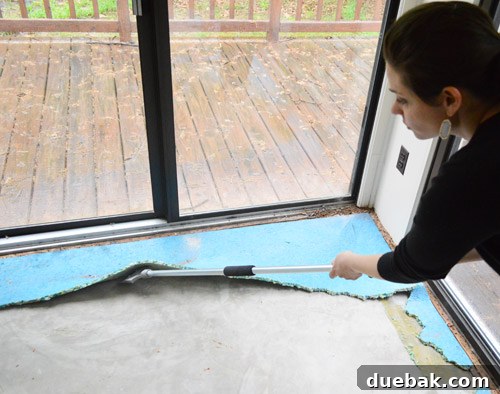
The satisfaction of seeing those stubborn glue bumps disappear, even if the deeper stains remained visible, was immense. The floor was transforming from a sticky, uneven mess into a clean, smooth slate – a crucial step forward, and I’ll detail those persistent stains a bit more closely in a moment.
Phase 3: Clearing the Way – Tack Strips and Final Cleanup
The Tedious Task of Tack Strip Extraction
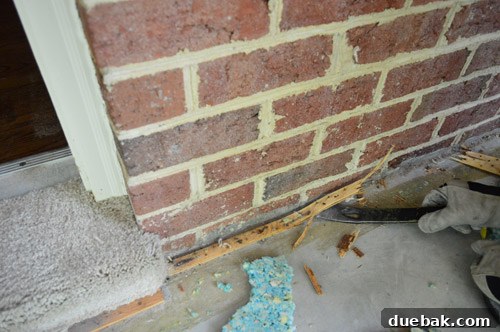
While I continued my meticulous work with the floor scraper, John took on the equally challenging task of extracting the tack strips from around the room’s perimeter. These strips, essentially thin, brittle pieces of old wood embedded with countless upward-pointing nails, were originally designed to securely hold the carpet in place. However, their removal proved to be a test of patience. Their age and brittleness meant they often splintered and broke into smaller pieces rather than coming up as a single, cohesive strip. John painstakingly worked a pry bar underneath them every few inches, applying leverage to slowly coax them away from the concrete. This process was far more time-consuming than anticipated. It took a significant hour and a half just to get all the rug pad fragments, excess glue residue, and these fragmented tack strips fully removed, a stark contrast to the mere ten minutes it took to pull up the main carpet sections. This phase underscored the hidden complexities of even seemingly simple demolition tasks.
The Grand Finale: Sweeping Up and Vacuuming
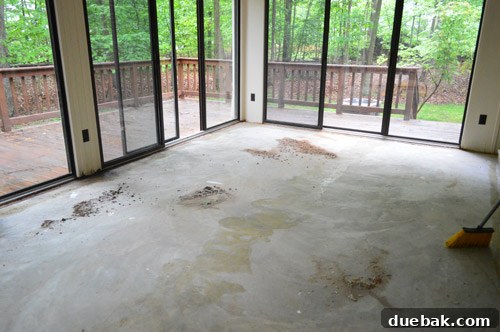
With all the major elements – the carpet, the glued-down pad, and the treacherous tack strips – finally removed, the sunroom was left with a chaotic assortment of debris. This included various random nails, scattered glue spots, and countless splinters of wood from the brittle tack strips. Our final cleanup phase began with a manual sweep: I carefully picked out any longer, larger shards of wood and bundled them for separate disposal. Attempting to vacuum a foot-long splinter with a shop vac is an exercise in futility and potential damage to the vacuum! Once the larger hazards were cleared, we brought in our trusty shop vac. This powerful tool is indispensable for renovation cleanup, far superior to a household vacuum for handling construction debris. We systematically swept all the small splinters, stray nails, stubborn balls of dried glue, and lingering tufts of old carpet into neat piles, then efficiently vacuumed them away. This final thorough cleaning marked a significant turning point, revealing the true state of the concrete floor beneath the layers of grime and neglect.
A Breath of Fresh Air: The Immediate Concrete Floor Transformation
From Swampy Mess to Smooth Concrete Canvas
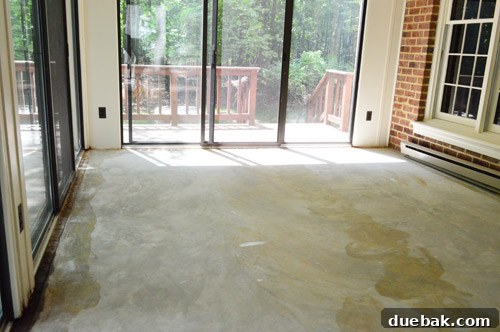
The transformation was instant and dramatic. The removal of the “stinky” swampy carpet instantly improved the room’s atmosphere, even with the remaining visual imperfections. What emerged was a raw concrete floor, a stark but clean canvas. While the persistent glue stains were still visible, etched into the porous concrete surface, the overall improvement was undeniable. The oppressive dampness and musty odor were replaced by the crisp, albeit industrial, smell of exposed concrete. This marked a significant milestone; the room had truly turned a corner, shedding its past and ready for its future. The potential of the space, once hidden beneath layers of neglect, was now palpable, inviting us to envision its full renovation.
Addressing Odor and Stains: Our First Steps to Restoration
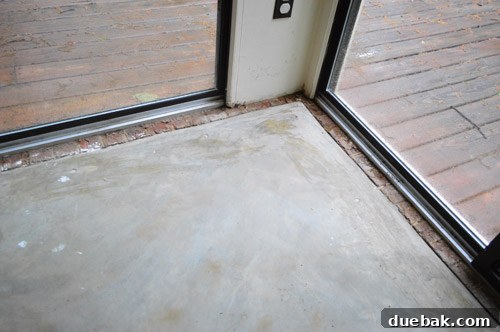
Thanks to the diligent work with the floor scraper, the entire concrete floor was now uniformly flush and smooth. This was a critical achievement, as uneven surfaces can complicate future flooring installations. While the frustrating glue stains had deeply soaked into the concrete, becoming a permanent part of its texture, the physical bumps, along with the dangerous nails and staples, were completely gone. The next immediate step in our renovation plan involves a multi-pronged approach to fully mitigate the lingering issues. First, a thorough, deep cleaning of the concrete will remove any surface grime and microscopic remnants. Following this, we plan to apply a high-quality stain and odor-blocking primer. This specialized primer is essential for sealing in any remaining unpleasant odors, ensuring they don’t resurface on hot, humid days. Finally, a durable coat of porch and floor paint will not only provide a fresh aesthetic but also effectively cover those stubborn glue stains, offering a protective and attractive finish. This comprehensive treatment promises to make the sunroom approximately 98% more pleasant to inhabit, setting the stage for its grander transformation.
Our Grand Vision: The Sunroom’s Future Transformation
With the first crucial step of carpet removal successfully completed, our minds are already brimming with grand plans for this sunroom. This initial demolition phase has merely cleared the slate; the true transformation is yet to come. Our vision is to convert this once-damp and neglected space into a vibrant, inviting area that seamlessly blends indoor comfort with outdoor allure. This multi-phase project aims to address both functionality and aesthetics, creating a truly exceptional space within our home.
Phase 1: Establishing a Foundation of Freshness
Rip up old stinky carpet and padding– *Achieved! The musty history is now behind us.*- **Scrub the concrete and seal in the smell somehow (so it doesn’t leech odor forever):** This is paramount. We will use industrial-strength concrete cleaners to thoroughly wash the floor, followed by a specialized stain and odor-blocking primer. This will create an impenetrable barrier, permanently neutralizing any residual “stink” and preventing moisture from contributing to future odor issues. The goal is a truly fresh, clean foundation.
- **Stain or paint the concrete floor as part of Phase 1*:** To immediately enhance the aesthetic and protect the concrete, we will either apply a durable concrete stain or a high-quality porch and floor paint. This will not only hide the lingering glue stains but also provide a clean, visually appealing surface that is easy to maintain. This step is crucial for making the room immediately habitable and enjoyable.
- **Permanently remove the half-broken base heater:** The old, inefficient, and partially damaged base heater is an eyesore and a functional impediment. Its removal will free up wall space, streamline the design, and eliminate an outdated fixture that no longer serves our vision for the room’s heating and cooling needs.
Phase 2: Elevating Aesthetics with Stone and Structure
- **Eventually retile the floor with outdoor-safe stone to upgrade the old concrete floors (down the line for Phase 2):** While painting or staining the concrete serves as a great interim solution, our long-term plan is to install durable, outdoor-safe stone tiles. This will dramatically elevate the room’s aesthetic, providing a luxurious, natural texture underfoot that is perfectly suited for a transitional indoor-outdoor space. We envision a material that offers both beauty and resilience against the elements.
- **Convert sunroom to an open covered porch with new columns and no more sliders:** This is perhaps the most ambitious part of our renovation. Many of the existing sliders are beyond repair, with compromised seals and rotten posts contributing to the moisture issues. We plan to completely remove these old sliders and replace them with elegant new columns, effectively transforming the enclosed sunroom into an open, covered porch. We’re envisioning something akin to the inviting, airy feel of this inspiring example, creating a seamless connection to our backyard.
Envisioning a Seamless Indoor-Outdoor Living Space
- **Possibly build a brick outdoor fireplace off of the sunroom after we open it up?:** To enhance the outdoor living experience, we are strongly considering adding a beautiful brick outdoor fireplace adjacent to the newly opened porch. This would create a cozy focal point, extending the usability of the space into cooler evenings and adding significant architectural interest and value. While we like elements of this design inspiration, we’re looking for something that perfectly complements our home’s style.
The Finer Details: Ceiling and Fireplace Additions
- **Add beadboard to the ceiling and paint it soft blue?:** To complete the aesthetic transformation, we envision adding beadboard paneling to the ceiling. This classic architectural detail will add texture and character, evoking a charming, coastal-inspired feel. Painting it a soft blue will further enhance the open, airy ambiance, mimicking the sky and creating a serene, inviting atmosphere that perfectly suits an indoor-outdoor living space.
* This is just a first-thought brain dump, a flexible roadmap for our renovation journey. We understand that plans can evolve. If, for instance, we discover that painting the floor now would inhibit our ability to successfully tile it down the road, we will certainly course correct. We’re committed to sharing our evolving plans and any new insights as we move forward with each phase of the sunroom’s exciting transformation.
Reflecting on Our Sunroom’s Journey: Worth Every Effort
The sense of accomplishment from having that old, “stinky” carpet finally gone is immense. While the task of carrying out the heavy, damp sections of the rug to the garage ourselves sent a shiver of unpleasant memory down my spine, the outcome was absolutely worth every bit of effort. The sunroom, once a source of dampness and odor, now stands as a clean, smooth, and much more inviting space, brimming with potential. This initial, challenging phase has laid the groundwork for a stunning transformation, and we are incredibly excited to embark on the next steps of turning our vision into a tangible reality. This project reinforces our belief that with dedication and a bit of DIY spirit, even the most challenging spaces can be revitalized into areas of beauty and joy.
Psst- Clara’s having more conversations over on Young House Life. Number 5 made us laugh until we cried. You can check it out here!