
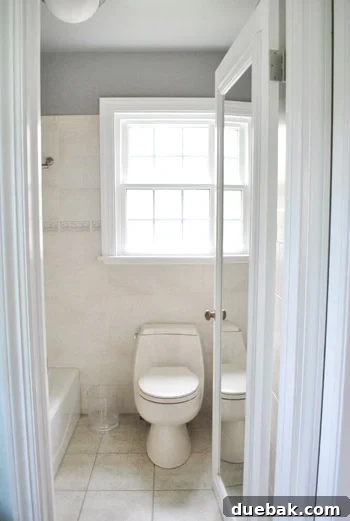
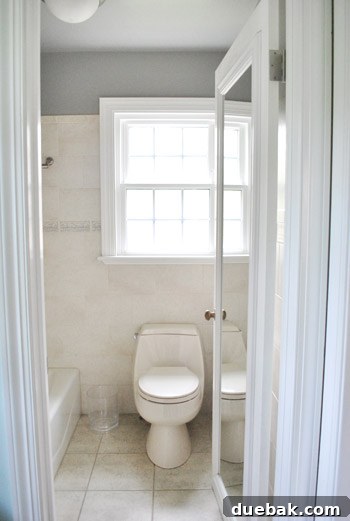
Welcome back to our ongoing home transformation journey! Today, we’re thrilled to unveil the dramatic makeover of our formerly uninspiring, beige-on-beige master bathroom. Get ready to witness a stunning shift as this space officially embraces the sophisticated charm of **Rockport Gray by Benjamin Moore**. This elegant hue, a subtle yet impactful gray, has completely redefined the room, imbuing it with a fresh, contemporary feel that we absolutely adore. Our love affair with Rockport Gray began the moment we first encountered it gracing the walls of a beautifully designed kitchen during a house tour we fondly recall here. Its versatile nature and warm undertones immediately captured our imagination, marking it as a top contender for our master bathroom’s much-needed refresh. The transformation is already breathtaking, even without the final touches like the shower curtain being rehung, allowing the pristine new color to truly stand out. We’ve captured some initial glimpses, and trust us, the ‘after’ is a testament to the power of a thoughtfully chosen paint color.
But let’s rewind a bit, shall we? Before we could immerse ourselves in the satisfying task of applying two luxurious coats of this exquisite paint, there were crucial preliminary steps to tackle. As we hinted at in our initial mood board for the room, our vision involved decluttering and optimizing the available wall space. The first order of business was to bid farewell to an unused shelf and towel bar that had long occupied a prime spot. These fixtures, while seemingly practical, never quite served their purpose in our daily routine, creating unnecessary visual clutter rather than functional utility. We deliberated on their fate for some time, ultimately deciding that their removal was essential to achieving the minimalist, open aesthetic we craved. Understanding our rationale for this decision can be found in more detail in our previous post.
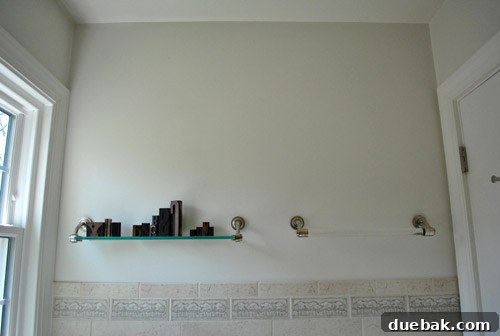
The strategic removal of these elements wasn’t just about decluttering; it was about creating a blank canvas, specifically on the only wall not almost entirely covered in tile. This particular section of wall was destined to become a focal point, the perfect spot for some thoughtfully selected artwork that would personalize the space and inject character. With our plan firmly in place, we proceeded with the removal. Equipped with a reliable allen wrench kit, similar to the versatile set you can find here, the initial steps of dismantling the fixtures went smoothly. However, as is often the case with older homes and DIY projects, we soon encountered an unexpected challenge that required a bit of creative problem-solving.
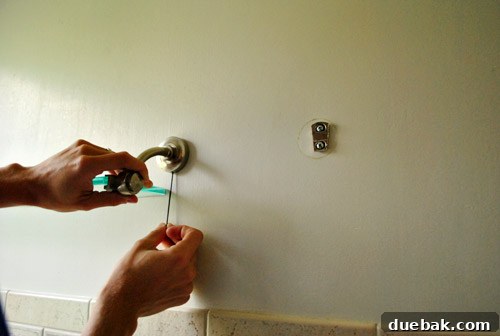
Upon removing the shelf and towel bar, we discovered several stubborn metal anchors embedded deep within the wall. These anchors, remnants of a previous installation, proved to be quite problematic. As we attempted to extract them, they began to tear chunks of the drywall, creating unsightly damage. Given that our bathroom is part of an addition dating back to the seventies, the walls are constructed from drywall rather than the more common plaster found in older sections of the house. While plaster might have crumbled even more severely under such pressure, the drywall still posed a significant challenge, threatening to undo our efforts to create a smooth, paint-ready surface. This unforeseen hurdle served as a valuable, albeit frustrating, learning experience.
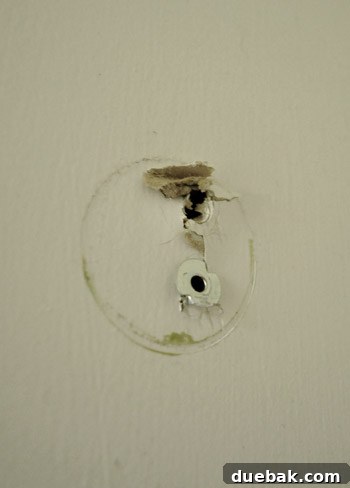
After wrestling with one particularly recalcitrant anchor and observing the extent of the drywall damage it caused, we quickly learned our lesson. Continuing to pull them out was clearly not the optimal solution. Instead, we pivoted to a more effective and less destructive approach. Our new strategy was simple yet ingenious: instead of extracting, we decided to integrate. This meant abandoning the struggle against the anchors and instead making them a permanent, albeit invisible, part of the wall structure. This decision saved us significant time and prevented further, more extensive drywall repairs, keeping our renovation timeline on track.
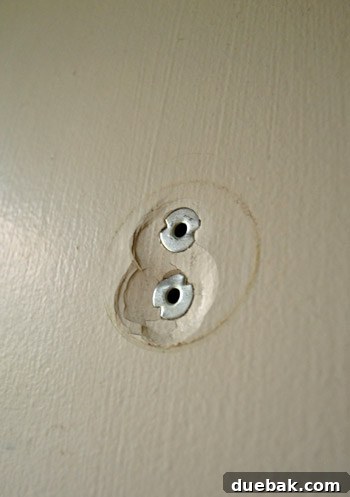
So, what was this ingenious solution? It involved a trusty hammer and a bit of spackle. I gently, yet firmly, tapped the protruding metal anchors further into the wall, ensuring they were recessed enough to be completely flush with, or slightly below, the drywall surface. This maneuver effectively neutralized their destructive potential. Once recessed, I generously applied spackle directly over them, building up the layers to create a seamless, perfectly smooth finish. The goal was to erase any trace of the anchors, making the wall appear as if they were never there. Below, you can see a glimpse of what the spackled area looked like before the final sanding – please pardon the slightly overexposed picture; I momentarily forgot to adjust the white balance, but the texture is clearly visible.
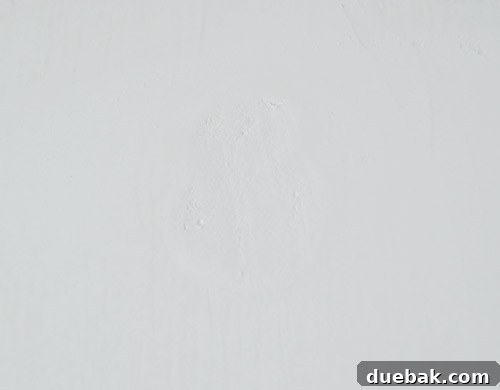
Notice the subtle roughness in the middle of the image? That’s the spackle diligently doing its work. Once thoroughly dry, the next crucial step was sanding it smooth. For this, I highly recommend using a sanding block. This handy tool is a game-changer because it maintains a consistently flat surface, mimicking the wall itself, which is far superior to trying to achieve an even finish with a floppy, loose piece of sandpaper. A sanding block ensures uniform pressure and prevents dips or uneven spots, leaving you with a perfectly level surface ready for paint. We opted for Dap Crackshot spackle, easily identifiable by its blue lid, which performed admirably. However, we’ve heard exciting news that many stores now stock low-VOC (Volatile Organic Compound) spackle options. We’re eager to try those out in future projects, aligning with our preference for healthier, more eco-friendly home improvement products. This approach not only repaired the wall but also prepared it flawlessly for the upcoming color transformation.
With the wall meticulously spackled and sanded to perfection, it was finally time for the moment we had been anticipating: applying the paint. A quick note on priming: while priming after spackling is often recommended, especially for larger repairs or color changes, we’ve successfully skipped this step on several occasions without any adverse effects. It seems modern paint formulations are becoming increasingly robust, offering excellent coverage and adhesion on their own. However, if you’re ever in doubt, a quick prime coat certainly won’t hurt! For our bathroom, we chose Benjamin Moore’s Rockport Gray, a color we’d first encountered and instantly fallen for during a memorable House Crash tour in Portland. We only needed a single quart of semi-gloss paint, opting for Benjamin Moore’s Natura line, their fantastic no-VOC option. This choice reflects our commitment to creating a healthy living environment, minimizing exposure to harsh chemicals. The semi-gloss finish was a deliberate choice for a bathroom, as its inherent durability and ease of cleaning make it ideal for areas prone to moisture and high traffic. However, working with semi-gloss does present a unique challenge: the first coat on such a slick surface often looks surprisingly terrible, with streaks and uneven coverage that can be quite disheartening initially.
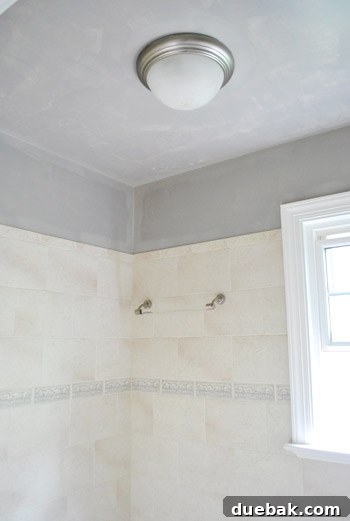
…but true to form, the magic truly happens with the second coat. It’s a moment of pure satisfaction when those imperfections vanish, replaced by a smooth, uniform, and richly colored surface that perfectly embodies the vision. The transition from a splotchy, uneven first layer to a flawless, deep finish is a testament to the importance of patience and proper technique when painting with semi-gloss. It transformed the raw application into a refined, professional-looking result, demonstrating the full potential of Benjamin Moore’s Rockport Gray.
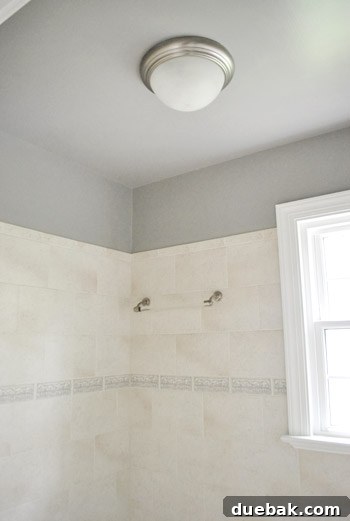
And here she is, the room fully painted, with the shower curtain gracefully rehung, bringing a sense of completion to this phase of the project. While I wasn’t able to transform the cream trim to a crisp, bright white before tackling the walls, that important detail is next on the agenda. For a seasoned DIYer like myself, painting walls first and then tackling the trim isn’t an unusual order of operations; I’ve done it countless times, and the results are always worth the effort. The immediate impact of the new wall color is undeniable, even with the existing trim, proving that a fresh coat of paint can instantly revitalize a space. The room now feels significantly brighter and more sophisticated, a clear departure from its former monochromatic state, and we couldn’t be happier with the transformation.
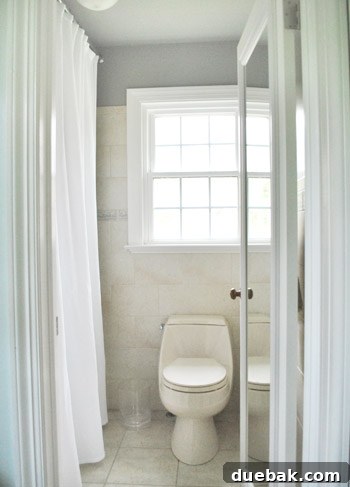
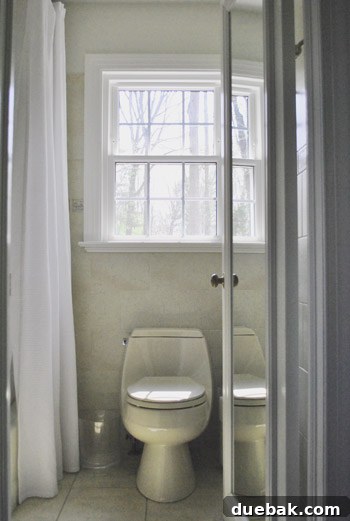
To truly appreciate the dramatic shift, let’s take a quick flashback to the “before.” This side-by-side comparison perfectly illustrates the incredible contrast and newfound crispness that the less monochromatic color palette brings to the room. The original beige-on-beige scheme, while not offensive, lacked depth and personality. Now, with the introduction of Rockport Gray, the bathroom exudes a sophisticated tranquility that was previously absent. It’s amazing how a single color change can elevate the entire atmosphere, making the space feel more intentional and aesthetically pleasing. This isn’t just a color change; it’s a complete mood transformation, proving that sometimes, less is indeed more when it comes to impactful design choices.
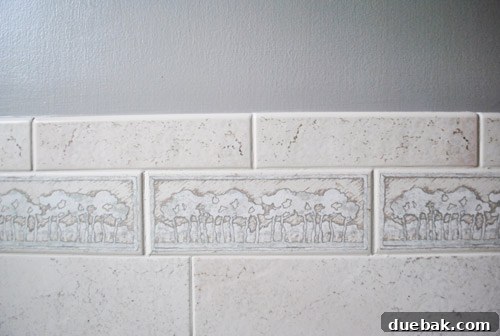
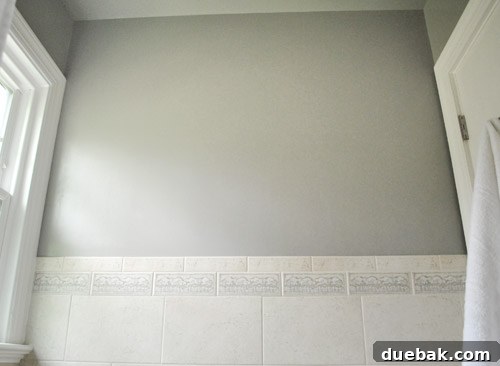
One of the most pleasing aspects of this renovation is how beautifully the existing gray tones in our tiles now interact with the darker, more contemporary wall color. The subtle gray of our main tiles and the charming little tree accent tiles truly pop against the backdrop of Rockport Gray, creating an unexpected harmony. It’s a delightful discovery how well our existing features, which we once thought might clash, actually complement the new paint. While we can envision the room taking on an even more personalized feel someday with soft frosted gray glass subway tile as an accent, for now, we’re genuinely pleased that the tree accents work so much better with the freshly painted walls. This unexpected synergy highlights how thoughtful color selection can breathe new life into existing elements, transforming what was simply “there” into something truly integrated and appealing.
This freshly painted wall, now a serene canvas of Rockport Gray, is practically begging for some carefully chosen art to complete its transformation (scroll up to revisit the “before” perspective from this angle and appreciate the blank slate we started with). Beyond just aesthetics, the room actually feels remarkably more open and expansive, despite the wall color being darker than its predecessor. This counterintuitive perception is largely due to the absence of those former shelves and bars. Their removal has eliminated the feeling of visual encroachment, particularly when walking towards the toilet. The space now breathes more freely, offering an uncluttered pathway and a greater sense of calm and spaciousness. It’s a powerful reminder that sometimes, removing elements can contribute more to a room’s feeling of openness than simply choosing a light paint color. The functionality and flow of the bathroom have dramatically improved, making it a more pleasant and welcoming space.
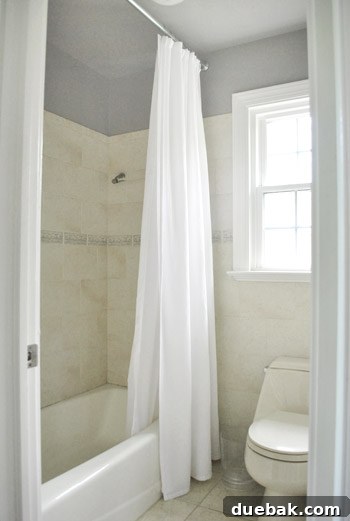
Observe how the crisp slice of white in the shower curtain now beautifully complements the interplay of tan and gray tones throughout the room. This subtle yet significant detail foreshadows our next steps in refining the bathroom’s aesthetic. We are eagerly anticipating the moment when we can transform the existing cream trim into a true, glossy white. This upgrade, along with replacing the toilet with a classic white model and incorporating other carefully selected white accents, will create a cohesive and consistently tied-in color scheme. The goal is to maximize the visual impact of the fresh gray walls by providing a clean, bright contrast, enhancing the room’s modern appeal and bringing our full design vision to life. This thoughtful layering of colors and finishes will ensure every element feels intentional and contributes to a harmonized, elegant master bathroom.
So, with this significant painting project now complete, our master bathroom to-do list has been updated and now looks a little something like this. Each item represents a step towards fully realizing our vision for a serene, modern, and highly functional space:
- Paint the cream trim white: Although it might appear white in these photographs, the bright white light switch next to the existing cream door trim makes the subtle difference painfully obvious in person. This upgrade will provide a clean, crisp contrast against the new wall color, making the entire room feel more polished and updated.
Paint the walls so they have some contrast:(Completed – hello, Rockport Gray!) This foundational step has already dramatically transformed the room’s atmosphere, laying the groundwork for all subsequent changes.- Craigslist the toilet and replace it with a classic white one: Our current toilet is functional but visually outdated. A sleek, classic white toilet will instantly elevate the room’s aesthetic, aligning with the clean, modern look we are striving for.
- Replace the “boob light”: This common builder-grade fixture is a notorious eyesore in many homes. Swapping it out for a more contemporary and stylish lighting solution will significantly improve both the form and function of the bathroom’s illumination, adding to the overall design coherence.
- Hang some bathroom-friendly art: Now that we have a beautiful, uncluttered wall, it’s the perfect canvas for art that adds personality and warmth. We’ll carefully select pieces that are suitable for a bathroom environment, considering moisture and durability.
- Do something to add privacy to the window: Privacy is paramount in a bathroom. We need to find an elegant and effective solution for the window, whether it’s a stylish blind, frosted film, or a combination, that complements the new design while offering necessary seclusion.
- Replace the border tile around the room (maybe in phase 2?): While not an immediate priority, replacing the existing border tile is a long-term goal. This “phase 2” project would allow us to further customize the space and introduce an even more refined tile choice that perfectly matches our evolving aesthetic.
- Replace the floor tile down the road: Similar to the border tile, updating the floor tile is a future aspiration. Given the sheer amount of it, new flooring would help break up the existing patterns and introduce a fresh visual element, creating a more cohesive and contemporary foundation for the entire bathroom.
The encouraging news for anyone who might be delaying painting a small bathroom is that it genuinely doesn’t take as long as one might imagine. Each coat of paint, including cutting in and rolling, likely took us less than an hour per session. Our process is quite efficient: I handle the precise “cutting in” along edges and trim, while John follows with the roller, ensuring even coverage across the larger wall surfaces. We then repeat this streamlined process for the second coat, which goes even faster. This teamwork makes the task feel manageable and less daunting. I vividly recall John’s mom once painting her entire bathroom, walls and all, using nothing but a paintbrush. At the time, I thought it was incredibly impressive, and honestly, the thought still amazes me to this day! It must have taken an eternity, but on the bright side, there was only one tool to wash at the end of it all. Haha! All in all, this bathroom renovation, starting with the fresh coat of Rockport Gray, is proving to be a highly rewarding project, bringing us closer to our dream home, one stylish update at a time.