
Unveiling the Charm of Star Jasmine: A Comprehensive Grower’s Guide
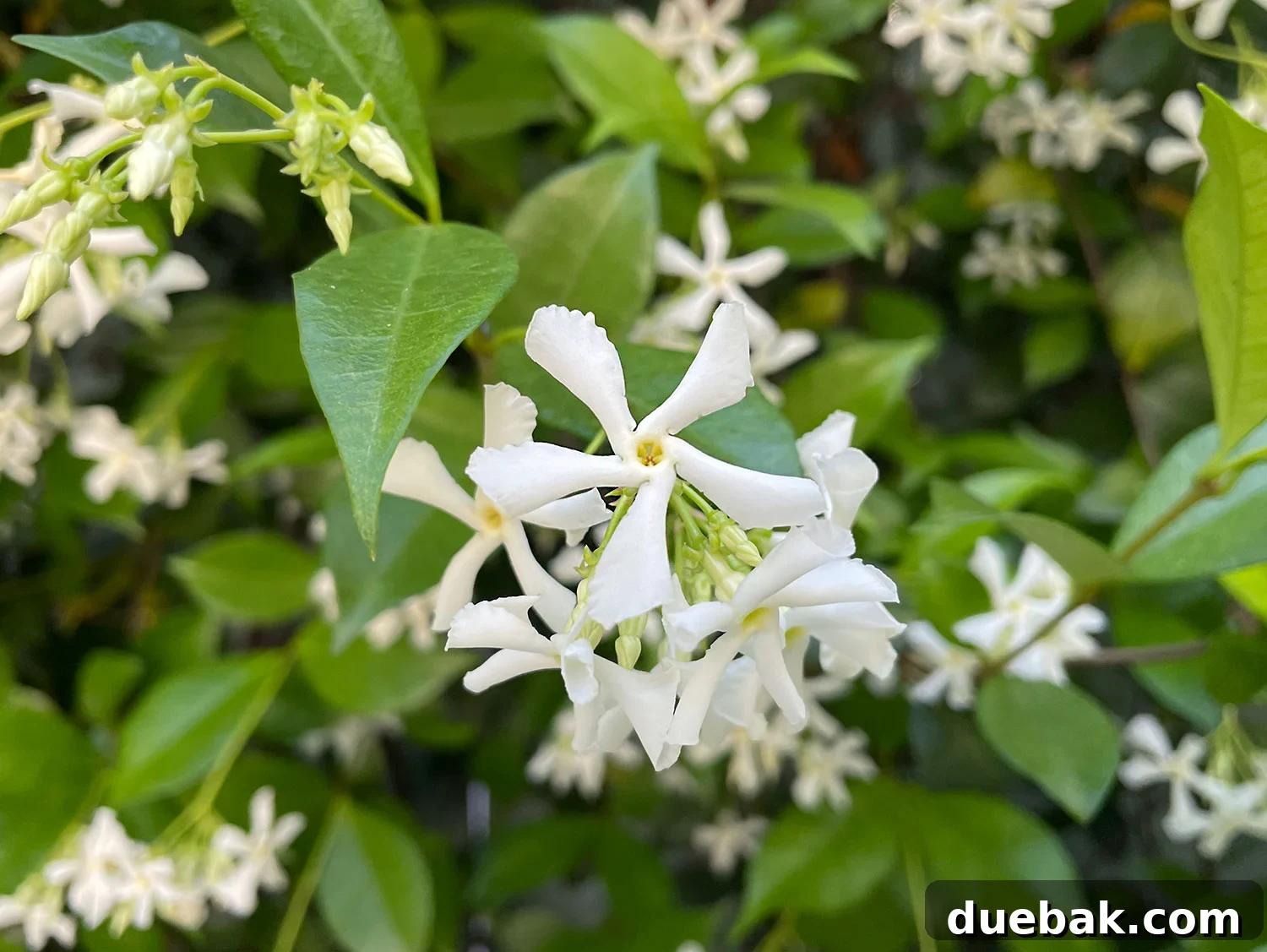
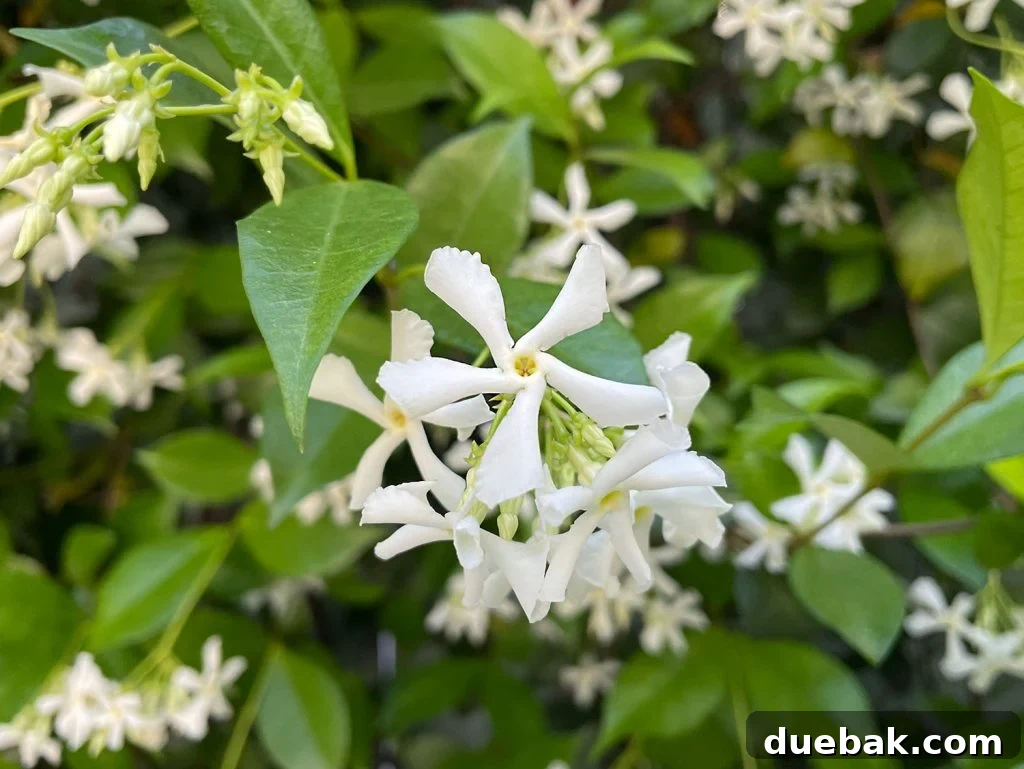
Star jasmine (Tracheelospermum jasminoides) stands out as an exceptionally versatile and captivating evergreen vine, cherished for its rapid growth, lush foliage, and intoxicatingly fragrant white blooms. Whether you’re seeking a dense ground cover, an elegant climbing vine to adorn your structures, or a sophisticated container plant, star jasmine delivers impressive coverage and privacy, transforming any space into a fragrant oasis. Its star-shaped flowers emerge in a spectacular display each spring, filling the air with a sweet, unforgettable perfume. Native to the lush landscapes of Asia, this resilient plant has found a second home in the warm, inviting climates of the Southeastern United States and various regions of California, where its ease of care makes it a favorite among gardeners. Discover why star jasmine is not just a plant, but a sensory experience and an effortless addition to nearly any landscape.
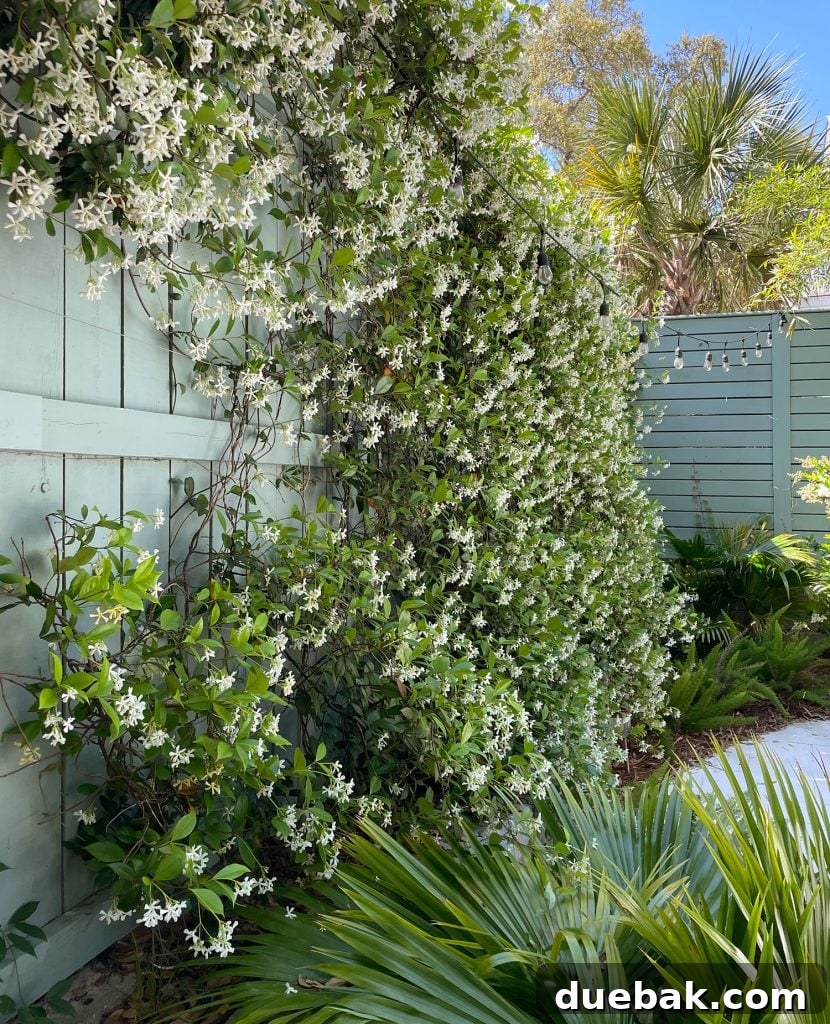
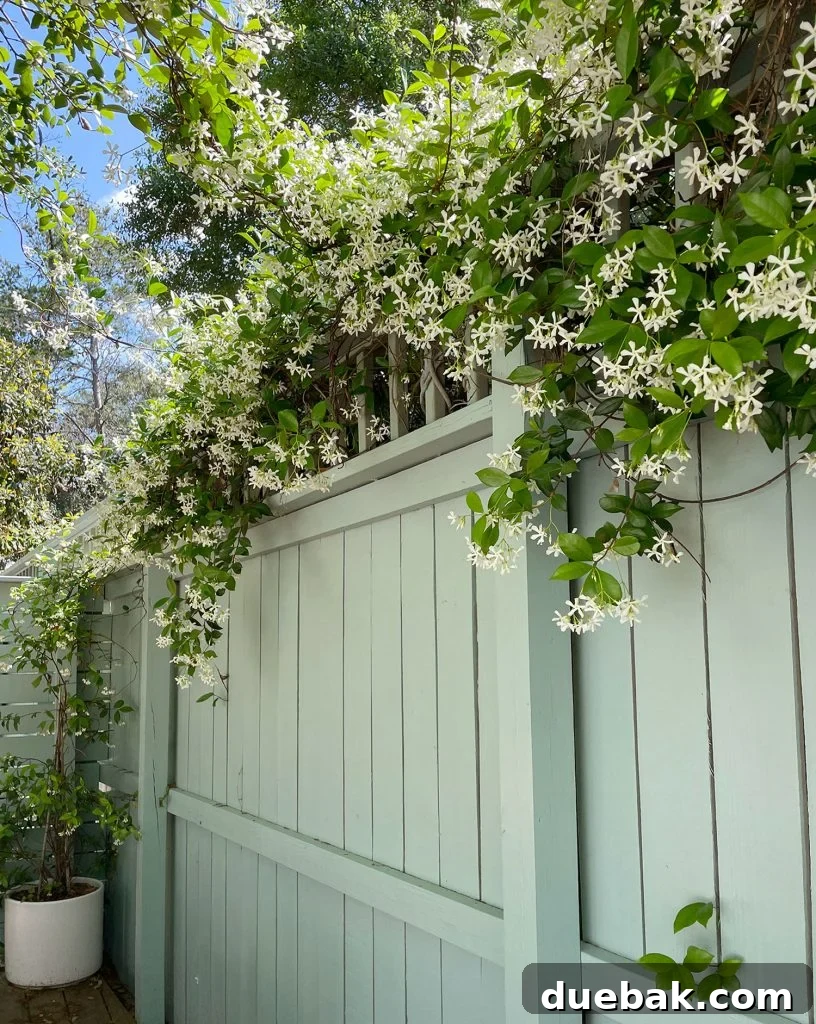
While star jasmine excels as a dense ground cover or a thriving container plant, its true grandeur often shines when utilized as a climbing vine. This application requires a supportive structure—be it a sturdy trellis, a graceful pergola, simple stakes, or even strategically placed wires on a wall. These structures are surprisingly easy to install or build. For inspiration, explore our DIY trellis tutorials, including a guide for a wire trellis on a wall and instructions for constructing a robust freestanding privacy trellis. Used this way, star jasmine creates an unrivaled living screen, providing both beauty and seclusion.
Table of Contents
Star Jasmine Quick Facts
For those eager to get acquainted with this magnificent plant, here’s a snapshot of essential information about star jasmine at a glance:
- Latin name: Trachelospermum jasminoides
- Plant type: Evergreen climbing vine
- Flowers: Small, star-shaped, pure white to creamy white blooms with an intensely sweet fragrance
- Bloom time: From mid-spring through early summer, varying slightly by region and climate
- Sun exposure: Thrives in full sun (6+ hours direct sunlight) but tolerates partial shade
- Growth rate: Fast-growing, typically adding 3 to 6 feet of new growth per year under ideal conditions
- Mature size: Can reach lengths of up to 20 feet as a climbing vine, with a spread of 1-2 feet. As ground cover, it spreads extensively.
- Soil: Prefers well-draining soil; adaptable to various soil types, ideally with a neutral to slightly acidic pH (6.0 – 7.0)
- Hardiness Zones: Suited for USDA Zones 8-12, tolerant of mild frosts
- Native area: Indigenous to regions of eastern and southeastern Asia
What Is Star Jasmine?
Star jasmine (Trachelospermum jasminoides) is an enduringly popular evergreen, woody climbing vine that, despite its common name and delightful fragrance, is not a “true” jasmine. While it shares many aesthetic and aromatic qualities with members of the Jasminum genus, such as their captivating scent, botanically, they belong to different families. True jasmines are part of the Oleaceae family, commonly known as the olive family. Star jasmine, on the other hand, is a proud member of the Apocynaceae family, often referred to as the Dogbanes. This diverse family also includes other well-known ornamental plants like oleander, milkweed, and frangipani, distinguishing star jasmine with its unique botanical lineage.
Botanical distinctions aside, star jasmine is an immensely popular outdoor plant, particularly celebrated in warmer climates within USDA Zones 8-12. Its widespread appeal stems from several desirable characteristics: its remarkably fast growth rate, its ability to remain verdant and attractive year-round, and its breathtaking proliferation of small, intensely fragrant flowers from early spring to early summer, depending on local conditions. These delicate blooms are typically pure white or creamy white, and their distinctive five-petal, star-like shape is the inspiration behind the plant’s common name. Historically, it was also known as Confederate jasmine or Southern jasmine, reflecting its widespread cultivation and popularity throughout the southeastern United States, where its beauty and hardiness have made it a garden staple.
How To Grow Star Jasmine
Cultivating vibrant star jasmine plants in your garden or landscape is surprisingly straightforward, with successful establishment largely dependent on thoughtful initial placement. Once rooted and thriving, these resilient vines demand surprisingly little ongoing attention or intensive care, beyond occasional pruning to maintain their desired shape and vigor. However, ensuring the right conditions from the start will set your star jasmine up for years of flourishing growth and spectacular blooms. Here’s a comprehensive guide to what you should keep in mind for optimal growth.
Sunlight
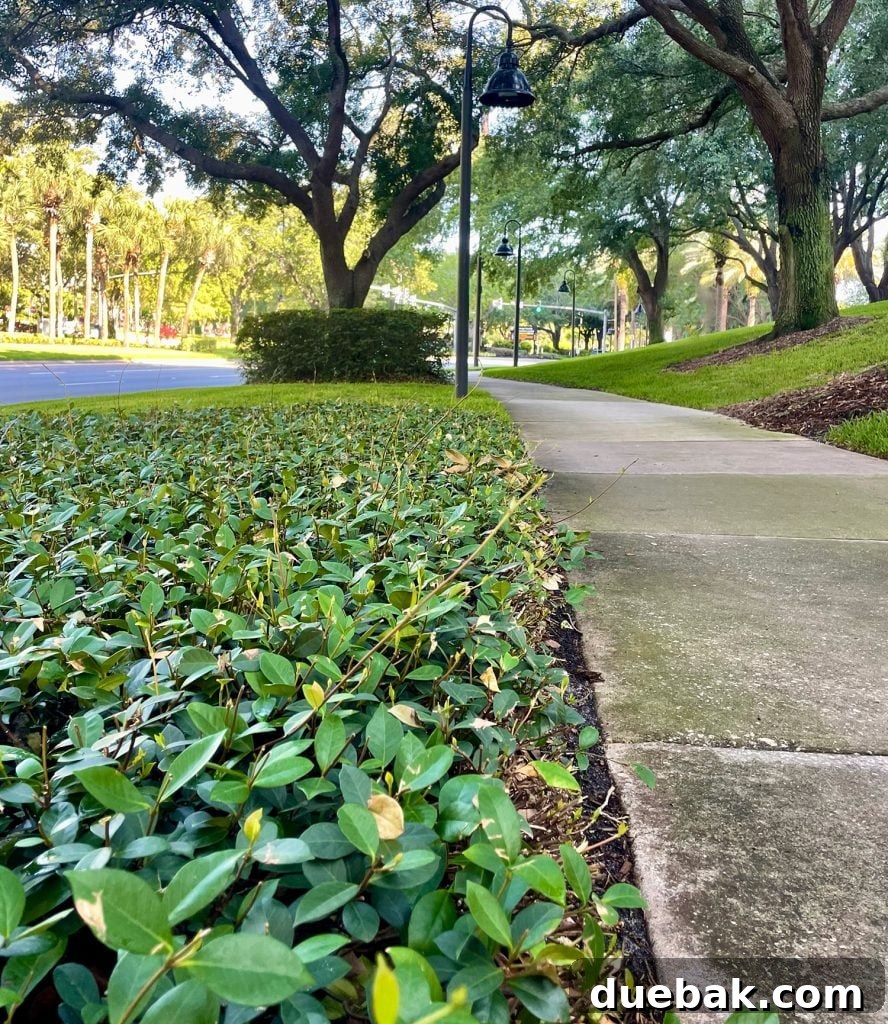
Star jasmine exhibits remarkable adaptability when it comes to sunlight exposure, thriving in a range of conditions. For the most prolific flowering and robust growth, it performs best in full sun, meaning at least 6 to 8 hours of direct sunlight per day. However, it also adapts well to partial shade, which can be particularly beneficial in regions with intense summer heat, offering some protection from scorching afternoon sun. In shadier locations, such as under the canopy of large trees where we’ve observed it growing, star jasmine will still establish and grow, but typically at a slower rate and with a reduced abundance of flowers. For the fastest and most impressive results, aim for areas that receive a minimum of 4 hours of direct sunlight daily, ensuring a beautiful balance of foliage and fragrant blooms.
Soil
Star jasmine is commendably unfussy about its soil conditions, demonstrating a broad tolerance for various types. Nevertheless, for optimal health and vigor, it truly flourishes in loamy, well-draining soil. The importance of good drainage cannot be overstated, as star jasmine dislikes sitting in soggy conditions, which can lead to root rot. Our experience in NW Florida, with its naturally sandy soil, confirms its adaptability; the plant grows exceptionally well here. When planting new specimens, we always make it a practice to amend the existing soil with standard garden soil or a good quality compost to enhance nutrient content and drainage, providing the best possible start. This vine also tolerates a range of soil pH levels, performing ideally in neutral to slightly acidic conditions, typically between 6.0 and 7.0.
Watering
Once established, star jasmine boasts a commendable drought tolerance, making it a relatively low-maintenance choice for many landscapes. However, consistent and regular watering is crucial during its initial establishment phase, typically throughout its first year, and particularly during its active growing seasons in spring and summer. For newly planted star jasmine, we recommend watering thoroughly every 2-4 days for the first few weeks to help roots settle, gradually reducing frequency to weekly for the subsequent months. After it has firmly established its root system, supplemental watering is generally only necessary during prolonged dry spells or periods of extreme heat. It is vital to avoid overwatering, especially for plants grown in containers, as star jasmine absolutely dislikes having its roots sit in consistently wet soil, which can quickly lead to problems like root rot. Always ensure the soil has a chance to dry out slightly between waterings.
Containers
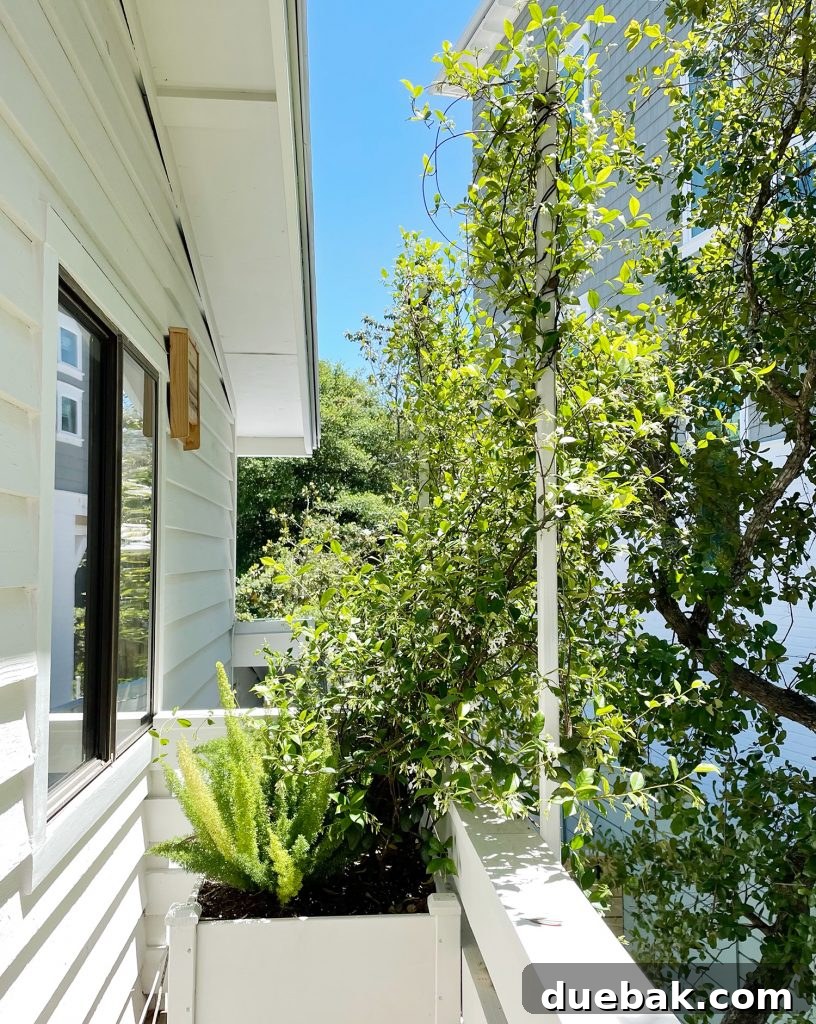
This hardy and adaptable vine demonstrates incredible flexibility in its growth habit, thriving equally well when planted directly in the ground or cultivated in large containers. We have successfully grown star jasmine in both scenarios, observing comparable vigor and beauty. Container gardening offers a fantastic opportunity to enjoy star jasmine on porches, patios, near fences, or beneath pergolas, allowing for controlled growth and placement. When choosing a container, ensure it is sufficiently large to accommodate the root system and, crucially, has adequate drainage holes to prevent waterlogging. Potting mix should be well-draining, similar to its in-ground soil preference. You can even see some of our container-grown star jasmine on our backyard deck. We’ve also utilized it ingeniously by planting it in a raised planter box to create an effective privacy trellis on our upstairs deck, showcasing its capacity to serve both decorative and functional purposes in confined or elevated spaces.
Temperature and Humidity
Star jasmine is ideally suited for moderate to warm climates, flourishing particularly well within USDA Hardiness Zones 8-12, where it also benefits from higher levels of humidity. You can easily determine your specific zone by entering your zip code on the USDA website. While it thrives and blooms most prolifically in temperatures ranging from 60-75ºF (15-24ºC), it demonstrates a surprising resilience, capable of surviving brief drops in temperature as low as 10ºF (-12ºC). However, prolonged exposure to freezing temperatures can cause damage. For instance, we regrettably lost a few vines during the severe 2022 cold snap, which saw several consecutive days in the mid-teens. Despite some browning and leaf drop, it’s worth noting that the majority of our plants fully recovered and burst back into life by the following spring, showcasing their inherent hardiness. In colder zones, consider growing it in containers that can be moved indoors during winter, or provide ample protection with mulch and frost cloths.
Star Jasmine Growth: Before & After
Patience is a virtue when it comes to establishing star jasmine, as the plant can appear a bit scraggly or sparse during its first year or two while it establishes a robust root system. We recently experienced this firsthand when planting a new vine on a wire trellis in our backyard, replacing a beautiful but ultimately finicky bougainvillea that succumbed to a cold snap. In its initial stage, we carefully stretched and wrapped the young vines along the trellis to encourage upward and outward growth, aiming for full coverage over time. While it blossomed, its appearance remained somewhat sparse, a common sight for newly planted specimens.
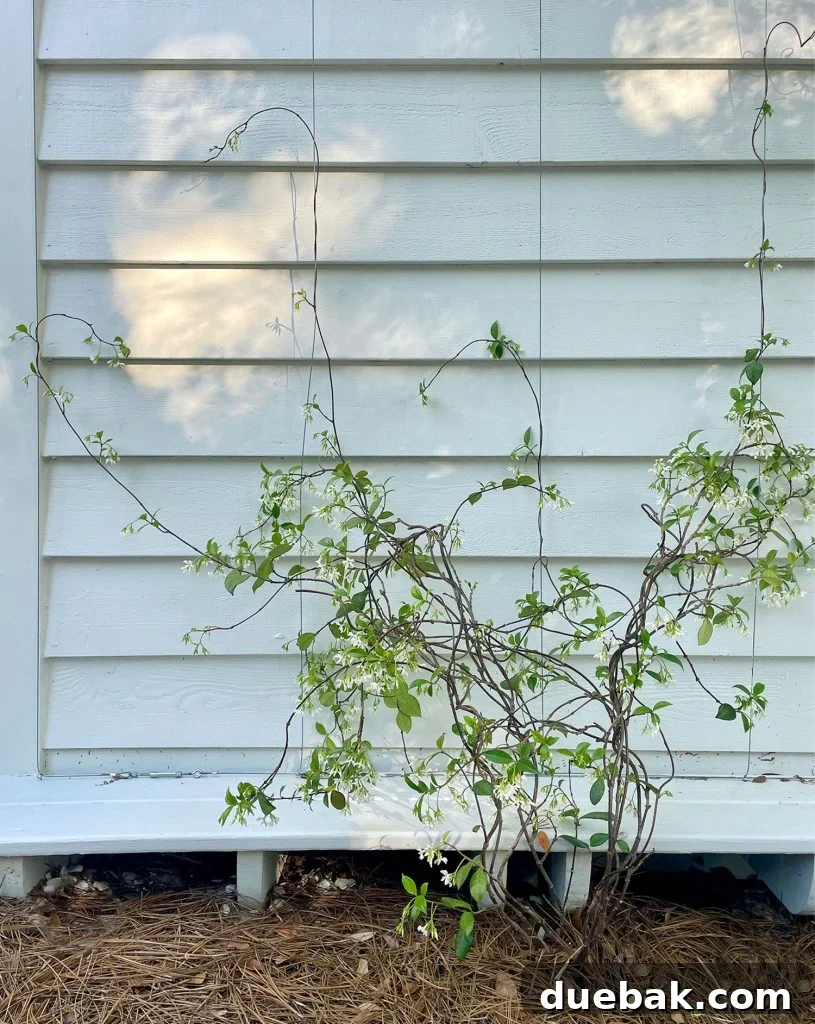
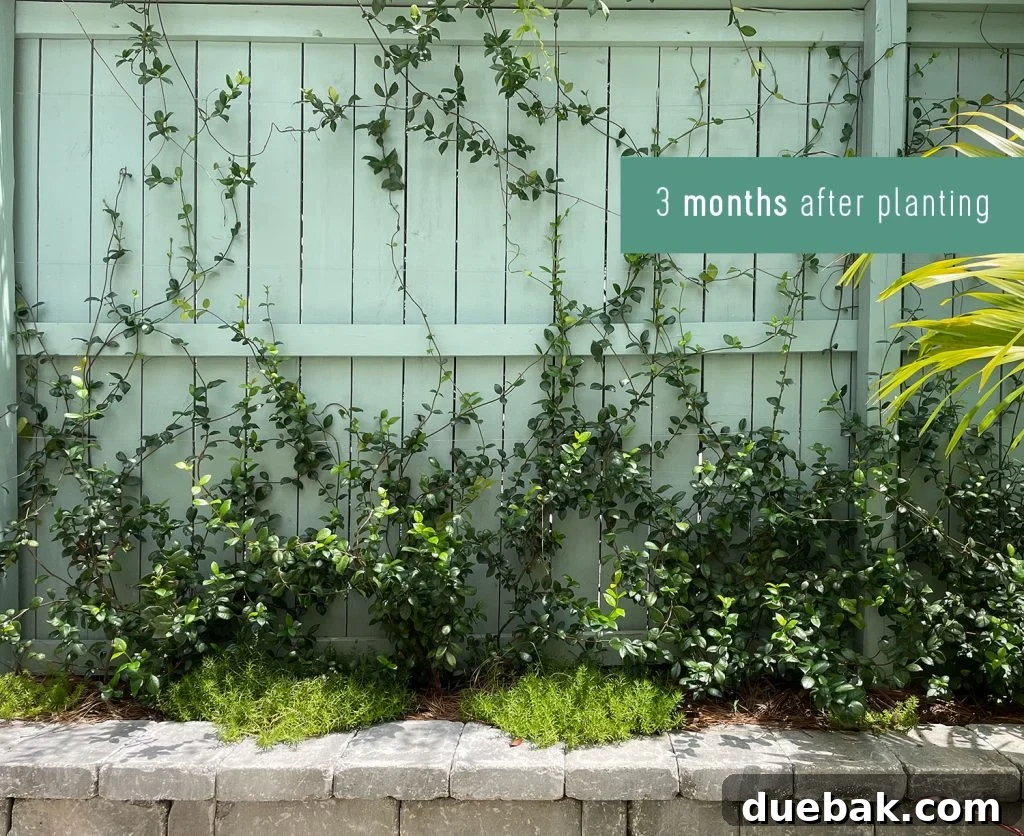
However, we can attest that patience with star jasmine is profoundly rewarded! To illustrate its remarkable transformation, consider the dramatic before & after comparison of the star jasmine we planted behind our pool. We carefully set it into the narrow strip of soil above our retaining wall, inspired by our neighbors’ star jasmine already gracefully cascading over the shared fence. We were eager to join the “jasmine party” and create our own fragrant green wall. You can find more images of this area in our pool’s before & after feature, but below you’ll see how it looked approximately three months after initial planting.
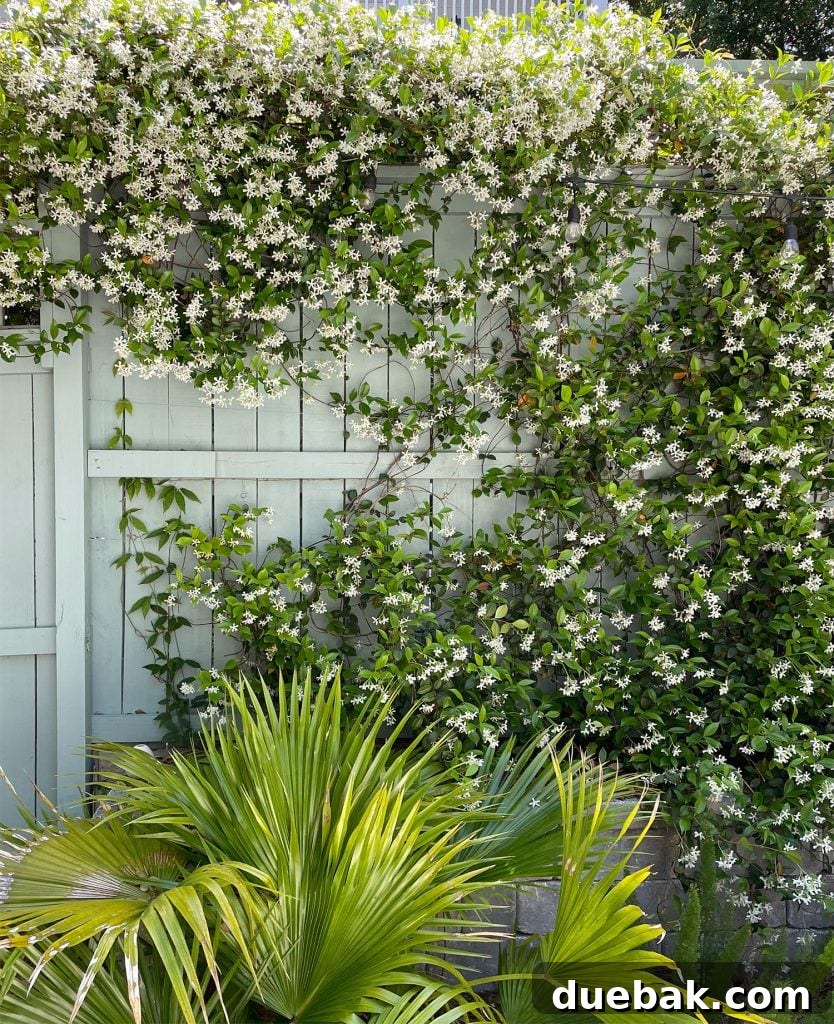
Now, feast your eyes on what that same space looks like roughly three years later. The transformation is truly astonishing – you might not believe it’s the same spot!
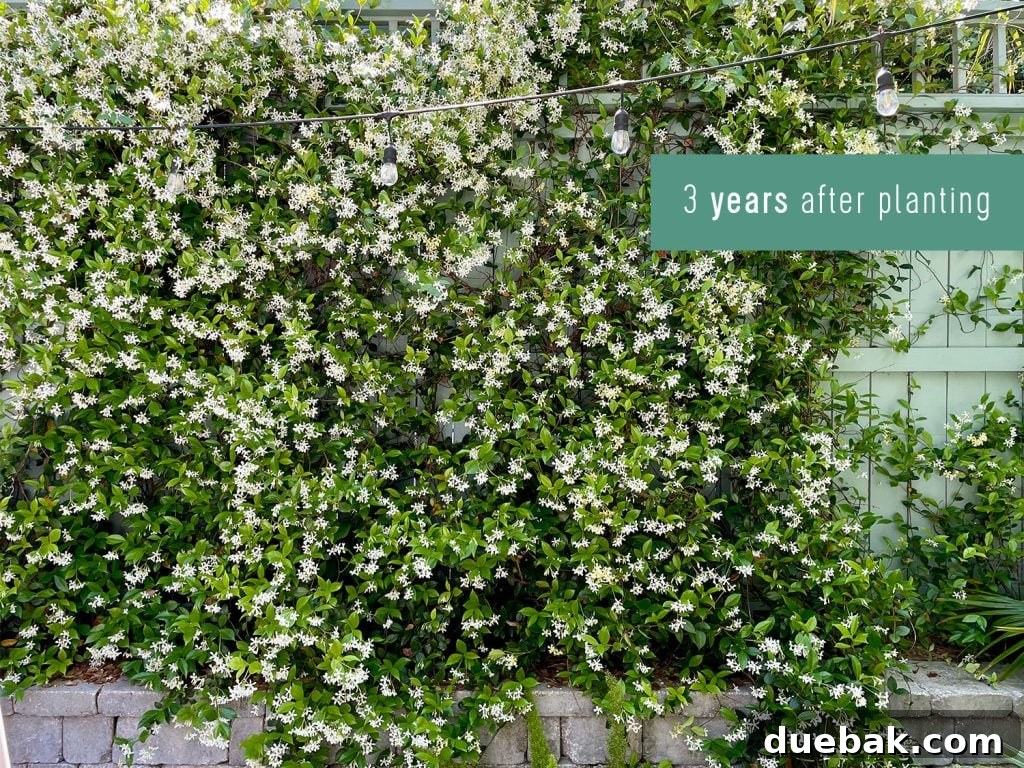
To aid the vines in their vertical ascent, we strategically installed several wires across the back of the fence. During the first year or two, we diligently guided and manually wrapped the nascent vines to encourage upward rather than outward growth. This process was surprisingly easy and even enjoyable, watching the plant take shape. The old gardening adage suggests that in its first year, a plant “sleeps,” in the second year it “creeps,” and in the third year, it “leaps.” However, star jasmine, with its remarkably fast growth rate, often starts leaping by the second year itself! So, you won’t have to wait an eternity to witness its magnificent development, especially if it’s planted in a sunny, favorable location. The rewards are well worth the initial guidance.
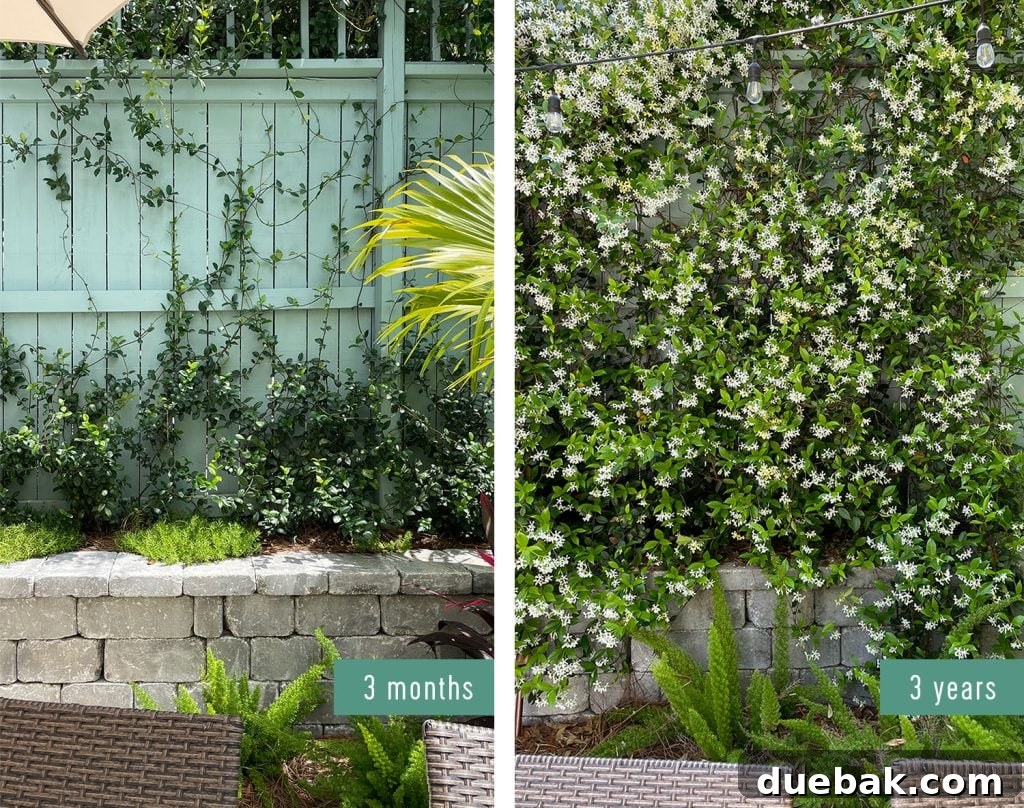
This verdant wall of star jasmine has become an absolute highlight in our backyard. For most of the year, its dense, dark green foliage creates the appearance of a solid, living hedge, retaining its beauty even through the winter months. But it is in the spring, when it erupts into a cascade of fragrant white flowers, that it truly shines. The sweet, heady scent is absolutely amazing, perfuming the entire backyard and creating an enchanting atmosphere. What makes this plant even more delightful is its low-maintenance nature once established, requiring minimal fuss for such a spectacular display. It truly is a plant that gives back endlessly.
Star Jasmine Care
Once your star jasmine has successfully established its root system and begun to thrive, you’ll find that it demands surprisingly little in terms of regular care. This makes it an ideal choice for gardeners seeking high impact with minimal effort. Here are the primary maintenance tasks we undertake to keep our star jasmine healthy, beautiful, and flourishing:
- Pruning: While star jasmine is a vigorous grower, occasional pruning is essential to control its overall growth, manage its size, and maintain a desirable shape. The best time to undertake significant pruning is after its spectacular flowering season has concluded, typically in late spring or early summer. Always use clean, sharp clippers to make precise cuts and prevent the spread of disease. You can also remove any dead, damaged, or diseased vines at any point throughout the year to keep the plant healthy. Be aware that the plant excretes a milky white sap when cut, which can be sticky and mildly irritating to some people’s skin. It’s advisable to wear gloves and long sleeves when pruning to protect your skin.
- Fertilizing: In many cases, especially when planted in good soil, star jasmine does not strictly require fertilization. We haven’t found it necessary to fertilize any of our established jasmine plants. However, if your soil is poor, or if you notice a lack of vigor or sparse flowering, some gardeners choose to use a balanced, slow-release granular fertilizer to encourage more robust growth and bloom production. If you decide to fertilize, the optimal time to apply it is just before the active growing season begins in early spring, in anticipation of its flowering period. Avoid over-fertilizing, as this can lead to excessive foliage growth at the expense of flowers.
- Watering (Established Plants): As mentioned, established star jasmine plants are quite drought-tolerant. In most climates, natural rainfall will suffice to meet their watering needs. However, if your area experiences prolonged periods of drought, or during extended dry spells with high temperatures, supplemental watering will be beneficial. We typically provide our jasmine with a deep watering once a week during such dry periods, similar to how we care for our other outdoor plants. Deep watering encourages the roots to grow further down into the soil, making the plant more resilient to future dry conditions. Always check the soil moisture before watering to prevent over-saturation.
Other Star Jasmine FAQs
Curious about more specific aspects of star jasmine? Here are answers to some of the most frequently asked questions about this beloved plant.
Is star jasmine poisonous to dogs?
Good news for pet owners! The ASPCA (American Society for the Prevention of Cruelty to Animals) officially lists star jasmine as non-toxic to both cats and dogs. This makes it a safe and beautiful addition to gardens where curious pets might roam. However, it’s worth reiterating that the milky white sap excreted from a cut vine or stem can be mildly irritating to some people’s skin, so exercise caution during pruning.
Does star jasmine attract bees?
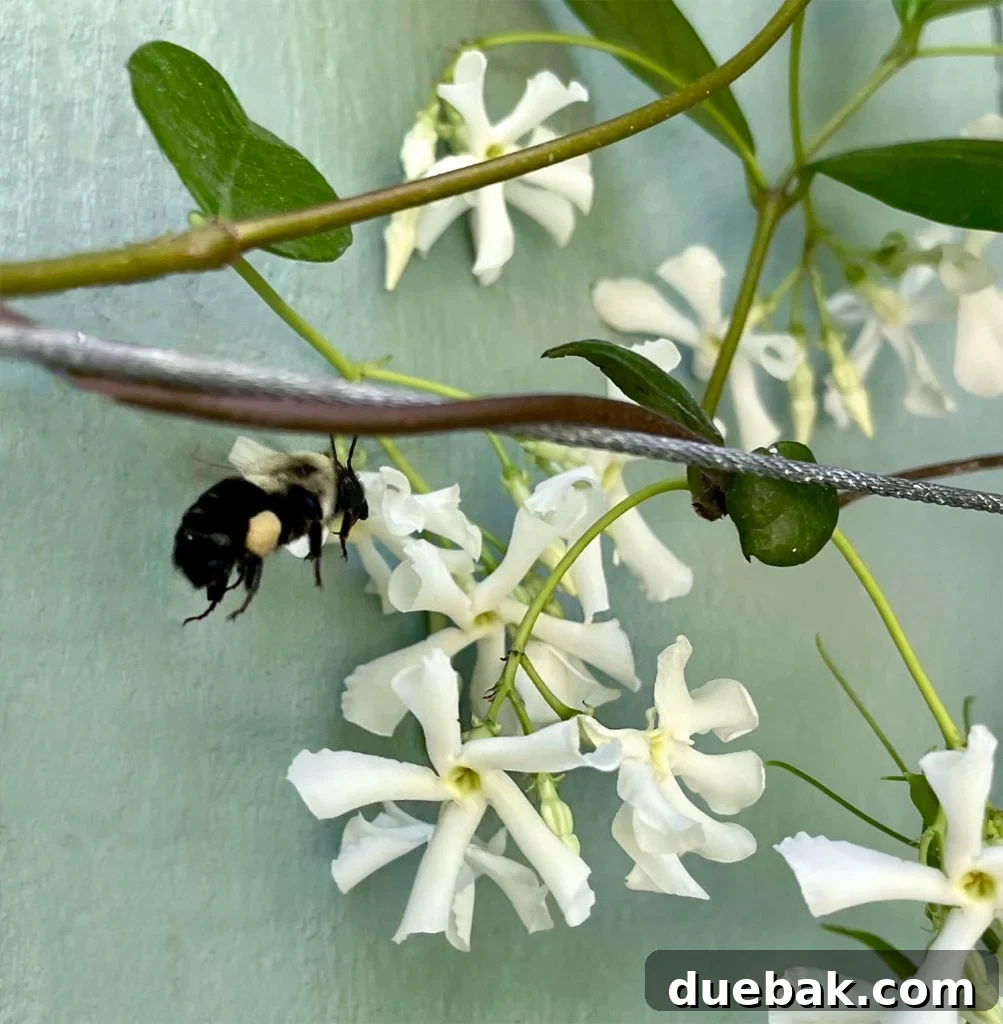
Absolutely! Star jasmine is a fantastic choice for attracting a diverse array of pollinators to your garden. Its strong, sweet-smelling flowers, produced in abundance, are highly appealing to bees, which are drawn to its nectar and pollen. Beyond bees, star jasmine is also known to attract hummingbirds, adding another layer of lively activity and natural beauty to your outdoor space. If you’re looking to support local ecosystems and encourage more beneficial insects and birds into your garden, this fragrant vine is an excellent and effective addition.
Is star jasmine invasive?
Star jasmine is characterized by its vigorous growth habit, whether it’s climbing enthusiastically or spreading rapidly as a ground cover. Because of this strong growth, some gardeners might consider it “aggressive” or potentially “invasive” in the context of it spreading beyond desired boundaries, especially when used as a ground cover. To maintain control and prevent it from encroaching on other areas, regular pruning and trimming are often necessary. A key advantage, however, is that these vines do not possess adhesive aerial roots or suction cups; instead, they twine around structures or themselves. This characteristic makes them relatively easy to remove or redirect from surfaces or areas where their presence is unwanted, simplifying maintenance compared to truly invasive plants that cling permanently.
Is star jasmine deer-resistant?
Yes, star jasmine is generally considered to be deer-resistant. Deer tend to shy away from plants with strong fragrances or specific textures, and the robust scent of star jasmine typically deters them. This makes it a popular choice for gardens located in areas prone to deer browsing, offering a beautiful and less vulnerable option. However, it’s always important to remember the caveat that if deer are sufficiently hungry, they will eat almost anything, including plants they typically avoid. While not 100% foolproof, it’s a reliable choice for reducing deer damage in your landscape.
Are jasmine and star jasmine the same thing?
Despite their shared common name and wonderfully fragrant flowers, jasmine and star jasmine are not the same plant. They are, in fact, entirely distinct botanical species belonging to different plant families and genera. True jasmines are members of the family Oleaceae (the olive family) and belong to the genus Jasminum. Star jasmine, scientifically known as Trachelospermum jasminoides, is classified within the family Apocynaceae, commonly referred to as the Dogbane family, and its genus is Trachelospermum. This botanical classification places star jasmine as a more distant relative to plants like milkweed, natal plum, frangipani, and oleander, rather than to true jasmines. While both offer delightful scents and beautiful blooms, understanding this distinction is key for accurate plant identification and care.
More Plants We Love
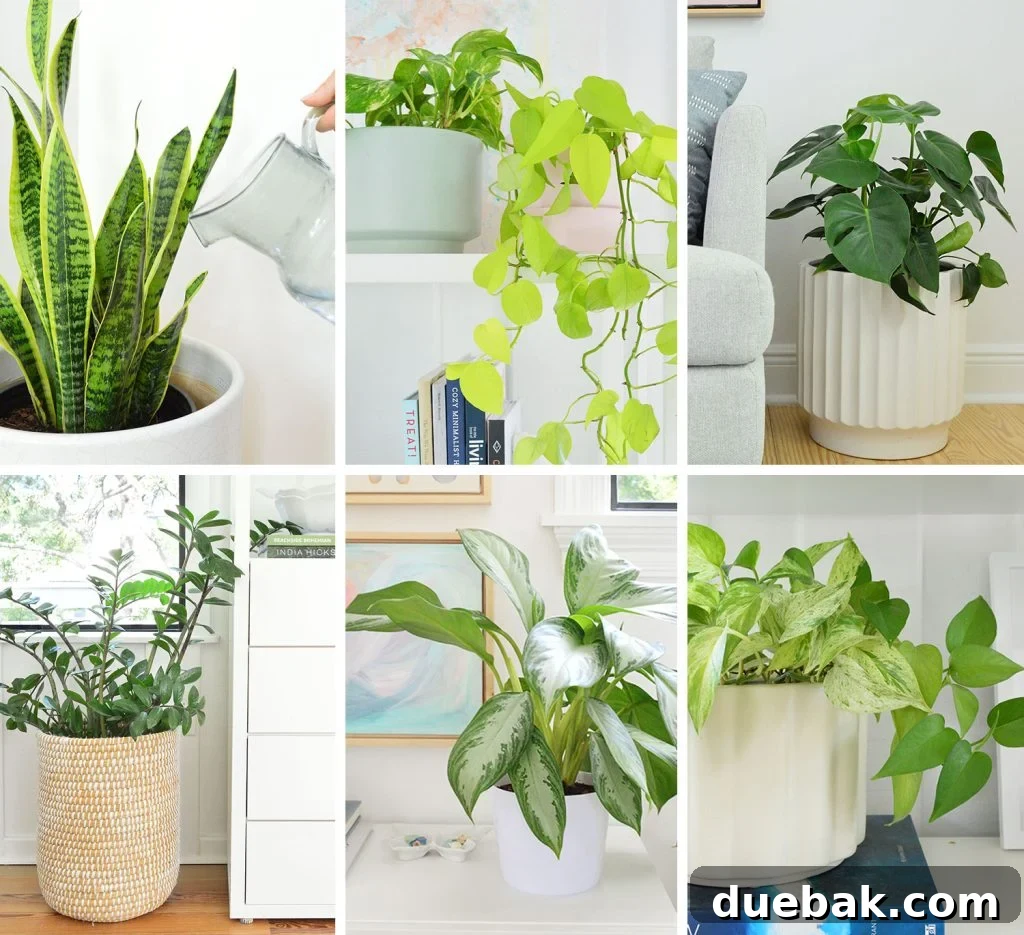
If you’re eager to expand your green thumb knowledge and explore more of our favorite plants and gardening projects, delve into some of these insightful posts below:
- Best Low-Light Houseplants
- Best Air Purifying Indoor Plants
- Golden Pothos Care Guide
- Marble Queen Pothos Care Guide
- Neon Pothos Care Guide
- Corn Plant Care Guide
- Aglaonema Plant Care Guide
- Monstera Deliciosa Care Guide
- Snake Plant Care Guide
- Fiddle Leaf Fig Care Guide
- Tree Philodendron Care Guide
- How to Build An Easy Plant Shelf
- Make A DIY Wire Trellis
- Protecting Outdoor Plants In A Deep Freeze
*This post contains affiliate links, so we may earn a small commission when you make a purchase through links on our site at no additional cost to you.