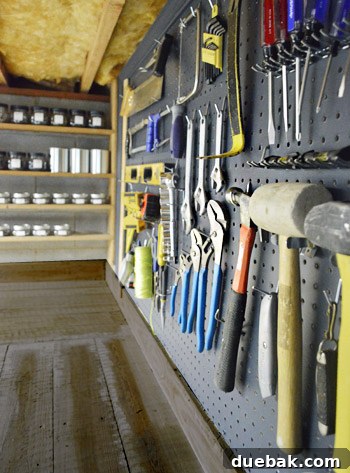
Welcome to a journey of transformation, where we tackle the often-overlooked and sometimes overwhelming depths of our basement workshop. For many homeowners, the basement becomes a catch-all space, a repository for forgotten items, and a testament to good intentions that often gather dust. But what if this neglected area could be reimagined as a highly functional, aesthetically pleasing creative hub? That’s precisely our mission today as we dive into a significant home improvement project: revamping our basement workshop, starting with the bane of many DIYers – the paint collection – and elevating our essential tool storage with a stylish pegboard makeover. Let’s pick up right where we left off, addressing the chaotic reality of our current storage situation.
Taming the Paint Can Chaos: A Shelf Transformation
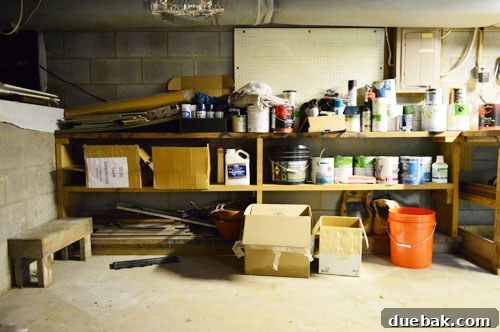
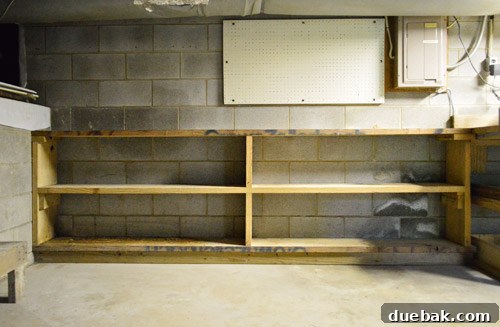
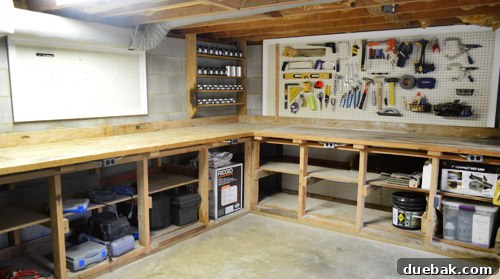
For far too long, this shelf has been the designated, albeit disheveled, home for an ever-growing collection of paint cans and various paint-related items. It has functioned as the absolute antithesis of organization, a stark reminder of tasks undone for nearly two years since we moved into this home. Truth be told, it even housed several boxes of items that remained stubbornly unpacked, a testament to the pervasive clutter. The sight of it alone was enough to induce a mild panic attack for any organization enthusiast. This chaos wasn’t just unsightly; it was inefficient, making it nearly impossible to find the right shade or type of paint when inspiration struck. We knew this state of affairs couldn’t continue if we wanted our basement to serve as a truly productive workspace.
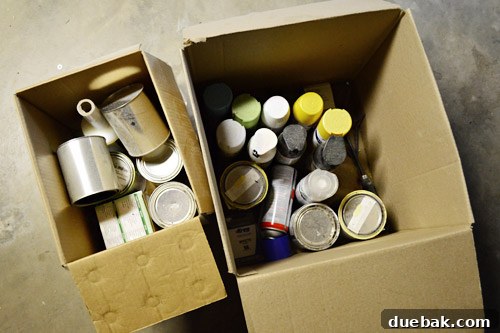
Our journey began with a complete overhaul of this unruly shelf. The first, and most crucial, step was to remove every single item, effectively creating a blank canvas. This critical initial phase allowed us to achieve two vital objectives: first, to thoroughly dust and clean the shelves, eliminating years of accumulated grime; and second, to conduct a comprehensive inventory of what truly belonged there versus what was simply occupying valuable space. We meticulously sorted through the items, separating legitimate paint supplies from miscellaneous clutter, empty containers, and those two-year-old unpacked boxes. It was astonishing how much detritus had accumulated, disguised as necessary items. Many empty or nearly empty paint cans, and those long-forgotten boxes, were finally broken down and sent to the recycling bin, marking a significant milestone in our decluttering efforts.
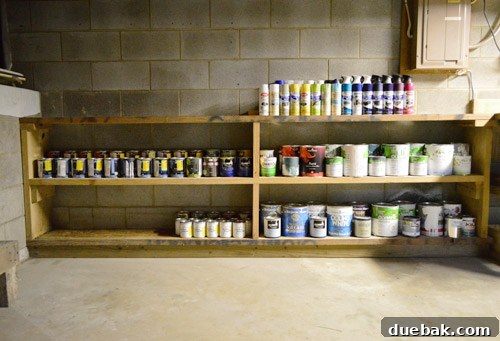
Within a mere thirty minutes, the transformation was already remarkable. The once overflowing shelves began to take on a semblance of order. All non-paint related items, such as bags of grout, polymeric sand, and other miscellaneous DIY essentials, were relocated to their designated spots on other shelves within the larger workshop area, specifically under the main workbench. This strategic reorganization ensured that this particular zone could be dedicated exclusively to paint, primer, and stain. Our extensive collection of these items, accumulated over numerous projects and book photoshoots, necessitated a focused and efficient storage solution. The left side of the shelf, in particular, became a neatly arranged display of quart and tester-sized cans, predominantly leftovers from past creative endeavors.
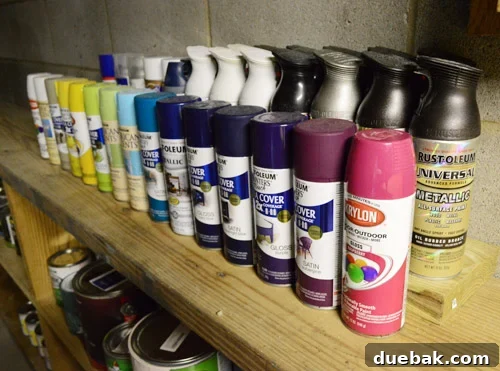
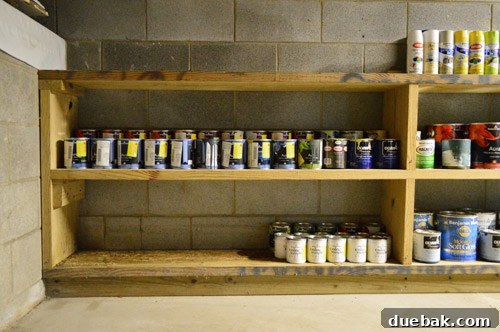
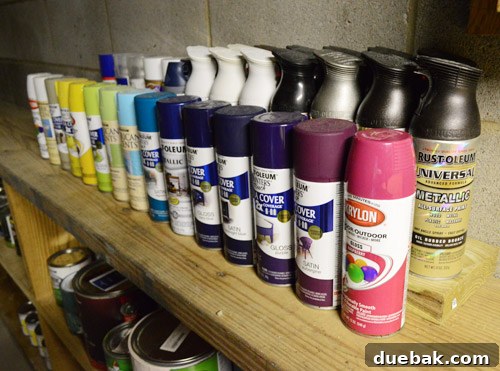
Achieving this level of visual organization, especially for items like paint cans, can be tricky. A simple yet incredibly effective trick we employed was creating a “tiered” effect for better visibility. This was easily accomplished by placing a spare piece of 2×6 scrap wood under the back row of paint cans. This slight elevation allowed us to effortlessly see the labels and colors of all cans, preventing the frustration of rummaging through rows to find a specific shade. This ingenious solution is particularly helpful for our extensive spray paint collection, which now boasts nearly every color of the rainbow – a spectrum we can partially attribute to various book projects. This practical approach not only enhances the aesthetics of the shelf but significantly improves its functionality, saving valuable time during future projects.
While this current paint storage system is undoubtedly more manageable and sustainable than our previous, more elaborate method – which involved repackaging and meticulously labeling every single leftover paint can – it still represents a significant improvement. Our past system, though admirable in its ambition, proved too time-consuming to maintain as new paints were acquired and projects progressed. We’ve learned that sometimes, simplicity and practicality trump overly complex solutions. The goal here is efficient access and clarity, not a museum-level exhibit. However, reflecting on the sheer dedication of that previous system still brings a nostalgic warmth, reminding us of the peak of our organizational prowess. #thosewerethedays.
Now, with our paint collection somewhat tamed, let’s put some of that leftover paint to good use. We’re about to embark on another exciting mini-project, one that will not only utilize some of our surplus paint but also dramatically elevate the aesthetics and functionality of another key workshop element. Can you guess what’s about to receive a splash of color and a touch of refinement? A hint: it’s a DIY staple for tool organization.
Elevating Utility: The Pegboard Makeover
Before dipping into the paint, we decided to give our functional but plain pegboard a much-needed upgrade by adding a simple frame. This subtle addition, created using some scrap wood and about $10 worth of new materials, promises to transform the pegboard from a mere utility panel into a more integrated and polished design feature within the workshop. Pegboards are fantastic for keeping tools visible and accessible, but their raw edges can often detract from a cohesive aesthetic. A frame, we reasoned, would bridge that gap, giving the entire setup a more intentional and finished look. After all, aren’t these meticulously organized tools, each in its place, a peculiar yet undeniable form of functional art?
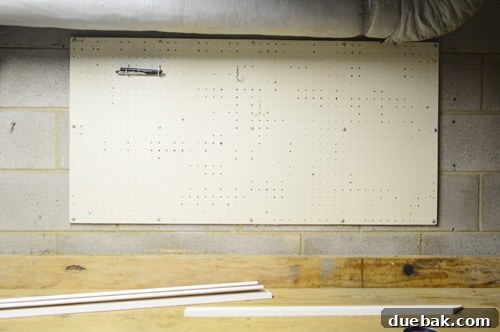
The framing process itself was straightforward. We carefully measured and cut the wood pieces to create a snug border around the pegboard. The goal was to enhance its appearance without impeding its core function. We strategically opted to frame only three sides of the larger pegboard. This decision was practical: one edge naturally aligned perfectly with the existing work surface, and with our yardstick designed to overlap that specific section, a frame there would have been redundant. Attaching the frame was simple, requiring just a few strategically placed finish nails to secure the wood pieces to the pegboard. This quick and affordable step was already making a noticeable difference, hinting at the sophisticated outcome to come.
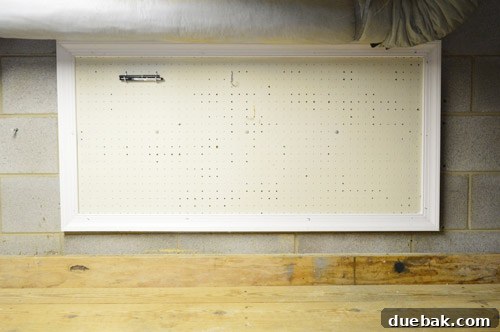
With the frames now complete on both the larger and smaller pegboards, the transformation was visibly underway. The once stark panels instantly gained a sense of purpose and polish. While the smaller board currently holds only a solitary pen, awaiting its full complement of tools, its framed presence already feels more intentional. Rest assured, we’ll be sure to share updates once that pegboard too, reaches its full organizational potential. These frames, even unpainted, provided the perfect precursor to the next, most impactful step of this makeover: introducing color.
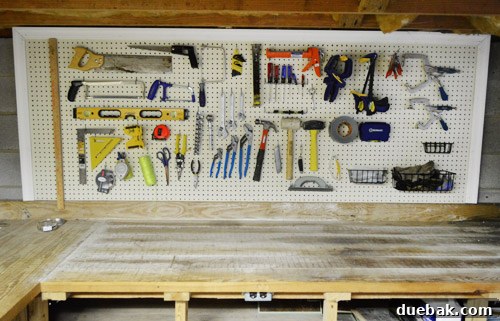
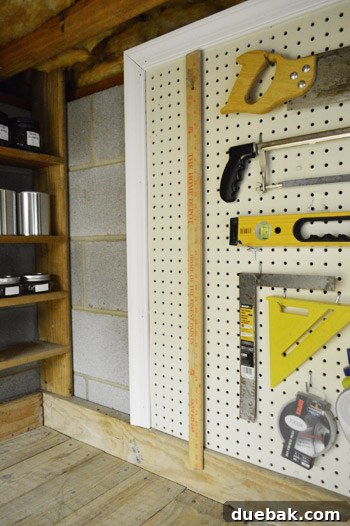
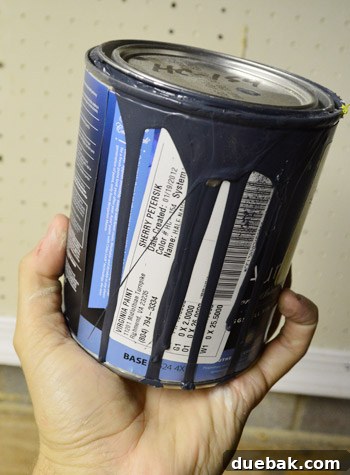
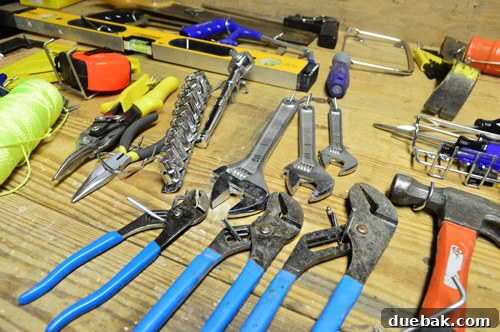
The choice of paint was crucial. From our extensive collection of leftover paints, we unanimously selected Hale Navy by Benjamin Moore. This sophisticated dark blue, previously used in a notable project showcased on page 287 of our book, has captivated us ever since. Its deep, muted tone promised to bring a refined yet masculine quality to the workshop, transforming the utilitarian pegboard into a focal point. Before applying any paint, we systematically removed all tools from the pegboard. To ensure an easy reassembly, we carefully laid out each tool, keeping its corresponding hook right alongside it. This meticulous approach prevented any confusion when it came time to return everything to its rightful spot. Many often wonder why we didn’t paint the pegboard before arranging tools. Our reasoning was simple: we wanted to observe the tool arrangement first. This allowed us to confirm that a full, dark background was indeed the best choice, rather than opting for a pattern or partial coverage. The tools, in their organized state, were already visually striking, and a strong, unifying background would only enhance their presence.
Applying the paint required a delicate touch to avoid clogging the pegboard holes, which would compromise its functionality. We opted for a small foam roller, applying the Hale Navy in thin, even coats. This technique ensured smooth coverage without gumming up the holes. While some holes were already slightly clogged from a previous white paint application, they remained entirely functional, easily cleared by simply inserting a peg. The dark, manly background immediately began to take shape, providing a striking contrast against the future display of tools. We consciously decided against outlining each tool’s position, a common pegboard organization technique. Our preference for flexibility means we can easily add new tools or rearrange existing ones as our needs evolve, without being constrained by fixed outlines. This adaptability is, in our opinion, one of the greatest strengths of a well-utilized pegboard system.
After the first coat, the large pegboard already showed significant promise. The Hale Navy began to transform the raw wood into a sophisticated backdrop. Notably, we painted the newly added trim in the same color, creating a seamless and integrated look. This decision was deliberate, aiming for a cohesive aesthetic that would make the pegboard appear as a singular, well-designed unit rather than a utilitarian panel with an added frame. The initial coat, while not perfect, provided a solid foundation for the depth and richness that would emerge with subsequent applications. The subtle distinction of the dark trim against the pegboard’s dark background added a layer of understated elegance, defying the typical expectations of a basement workshop.
Once two coats of paint were applied and thoroughly dry, both pegboards displayed their full transformation. The difference was stark and utterly satisfying. Although the challenging lighting conditions in the room might make one board appear splotchy or a different shade in photographs, in person, both panels exhibited the same consistent, beautifully even coat of Hale Navy. It’s a common trick of light in basements, but the true color is a deep, muted navy, unmistakably rich and sophisticated. Keeping the frames the same color as the pegboard was key to achieving this refined look. It prevented a high-contrast, stark border, instead creating a subtle, sophisticated integration that makes the entire piece feel thoughtfully designed. Who knew a basement pegboard could evoke such a sense of style?
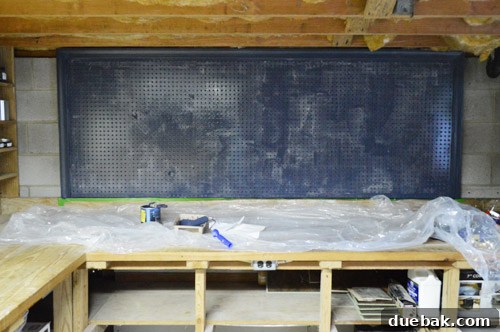
The true beauty of the Hale Navy became evident in better lighting. It’s a color that is distinctly navy but possesses an incredible depth and a muted quality that prevents it from feeling overpowering. This choice of paint, combined with the monochromatic framing, resulted in a finished product that is far more sophisticated than a simple utilitarian tool board. The technique of applying thin coats with a foam roller proved successful; the holes remained perfectly functional, with only minimal effort required to clear any previously clogged ones. This small detail ensures that the pegboard’s core purpose—efficient tool storage—is fully preserved, even enhanced by its new aesthetic. The final result is a workspace feature that is both highly practical and visually appealing.
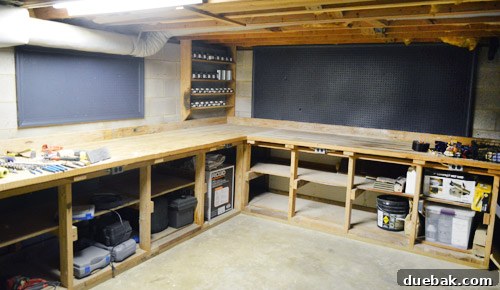
With the paint completely dry, the moment arrived to return the tools to their freshly painted home. The transformation was complete, and the impact was immediate. For an estimated investment of just $15 for trim materials (assuming you don’t have scrap wood readily available) and another $15 for a quart of paint (if you don’t have leftovers like us), your basement workshop can undergo a similar revitalization. This affordable upgrade not only enhances the visual appeal of the space but also elevates its perceived value and user experience. It proves that significant improvements don’t always require a hefty budget or complex construction. Sometimes, all it takes is a fresh perspective and a thoughtful application of color and structure to truly bring a space to life.
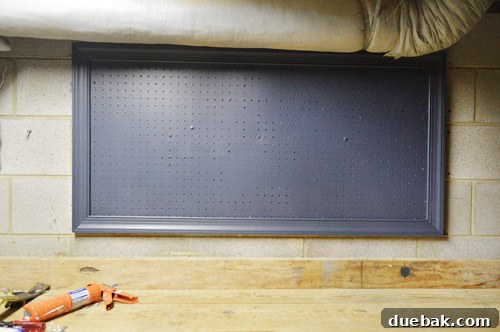
And with that, our appreciation for the humble pegboard reached new heights. The addition of paint, though a simple touch, had a profound effect—it instilled a sense of “cared-for” ownership in the room. This phenomenon happens every time fresh paint is applied: the space begins to feel more like *ours*, less like a remnant of previous occupants. It’s an essential part of making a house truly feel like a home. This revitalized energy is already sparking ideas for our next basement project. We’re envisioning staining some of the existing wood elements in the room. A deeper, richer color could introduce much-needed contrast and warmth, further enhancing the overall aesthetic and completing the transformation of this once-neglected space. Just imagine the impact, much like this Photoshop rendition suggests…
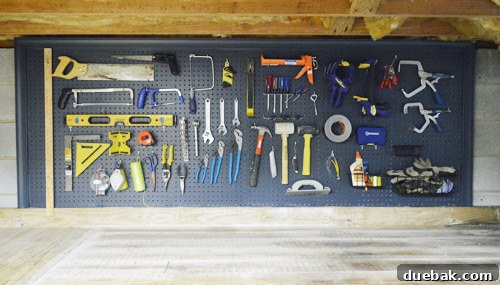
Indeed, the transformation is truly inspiring, making the pegboard not just a storage solution but a statement piece within the workshop. It showcases how functional elements can also contribute significantly to the overall design and feel of a space.
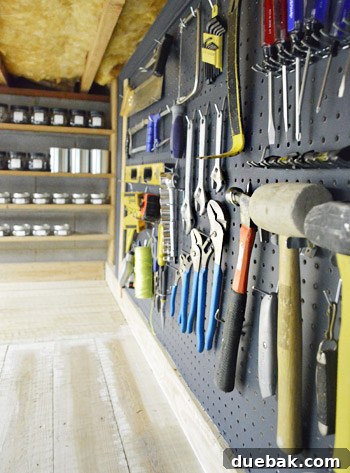
Thanks to the magic of Photoshop, envisioning the stained wood is effortlessly smooth. If only real-life staining were as quick and easy! We’ll certainly keep you updated on that next big project. What home improvement endeavors are you currently tackling? Are you embarking on any basement or garage upgrades? Has your love affair with pegboards grown stronger recently? Or perhaps, like us, you’re contemplating joining “Painters Anonymous” given the sheer volume of paint cans and spray bottles in your arsenal? It certainly feels like a necessary intervention sometimes!