
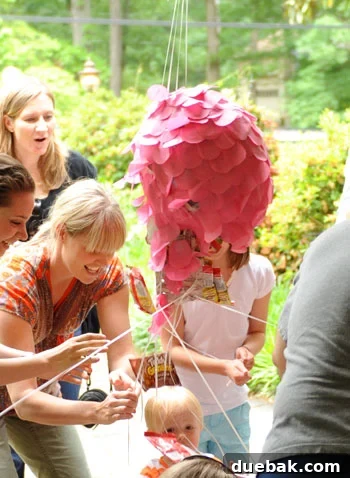
There’s nothing quite like the excitement a piñata brings to a party, especially for little ones. While traditional whack-style piñatas can be a blast, they’re not always suitable for younger children who might lack the strength or coordination to wield a bat effectively. This is where the brilliant idea of a pull-string piñata shines! Safe, inclusive, and just as thrilling, a DIY pull-string piñata allows every child to participate in the fun of revealing hidden treasures. We received numerous requests for a detailed tutorial on crafting these delightful party additions, and we’re thrilled to share our comprehensive guide. Get ready to create a memorable centerpiece for your next celebration that’s as easy to make as it is fun to break open!
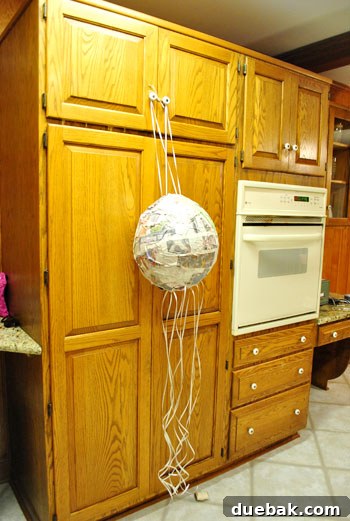
The journey to creating a successful homemade pull-string piñata can sometimes seem daunting, especially during the initial, less-than-glamorous paper mache stages. Many might recall seeing the early steps of this project, which admittedly left our creation looking a bit… questionable. However, we’re here to assure you that even the most humble beginnings can lead to a spectacular outcome! We’ll recap those foundational steps quickly here, ensuring this post is your one-stop resource for whipping up your very own, beautifully functional pull-string piñata. Despite initial doubts (ours included!), this project was destined to defy expectations, proving that a little creativity and perseverance go a long way.
Why Choose a Pull-String Piñata? The Safe and Fun Alternative
Before diving into the crafting process, let’s explore why a pull-string piñata is an excellent choice, especially for parties involving younger children. Unlike their traditional counterparts, pull-string piñatas don’t require blindfolds or bats, eliminating potential safety concerns associated with swinging objects in a group setting. This makes them significantly safer for toddlers and preschoolers, allowing them to participate without risk of accidental bumps or injuries. Furthermore, pull-string piñatas are incredibly inclusive. Children of all ages and abilities can enjoy pulling a string, ensuring no one is left out of the exciting reveal. It’s also a fantastic option for indoor parties where space might be limited, or for parents who prefer a less chaotic way to distribute treats. The anticipation builds as each child selects a string, wondering if theirs will be the one to release the flood of goodies. It’s a moment of shared delight that truly enhances the party atmosphere!
Gather Your Materials: What You’ll Need
Crafting your own pull-string piñata is not only fun but also incredibly budget-friendly, especially if you already have some common household items on hand. Here’s a comprehensive list of what you’ll need to get started:
- For the Paper Mache Paste:
- Approximately 2 parts water
- 1 part all-purpose flour
- For the Piñata Base:
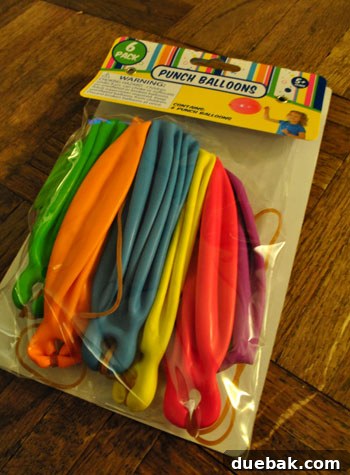
- Large balloon (a punch balloon works great due to its durability and size)
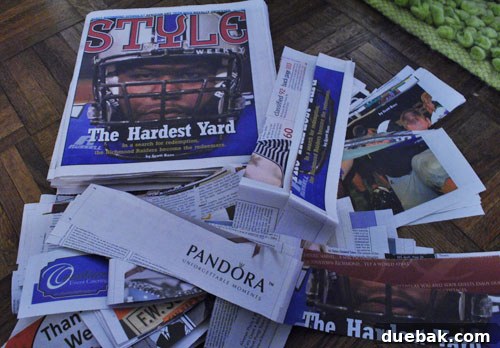
- Newspaper (plenty of strips, approximately 1-2 inches wide)
- For Drying:
- Clothesline or sturdy hanging spot
- Hairdryer (optional, but highly recommended for speed)
- For Assembly and Treats:
- Exacto knife or sharp utility knife
- Kid-friendly treats (individually packaged snacks work best to avoid choking hazards, e.g., Goldfish crackers, Teddy Grahams)
- Hole puncher
- Curling ribbon (approximately nine 30-inch lengths, plus two longer pieces for hanging)
- Duct tape (heavy-duty, for reinforcement)
- Cardboard scraps (for reinforcing the flap)
- For Decoration:
- Tissue paper (one pack, any color, for scales or desired design)
- Scotch tape or craft glue
Amazingly, for this project, the only items we needed to purchase were a pack of tissue paper and the multi-packs of snacks, totaling under $8! This highlights how accessible and economical DIY party decorations can be.
Step-by-Step Guide: Crafting Your Pull-String Piñata
1. Preparing the Paper Mache Base
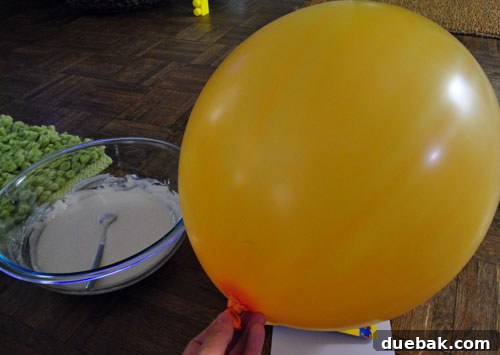
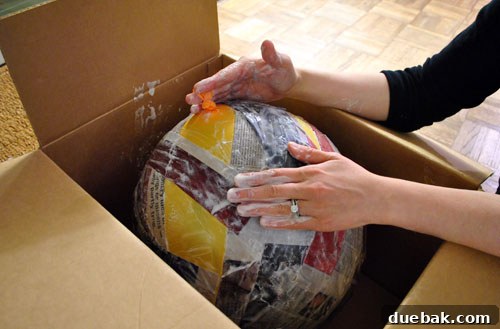
The foundation of your piñata is the paper mache. Start by mixing your paper mache paste: approximately two parts water to one part all-purpose flour. Whisk it until smooth, achieving a consistency similar to pancake batter – not too thick, not too thin. You want it runny enough to soak into the newspaper strips but thick enough to adhere. Next, inflate a large balloon, such as a punch balloon, to your desired piñata size. This balloon will serve as your mold. Cut your newspaper into strips, about 1 to 2 inches wide and 6 to 8 inches long. Dip each strip into the paper mache paste, ensuring it’s fully coated, then run it between your fingers to remove excess paste. Apply these strips smoothly onto the balloon, overlapping them slightly. Cover the entire balloon, leaving a small, untreated circular area around the knot for easy removal later. Aim for at least 2-3 layers for a sturdy shell. This initial application can look a bit messy, but trust the process!
2. The Crucial Drying Process
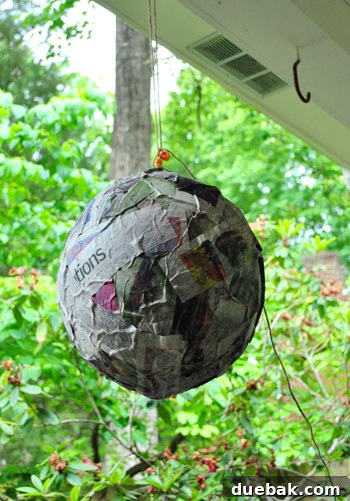
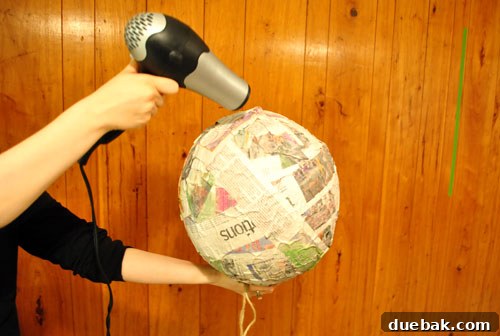
Patience is key during the drying phase. Allow your paper mache-covered balloon to dry overnight, or even longer, in a well-ventilated area. Hanging it can promote air circulation and speed up the process. We initially tried hanging it outdoors, but on a humid day, this proved ineffective. If you find your piñata shell is still soggy or feels soft, don’t despair! A brilliant trick recommended by fellow crafters is to use a hairdryer. This dramatically accelerates drying, hardening the shell completely in about ten minutes, creating a robust and ready-to-use form. A thoroughly dry shell is vital for the piñata to hold its shape and the weight of the treats.
3. Creating the Treat Release Flap
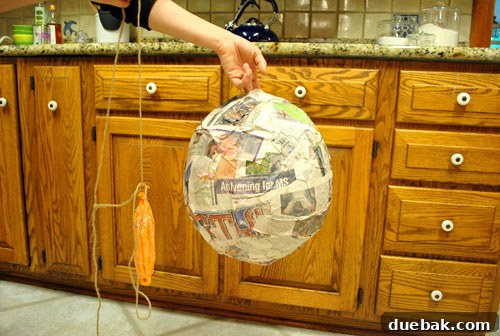
Once your paper mache shell is completely dry and hard, it’s time to pop the balloon inside. This should be a satisfying moment, as the balloon easily slips away, leaving you with a hollow, piñata-shaped shell. Now, envision the bottom of your piñata (where the treats will eventually emerge). Using an X-Acto knife or a sharp utility knife, carefully cut an “exit flap” in this area. We recommend a U-shape or a hinged rectangular flap. Ensure the flap is large enough for treats to fall out easily but small enough to be securely closed. This is where the magic happens, so precision counts!
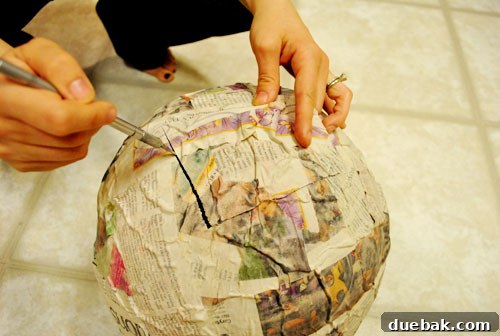
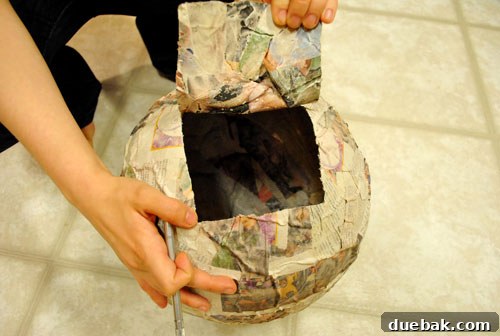
4. Filling with Delicious Treats
With your flap cut, it’s time for the most exciting part for the kids: filling the piñata! We opted for kid-friendly treats that were individually packaged and wouldn’t pose a choking hazard for little ones, like packs of Goldfish crackers and Teddy Grahams. Consider the age group of your party guests when selecting fillers. Avoid small, hard candies for very young children. Distribute the treats evenly inside the piñata to balance the weight, ensuring it hangs properly and opens effectively.
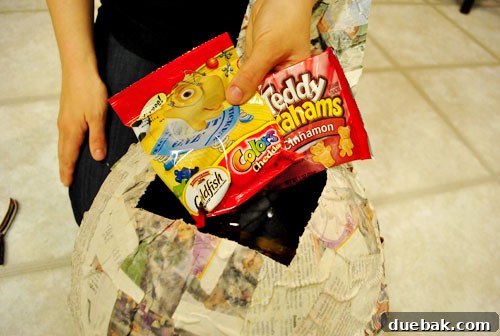
5. Attaching the Pull Strings
This step defines the “pull-string” aspect of your piñata. Using a hole puncher, create several holes around the edge of your treat flap and a few around the bottom of the piñata body itself, near the flap. For our party, with nine children attending, we made nine holes. Cut nine lengths of curling ribbon, each about 30 inches long. Thread one end of each ribbon through a hole, securing it inside the piñata with a piece of strong duct tape. For a classic pull-string piñata where only *one* string opens the flap, strategically attach one “winning” string directly to the flap in a way that will pull it open, while the others are simply decorative “dud” strings. If you want multiple strings to assist in opening, ensure they are all secured to the flap itself, allowing for a collaborative opening.
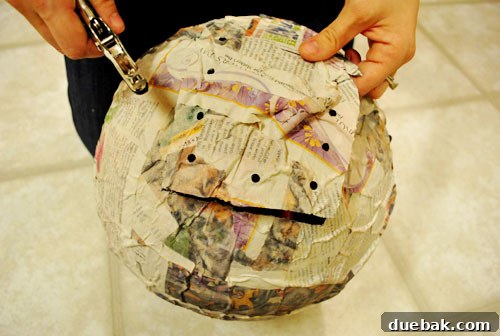
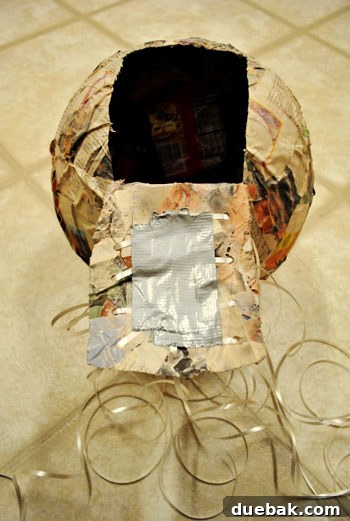
6. Securing the Flap and Reinforcing the Hanging Point
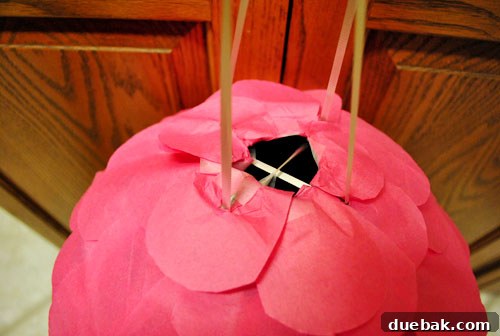
With the weight of the treats inside, gravity can be your enemy. To keep the treat flap securely closed until the big pull, we devised a clever solution: small cardboard tabs. Cut a few small pieces of cardboard and duct tape them just inside the piñata opening, above where your main flap will close. These act as tiny ledges for your large flap to slide in behind, holding it firmly. This might look a bit rustic at this stage, but remember, decoration will cover all imperfections! Next, prepare your piñata for hanging. At the top of your piñata, reinforce the paper mache with four 4-inch pieces of duct tape, folded over the edge of the opening. Then, use your hole puncher to create four holes through these reinforced areas, directly opposite each other. Thread two long, sturdy pieces of ribbon through these holes, looping each through two opposite holes and tying them off securely at the top. This creates two robust loops of equal length, forming a strong hanging mechanism that can support the piñata’s weight.
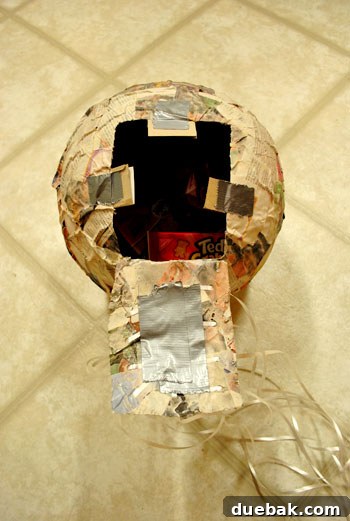
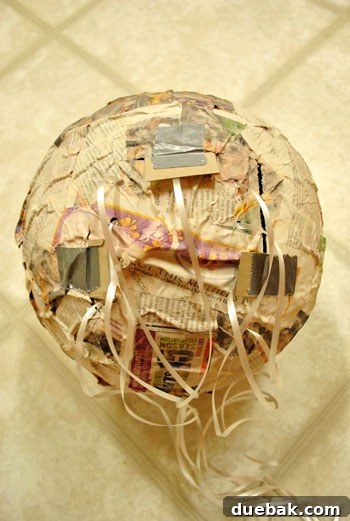
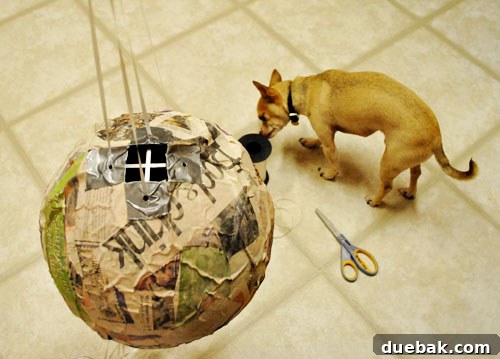
7. The Art of Decoration: Transforming Your Piñata
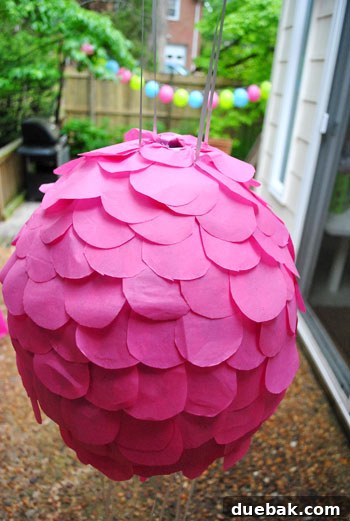
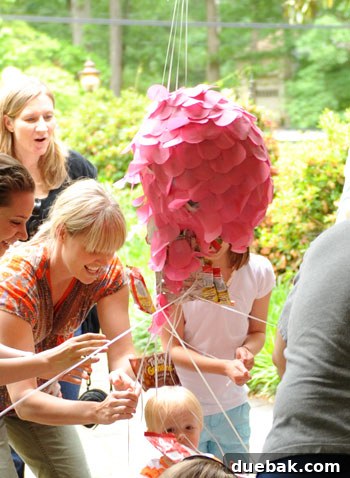
Now for the most satisfying transformation: decoration! We drew inspiration from a beautiful fish-scale design we admired on Pinterest. To achieve this, take one pack of tissue paper (we used pink for a charming touch), fold it multiple times, and cut out numerous small, rounded “scales.” Folding allows you to cut many at once, quickly building a large pile. To apply the scales, begin at the very bottom of your piñata and work your way up in overlapping rows, securing each scale with regular Scotch tape or craft glue. Gently twist the piñata as you go, ensuring even coverage all around. This layering technique will beautifully hide all the newspaper and duct tape beneath, turning your initially “ugly” structure into a sweet, finished creation. For the top, simply fold the top row of scales into the hanging hole and tape them to the inside for a polished look. Even if it’s hung high, these small details make a difference in the overall presentation.
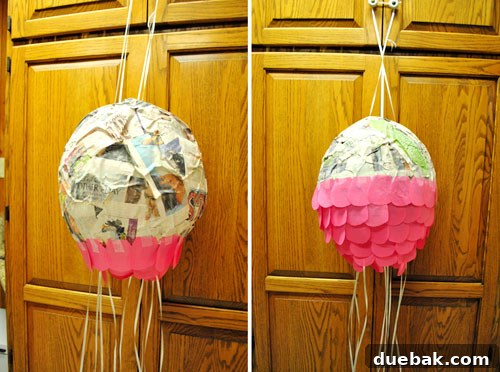
The transformation is truly remarkable. From a questionable paper mache blob to an adorable, party-ready piñata, the power of tissue paper is undeniable. This method yields a charming result, far surpassing its humble origins.
Tips for a Perfect Pull-String Piñata Experience
- Double-Layer Your Paper Mache: While two layers are good, three or even four layers will result in a much sturdier piñata that holds its shape better and won’t easily dent.
- Experiment with Shapes: Don’t limit yourself to a round balloon! Try animal-shaped balloons, or even construct a simple cardboard frame for more complex designs before applying paper mache.
- Consider Allergies: When choosing treats, be mindful of common food allergies among your party guests. Offering a variety or opting for non-food fillers (small toys, stickers) can be a great alternative.
- Pre-test Your Flap: Before decorating, do a quick test. Fill the piñata and ensure your flap mechanism holds the weight, but also opens with a gentle tug on the designated string(s). Adjust reinforcement as needed.
- Theme Your Decoration: Match your piñata’s decoration to your party’s theme for an extra special touch. Use different colored tissue paper, add streamers, or paint details once the paper mache is dry.
- Hang Securely: Ensure the spot where you hang your piñata is strong enough to bear its full weight. A sturdy beam, ceiling hook, or even a clothesline between two robust poles works best.
Conclusion: Celebrate with a Handmade Touch!
And there you have it – a complete guide to crafting a charming and functional pull-string piñata that’s guaranteed to be a hit at any party! What started as a somewhat humble (and admittedly, a little rough around the edges) paper mache project transformed into a delightful centerpiece through determination and a bit of creative flair. We hope this detailed tutorial inspires you to unleash your inner crafter and create something truly special for your next celebration. Not only is it incredibly rewarding to make, but the joy it brings to children as they eagerly pull the strings is absolutely priceless. Go ahead, give it a try – you might surprise yourself with the adorable results!
Have you ever made a pull-string piñata or another homemade party game like cornhole or “pin the tail on the donkey”? We’d love to hear about your experiences and see your creations! Share your tips, tricks, and party game ideas in the comments below. Let’s inspire each other to make every party a truly memorable handmade event!
Psst- If you’re looking for more easy and affordable party decorations, check out our tutorial on making cheap and easy balloon garlands. They’re a fantastic way to add a festive touch without breaking the bank! Find the full guide here.