
The Ultimate DIY Guide to Removing Old Wallpaper: Methods, Tips, and Tricks
Wallpaper has undeniably made a magnificent return as a staple in modern home design. Its ability to transform a space with pattern, texture, and color is unmatched. However, for many homeowners, the journey isn’t about choosing new wallpaper, but rather tackling the dated, dingy, or even downright unsightly old wallpaper that clings stubbornly to their walls. In our previous home, we faced this exact challenge in numerous rooms: the kitchen, dining room, foyer, and two distinct bathrooms! Through this extensive experience, we rigorously tested four different wallpaper removal methods, and today, we’re excited to share our comprehensive findings to help you conquer your own wallpaper woes.
The good news is that removing wallpaper doesn’t demand specialized tools or a hefty budget. It’s a completely achievable DIY project for any homeowner, regardless of experience level. While it can indeed be a tedious process, requiring a good amount of elbow grease and patience—especially depending on the room’s size and the wallpaper’s stubbornness—we can confidently affirm that the effort is incredibly worthwhile. Having personally stripped multiple rooms of decades-old wallpaper, we know the satisfaction of revealing a fresh, blank canvas ready for its next chapter.
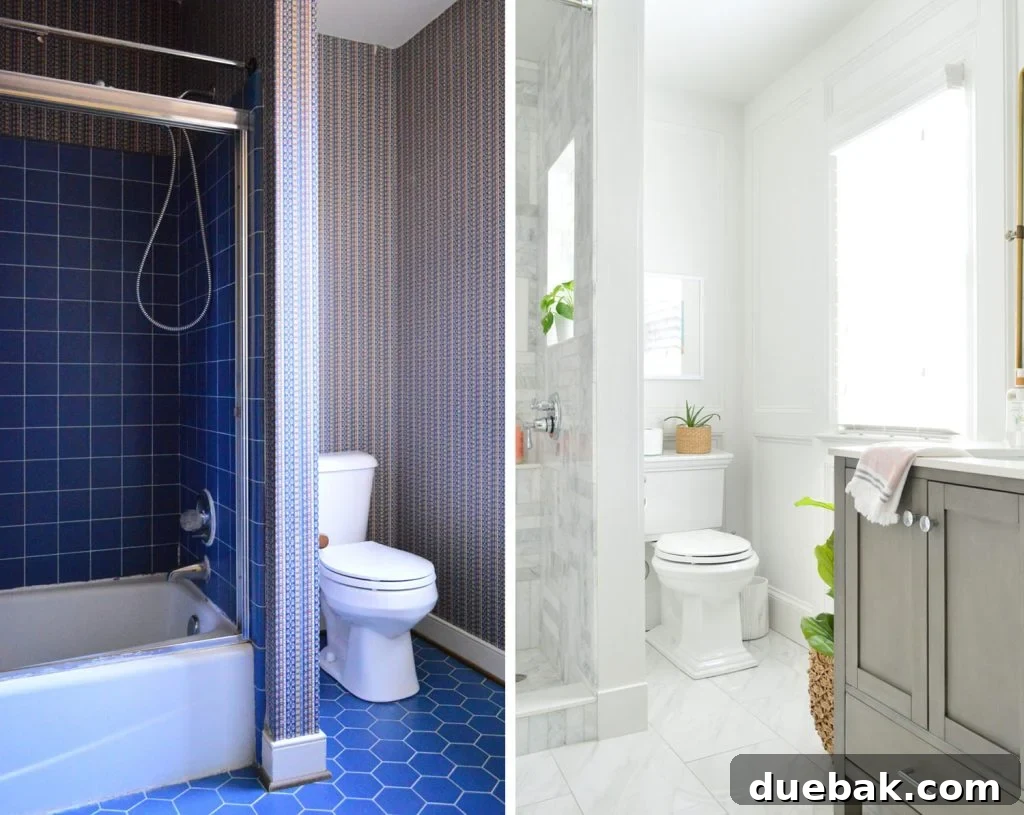
Curious to see the transformations? You can explore more striking before and after photos of our formerly wallpapered rooms. The image above showcases our old main bathroom, which received a dramatic and much-needed makeover after its wallpaper was removed.
Table of Contents
Four Proven Methods to Tackle Stubborn Wallpaper
Before diving into our removal process, we extensively gathered various methods from experts and fellow DIYers to test and report back on. What we discovered is that not all methods perform equally, and certain rooms or types of wallpaper responded better to different techniques. This highlights a crucial point: there isn’t one universal “best” way to remove wallpaper. Instead, you have a versatile arsenal of options, and a willingness to experiment will be your greatest asset.
- Method #1 – Dry Stripping: This involves carefully tearing down sections of wallpaper without any prior wetting or steaming. It’s the easiest starting point if you’re lucky.
- Method #2 – Hot Water: Using hot water to saturate the wallpaper helps to reactivate and dissolve the adhesive beneath, making the paper easier to peel.
- Method #3 – Stripping Solution: This method utilizes either a homemade mixture (like water, soap, or fabric softener) or a commercial chemical solution sprayed onto the wallpaper to break down the glue.
- Method #4 – Steaming: Employing a handheld or upright steamer applies hot, moist vapor to deeply penetrate and loosen the wallpaper adhesive.
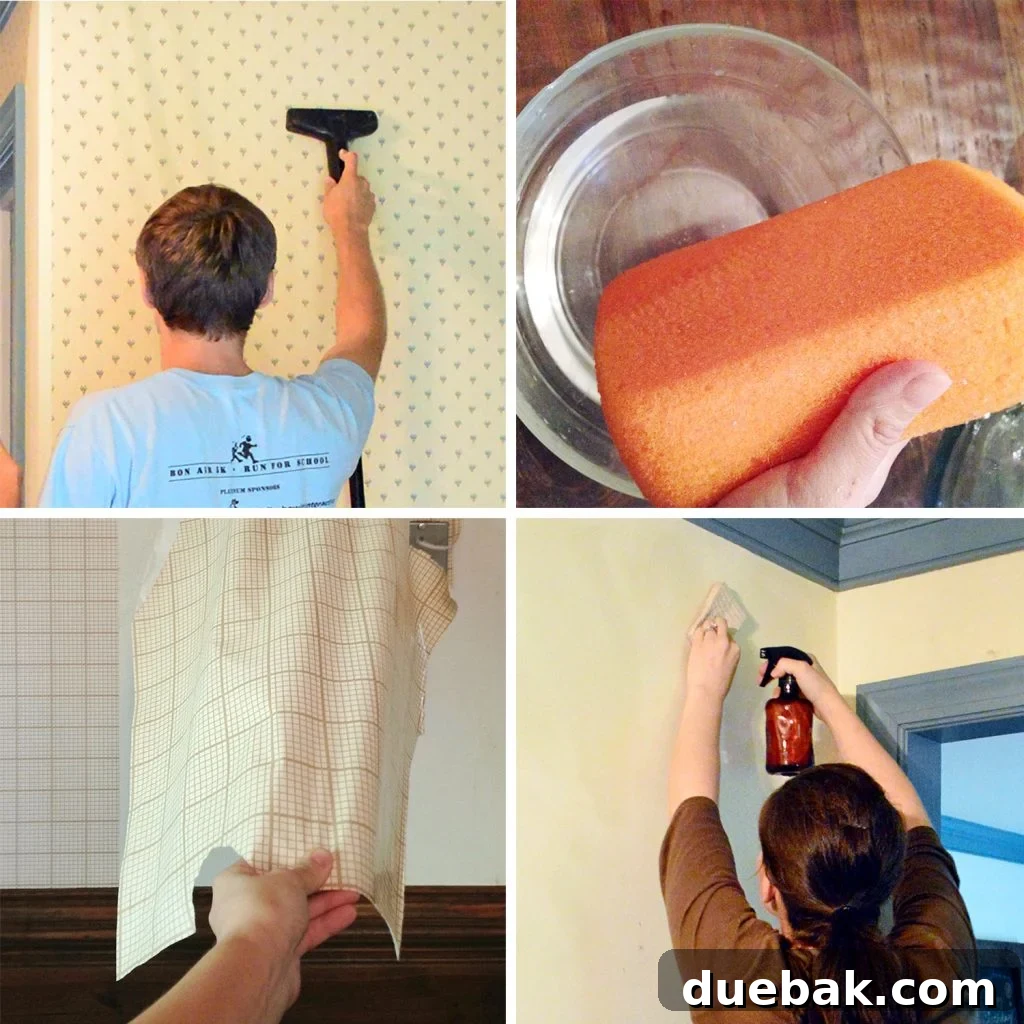
Be prepared to potentially try multiple methods or even combine them, as you never know which technique will be the secret weapon for your specific wallpaper and wall type. We frequently found ourselves needing to switch between or layer approaches to finish the job effectively.
Essential Tools and Supplies for Wallpaper Removal
Before you begin the exciting (and sometimes challenging) task of wallpaper removal, it’s wise to gather all necessary supplies. Having everything on hand will ensure a smoother, more efficient process and prevent frustrating interruptions.
- Glass spray bottle or pump sprayer: Essential for applying water or stripping solutions evenly.
- Large sponge: Great for applying hot water or solutions, and for wiping down walls.
- Putty knife: Your primary tool for gently prying up edges and scraping off loosened wallpaper and glue.
- Utility knife: Crucial for cutting wallpaper at trim lines and for precise removal of stubborn sections.
- Painter’s tape: For sealing electrical outlets and light switches to protect them from moisture.
- Plastic drop cloth: Absolutely necessary for protecting floors, furniture, and other surfaces from water, glue, and debris.
- Trash bags: For immediate cleanup of peeled wallpaper and glue, preventing it from drying onto your floors.
- Paper towels or old rags: For quick spills, wiping tools, and general cleanup.
- Steamer (optional): While effective, it’s an investment. Consider borrowing or renting one if you don’t already own it.
- Stripping solution (optional): You can often make your own, but commercial options are available.
- Wallpaper scoring tool (optional): Designed to perforate wallpaper, though our experience suggests it can be more hindrance than help.
- Wallpaper scraper (optional): Similar to a putty knife but often wider. A good putty knife usually suffices.
The “optional” supplies are generally items you might not have readily available. While scoring and specialized scraping tools are inexpensive, we personally didn’t find them particularly helpful, as detailed below. Premixed stripping solutions are convenient, but you can easily create effective homemade versions with common household ingredients (recipes included further down). A steamer can be a game-changer for very stubborn wallpaper, but given their cost, don’t feel pressured to purchase one if other methods prove sufficient.
A Critical Look at Scoring Tools
Many online tutorials and professional advice columns suggest using a scoring tool as a preparatory step before spraying or steaming your wallpaper. This simple, handheld device features small wheels with sharp teeth that, when rubbed over your wall, create tiny perforations in the wallpaper surface. The idea behind this is to allow your stripping liquid or steam to better penetrate the top layer and reach the crucial glue layer underneath, theoretically speeding up the dissolution process.
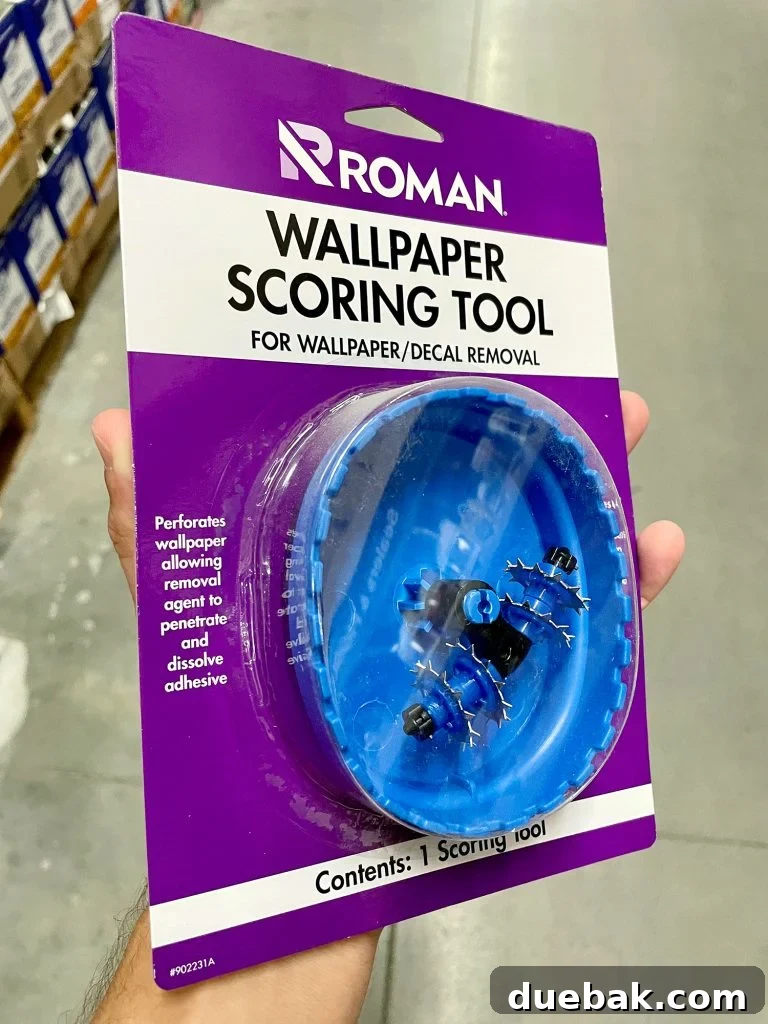
However, in our extensive experience with various wallpapers, scoring wallpaper proved to be both time-consuming and tiresome, ultimately making the project harder, not easier. We repeatedly observed that scored wallpaper pieces were far more likely to tear into small, frustratingly choppy bits rather than peeling off in large, satisfying sections. This not only added significant time to our removal process but also increased the mess and our frustration levels. For these reasons, we do not personally recommend using a scoring tool. That said, individual experiences can vary, so feel free to acquire one if you’re curious to test its efficacy in your unique space.
Preparing Your Room for a Smooth Removal Process
Regardless of the wallpaper removal technique you choose, a little preparation goes a long way in protecting your home and making the job more manageable. Taking these steps beforehand can prevent damage, minimize mess, and ensure your safety.
Clear the area: Move furniture, art, and decor away from walls. Just as you would when painting a room, it’s essential to create a clear workspace. Remove all wall hangings, art, and decor. If possible, remove large furniture from the room entirely. If not, push it to the center of the room and cover it with a plastic drop cloth to protect it from water, adhesive residue, and debris.
Ensure electrical safety: Remove switch plates and outlet covers. Unscrew and carefully remove all electrical switch plates and outlet covers. Wallpaper often extends behind these, and removing the covers allows you full access to the paper. In some of our rooms, the outlet covers themselves were wallpapered, making removal even more critical!
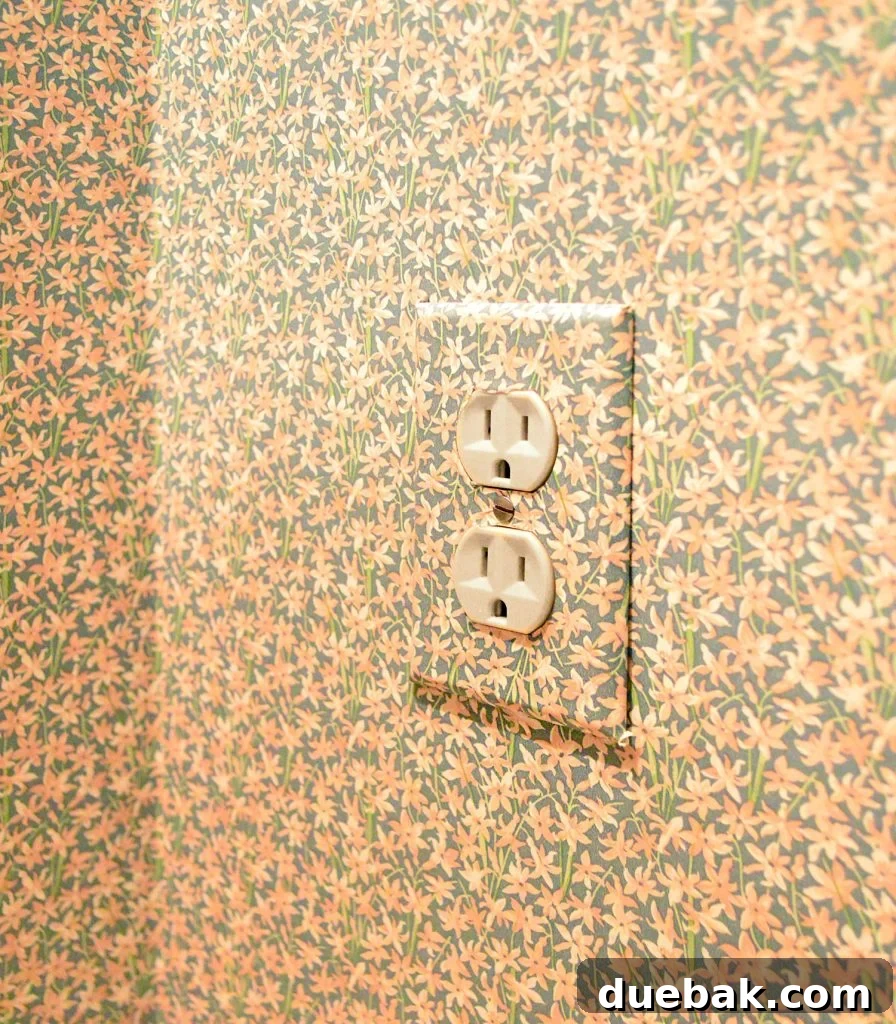
Protect surrounding surfaces: Shield floors, furniture, and outlets from moisture. Your walls will inevitably get wet during the removal process, so comprehensive protection is vital. Lay down sturdy plastic drop cloths generously to cover all floors and any remaining furniture. For electrical safety, use painter’s tape to seal over outlets and light switches once their covers are removed. This helps prevent any water or moisture from entering the electrical boxes.
Ensure good ventilation: Opening windows and using fans can help with air circulation, especially if you’re using stripping solutions or a steamer. This reduces humidity and dissipates any fumes, making the work environment more comfortable and safer.
Understanding Wallpaper Construction: Layers and Adhesives
Before you embark on removing wallpaper, having a basic understanding of how it was likely installed can significantly aid your efforts. Most traditional wallpapers consist of two primary layers. The top, decorative layer can be made from a variety of materials, including vinyl, bamboo, paper, or various textiles. The underlayer, which is the key to removal, is typically an adhesive paper backing or a layer of glue applied directly to the wall.
The majority of effective wallpaper removal methods – whether using water, solutions, or steam – operate on the principle of heating, softening, or dissolving this glue layer. By weakening the bond between the wallpaper and the wall, the paper can then be peeled away. Depending on the age, type, and quality of the wallpaper, as well as the adhesive used, the paper and glue layers may come off together in satisfying large sheets, or they might separate, requiring different techniques for each layer.
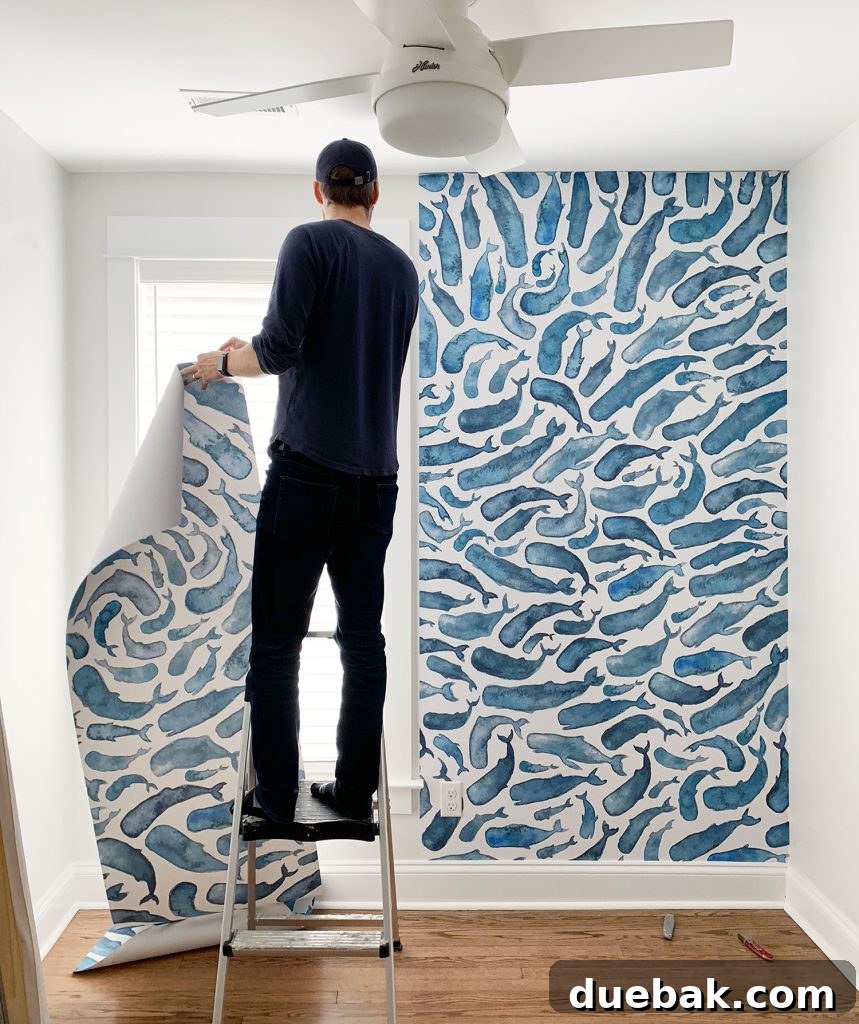
It’s also worth noting that if you’re dealing with newer wallpaper, it might be the removable, peel-and-stick variety. These glue-free wallpapers have surged in popularity over the last 10-20 years, offering a seemingly simpler installation and removal process. We’ve successfully installed removable wallpaper and even removable wall murals on multiple occasions! They function much like giant stickers, and many can indeed be removed with minimal fuss. However, even with “removable” varieties, it’s wise to proceed with caution and take your time. Occasionally, even these can pull off wall paint beneath them, despite their claims of easy, damage-free removal.
Understanding these fundamentals will help you anticipate challenges and choose the most appropriate method for your specific wallpaper situation.
Method #1: Dry Stripping – The Initial Attack
Before you introduce any special tools, liquids, or steam, the very first step in wallpaper removal should always be dry stripping. This method involves simply attempting to tear down a wallpaper panel or two by hand. Begin by finding a loose corner or a peeling seam, or carefully use a putty knife to gently pry up an edge at a seam. Once you have a firm grip on a piece of the wallpaper, pull slowly and steadily to see if any sections come off. This initial attempt might not always yield results, but it’s always worth a shot as it requires no extra effort or materials!
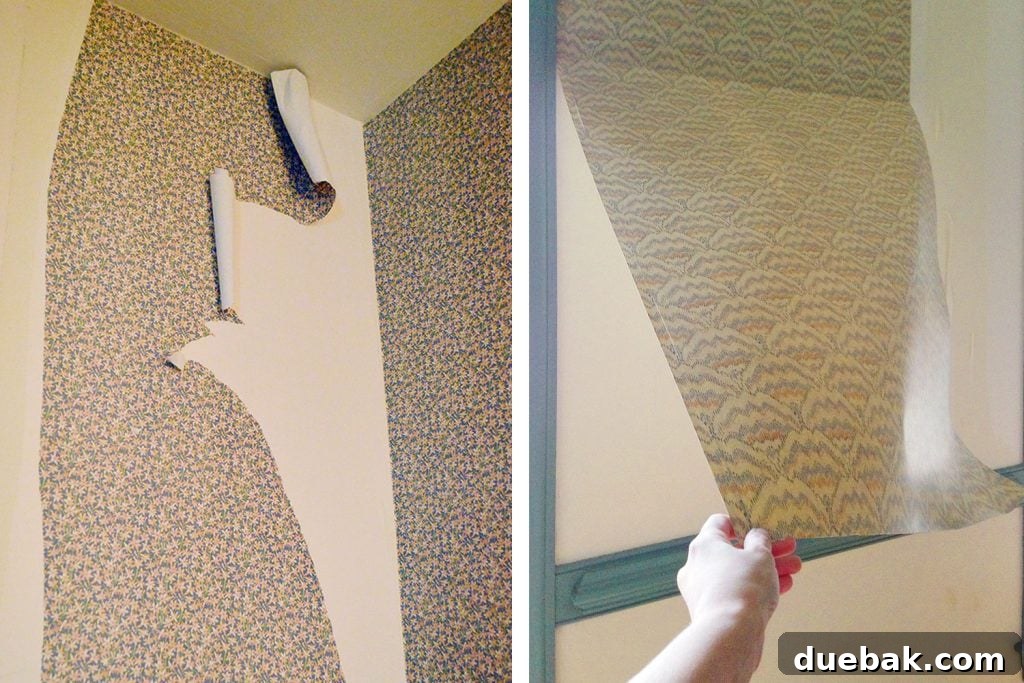
While our wallpaper often tore off in frustratingly small strips, there were delightful moments when we managed to remove several full sheets! This is an incredibly satisfying experience. The success of this “dry stripping” method is highly dependent on several factors: the age of your wallpaper, the quality of its installation, and the environmental conditions of the room. For instance, this method worked exceptionally well in our bathroom. Years of humidity had already caused several areas to loosen and peel, making it a prime candidate for dry stripping. Sherry even famously removed several panels while simply showering one day!
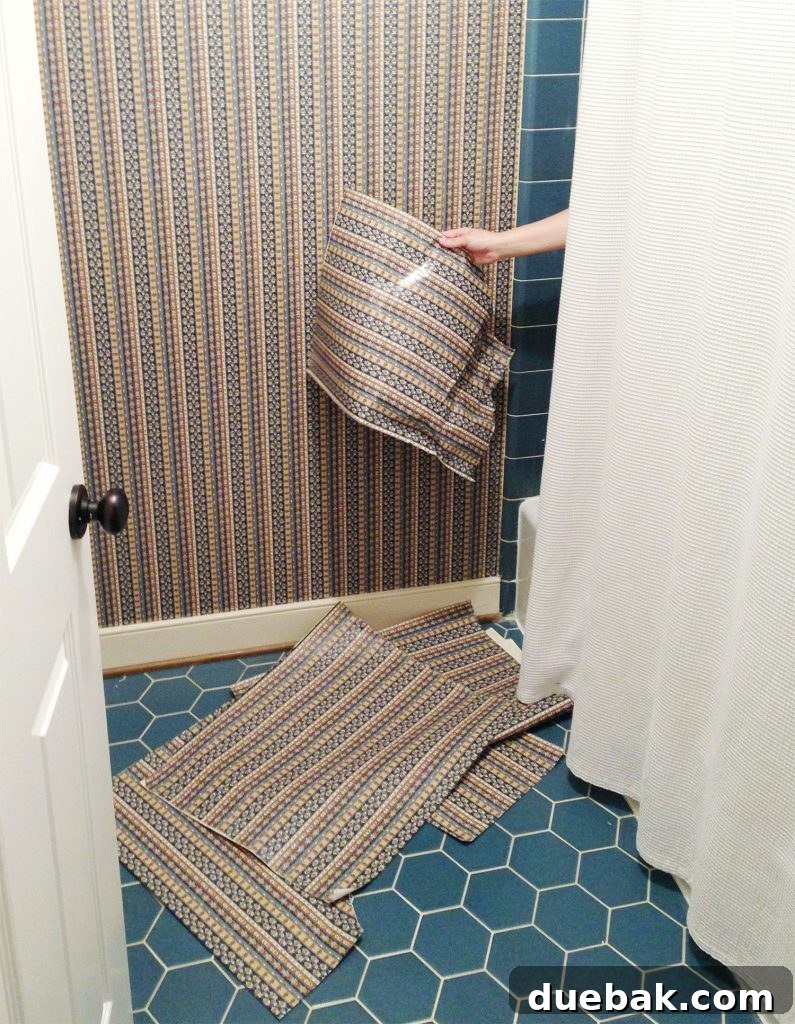
Although this technique is unlikely to completely finish the entire job, it serves as an excellent starting point. It might get you further along than you anticipate and save you time and effort on subsequent steps. However, in most cases, you will still need to proceed with one of the following methods to thoroughly remove the underlying glue layer and any remaining paper backing.
For a deeper dive, read our full post about using dry stripping to remove wallpaper.
Method #2: Hot Water – An Economical & Effective Solution
After we peeled off as much as we could using the dry stripping method, our next step was to deploy the power of hot water. Spraying or dabbing hot water onto the wallpaper effectively reactivates the dried glue, making the paper significantly easier to remove. The primary advantage of this method is its cost-effectiveness and accessibility: it requires only readily available household items (you don’t need to buy a specialized steamer) and involves no complex chemical mixtures. It’s simply hot water, applied with a spray bottle or dabbed on with a large sponge!
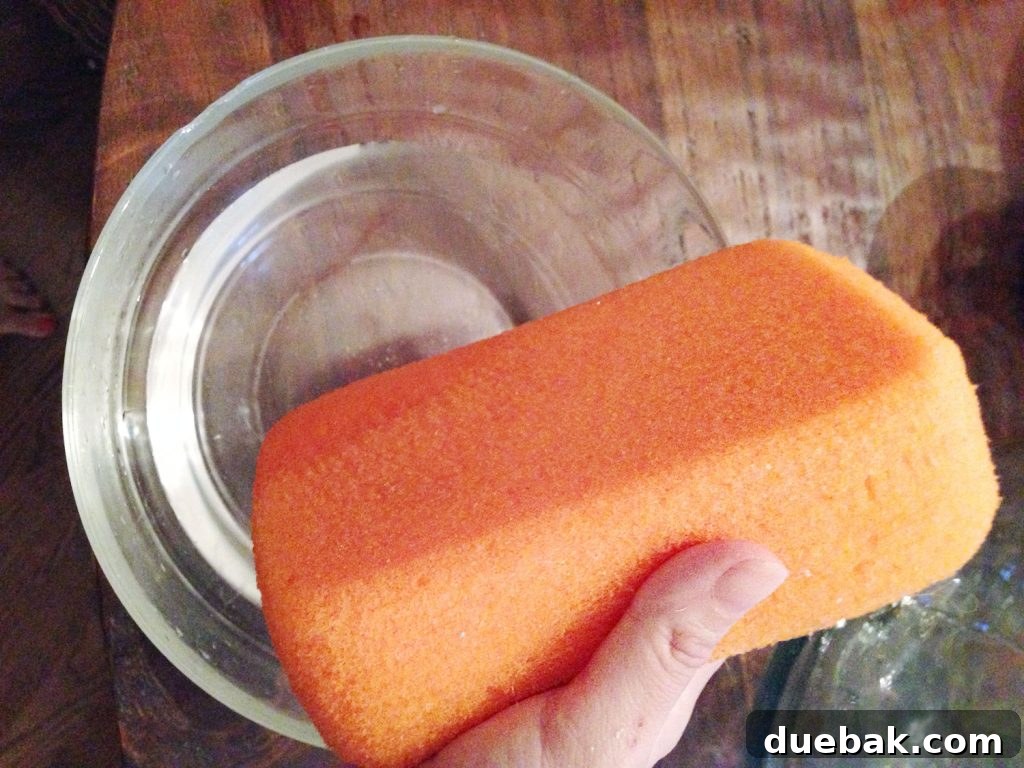
When we initially employed the hot water method, we started with a spray bottle filled with boiling water. This presented a few challenges: the intense heat warped the plastic bottle, and it was so hot to hold that we needed oven mitts. We quickly learned that simply using hot water straight from the tap, applied with a large sponge, was much easier and produced comparable results. Here’s the simple process:
- Dampen the wallpaper thoroughly using a damp sponge dipped in a bowl of hot tap water, or spray liberally with a spray bottle.
- Allow the water to soak in for 2-3 minutes. This crucial waiting period gives the hot water time to penetrate the wallpaper and reactivate the adhesive.
- Begin to peel off the softened wallpaper by hand. For stubborn areas or remaining bits, gently use a putty knife to scrape it away.
We highly recommend working in small sections at a time. This allows you to peel the wallpaper before each treated area dries out or cools down, which would necessitate re-wetting. This approach maximizes efficiency and minimizes frustration.
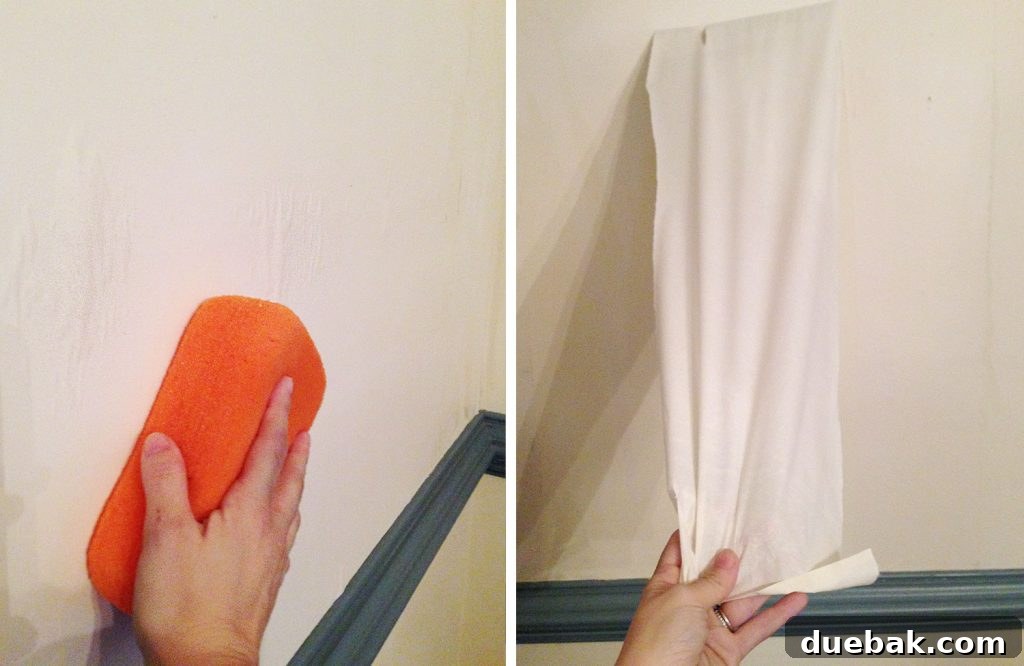
As you can observe in the photos, this method was particularly effective at removing the often-overlooked glue layer beneath the wallpaper (notice the bubbling above the sponge?). Trust us on this: you absolutely do not want to simply peel off the top layer of your wallpaper and then paint directly over the residual glue layer. It will inevitably lead to a bumpy, uneven, and aesthetically unpleasing finish. You must meticulously strip off that glue layer from the wall as well. Just remember to keep your sponge damp, not soaking wet, and ensure your floors and electrical outlets are adequately protected. The area will get quite wet, so prepare accordingly!
Discover more detailed insights in our full post about using hot water to remove wallpaper.
Method #3: Wallpaper Stripping Solutions – DIY vs. Commercial
When hot water alone isn’t quite cutting through the adhesive, or for particularly stubborn wallpaper, a stripping solution can significantly boost your efforts. You have the option of using either a homemade concoction or a commercially available store-bought stripping solution to effectively loosen the wallpaper glue. The beauty of homemade recipes is their simplicity and reliance on ingredients you likely already have around the house. Here are a few highly effective and easy-to-mix options:
- Fabric softener + hot water: Mix approximately 50/50. The softeners help to break down the glue’s bond and allow for easier penetration.
- Laundry detergent + hot water: A 50/50 mix often works wonders. Laundry detergents contain surfactants that emulsify and dissolve the adhesive.
- White vinegar + hot water: Aim for slightly less vinegar, perhaps a 40/60 vinegar-to-water ratio. The acidity of vinegar helps to break down alkaline-based glues.
- Dish soap + hot water: Similar to laundry detergent, a roughly 40/60 dish soap-to-water ratio works well. Dish soap acts as a degreaser and surfactant.
For each of these solutions, the hot water plays a crucial role by reactivating the dried glue, while the detergents, fabric softeners, or vinegar actively work to dissolve and break down its adhesion. This two-pronged approach makes removal much more efficient.
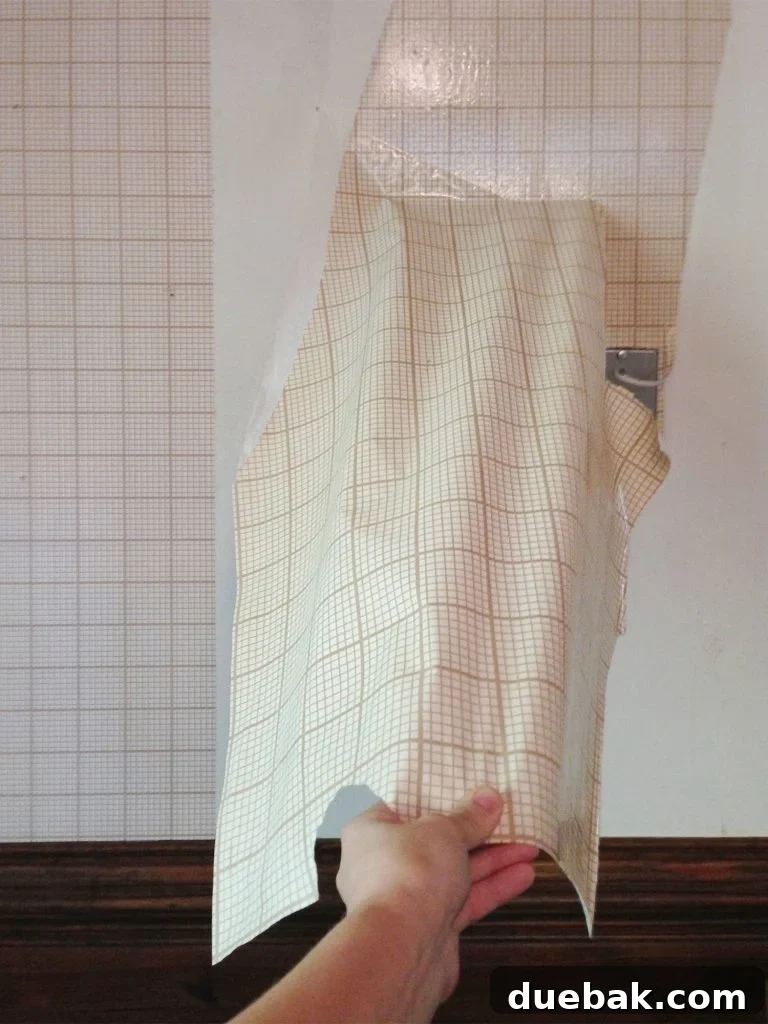
Using a spray bottle or a sponge, generously dampen your wallpaper with your chosen solution. Allow it to sit for a couple of minutes—this crucial dwell time allows the solution to penetrate and work its magic on the adhesive. If you opt for a store-bought stripper, always meticulously follow the specific application instructions provided on the label for optimal results and safety. After the waiting period, you can begin to peel the wallpaper by hand or with the aid of a small putty knife. It’s common for the decorative paper layer to come off separately from the glue backing. We often found ourselves needing to go back for a second pass, re-spraying any residual glue and removing it separately to ensure a truly clean wall surface.
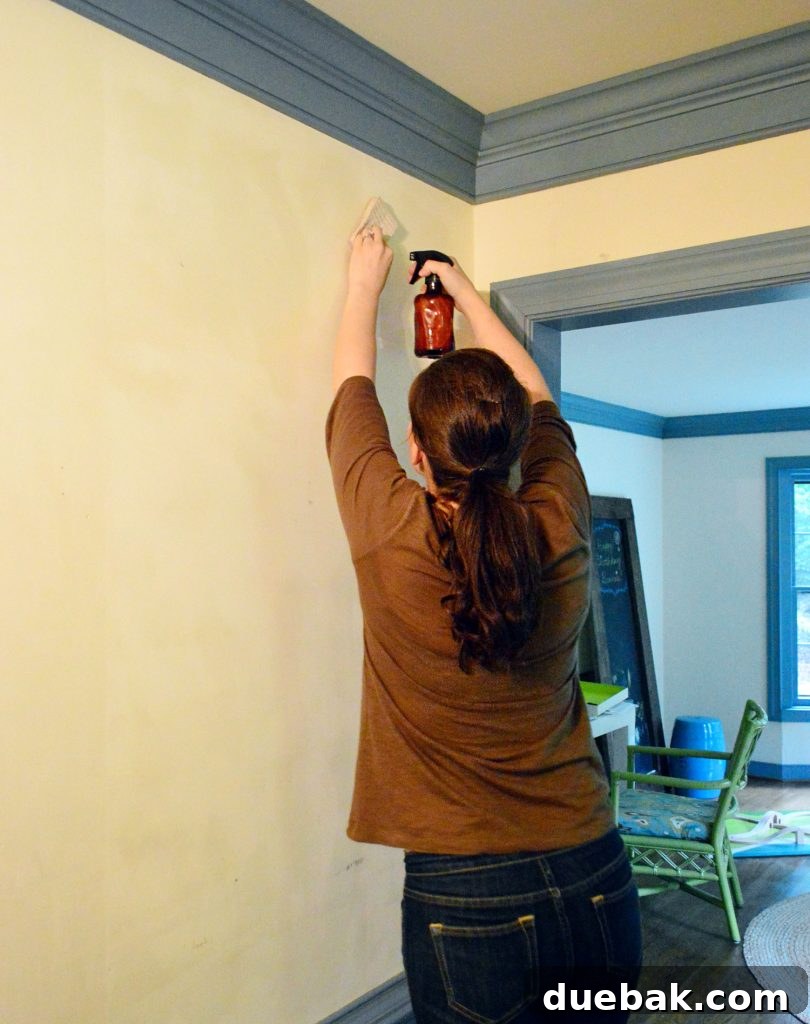
For small, stubborn sections of glue that stubbornly adhere, we discovered that rubbing them with the rough side of a small, damp sponge could be very effective in dislodging those hard-to-see bits. While specialized wallpaper scrapers are available to assist with this task, we personally found a standard putty knife combined with a little elbow grease to be sufficient. Remember, the goal is a completely clean wall, free of any adhesive residue, to ensure a smooth finish for your next wall treatment.
For detailed recipes and more tips, read the full post about using homemade stripper to remove wallpaper.
Method #4: Steaming – The Powerhouse Approach
An electric steamer often seems like the ultimate solution for quickly powering through a wallpaper removal project. In many cases, it can indeed be a highly effective and efficient method. However, it also comes with a few key considerations and potential drawbacks that are important to weigh before you invest in or rent one.
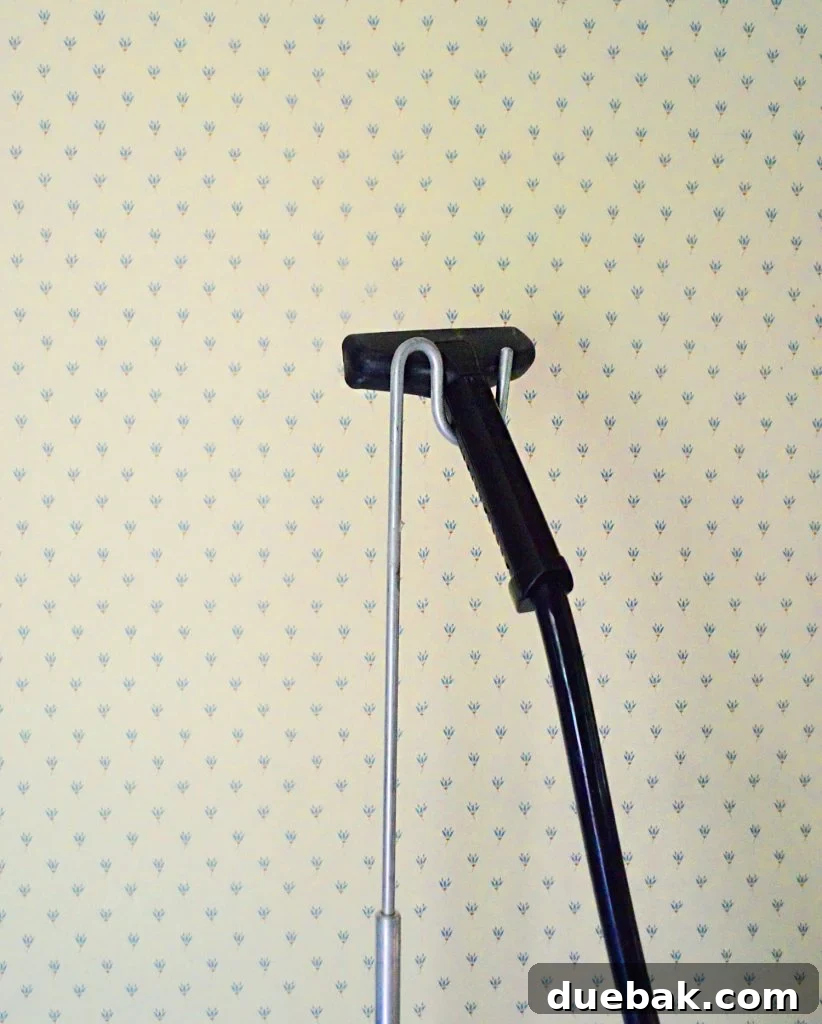
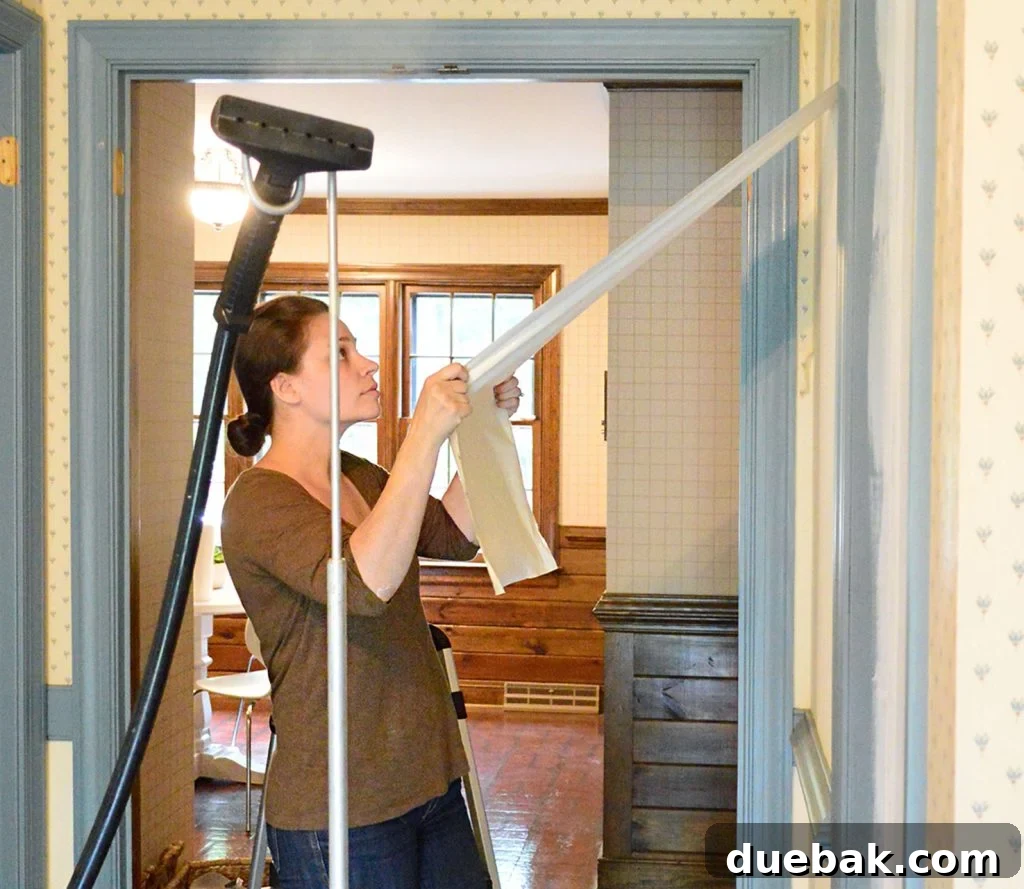
With an electric wallpaper steamer, you direct a concentrated blast of hot steam directly onto your wallpaper. This intense heat and moisture penetrate the paper and reactivate the glue, much like the hot water and solution methods, but often with greater speed and depth. One of its primary benefits is that it can be faster, cleaner, and potentially less cumbersome than constantly spraying and scrubbing large walls. For large surface areas, it can also be less physically taxing. We discovered that the most effective strategy with a steamer was a “peel as you steam” technique, where we continuously pulled on the wallpaper as we slowly moved the steamer head down the wall.
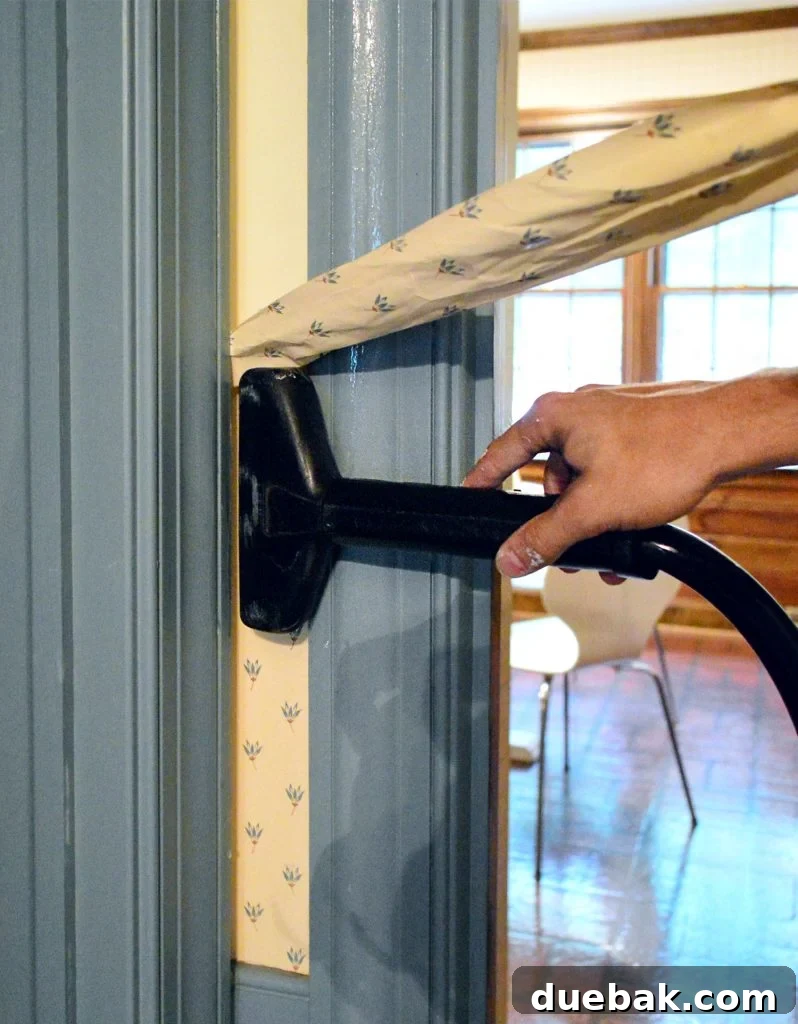
Steamers, however, can represent a significant upfront investment. A robust, large, upright wallpaper steamer can cost upwards of $250. We were fortunate enough to borrow one from a family member, which saved us a considerable expense. Smaller handheld steamers are more affordable, typically ranging from $50 to $75, and you might even have one already for steaming clothes. The drawback with smaller models, however, is their typically small water reservoirs, meaning you could spend a lot of time refilling them and waiting for the water to heat back up, which can interrupt your workflow.
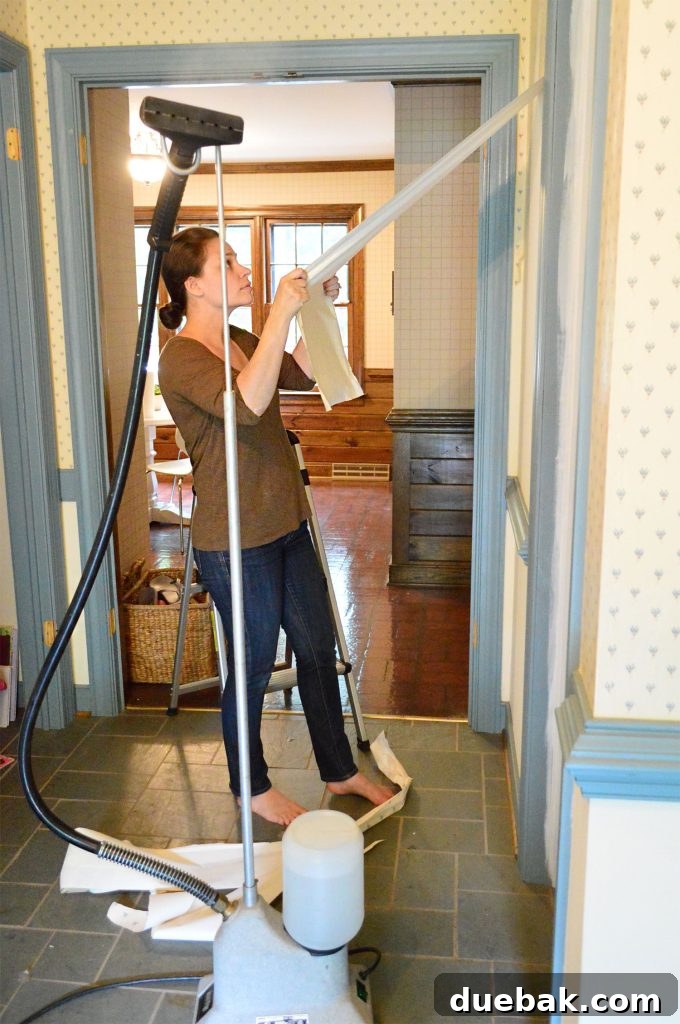
The large water tank and extended hose on the borrowed steamer greatly contributed to our project’s efficiency. Yet, even with its advantages, the hose wasn’t quite long enough to comfortably reach the uppermost sections of our taller rooms. This necessitated hoisting the heavy steamer unit in the air at certain points, which became quite tiring, especially when the tank was full of water. Despite its power, working with steam also requires extreme caution due to the high temperatures involved, making protective gloves and eye wear essential.
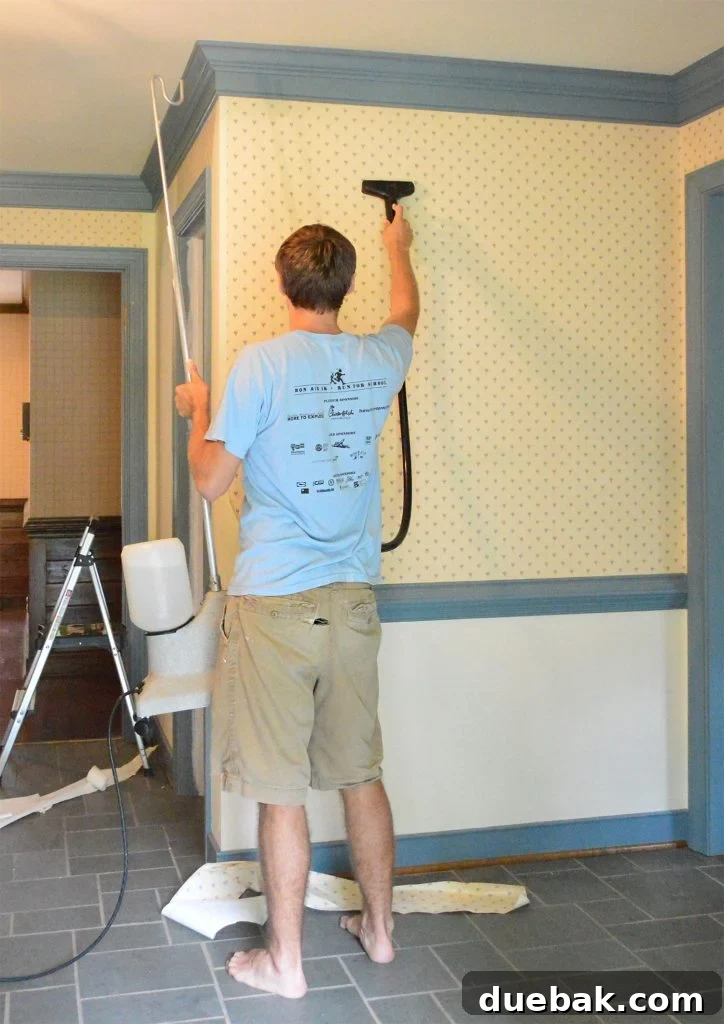
Overall, we found steaming to be the fastest method, primarily because it often removed both the wallpaper paper and the glue layer simultaneously in one pass. However, it didn’t completely revolutionize the process to the point where we would unequivocally recommend purchasing one. If you don’t have easy access to a steamer, the other methods remain highly effective alternatives and might be more practical for your specific situation.
For a comprehensive walkthrough, read our full post about using a steamer to remove wallpaper.
Pro Tips for a Successful Wallpaper Removal Project
No matter which method you ultimately choose to tackle your wallpaper removal project, keeping these general tips in mind will ensure a smoother, more efficient, and less frustrating experience. These insights come from our own trial-and-error, designed to help you avoid common pitfalls.
Patience is Key
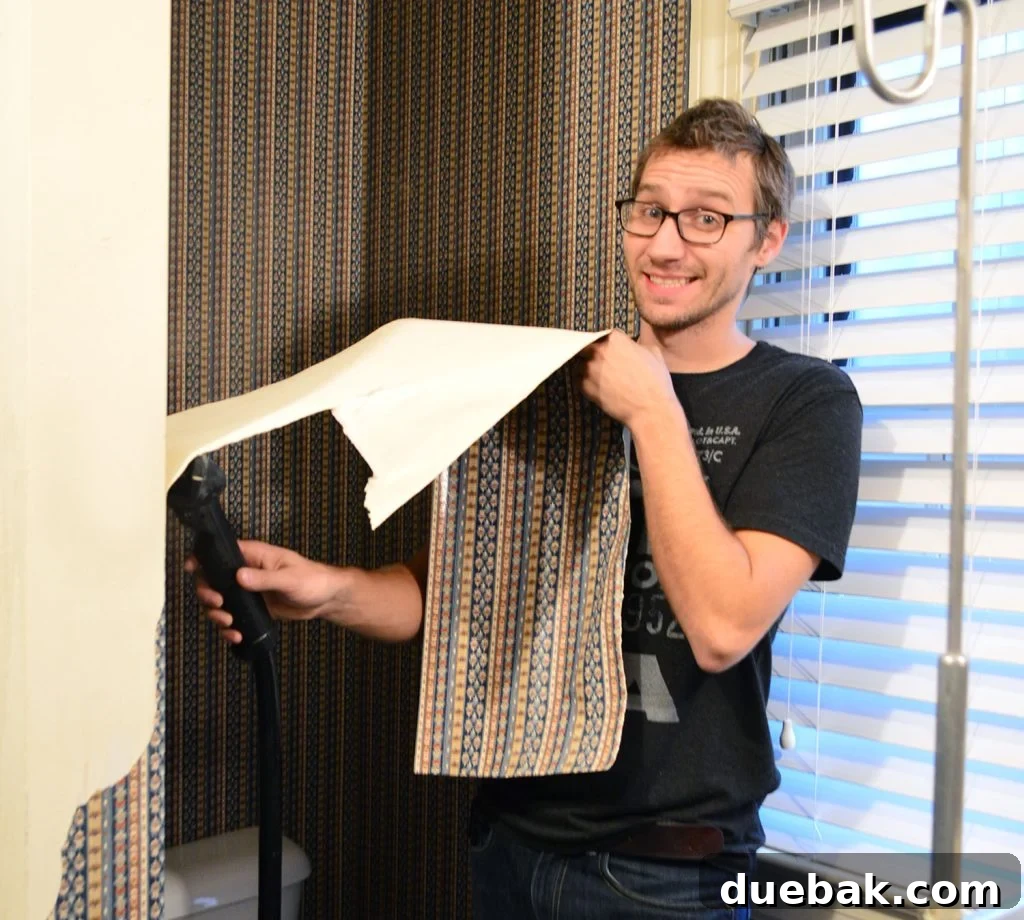
We understand the eagerness to banish that old wallpaper from your home once and for all, but patience truly is a virtue in this endeavor. Rushing the process can lead to more work in the long run. Give your hot water or stripping solution ample time to thoroughly soak into the glue and soften it. Move carefully and deliberately with your putty knife, using gentle pressure to avoid gouging or damaging the drywall underneath. When peeling, pull the panels slowly and steadily; quick, jerky motions are more likely to rip the wallpaper into a thousand annoying little pieces, turning a satisfying peel into a fragmented mess. Think of it less as ripping and more like carefully peeling a stubborn label or sticker off a bottle – slow and steady yields the best results.
Work in Manageable Sections
While it might seem efficient to douse an entire wall with spray or steam, this approach is often counterproductive. Instead, focus on working with one or two wallpaper panels at a time. If you treat a large area, some sections will inevitably begin to cool and dry out by the time you get around to peeling them. This means you’ll end up wasting more time and solution by having to re-steam or re-spray those areas. Working in smaller sections ensures that the wallpaper remains pliable and receptive to removal when you’re ready to peel.
Manage Your Mess Efficiently
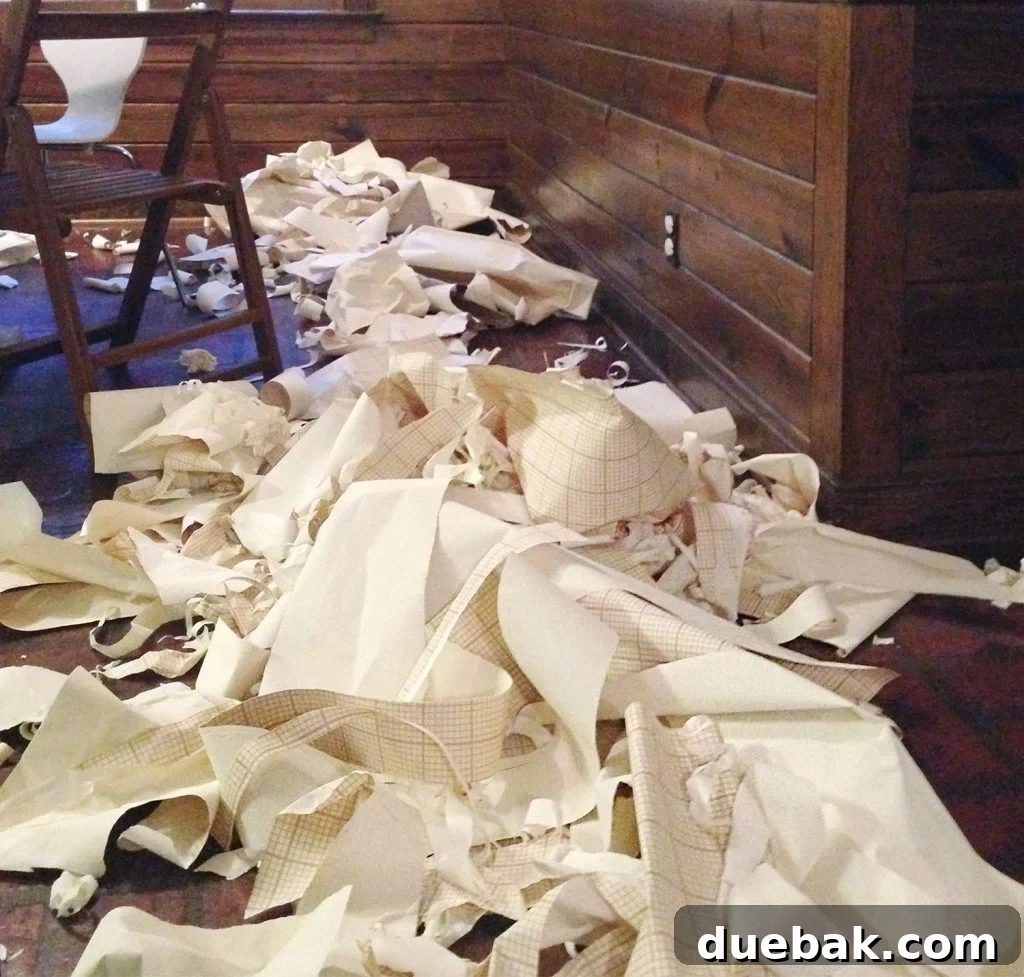
Wallpaper removal is inherently a messy job. You’ll quickly find your floor covered in wet wallpaper scraps, strips of paper backing, and gooey glue residue. To prevent the glue from drying onto your floors (which is notoriously difficult to clean once hardened), keep several trash bags conveniently handy and make a habit of cleaning up often. Promptly collect and dispose of peeled wallpaper and glue as you go. This not only keeps your workspace safer but also makes the final cleanup much less daunting.
Keep a Utility Knife Nearby for Tricky Edges
It’s not uncommon for builders or previous DIYers to hang wallpaper *before* installing trim, baseboards, wainscoting, or built-ins. If you encounter areas where your wallpaper disappears under any molding, don’t try to rip it out. Instead, use a very sharp utility knife to carefully score and cut along the edge of the molding. This creates a clean break and prevents damage to your trim or the wall behind it. For those minuscule, stubborn leftover bits of wallpaper or glue, we’ve found that a pair of fine-tipped tweezers can be surprisingly effective for precise removal.
Prioritize Safety
Working with water near electricity always demands caution. Ensure all outlets and switches are taped off as mentioned in the preparation section. If using chemical stripping solutions, work in a well-ventilated area and consider wearing gloves and eye protection to prevent skin irritation or accidental splashes. When using a steamer, be mindful of the hot steam and surfaces to avoid burns.
Repairing Your Walls After Wallpaper Removal
Even the most meticulously executed wallpaper removal can, unfortunately, leave behind some degree of damage to your underlying walls. It’s a common scenario: the paint might peel off along with the glue, your putty knife could accidentally gouge the sheetrock, or sometimes, bits of the drywall paper itself might tear away. Sometimes the damage is minimal, presenting as a few minor scuffs. Other times, it can resemble a veritable “bloodbath,” much like the state of one of our bathrooms after wallpaper removal (pictured below). The key takeaway here is: don’t panic! Almost all wallpaper removal damage is completely fixable.
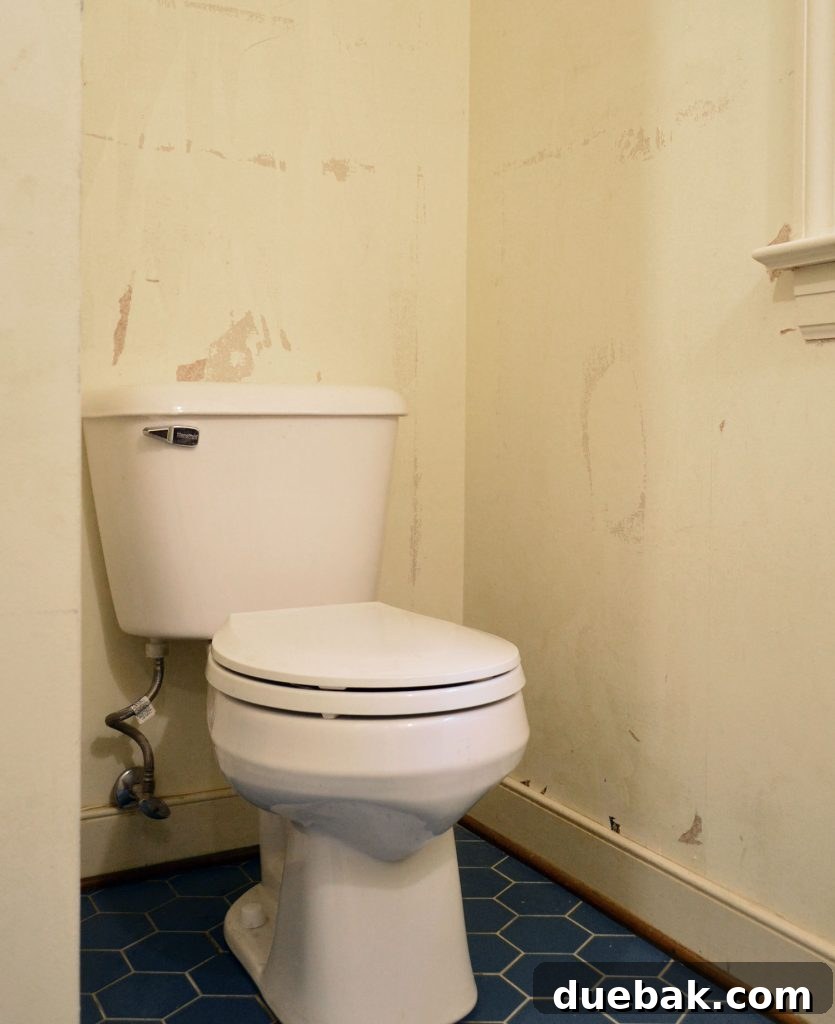
To address these damaged areas, start by ensuring the wall is completely dry and free of any dust or loose debris. Then, use your putty knife to carefully fill any dings, holes, or peeled patches with a thin, even layer of drywall spackle. For minor imperfections, like a shallow orange-peel texture where paint or drywall paper has lifted, spackle can easily fill them to create a much smoother finish. For larger areas of damage, particularly those with significant tears or deep gouges, you may require a thicker application of drywall mud, or in extreme cases, a full wall skimcoat to achieve a perfectly smooth surface.
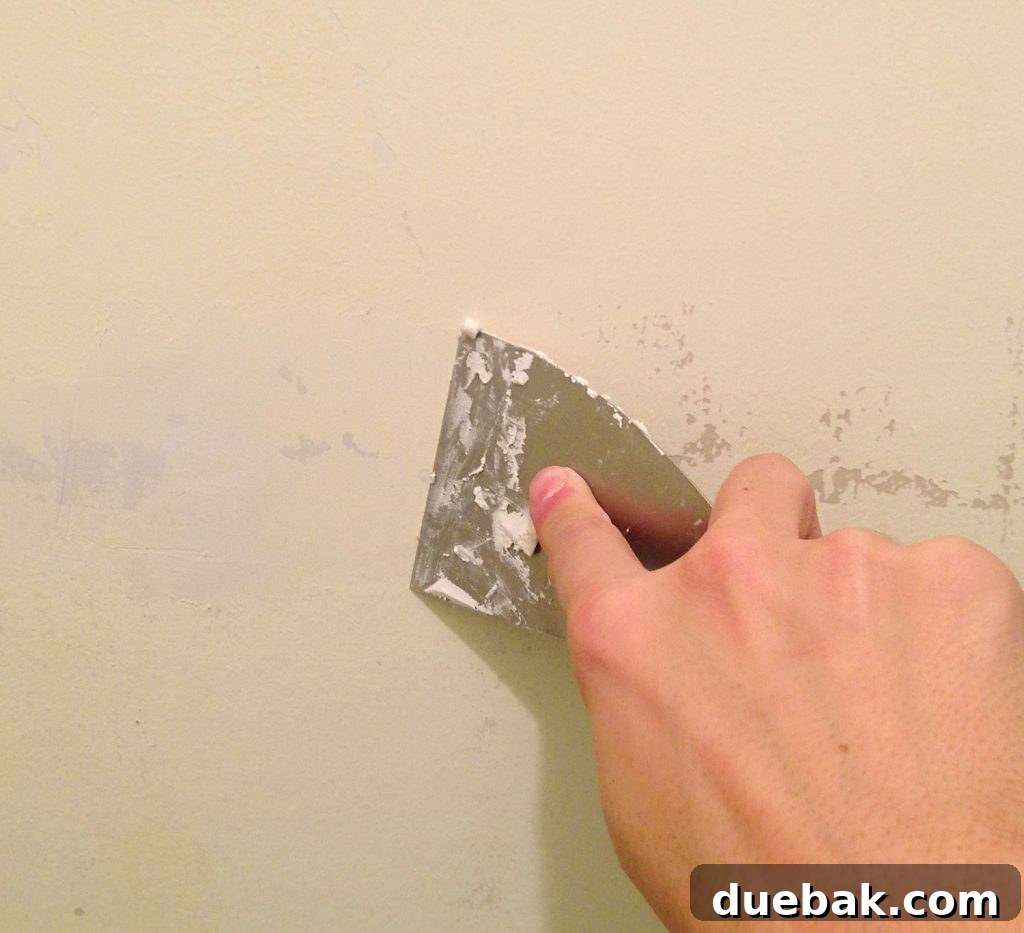
Once your spackle or drywall mud has thoroughly dried (always follow product instructions for drying times), use a high-grit sanding block or a palm sander to smooth these areas flush with the surrounding wall. You might even find that for very minor roughness, you can skip the spackle entirely and simply sand your rough spots smooth. However you address the damage, we highly recommend priming your walls before applying any new paint. Residual glue, even if visually undetectable, can cause paint to “flash” (appear shinier or duller in certain spots), leading to an uneven finish. A quality primer acts as a barrier, sealing in any remaining residue and ensuring you achieve a perfectly uniform and professional paint finish.
What Comes Next? Ideas for Your Newly Stripped Walls
Congratulations! You’ve successfully navigated the challenging journey of wallpaper removal, and your walls are now a blank canvas awaiting their next transformation. This is a huge accomplishment, and you should feel incredibly proud of your hard work! Now that the old wallpaper is gone and your walls are prepped, the fun part begins: deciding what to do next. The possibilities are endless, allowing you to personalize your space truly. Here are some inspiring ideas and resources to help you envision and execute your next wall treatment:
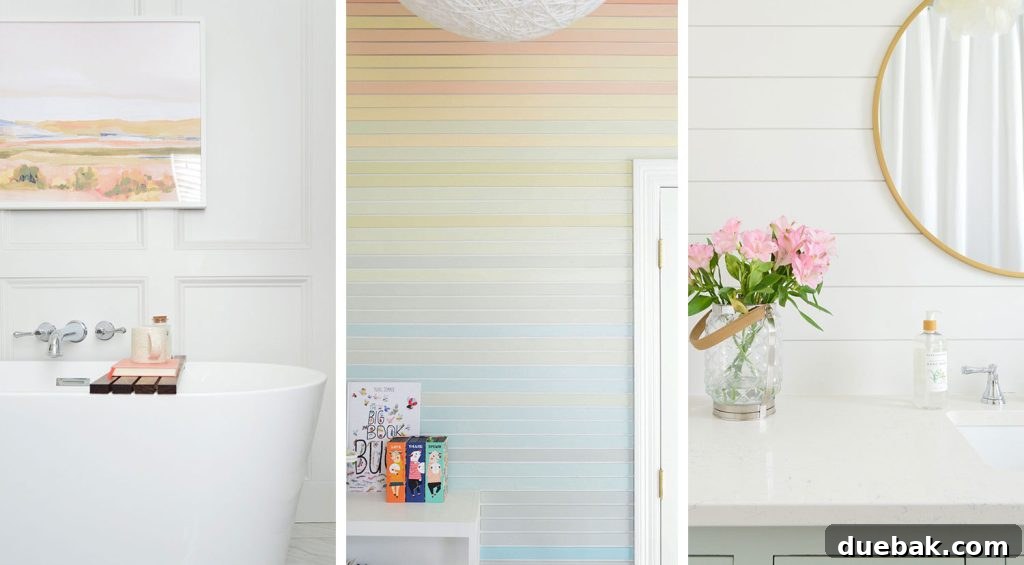
- How to Hang Peel & Stick Wallpaper: Yes, we really are suggesting putting wallpaper back up! Modern peel-and-stick options offer incredible flexibility and are far easier to remove if your tastes change.
- How To Hang A Removable Wall Mural: Make a big statement with a stunning, easily changeable mural.
- How To Paint A Wall Mural: Unleash your inner artist and create a unique, hand-painted focal point.
- How To Add “Wallpaper” Using Fabric: For a soft, unique, and luxurious texture, consider applying fabric to your walls.
- How To Install A Gradient Planked Wall: Add architectural interest and a touch of modern design with planking and a subtle color transition.
- How To Add Box Panel Board & Batten: Elevate your walls with classic or contemporary board and batten paneling for added depth and character.
- Paint It! For a timeless and versatile option, choose a fresh coat of paint. Explore our favorites like Benjamin Moore Edgecomb Gray (our Favorite Greige) or Sherwin Williams Pure White (our Favorite White).
Whatever you choose, your newly stripped walls are ready for their next beautiful transformation!
*This post contains affiliate links, so we may earn a small commission when you make a purchase through links on our site at no additional cost to you.