
Mastering the Deck: From Basic Boards to a Stunning Picture Frame Finish
The journey of transforming a backyard into a functional and beautiful outdoor living space is often filled with challenges, learning curves, and immense satisfaction. In our ongoing deck construction saga, we’ve reached a pivotal moment – the successful installation of all the primary deck boards. What began as a complex blueprint, a pile of lumber, and countless hours of meticulous work is now steadily evolving into the deck of our dreams. This chapter focuses on the satisfying progress of securing the main decking and the intricate process of crafting the professional-grade picture frame border that truly elevates its aesthetic.
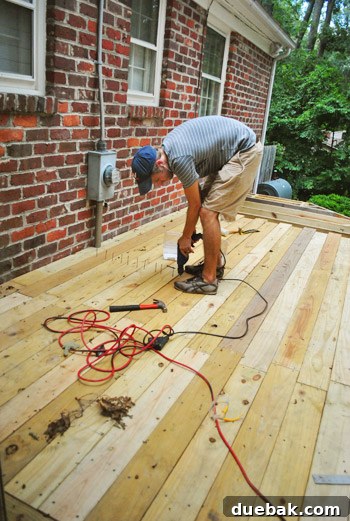
Following the foundational work, the bulk of the deck construction involved the systematic process of laying and securing the main decking boards. This phase, while seemingly straightforward, demanded meticulous attention to detail and a robust approach to ensure durability and a flawless finish. The goal was to transform a skeletal frame into a solid, stable surface capable of withstanding years of use and the elements. Each board was carefully positioned, ensuring consistent spacing for proper drainage and wood expansion, a crucial step for the longevity of the deck. This repetitive but vital task involved precise measurements, accurate cuts, and the diligent drilling and fastening of countless screws. The battle against the elements, particularly the intense heat, added an extra layer of challenge, turning each day’s work into a test of endurance and dedication. However, the sight of a growing, solid surface beneath our feet provided constant motivation, replacing the initial trepidation of working over an open framework with a tangible sense of accomplishment.
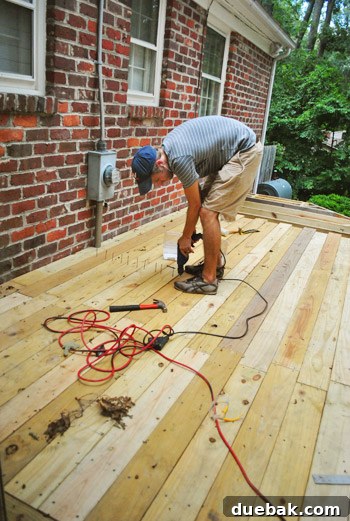
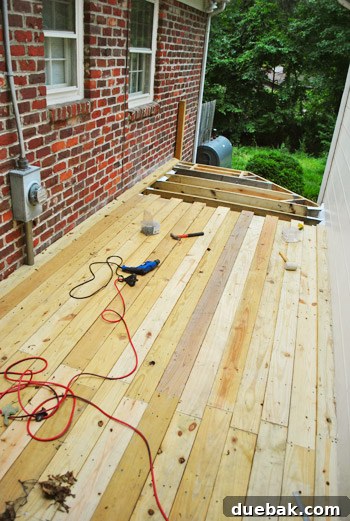
The transition from a series of joists to a robust, walkable surface marked a significant milestone. The middle section of the deck, once a patchwork of support beams, was now fully laid down and securely screwed into place. This tangible progress was immensely gratifying. Moving across a stable, solid platform rather than carefully navigating around open spaces was a relief, reinforcing the feeling that this ambitious DIY deck project was truly coming together. This phase, while demanding, underscored the importance of persistence in any large-scale home improvement endeavor. The meticulous process of fastening each board ensures not only structural integrity but also contributes to the overall safety and aesthetic appeal of the completed deck.
Crafting the Perfect Edge: The Picture Frame Border
As the main decking neared completion, the focus shifted towards the edges, specifically implementing a “picture frame” border. This design choice, common in professional deck construction, provides a clean, finished look by hiding the exposed end grain of the deck boards. It’s a detail that significantly enhances the perceived quality and craftsmanship of the entire deck. While this involved more board attaching, the edge work required a distinct approach involving precise planning, careful measuring, and accurate calculations to ensure seamless integration with the main decking. This wasn’t just about securing more boards; it was about defining the perimeter with architectural precision, ensuring every line and angle contributed to a cohesive and elegant design.
One of the key insights gained from various deck building tutorials was the optimal method for achieving a perfectly straight and even edge when incorporating a picture frame border. Instead of attempting to measure and cut each board individually before placement – a method prone to minor inconsistencies – the superior technique involves letting the main deck boards extend past the intended border. Once all the boards are securely fastened, a circular saw is then used to cut them simultaneously, creating one continuous, clean, and perfectly aligned edge. This method drastically reduces the risk of uneven lines and simplifies the overall process, ensuring a professional finish that would be difficult to achieve otherwise. It’s a testament to the value of researching best practices in DIY projects.
Precision Cutting: The Circular Saw in Action
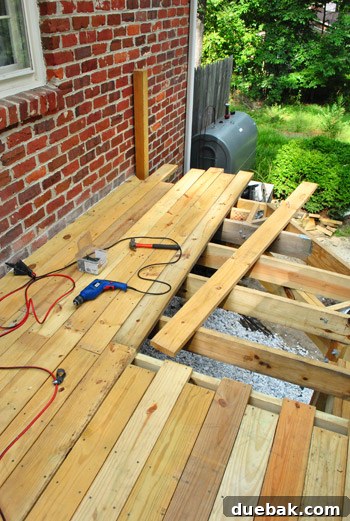
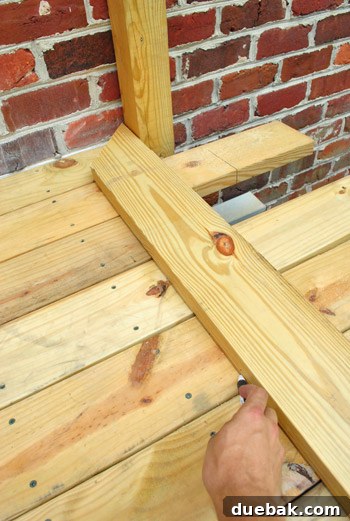
With the “jagged little edge” of the overhanging deck boards firmly screwed into place, the next step was to define the precise cut line. A pre-mitered frame piece was invaluable here; it served as a perfect guide, allowing for a clear and accurate pen line to be drawn across all the boards. This visual guide is critical for ensuring a perfectly straight cut, minimizing errors, and achieving the clean aesthetic characteristic of a well-executed picture frame border. This methodical approach highlights the importance of careful preparation before engaging powerful tools, transforming what could be a challenging task into a manageable and precise operation.
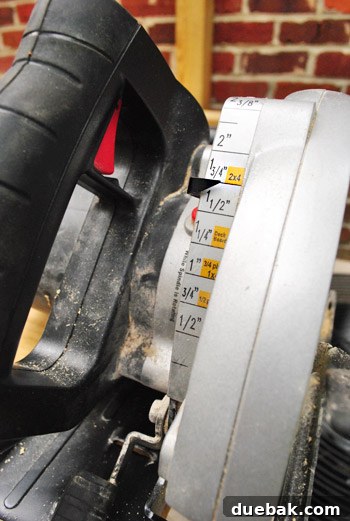
Before initiating any cuts with the circular saw, safety and precision are paramount. A crucial step involves setting the depth of the circular saw blade. For our deck boards, which are typically 1.5 inches thick, setting the saw depth to 1 and 3/4 inches ensures that the blade cuts cleanly through the decking material without accidentally nicking or damaging the underlying joists or girders. This seemingly small adjustment is vital for protecting the structural integrity of the deck and for maintaining the longevity of the saw blade. It’s a prime example of how attention to detail in DIY projects prevents potential headaches and costly mistakes down the line.
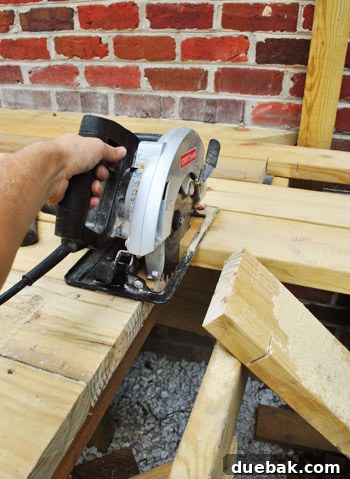
With the saw depth meticulously set, it was time to bring the cutting action to life. The circular saw hummed to life, making its way steadily along the marked line. This moment, often captured in a quick, somewhat staged photo, represents the culmination of careful planning and preparation. Maintaining a perfectly straight cut with a circular saw requires a steady hand and focused concentration, especially when working across multiple boards simultaneously. The process involved a smooth, controlled motion, stopping just before reaching the last board which, being part of the pre-mitered picture frame design, was already cut to size. This careful execution ensured that the straight edge of the main decking met the mitered corner of the frame piece with absolute precision, forming a clean and intentional transition.
The result of this careful cutting process was immediately apparent. Once the trimmed end piece was dropped into place, after a quick sanding to smooth out any rough edges, the transformation was remarkable. The once jagged, uneven line was replaced by a crisp, uniform edge that perfectly aligned with the framing. This instant visual improvement solidified the decision to implement the picture frame border, confirming its ability to impart a much more refined and “pro” appearance to the entire deck structure. The satisfaction of seeing such a precise outcome from a DIY effort is truly one of the most rewarding aspects of home improvement.
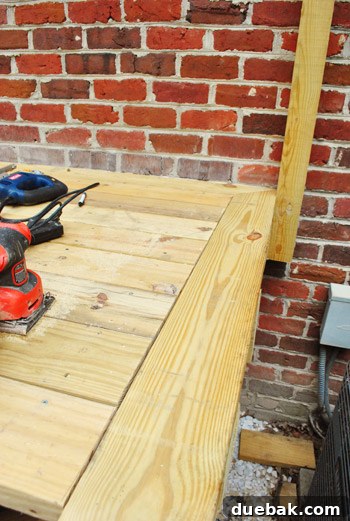
The Challenge of Angled Cuts: Mastering Mitered Corners
While cutting the straight edge was relatively straightforward, the real test of skill and patience came with the angled cuts required for the mitered corners of the picture frame border. This particular phase posed a unique geometrical challenge. My geometry skills, admittedly rusty, were put to the test as I grappled with determining the precise angle at which the two picture frame boards needed to meet for a perfect, seamless corner. This wasn’t a task to rush; it involved several test attempts on scrap wood, adjusting the miter saw’s angle incrementally until the fit was absolutely flawless. This trial-and-error approach, though time-consuming, was crucial for avoiding costly mistakes on the actual decking material and proved to be an invaluable learning experience in precision carpentry.
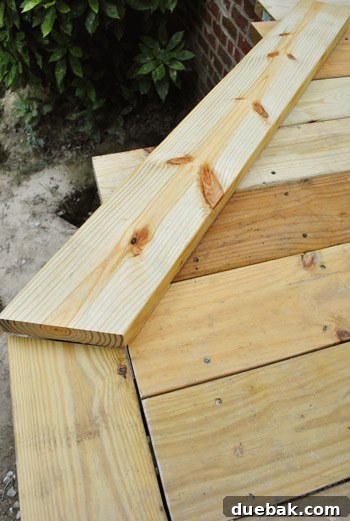
Once the correct angle was finally determined and perfectly replicated on the scrap pieces, the process for the actual deck boards followed a familiar pattern. The critical step of marking the cut with a clear, obvious pen line was repeated, providing an unmistakable guide for the saw. With the line established and the circular saw once again revved up, the angled cut was made with a newfound confidence, a direct result of the earlier experimentation and success on the test pieces. This methodical approach ensures that even complex cuts can be executed accurately and efficiently, minimizing waste and maximizing precision in the final deck construction.
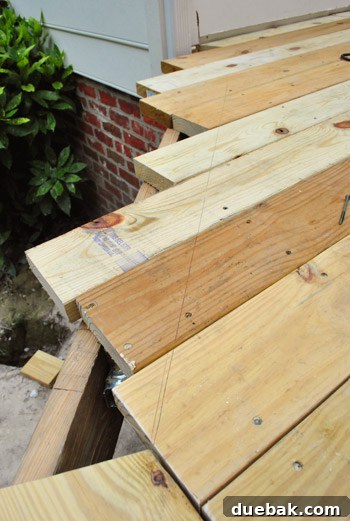
The satisfaction of seeing a perfectly executed angled cut is immense. The clean, crisp edge, though temporarily adorned with a fine layer of sawdust, stood as a testament to the effort and precision involved. This kind of detail, often overlooked in basic deck construction, is what truly differentiates a good DIY project from an exceptional one. The sharp lines and accurate angles contribute significantly to the overall professional appearance of the deck, making every moment of careful measurement and cautious cutting worthwhile.
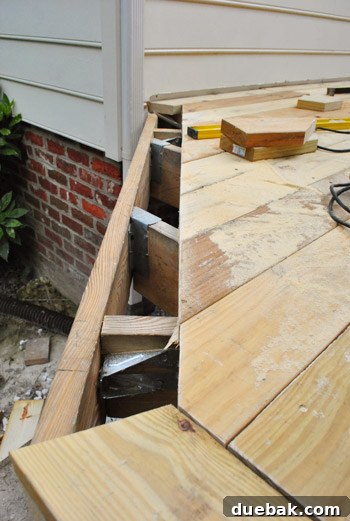
The Finished Product: A Deck Transformed
Bringing all the elements together, the final picture frame border, once every piece was meticulously screwed into place, presented a truly gratifying sight. The intricate process of planning, cutting, and securing each board, especially the challenging angled sections, paid off handsomely. There’s a profound sense of pride in completing such a detail-oriented task without damaging any of the precious decking material, relying instead on the “test scrap pieces that volunteered as tribute” during the learning phase. This successful execution not only demonstrates growing carpentry skills but also the value of patience and perseverance in tackling complex home improvement projects.
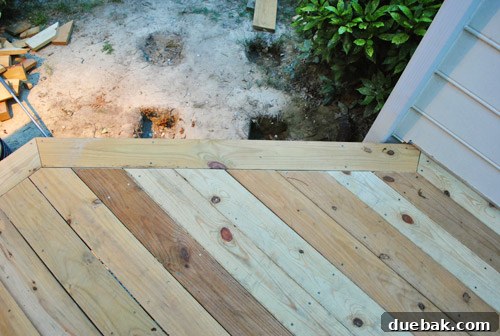
The completed end section, with its perfectly mitered corners and clean lines, truly underscores the transformative power of a picture frame border. Opting for this detail over a simpler edge proved to be an excellent decision. It adds an undeniable touch of sophistication and professionalism, making the deck look far more “pro” than a standard, straightforward installation. This architectural flourish elevates the entire outdoor living space, turning a functional platform into a beautifully crafted extension of the home.
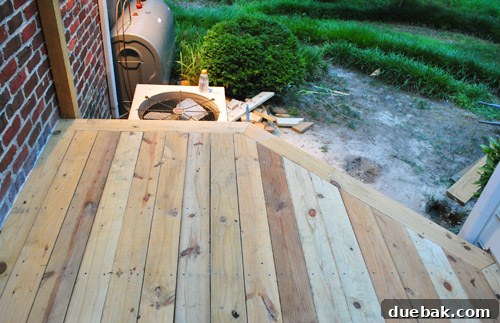
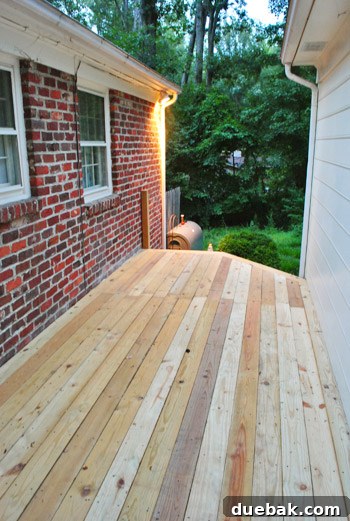
With the last board securely fastened, the entire deck surface is now officially complete! This milestone calls for celebration, marking the end of a demanding yet incredibly rewarding phase of the project. There were moments throughout this extensive DIY journey when the vision of a complete, solid deck seemed distant, but seeing it now, fully decked, is an immense triumph. The design also incorporated two distinct zippered seam details, strategically placed to frame the future dining table, much like the rendering Sherry envisioned here. These seams are not merely functional; they are built-in design elements that promise to truly pop once the boards are sealed and the furniture is in place, creating a cohesive and stylish outdoor dining area.
The Next Chapter: Railings and Stairs
While the completion of the deck surface is a significant achievement, it also heralds the beginning of the next, equally challenging phase: designing and constructing the railing and stairs. These elements, though back-burnered during the intensive decking process, now demand full attention. They involve intricate mathematical calculations, strict adherence to safety codes, and meticulous craftsmanship, as they are often focal points for inspectors. The complexity of ensuring both structural integrity and aesthetic appeal for railings and stairs presents a new set of hurdles. Will our DIY hero navigate these challenges with the same success, or will new obstacles emerge? The saga of our deck build continues, promising more lessons and, hopefully, more triumphs.
Have you embarked on any recent DIY projects that felt particularly heroic, even if only in your own estimation? Share your stories of home improvement bravery!
Psst – Eager to catch up on the entire journey of this extensive DIY deck project? Explore the previous chapters and witness the transformation from conception to completion. Here’s where we first shared our ambitious vision for the space, then meticulously removed the existing plantings and dismantled the old, dilapidated balcony. Following that, we focused on selecting the ideal materials and meticulously documented our first day of building progress. The subsequent steps involved the arduous task of digging all the essential post holes, learning from a setback when we failed our initial inspection, which led us to revise our plan and dig even more holes(which thankfully received approval!). With foundations in place, we proceeded to set the crucial support posts. Next, it was time to meticulously install all the joists, followed by a flurry of last-minute preparations before the deck boards. We then began the exciting process of laying the decking boards, whipped up a comprehensive mood board outlining our design plan, and then continued laying the remaining deck boards to bring us to this very chapter. Now you’re all caught up!