
Ultimate DIY Guide: Rerouting Dryer Vents and Adding HVAC for an Efficient Laundry Room Renovation
Embarking on a home renovation project, especially one involving essential utility spaces like a laundry room, often uncovers a myriad of tasks that are crucial but perhaps not the most glamorous. This post delves into two such vital elements: rerouting the dryer duct work and adding new HVAC vents. While these steps might not grab headlines, they are foundational for both the safety and long-term efficiency of your new laundry space. Join us as we navigate the practicalities of these often-overlooked yet incredibly important DIY endeavors, ensuring your renovated laundry room is not just beautiful, but also highly functional and safe.
Our journey began with the exciting completion of the framing phase for our new laundry room. Just as Monday’s post went live, our skilled framer, David, was meticulously adding the final touches. This included the construction of the crucial fourth wall, destined to host the doorway leading to the main hallway, truly defining the room’s boundaries. It’s these structural foundations that pave the way for all the intricate details that follow, setting the stage for a complete transformation.
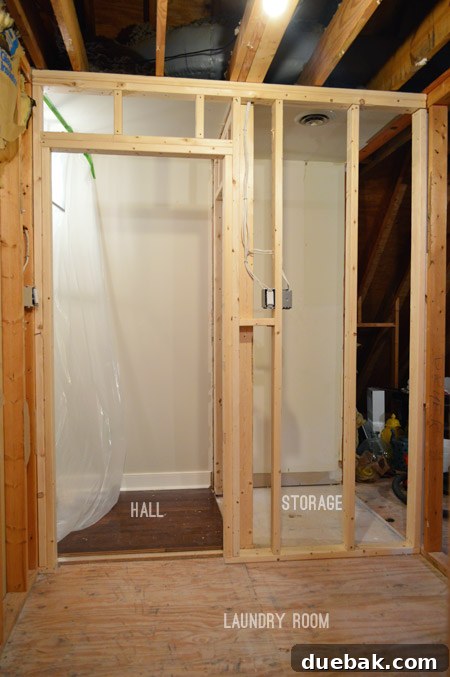
In addition to the laundry room wall, David also constructed the framework for what will eventually be the frosted door entrance to our current storage area, slated to become a future TV room. The perspective for this photograph was carefully chosen to bypass the protective plastic sheeting, a temporary but effective measure helping to mitigate attic heat and maintain a more comfortable working environment during construction. This foresight in planning helps manage environmental factors throughout the renovation process.
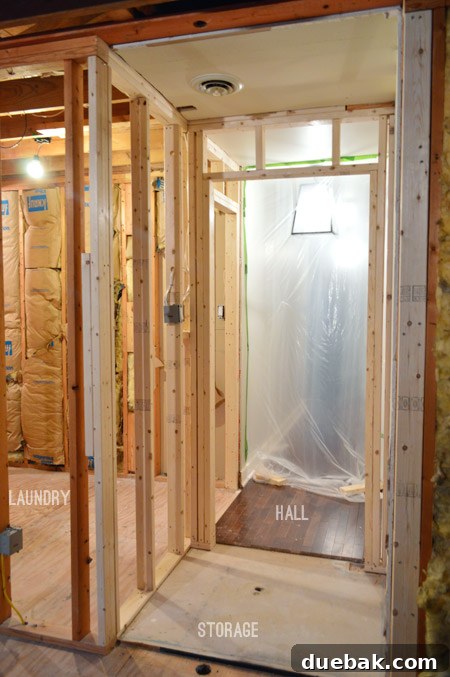
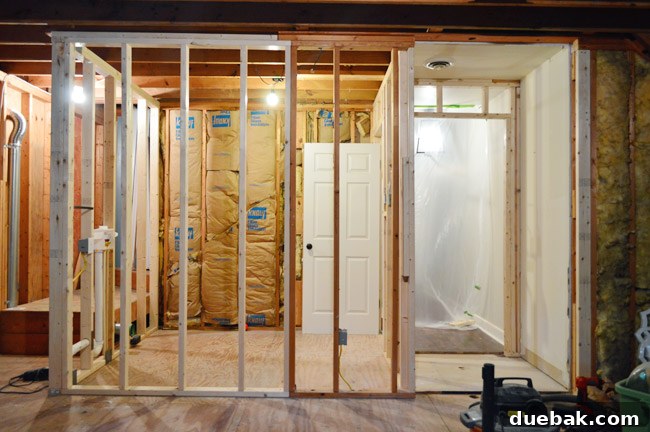
Here’s a comprehensive view of the fully completed framing, providing a clear visualization of the new room’s structure. To offer a sense of scale and spatial planning, I propped up a door, demonstrating how it will comfortably swing inward. With the room measuring a generous 8 feet deep, there is ample space for the door to open fully without any interference with the planned placement of our washer, dryer, or cabinetry. This careful planning ensures optimal functionality and flow within the new space, making it user-friendly and efficient.
While the initial excitement of framing a new room is palpable, this particular post is dedicated to shedding light on those often-overlooked, yet utterly essential, “behind-the-walls” tasks. These aren’t always the most thrilling parts of a renovation, but their importance cannot be overstated for the safety, efficiency, and longevity of your home. Before the drywall could even begin to go up, we meticulously tackled three critical items on our checklist. These steps, though perhaps not visually spectacular, are paramount for anyone undertaking similar home improvement projects. Prepare for a detailed visual journey through each stage, revealing the hidden work that creates a truly functional space.
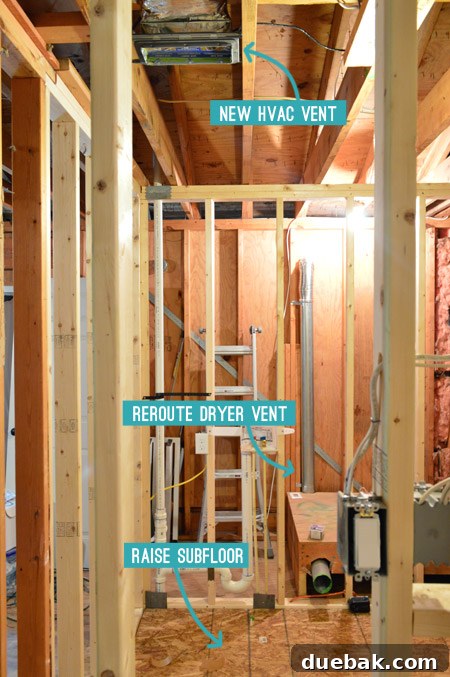
Optimizing Dryer Venting for Safety and Efficiency
Understanding Dryer Vent Requirements and Strategic Planning for Rerouting
Let’s begin with the crucial task of installing a new dryer vent. Proper dryer ventilation is not just about getting clothes dry; it’s fundamentally about safety and preventing potential fire hazards. Industry guidelines, endorsed by organizations like the International Residential Code, recommend that a dryer vent pipe should ideally be no longer than 25 feet. Crucially, for every 90-degree turn in the ductwork, you must subtract 5 feet from the maximum allowable length. This calculation is vital because excessive length and too many bends significantly restrict airflow, leading to reduced efficiency, increased drying times, and a dangerous buildup of lint – a primary cause of dryer fires.
Our previous dryer setup, unfortunately, served as a prime example of what not to do. It featured a convoluted path that was approximately 10 feet too long and incorporated at least three too many 90-degree turns, severely impeding airflow and posing a safety risk. Rectifying this was a top priority for our new laundry room. An inefficient vent means your dryer works harder, uses more energy, and increases the potential for component failure or, worse, a fire.
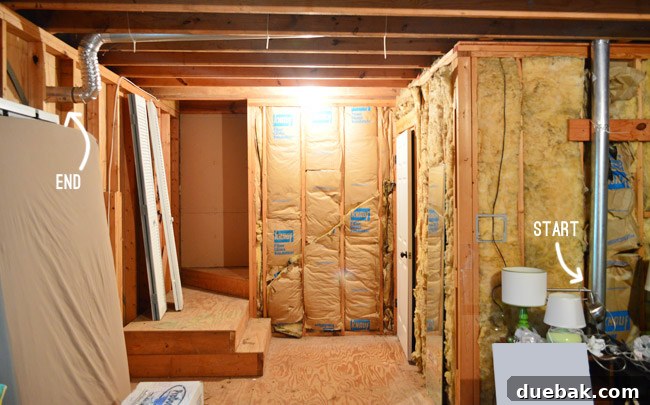
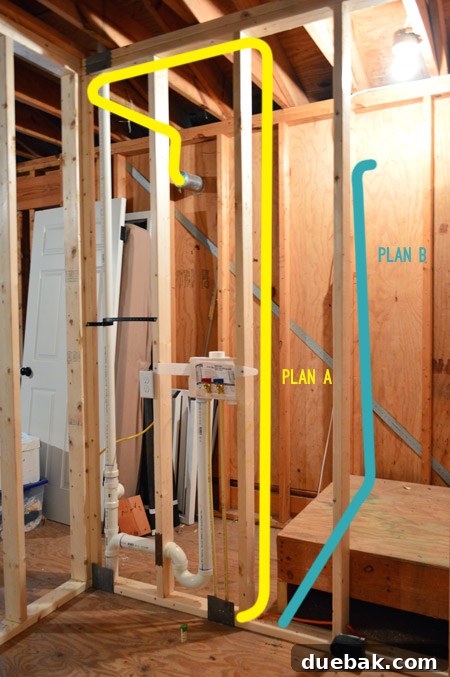
The good news was that relocating our dryer to the back wall of the newly framed room brought us much closer to an exterior wall, immediately offering a more direct route. Initially, our “Plan A” for the new vent path, while an improvement, still involved nearly as many turns and a similar overall length to keep the pipes tucked away and out of sight. This was clearly not ideal for optimal performance. Undeterred, we explored alternatives and discovered “Plan B,” a significantly more efficient and shorter route that involved running the ductwork under the attic steps. This innovative solution, however, presented its own challenge: cutting a brand new hole in the exterior wall. While this isn’t high on anyone’s list of favorite activities, it was a necessary step to achieve optimal dryer performance and safety. We’ll explain later why we ultimately chose to run the vent higher up the wall rather than exiting directly under the stairs, a decision driven by long-term maintenance, aesthetic considerations, and preventing lint accumulation.
Preparing the Pathway and Cleaning Existing Ductwork Components
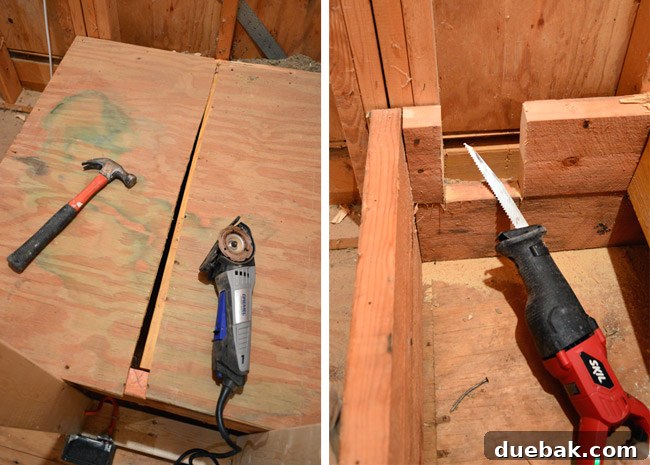
The first practical step for Plan B was to create a clear path for the 4-inch vent pipe beneath the attic step. I carefully used my Dremel Sawmax to cut along the plywood top, aligning the cut with the step joist. This precise cut allowed for easy removal and, more importantly, seamless reattachment later, ensuring structural integrity. Following this, a robust reciprocating saw was employed to cut a 4-inch wide section out of the 2×6 support, creating a perfect, custom-fit channel for the dryer vent to rest securely. This meticulous preparation ensures the ductwork is properly supported and integrated into the structure, preventing future sagging or damage.
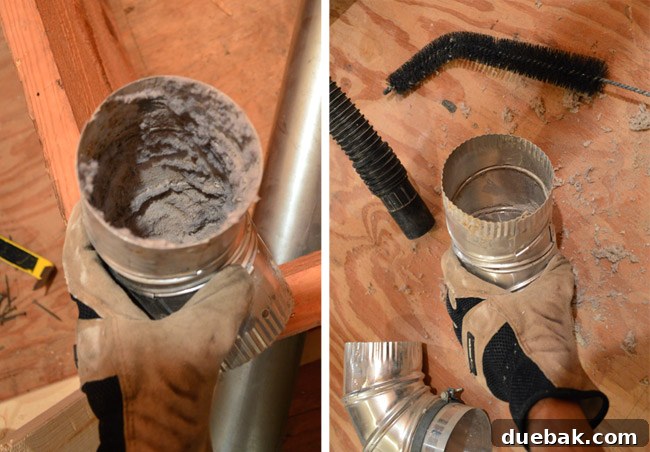
Rather than purchasing entirely new components, I opted to reuse the existing metal vent pipes. They were still in good condition, and I had a decent selection of pieces to work with, making this an economical choice. The key, however, was a thorough cleaning. I disassembled all the pipes and meticulously scrubbed them clean using a long-bristled brush in conjunction with my powerful Shop Vac. This step is critical to remove any accumulated lint and debris, ensuring unimpeded airflow and significantly reducing the risk of lint fires. A clean vent system is an efficient and safe vent system, extending the life of your dryer and protecting your home.
Assembling and Sealing the Dryer Duct Sections
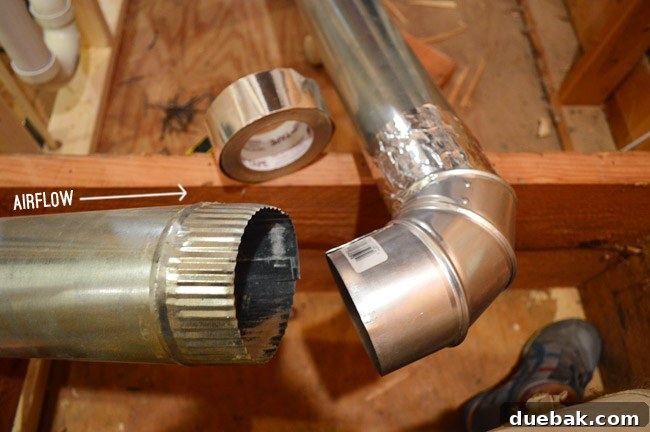
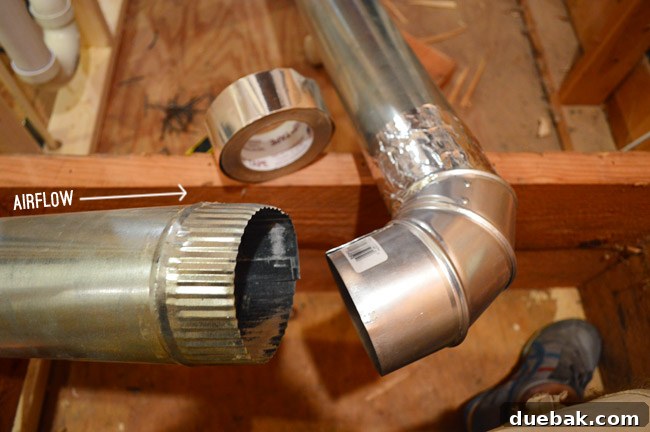
With the pipes thoroughly cleaned, the next phase involved reassembling them. Metal vent pipes are ingeniously designed with one end crimped, facilitating easy and secure connections. A crucial tip for assembly, which I learned through extensive research, is to ensure that the crimped ends are oriented in the direction of the airflow. This prevents air from catching on the crimping, maintaining optimal pressure and efficiency within the ductwork and preventing lint from snagging. Once each section was fitted snugly, I proceeded to seal all connections with metal-faced duct tape. It’s imperative to use genuine metal-faced duct tape, not standard “duck tape,” as the latter is not designed for the high heat and specific sealing requirements of dryer vents and can degrade over time, leading to leaks and hazards.
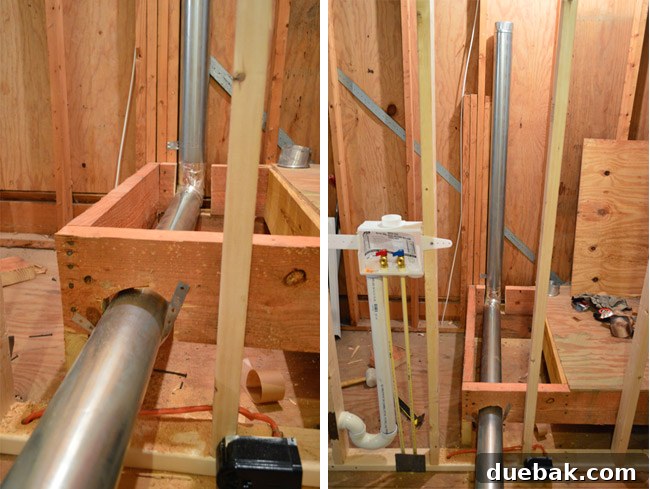
Once all the individual pipe sections were securely joined, I began the process of positioning the entire assembly to run under the stairs and then up the back exterior wall. An opening had been carefully made in the side of the stair structure to allow the duct to pass through seamlessly, ensuring a tidy installation. To ensure the ductwork remained firmly in place and well-supported against gravity and potential vibrations, I utilized sturdy steel hanger straps. These straps are essential for preventing sagging or shifting of the pipes, which could otherwise create kinks, impede airflow, or cause structural stress over time, compromising the entire system’s efficiency.
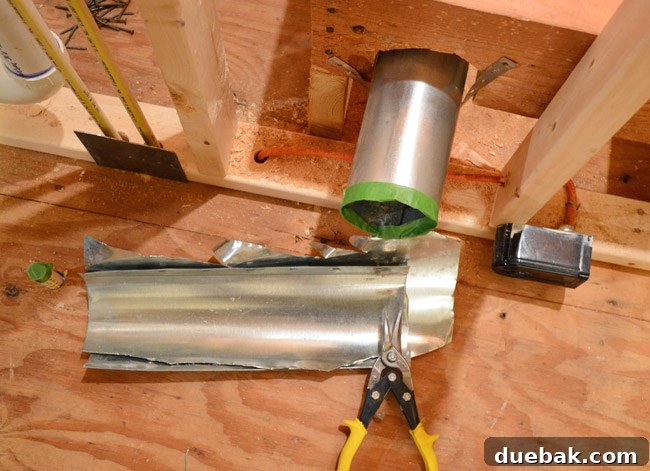
The bottom section of the pipe initially extended too far into the room, requiring a precise trim to integrate smoothly with the future dryer placement. I used specialized metal snips to cut it down to a more appropriate length. I purposely left it slightly longer than the final desired measurement, allowing for a precise cut and perfect fit once the room’s finishing touches are closer to completion. To prevent accidental cuts or injuries on the newly exposed sharp metal edge during ongoing work, I applied bright green painter’s tape as a temporary but effective safety measure. Safety during DIY projects is always paramount, especially when working with cut metal.
Creating the Exterior Vent Opening with Precision
The next major hurdle was cutting the new hole in the exterior wall – a task that, while intimidating, is entirely manageable with careful preparation and the right tools. My first step was to drill a pilot hole from the inside. This initial hole served as a crucial reference point, ensuring that the new exterior vent hole would be precisely positioned directly above the duct pipe I had just installed internally, guaranteeing perfect alignment and minimizing errors on the exterior.
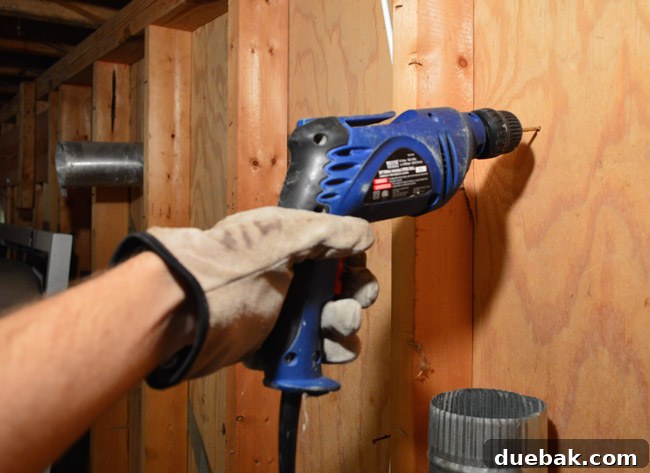
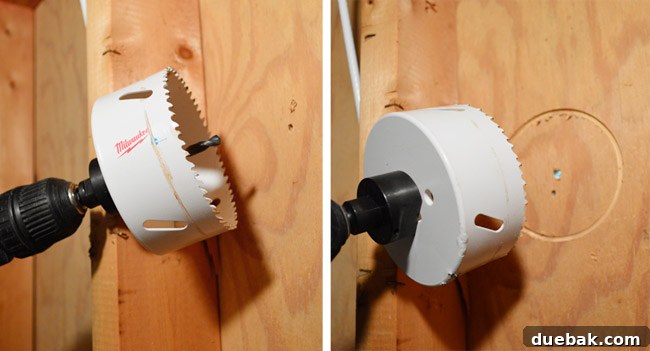
Armed with my pilot hole, I headed outside to tackle the more substantial task of creating the main opening in the siding. This involved working from a ladder, which always adds an extra layer of caution and safety considerations to any DIY project. For this, I employed a robust 4 1/8-inch hole saw (which will be seen more closely in an upcoming image). Starting from the exterior was a strategic choice; it allowed me to ensure the hole was perfectly centered within a single siding board, avoiding an awkward cut that might span across two boards and compromise the siding’s integrity. The interior pilot hole proved invaluable in guiding my drill to the exact desired location, minimizing guesswork and ensuring precision.
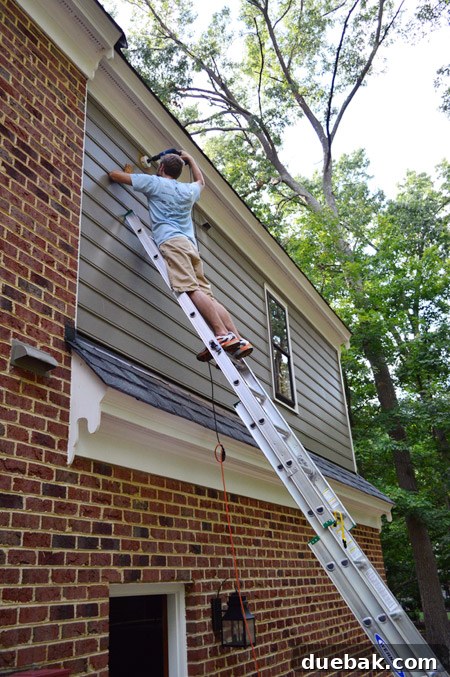
From the outside, I only cut through the hardboard siding, electing not to go through the underlying plywood at that stage. My goal was to minimize time spent precariously on the ladder, prioritizing safety and stability. Returning indoors, the 4 1/8-inch hole saw had conveniently created a fresh pilot hole in the plywood, which I could now follow to complete the cut from the inside. This two-stage approach ensured that the alignment remained perfect and allowed for a more stable working position for the final, full-depth cut, significantly reducing effort and risk.
Installing the Exterior Vent Cap and Final Duct Connections
With the hole now completely cut through the exterior wall, it was time to install the new dryer vent cap. I specifically chose a cap that closely resembled our original one. This was a deliberate choice because both caps will temporarily coexist until we undertake the more involved process of removing the old one and patching the siding (for now, the old vent has been capped and sealed from the inside to prevent drafts). Before installation, Sherry thoughtfully painted the new vent cap to match the existing siding, minimizing ladder work and ensuring a cohesive exterior appearance immediately upon installation, blending seamlessly with the home’s aesthetic.
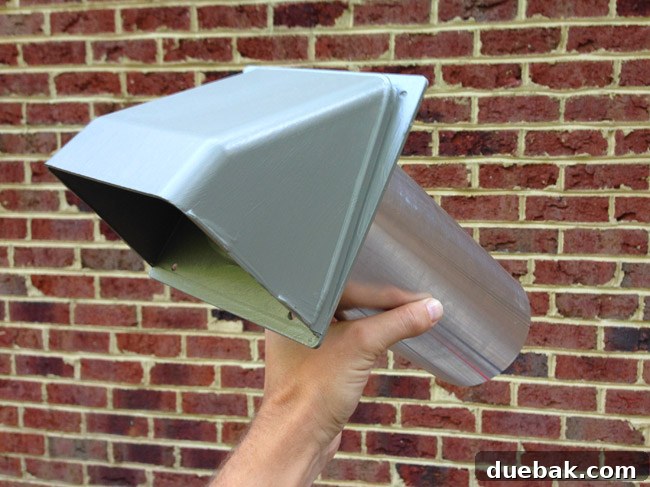
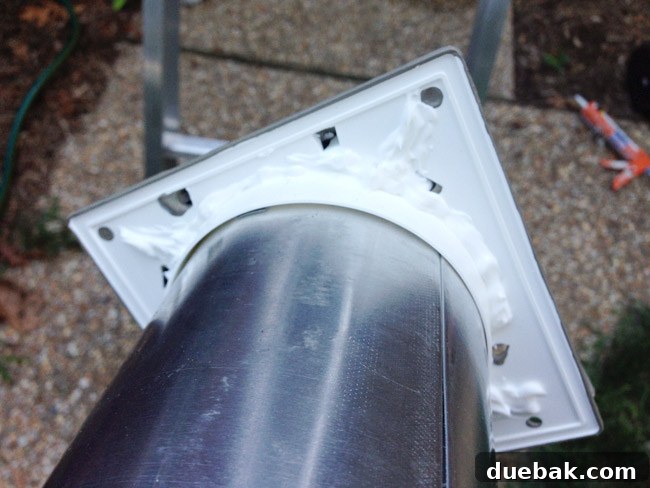
Prior to ascending the ladder for installation, I applied a generous ring of high-quality silicone caulk around the back flange of the vent cap. This step is absolutely critical for creating a weather-tight seal from the outset, preventing any moisture infiltration that could lead to damage, rot, or mold growth behind the siding. A secure, watertight seal is paramount for the longevity and integrity of your home’s exterior envelope, protecting against the elements.
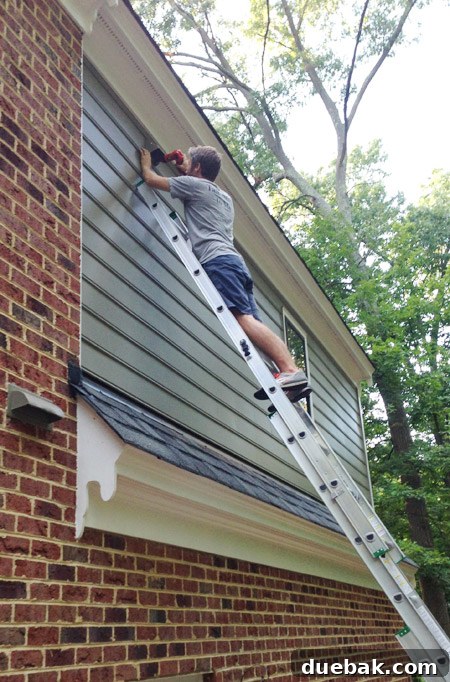
Installing the vent cap required a bit of careful maneuvering and slight sanding down of the 4 1/8-inch hole to accommodate the 4-inch pipe, but eventually, it settled into a snug fit. Once in place, I securely screwed it to the siding, ensuring a firm and durable hold against wind and weather. This photo also illustrates precisely why we opted to place the new vent as high as we did, rather than exiting the house directly beneath the attic stairs. Had we chosen the lower route, the vent would have been barely above the small roof section below, inevitably leading to lint accumulation on the shingles. Therefore, since a higher placement was necessary regardless, we decided to align it with the existing old vent. This not only provided a cleaner, more organized look, preventing a visually “janky” diagonal appearance, but also simplified future patching when the old vent is eventually removed and the siding repaired.
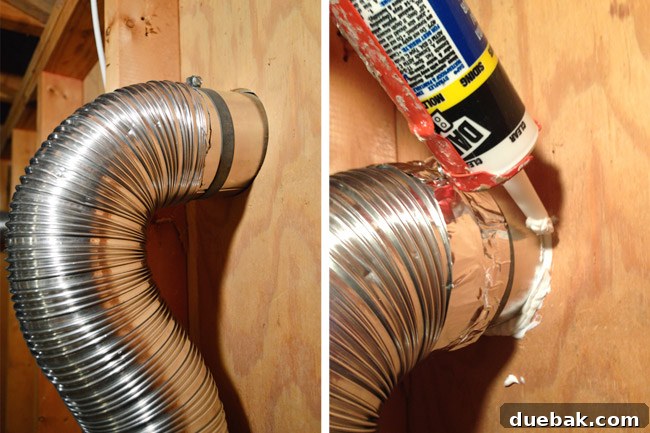
Back inside, with the exterior vent firmly in place, I trimmed off any excess vent pipe protruding into the room using my metal snips. I then connected a semi-rigid vent pipe to it, securing the connection with another generous application of metal-faced duct tape and a final ring of silicone caulk. This combination of mechanical connection, specialized tape, and caulk ensures an airtight and durable seal, essential for preventing air leaks, maintaining optimal dryer performance, and containing lint within the ductwork, significantly reducing fire risk.
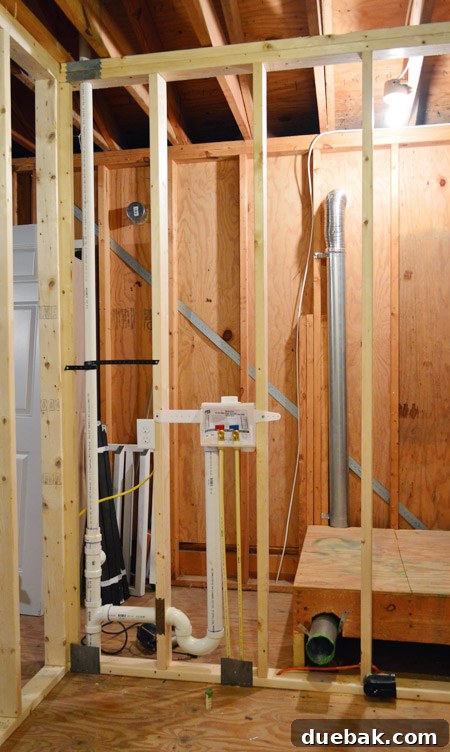
With the dryer duct work meticulously installed and sealed, the final step for this section was to reattach the section of the stair that had been cut away to create the pathway. Once that was done, our dryer ventilation system was officially “back in business.” Of course, true operational readiness awaits the actual dryer installation and connection, but the crucial infrastructure is now perfectly in place for safe and efficient drying for years to come.
Preparing the Subfloor for a Seamless and Durable Finish
Before diving back into duct discussions, let’s take a brief but important detour to address the floor. As you might have noticed, the new laundry room currently sits at a significantly lower level than the adjacent areas, specifically our existing hardwood floors. Our goal is to achieve a perfectly flush transition between the new tile flooring in the laundry room and the existing hardwood floors in the rest of the house. To accomplish this seamless aesthetic and functional blend, it was necessary to carefully build up the subfloor to the correct height and ensure a stable base for the tile.
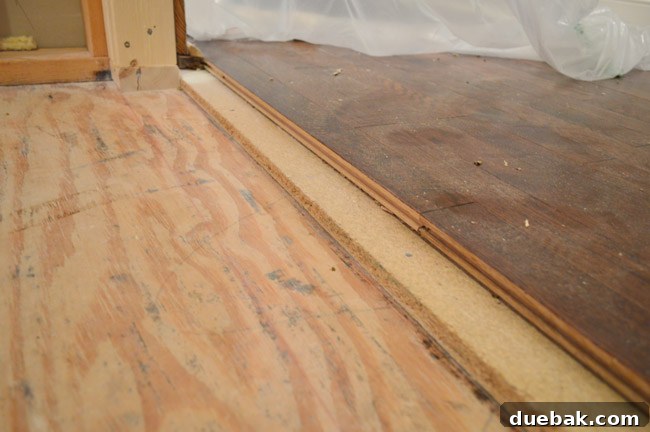
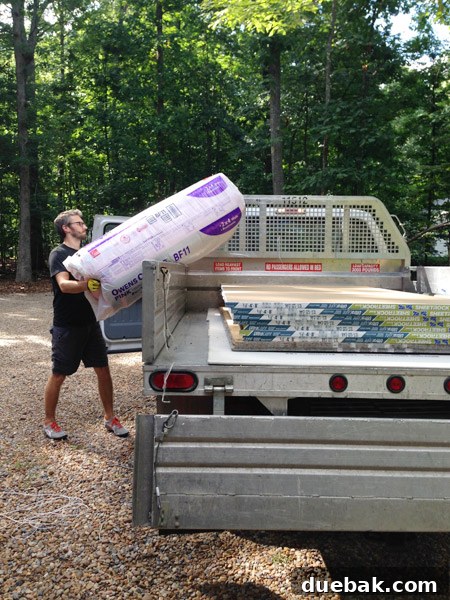
After careful calculations, I determined the precise layers needed to achieve the desired height. This involved a 3/4-inch layer of new subfloor (OSB), followed by a 1/2-inch concrete backer board – which is essential for providing a stable, rigid, and waterproof base for tiling. Additionally, I factored in the combined height of the tile itself and the thinset mortar used for adhesion. This meticulous arithmetic ensured that the finished tile surface would be perfectly flush with the existing hardwood, preventing tripping hazards and creating a visually appealing transition. Given the need for several large sheets of subfloor and other bulky materials like drywall and insulation, this was the perfect opportunity to utilize Home Depot’s convenient $19 truck rental service. It saved multiple trips and simplified material transport significantly, making the logistics much smoother.
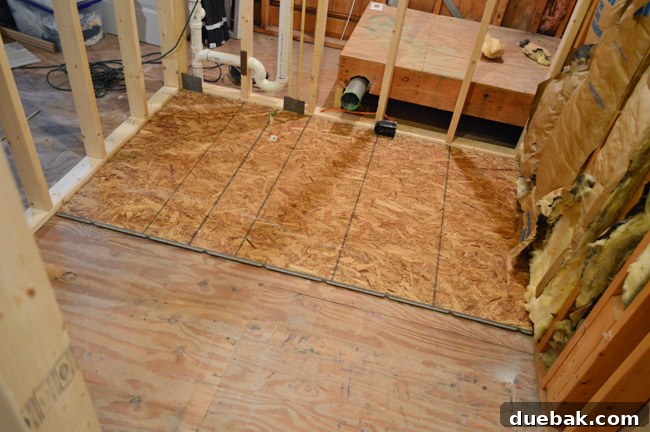
The 4 x 8-foot sheets of 1/2-inch OSB subfloor required some precise trimming with my circular saw before they could be brought into the room and maneuvered into place. Despite their size, getting the two sheets to fit nicely into the space wasn’t overly challenging, thanks to accurate measurements. Once positioned, I meticulously glued and screwed them down. The gluing step is particularly important as it provides an extra layer of adhesion that significantly helps in reducing any potential creakiness or movement in the subfloor over time, ensuring a solid, quiet, and stable foundation for the new tile. Here’s the first sheet being laid down, a critical step for a lasting floor.
Integrating HVAC: Bringing Essential Comfort and Air Quality to the Laundry Room
Assessing the Need for New HVAC Vents and Finding Resources
Now, let’s circle back to ducts, but this time focusing on the HVAC variety. Our newly framed laundry room, despite its proximity to the main trunk line – and the fact that the old laundry nook even had its own dedicated vent – was initially designed with zero provisions for heating or cooling. This oversight would lead to an uncomfortable and potentially damp environment, not ideal for a space housing appliances that generate heat and moisture. Integrating proper heating and cooling is crucial for user comfort, preventing mold growth due to humidity, and prolonging the life of expensive laundry appliances. The solution: tapping into the existing main HVAC trunk line to ensure year-round climate control.
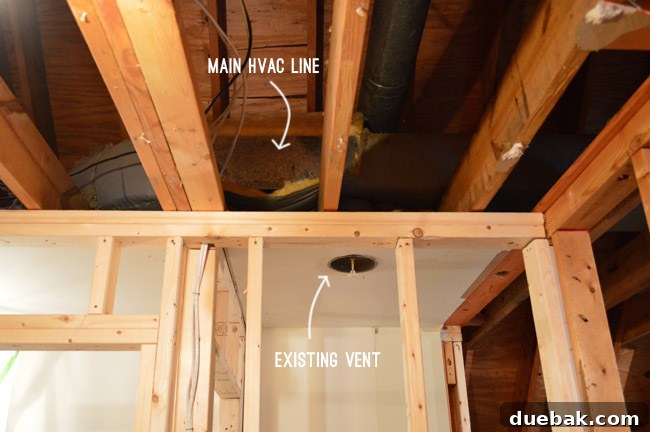
Admittedly, this was an area where my professional expertise was limited, and finding comprehensive, easy-to-follow guidance online for DIY HVAC additions proved a bit challenging. However, after extensive searching, I found a valuable online series that offered enough explanation and clear photographs to instill the confidence needed to tackle this project. Furthermore, during a visit to Home Depot, I discovered an “Add A Vent” kit. This kit came complete with the necessary materials, a detailed tool list, and step-by-step instructions, making the prospect of adding an HVAC vent seem far less daunting than initially anticipated and a great option for less experienced DIYers.
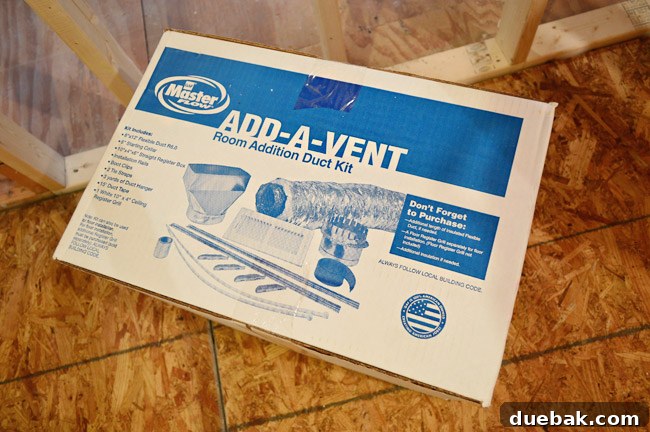
Interestingly, despite purchasing the “Add-A-Vent” kit (which cost $67), I ultimately didn’t use the boxed set for this specific installation. Upon reviewing its contents, I realized I already owned several of the included items, and the remaining components could be purchased individually for approximately $54, offering a small cost saving. Among these individual purchases was the incredibly useful “Speedi-Boot,” a pre-fabricated component designed to simplify and expedite the installation of new ceiling vents between joists. This realization prompted me to return the complete kit and instead opt for an à la carte approach. However, I still want to highlight the “Add-A-Vent” kit here, as it can be an invaluable resource for others who might not already possess some of the necessary supplies and are looking for a comprehensive, all-in-one solution to add an HVAC vent.
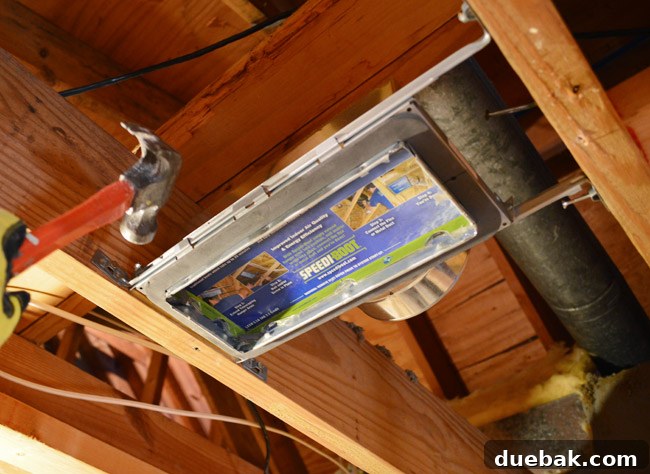
Tapping into the Main HVAC Trunk Line with Confidence
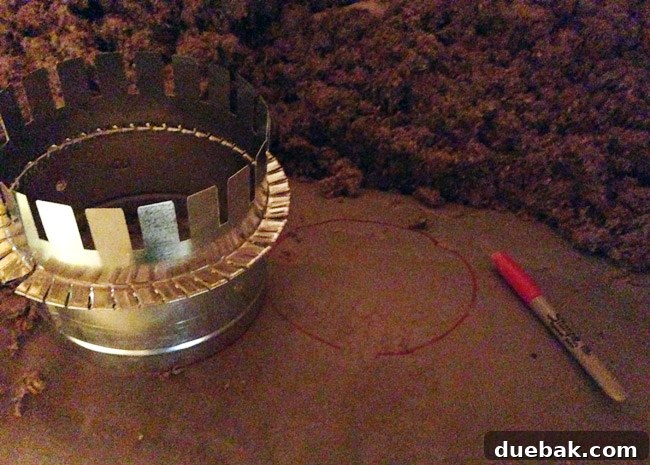
The most nerve-wracking part of this entire HVAC addition was undoubtedly cutting into the main HVAC trunk duct – a critical component of the home’s climate control system. However, with the detailed guidance from my online research, I carefully traced out the exact location where I intended to attach the new collar. Precision here is paramount to ensure proper airflow, avoid damaging the existing system, and create an efficient connection for the new vent.
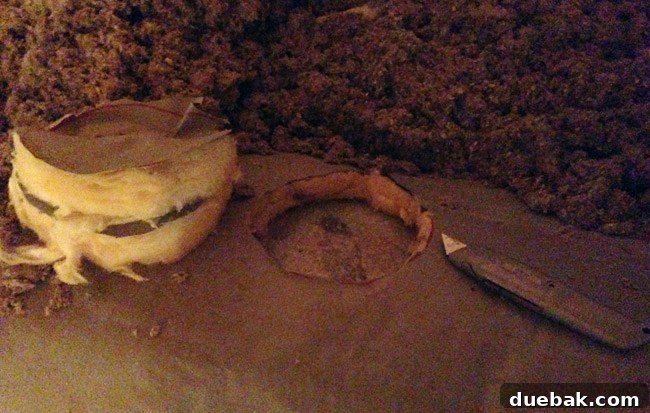
Following the traced outline, I used a sharp utility knife to carefully cut through the outer insulation layer, meticulously exposing the metal vent beneath. This step requires a steady hand and controlled pressure to avoid cutting too deeply and potentially damaging the metal duct itself, which could lead to air leaks and reduced system efficiency. Patience and precision are key here.
While my initial tutorial provided a solid foundation, it didn’t offer much guidance on cutting the actual hole in the metal duct itself. Thankfully, a quick search led me to this helpful video, which clarified the process beautifully. Essentially, I hammered a flathead screwdriver into the metal to create a starter puncture, then used my metal cutters to carefully work my way around the circular outline. While there are undoubtedly specialized snips designed for cutting perfect circular holes, my existing metal cutters proved sufficient for the task, performing well enough to create the required opening for the collar. The key is to take your time and make small, controlled cuts.
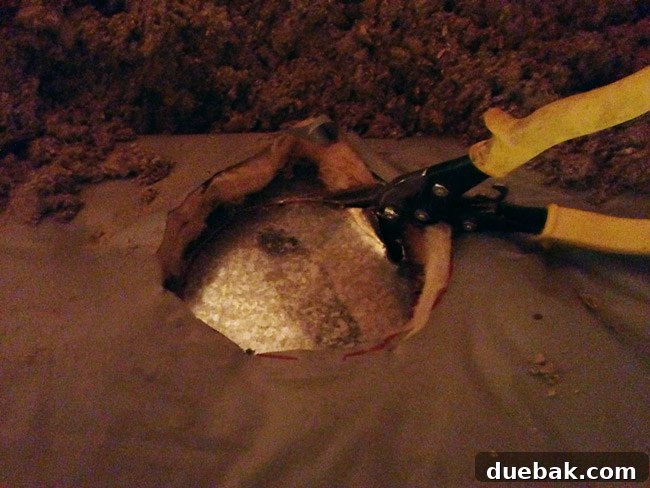
Installing the Collar and Connecting Flexible Ductwork for Optimal Airflow
The collar, a crucial component for connecting the flexible duct to the main trunk, features a series of tabs. To ensure a secure and stable fit, I bent half of these tabs outward, allowing them to rest flush against the exterior of the vent, acting as an anchor. The remaining tabs were bent inward, designed to be inserted into the newly cut hole. Once the collar was positioned within the hole, I reached through its top and bent the inward tabs outwards in the opposite direction. This clever mechanism effectively locks the collar firmly against the inside of the vent, creating a remarkably snug and stable connection without the need for additional fasteners on the interior, ensuring a leak-free attachment.
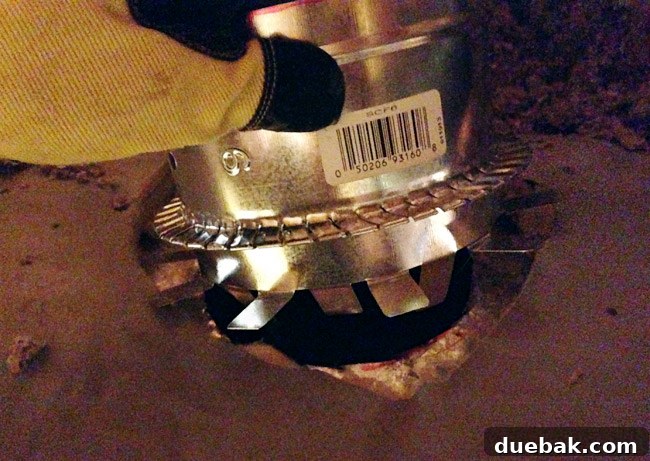
To finalize the connection and ensure an absolutely airtight seal, I firmly pressed high-quality foil duct tape around the entire circumference of the newly installed collar. This specialized tape is essential for preventing air leaks, which can significantly reduce the efficiency of your HVAC system by allowing conditioned air to escape. A tight seal here is critical for directing conditioned air effectively to the new vent, maximizing energy efficiency and comfort in the laundry room.
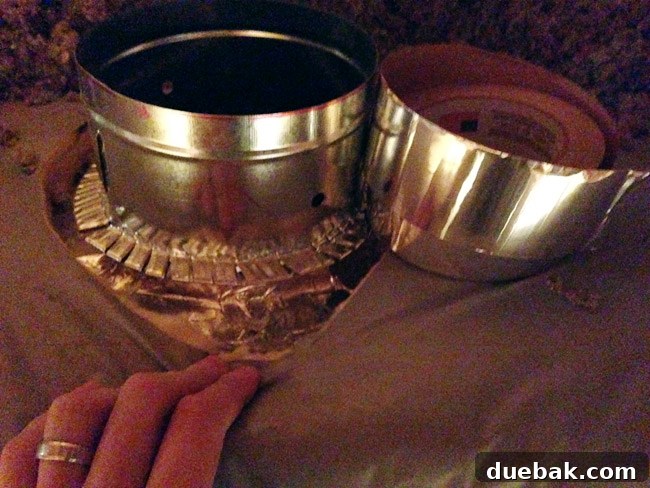
The next step involved attaching the insulated flexible duct, which would create the pathway from the new collar to the ceiling vent. Cutting this flexible duct to the desired length is straightforward with a utility knife, but remember that you’ll also need wire cutters to snip through the internal wire coil that gives it its structure. I secured the flexible duct to the collar using a robust zip tie, followed by a thorough wrapping of more foil duct tape to ensure a strong, airtight connection that will withstand the test of time and airflow. This dual approach provides both mechanical stability and an excellent, long-lasting seal.
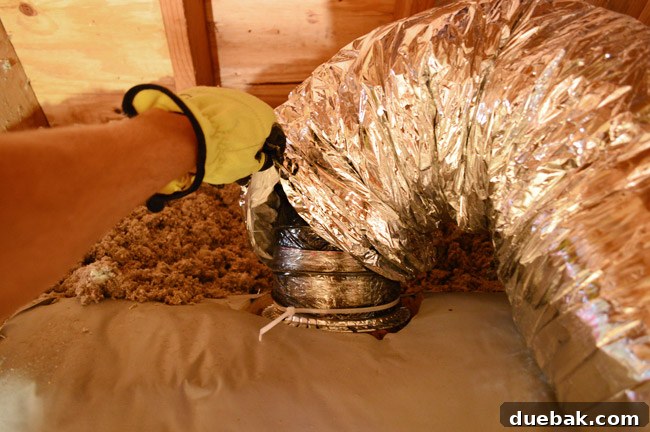
To optimize airflow and prevent any potential restrictions or energy loss, I used additional zip ties to strategically hang the flexible duct from the ceiling joists. This ensures that the duct maintains a smooth, unkinked path, eliminating any sharp bends or sagging that could impede air velocity. Avoiding kinks is paramount for maintaining the intended performance of the HVAC system, ensuring that conditioned air flows freely and efficiently into the laundry room, contributing to consistent temperature and humidity control.
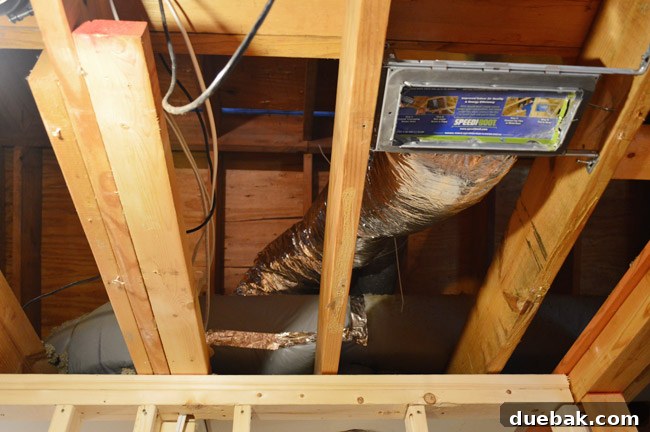
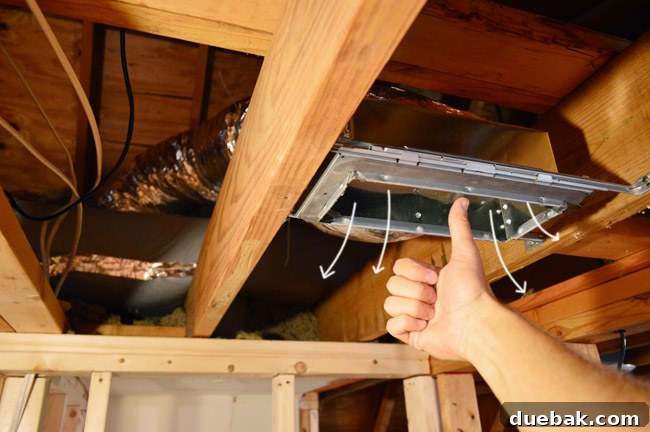
For now, I’ve opted to leave the cardboard “dust shield” (as the manufacturer terms it) in the ceiling vent. This will protect the interior of the vent from construction dust and debris, preserving its cleanliness and functionality until the room is fully ready for heating and cooling. However, I did perform a quick test by briefly turning on the A/C to confirm proper operation. As my enthusiastic thumbs-up and the cartoon air arrows in the picture clearly indicate, the new vent worked perfectly, delivering a satisfying burst of conditioned air! This small test provided immense satisfaction, confirming that our efforts to bring comfort and controlled climate to the laundry room were a complete success.
Conclusion: Laying Solid Foundations for a Functional and Comfortable Laundry Space
While installing dryer vents and HVAC ducts might not be the most glamorous aspects of a home renovation, completing these critical, “behind-the-walls” tasks brings an immense sense of accomplishment. These projects are the true backbone of a functional, safe, and comfortable laundry room, ensuring long-term efficiency and peace of mind. Getting them meticulously out of the way means the room can now truly begin to take shape in more visible and exciting ways. Indeed, we’ve already embarked on the drywalling phase, and seeing the sheets go up is rapidly transforming this space from a framed skeleton into what is visibly becoming a proper, enclosed room.
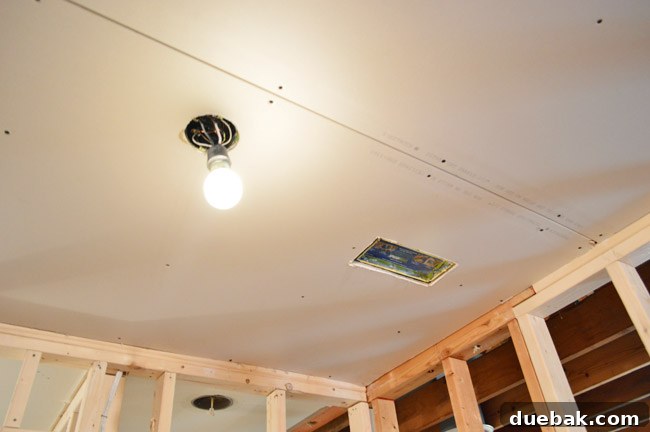
We’ll be sharing all the details of the drywall installation as soon as it’s completed, hopefully by Monday if everything continues to go smoothly according to our timeline. We have a couple of book photoshoots scheduled for today and tomorrow, which forces us to temporarily switch our brains out of “Laundry Room Mode” and focus on other creative endeavors. However, we were fortunate enough to get some laundry done at my parents’ house yesterday, ensuring we won’t be “stinky” for the photographer! Stay tuned for more updates on our ongoing renovation journey, as we bring this new laundry room to its beautiful and functional completion.