
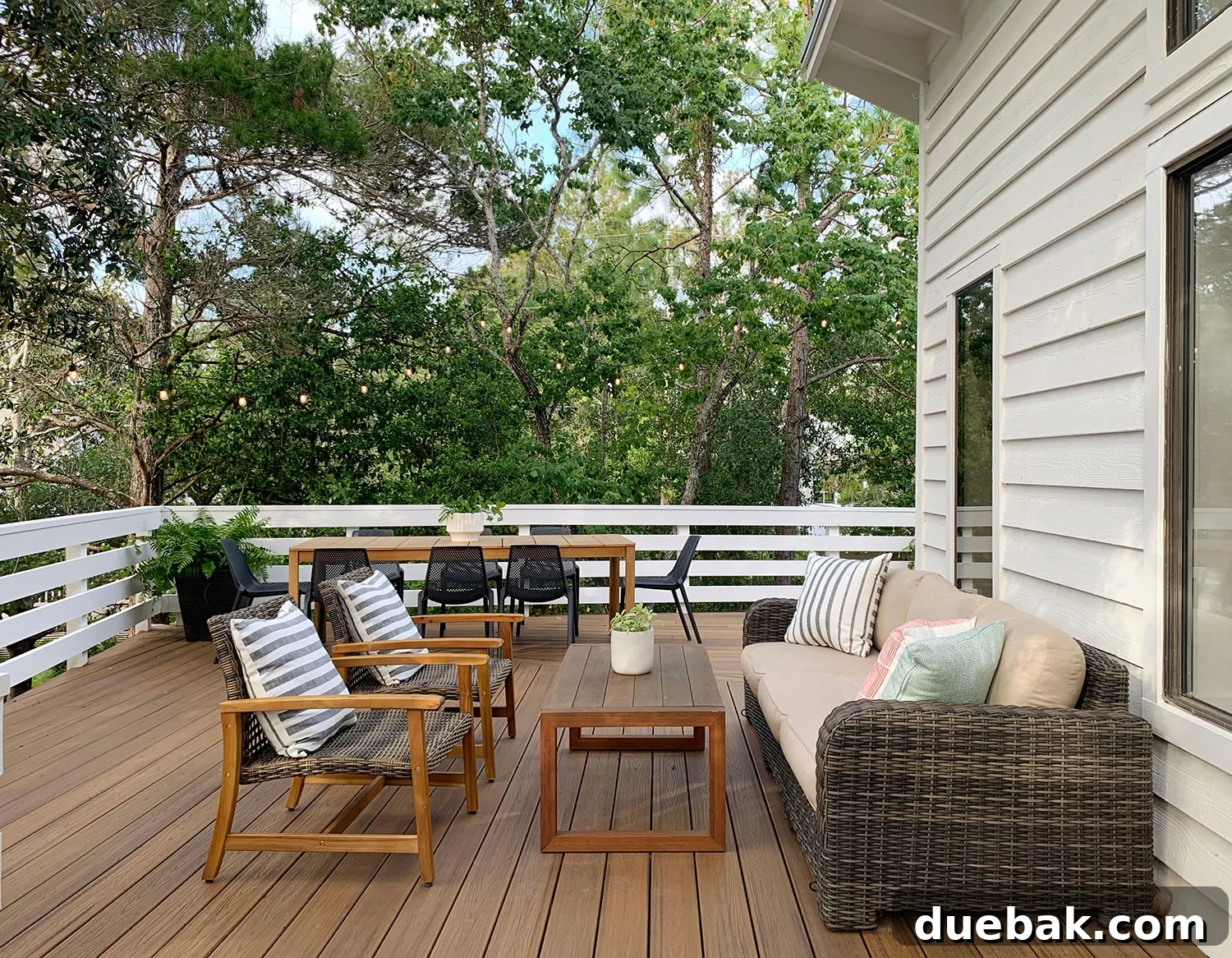
In addition to our 1,400 square feet of indoor living space, our house benefits from generous outdoor areas — most notably a large second-story deck off of our family room. That elevated outdoor “room” surrounded by trees has quickly become one of our favorite places, and in this post I’ll explain why.
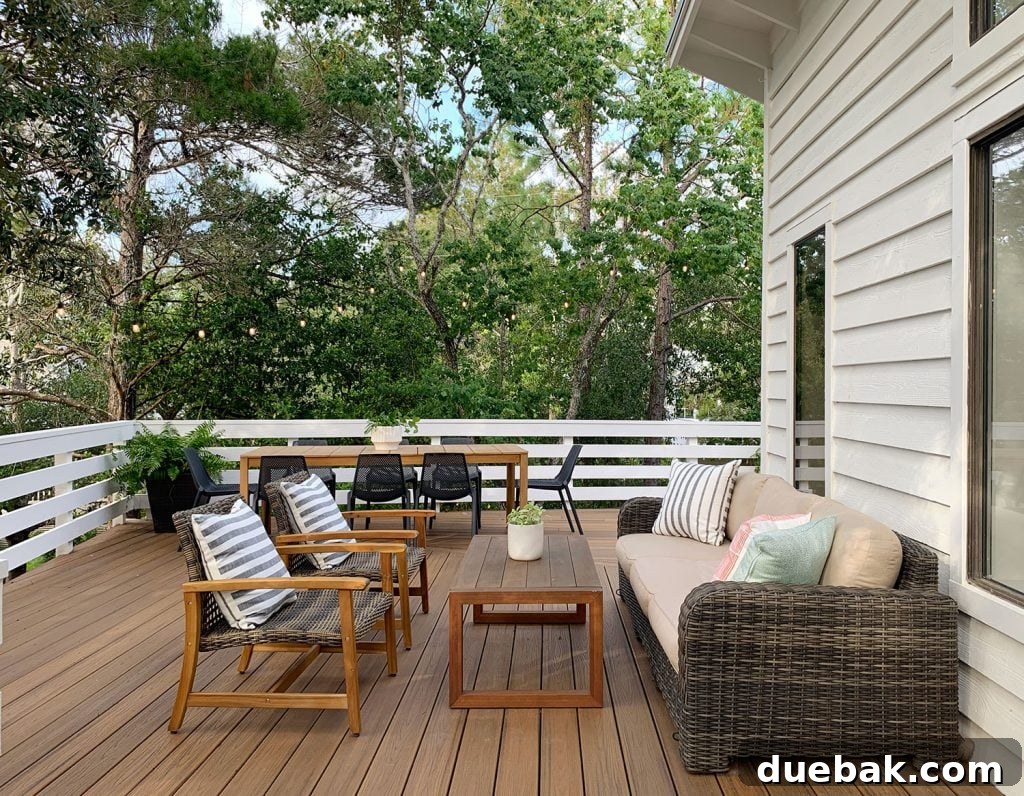
We bought the house in February when it was raining, so we didn’t spend much time out here at first. You may remember the “before” photos we shared with the exterior updates: we painted the house, replaced rotting deck boards with Trex, and swapped the shaky old railings for new sturdy ones. Those repairs helped reveal just how large this deck truly is.
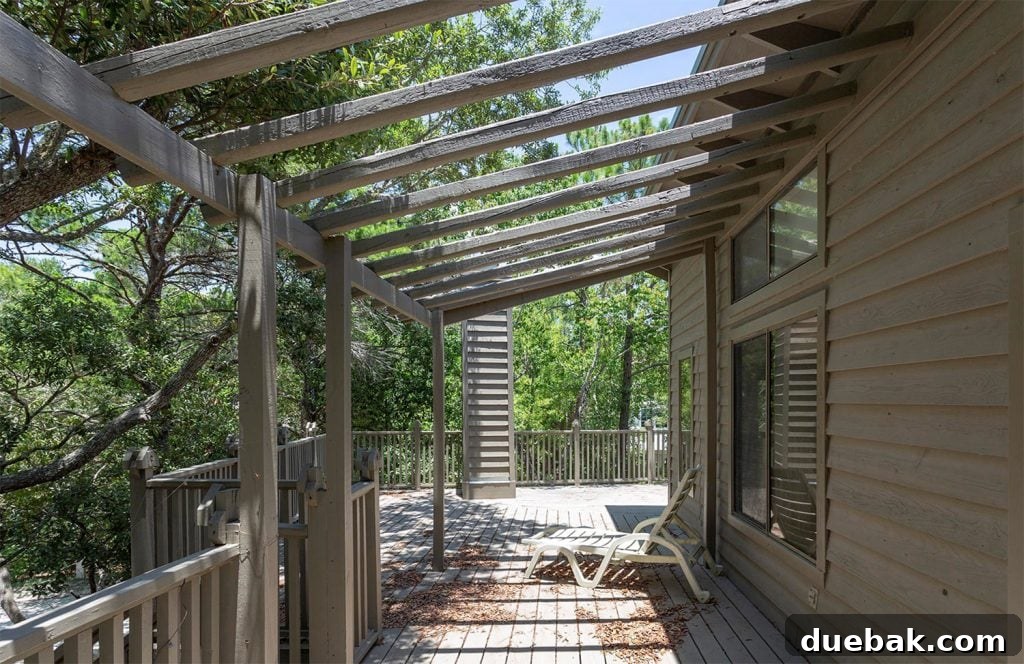
Old features like a pergola and a chimney had hidden the deck’s scale. Without them, the deck reads as one of the biggest “rooms” in our home, which presented layout challenges: we wanted the space to be useful and intentional, not just filled for the sake of filling it.
Before I get into the details and the low-maintenance choices we made, here’s a short walk-through video that shows the deck’s size and how we divided it into distinct zones. The video is silent and gives a good sense of how the space shifts from day to evening.
Large outdoor spaces are a great bonus, especially in a warm climate where you can use them most of the year. But they can also become a burden if they’re not planned thoughtfully. Over the last decade we learned the hard way that outdoor areas often become extra maintenance unless they’re easy to use and ready at a moment’s notice.
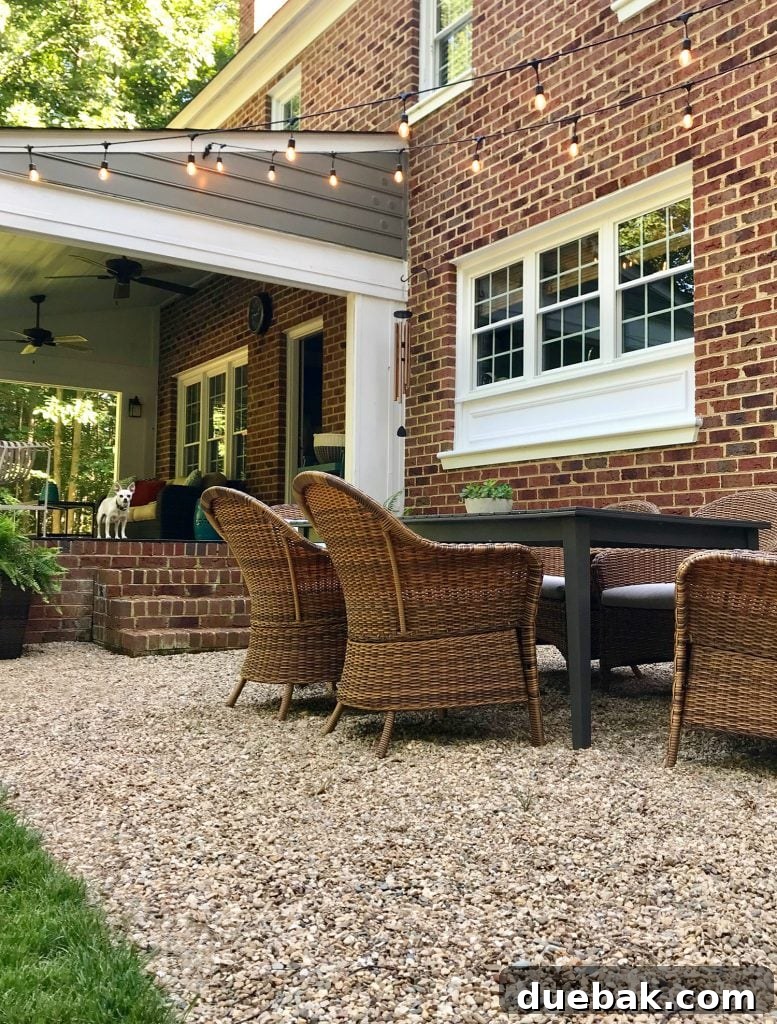
From past experience — like our backyard at the beach house, which taught us to prefer smaller, more private, and well-chosen outdoor setups — we made a conscious decision here to prioritize function. That meant avoiding beautiful-but-impractical pieces that require more upkeep than enjoyment.
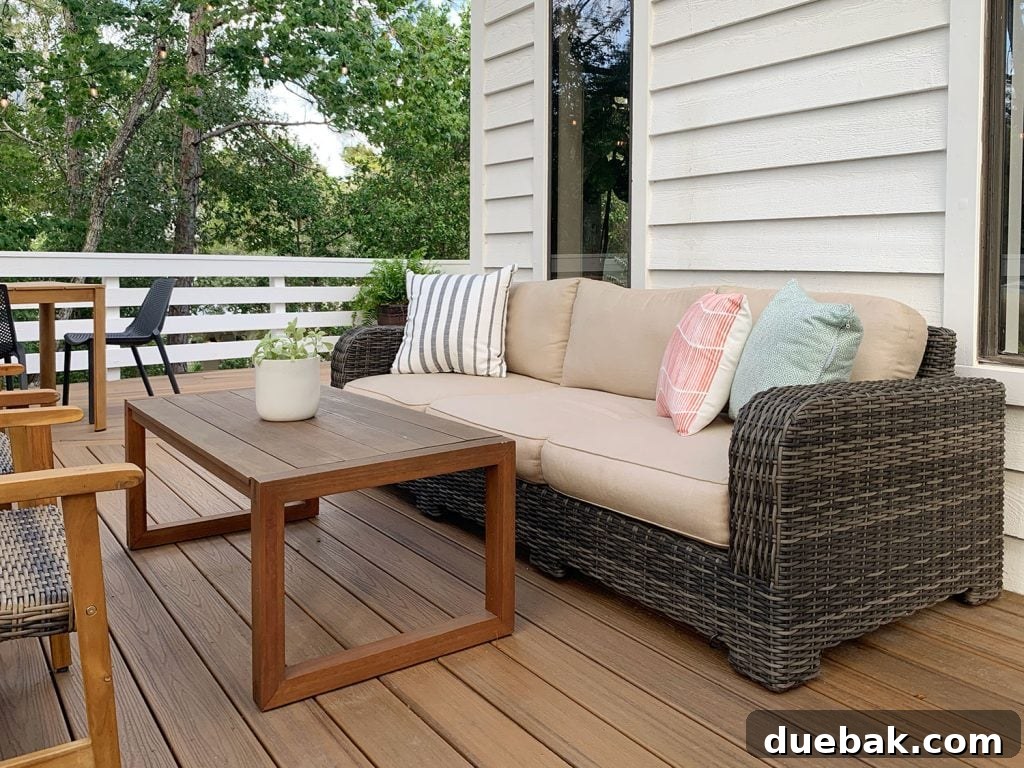
We intentionally created three zones: (1) a comfortable lounge and conversation area with a plan to keep the sofa cushions dry, (2) an outdoor dining/game table, and (3) a placeholder spot we’re leaving flexible for future use.
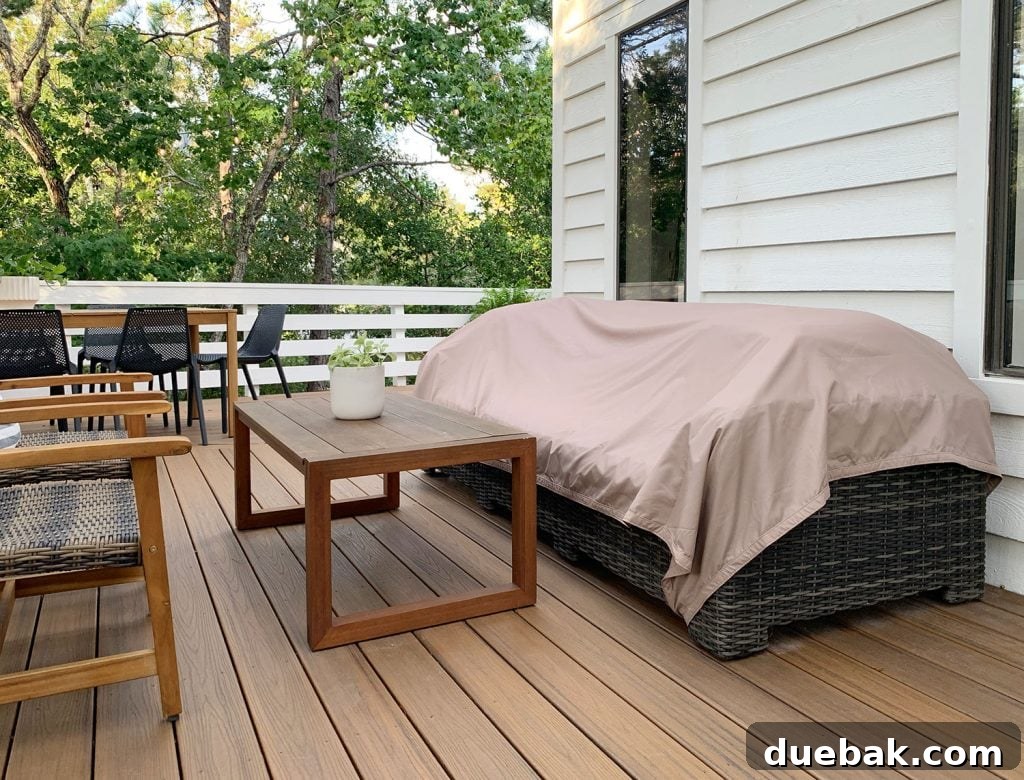
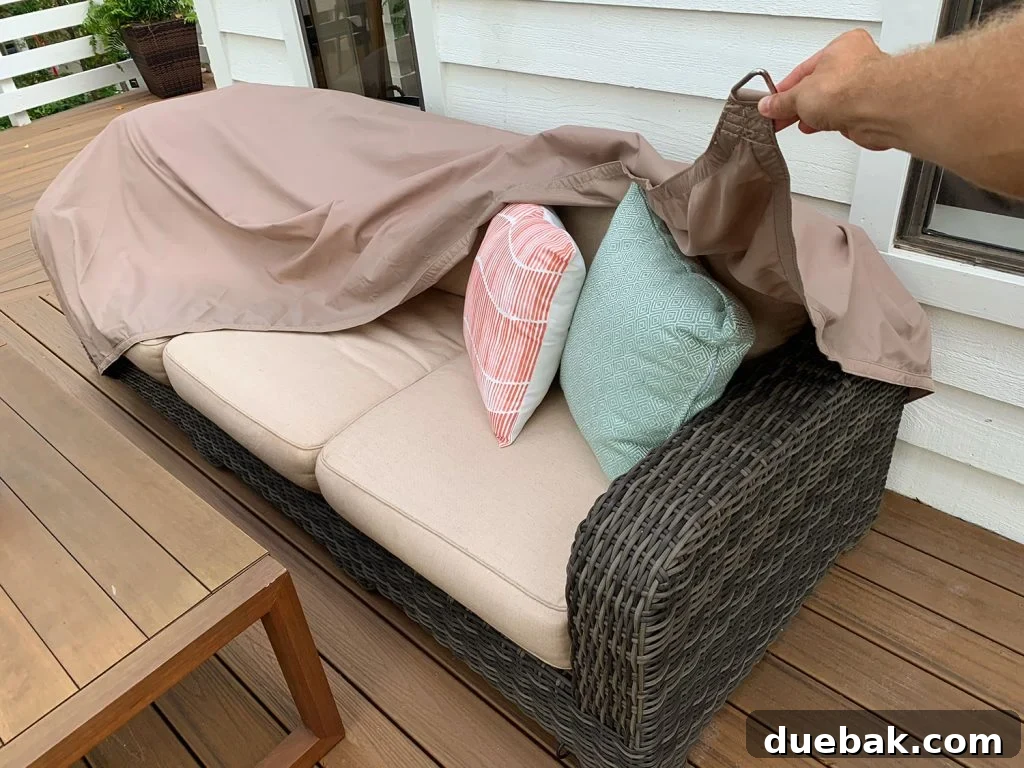
The lounge area centers on an outdoor sofa we brought from Richmond. It’s about seven years old and has held up well after annual pressure-washing of the cushions. Because the sofa sits in shade most of the day, cushions could stay damp, so we searched for a low-profile solution to keep them usable.
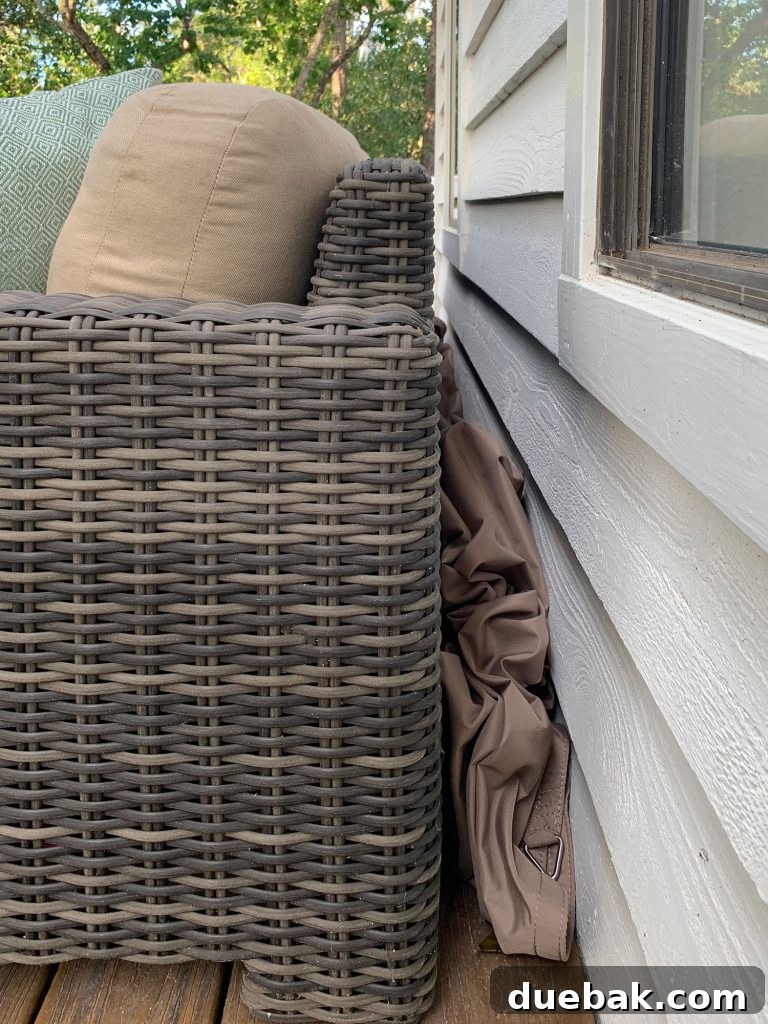
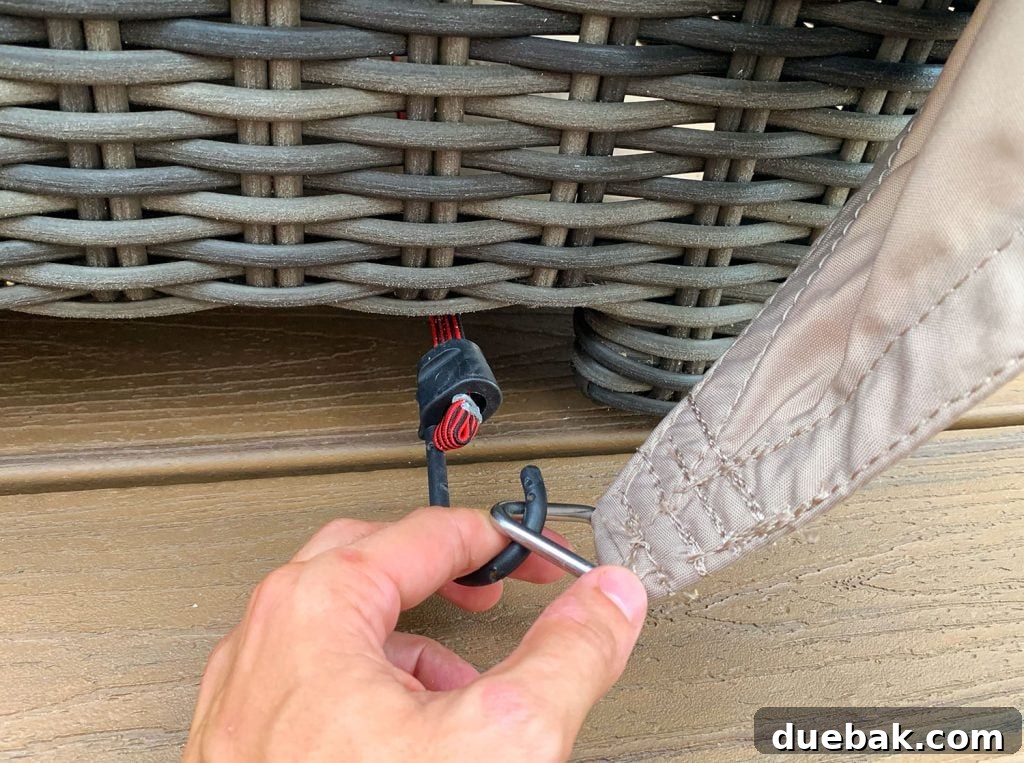
Instead of bulky, awkward furniture covers, we use a waterproof sun sail shade as a lightweight, easy-to-handle cover. It’s the right size to cover the cushions without excess fabric, and when it’s not needed we tuck it behind the sofa. Two short bungee cords anchor it under the couch so it stays put when in use.
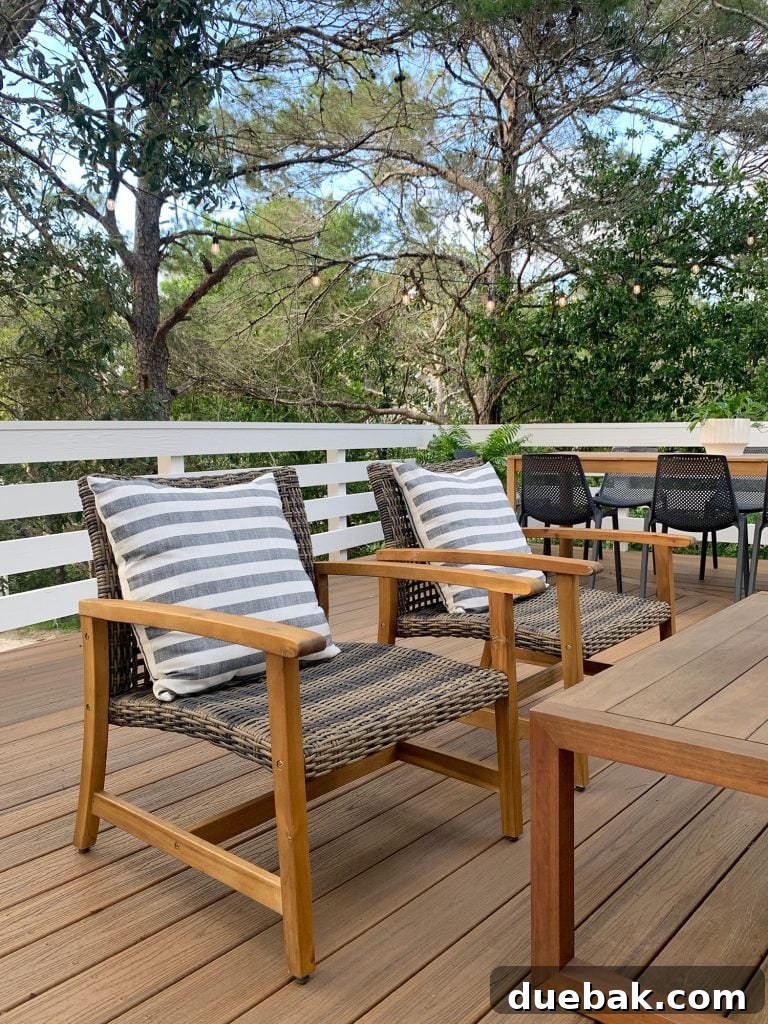
To complement the sofa we added a coffee table and two wood-and-wicker lounge chairs that echo the sofa’s weave. The chairs are deep and comfortable, so we bought large outdoor toss pillows for extra support. Those pillows are fast-drying, so they can stay out even after a shower and still be ready to use.
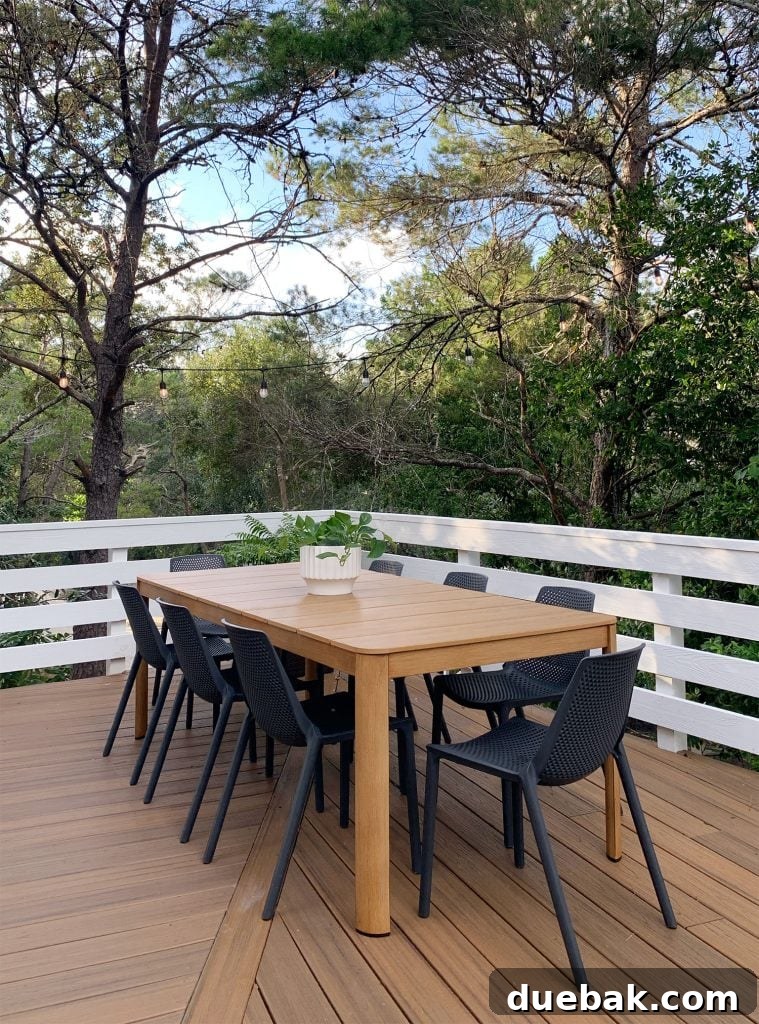
The second zone is our outdoor dining and game area. After moving, our old wooden table fell apart from rot, so we replaced it with a faux-wood aluminum table that resists moisture and is easy to maintain. We paired it with black molded chairs that drain quickly and require no cushions, making the dining area practical and ready for frequent use.
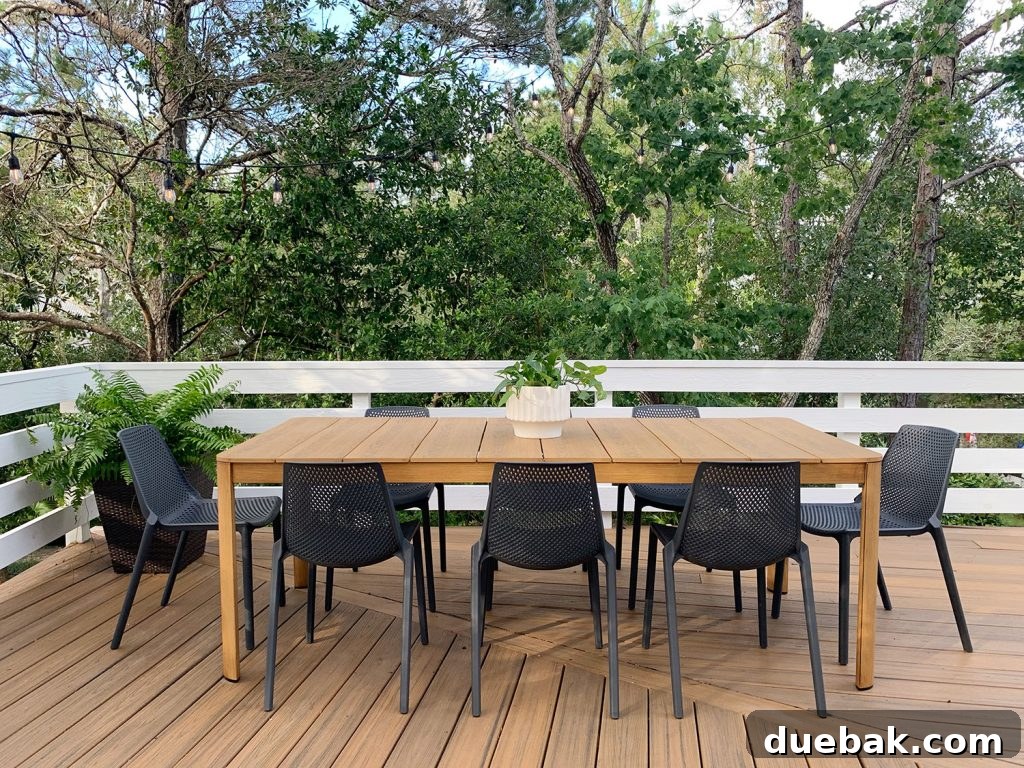
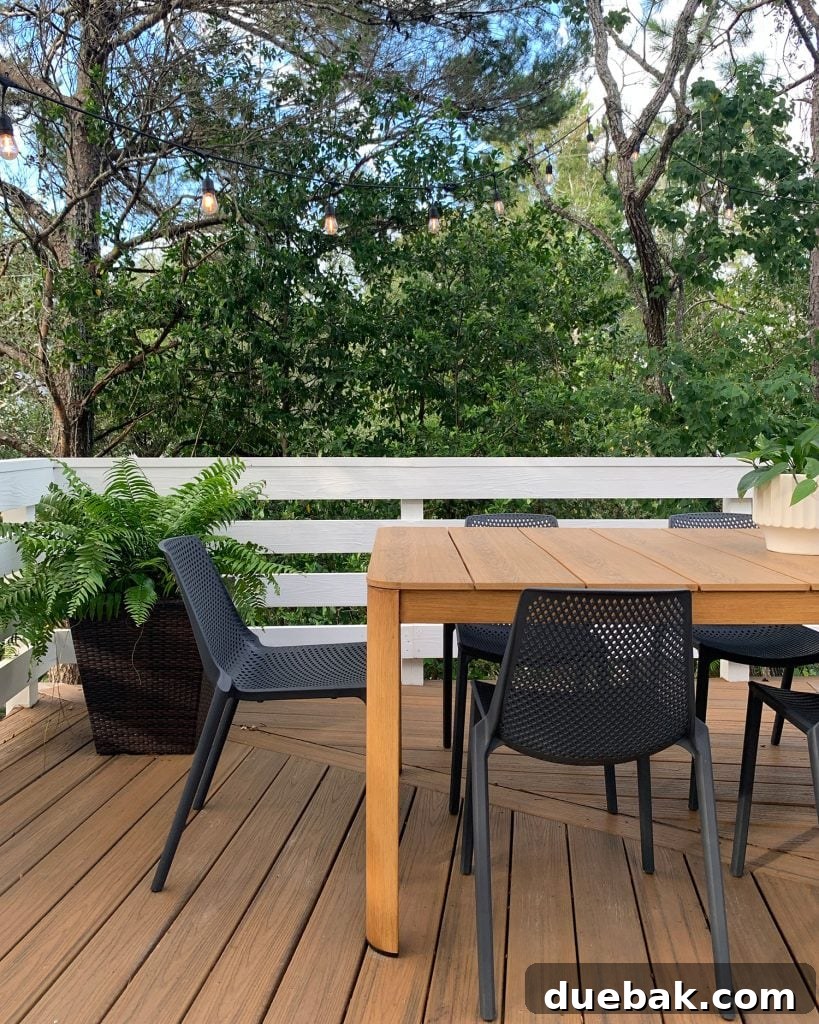
That table has already seen more use in a few months than our old one did in years. It’s become a favorite spot for taco nights, casual work sessions with laptops, and evening family games — thanks to the shade and easy upkeep.
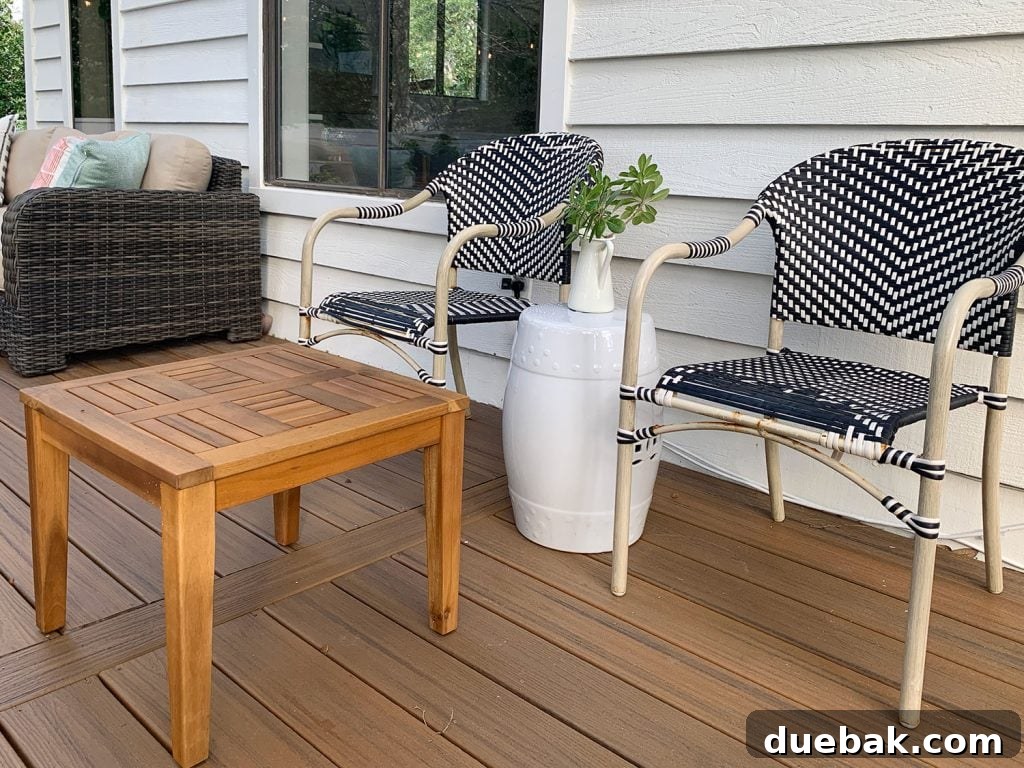
Between the lounge and dining areas we left a flexible spot that remains a placeholder for now. Rather than buy something impulsively, we wanted time to decide the best long-term use. For the moment we’ve furnished it with a couple of bistro-style chairs that Sherry rescued from the curb — a free, functional solution that helps us visualize future options like a cushionless double lounge chair or a small planted corner.
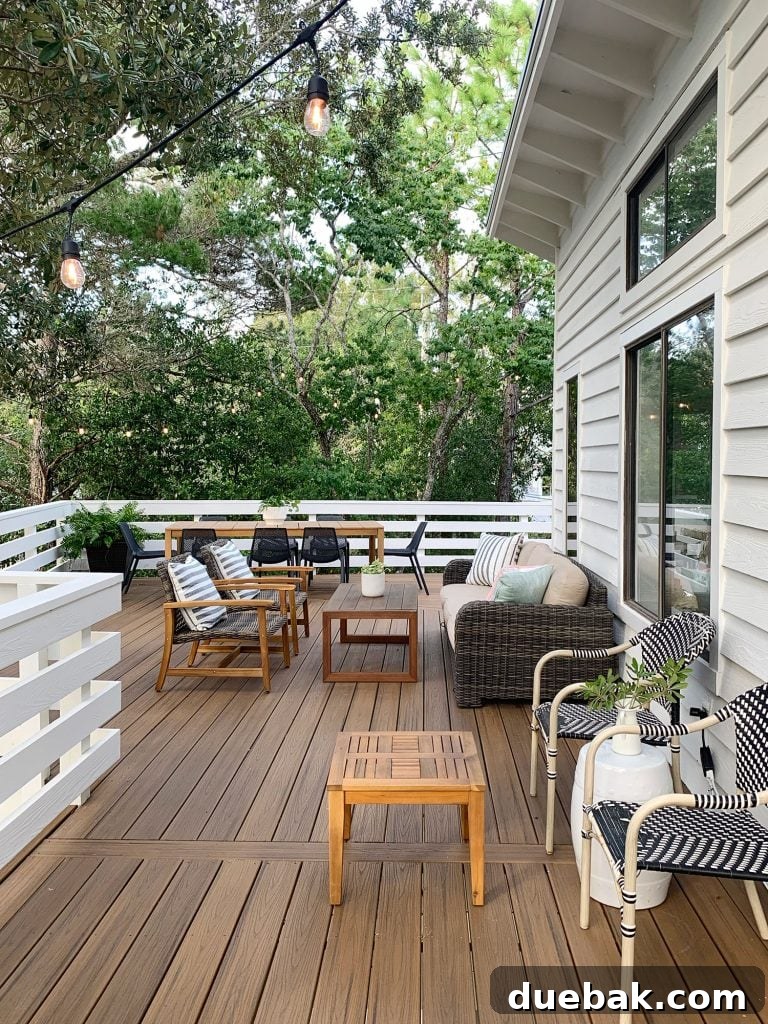
One final detail that transformed the deck: string lights. We started with three 50-foot strands and initially zig-zagged them from the house to the trees. After a storm taught us that trees sway independently, we looped the lights entirely around the trees so they move together, which has held up much better. They’re on an automated outdoor plug, so the lights turn on every evening without fuss.
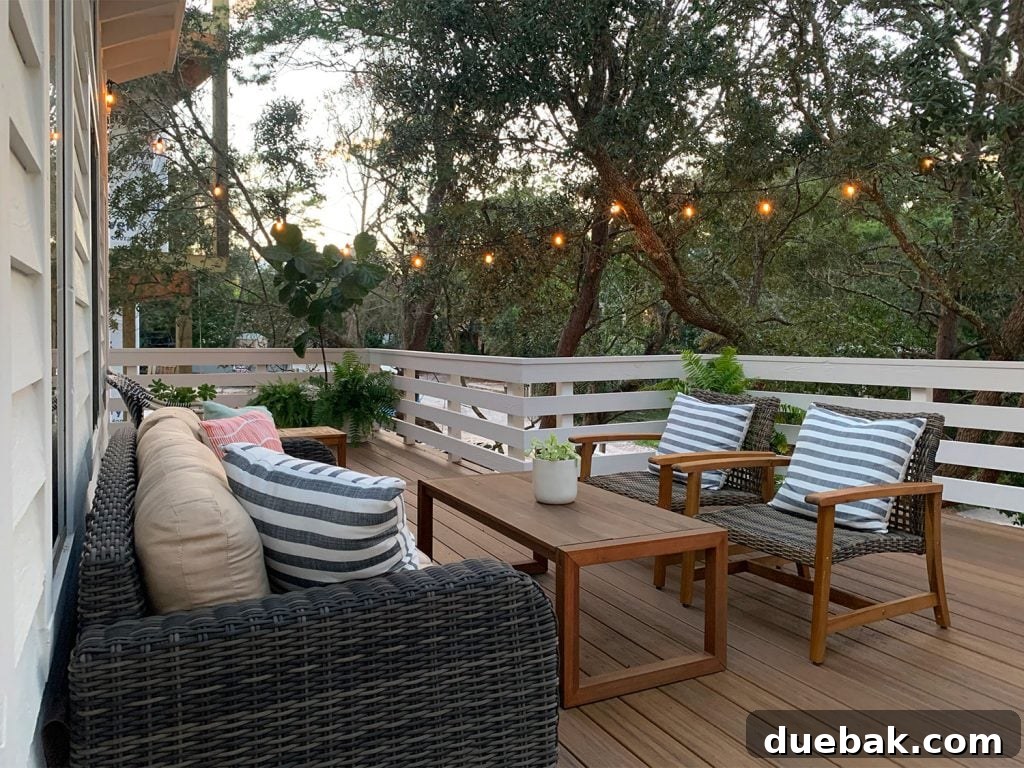
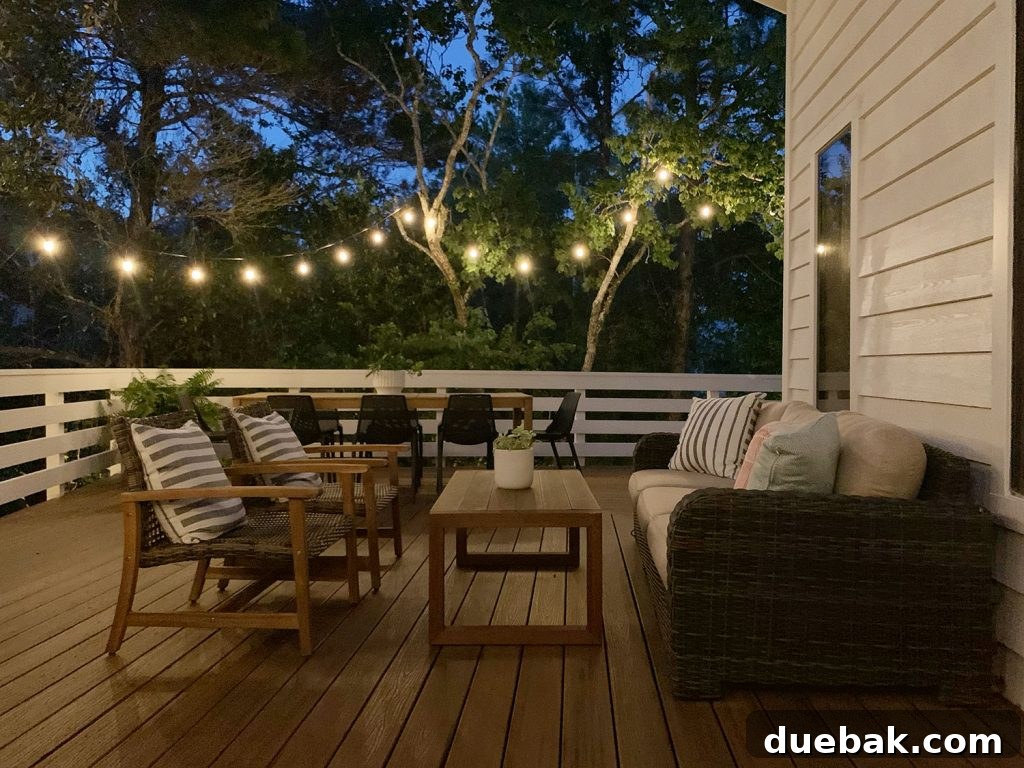
Photos don’t capture the full magic of being up in the trees at dusk, with lights glowing and the neighbourhood tucked below. The deck feels like a peaceful pocket of privacy, and we’ve enjoyed watching it become a well-used extension of our home.
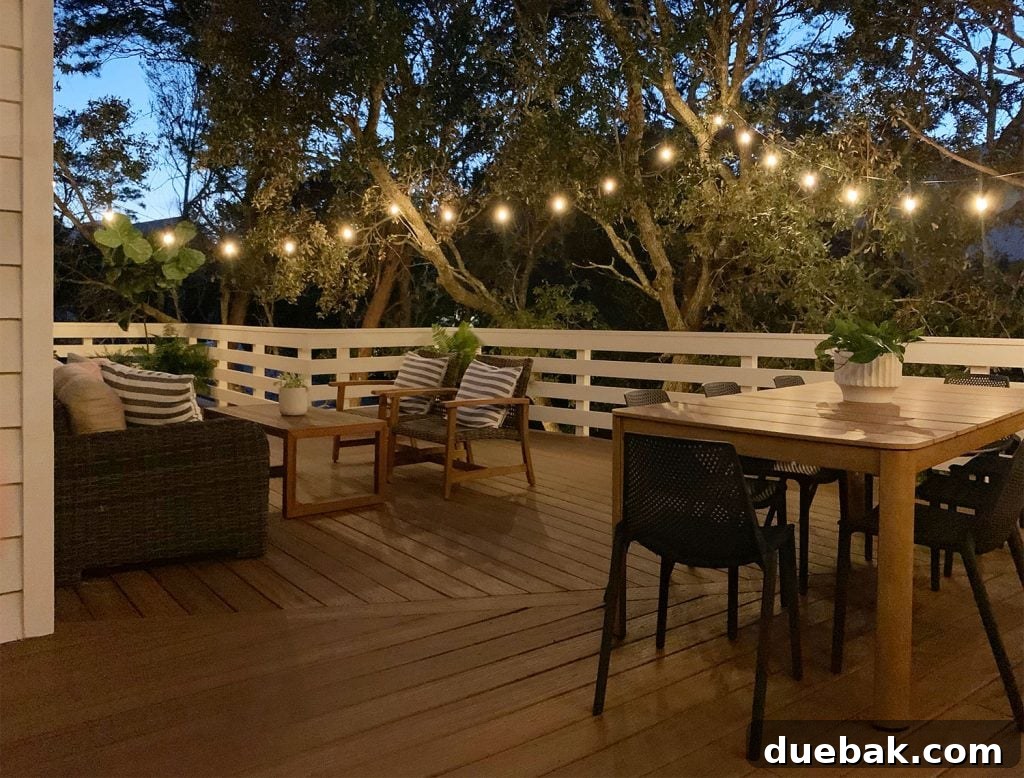
If you’re curious about other outdoor areas, we previously shared our front porch, side porch, and outdoor shower updates in our exterior before & after post. We’re also waiting on a backordered item for the side porch — a hanging daybed inspired by one we loved in Costa Rica — so stay tuned for that update.
P.S. You can see our Florida house progress, including interior and outdoor projects, in our project archive. This post contains affiliate links, which may earn a small commission at no additional cost to you.